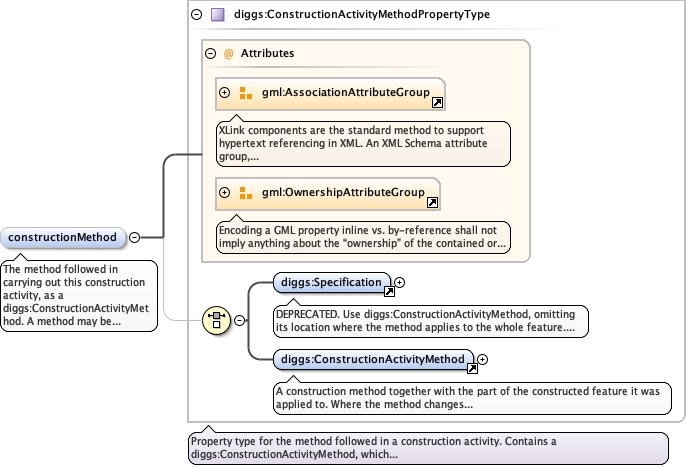
The method followed in carrying out this construction activity, as adiggs:ConstructionActivityMethod. A method may be tied to the partof the feature it applies to, for example one method for the base ofa surface crust and another below it; with no location it applies tothe whole feature. Repeat for each method used. A reference(xlink:href) to a method held elsewhere may be given in place of theobject. Giving a diggs:Specification directly in this property isdeprecated.
<element name="constructionMethod" type="diggs:ConstructionActivityMethodPropertyType" maxOccurs="unbounded" minOccurs="0"><annotation><documentation>The method followed in carrying out this construction activity, as a diggs:ConstructionActivityMethod. A method may be tied to the part of the feature it applies to, for example one method for the base of a surface crust and another below it; with no location it applies to the whole feature. Repeat for each method used. A reference (xlink:href) to a method held elsewhere may be given in place of the object. Giving a diggs:Specification directly in this property is deprecated.</documentation></annotation></element>
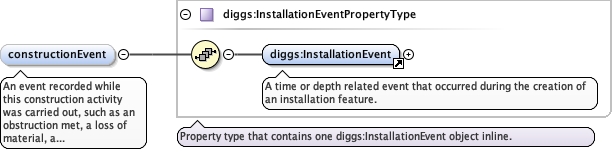
An event recorded while this construction activity was carried out,such as an obstruction met, a loss of material, a stoppage or arefusal. Each is a diggs:InstallationEvent, which can state thedepth interval and time it occurred over and any associatedreadings. Repeat for each event. Events describe what happenedduring the activity; the method followed is stated byconstructionMethod.
<element maxOccurs="unbounded" minOccurs="0" name="constructionEvent" type="diggs:InstallationEventPropertyType"><annotation><documentation>An event recorded while this construction activity was carried out, such as an obstruction met, a loss of material, a stoppage or a refusal. Each is a diggs:InstallationEvent, which can state the depth interval and time it occurred over and any associated readings. Repeat for each event. Events describe what happened during the activity; the method followed is stated by constructionMethod.</documentation></annotation></element>
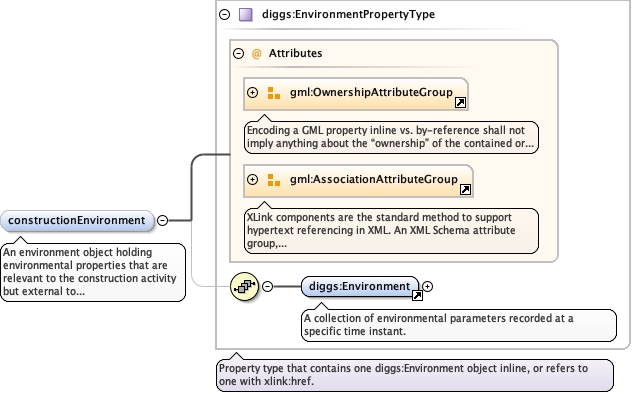
<element name="constructionEnvironment" type="diggs:EnvironmentPropertyType" maxOccurs="unbounded" minOccurs="0"><annotation><documentation>An environment object holding environmental properties that are relevant to the construction activity but external to it.</documentation></annotation></element>
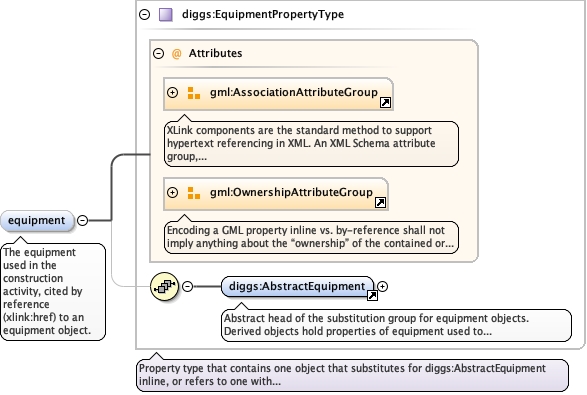
<element name="equipment" type="diggs:EquipmentPropertyType" maxOccurs="unbounded" minOccurs="0"><annotation><appinfo>diggs:AbstractEquipment</appinfo><documentation>The equipment used in the construction activity, cited by reference (xlink:href) to an equipment object.</documentation></annotation></element>
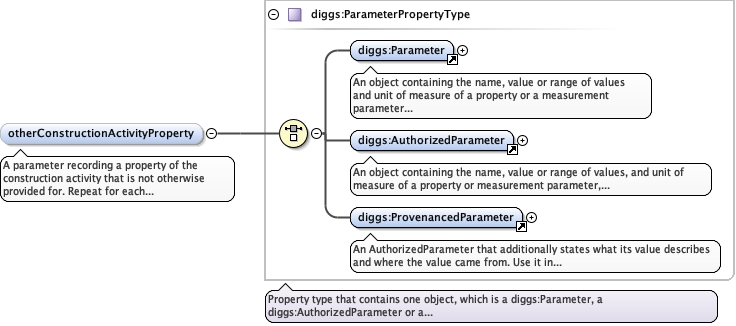
<element minOccurs="0" name="otherConstructionActivityProperty" type="diggs:ParameterPropertyType" maxOccurs="unbounded"><annotation><documentation>A parameter recording a property of the construction activity that is not otherwise provided for. Repeat for each property.</documentation></annotation></element>
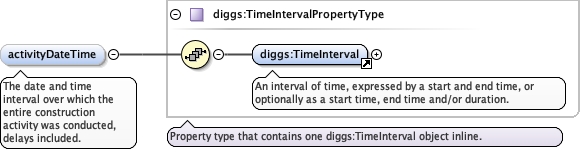
<element minOccurs="0" name="activityDateTime" type="diggs:TimeIntervalPropertyType"><annotation><documentation>The date and time interval over which the entire construction activity was conducted, delays included.</documentation></annotation></element>
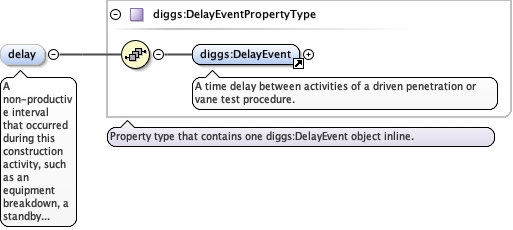
A non-productive interval that occurred during this constructionactivity, such as an equipment breakdown, a standby period or a rigmove. Repeat for each delay. The delayType of each diggs:DelayEventgives the cause, from a controlled list. This is the structuredcounterpart of a narrative remark and supports production analysissuch as utilization and non-productive time. Recording a delay heredoes not replace activityDateTime, which covers the whole activity,delays included. This is an activity-level delay, distinct from thedelay property of diggs:DriveSetType (the delay before one driveincrement started) and of diggs:VaneTestMeasurementDataType (aprocedurally required waiting period).
<element minOccurs="0" name="delay" type="diggs:DelayEventPropertyType" maxOccurs="unbounded"><annotation><documentation>A non-productive interval that occurred during this construction activity, such as an equipment breakdown, a standby period or a rig move. Repeat for each delay. The delayType of each diggs:DelayEvent gives the cause, from a controlled list. This is the structured counterpart of a narrative remark and supports production analysis such as utilization and non-productive time. Recording a delay here does not replace activityDateTime, which covers the whole activity, delays included. This is an activity-level delay, distinct from the delay property of diggs:DriveSetType (the delay before one drive increment started) and of diggs:VaneTestMeasurementDataType (a procedurally required waiting period).</documentation></annotation></element>
Complex Type diggs:AbstractConstructionActivityType
Namespace
http://diggsml.org/schemas/3
Annotations
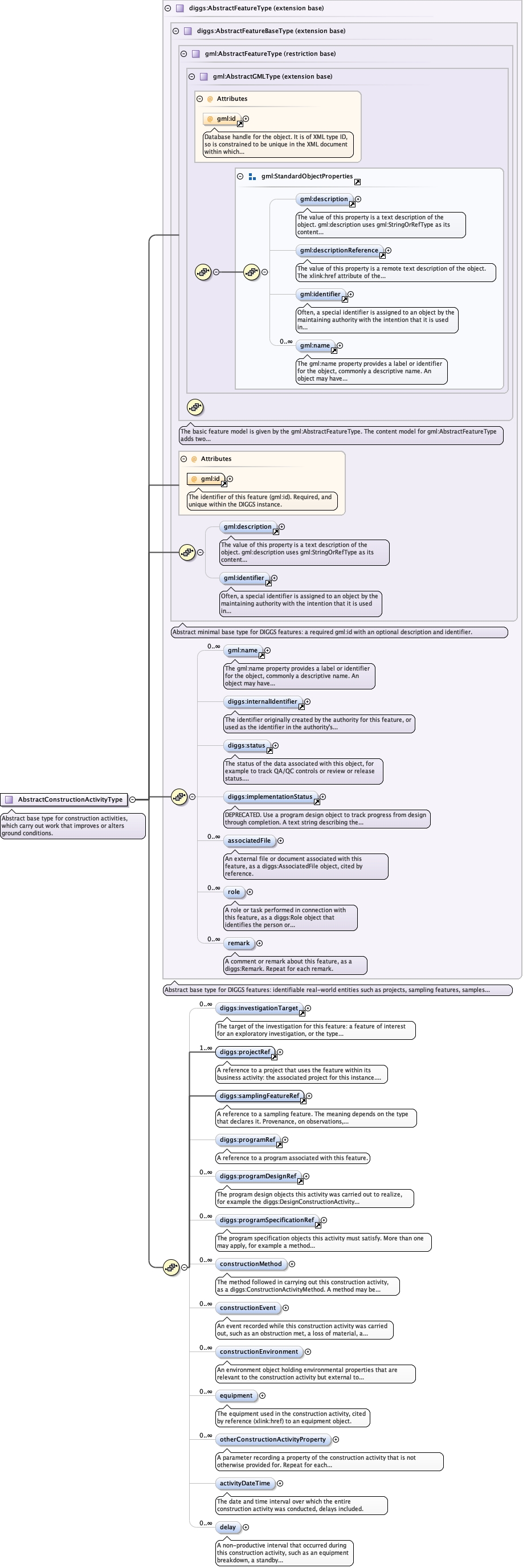
Abstract base type for construction activities, which carry out work that improvesor alters ground conditions.
Database handle for the object. It is of XML type ID, so is constrained to beunique in the XML document within which it occurs. An external identifier for the object inthe form of a URI may be constructed using standard XML and XPointer methods. This is doneby concatenating the URI for the document, a fragment separator, and the value of the idattribute.
Source
<complexType name="AbstractConstructionActivityType" abstract="false"><annotation><documentation>Abstract base type for construction activities, which carry out work that improves or alters ground conditions.</documentation></annotation><complexContent><extension base="diggs:AbstractFeatureType"><sequence><element ref="diggs:investigationTarget" maxOccurs="unbounded" minOccurs="0"/><element ref="diggs:projectRef" maxOccurs="unbounded"/><element minOccurs="1" ref="diggs:samplingFeatureRef" maxOccurs="1"/><element minOccurs="0" ref="diggs:programRef" maxOccurs="1"/><element minOccurs="0" maxOccurs="unbounded" ref="diggs:programDesignRef"><annotation><documentation>The program design objects this activity was carried out to realize, for example the diggs:DesignConstructionActivity that planned it.</documentation></annotation></element><element minOccurs="0" maxOccurs="unbounded" ref="diggs:programSpecificationRef"><annotation><documentation>The program specification objects this activity must satisfy. More than one may apply, for example a method specification together with a site-level performance specification.</documentation></annotation></element><element name="constructionMethod" type="diggs:ConstructionActivityMethodPropertyType" maxOccurs="unbounded" minOccurs="0"><annotation><documentation>The method followed in carrying out this construction activity, as a diggs:ConstructionActivityMethod. A method may be tied to the part of the feature it applies to, for example one method for the base of a surface crust and another below it; with no location it applies to the whole feature. Repeat for each method used. A reference (xlink:href) to a method held elsewhere may be given in place of the object. Giving a diggs:Specification directly in this property is deprecated.</documentation></annotation></element><element maxOccurs="unbounded" minOccurs="0" name="constructionEvent" type="diggs:InstallationEventPropertyType"><annotation><documentation>An event recorded while this construction activity was carried out, such as an obstruction met, a loss of material, a stoppage or a refusal. Each is a diggs:InstallationEvent, which can state the depth interval and time it occurred over and any associated readings. Repeat for each event. Events describe what happened during the activity; the method followed is stated by constructionMethod.</documentation></annotation></element><element name="constructionEnvironment" type="diggs:EnvironmentPropertyType" maxOccurs="unbounded" minOccurs="0"><annotation><documentation>An environment object holding environmental properties that are relevant to the construction activity but external to it.</documentation></annotation></element><element name="equipment" type="diggs:EquipmentPropertyType" maxOccurs="unbounded" minOccurs="0"><annotation><appinfo>diggs:AbstractEquipment</appinfo><documentation>The equipment used in the construction activity, cited by reference (xlink:href) to an equipment object.</documentation></annotation></element><element minOccurs="0" name="otherConstructionActivityProperty" type="diggs:ParameterPropertyType" maxOccurs="unbounded"><annotation><documentation>A parameter recording a property of the construction activity that is not otherwise provided for. Repeat for each property.</documentation></annotation></element><element minOccurs="0" name="activityDateTime" type="diggs:TimeIntervalPropertyType"><annotation><documentation>The date and time interval over which the entire construction activity was conducted, delays included.</documentation></annotation></element><element minOccurs="0" name="delay" type="diggs:DelayEventPropertyType" maxOccurs="unbounded"><annotation><documentation>A non-productive interval that occurred during this construction activity, such as an equipment breakdown, a standby period or a rig move. Repeat for each delay. The delayType of each diggs:DelayEvent gives the cause, from a controlled list. This is the structured counterpart of a narrative remark and supports production analysis such as utilization and non-productive time. Recording a delay here does not replace activityDateTime, which covers the whole activity, delays included. This is an activity-level delay, distinct from the delay property of diggs:DriveSetType (the delay before one drive increment started) and of diggs:VaneTestMeasurementDataType (a procedurally required waiting period).</documentation></annotation></element></sequence></extension></complexContent></complexType>