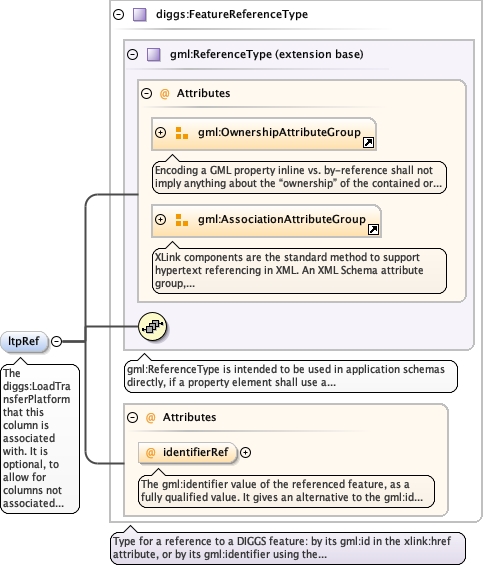
The diggs:LoadTransferPlatform that this column is associated with.It is optional, to allow for columns not associated with an LTP(trial columns outside a platform, or sacrificial columns that arenot load bearing) and because columns are installed before theplatform is laid over them, so a column record may legitimately bedelivered before its platform exists. A spatial association can bemade, but an explicit association by this property is definitive,should be used in preference to a spatial comparison, and governswhere the two disagree. The positional test, of the column'sreferencePoint against the featureExtent of the platform, remains afallback where this element is absent, but it is only an inference:platform extents may overlap where a structure's platform is drawnover a residual "remaining area" platform without being punched outof it, and a column head within centimeters of a shared boundary isdecided by rounding rather than intent. The reference statesmembership, asserted by the member, like the inheritedsamplingFeatureGroupRef. Given by reference only.
The gml:identifier value of the referenced feature, as a fully qualifiedvalue. It gives an alternative to the gml:id in xlink:href for findingthe referenced feature, mainly to reference a feature by a globallyunique identifier and where naming conflicts occur with gml:id whenaccessing data in external files.
<element minOccurs="0" name="ltpRef" type="diggs:FeatureReferenceType"><annotation><appinfo source="urn:x-gml:targetElement">diggs:LoadTransferPlatform</appinfo><documentation>The diggs:LoadTransferPlatform that this column is associated with. It is optional, to allow for columns not associated with an LTP (trial columns outside a platform, or sacrificial columns that are not load bearing) and because columns are installed before the platform is laid over them, so a column record may legitimately be delivered before its platform exists. A spatial association can be made, but an explicit association by this property is definitive, should be used in preference to a spatial comparison, and governs where the two disagree. The positional test, of the column's referencePoint against the featureExtent of the platform, remains a fallback where this element is absent, but it is only an inference: platform extents may overlap where a structure's platform is drawn over a residual "remaining area" platform without being punched out of it, and a column head within centimeters of a shared boundary is decided by rounding rather than intent. The reference states membership, asserted by the member, like the inherited samplingFeatureGroupRef. Given by reference only.</documentation></annotation></element>
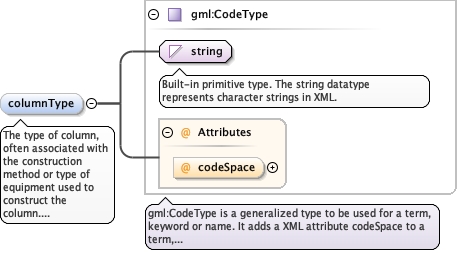
The type of column, often associated with the construction method ortype of equipment used to construct the column. Use the DIGGSdictionary columnType.xml for the list of values.
<element minOccurs="0" name="columnType" type="gml:CodeType"><annotation><documentation>The type of column, often associated with the construction method or type of equipment used to construct the column. Use the DIGGS dictionary columnType.xml for the list of values.</documentation></annotation></element>
How the ground was handled as this column was formed: fulldisplacement, partial displacement or replacement. It is the primaryclassifier: a displacement technique generates no spoil anddensifies the surrounding ground, while a replacement techniqueremoves soil, so the quality-control data a rig can produce and theacceptance evidence that can be asked for both follow from it. It isorthogonal to columnType, and constrained against it: columnTypenames the technique and this names what that technique does to theground, but they are not independent (a continuous flight augercolumn cannot be full displacement), so each columnType.xml entrydeclares the families it is compatible with through aconditionalElementXpath on its Occurrence. That check is performedby dictionary-validation.xsl, not by this schema, because XSD cannotexpress a correlation between sibling values; as a consequence,stating columnType without this element fails dictionary validation,so in practice the two travel together. The ri prefix marks thatthis element is bound to the rigid inclusion list; installationmethod is a concept other DIGGS domains will want under their ownvocabularies. Values come from the enumerated list, or "Other: xx",where xx is a user-defined term whose meaning differs from everylisted value (not a synonym of one).
<element minOccurs="0" name="riInstallationMethod" type="diggs:RIInstallationMethodEnumExtType"><annotation><documentation>How the ground was handled as this column was formed: full displacement, partial displacement or replacement. It is the primary classifier: a displacement technique generates no spoil and densifies the surrounding ground, while a replacement technique removes soil, so the quality-control data a rig can produce and the acceptance evidence that can be asked for both follow from it. It is orthogonal to columnType, and constrained against it: columnType names the technique and this names what that technique does to the ground, but they are not independent (a continuous flight auger column cannot be full displacement), so each columnType.xml entry declares the families it is compatible with through a conditionalElementXpath on its Occurrence. That check is performed by dictionary-validation.xsl, not by this schema, because XSD cannot express a correlation between sibling values; as a consequence, stating columnType without this element fails dictionary validation, so in practice the two travel together. The ri prefix marks that this element is bound to the rigid inclusion list; installation method is a concept other DIGGS domains will want under their own vocabularies. Values come from the enumerated list, or "Other: xx", where xx is a user-defined term whose meaning differs from every listed value (not a synonym of one).</documentation></annotation></element>
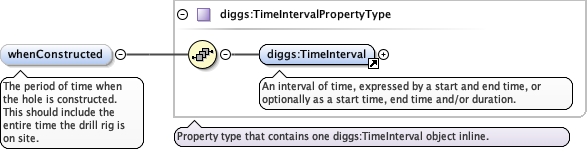
<element maxOccurs="1" minOccurs="0" name="whenConstructed" type="diggs:TimeIntervalPropertyType"><annotation><documentation>The period of time when the hole is constructed. This should include the entire time the drill rig is on site.</documentation></annotation></element>
The position this column actually occupied in the installationorder, counting from 1; the as-built counterpart of the plannedorder stated by a diggs:DesignProductionSequence. It is recordedrather than derived, because the actual order is not recoverablefrom whenConstructed (optional, thinly populated, and a timestampanswers when rather than in what order, which matters where severalrigs work concurrently) or from the column's name. Comparing it withthe planned order shows whether a specified sequence was followed,and it is the as-built side against which a minimum age or minimumspacing to fresh concrete, specified as a diggs:ClearanceConstraint,is evaluated.
Diagram
Type
positiveInteger
Properties
content
simple
minOccurs
0
Source
<element minOccurs="0" name="installationSequenceNumber" type="positiveInteger"><annotation><documentation>The position this column actually occupied in the installation order, counting from 1; the as-built counterpart of the planned order stated by a diggs:DesignProductionSequence. It is recorded rather than derived, because the actual order is not recoverable from whenConstructed (optional, thinly populated, and a timestamp answers when rather than in what order, which matters where several rigs work concurrently) or from the column's name. Comparing it with the planned order shows whether a specified sequence was followed, and it is the as-built side against which a minimum age or minimum spacing to fresh concrete, specified as a diggs:ClearanceConstraint, is evaluated.</documentation></annotation></element>
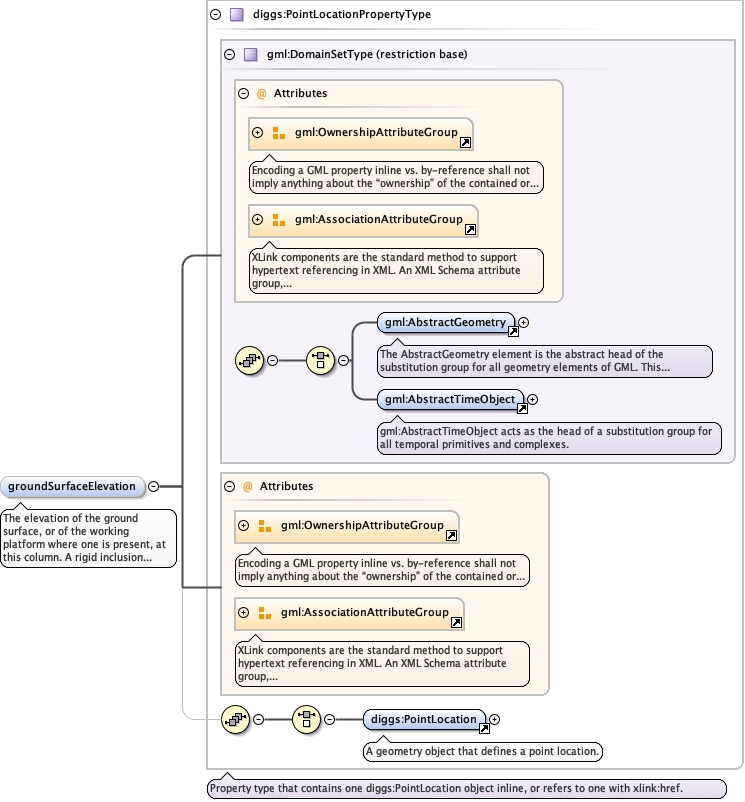
The elevation of the ground surface, or of the working platformwhere one is present, at this column. A rigid inclusion conflatesthe drilled hole and the grout column into one sampling feature, andthe column takes precedence for geometry: the centerLine runs fromthe column head to the column tip, not from ground level to the tip.Depths recorded while drilling (measurement-while-drilling data, andevents on the construction activity) are measured from the ground orplatform datum the rig works from, and this property relates thetwo; without it, drilling-time depths cannot be placed on thecolumn. Because it is a position, not a length, it may be stated inwhichever frame it was measured: a one-dimensional position in avertical CRS, a one-dimensional position in this column's own linearreferencing system, or a full three-dimensional position. PopulateuomLabels so the unit is readable without resolving the CRS. Itcorresponds to the property of the same name ondiggs:AbstractPileType.
<element minOccurs="0" name="groundSurfaceElevation" type="diggs:PointLocationPropertyType"><annotation><documentation>The elevation of the ground surface, or of the working platform where one is present, at this column. A rigid inclusion conflates the drilled hole and the grout column into one sampling feature, and the column takes precedence for geometry: the centerLine runs from the column head to the column tip, not from ground level to the tip. Depths recorded while drilling (measurement-while-drilling data, and events on the construction activity) are measured from the ground or platform datum the rig works from, and this property relates the two; without it, drilling-time depths cannot be placed on the column. Because it is a position, not a length, it may be stated in whichever frame it was measured: a one-dimensional position in a vertical CRS, a one-dimensional position in this column's own linear referencing system, or a full three-dimensional position. Populate uomLabels so the unit is readable without resolving the CRS. It corresponds to the property of the same name on diggs:AbstractPileType.</documentation></annotation></element>
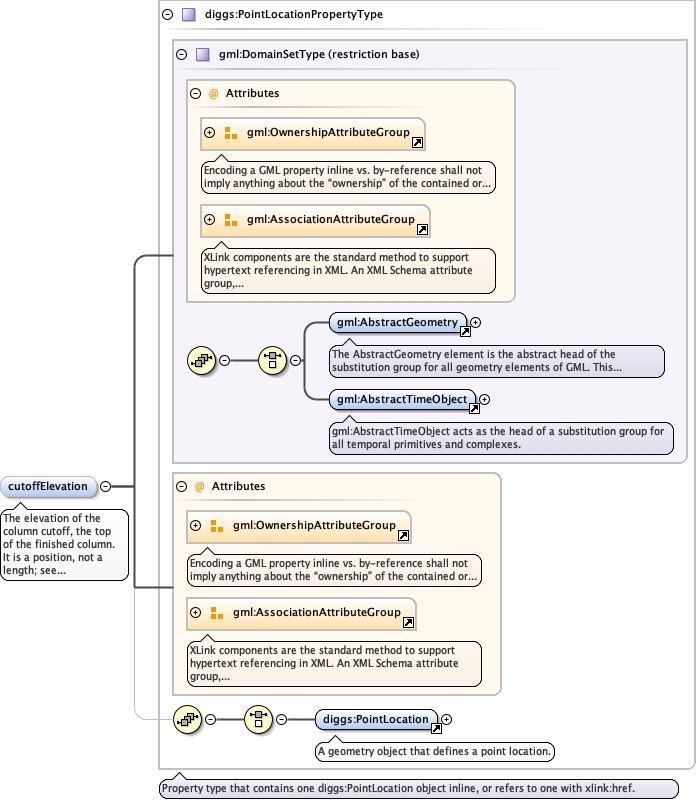
The elevation of the column cutoff, the top of the finished column.It is a position, not a length; see groundSurfaceElevation for theframe options and the uomLabels guidance. It is optional andinformational, carried for symmetry with columnLength. UnlikegroundSurfaceElevation it is derivable from the geometry, being thefirst point of the centerLine, so where the two disagree thegeometry prevails.
<element minOccurs="0" name="cutoffElevation" type="diggs:PointLocationPropertyType"><annotation><documentation>The elevation of the column cutoff, the top of the finished column. It is a position, not a length; see groundSurfaceElevation for the frame options and the uomLabels guidance. It is optional and informational, carried for symmetry with columnLength. Unlike groundSurfaceElevation it is derivable from the geometry, being the first point of the centerLine, so where the two disagree the geometry prevails.</documentation></annotation></element>
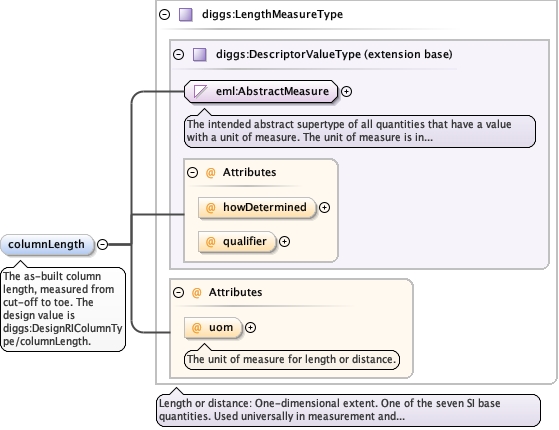
<element minOccurs="0" name="columnLength" type="diggs:LengthMeasureType"><annotation><documentation>The as-built column length, measured from cut-off to toe. The design value is diggs:DesignRIColumnType/columnLength.</documentation></annotation></element>
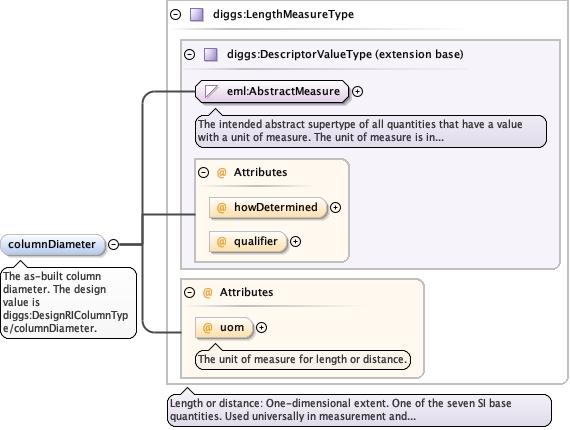
<element minOccurs="0" name="columnDiameter" type="diggs:LengthMeasureType"><annotation><documentation>The as-built column diameter. The design value is diggs:DesignRIColumnType/columnDiameter.</documentation></annotation></element>
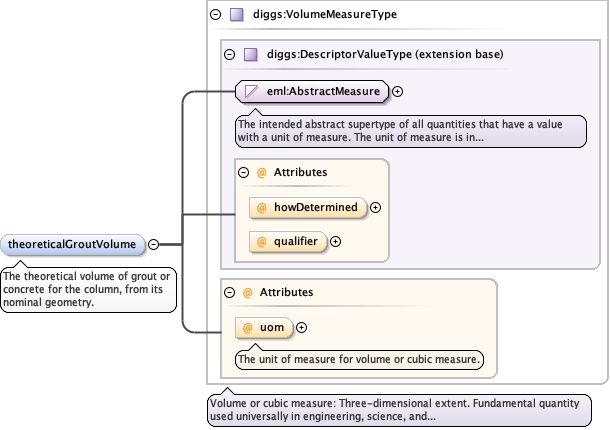
<element minOccurs="0" name="theoreticalGroutVolume" type="diggs:VolumeMeasureType"><annotation><documentation>The theoretical volume of grout or concrete for the column, from its nominal geometry.</documentation></annotation></element>
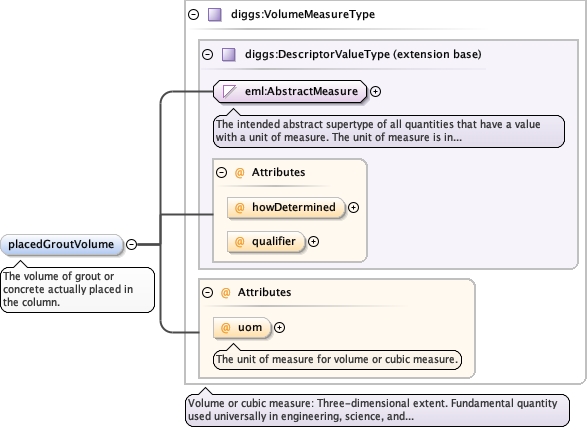
<element minOccurs="0" name="placedGroutVolume" type="diggs:VolumeMeasureType"><annotation><documentation>The volume of grout or concrete actually placed in the column.</documentation></annotation></element>
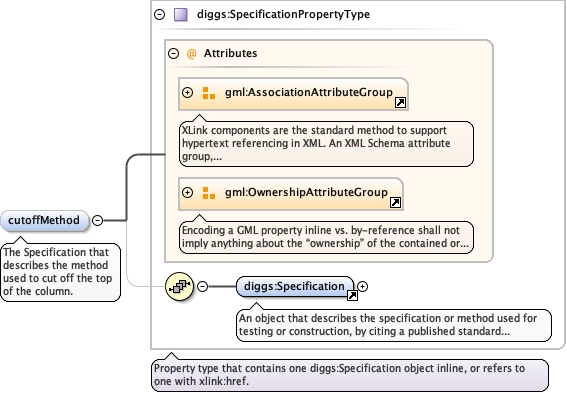
<element minOccurs="0" name="cutoffMethod" type="diggs:SpecificationPropertyType"><annotation><documentation>The Specification that describes the method used to cut off the top of the column.</documentation></annotation></element>
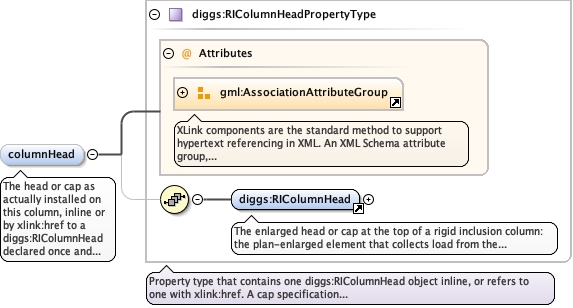
The head or cap as actually installed on this column, inline or byxlink:href to a diggs:RIColumnHead declared once and shared by everycolumn built to the same cap detail. The presence of this propertyis the assertion that a head exists; a column with no head omits it.
<element minOccurs="0" name="columnHead" type="diggs:RIColumnHeadPropertyType"><annotation><documentation>The head or cap as actually installed on this column, inline or by xlink:href to a diggs:RIColumnHead declared once and shared by every column built to the same cap detail. The presence of this property is the assertion that a head exists; a column with no head omits it.</documentation></annotation></element>
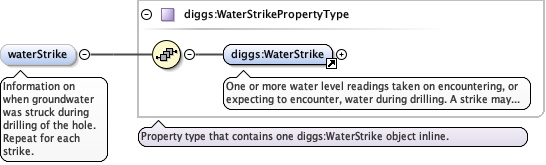
<element maxOccurs="unbounded" minOccurs="0" name="waterStrike" type="diggs:WaterStrikePropertyType"><annotation><documentation>Information on when groundwater was struck during drilling of the hole. Repeat for each strike.</documentation></annotation></element>
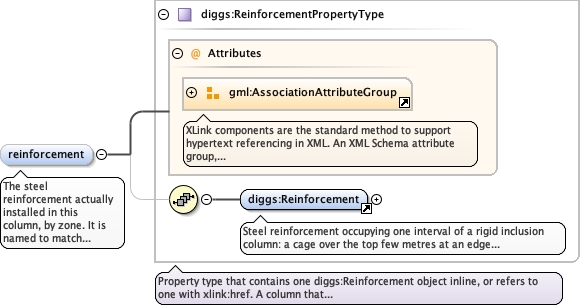
The steel reinforcement actually installed in this column, by zone.It is named to match diggs:DesignRIColumnType/reinforcement, thedesign counterpart. Absent where the column is unreinforced, thecommon case. Repeat for each reinforced zone.
<element maxOccurs="unbounded" minOccurs="0" name="reinforcement" type="diggs:ReinforcementPropertyType"><annotation><documentation>The steel reinforcement actually installed in this column, by zone. It is named to match diggs:DesignRIColumnType/reinforcement, the design counterpart. Absent where the column is unreinforced, the common case. Repeat for each reinforced zone.</documentation></annotation></element>
Database handle for the object. It is of XML type ID, so is constrained to beunique in the XML document within which it occurs. An external identifier for the object inthe form of a URI may be constructed using standard XML and XPointer methods. This is doneby concatenating the URI for the document, a fragment separator, and the value of the idattribute.
Source
<complexType name="RIColumnType"><complexContent><extension base="diggs:AbstractLinearSamplingFeatureType"><sequence><element minOccurs="0" name="ltpRef" type="diggs:FeatureReferenceType"><annotation><appinfo source="urn:x-gml:targetElement">diggs:LoadTransferPlatform</appinfo><documentation>The diggs:LoadTransferPlatform that this column is associated with. It is optional, to allow for columns not associated with an LTP (trial columns outside a platform, or sacrificial columns that are not load bearing) and because columns are installed before the platform is laid over them, so a column record may legitimately be delivered before its platform exists. A spatial association can be made, but an explicit association by this property is definitive, should be used in preference to a spatial comparison, and governs where the two disagree. The positional test, of the column's referencePoint against the featureExtent of the platform, remains a fallback where this element is absent, but it is only an inference: platform extents may overlap where a structure's platform is drawn over a residual "remaining area" platform without being punched out of it, and a column head within centimeters of a shared boundary is decided by rounding rather than intent. The reference states membership, asserted by the member, like the inherited samplingFeatureGroupRef. Given by reference only.</documentation></annotation></element><element ref="diggs:elementClass"><annotation><documentation>The role of this column: trial, test, production or sacrificial. It is authoritative regardless of whether the column belongs to a group through samplingFeatureGroupRef, since group membership does not indicate a column's role. Values come from the enumerated list, or "Other: xx", where xx is a user-defined term whose meaning differs from every listed value (not a synonym of one).</documentation></annotation></element><element minOccurs="0" name="columnType" type="gml:CodeType"><annotation><documentation>The type of column, often associated with the construction method or type of equipment used to construct the column. Use the DIGGS dictionary columnType.xml for the list of values.</documentation></annotation></element><element minOccurs="0" name="riInstallationMethod" type="diggs:RIInstallationMethodEnumExtType"><annotation><documentation>How the ground was handled as this column was formed: full displacement, partial displacement or replacement. It is the primary classifier: a displacement technique generates no spoil and densifies the surrounding ground, while a replacement technique removes soil, so the quality-control data a rig can produce and the acceptance evidence that can be asked for both follow from it. It is orthogonal to columnType, and constrained against it: columnType names the technique and this names what that technique does to the ground, but they are not independent (a continuous flight auger column cannot be full displacement), so each columnType.xml entry declares the families it is compatible with through a conditionalElementXpath on its Occurrence. That check is performed by dictionary-validation.xsl, not by this schema, because XSD cannot express a correlation between sibling values; as a consequence, stating columnType without this element fails dictionary validation, so in practice the two travel together. The ri prefix marks that this element is bound to the rigid inclusion list; installation method is a concept other DIGGS domains will want under their own vocabularies. Values come from the enumerated list, or "Other: xx", where xx is a user-defined term whose meaning differs from every listed value (not a synonym of one).</documentation></annotation></element><element maxOccurs="1" minOccurs="0" name="whenConstructed" type="diggs:TimeIntervalPropertyType"><annotation><documentation>The period of time when the hole is constructed. This should include the entire time the drill rig is on site.</documentation></annotation></element><element minOccurs="0" name="installationSequenceNumber" type="positiveInteger"><annotation><documentation>The position this column actually occupied in the installation order, counting from 1; the as-built counterpart of the planned order stated by a diggs:DesignProductionSequence. It is recorded rather than derived, because the actual order is not recoverable from whenConstructed (optional, thinly populated, and a timestamp answers when rather than in what order, which matters where several rigs work concurrently) or from the column's name. Comparing it with the planned order shows whether a specified sequence was followed, and it is the as-built side against which a minimum age or minimum spacing to fresh concrete, specified as a diggs:ClearanceConstraint, is evaluated.</documentation></annotation></element><element maxOccurs="unbounded" minOccurs="0" ref="diggs:groutRef"><annotation><documentation>The grout or concrete batch this column was formed from, a diggs:GroutBatch. Cite each batch where the column took more than one. The method followed and the events recorded while forming the column are on its diggs:RIColumnConstruction activity. Given by reference only.</documentation></annotation></element><element minOccurs="0" name="groundSurfaceElevation" type="diggs:PointLocationPropertyType"><annotation><documentation>The elevation of the ground surface, or of the working platform where one is present, at this column. A rigid inclusion conflates the drilled hole and the grout column into one sampling feature, and the column takes precedence for geometry: the centerLine runs from the column head to the column tip, not from ground level to the tip. Depths recorded while drilling (measurement-while-drilling data, and events on the construction activity) are measured from the ground or platform datum the rig works from, and this property relates the two; without it, drilling-time depths cannot be placed on the column. Because it is a position, not a length, it may be stated in whichever frame it was measured: a one-dimensional position in a vertical CRS, a one-dimensional position in this column's own linear referencing system, or a full three-dimensional position. Populate uomLabels so the unit is readable without resolving the CRS. It corresponds to the property of the same name on diggs:AbstractPileType.</documentation></annotation></element><element minOccurs="0" name="cutoffElevation" type="diggs:PointLocationPropertyType"><annotation><documentation>The elevation of the column cutoff, the top of the finished column. It is a position, not a length; see groundSurfaceElevation for the frame options and the uomLabels guidance. It is optional and informational, carried for symmetry with columnLength. Unlike groundSurfaceElevation it is derivable from the geometry, being the first point of the centerLine, so where the two disagree the geometry prevails.</documentation></annotation></element><element minOccurs="0" name="columnLength" type="diggs:LengthMeasureType"><annotation><documentation>The as-built column length, measured from cut-off to toe. The design value is diggs:DesignRIColumnType/columnLength.</documentation></annotation></element><element minOccurs="0" name="columnDiameter" type="diggs:LengthMeasureType"><annotation><documentation>The as-built column diameter. The design value is diggs:DesignRIColumnType/columnDiameter.</documentation></annotation></element><element minOccurs="0" name="theoreticalGroutVolume" type="diggs:VolumeMeasureType"><annotation><documentation>The theoretical volume of grout or concrete for the column, from its nominal geometry.</documentation></annotation></element><element minOccurs="0" name="placedGroutVolume" type="diggs:VolumeMeasureType"><annotation><documentation>The volume of grout or concrete actually placed in the column.</documentation></annotation></element><element minOccurs="0" name="cutoffMethod" type="diggs:SpecificationPropertyType"><annotation><documentation>The Specification that describes the method used to cut off the top of the column.</documentation></annotation></element><element minOccurs="0" name="columnHead" type="diggs:RIColumnHeadPropertyType"><annotation><documentation>The head or cap as actually installed on this column, inline or by xlink:href to a diggs:RIColumnHead declared once and shared by every column built to the same cap detail. The presence of this property is the assertion that a head exists; a column with no head omits it.</documentation></annotation></element><element maxOccurs="unbounded" minOccurs="0" name="waterStrike" type="diggs:WaterStrikePropertyType"><annotation><documentation>Information on when groundwater was struck during drilling of the hole. Repeat for each strike.</documentation></annotation></element><element maxOccurs="unbounded" minOccurs="0" name="reinforcement" type="diggs:ReinforcementPropertyType"><annotation><documentation>The steel reinforcement actually installed in this column, by zone. It is named to match diggs:DesignRIColumnType/reinforcement, the design counterpart. Absent where the column is unreinforced, the common case. Repeat for each reinforced zone.</documentation></annotation></element></sequence></extension></complexContent></complexType>