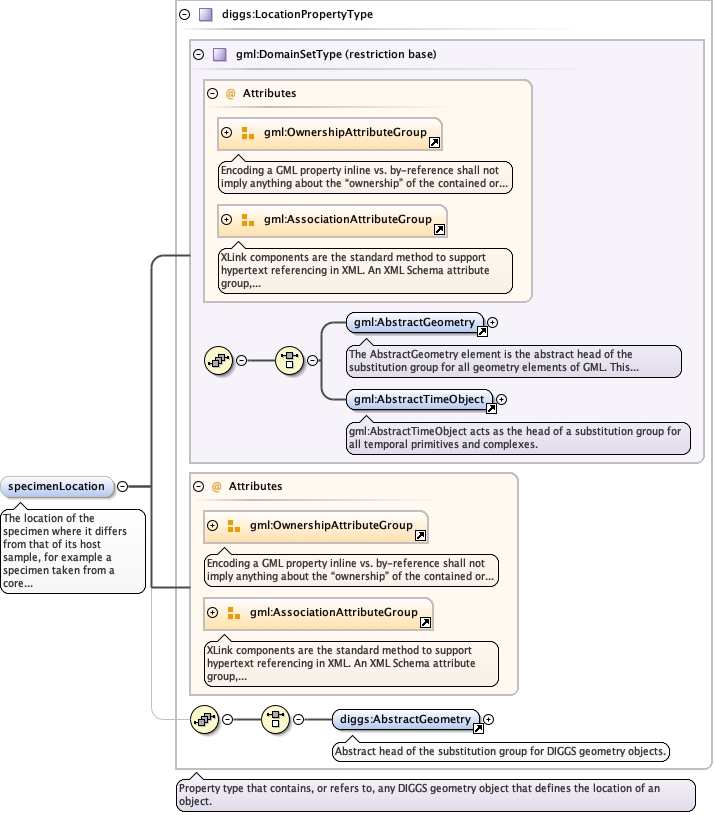
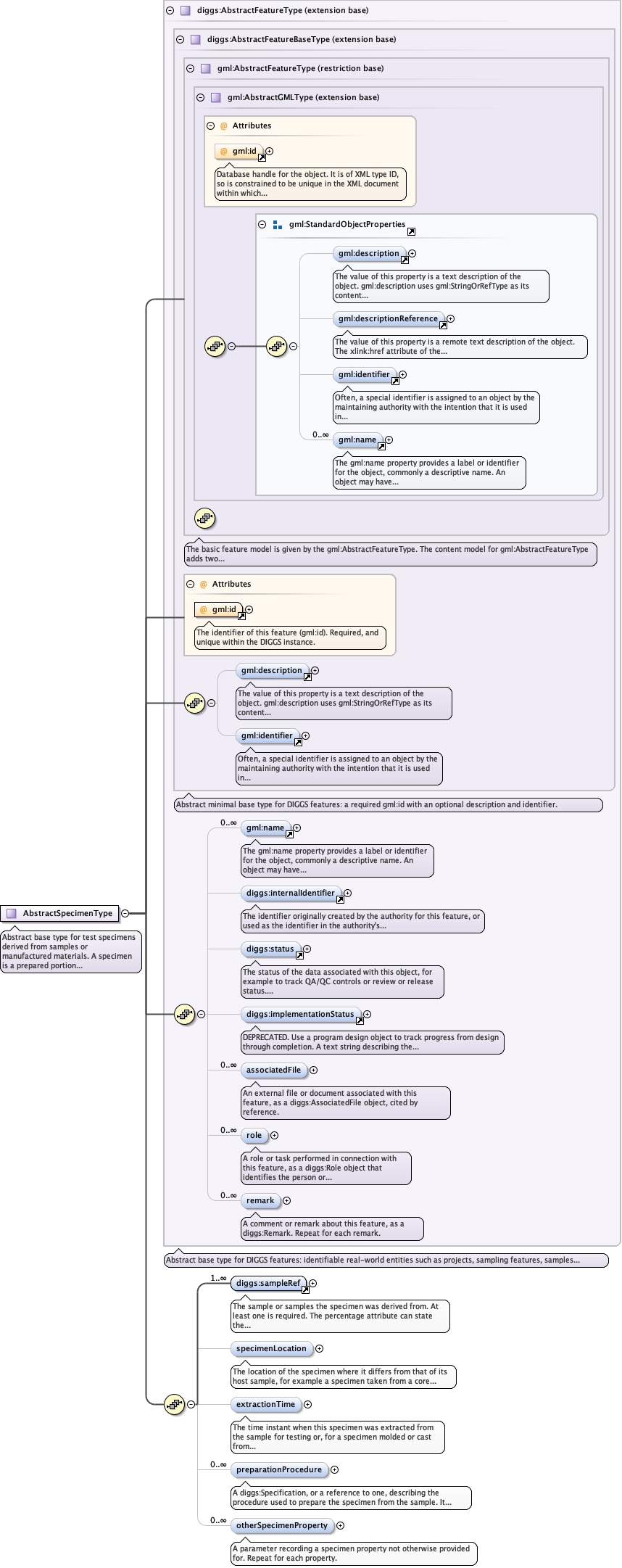
The location of the specimen where it differs from that of its hostsample, for example a specimen taken from a core sample at aspecific location rather than one encompassing the whole sample.When absent, the specimen location is that of the host sample, ifrelevant.
<element minOccurs="0" name="specimenLocation" type="diggs:LocationPropertyType"><annotation><documentation>The location of the specimen where it differs from that of its host sample, for example a specimen taken from a core sample at a specific location rather than one encompassing the whole sample. When absent, the specimen location is that of the host sample, if relevant.</documentation></annotation></element>
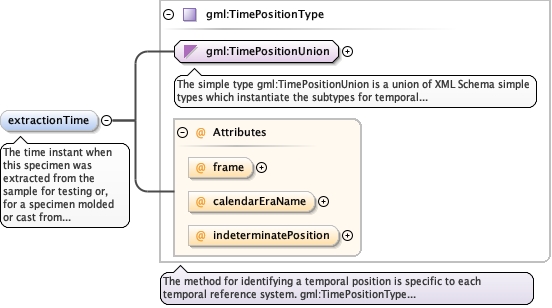
The time instant when this specimen was extracted from the samplefor testing or, for a specimen molded or cast from fresh material,the time it was made. It equals diggs:MaterialTest/samplingTime anddiggs:Test/samplingTime when only one specimen is used for the test,and should generally not be used in that case. Where severalspecimens are used and each was extracted at a different time, usethis property for the precise time of each.
<element minOccurs="0" name="extractionTime" type="gml:TimePositionType"><annotation><documentation>The time instant when this specimen was extracted from the sample for testing or, for a specimen molded or cast from fresh material, the time it was made. It equals diggs:MaterialTest/samplingTime and diggs:Test/samplingTime when only one specimen is used for the test, and should generally not be used in that case. Where several specimens are used and each was extracted at a different time, use this property for the precise time of each.</documentation></annotation></element>
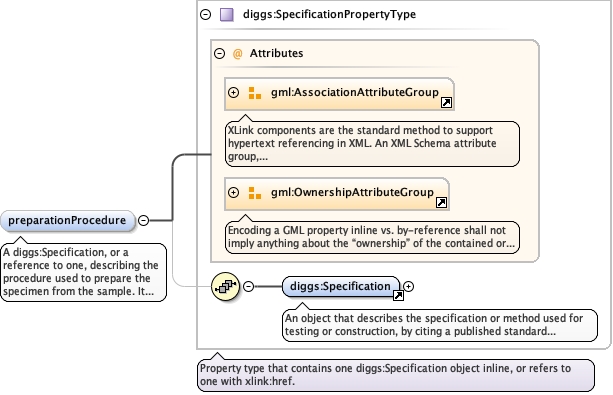
A diggs:Specification, or a reference to one, describing theprocedure used to prepare the specimen from the sample. It can be asimple description (the gml:description of the Specification), thename of a standard (the gml:name) or a full procedural specificationusing the properties of the Specification. More than one may begiven where the specimen was made and prepared under severalprocedures, for example cast and cured under one standard and cappedunder another.
<element maxOccurs="unbounded" minOccurs="0" name="preparationProcedure" type="diggs:SpecificationPropertyType"><annotation><documentation>A diggs:Specification, or a reference to one, describing the procedure used to prepare the specimen from the sample. It can be a simple description (the gml:description of the Specification), the name of a standard (the gml:name) or a full procedural specification using the properties of the Specification. More than one may be given where the specimen was made and prepared under several procedures, for example cast and cured under one standard and capped under another.</documentation></annotation></element>
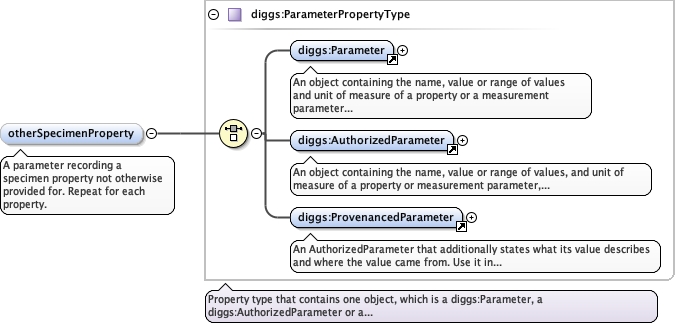
<element minOccurs="0" name="otherSpecimenProperty" type="diggs:ParameterPropertyType" maxOccurs="unbounded"><annotation><documentation>A parameter recording a specimen property not otherwise provided for. Repeat for each property.</documentation></annotation></element>
Complex Type diggs:AbstractSpecimenType
Namespace
http://diggsml.org/schemas/3
Annotations
Abstract base type for test specimens derived from samples or manufacturedmaterials. A specimen is a prepared portion of a sample used for a specificlaboratory test, typically prepared to standard dimensions and conditions (forexample trimmed, molded or cured) according to the test method. One sample can yieldseveral specimens for different tests or repeat testing. A specimen is describedwithin the specimen property of the diggs:Test or diggs:MaterialTest that tests it.
Database handle for the object. It is of XML type ID, so is constrained to beunique in the XML document within which it occurs. An external identifier for the object inthe form of a URI may be constructed using standard XML and XPointer methods. This is doneby concatenating the URI for the document, a fragment separator, and the value of the idattribute.
Source
<complexType abstract="true" name="AbstractSpecimenType"><annotation><documentation>Abstract base type for test specimens derived from samples or manufactured materials. A specimen is a prepared portion of a sample used for a specific laboratory test, typically prepared to standard dimensions and conditions (for example trimmed, molded or cured) according to the test method. One sample can yield several specimens for different tests or repeat testing. A specimen is described within the specimen property of the diggs:Test or diggs:MaterialTest that tests it.</documentation></annotation><complexContent><extension base="diggs:AbstractFeatureType"><sequence><element maxOccurs="unbounded" ref="diggs:sampleRef"><annotation><documentation>The sample or samples the specimen was derived from. At least one is required. The percentage attribute can state the proportion each sample contributes.</documentation></annotation></element><element minOccurs="0" name="specimenLocation" type="diggs:LocationPropertyType"><annotation><documentation>The location of the specimen where it differs from that of its host sample, for example a specimen taken from a core sample at a specific location rather than one encompassing the whole sample. When absent, the specimen location is that of the host sample, if relevant.</documentation></annotation></element><element minOccurs="0" name="extractionTime" type="gml:TimePositionType"><annotation><documentation>The time instant when this specimen was extracted from the sample for testing or, for a specimen molded or cast from fresh material, the time it was made. It equals diggs:MaterialTest/samplingTime and diggs:Test/samplingTime when only one specimen is used for the test, and should generally not be used in that case. Where several specimens are used and each was extracted at a different time, use this property for the precise time of each.</documentation></annotation></element><element maxOccurs="unbounded" minOccurs="0" name="preparationProcedure" type="diggs:SpecificationPropertyType"><annotation><documentation>A diggs:Specification, or a reference to one, describing the procedure used to prepare the specimen from the sample. It can be a simple description (the gml:description of the Specification), the name of a standard (the gml:name) or a full procedural specification using the properties of the Specification. More than one may be given where the specimen was made and prepared under several procedures, for example cast and cured under one standard and capped under another.</documentation></annotation></element><element minOccurs="0" name="otherSpecimenProperty" type="diggs:ParameterPropertyType" maxOccurs="unbounded"><annotation><documentation>A parameter recording a specimen property not otherwise provided for. Repeat for each property.</documentation></annotation></element></sequence></extension></complexContent></complexType>