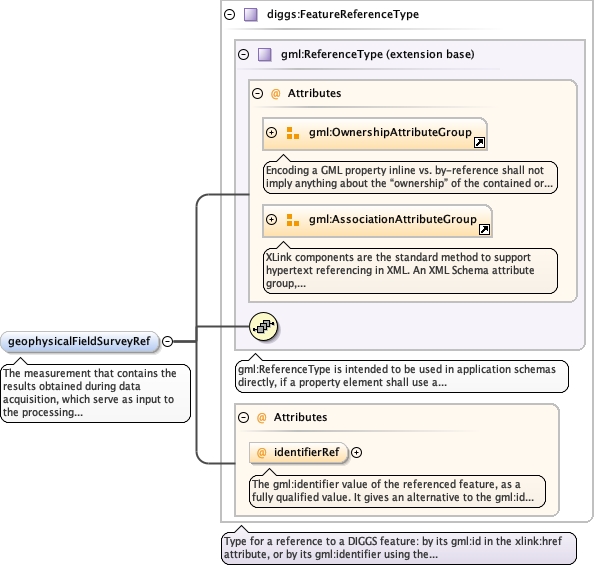
The measurement that contains the results obtained during dataacquisition, which serve as input to the processing steps thatproduce the results of this measurement. Given by reference only.
The gml:identifier value of the referenced feature, as a fully qualifiedvalue. It gives an alternative to the gml:id in xlink:href for findingthe referenced feature, mainly to reference a feature by a globallyunique identifier and where naming conflicts occur with gml:id whenaccessing data in external files.
<element minOccurs="0" name="geophysicalFieldSurveyRef" type="diggs:FeatureReferenceType"><annotation><documentation>The measurement that contains the results obtained during data acquisition, which serve as input to the processing steps that produce the results of this measurement. Given by reference only.</documentation></annotation></element>
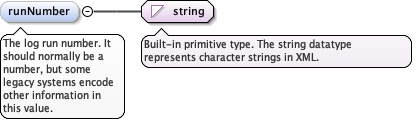
The log run number. It should normally be a number, but some legacysystems encode other information in this value.
Diagram
Type
string
Properties
content
simple
minOccurs
0
Source
<element minOccurs="0" name="runNumber" type="string"><annotation><documentation>The log run number. It should normally be a number, but some legacy systems encode other information in this value.</documentation></annotation></element>
The bottom hole assembly run number associated with this log.
Diagram
Type
positiveInteger
Properties
content
simple
minOccurs
0
Source
<element minOccurs="0" name="bhaRunNumber" type="positiveInteger"><annotation><documentation>The bottom hole assembly run number associated with this log.</documentation></annotation></element>
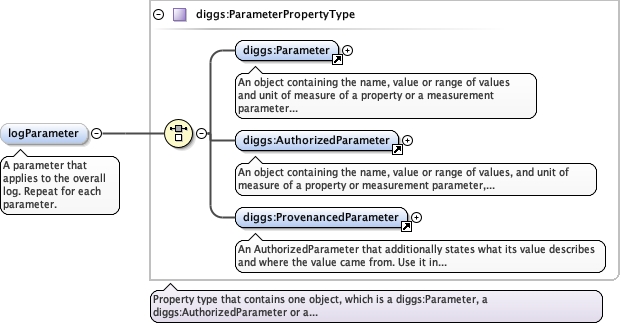
<element maxOccurs="unbounded" minOccurs="0" name="logParameter" type="diggs:ParameterPropertyType"><annotation><documentation>A parameter that applies to the overall log. Repeat for each parameter.</documentation></annotation></element>
Database handle for the object. It is of XML type ID, so is constrained to beunique in the XML document within which it occurs. An external identifier for the object inthe form of a URI may be constructed using standard XML and XPointer methods. This is doneby concatenating the URI for the document, a fragment separator, and the value of the idattribute.
Source
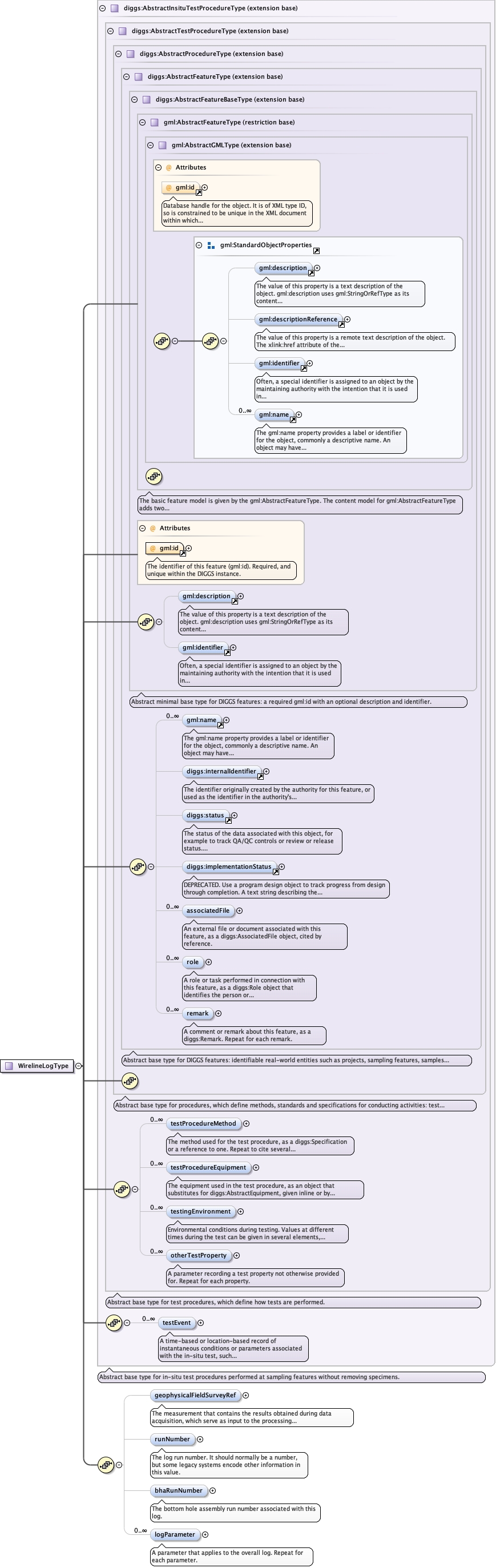
<complexType name="WirelineLogType"><complexContent><extension base="diggs:AbstractInsituTestProcedureType"><sequence><element minOccurs="0" name="geophysicalFieldSurveyRef" type="diggs:FeatureReferenceType"><annotation><documentation>The measurement that contains the results obtained during data acquisition, which serve as input to the processing steps that produce the results of this measurement. Given by reference only.</documentation></annotation></element><element minOccurs="0" name="runNumber" type="string"><annotation><documentation>The log run number. It should normally be a number, but some legacy systems encode other information in this value.</documentation></annotation></element><element minOccurs="0" name="bhaRunNumber" type="positiveInteger"><annotation><documentation>The bottom hole assembly run number associated with this log.</documentation></annotation></element><element maxOccurs="unbounded" minOccurs="0" name="logParameter" type="diggs:ParameterPropertyType"><annotation><documentation>A parameter that applies to the overall log. Repeat for each parameter.</documentation></annotation></element></sequence></extension></complexContent></complexType>