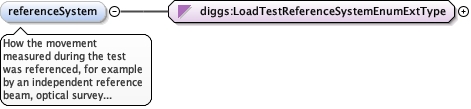
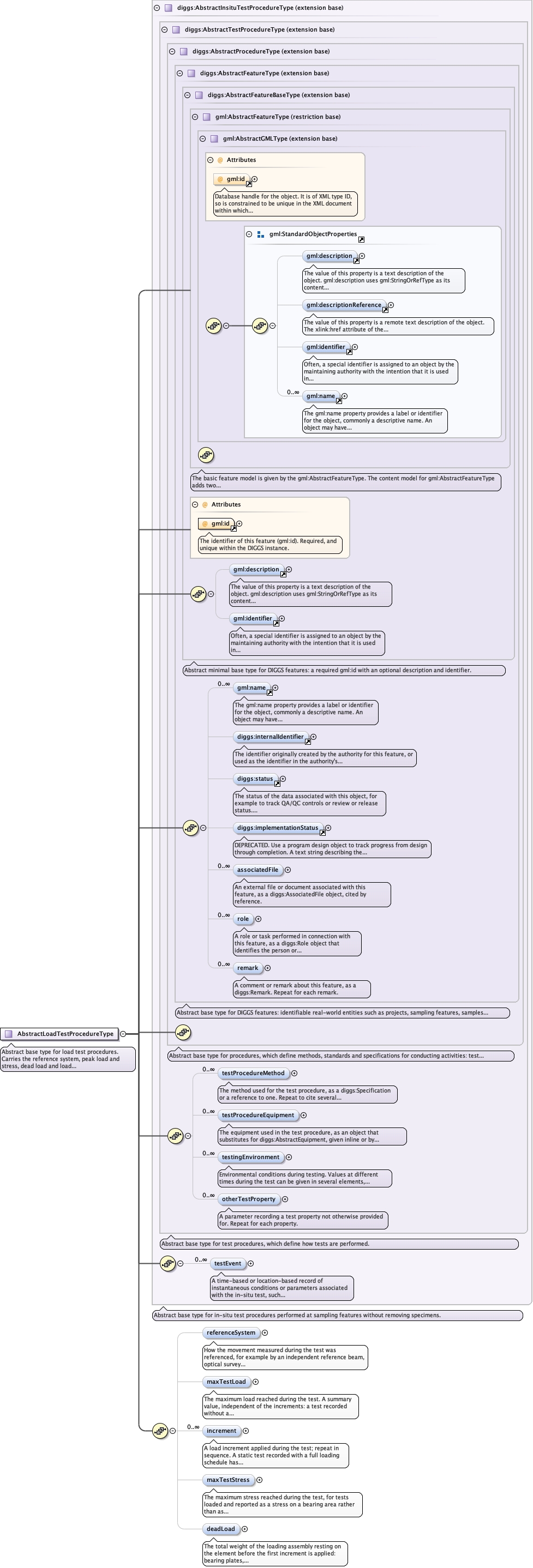
How the movement measured during the test was referenced, forexample by an independent reference beam, optical survey orsatellite positioning. ASTM D1143 and EN ISO 22477-1 require thereference to be independent of the reaction system and unaffected byground movement caused by the test; this element records thearrangement used and does not assert that it met that requirement.Values come from the enumerated list, or "Other: xx", where xx is auser-defined term whose meaning differs from every listed value (nota synonym of one).
<element minOccurs="0" name="referenceSystem" type="diggs:LoadTestReferenceSystemEnumExtType"><annotation><documentation>How the movement measured during the test was referenced, for example by an independent reference beam, optical survey or satellite positioning. ASTM D1143 and EN ISO 22477-1 require the reference to be independent of the reaction system and unaffected by ground movement caused by the test; this element records the arrangement used and does not assert that it met that requirement. Values come from the enumerated list, or "Other: xx", where xx is a user-defined term whose meaning differs from every listed value (not a synonym of one).</documentation></annotation></element>
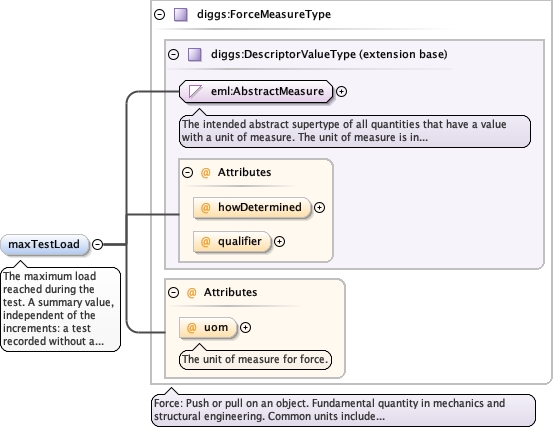
The maximum load reached during the test. A summary value,independent of the increments: a test recorded without a fullincrement schedule can still state its peak load.
<element minOccurs="0" name="maxTestLoad" type="diggs:ForceMeasureType"><annotation><documentation>The maximum load reached during the test. A summary value, independent of the increments: a test recorded without a full increment schedule can still state its peak load.</documentation></annotation></element>
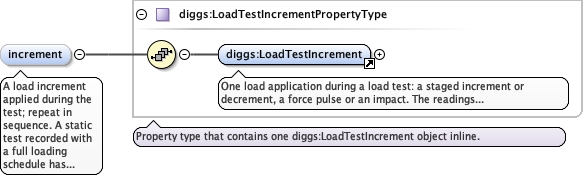
A load increment applied during the test; repeat in sequence. Astatic test recorded with a full loading schedule has several; arapid or dynamic test, a single pulse or blow, typically has none.See diggs:LoadTestIncrementType for what each increment carries,including the two alternative hold criteria: a fixed-duration hold(as in the ASTM quick test) or a hold until the movement ratestabilizes (as in the EN ISO 22477-1 maintained-load method).
<element minOccurs="0" maxOccurs="unbounded" name="increment" type="diggs:LoadTestIncrementPropertyType"><annotation><documentation>A load increment applied during the test; repeat in sequence. A static test recorded with a full loading schedule has several; a rapid or dynamic test, a single pulse or blow, typically has none. See diggs:LoadTestIncrementType for what each increment carries, including the two alternative hold criteria: a fixed-duration hold (as in the ASTM quick test) or a hold until the movement rate stabilizes (as in the EN ISO 22477-1 maintained-load method).</documentation></annotation></element>
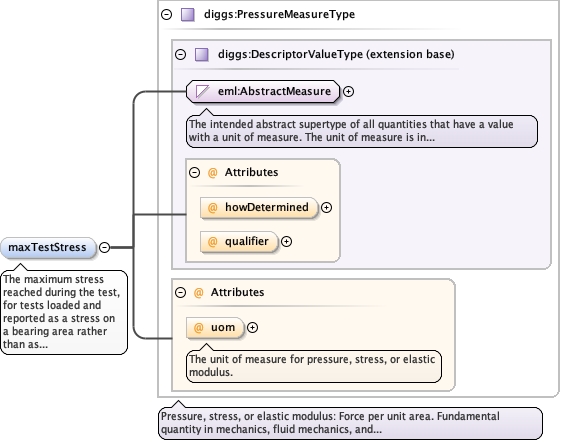
The maximum stress reached during the test, for tests loaded andreported as a stress on a bearing area rather than as a force. Maybe given alongside maxTestLoad; either or both may be present.
The unit of measure for pressure, stress, or elastic modulus.
Source
<element minOccurs="0" name="maxTestStress" type="diggs:PressureMeasureType"><annotation><documentation>The maximum stress reached during the test, for tests loaded and reported as a stress on a bearing area rather than as a force. May be given alongside maxTestLoad; either or both may be present.</documentation></annotation></element>
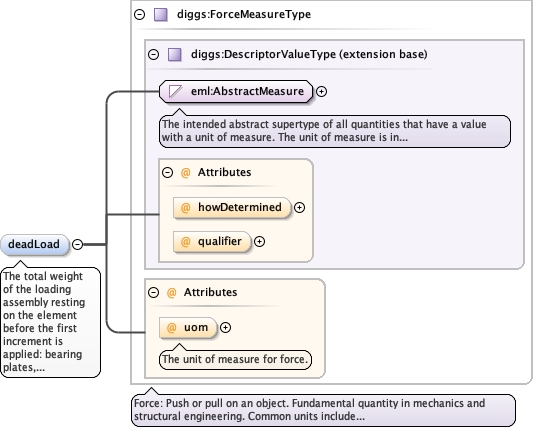
The total weight of the loading assembly resting on the elementbefore the first increment is applied: bearing plates, jack,reaction beams and platform. The weights of the individual itemsbelong on the equipment records cited throughtestProcedureEquipment.
<element minOccurs="0" name="deadLoad" type="diggs:ForceMeasureType"><annotation><documentation>The total weight of the loading assembly resting on the element before the first increment is applied: bearing plates, jack, reaction beams and platform. The weights of the individual items belong on the equipment records cited through testProcedureEquipment.</documentation></annotation></element>
Complex Type diggs:AbstractLoadTestProcedureType
Namespace
http://diggsml.org/schemas/3
Annotations
Abstract base type for load test procedures. Carries the reference system, peak loadand stress, dead load and load increments shared by static, rapid and dynamic loadtests.
Database handle for the object. It is of XML type ID, so is constrained to beunique in the XML document within which it occurs. An external identifier for the object inthe form of a URI may be constructed using standard XML and XPointer methods. This is doneby concatenating the URI for the document, a fragment separator, and the value of the idattribute.
Source
<complexType abstract="true" name="AbstractLoadTestProcedureType"><annotation><documentation>Abstract base type for load test procedures. Carries the reference system, peak load and stress, dead load and load increments shared by static, rapid and dynamic load tests.</documentation></annotation><complexContent><extension base="diggs:AbstractInsituTestProcedureType"><sequence><element minOccurs="0" name="referenceSystem" type="diggs:LoadTestReferenceSystemEnumExtType"><annotation><documentation>How the movement measured during the test was referenced, for example by an independent reference beam, optical survey or satellite positioning. ASTM D1143 and EN ISO 22477-1 require the reference to be independent of the reaction system and unaffected by ground movement caused by the test; this element records the arrangement used and does not assert that it met that requirement. Values come from the enumerated list, or "Other: xx", where xx is a user-defined term whose meaning differs from every listed value (not a synonym of one).</documentation></annotation></element><element minOccurs="0" name="maxTestLoad" type="diggs:ForceMeasureType"><annotation><documentation>The maximum load reached during the test. A summary value, independent of the increments: a test recorded without a full increment schedule can still state its peak load.</documentation></annotation></element><element minOccurs="0" maxOccurs="unbounded" name="increment" type="diggs:LoadTestIncrementPropertyType"><annotation><documentation>A load increment applied during the test; repeat in sequence. A static test recorded with a full loading schedule has several; a rapid or dynamic test, a single pulse or blow, typically has none. See diggs:LoadTestIncrementType for what each increment carries, including the two alternative hold criteria: a fixed-duration hold (as in the ASTM quick test) or a hold until the movement rate stabilizes (as in the EN ISO 22477-1 maintained-load method).</documentation></annotation></element><element minOccurs="0" name="maxTestStress" type="diggs:PressureMeasureType"><annotation><documentation>The maximum stress reached during the test, for tests loaded and reported as a stress on a bearing area rather than as a force. May be given alongside maxTestLoad; either or both may be present.</documentation></annotation></element><element minOccurs="0" name="deadLoad" type="diggs:ForceMeasureType"><annotation><documentation>The total weight of the loading assembly resting on the element before the first increment is applied: bearing plates, jack, reaction beams and platform. The weights of the individual items belong on the equipment records cited through testProcedureEquipment.</documentation></annotation></element></sequence></extension></complexContent></complexType>