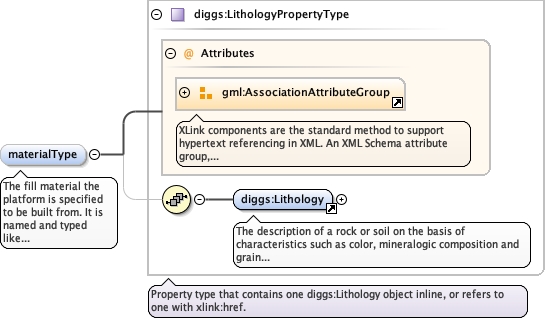
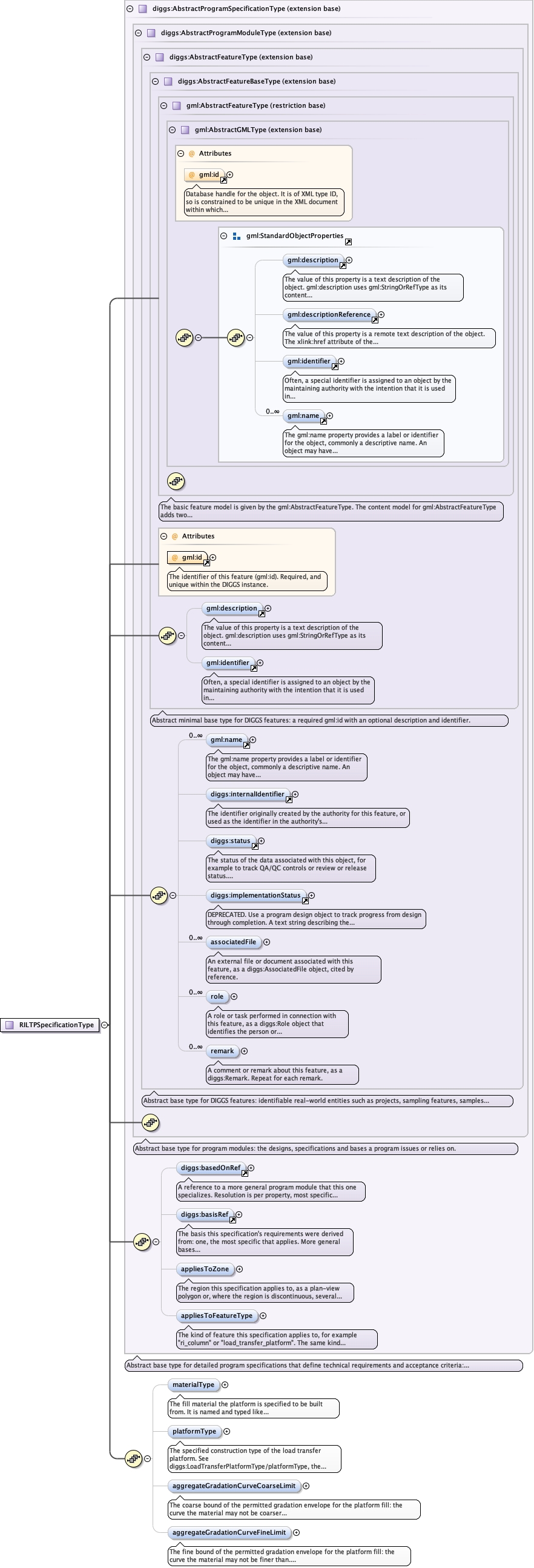
The fill material the platform is specified to be built from. It isnamed and typed like diggs:LTPLiftType/materialType, the as-builtcounterpart, so that specified and constructed material can becompared without translation.
<element minOccurs="0" name="materialType" type="diggs:LithologyPropertyType"><annotation><documentation>The fill material the platform is specified to be built from. It is named and typed like diggs:LTPLiftType/materialType, the as-built counterpart, so that specified and constructed material can be compared without translation.</documentation></annotation></element>
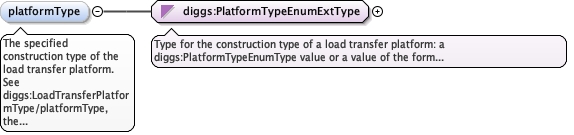
The specified construction type of the load transfer platform. Seediggs:LoadTransferPlatformType/platformType, the as-builtcounterpart, for the shared vocabulary. Values come from theenumerated list, or "Other: xx", where xx is a user-defined termwhose meaning differs from every listed value (not a synonym ofone).
<element minOccurs="0" name="platformType" type="diggs:PlatformTypeEnumExtType"><annotation><documentation>The specified construction type of the load transfer platform. See diggs:LoadTransferPlatformType/platformType, the as-built counterpart, for the shared vocabulary. Values come from the enumerated list, or "Other: xx", where xx is a user-defined term whose meaning differs from every listed value (not a synonym of one).</documentation></annotation></element>
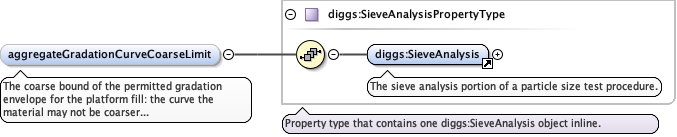
The coarse bound of the permitted gradation envelope for theplatform fill: the curve the material may not be coarser than. WithaggregateGradationCurveFineLimit it defines the band a conforminggradation must fall inside. A gradation limit is a curve, not anumber, so it is not an acceptance criterion like the otherrequirements of the platform: an acceptance criterion carries anoperator and a limit with min, value and max, which expresses ascalar band but not a percent-passing curve across a dozen sievesizes. The pair has the shape that diggs:GroutSpecificationType usesfor the aggregate in a grout mix, with the genericdiggs:SieveAnalysisPropertyType rather than a grout-specific type.It is provisional pending confirmation by the subject matter expert;see diggs:RILTPSpecification.
<element minOccurs="0" name="aggregateGradationCurveCoarseLimit" type="diggs:SieveAnalysisPropertyType"><annotation><documentation>The coarse bound of the permitted gradation envelope for the platform fill: the curve the material may not be coarser than. With aggregateGradationCurveFineLimit it defines the band a conforming gradation must fall inside. A gradation limit is a curve, not a number, so it is not an acceptance criterion like the other requirements of the platform: an acceptance criterion carries an operator and a limit with min, value and max, which expresses a scalar band but not a percent-passing curve across a dozen sieve sizes. The pair has the shape that diggs:GroutSpecificationType uses for the aggregate in a grout mix, with the generic diggs:SieveAnalysisPropertyType rather than a grout-specific type. It is provisional pending confirmation by the subject matter expert; see diggs:RILTPSpecification.</documentation></annotation></element>
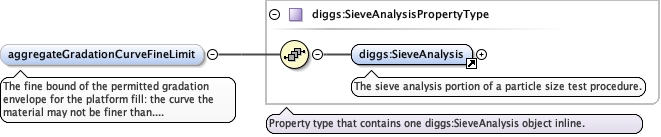
The fine bound of the permitted gradation envelope for the platformfill: the curve the material may not be finer than. It is the otherhalf of the band; see aggregateGradationCurveCoarseLimit for why itis a curve pair rather than an acceptance criterion.
<element minOccurs="0" name="aggregateGradationCurveFineLimit" type="diggs:SieveAnalysisPropertyType"><annotation><documentation>The fine bound of the permitted gradation envelope for the platform fill: the curve the material may not be finer than. It is the other half of the band; see aggregateGradationCurveCoarseLimit for why it is a curve pair rather than an acceptance criterion.</documentation></annotation></element>
Database handle for the object. It is of XML type ID, so is constrained to beunique in the XML document within which it occurs. An external identifier for the object inthe form of a URI may be constructed using standard XML and XPointer methods. This is doneby concatenating the URI for the document, a fragment separator, and the value of the idattribute.
Source
<complexType name="RILTPSpecificationType"><complexContent><extension base="diggs:AbstractProgramSpecificationType"><sequence><element minOccurs="0" name="materialType" type="diggs:LithologyPropertyType"><annotation><documentation>The fill material the platform is specified to be built from. It is named and typed like diggs:LTPLiftType/materialType, the as-built counterpart, so that specified and constructed material can be compared without translation.</documentation></annotation></element><element minOccurs="0" name="platformType" type="diggs:PlatformTypeEnumExtType"><annotation><documentation>The specified construction type of the load transfer platform. See diggs:LoadTransferPlatformType/platformType, the as-built counterpart, for the shared vocabulary. Values come from the enumerated list, or "Other: xx", where xx is a user-defined term whose meaning differs from every listed value (not a synonym of one).</documentation></annotation></element><element minOccurs="0" name="aggregateGradationCurveCoarseLimit" type="diggs:SieveAnalysisPropertyType"><annotation><documentation>The coarse bound of the permitted gradation envelope for the platform fill: the curve the material may not be coarser than. With aggregateGradationCurveFineLimit it defines the band a conforming gradation must fall inside. A gradation limit is a curve, not a number, so it is not an acceptance criterion like the other requirements of the platform: an acceptance criterion carries an operator and a limit with min, value and max, which expresses a scalar band but not a percent-passing curve across a dozen sieve sizes. The pair has the shape that diggs:GroutSpecificationType uses for the aggregate in a grout mix, with the generic diggs:SieveAnalysisPropertyType rather than a grout-specific type. It is provisional pending confirmation by the subject matter expert; see diggs:RILTPSpecification.</documentation></annotation></element><element minOccurs="0" name="aggregateGradationCurveFineLimit" type="diggs:SieveAnalysisPropertyType"><annotation><documentation>The fine bound of the permitted gradation envelope for the platform fill: the curve the material may not be finer than. It is the other half of the band; see aggregateGradationCurveCoarseLimit for why it is a curve pair rather than an acceptance criterion.</documentation></annotation></element></sequence></extension></complexContent></complexType>