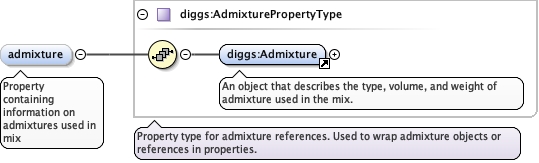
<element minOccurs="0" name="admixture" type="diggs:AdmixturePropertyType" maxOccurs="unbounded"><annotation><documentation>Property containing information on admixtures used in mix</documentation></annotation></element>
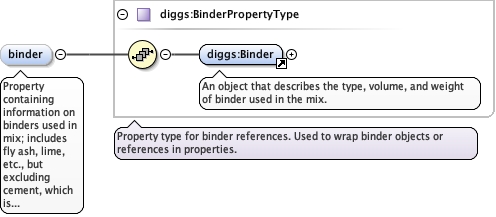
Property containing information on binders used in mix;includes fly ash, lime, etc., but excluding cement, which isrecorded in its own component property
<element minOccurs="0" name="binder" type="diggs:BinderPropertyType" maxOccurs="unbounded"><annotation><documentation>Property containing information on binders used in mix; includes fly ash, lime, etc., but excluding cement, which is recorded in its own component property</documentation></annotation></element>
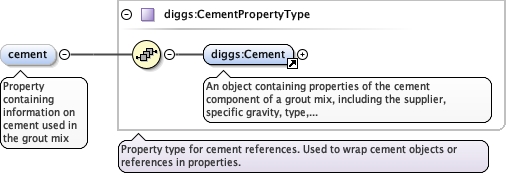
<element minOccurs="0" name="cement" type="diggs:CementPropertyType" maxOccurs="unbounded"><annotation><documentation>Property containing information on cement used in the grout mix</documentation></annotation></element>
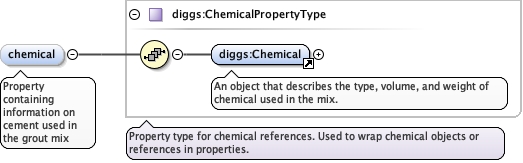
<element minOccurs="0" name="chemical" type="diggs:ChemicalPropertyType" maxOccurs="unbounded"><annotation><documentation>Property containing information on cement used in the grout mix</documentation></annotation></element>
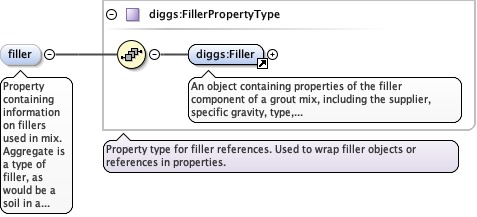
Property containing information on fillers used in mix.Aggregate is a type of filler, as would be a soil in a soil-cementmixture used to determine the appropriate slurry-soil mixes for deepsoil mixing
<element minOccurs="0" name="filler" type="diggs:FillerPropertyType" maxOccurs="unbounded"><annotation><documentation>Property containing information on fillers used in mix. Aggregate is a type of filler, as would be a soil in a soil-cement mixture used to determine the appropriate slurry-soil mixes for deep soil mixing</documentation></annotation></element>
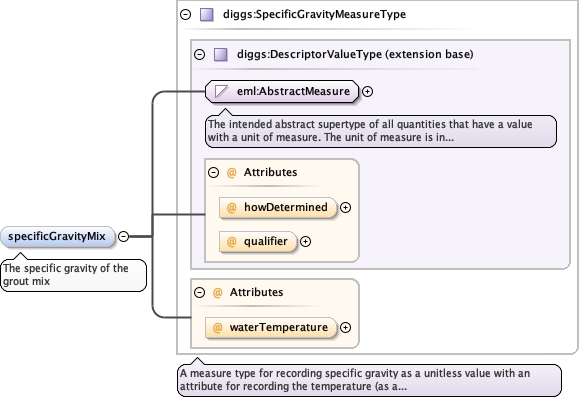
<element minOccurs="0" name="specificGravityMix" type="diggs:SpecificGravityMeasureType"><annotation><documentation>The specific gravity of the grout mix</documentation></annotation></element>
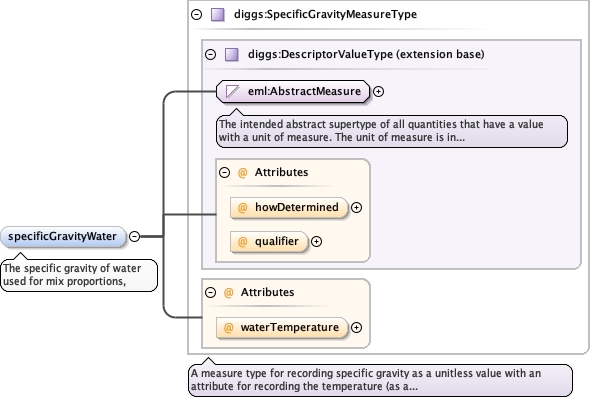
<element minOccurs="0" name="specificGravityWater" type="diggs:SpecificGravityMeasureType"><annotation><documentation>The specific gravity of water used for mix proportions,</documentation></annotation></element>
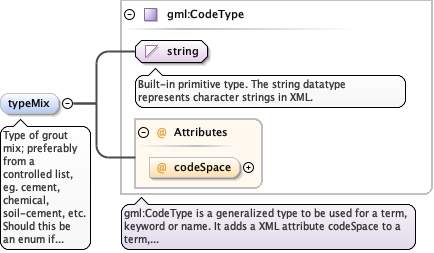
<element minOccurs="0" name="typeMix" type="gml:CodeType"><annotation><documentation>Type of grout mix; preferably from a controlled list, eg. cement, chemical, soil-cement, etc.</documentation><documentation>Should this be an enum if only a few common choices?</documentation></annotation></element>
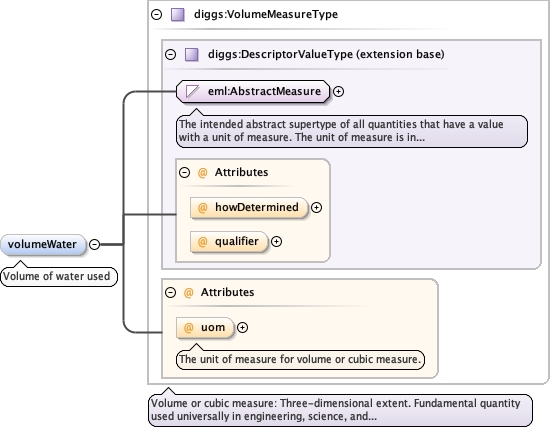
<element minOccurs="0" name="volumeWater" type="diggs:VolumeMeasureType"><annotation><documentation>Volume of water used</documentation></annotation></element>
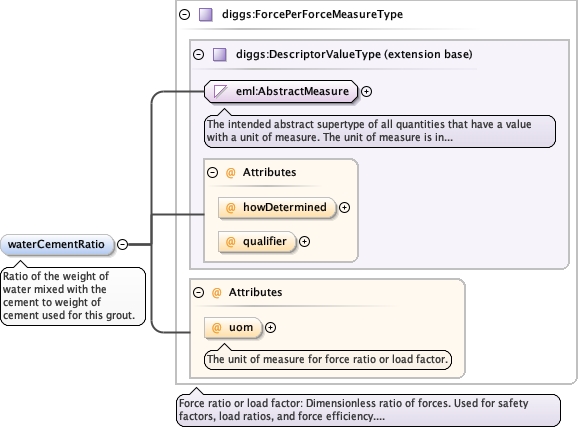
The unit of measure for force ratio or load factor.
Source
<element minOccurs="0" name="waterCementRatio" type="diggs:ForcePerForceMeasureType"><annotation><documentation>Ratio of the weight of water mixed with the cement to weight of cement used for this grout.</documentation></annotation></element>
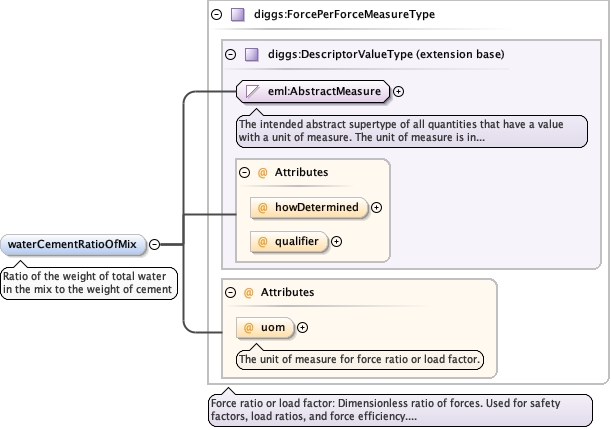
The unit of measure for force ratio or load factor.
Source
<element minOccurs="0" name="waterCementRatioOfMix" type="diggs:ForcePerForceMeasureType"><annotation><documentation>Ratio of the weight of total water in the mix to the weight of cement</documentation></annotation></element>
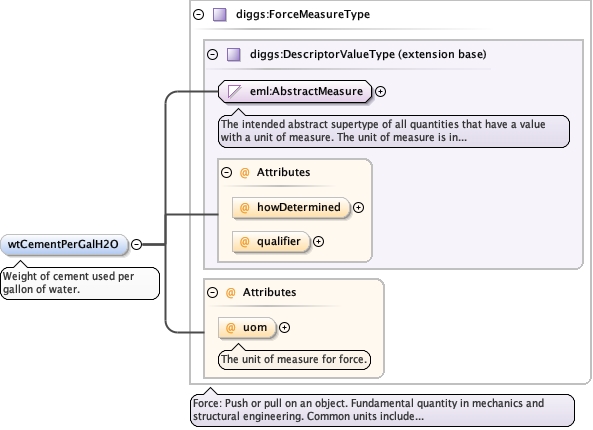
<element minOccurs="0" name="wtCementPerGalH2O" type="diggs:ForceMeasureType"><annotation><documentation>Weight of cement used per gallon of water.</documentation></annotation></element>
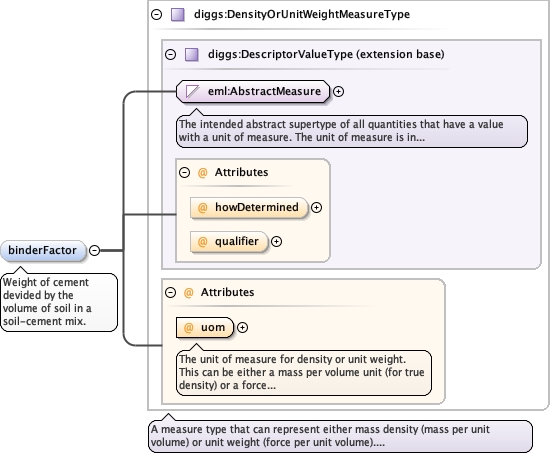
The unit of measure for density or unit weight. This can be either a mass per volume unit (for true density) or a force per volume unit (for unit weight).
Source
<element minOccurs="0" name="binderFactor" type="diggs:DensityOrUnitWeightMeasureType"><annotation><documentation>Weight of cement devided by the volume of soil in a soil-cement mix.</documentation></annotation></element>
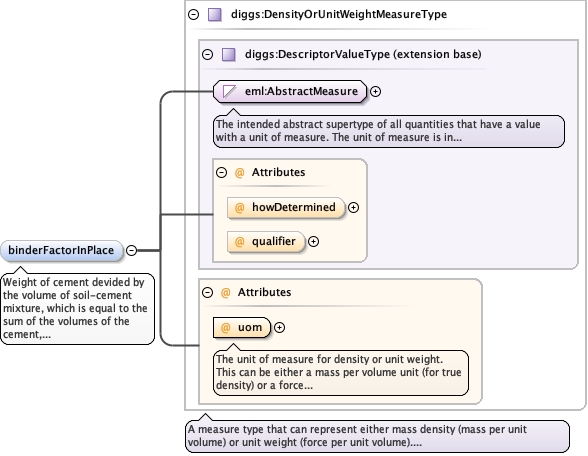
The unit of measure for density or unit weight. This can be either a mass per volume unit (for true density) or a force per volume unit (for unit weight).
Source
<element minOccurs="0" name="binderFactorInPlace" type="diggs:DensityOrUnitWeightMeasureType"><annotation><documentation>Weight of cement devided by the volume of soil-cement mixture, which is equal to the sum of the volumes of the cement, soil, and water.</documentation></annotation></element>
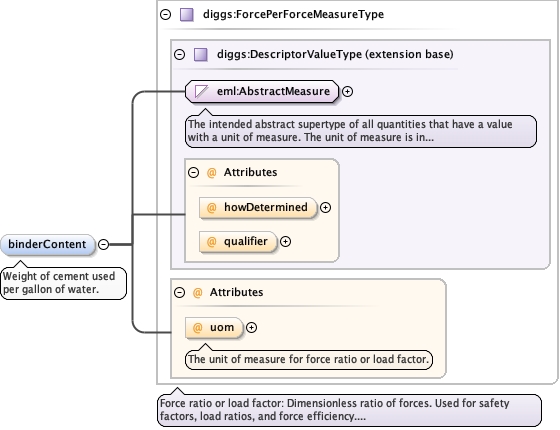
The unit of measure for force ratio or load factor.
Source
<element minOccurs="0" name="binderContent" type="diggs:ForcePerForceMeasureType"><annotation><documentation>Weight of cement used per gallon of water.</documentation></annotation></element>
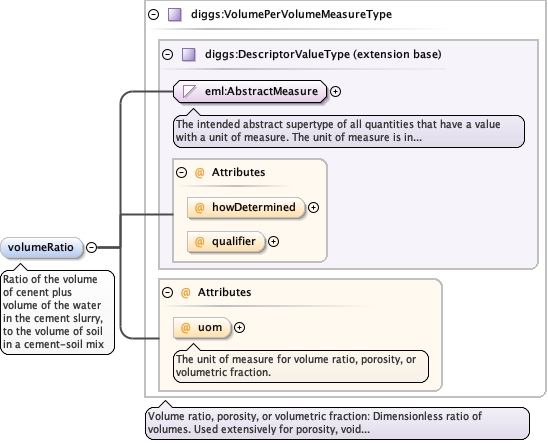
The unit of measure for volume ratio, porosity, or volumetric fraction.
Source
<element minOccurs="0" name="volumeRatio" type="diggs:VolumePerVolumeMeasureType"><annotation><documentation>Ratio of the volume of cenent plus volume of the water in the cement slurry, to the volume of soil in a cement-soil mix</documentation></annotation></element>
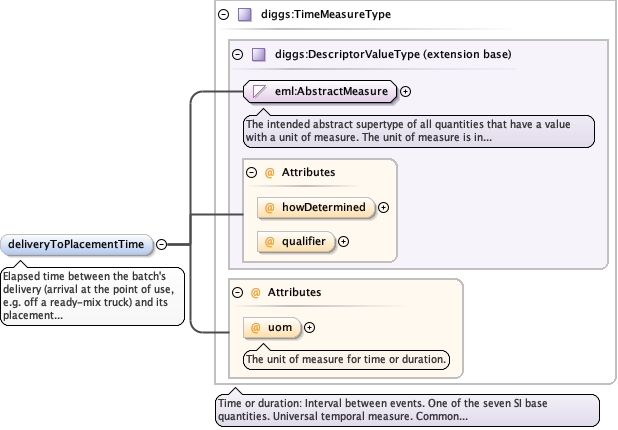
Elapsed time between the batch's delivery (arrival atthe point of use, e.g. off a ready-mix truck) and its placement(Installation Parameter Analysis row 32, S23). Real, unrecorded datauntil now: neither this type nor diggs:AbstractSampleType, itsultimate base, carried any time field at all - only referenceelements (samplingActivityRef, programRef and siblings). Thetransport window governs whether the batch is still placeable by thetime it reaches the hole, so it belongs on the type this project'sown trial/production split shares (diggs:TrialGroutBatchType is thebase both diggs:TrialGroutBatch and, through it,diggs:GroutBatchType extend), rather than duplicated ondiggs:GroutBatchType alone - a trial batch has the same transportquestion between mixing and test placement that a production batchhas between mixing and column placement.
<element minOccurs="0" name="deliveryToPlacementTime" type="diggs:TimeMeasureType"><annotation><documentation>Elapsed time between the batch's delivery (arrival at the point of use, e.g. off a ready-mix truck) and its placement (Installation Parameter Analysis row 32, S23). Real, unrecorded data until now: neither this type nor diggs:AbstractSampleType, its ultimate base, carried any time field at all - only reference elements (samplingActivityRef, programRef and siblings). The transport window governs whether the batch is still placeable by the time it reaches the hole, so it belongs on the type this project's own trial/production split shares (diggs:TrialGroutBatchType is the base both diggs:TrialGroutBatch and, through it, diggs:GroutBatchType extend), rather than duplicated on diggs:GroutBatchType alone - a trial batch has the same transport question between mixing and test placement that a production batch has between mixing and column placement.</documentation></annotation></element>
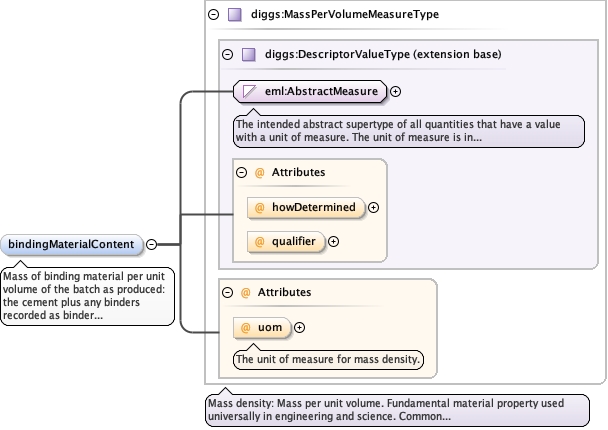
Mass of binding material per unit volume of the batch asproduced: the cement plus any binders recorded as binder components(fly ash, slag, silica fume and the like), excluding fillers andadmixtures. Reported in mass units (for example kg/m3), not as aweight. The quantity a minimum binder content requirement is statedagainst.
<element minOccurs="0" name="bindingMaterialContent" type="diggs:MassPerVolumeMeasureType"><annotation><documentation>Mass of binding material per unit volume of the batch as produced: the cement plus any binders recorded as binder components (fly ash, slag, silica fume and the like), excluding fillers and admixtures. Reported in mass units (for example kg/m3), not as a weight. The quantity a minimum binder content requirement is stated against.</documentation></annotation></element>
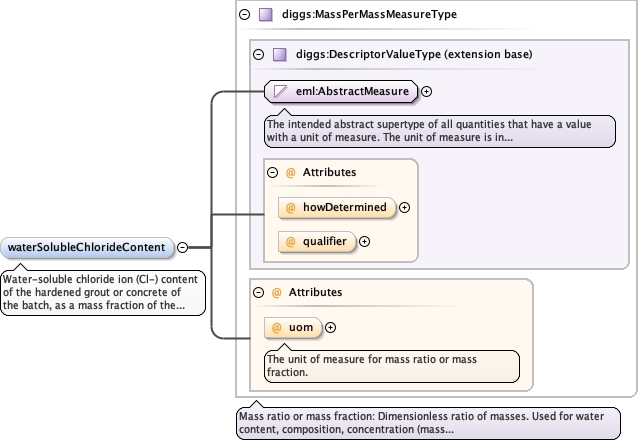
Water-soluble chloride ion (Cl-) content of the hardenedgrout or concrete of the batch, as a mass fraction of the cement(for example %). The chloride that dissolves in water under theconditions of the test (ASTM C1218/C1218M). A different quantityfrom acidSolubleChlorideContent; a specification may limit themseparately. The chloride content of the surrounding soil orgroundwater is a separate quantity.
The unit of measure for mass ratio or mass fraction.
Source
<element minOccurs="0" name="waterSolubleChlorideContent" type="diggs:MassPerMassMeasureType"><annotation><documentation>Water-soluble chloride ion (Cl-) content of the hardened grout or concrete of the batch, as a mass fraction of the cement (for example %). The chloride that dissolves in water under the conditions of the test (ASTM C1218/C1218M). A different quantity from acidSolubleChlorideContent; a specification may limit them separately. The chloride content of the surrounding soil or groundwater is a separate quantity.</documentation></annotation></element>
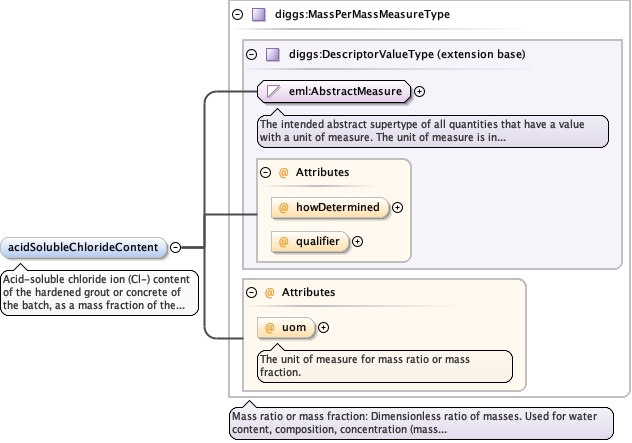
Acid-soluble chloride ion (Cl-) content of the hardenedgrout or concrete of the batch, as a mass fraction of the cement(for example %). The chloride that dissolves in acid under theconditions of the test (ASTM C1152/C1152M), which in most concretesapproximates the total chloride. A different quantity fromwaterSolubleChlorideContent; a specification may limit themseparately.
The unit of measure for mass ratio or mass fraction.
Source
<element minOccurs="0" name="acidSolubleChlorideContent" type="diggs:MassPerMassMeasureType"><annotation><documentation>Acid-soluble chloride ion (Cl-) content of the hardened grout or concrete of the batch, as a mass fraction of the cement (for example %). The chloride that dissolves in acid under the conditions of the test (ASTM C1152/C1152M), which in most concretes approximates the total chloride. A different quantity from waterSolubleChlorideContent; a specification may limit them separately.</documentation></annotation></element>
Complex Type diggs:TrialGroutBatchType
Namespace
http://diggsml.org/schemas/3
Annotations
Extended type based on AbstractSampleType. Adds elements for trial grout
                batch type definition.

                REMOVED, GB2 (2026-09-28): the local groutSpecificationRef [0..1]. Redundant with
                programSpecificationRef [0..*], already inherited from diggs:AbstractSampleType since
                S7 - a realized batch (or its GroutBatchType specialization) cites the
                GroutSpecification it must satisfy through that generic element, the same mechanism
                every other sample and sampling feature uses.
Database handle for the object. It is of XML type ID, so is constrained to beunique in the XML document within which it occurs. An external identifier for the object inthe form of a URI may be constructed using standard XML and XPointer methods. This is doneby concatenating the URI for the document, a fragment separator, and the value of the idattribute.
Source
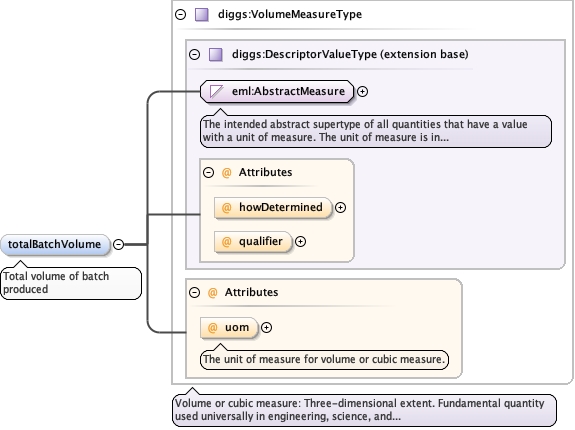
<complexType name="TrialGroutBatchType"><annotation><documentation>Extended type based on AbstractSampleType. Adds elements for trial grout batch type definition. REMOVED, GB2 (2026-09-28): the local groutSpecificationRef [0..1]. Redundant with programSpecificationRef [0..*], already inherited from diggs:AbstractSampleType since S7 - a realized batch (or its GroutBatchType specialization) cites the GroutSpecification it must satisfy through that generic element, the same mechanism every other sample and sampling feature uses.</documentation></annotation><complexContent><extension base="diggs:AbstractSampleType"><sequence><element minOccurs="0" name="admixture" type="diggs:AdmixturePropertyType" maxOccurs="unbounded"><annotation><documentation>Property containing information on admixtures used in mix</documentation></annotation></element><element minOccurs="0" name="binder" type="diggs:BinderPropertyType" maxOccurs="unbounded"><annotation><documentation>Property containing information on binders used in mix; includes fly ash, lime, etc., but excluding cement, which is recorded in its own component property</documentation></annotation></element><element minOccurs="0" name="cement" type="diggs:CementPropertyType" maxOccurs="unbounded"><annotation><documentation>Property containing information on cement used in the grout mix</documentation></annotation></element><element minOccurs="0" name="chemical" type="diggs:ChemicalPropertyType" maxOccurs="unbounded"><annotation><documentation>Property containing information on cement used in the grout mix</documentation></annotation></element><element minOccurs="0" name="filler" type="diggs:FillerPropertyType" maxOccurs="unbounded"><annotation><documentation>Property containing information on fillers used in mix. Aggregate is a type of filler, as would be a soil in a soil-cement mixture used to determine the appropriate slurry-soil mixes for deep soil mixing</documentation></annotation></element><element minOccurs="0" name="specificGravityMix" type="diggs:SpecificGravityMeasureType"><annotation><documentation>The specific gravity of the grout mix</documentation></annotation></element><element minOccurs="0" name="specificGravityWater" type="diggs:SpecificGravityMeasureType"><annotation><documentation>The specific gravity of water used for mix proportions,</documentation></annotation></element><element minOccurs="0" name="totalBatchVolume" type="diggs:VolumeMeasureType"><annotation><documentation>Total volume of batch produced</documentation></annotation></element><element minOccurs="0" name="typeMix" type="gml:CodeType"><annotation><documentation>Type of grout mix; preferably from a controlled list, eg. cement, chemical, soil-cement, etc.</documentation><documentation>Should this be an enum if only a few common choices?</documentation></annotation></element><element minOccurs="0" name="volumeWater" type="diggs:VolumeMeasureType"><annotation><documentation>Volume of water used</documentation></annotation></element><element minOccurs="0" name="waterCementRatio" type="diggs:ForcePerForceMeasureType"><annotation><documentation>Ratio of the weight of water mixed with the cement to weight of cement used for this grout.</documentation></annotation></element><element minOccurs="0" name="waterCementRatioOfMix" type="diggs:ForcePerForceMeasureType"><annotation><documentation>Ratio of the weight of total water in the mix to the weight of cement</documentation></annotation></element><element minOccurs="0" name="wtCementPerGalH2O" type="diggs:ForceMeasureType"><annotation><documentation>Weight of cement used per gallon of water.</documentation></annotation></element><element minOccurs="0" name="binderFactor" type="diggs:DensityOrUnitWeightMeasureType"><annotation><documentation>Weight of cement devided by the volume of soil in a soil-cement mix.</documentation></annotation></element><element minOccurs="0" name="binderFactorInPlace" type="diggs:DensityOrUnitWeightMeasureType"><annotation><documentation>Weight of cement devided by the volume of soil-cement mixture, which is equal to the sum of the volumes of the cement, soil, and water.</documentation></annotation></element><element minOccurs="0" name="binderContent" type="diggs:ForcePerForceMeasureType"><annotation><documentation>Weight of cement used per gallon of water.</documentation></annotation></element><element minOccurs="0" name="volumeRatio" type="diggs:VolumePerVolumeMeasureType"><annotation><documentation>Ratio of the volume of cenent plus volume of the water in the cement slurry, to the volume of soil in a cement-soil mix</documentation></annotation></element><element minOccurs="0" name="deliveryToPlacementTime" type="diggs:TimeMeasureType"><annotation><documentation>Elapsed time between the batch's delivery (arrival at the point of use, e.g. off a ready-mix truck) and its placement (Installation Parameter Analysis row 32, S23). Real, unrecorded data until now: neither this type nor diggs:AbstractSampleType, its ultimate base, carried any time field at all - only reference elements (samplingActivityRef, programRef and siblings). The transport window governs whether the batch is still placeable by the time it reaches the hole, so it belongs on the type this project's own trial/production split shares (diggs:TrialGroutBatchType is the base both diggs:TrialGroutBatch and, through it, diggs:GroutBatchType extend), rather than duplicated on diggs:GroutBatchType alone - a trial batch has the same transport question between mixing and test placement that a production batch has between mixing and column placement.</documentation></annotation></element><element minOccurs="0" name="bindingMaterialContent" type="diggs:MassPerVolumeMeasureType"><annotation><documentation>Mass of binding material per unit volume of the batch as produced: the cement plus any binders recorded as binder components (fly ash, slag, silica fume and the like), excluding fillers and admixtures. Reported in mass units (for example kg/m3), not as a weight. The quantity a minimum binder content requirement is stated against.</documentation></annotation></element><element minOccurs="0" name="waterSolubleChlorideContent" type="diggs:MassPerMassMeasureType"><annotation><documentation>Water-soluble chloride ion (Cl-) content of the hardened grout or concrete of the batch, as a mass fraction of the cement (for example %). The chloride that dissolves in water under the conditions of the test (ASTM C1218/C1218M). A different quantity from acidSolubleChlorideContent; a specification may limit them separately. The chloride content of the surrounding soil or groundwater is a separate quantity.</documentation></annotation></element><element minOccurs="0" name="acidSolubleChlorideContent" type="diggs:MassPerMassMeasureType"><annotation><documentation>Acid-soluble chloride ion (Cl-) content of the hardened grout or concrete of the batch, as a mass fraction of the cement (for example %). The chloride that dissolves in acid under the conditions of the test (ASTM C1152/C1152M), which in most concretes approximates the total chloride. A different quantity from waterSolubleChlorideContent; a specification may limit them separately.</documentation></annotation></element></sequence></extension></complexContent></complexType>