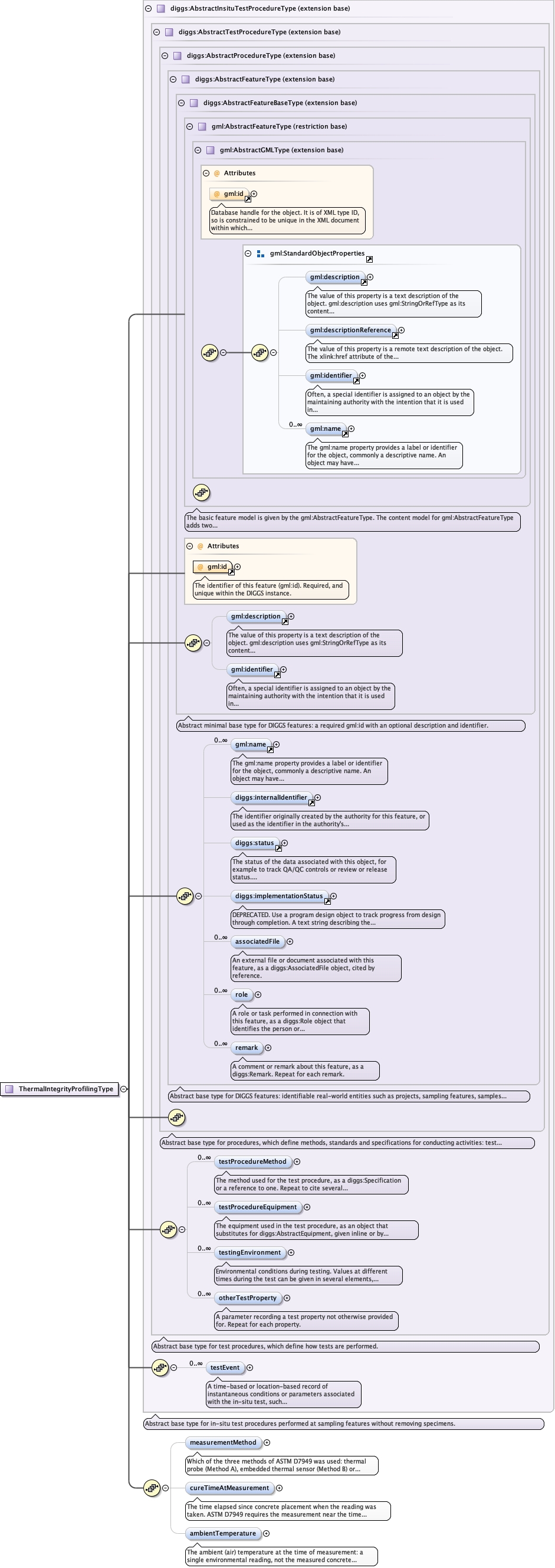
Which of the three methods of ASTM D7949 was used: thermal probe(Method A), embedded thermal sensor (Method B) or embeddedfiber-optic cable (Method C). Values come from the enumerated list,or "Other: xx", where xx is a user-defined term whose meaningdiffers from every listed value (not a synonym of one).
<element minOccurs="0" name="measurementMethod" type="diggs:ThermalIntegrityProfilingMethodEnumExtType"><annotation><documentation>Which of the three methods of ASTM D7949 was used: thermal probe (Method A), embedded thermal sensor (Method B) or embedded fiber-optic cable (Method C). Values come from the enumerated list, or "Other: xx", where xx is a user-defined term whose meaning differs from every listed value (not a synonym of one).</documentation></annotation></element>
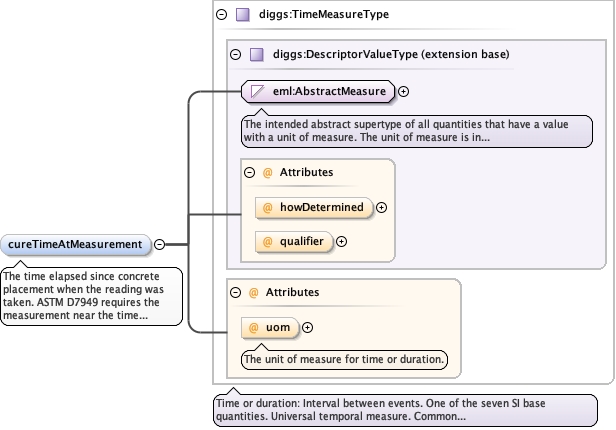
The time elapsed since concrete placement when the reading wastaken. ASTM D7949 requires the measurement near the time of peaktemperature, which depends on element size and mix design; a readingtaken too early or too late understates the thermal contrast adefect would produce.
<element minOccurs="0" name="cureTimeAtMeasurement" type="diggs:TimeMeasureType"><annotation><documentation>The time elapsed since concrete placement when the reading was taken. ASTM D7949 requires the measurement near the time of peak temperature, which depends on element size and mix design; a reading taken too early or too late understates the thermal contrast a defect would produce.</documentation></annotation></element>
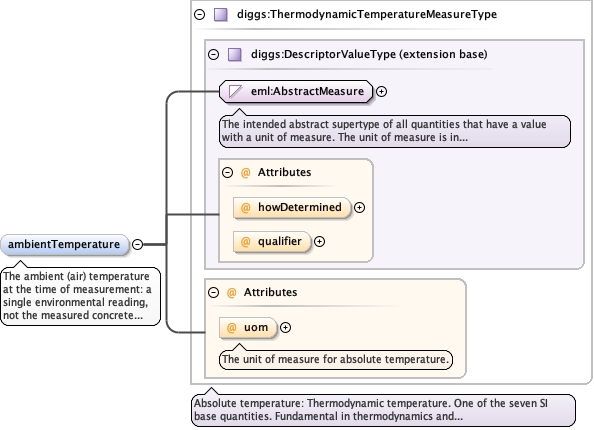
The ambient (air) temperature at the time of measurement: a singleenvironmental reading, not the measured concrete temperatureprofile, which is a result.
<element minOccurs="0" name="ambientTemperature" type="diggs:ThermodynamicTemperatureMeasureType"><annotation><documentation>The ambient (air) temperature at the time of measurement: a single environmental reading, not the measured concrete temperature profile, which is a result.</documentation></annotation></element>
Database handle for the object. It is of XML type ID, so is constrained to beunique in the XML document within which it occurs. An external identifier for the object inthe form of a URI may be constructed using standard XML and XPointer methods. This is doneby concatenating the URI for the document, a fragment separator, and the value of the idattribute.
Source
<complexType name="ThermalIntegrityProfilingType"><complexContent><extension base="diggs:AbstractInsituTestProcedureType"><sequence><element minOccurs="0" name="measurementMethod" type="diggs:ThermalIntegrityProfilingMethodEnumExtType"><annotation><documentation>Which of the three methods of ASTM D7949 was used: thermal probe (Method A), embedded thermal sensor (Method B) or embedded fiber-optic cable (Method C). Values come from the enumerated list, or "Other: xx", where xx is a user-defined term whose meaning differs from every listed value (not a synonym of one).</documentation></annotation></element><element minOccurs="0" name="cureTimeAtMeasurement" type="diggs:TimeMeasureType"><annotation><documentation>The time elapsed since concrete placement when the reading was taken. ASTM D7949 requires the measurement near the time of peak temperature, which depends on element size and mix design; a reading taken too early or too late understates the thermal contrast a defect would produce.</documentation></annotation></element><element minOccurs="0" name="ambientTemperature" type="diggs:ThermodynamicTemperatureMeasureType"><annotation><documentation>The ambient (air) temperature at the time of measurement: a single environmental reading, not the measured concrete temperature profile, which is a result.</documentation></annotation></element></sequence></extension></complexContent></complexType>