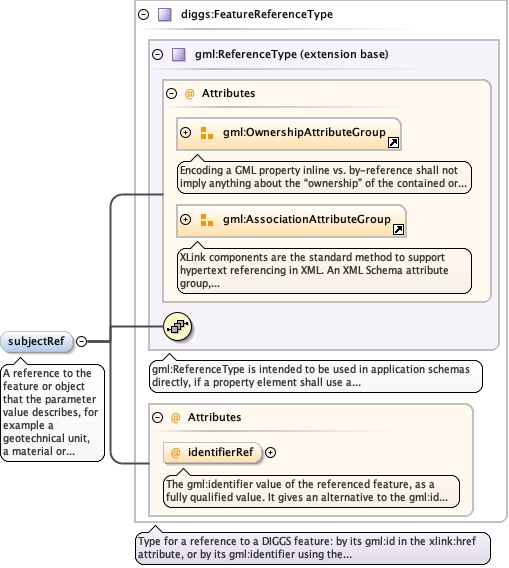
A reference to the feature or object that the parameter valuedescribes, for example a geotechnical unit, a material or a samplingfeature. Optional because the subject is sometimes evident from theobject or property that holds the parameter; state it explicitlywherever that context is not enough to identify the subjectunambiguously.
The gml:identifier value of the referenced feature, as a fully qualifiedvalue. It gives an alternative to the gml:id in xlink:href for findingthe referenced feature, mainly to reference a feature by a globallyunique identifier and where naming conflicts occur with gml:id whenaccessing data in external files.
<element minOccurs="0" maxOccurs="1" name="subjectRef" type="diggs:FeatureReferenceType"><annotation><documentation>A reference to the feature or object that the parameter value describes, for example a geotechnical unit, a material or a sampling feature. Optional because the subject is sometimes evident from the object or property that holds the parameter; state it explicitly wherever that context is not enough to identify the subject unambiguously.</documentation></annotation></element>
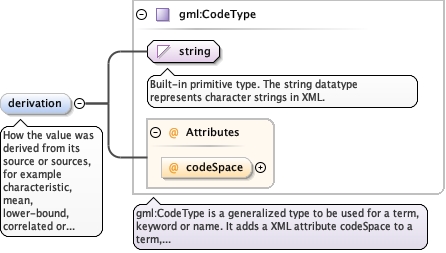
How the value was derived from its source or sources, for examplecharacteristic, mean, lower-bound, correlated or assumed. NoDIGGS-authored dictionary currently exists for this element.
<element minOccurs="0" maxOccurs="1" name="derivation" type="gml:CodeType"><annotation><documentation>How the value was derived from its source or sources, for example characteristic, mean, lower-bound, correlated or assumed. No DIGGS-authored dictionary currently exists for this element.</documentation></annotation></element>
Complex Type diggs:ProvenancedParameterType
Namespace
http://diggsml.org/schemas/3
Annotations
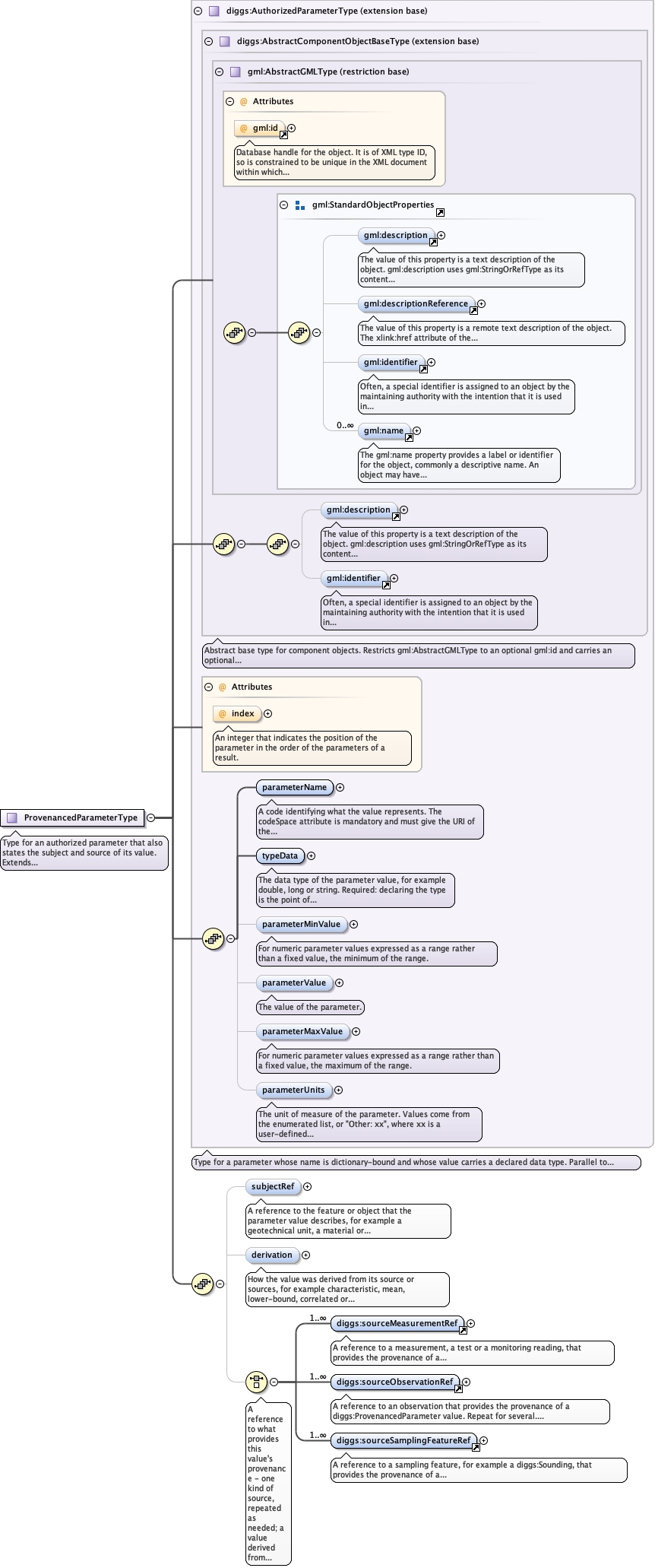
Type for an authorized parameter that also states the subject and source of itsvalue. Extends diggs:AuthorizedParameterType.
Database handle for the object. It is of XML type ID, so is constrained to beunique in the XML document within which it occurs. An external identifier for the object inthe form of a URI may be constructed using standard XML and XPointer methods. This is doneby concatenating the URI for the document, a fragment separator, and the value of the idattribute.
An integer that indicates the position of the parameter in the order ofthe parameters of a result.
Source
<complexType name="ProvenancedParameterType"><annotation><documentation>Type for an authorized parameter that also states the subject and source of its value. Extends diggs:AuthorizedParameterType.</documentation></annotation><complexContent><extension base="diggs:AuthorizedParameterType"><sequence><element minOccurs="0" maxOccurs="1" name="subjectRef" type="diggs:FeatureReferenceType"><annotation><documentation>A reference to the feature or object that the parameter value describes, for example a geotechnical unit, a material or a sampling feature. Optional because the subject is sometimes evident from the object or property that holds the parameter; state it explicitly wherever that context is not enough to identify the subject unambiguously.</documentation></annotation></element><element minOccurs="0" maxOccurs="1" name="derivation" type="gml:CodeType"><annotation><documentation>How the value was derived from its source or sources, for example characteristic, mean, lower-bound, correlated or assumed. No DIGGS-authored dictionary currently exists for this element.</documentation></annotation></element><choice minOccurs="0"><annotation><documentation>A reference to what provides this value's provenance - one kind of source, repeated as needed; a value derived from sources of more than one kind states each as a separate diggs:ProvenancedParameter.</documentation></annotation><element maxOccurs="unbounded" ref="diggs:sourceMeasurementRef"/><element maxOccurs="unbounded" ref="diggs:sourceObservationRef"/><element maxOccurs="unbounded" ref="diggs:sourceSamplingFeatureRef"/></choice></sequence></extension></complexContent></complexType>