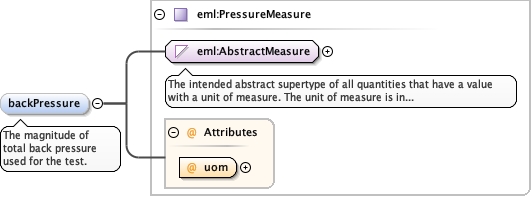
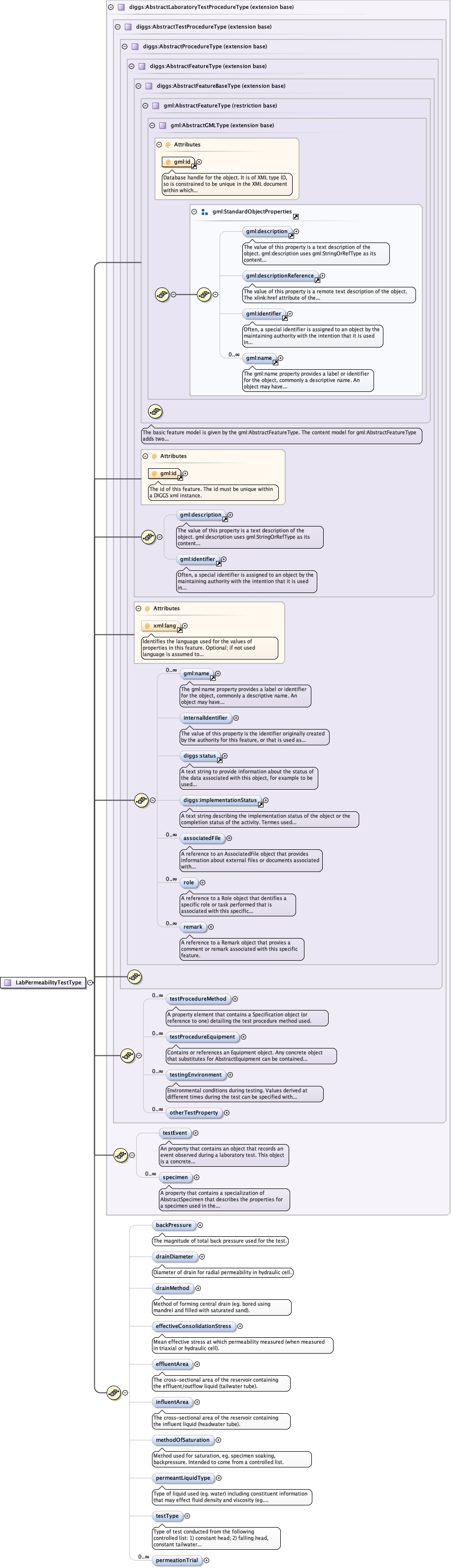
<element minOccurs="0" name="backPressure" type="eml:PressureMeasure"><annotation><documentation>The magnitude of total back pressure used for the test.</documentation></annotation></element>
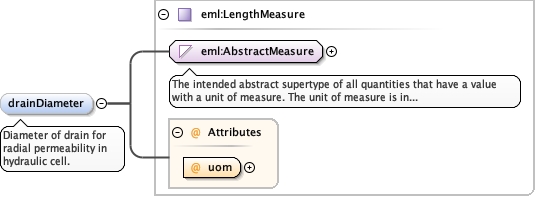
<element minOccurs="0" name="drainDiameter" type="eml:LengthMeasure"><annotation><documentation>Diameter of drain for radial permeability in hydraulic cell.</documentation></annotation></element>
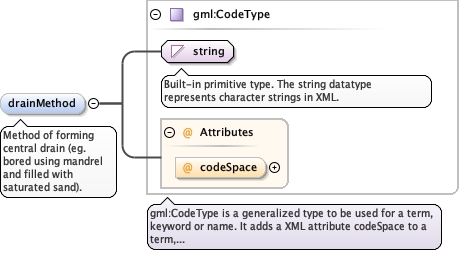
<element minOccurs="0" name="drainMethod" type="gml:CodeType"><annotation><documentation>Method of forming central drain (eg. bored using mandrel and filled with saturated sand).</documentation></annotation></element>
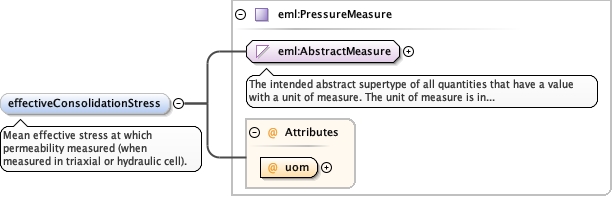
<element minOccurs="0" name="effectiveConsolidationStress" type="eml:PressureMeasure"><annotation><documentation>Mean effective stress at which permeability measured (when measured in triaxial or hydraulic cell).</documentation></annotation></element>
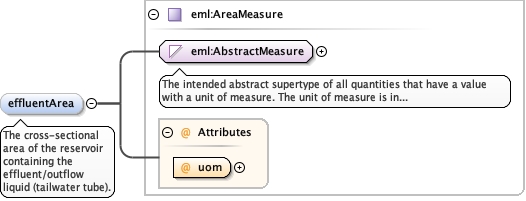
<element minOccurs="0" name="effluentArea" type="eml:AreaMeasure"><annotation><documentation>The cross-sectional area of the reservoir containing the effluent/outflow liquid (tailwater tube).</documentation></annotation></element>
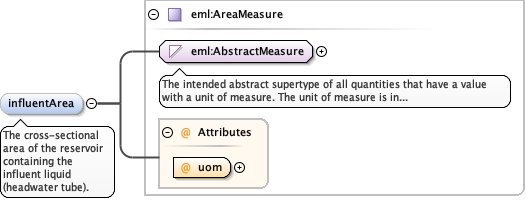
<element minOccurs="0" name="influentArea" type="eml:AreaMeasure"><annotation><documentation>The cross-sectional area of the reservoir containing the influent liquid (headwater tube).</documentation></annotation></element>
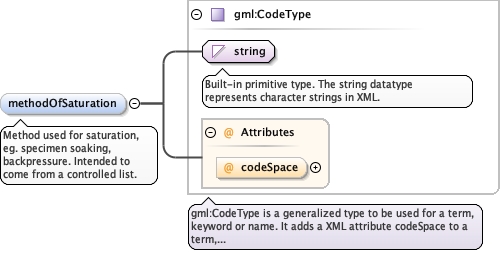
<element minOccurs="0" name="methodOfSaturation" type="gml:CodeType"><annotation><documentation>Method used for saturation, eg. specimen soaking, backpressure. Intended to come from a controlled list.</documentation></annotation></element>
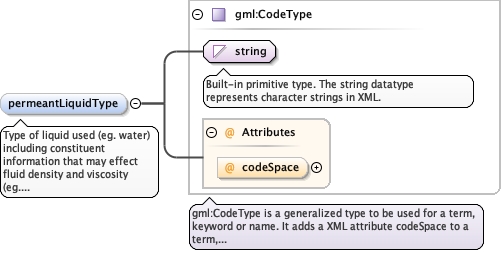
<element minOccurs="0" name="permeantLiquidType" type="gml:CodeType"><annotation><documentation>Type of liquid used (eg. water) including constituent information that may effect fluid density and viscosity (eg. salinity).</documentation></annotation></element>
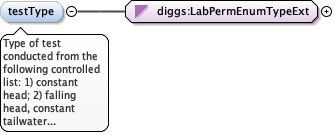
Type of test conducted from the following controlledlist: 1) constant head; 2) falling head, constant tailwaterelevation; 3) falling head, rising tailwater elevation; 4) constantrate of flow; 5) constant volume-constant head (by mercury); 6)constant volume-falling head (by mercury), rising tailwaterelevation;
Database handle for the object. It is of XML type ID, so is constrained to beunique in the XML document within which it occurs. An external identifier for the object inthe form of a URI may be constructed using standard XML and XPointer methods. This is doneby concatenating the URI for the document, a fragment separator, and the value of the idattribute.
<div><h3>lang (as an attribute name)</h3><p>denotes an attribute whose value is a language code for the natural language of the content of any element; its value is inherited. This name is reserved by virtue of its definition in the XML specification.</p></div><div><h4>Notes</h4><p>Attempting to install the relevant ISO 2- and 3-letter codes as the enumerated possible values is probably never going to be a realistic possibility.</p><p>See BCP 47 at<a href="http://www.rfc-editor.org/rfc/bcp/bcp47.txt">http://www.rfc-editor.org/rfc/bcp/bcp47.txt</a>and the IANA language subtag registry at<a href="http://www.iana.org/assignments/language-subtag-registry">http://www.iana.org/assignments/language-subtag-registry</a>for further information.</p><p>The union allows for the 'un-declaration' of xml:lang with the empty string.</p></div>
Source
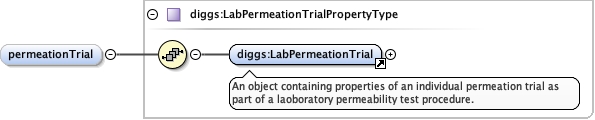
<complexType name="LabPermeabilityTestType"><complexContent><extension base="diggs:AbstractLaboratoryTestProcedureType"><sequence><element minOccurs="0" name="backPressure" type="eml:PressureMeasure"><annotation><documentation>The magnitude of total back pressure used for the test.</documentation></annotation></element><element minOccurs="0" name="drainDiameter" type="eml:LengthMeasure"><annotation><documentation>Diameter of drain for radial permeability in hydraulic cell.</documentation></annotation></element><element minOccurs="0" name="drainMethod" type="gml:CodeType"><annotation><documentation>Method of forming central drain (eg. bored using mandrel and filled with saturated sand).</documentation></annotation></element><element minOccurs="0" name="effectiveConsolidationStress" type="eml:PressureMeasure"><annotation><documentation>Mean effective stress at which permeability measured (when measured in triaxial or hydraulic cell).</documentation></annotation></element><element minOccurs="0" name="effluentArea" type="eml:AreaMeasure"><annotation><documentation>The cross-sectional area of the reservoir containing the effluent/outflow liquid (tailwater tube).</documentation></annotation></element><element minOccurs="0" name="influentArea" type="eml:AreaMeasure"><annotation><documentation>The cross-sectional area of the reservoir containing the influent liquid (headwater tube).</documentation></annotation></element><element minOccurs="0" name="methodOfSaturation" type="gml:CodeType"><annotation><documentation>Method used for saturation, eg. specimen soaking, backpressure. Intended to come from a controlled list.</documentation></annotation></element><element minOccurs="0" name="permeantLiquidType" type="gml:CodeType"><annotation><documentation>Type of liquid used (eg. water) including constituent information that may effect fluid density and viscosity (eg. salinity).</documentation></annotation></element><element minOccurs="0" name="testType" type="diggs:LabPermEnumTypeExt"><annotation><documentation>Type of test conducted from the following controlled list: 1) constant head; 2) falling head, constant tailwater elevation; 3) falling head, rising tailwater elevation; 4) constant rate of flow; 5) constant volume-constant head (by mercury); 6) constant volume-falling head (by mercury), rising tailwater elevation;</documentation></annotation></element><element maxOccurs="unbounded" minOccurs="0" name="permeationTrial" type="diggs:LabPermeationTrialPropertyType"/></sequence></extension></complexContent></complexType>