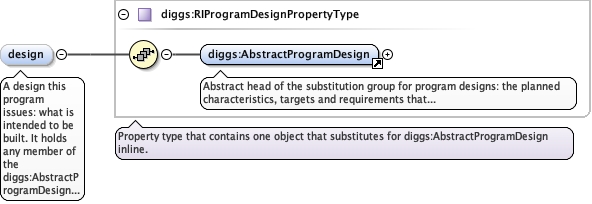
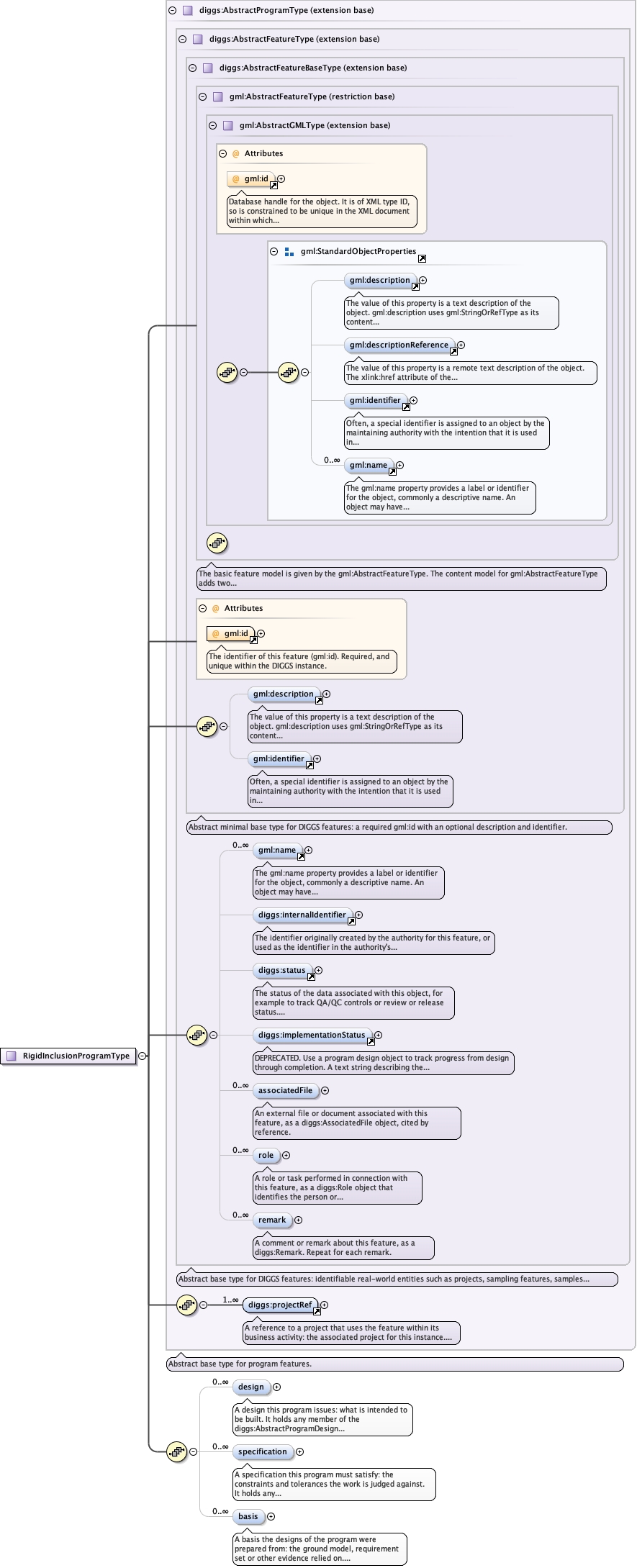
A design this program issues: what is intended to be built. It holdsany member of the diggs:AbstractProgramDesign substitution group, soa program may carry a diggs:DesignRITreatedArea, adiggs:DesignRIColumn and a diggs:DesignGroutMix alongside oneanother. Repeat for each design.
<element minOccurs="0" maxOccurs="unbounded" name="design" type="diggs:RIProgramDesignPropertyType"><annotation><documentation>A design this program issues: what is intended to be built. It holds any member of the diggs:AbstractProgramDesign substitution group, so a program may carry a diggs:DesignRITreatedArea, a diggs:DesignRIColumn and a diggs:DesignGroutMix alongside one another. Repeat for each design.</documentation></annotation></element>
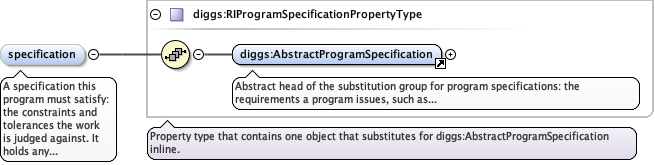
A specification this program must satisfy: the constraints andtolerances the work is judged against. It holds any member of thediggs:AbstractProgramSpecification substitution group. Repeat foreach specification.
<element minOccurs="0" maxOccurs="unbounded" name="specification" type="diggs:RIProgramSpecificationPropertyType"><annotation><documentation>A specification this program must satisfy: the constraints and tolerances the work is judged against. It holds any member of the diggs:AbstractProgramSpecification substitution group. Repeat for each specification.</documentation></annotation></element>
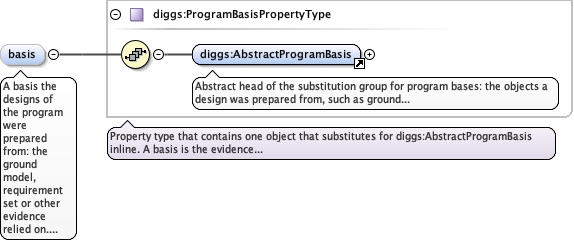
A basis the designs of the program were prepared from: the groundmodel, requirement set or other evidence relied on. It holds anymember of the diggs:AbstractProgramBasis substitution group. Repeatfor each basis.
<element minOccurs="0" maxOccurs="unbounded" name="basis" type="diggs:ProgramBasisPropertyType"><annotation><documentation>A basis the designs of the program were prepared from: the ground model, requirement set or other evidence relied on. It holds any member of the diggs:AbstractProgramBasis substitution group. Repeat for each basis.</documentation></annotation></element>
Database handle for the object. It is of XML type ID, so is constrained to beunique in the XML document within which it occurs. An external identifier for the object inthe form of a URI may be constructed using standard XML and XPointer methods. This is doneby concatenating the URI for the document, a fragment separator, and the value of the idattribute.
Source
<complexType name="RigidInclusionProgramType"><complexContent><extension base="diggs:AbstractProgramType"><sequence><element minOccurs="0" maxOccurs="unbounded" name="design" type="diggs:RIProgramDesignPropertyType"><annotation><documentation>A design this program issues: what is intended to be built. It holds any member of the diggs:AbstractProgramDesign substitution group, so a program may carry a diggs:DesignRITreatedArea, a diggs:DesignRIColumn and a diggs:DesignGroutMix alongside one another. Repeat for each design.</documentation></annotation></element><element minOccurs="0" maxOccurs="unbounded" name="specification" type="diggs:RIProgramSpecificationPropertyType"><annotation><documentation>A specification this program must satisfy: the constraints and tolerances the work is judged against. It holds any member of the diggs:AbstractProgramSpecification substitution group. Repeat for each specification.</documentation></annotation></element><element minOccurs="0" maxOccurs="unbounded" name="basis" type="diggs:ProgramBasisPropertyType"><annotation><documentation>A basis the designs of the program were prepared from: the ground model, requirement set or other evidence relied on. It holds any member of the diggs:AbstractProgramBasis substitution group. Repeat for each basis.</documentation></annotation></element></sequence></extension></complexContent></complexType>