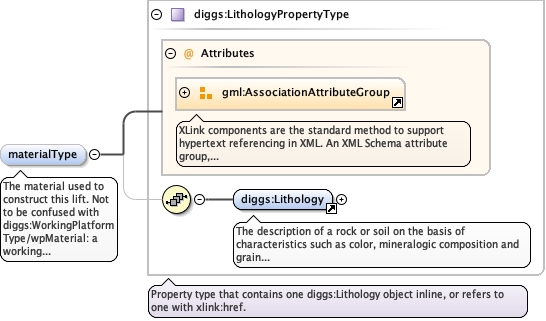
The material used to construct this lift. Not to be confused withdiggs:WorkingPlatformType/wpMaterial: a working platform istemporary construction access built before the columns, whereas alift is permanent structure placed after them, over the trimmedheads. The material is held on the lift rather than the platform sothat a platform built of more than one material can be described.
<element minOccurs="0" name="materialType" type="diggs:LithologyPropertyType"><annotation><documentation>The material used to construct this lift. Not to be confused with diggs:WorkingPlatformType/wpMaterial: a working platform is temporary construction access built before the columns, whereas a lift is permanent structure placed after them, over the trimmed heads. The material is held on the lift rather than the platform so that a platform built of more than one material can be described.</documentation></annotation></element>
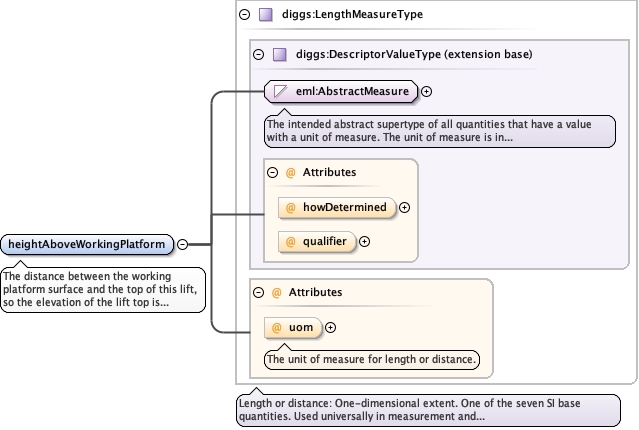
The distance between the working platform surface and the top ofthis lift, so the elevation of the lift top is wpElevation plus thisvalue. It is cumulative, not per lift: it is measured from theworking platform every time, so in a platform of contiguous lifts itincreases with each lift while liftThickness does not. The topmostlift's value is the thickness of the whole platform and equalsimpliedLTPThickness. It has the same name, type and datum asdiggs:GeosyntheticType/heightAboveWorkingPlatform, so both objectscontained by a platform are measured the same way. It is mandatoryhere, unlike on the geosynthetic, because a lift has no extentgeometry to carry its position.
<element minOccurs="1" name="heightAboveWorkingPlatform" type="diggs:LengthMeasureType"><annotation><documentation>The distance between the working platform surface and the top of this lift, so the elevation of the lift top is wpElevation plus this value. It is cumulative, not per lift: it is measured from the working platform every time, so in a platform of contiguous lifts it increases with each lift while liftThickness does not. The topmost lift's value is the thickness of the whole platform and equals impliedLTPThickness. It has the same name, type and datum as diggs:GeosyntheticType/heightAboveWorkingPlatform, so both objects contained by a platform are measured the same way. It is mandatory here, unlike on the geosynthetic, because a lift has no extent geometry to carry its position.</documentation></annotation></element>
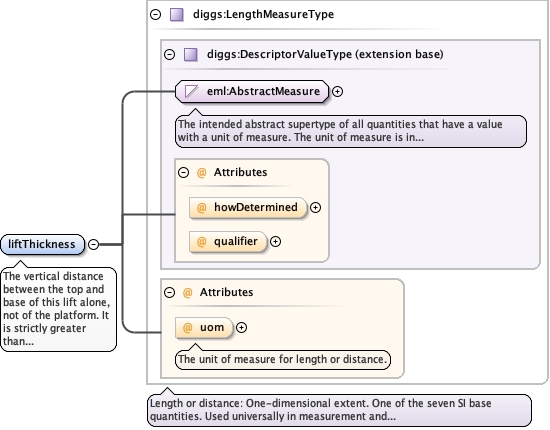
The vertical distance between the top and base of this lift alone,not of the platform. It is strictly greater than zero, since a liftof no thickness was not placed. For the platform as a whole seediggs:LoadTransferPlatformType/impliedLTPThickness.
<element minOccurs="1" name="liftThickness" type="diggs:LengthMeasureType"><annotation><documentation>The vertical distance between the top and base of this lift alone, not of the platform. It is strictly greater than zero, since a lift of no thickness was not placed. For the platform as a whole see diggs:LoadTransferPlatformType/impliedLTPThickness.</documentation></annotation></element>
Database handle for the object. It is of XML type ID, so is constrained to beunique in the XML document within which it occurs. An external identifier for the object inthe form of a URI may be constructed using standard XML and XPointer methods. This is doneby concatenating the URI for the document, a fragment separator, and the value of the idattribute.
Source
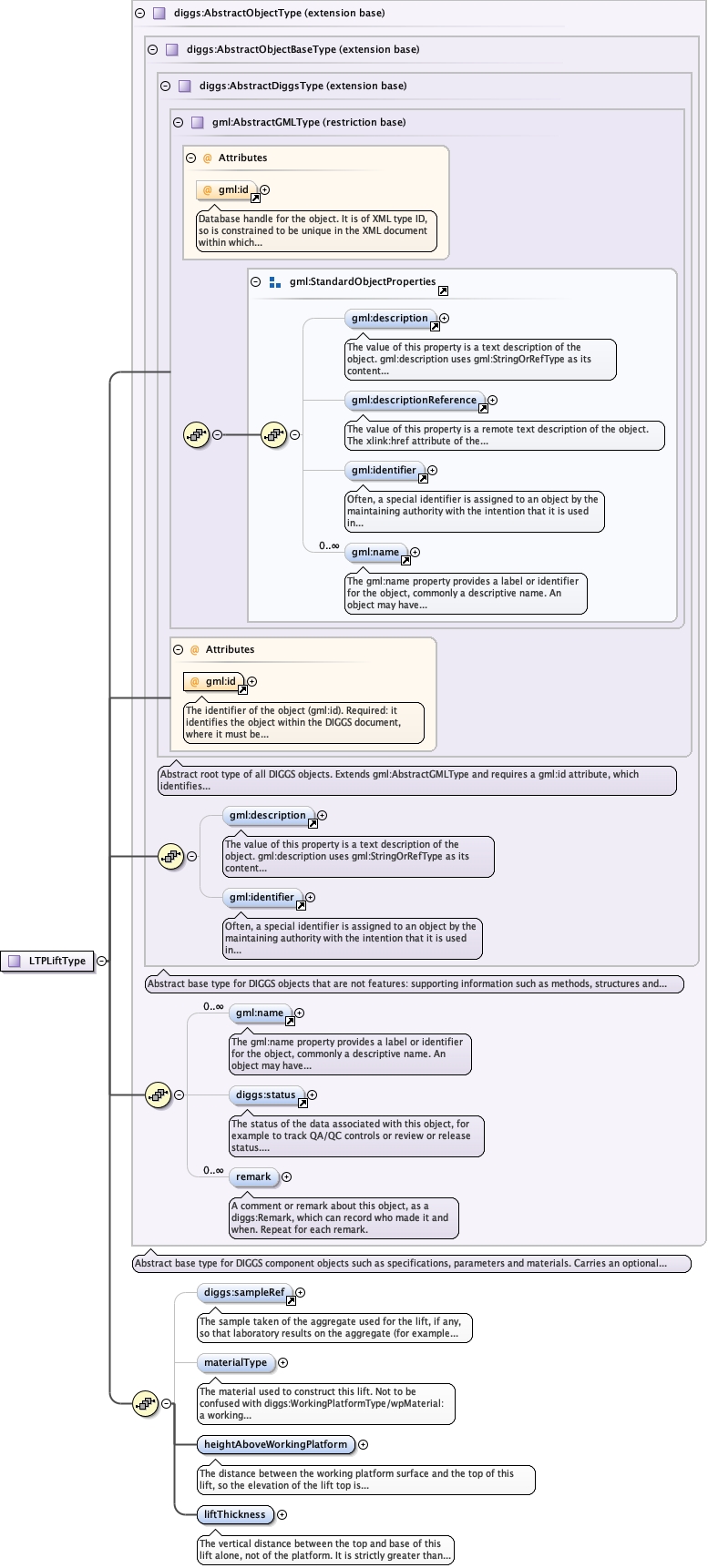
<complexType name="LTPLiftType"><complexContent><extension base="diggs:AbstractObjectType"><sequence><element minOccurs="0" ref="diggs:sampleRef"><annotation><documentation>The sample taken of the aggregate used for the lift, if any, so that laboratory results on the aggregate (for example density or compaction testing) can be cross-referenced to the lifts where it is used. Given by reference only.</documentation></annotation></element><element minOccurs="0" name="materialType" type="diggs:LithologyPropertyType"><annotation><documentation>The material used to construct this lift. Not to be confused with diggs:WorkingPlatformType/wpMaterial: a working platform is temporary construction access built before the columns, whereas a lift is permanent structure placed after them, over the trimmed heads. The material is held on the lift rather than the platform so that a platform built of more than one material can be described.</documentation></annotation></element><element minOccurs="1" name="heightAboveWorkingPlatform" type="diggs:LengthMeasureType"><annotation><documentation>The distance between the working platform surface and the top of this lift, so the elevation of the lift top is wpElevation plus this value. It is cumulative, not per lift: it is measured from the working platform every time, so in a platform of contiguous lifts it increases with each lift while liftThickness does not. The topmost lift's value is the thickness of the whole platform and equals impliedLTPThickness. It has the same name, type and datum as diggs:GeosyntheticType/heightAboveWorkingPlatform, so both objects contained by a platform are measured the same way. It is mandatory here, unlike on the geosynthetic, because a lift has no extent geometry to carry its position.</documentation></annotation></element><element minOccurs="1" name="liftThickness" type="diggs:LengthMeasureType"><annotation><documentation>The vertical distance between the top and base of this lift alone, not of the platform. It is strictly greater than zero, since a lift of no thickness was not placed. For the platform as a whole see diggs:LoadTransferPlatformType/impliedLTPThickness.</documentation></annotation></element></sequence></extension></complexContent></complexType>