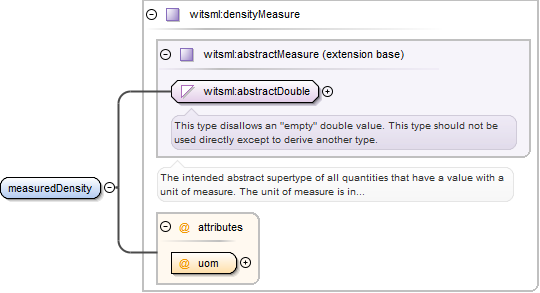
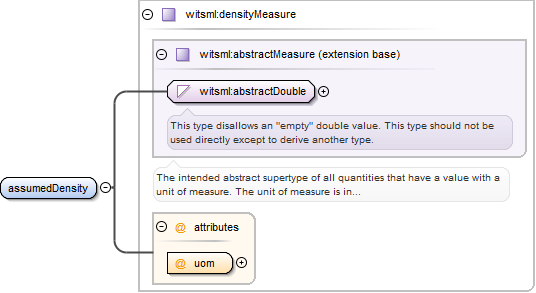
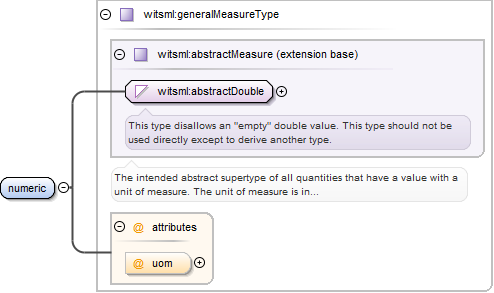
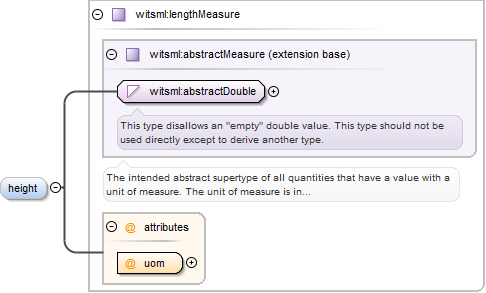
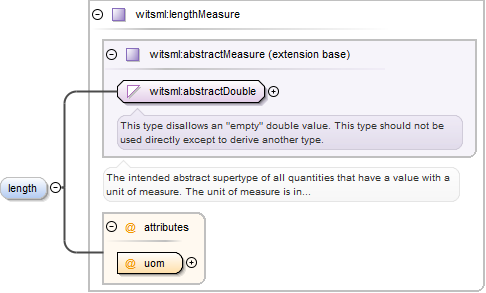
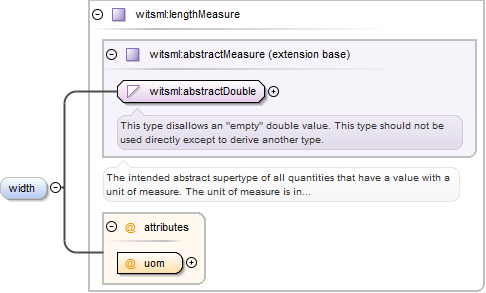
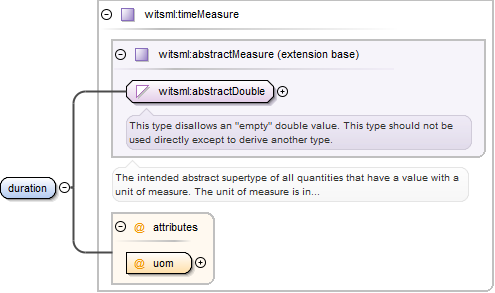
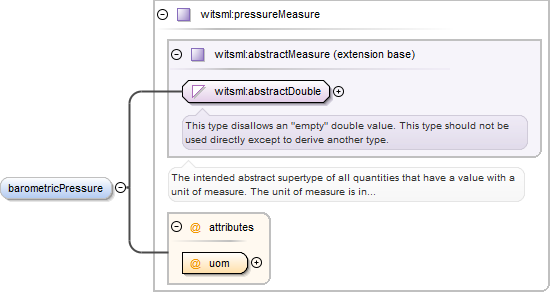
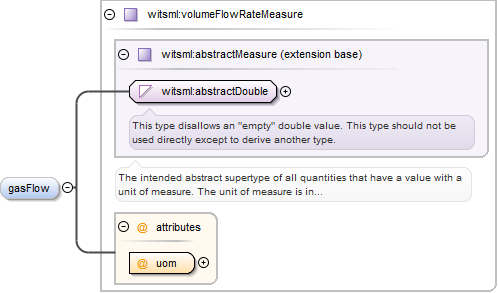
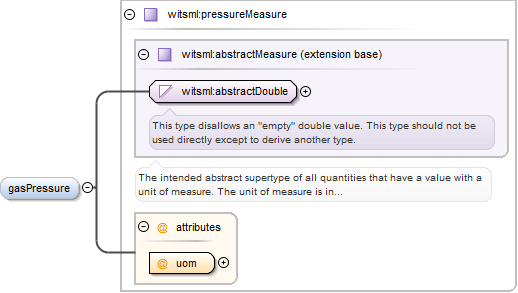
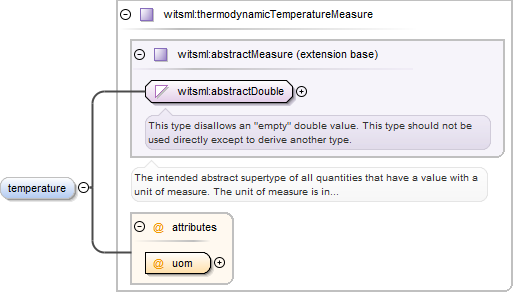
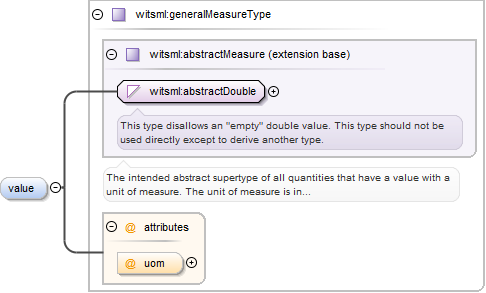
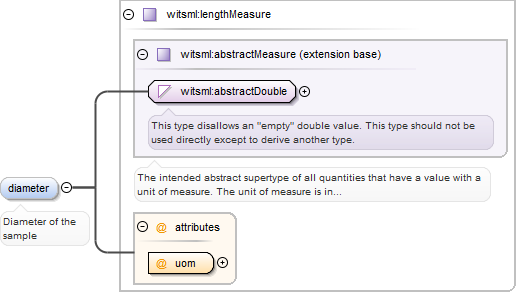
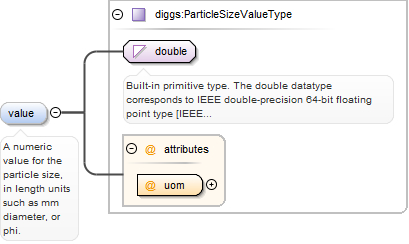
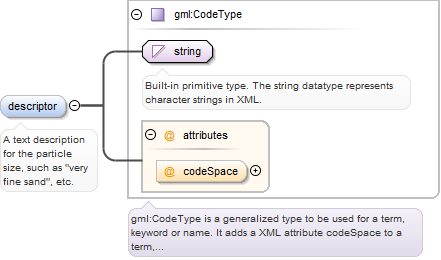
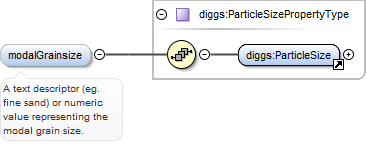
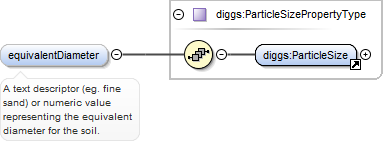
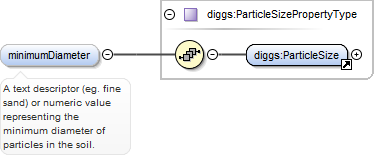
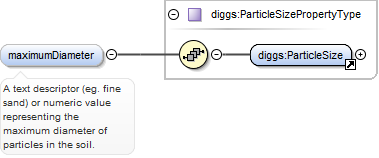
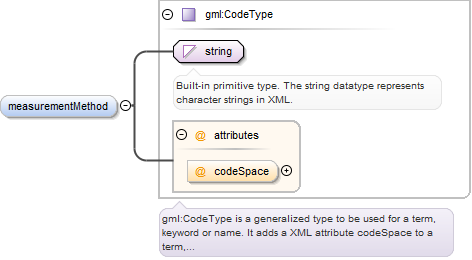
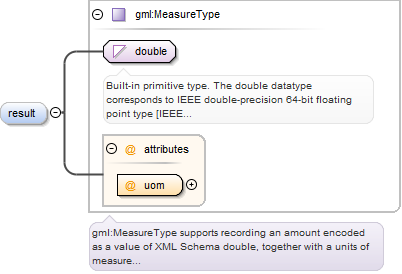
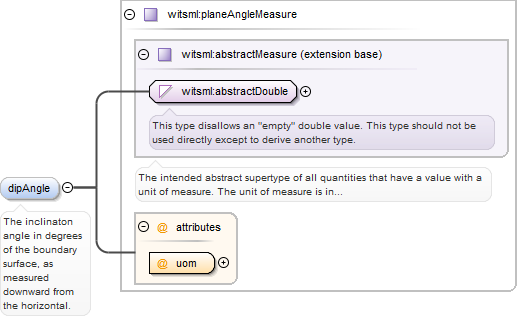
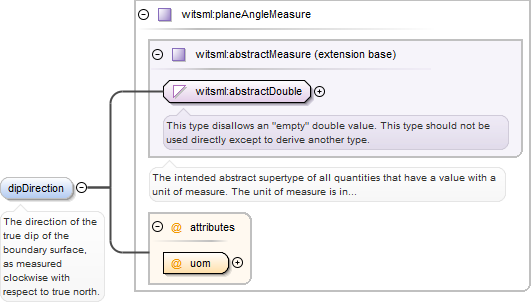
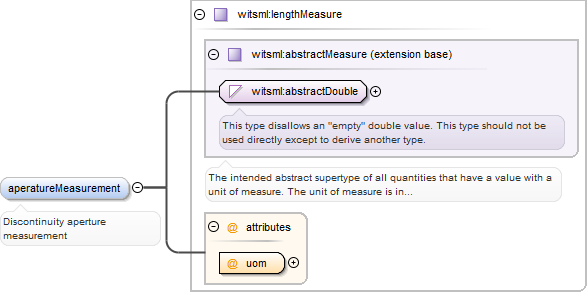
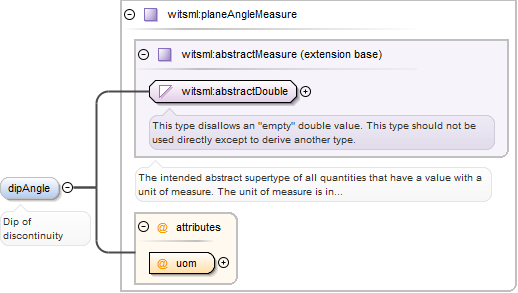
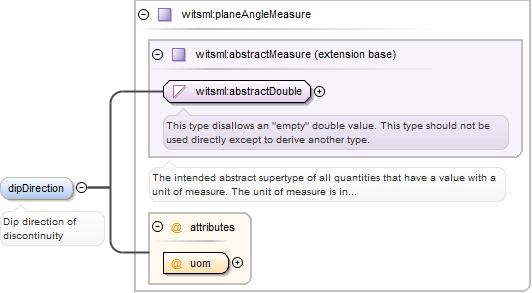
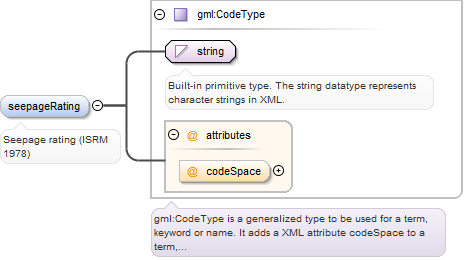
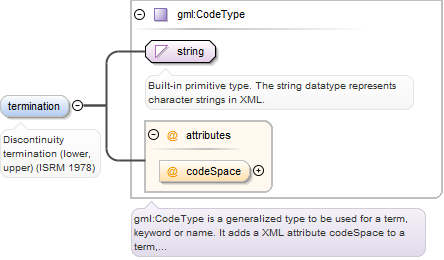
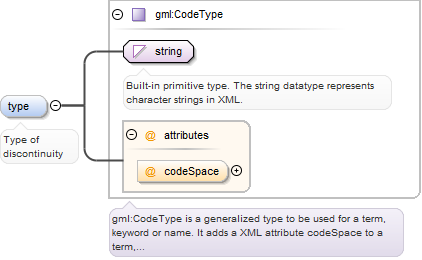
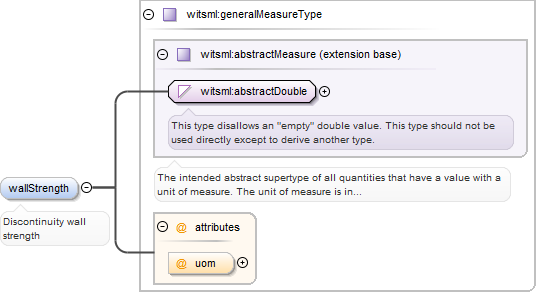
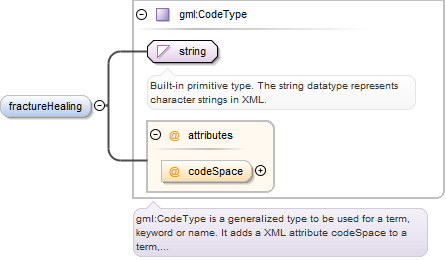
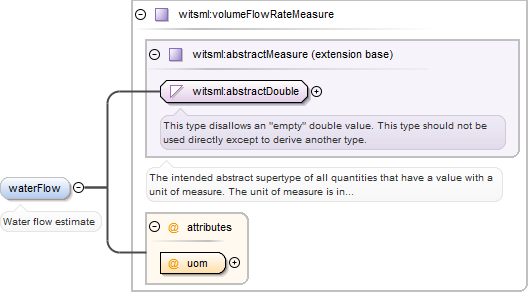
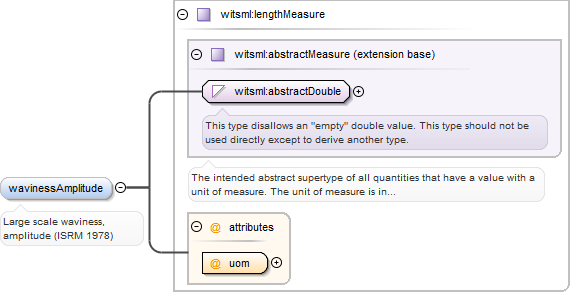
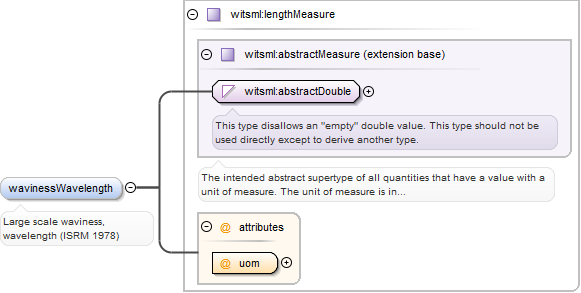
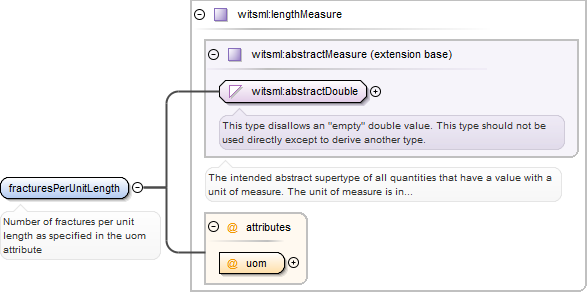
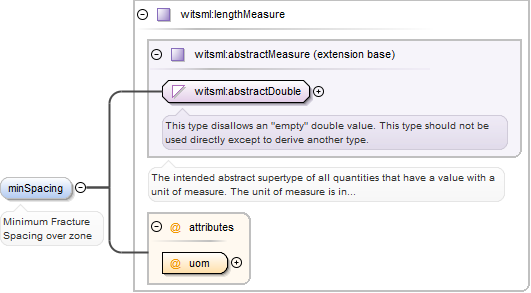
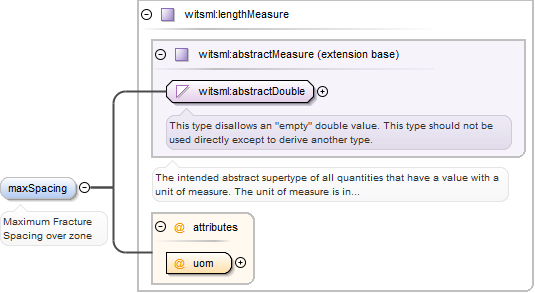
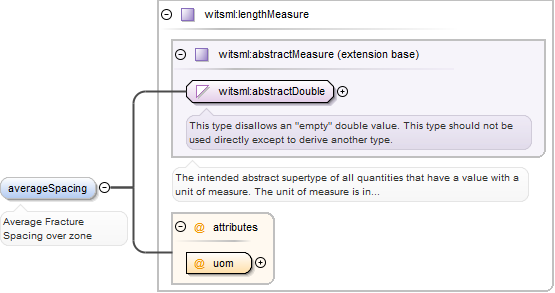
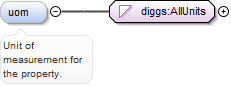
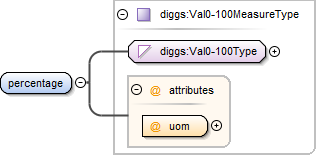
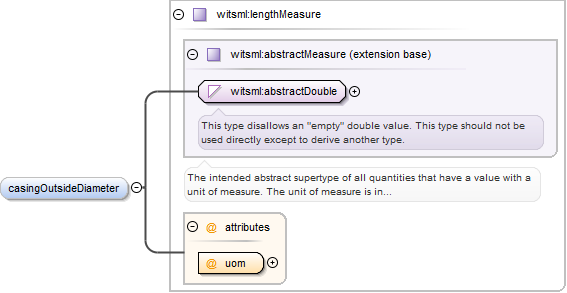
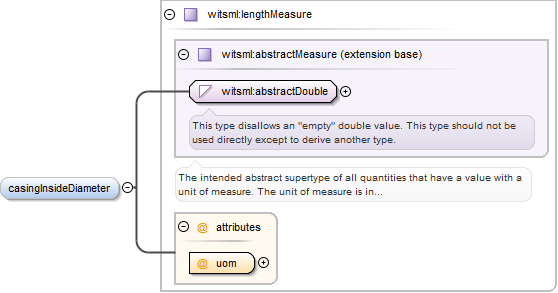
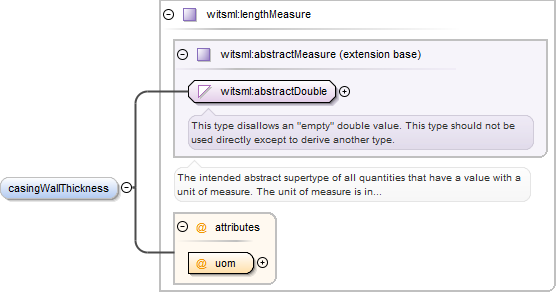
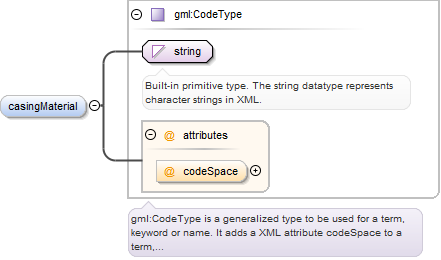
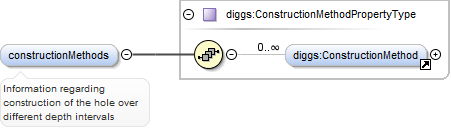
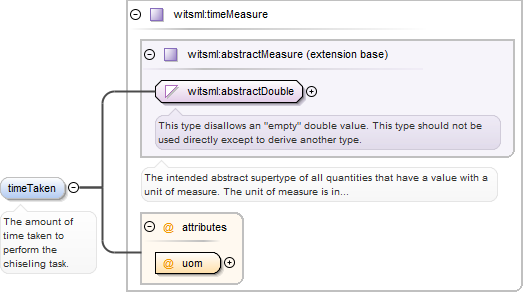
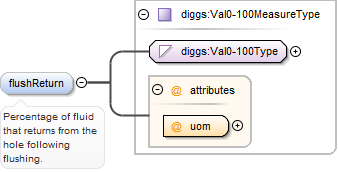
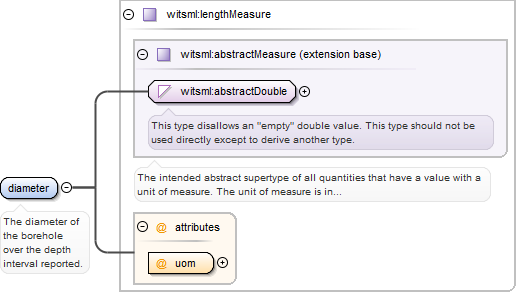
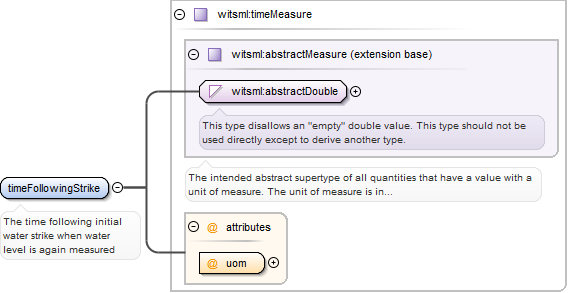
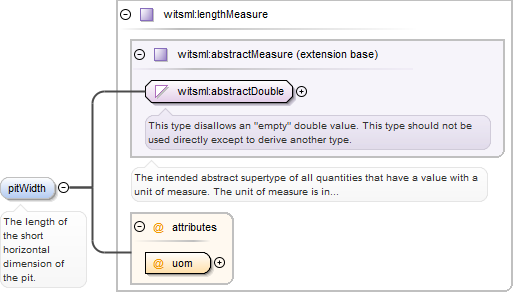
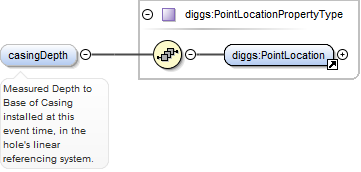
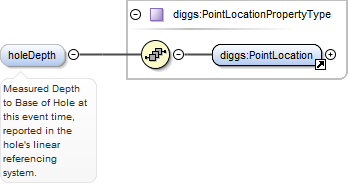
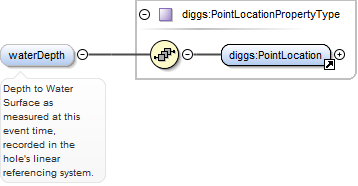
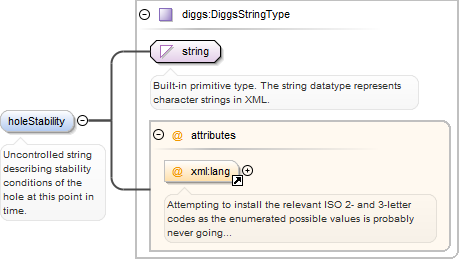
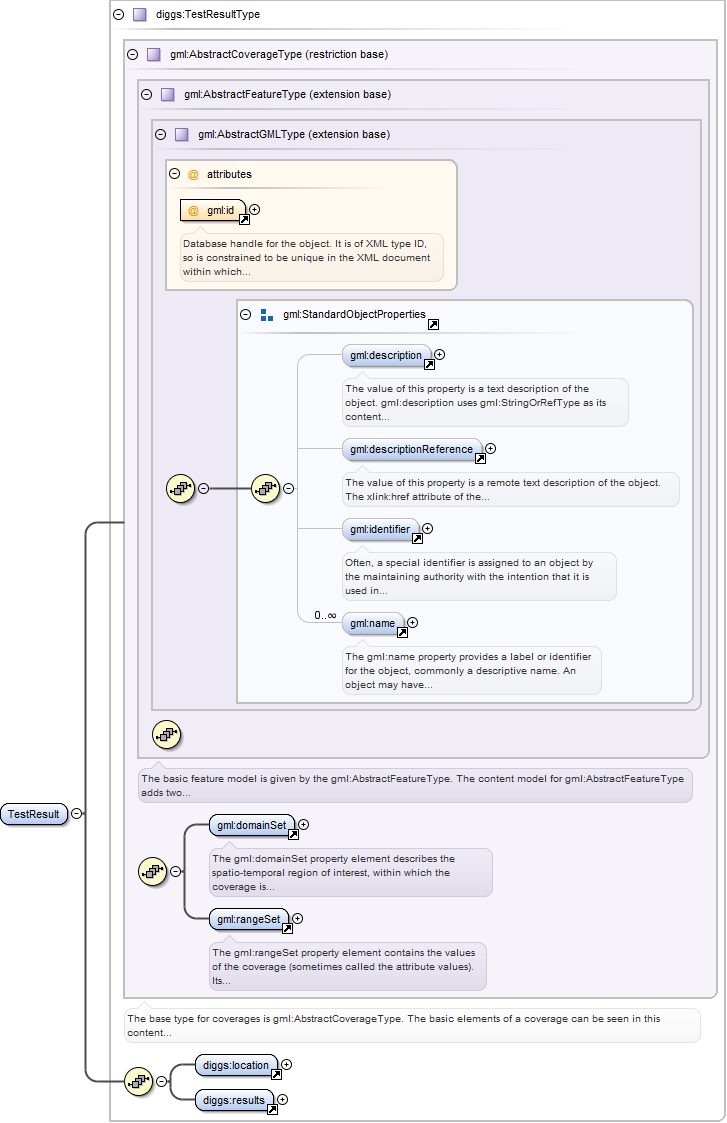
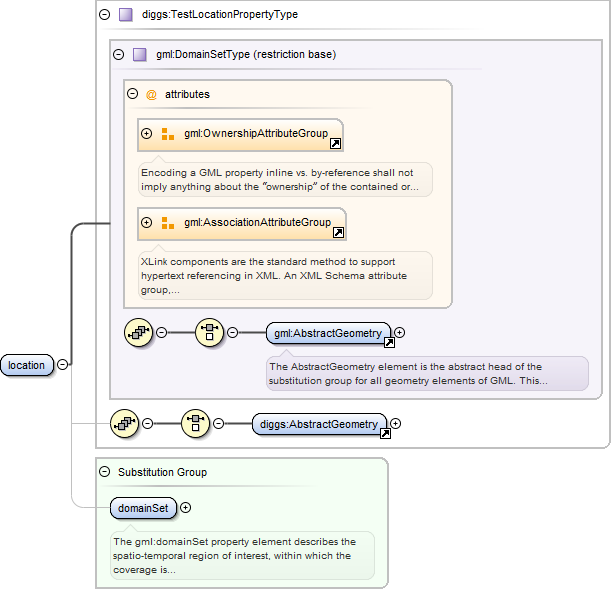
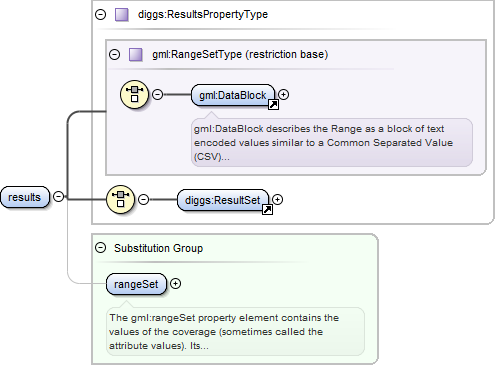
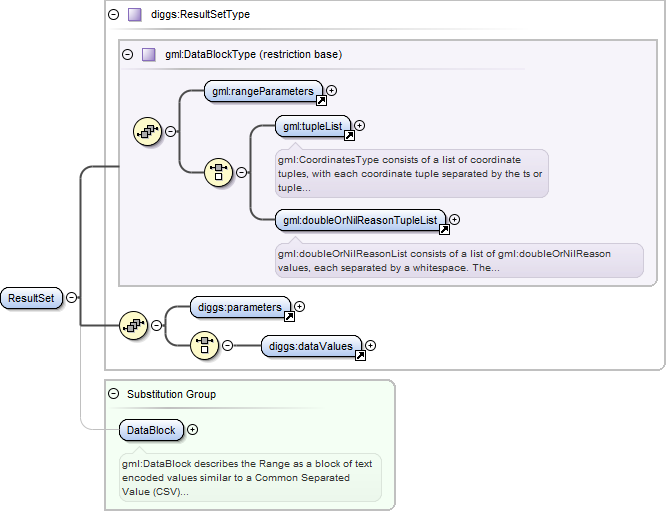
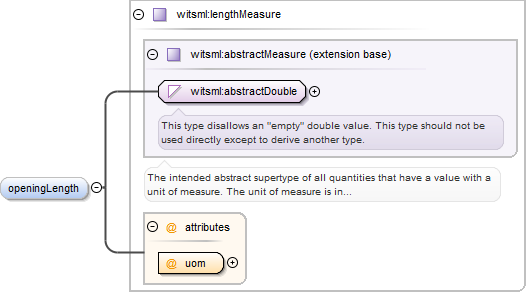
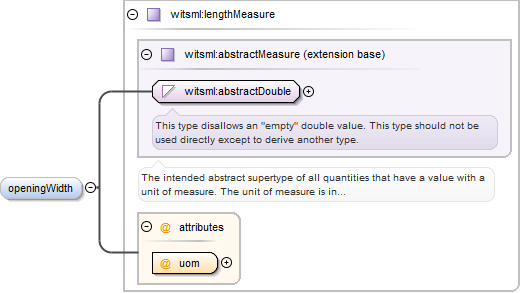
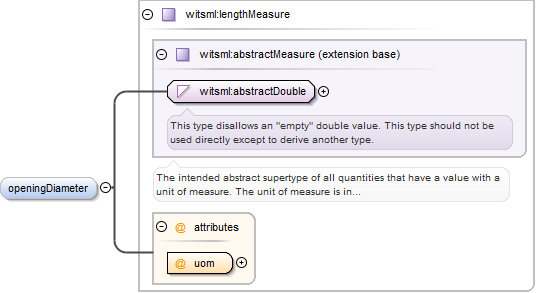
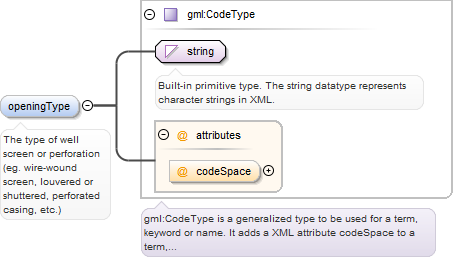
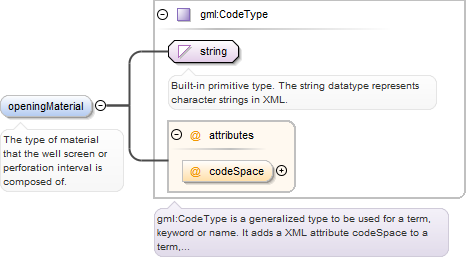
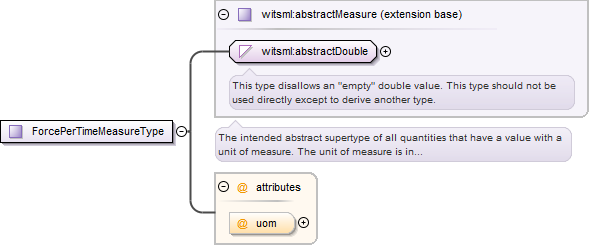
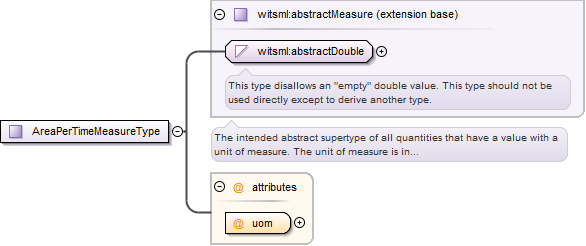
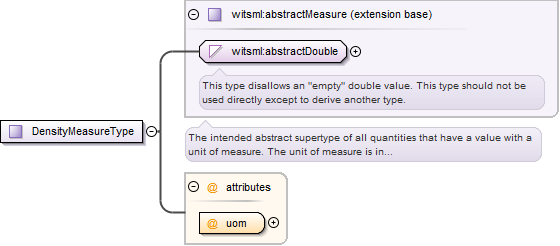
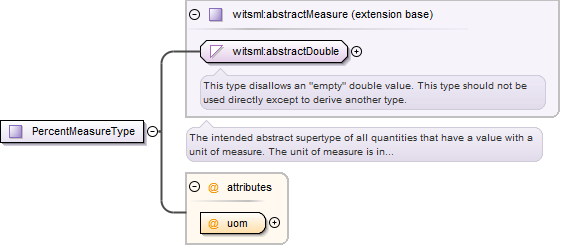
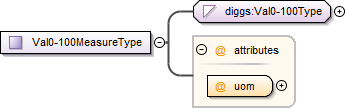
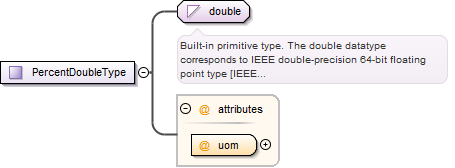
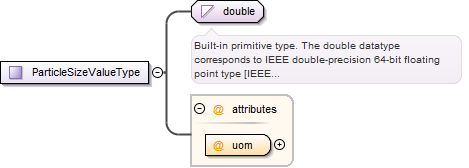
These types represent numeric quantities with a unit of measure implemented as a uom attribute. The units are gathered into single quantity class which represents a group of units. The unit symbols appropriate for the class are captured as enumerated lists. The implementation of this is to develop a type for each uom class that is a union of a standard list, the unknown value, and the Other: extension. Additional files will contain these structures.
This file defines a set of standard POSC units of measure for various quantity classes. This units list captures information contained in the POSC units dictionary at http://www.posc.org/refs/poscUnits20.xml. The enumerated lists do not contain any deprecated units.
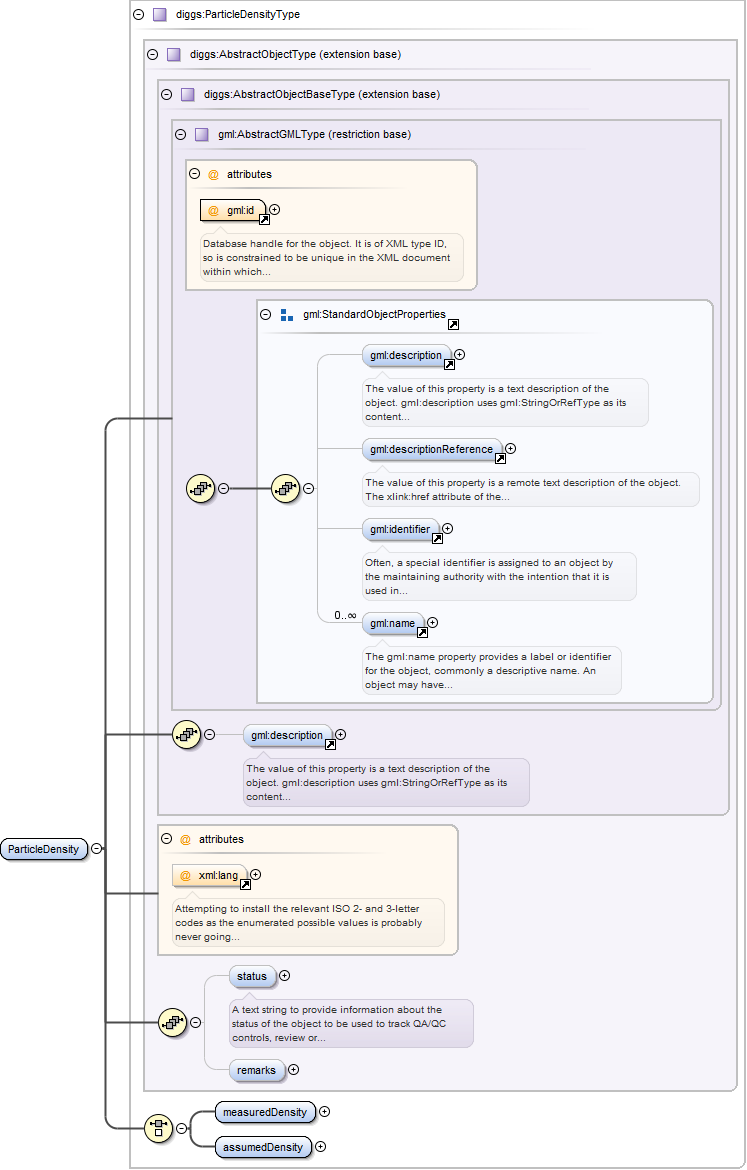
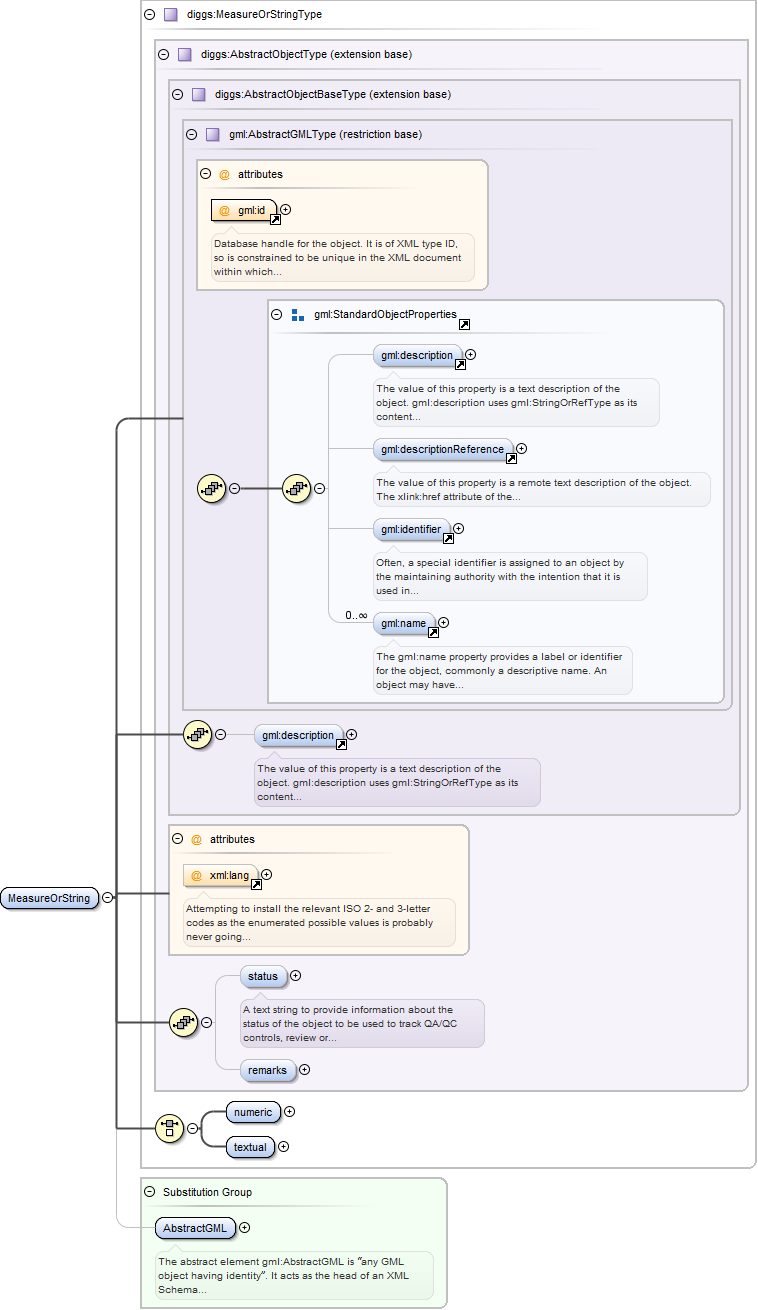
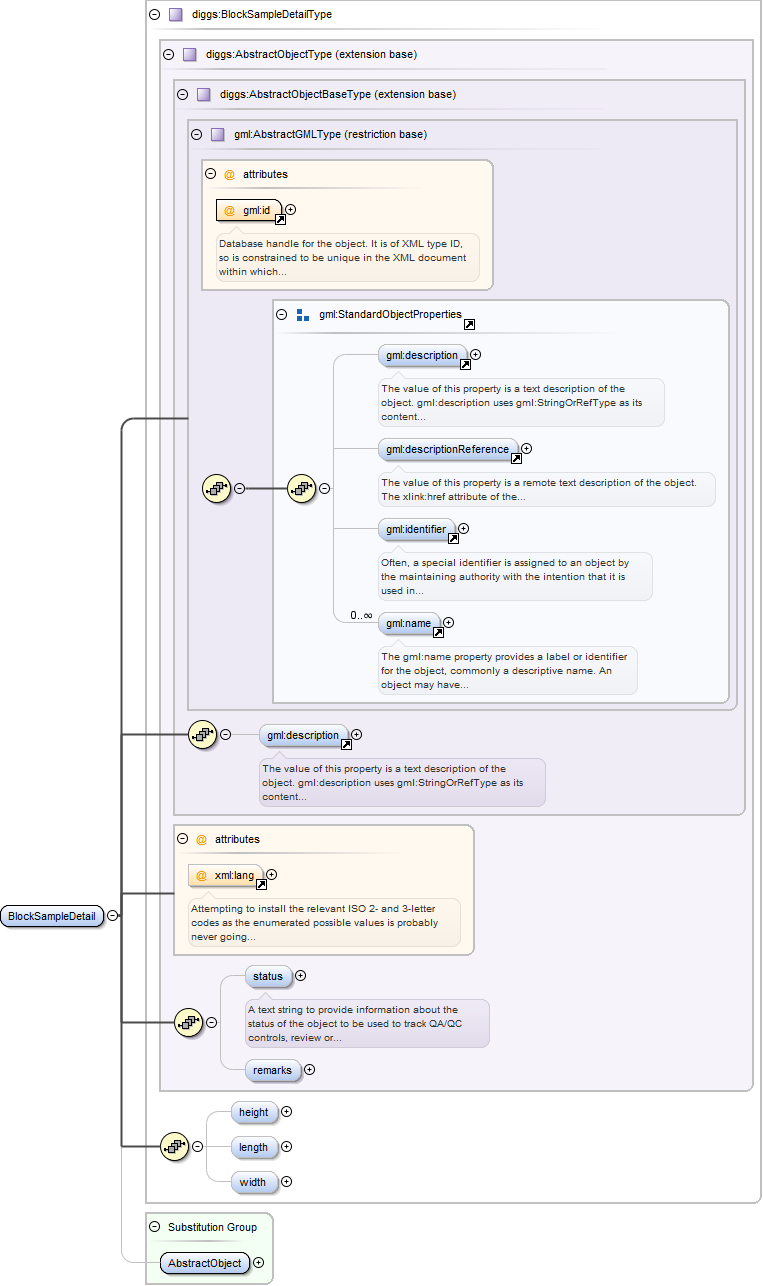
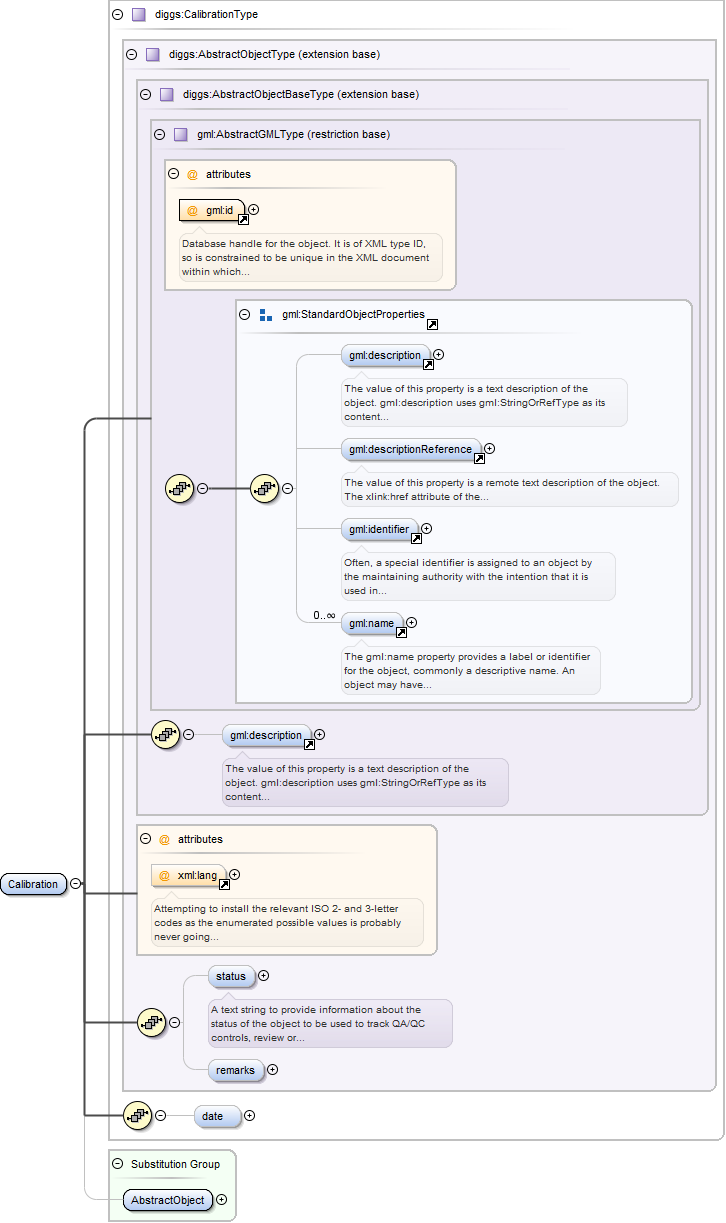
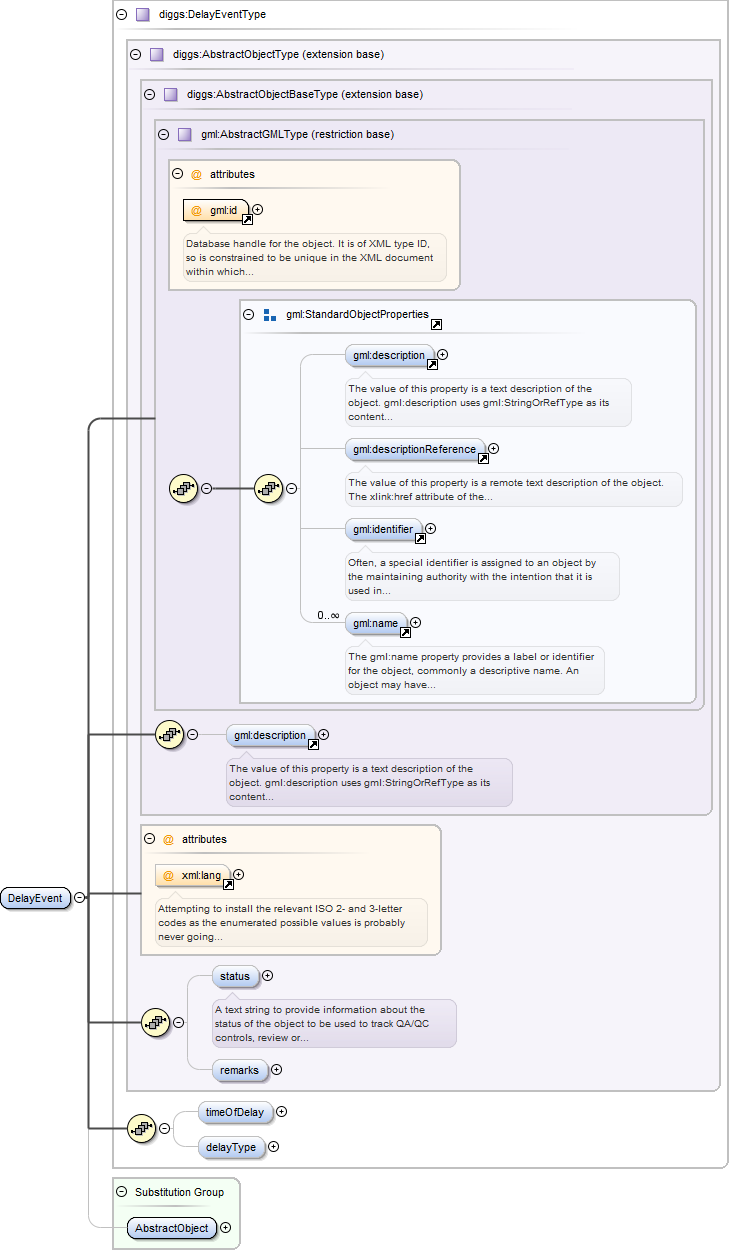
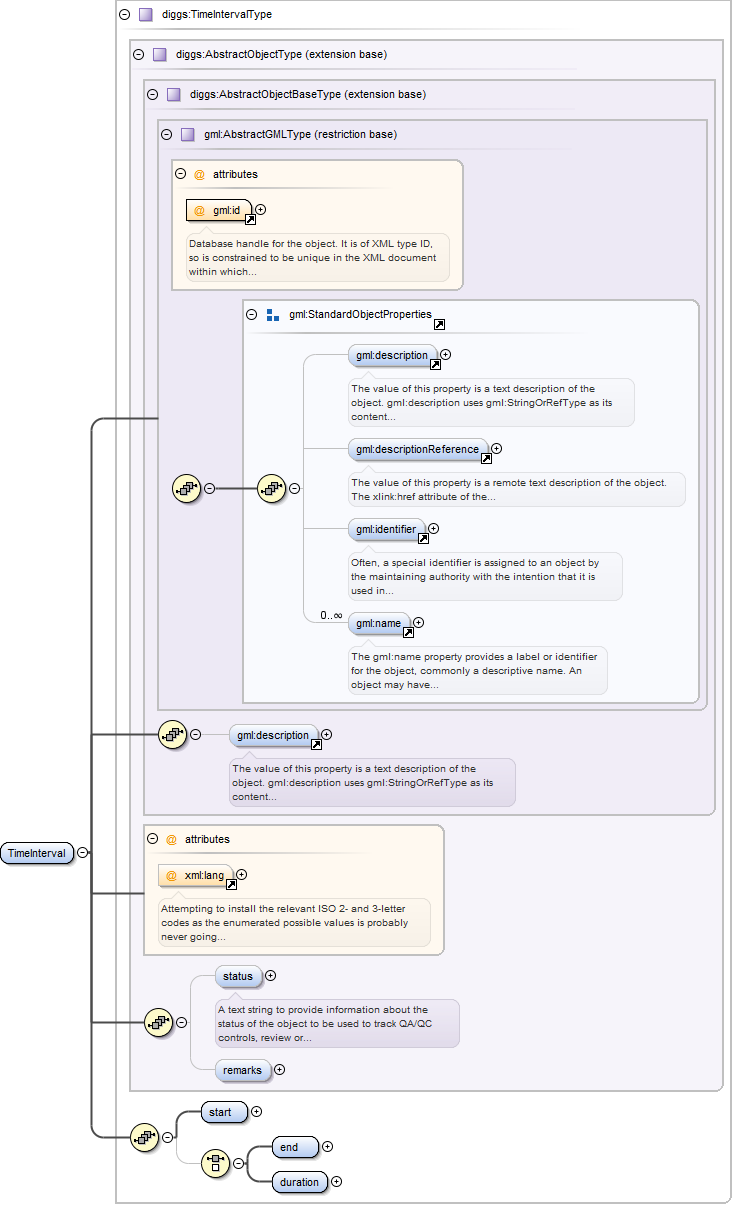
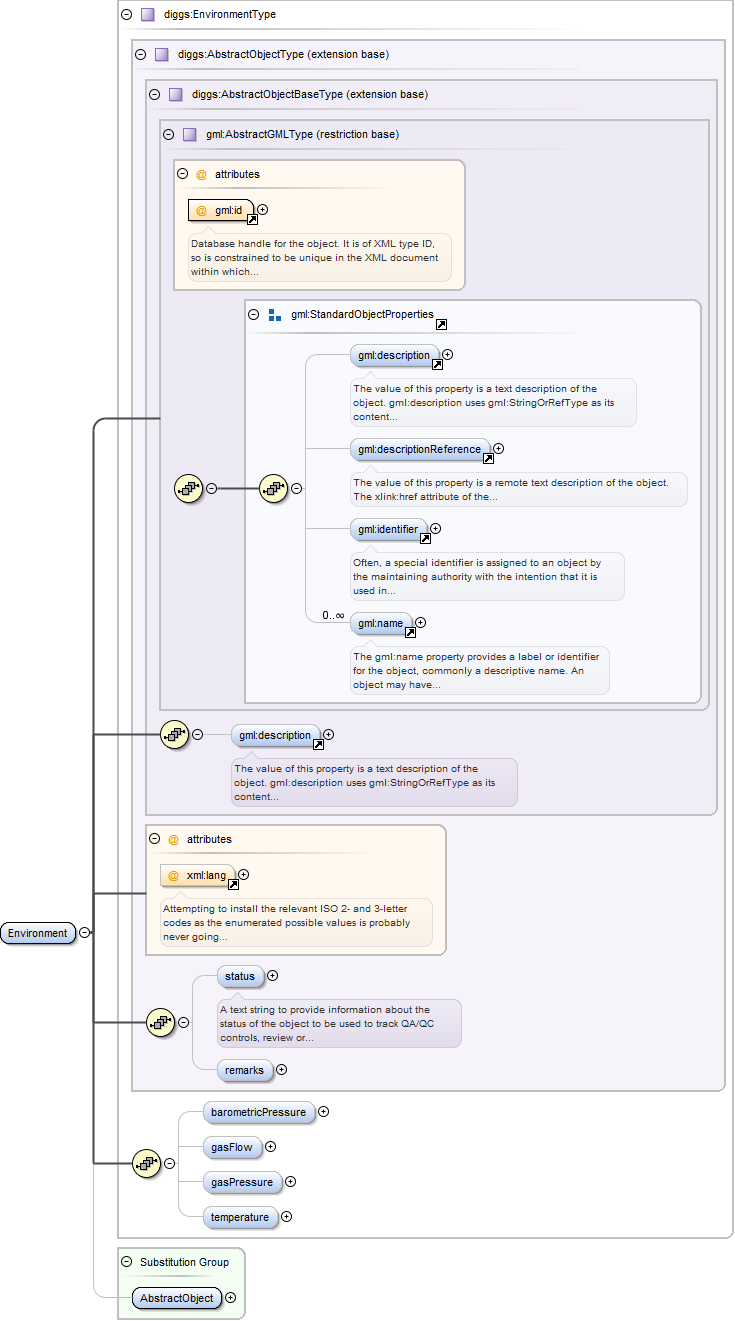
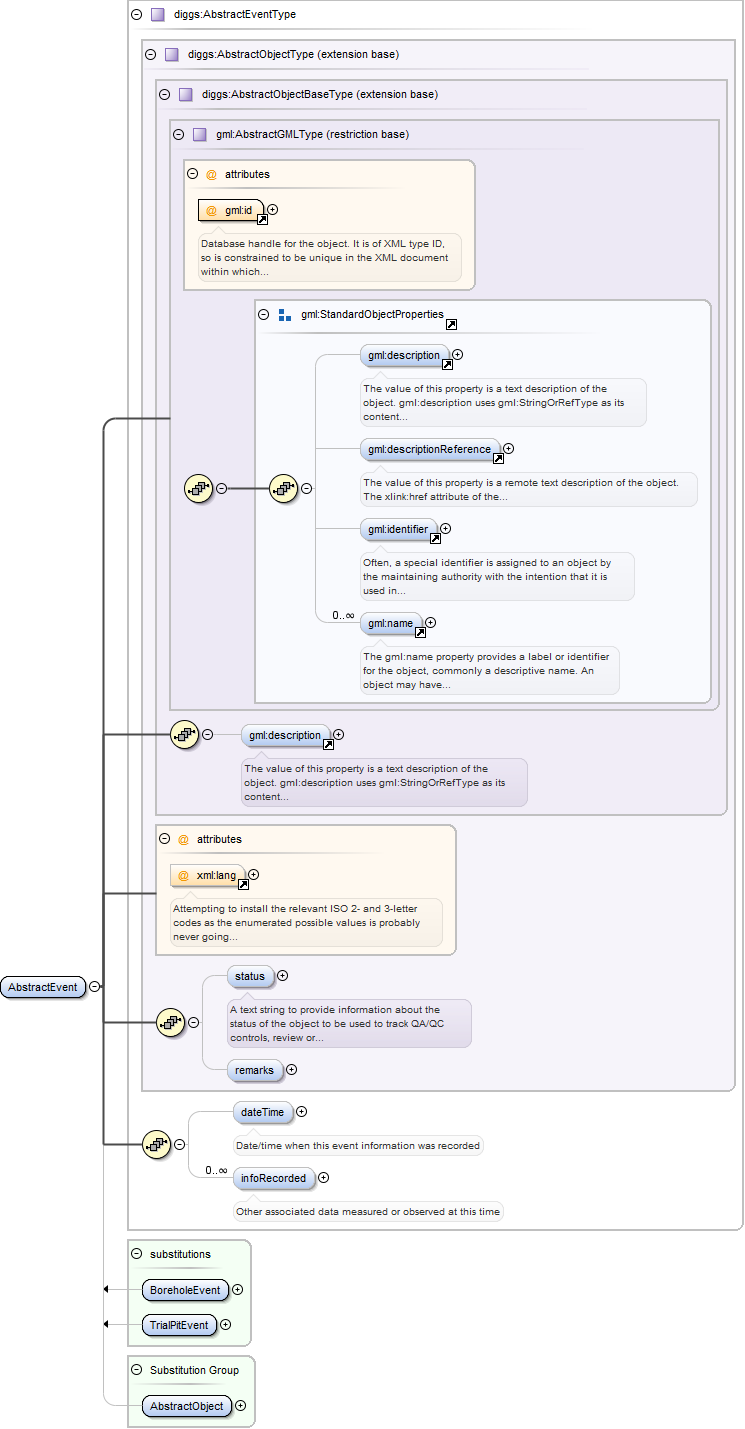
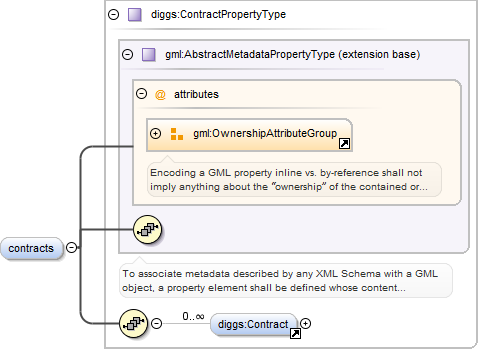
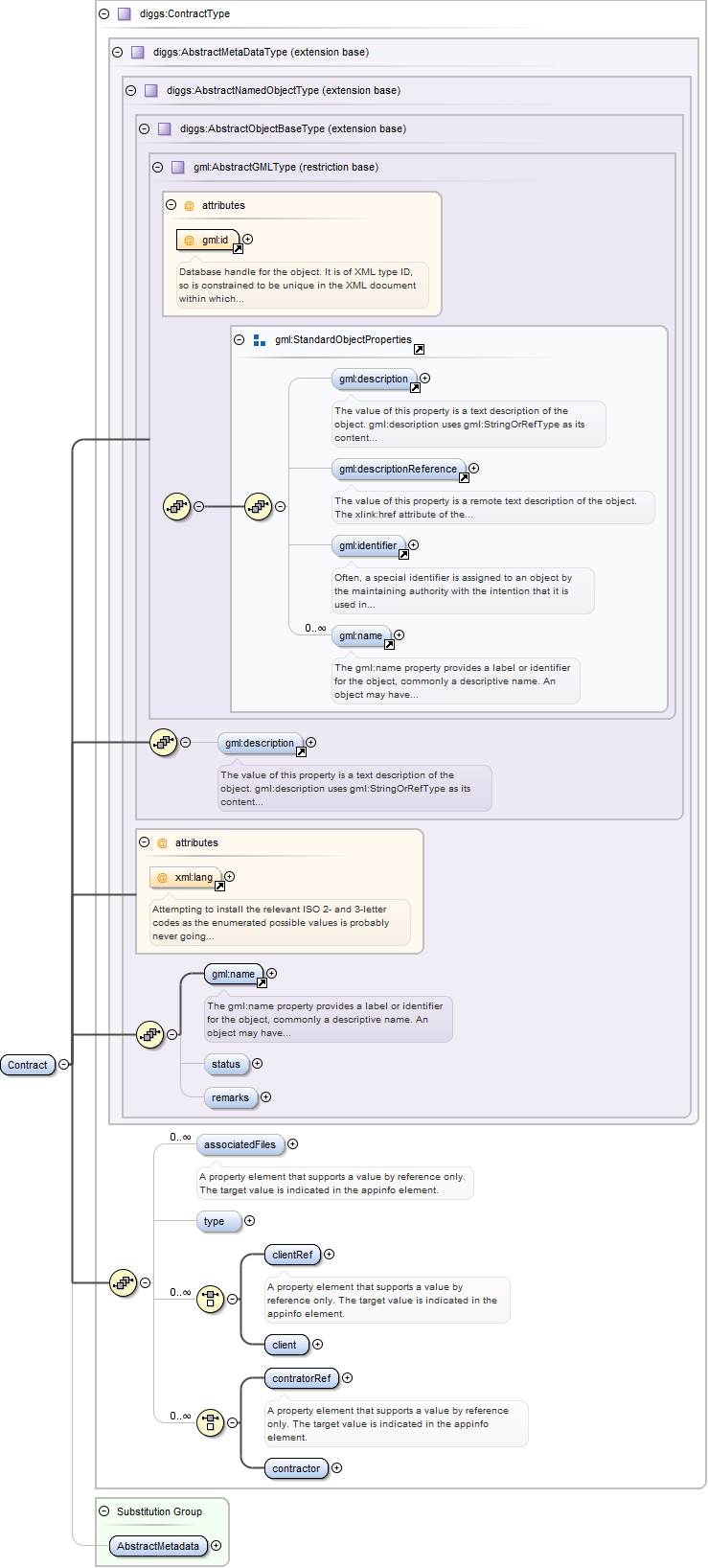
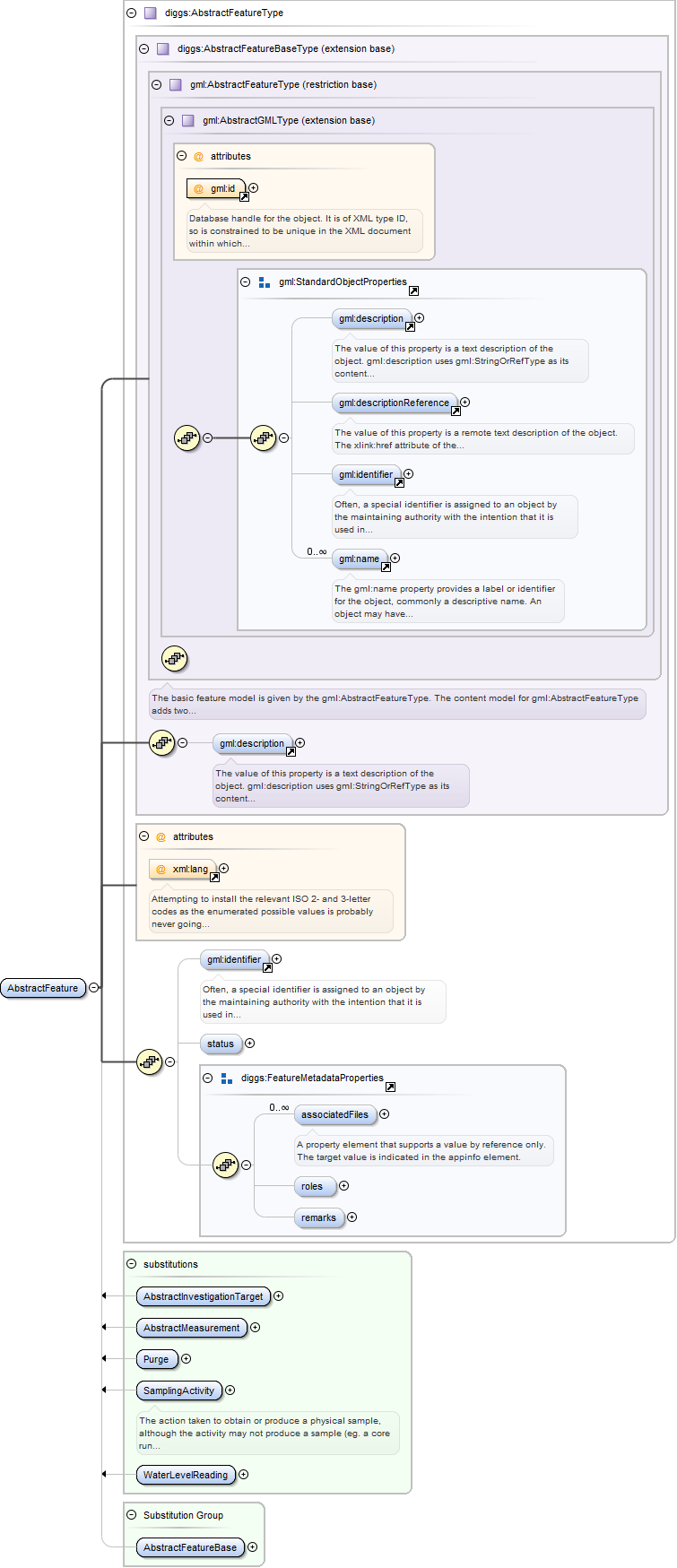
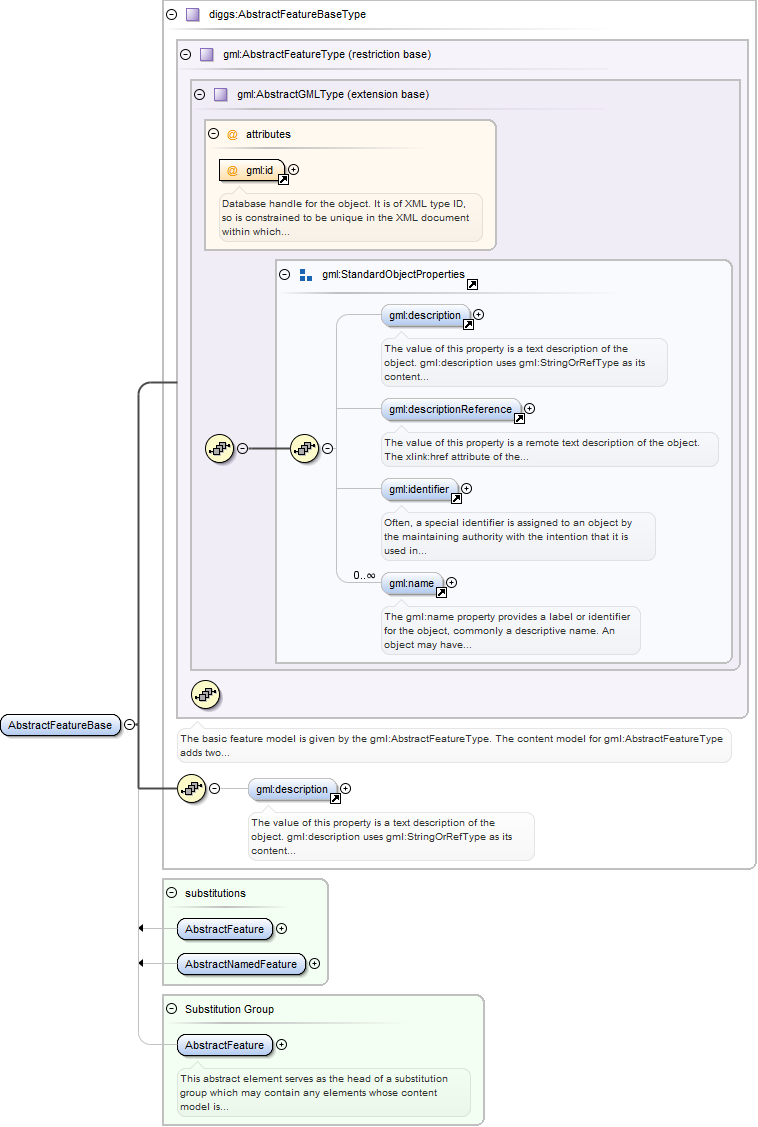
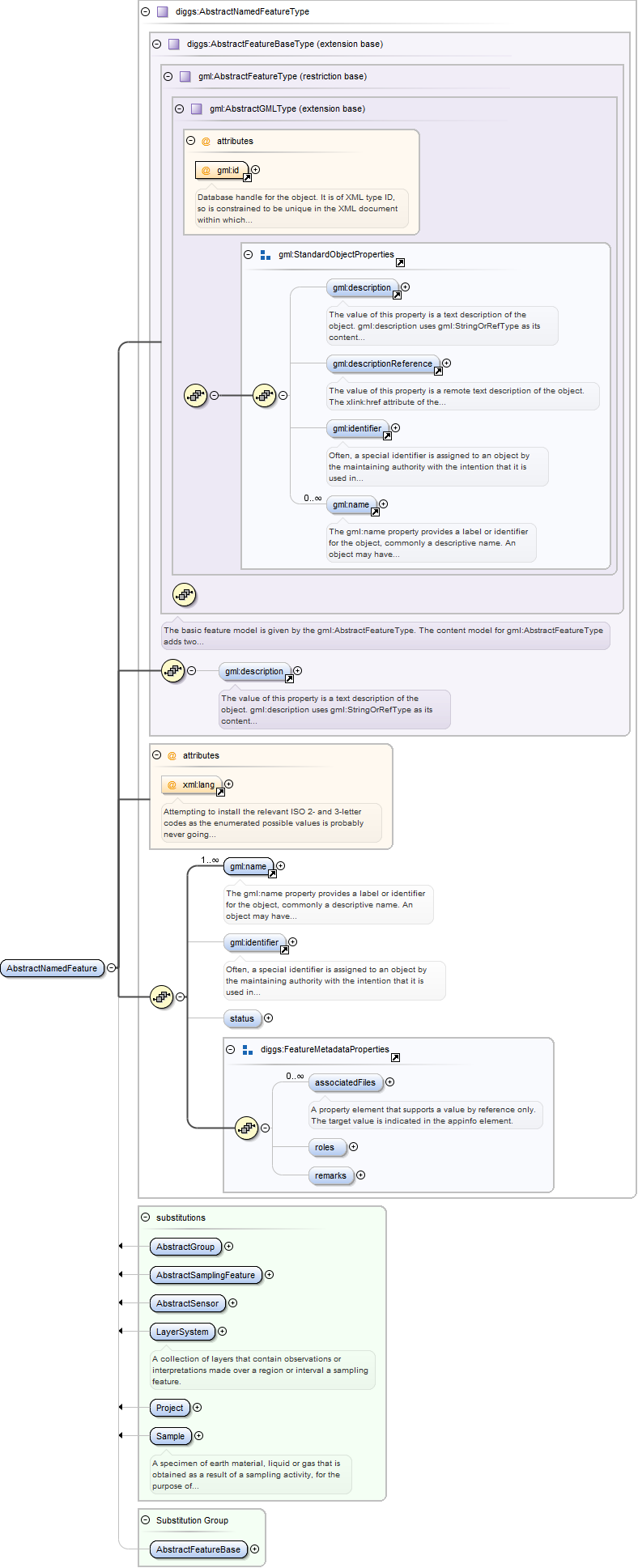
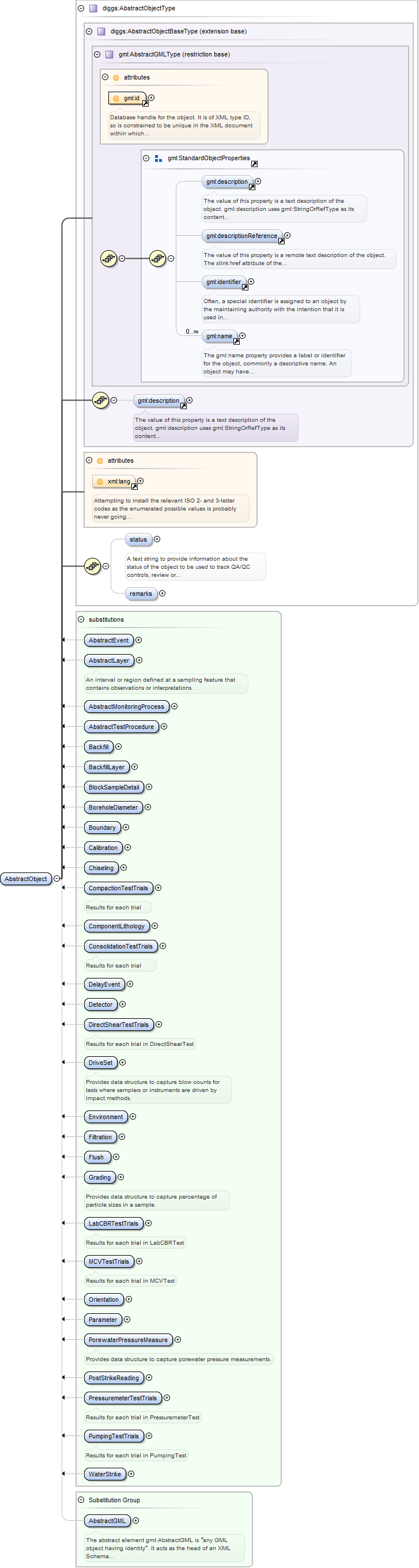
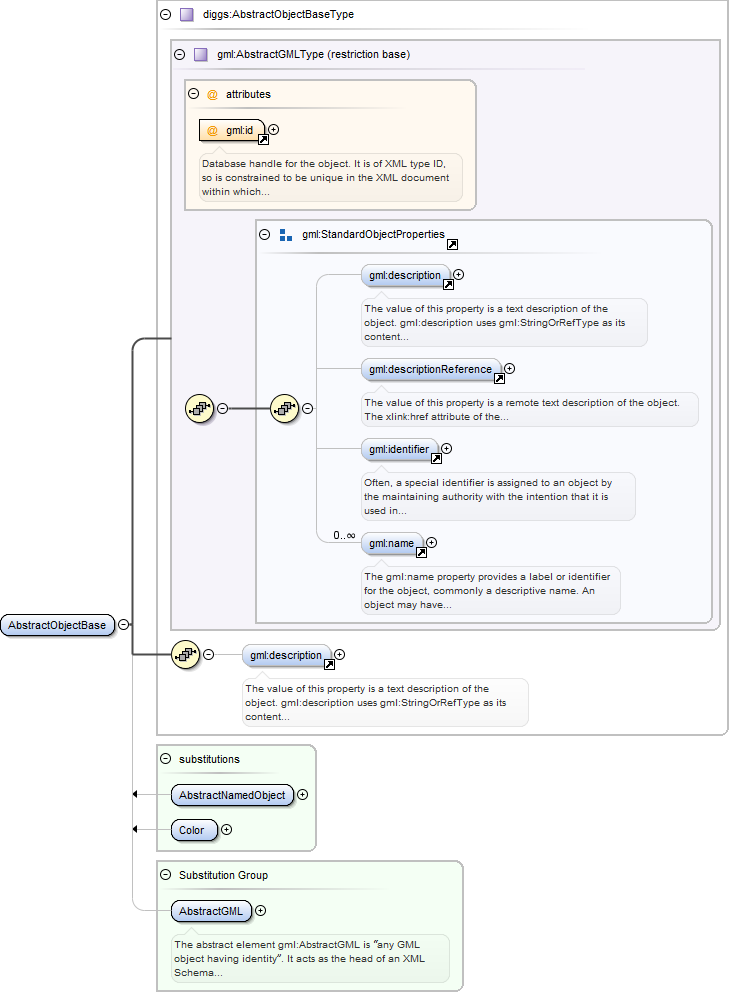
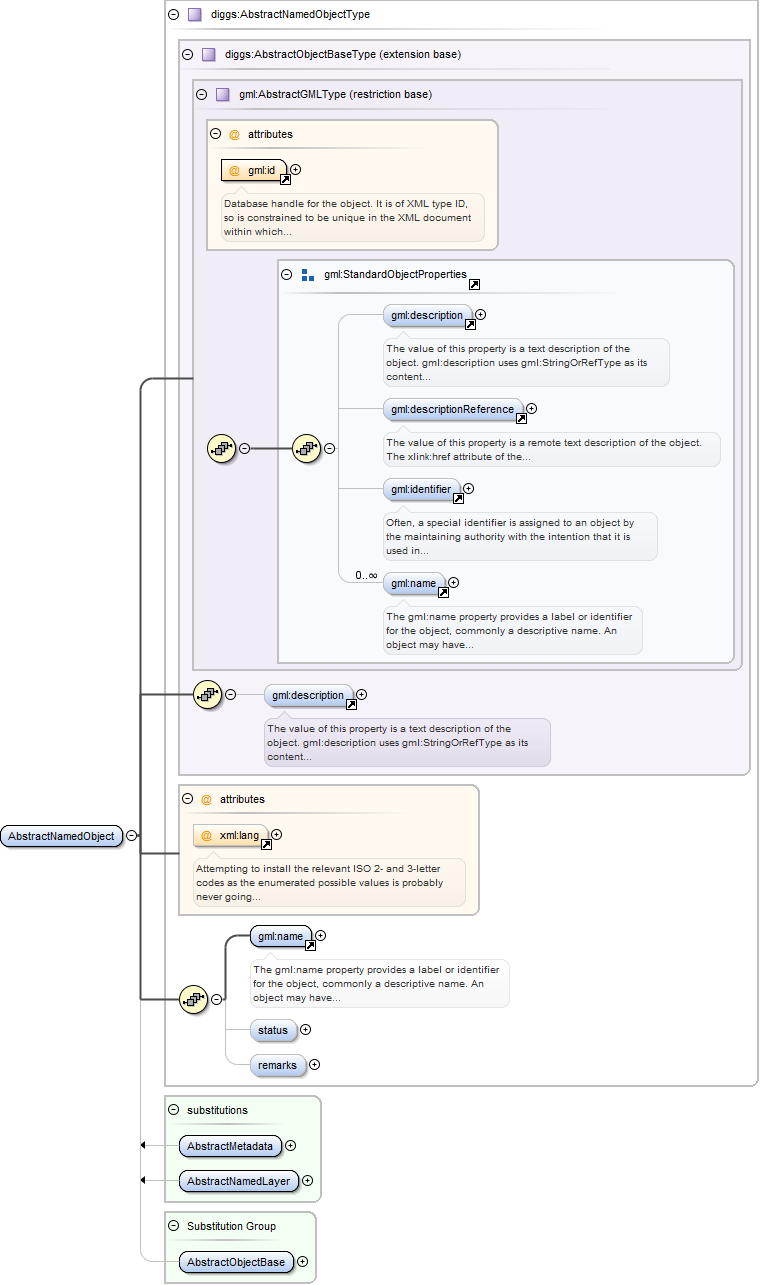
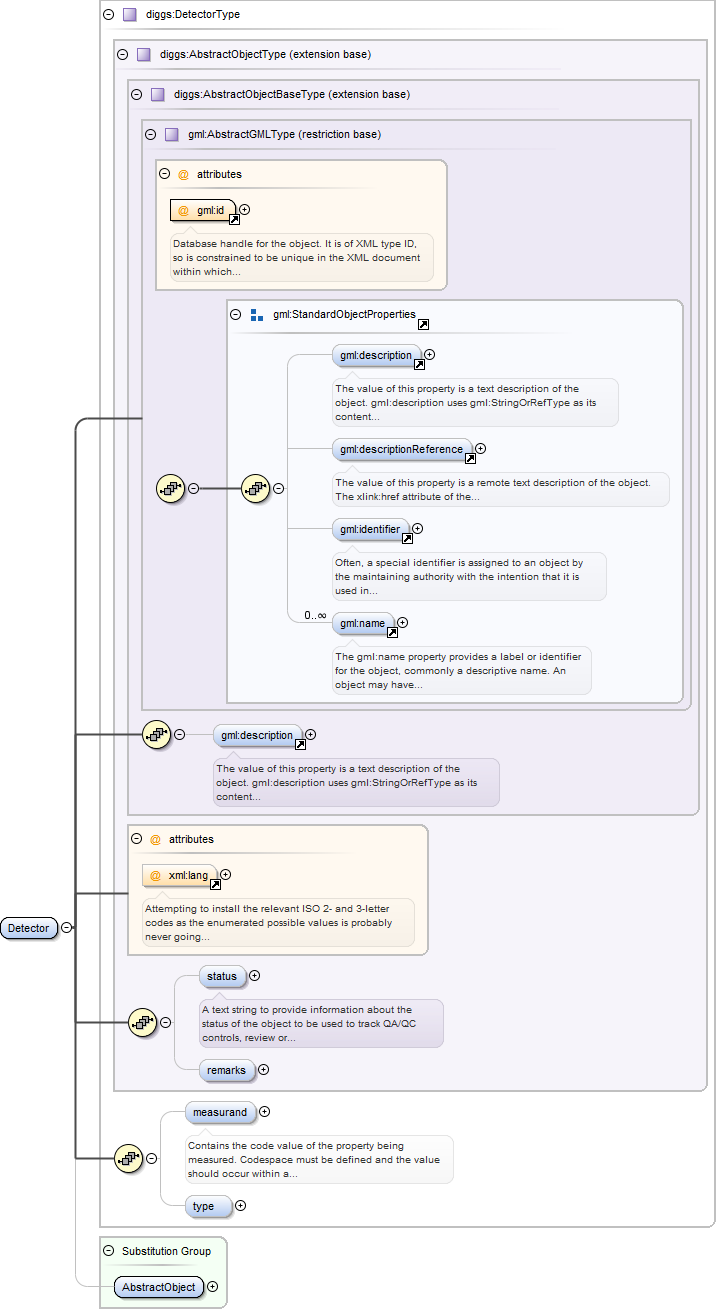
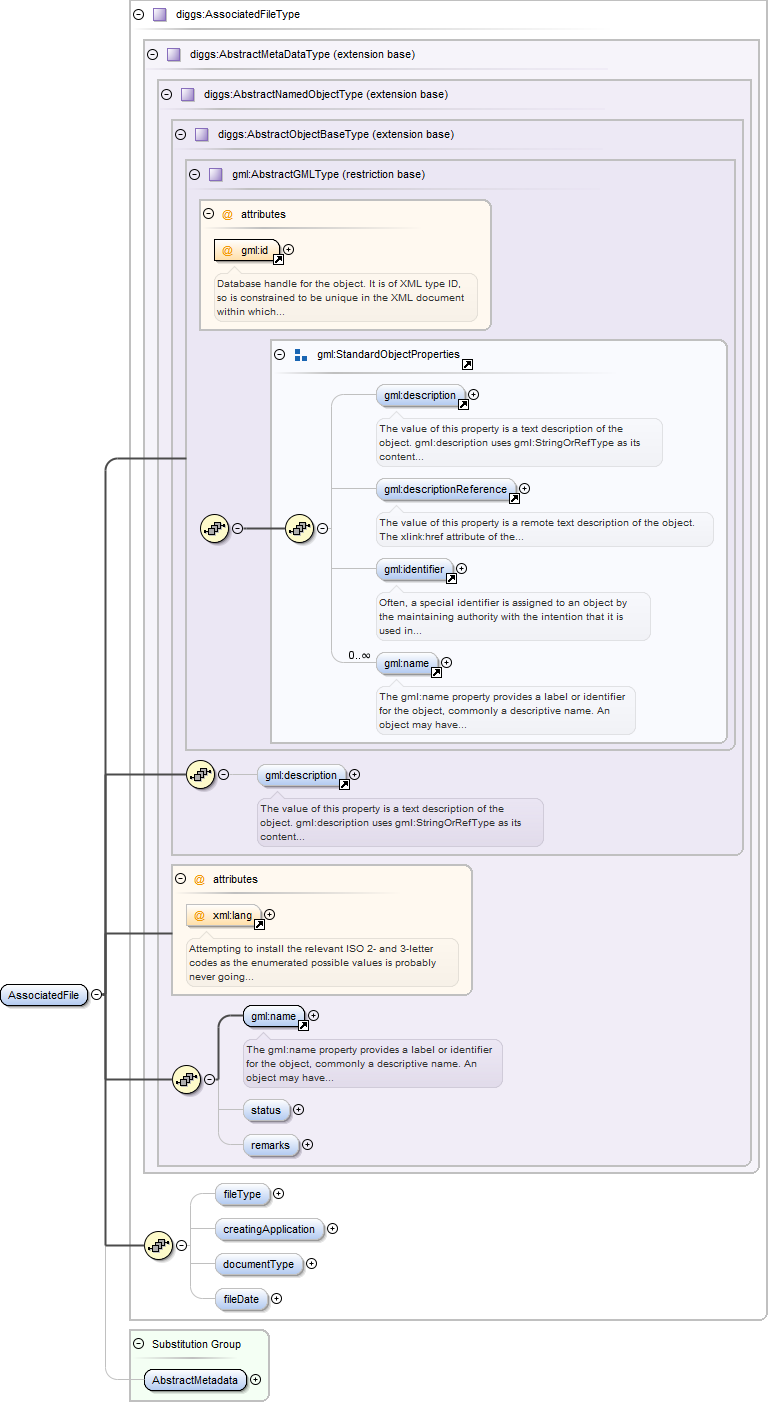
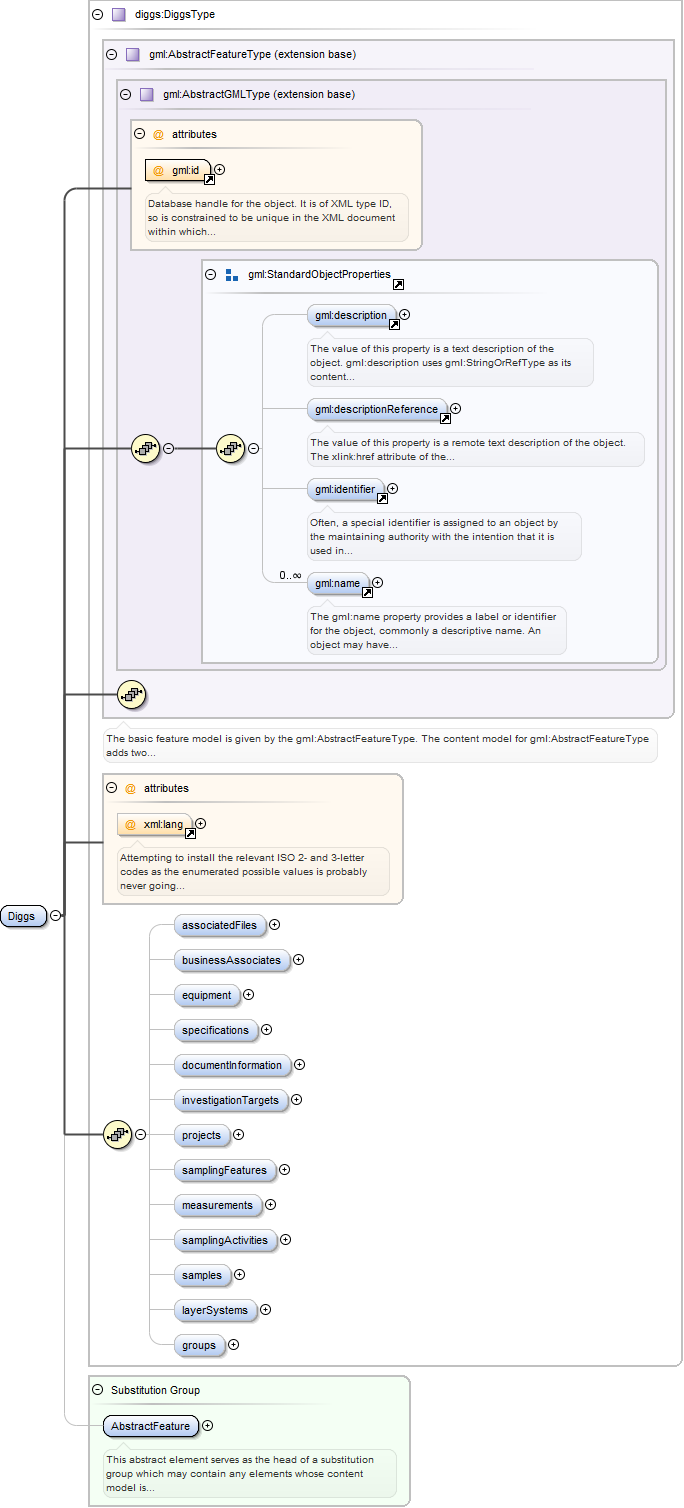
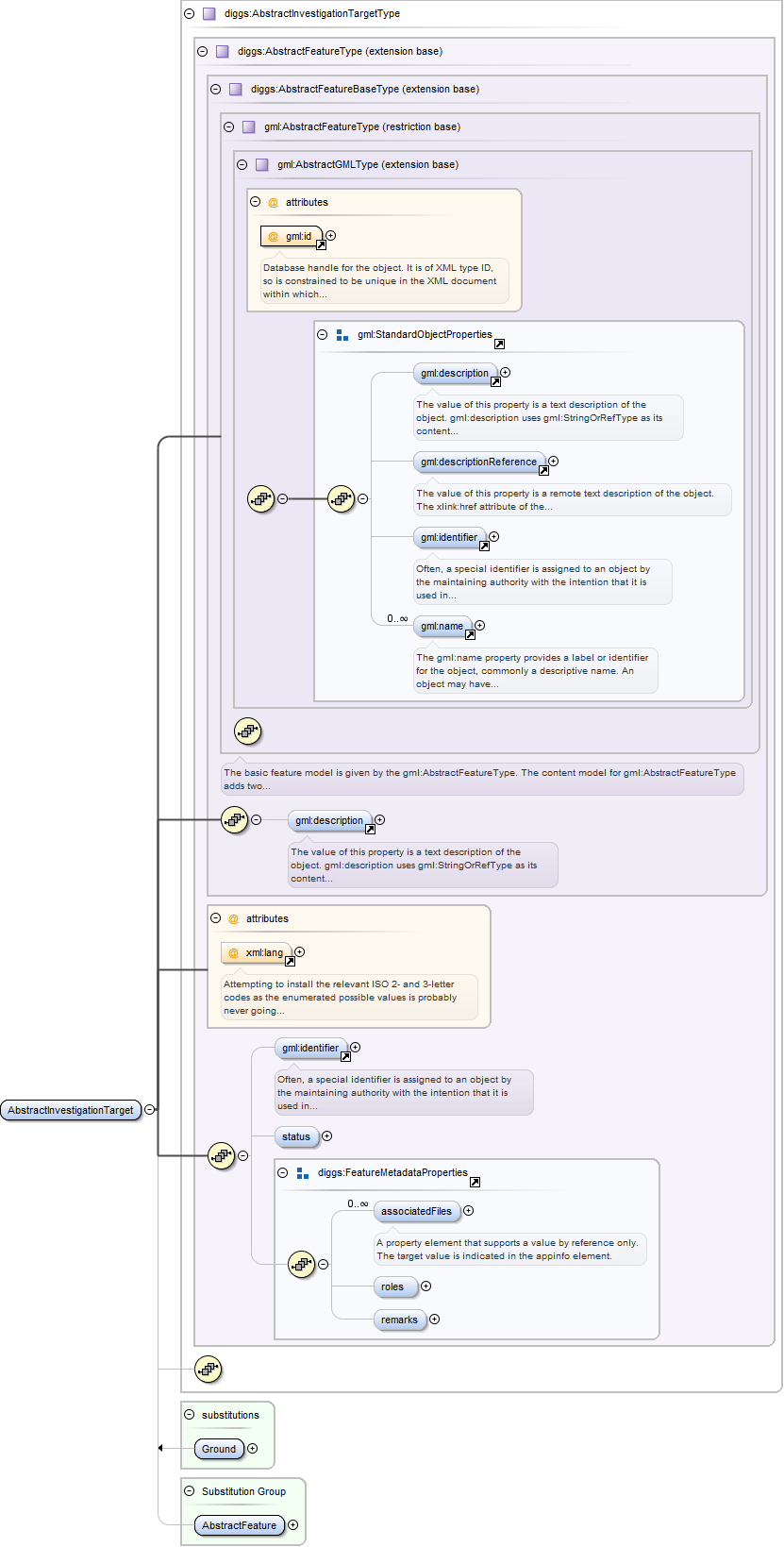
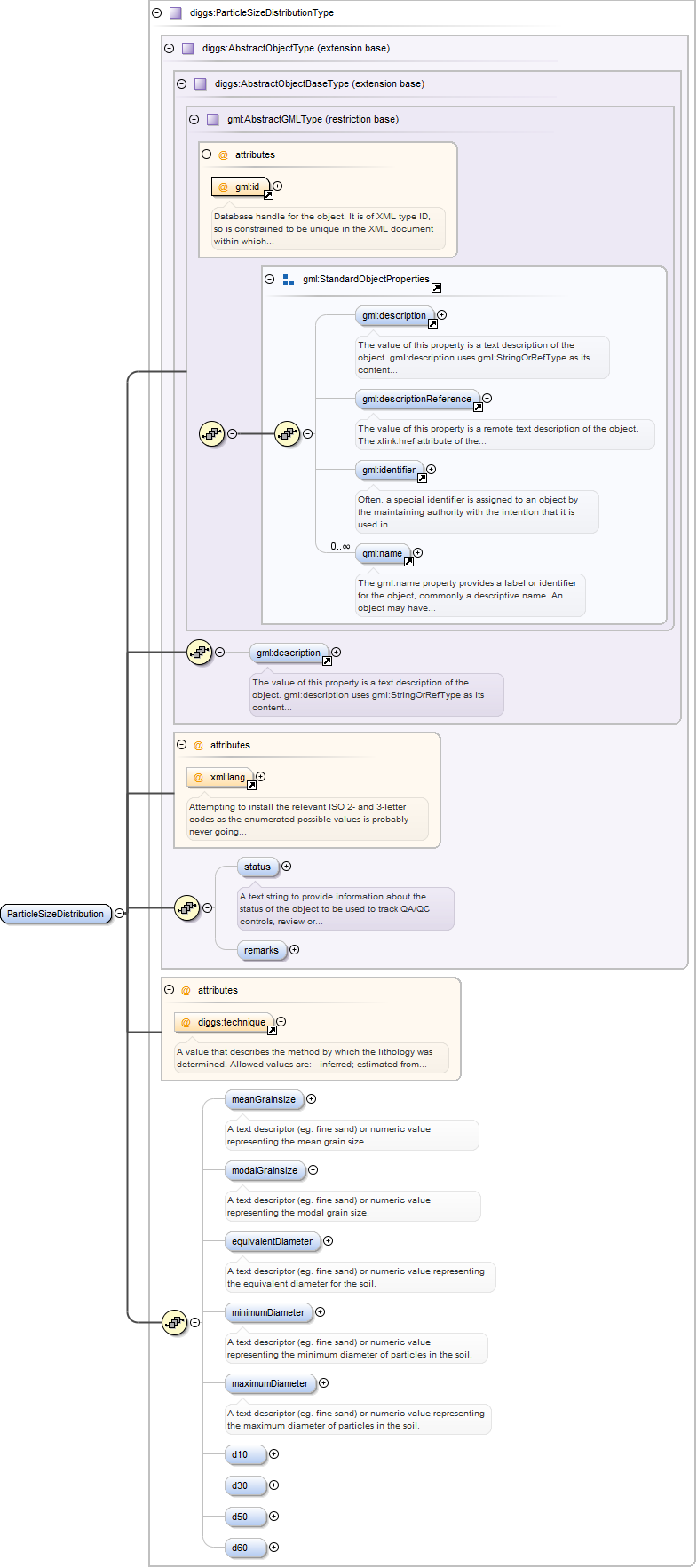
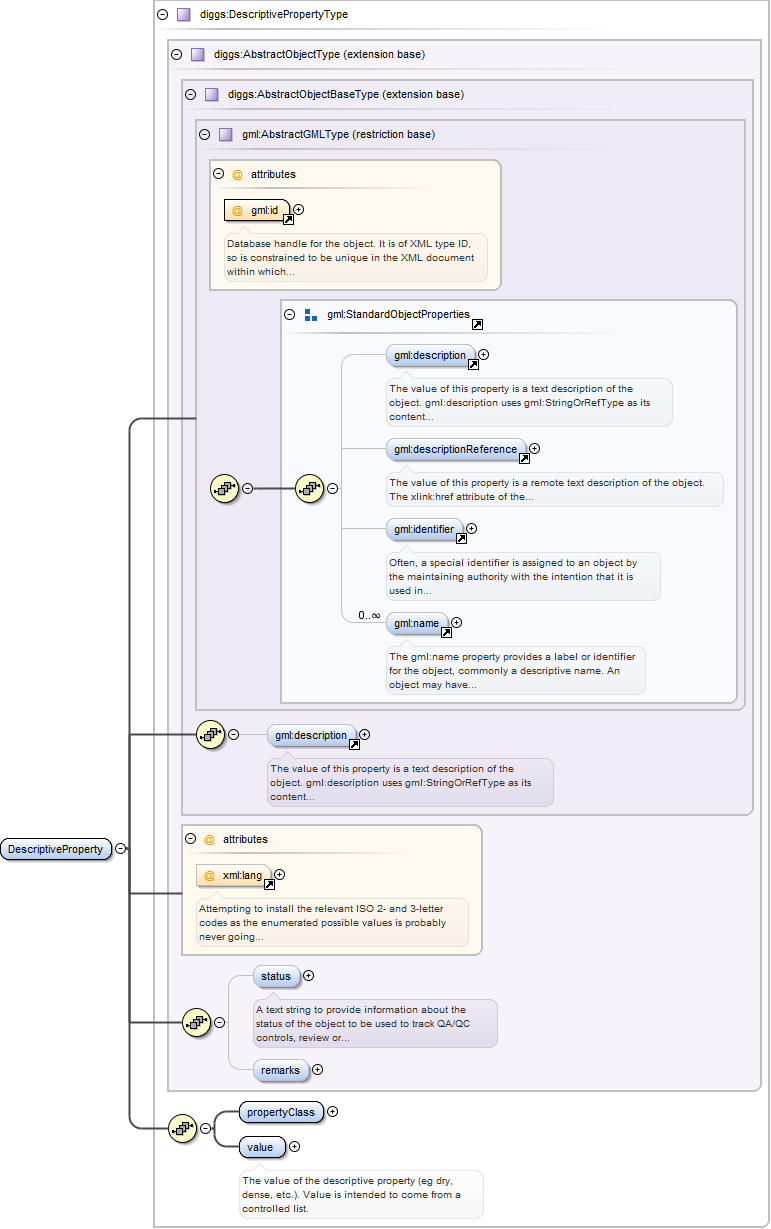
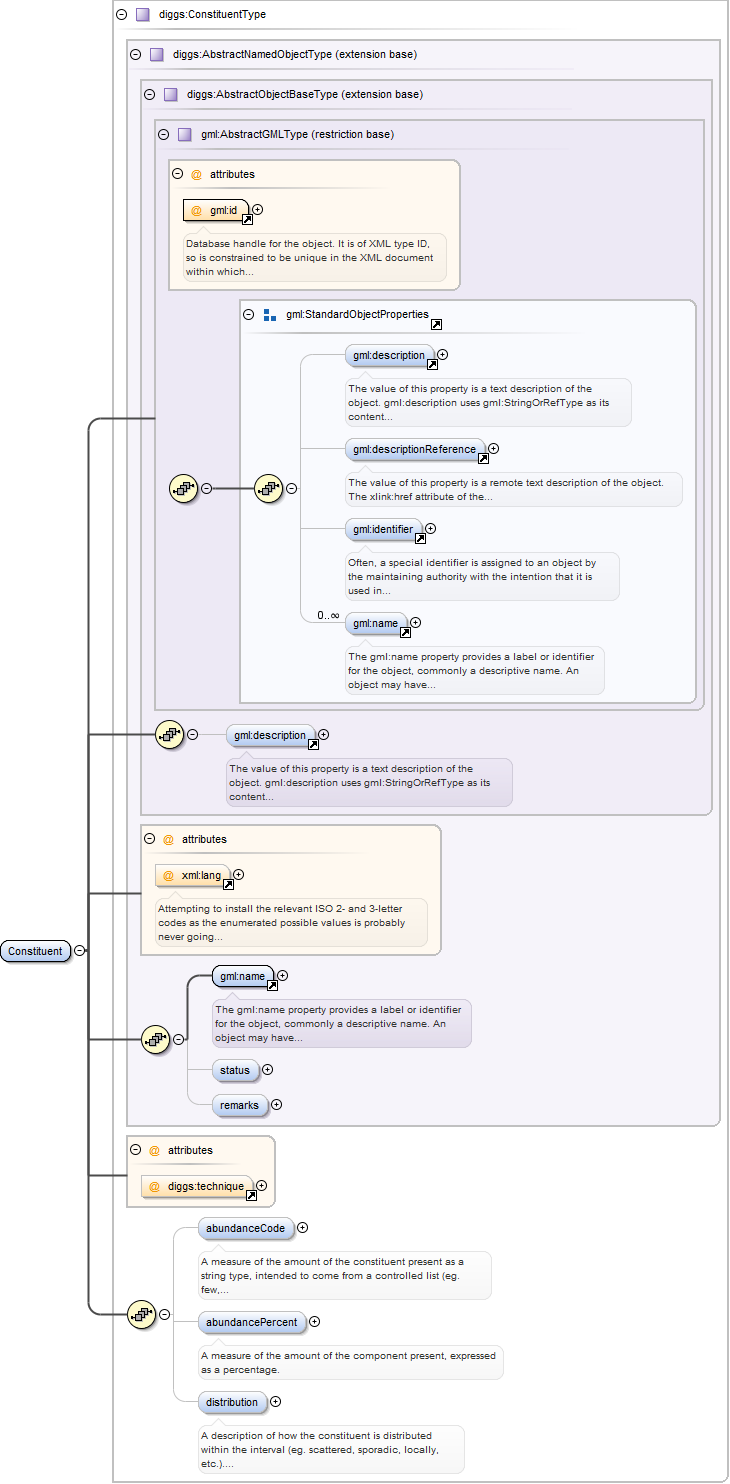
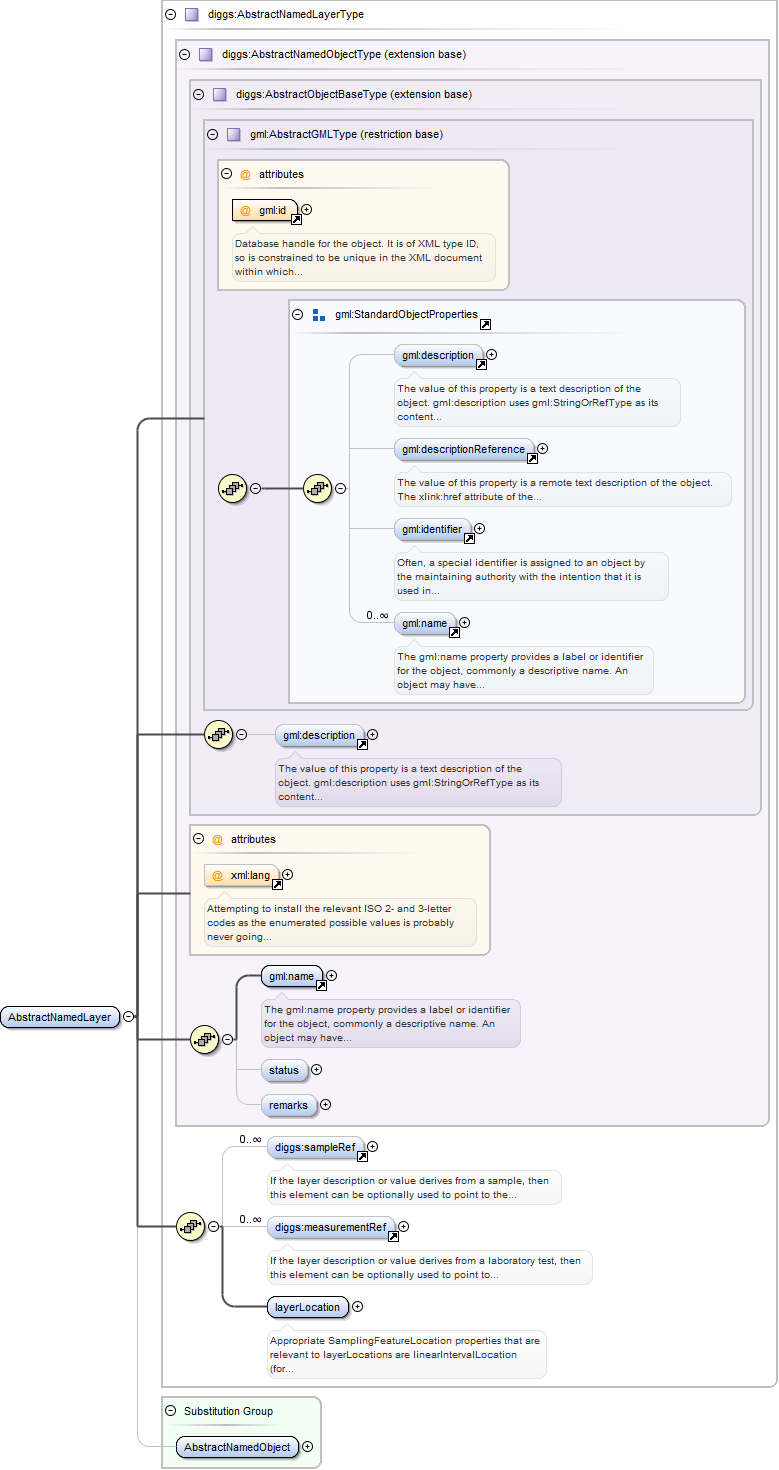
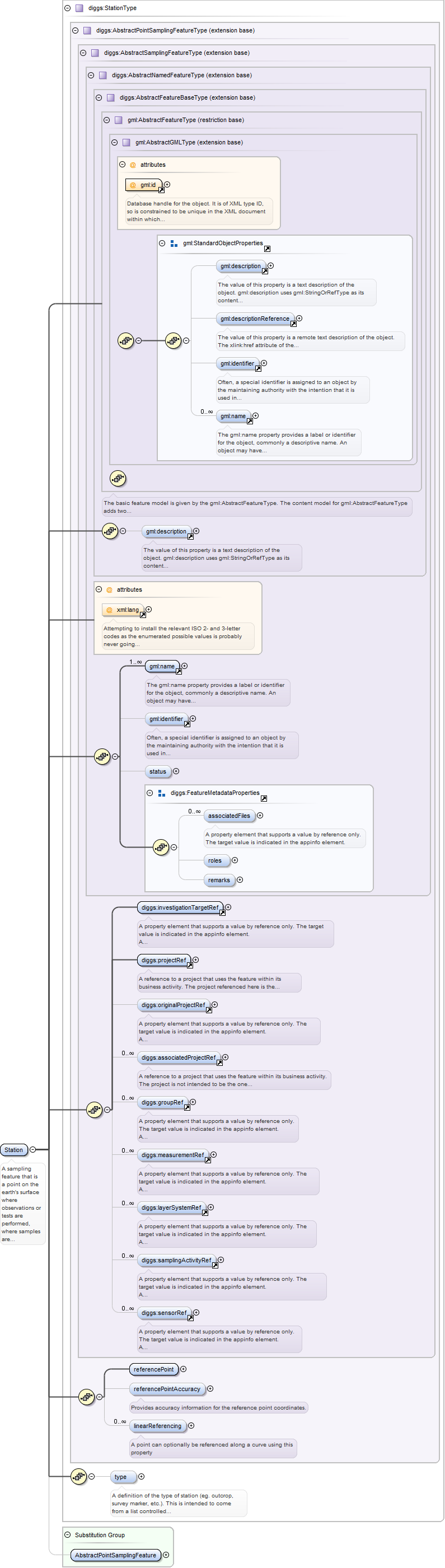
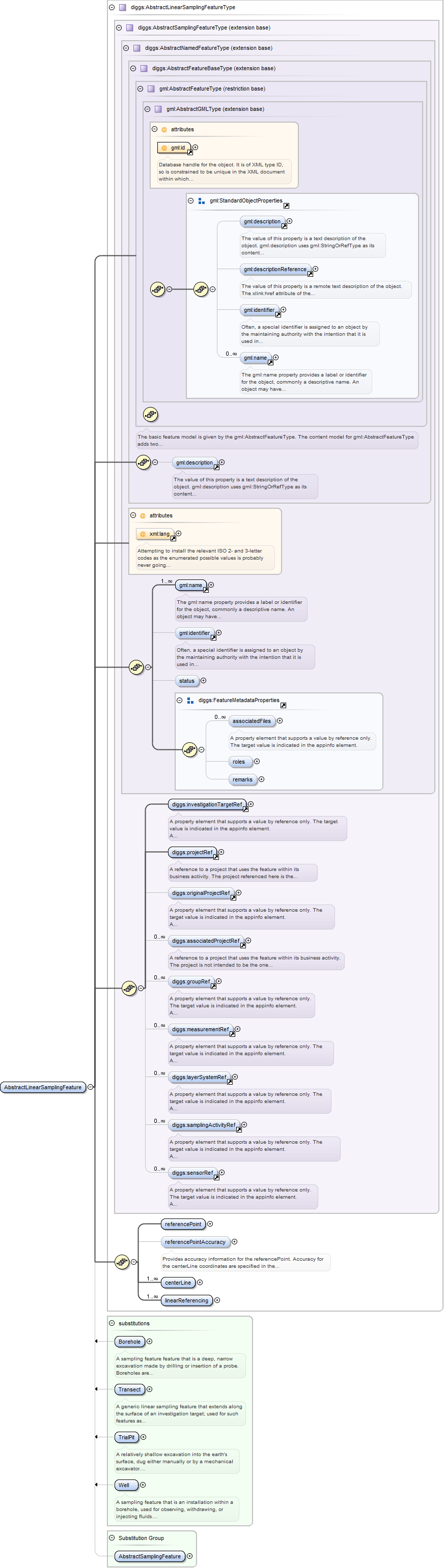
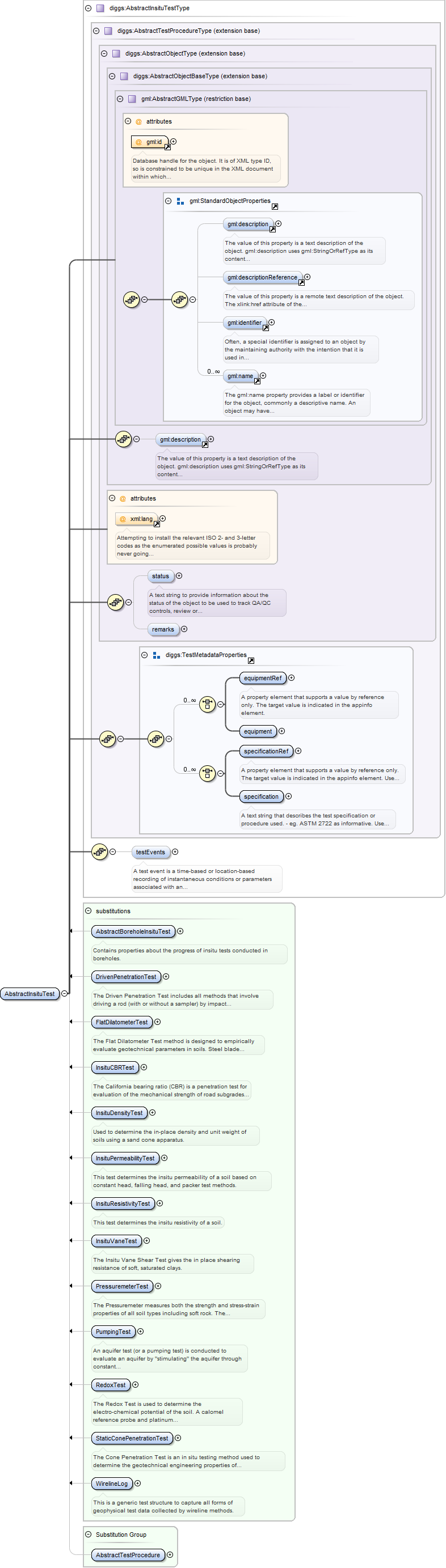
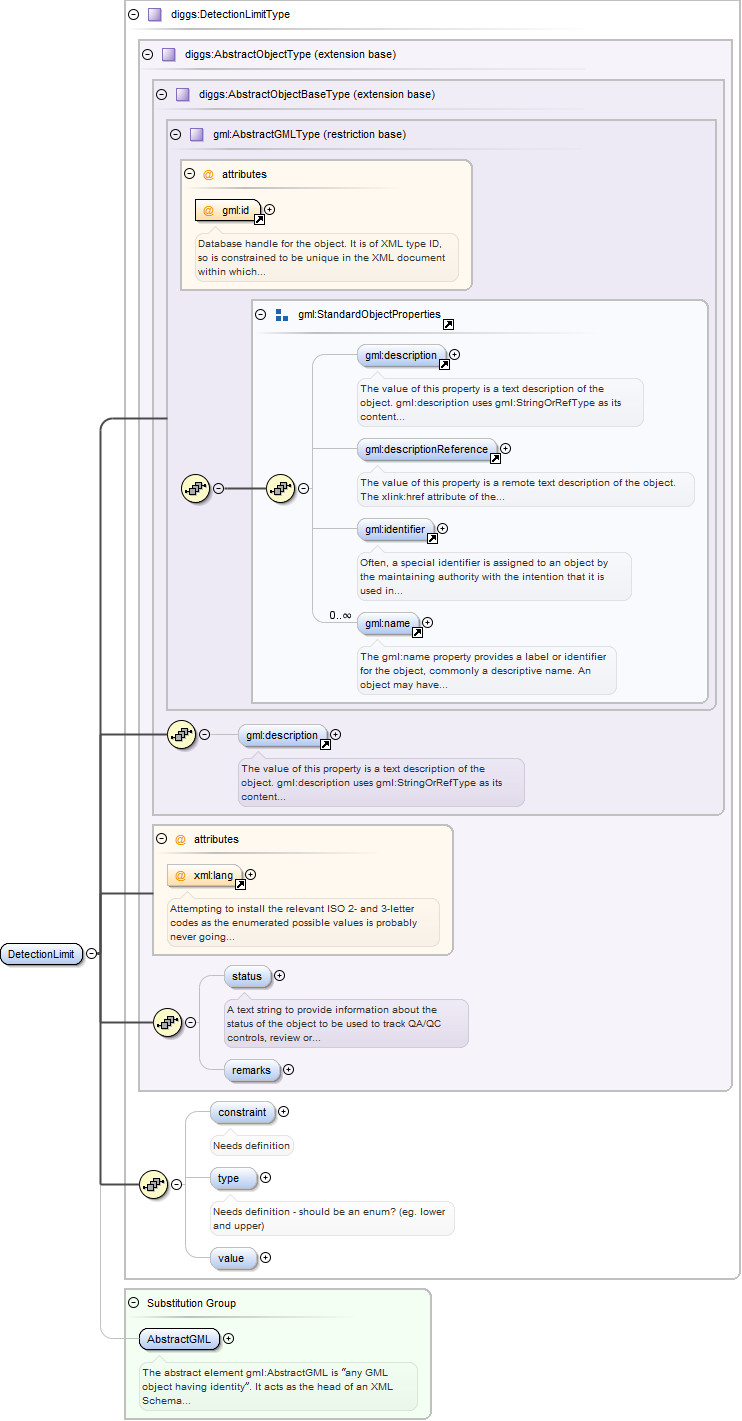
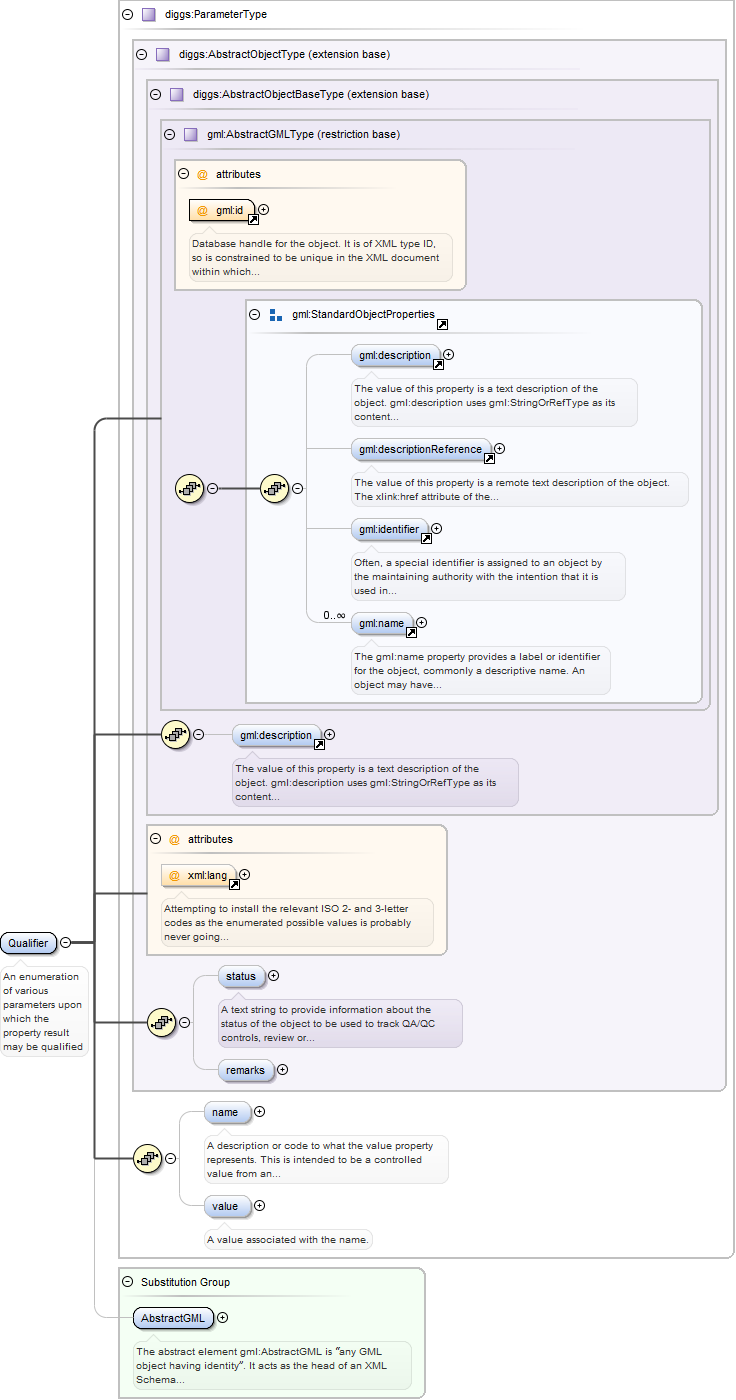
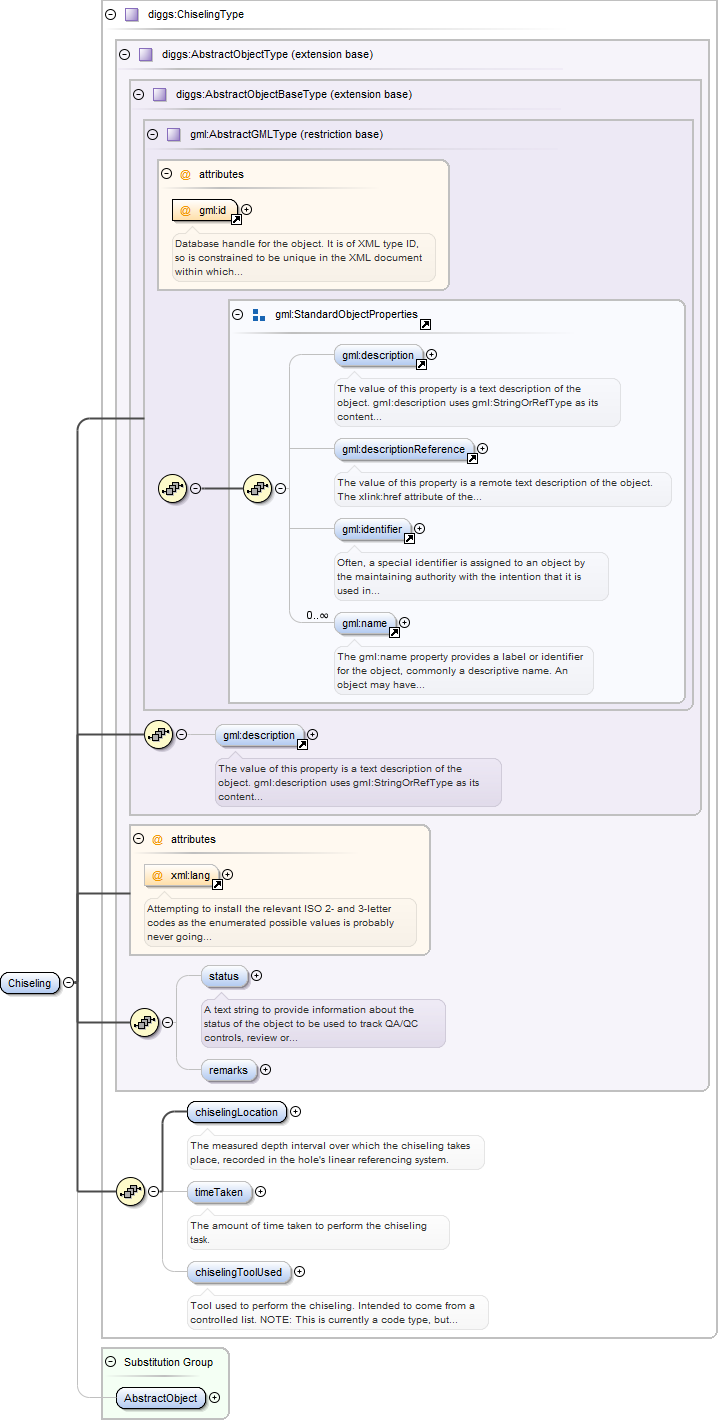
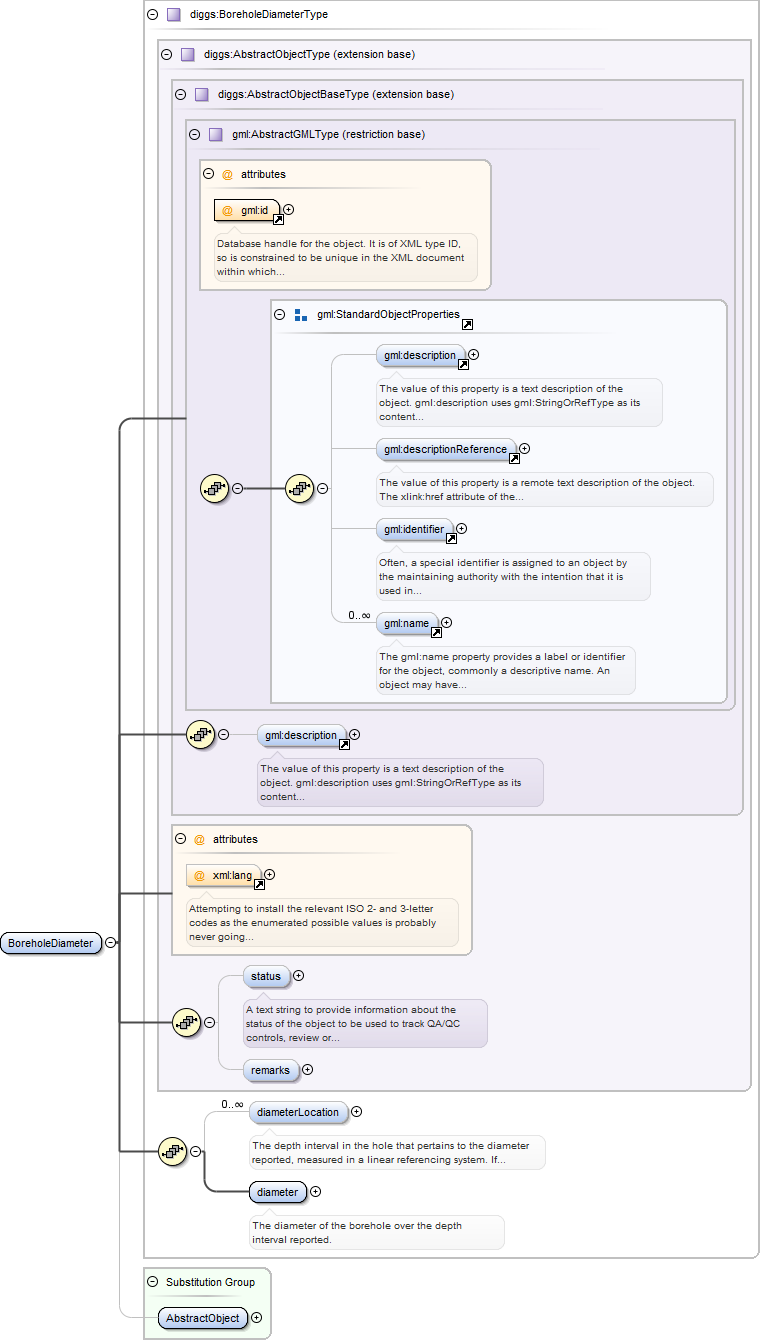
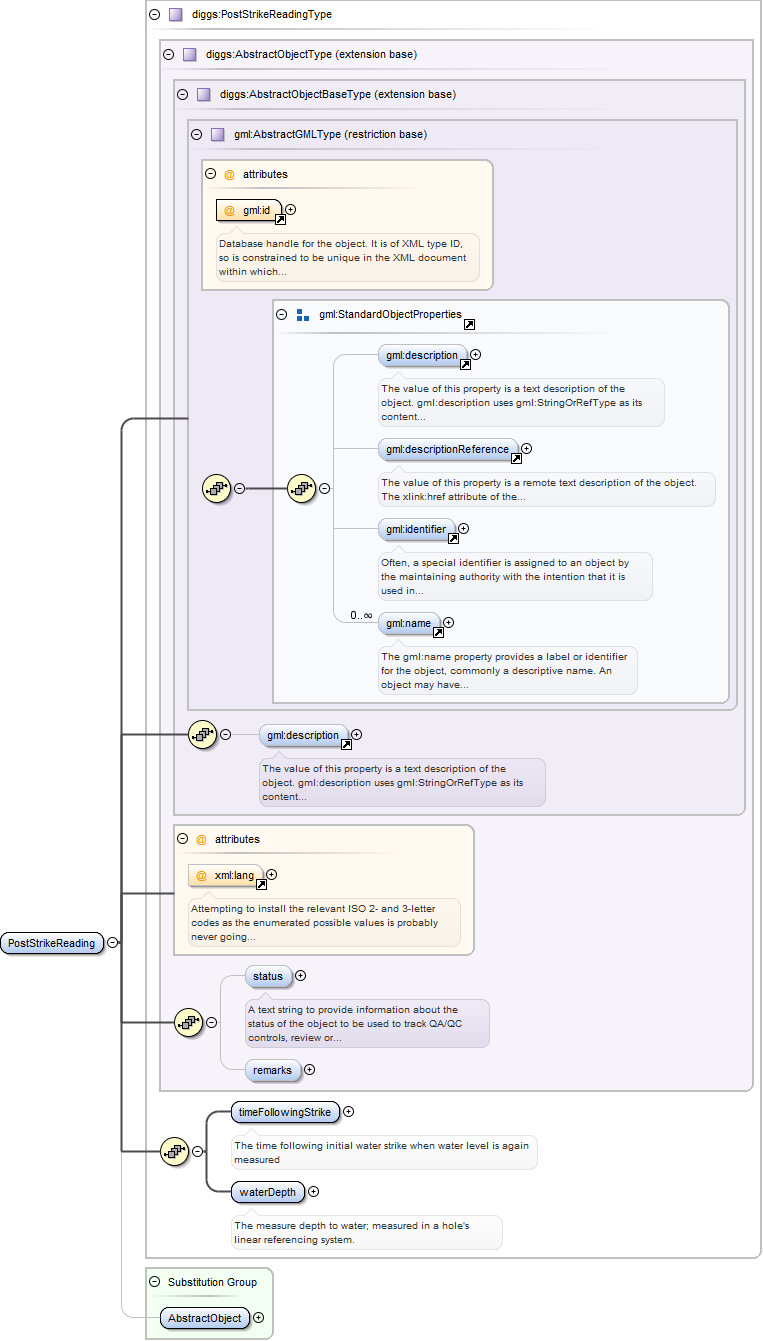
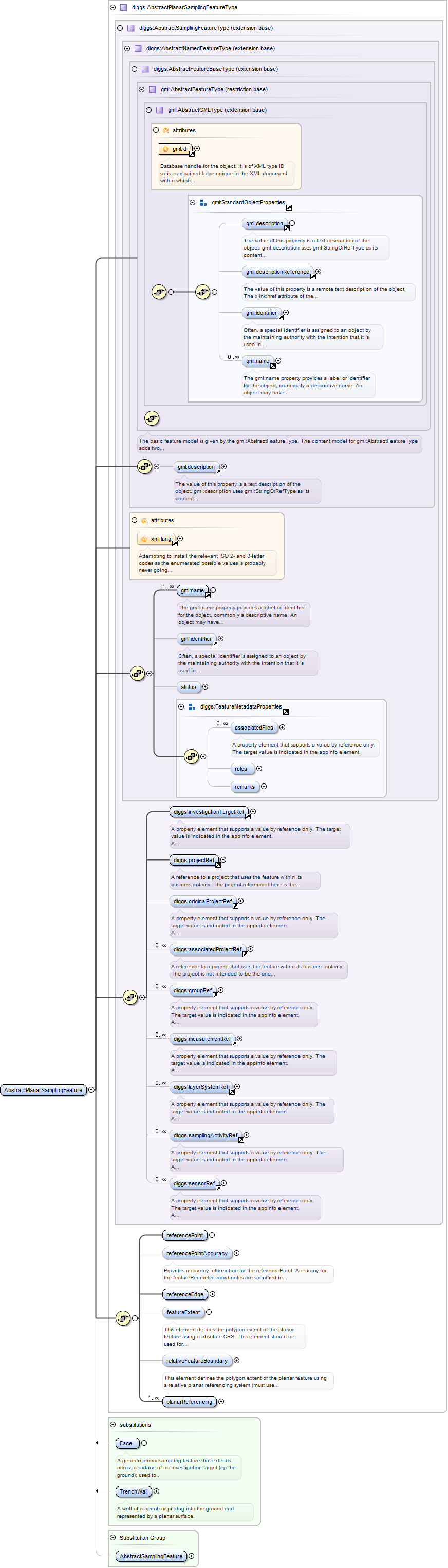
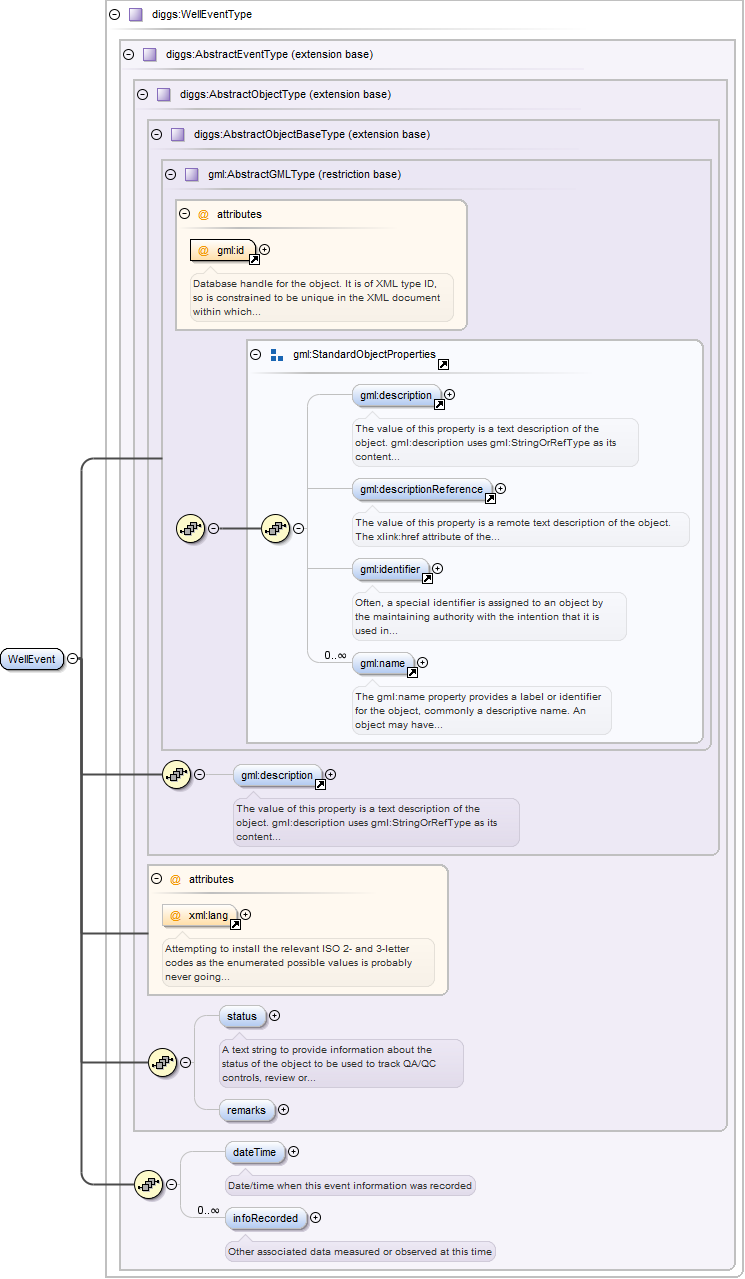
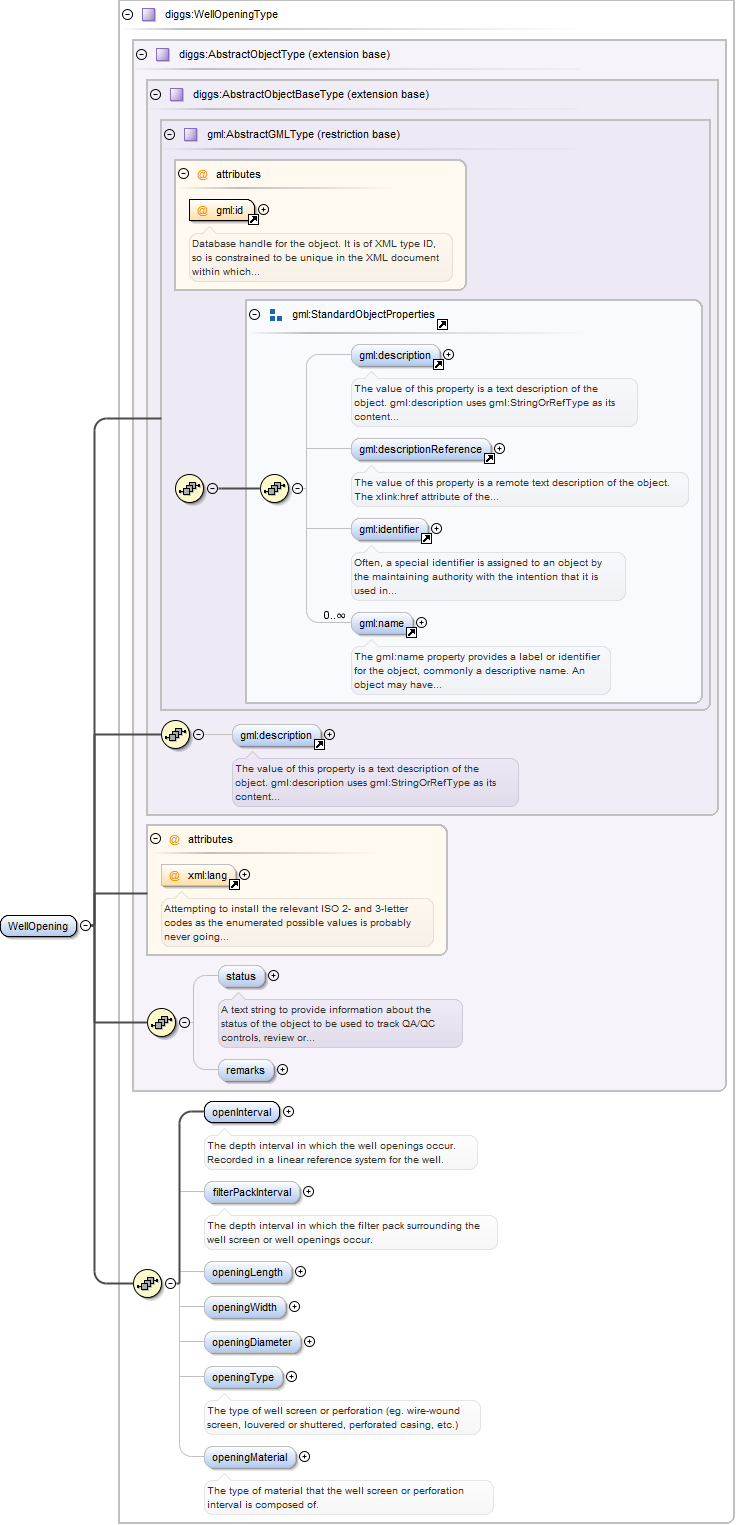
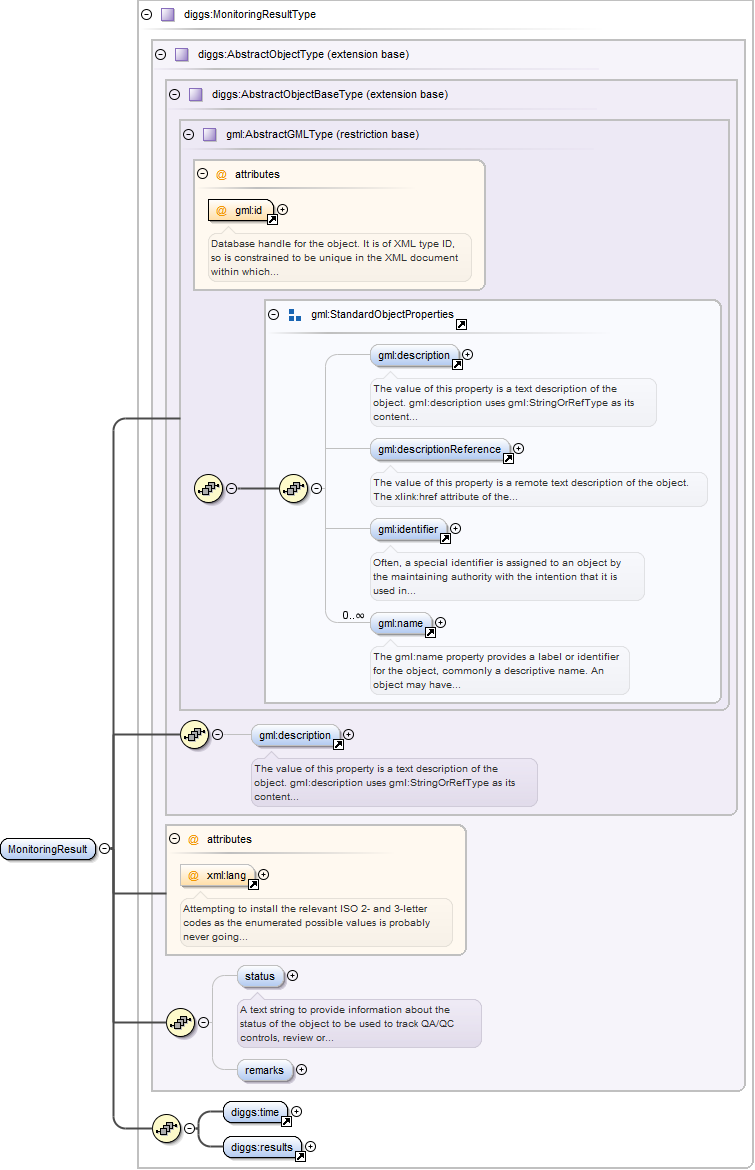
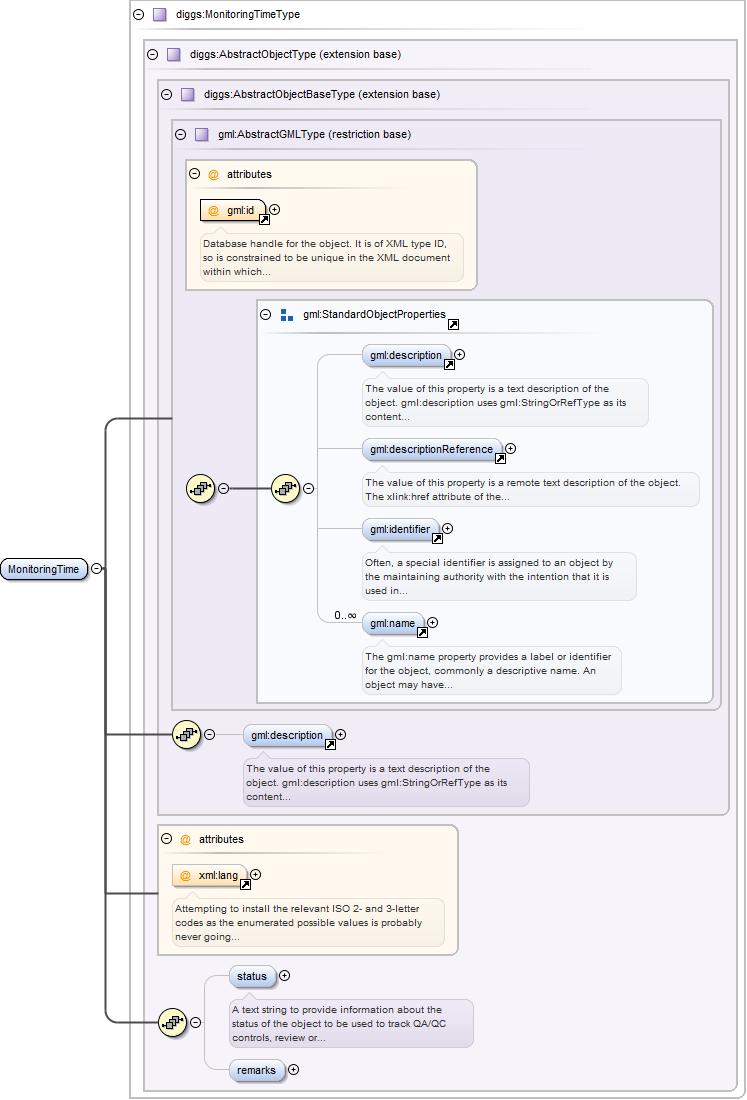
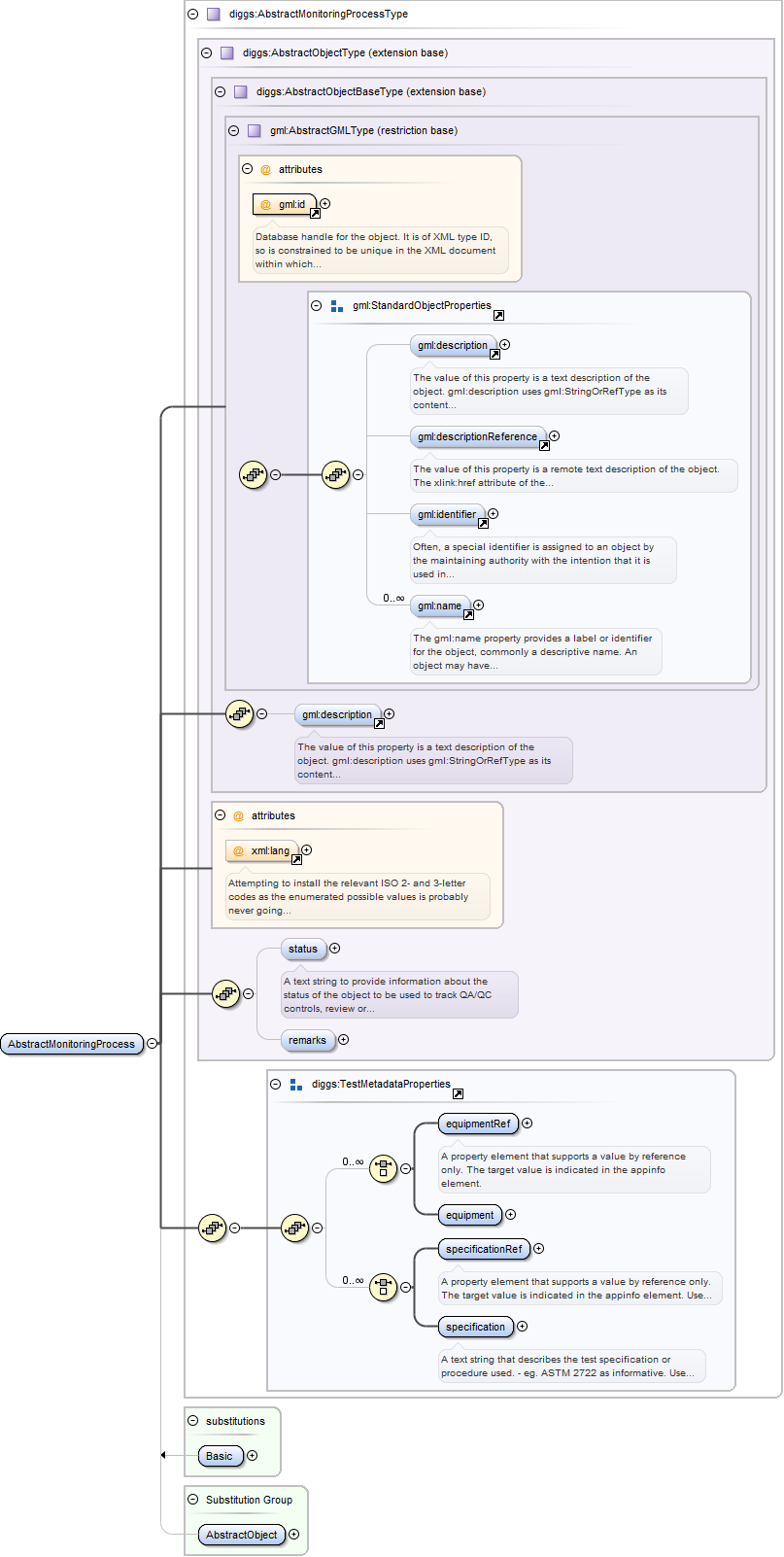
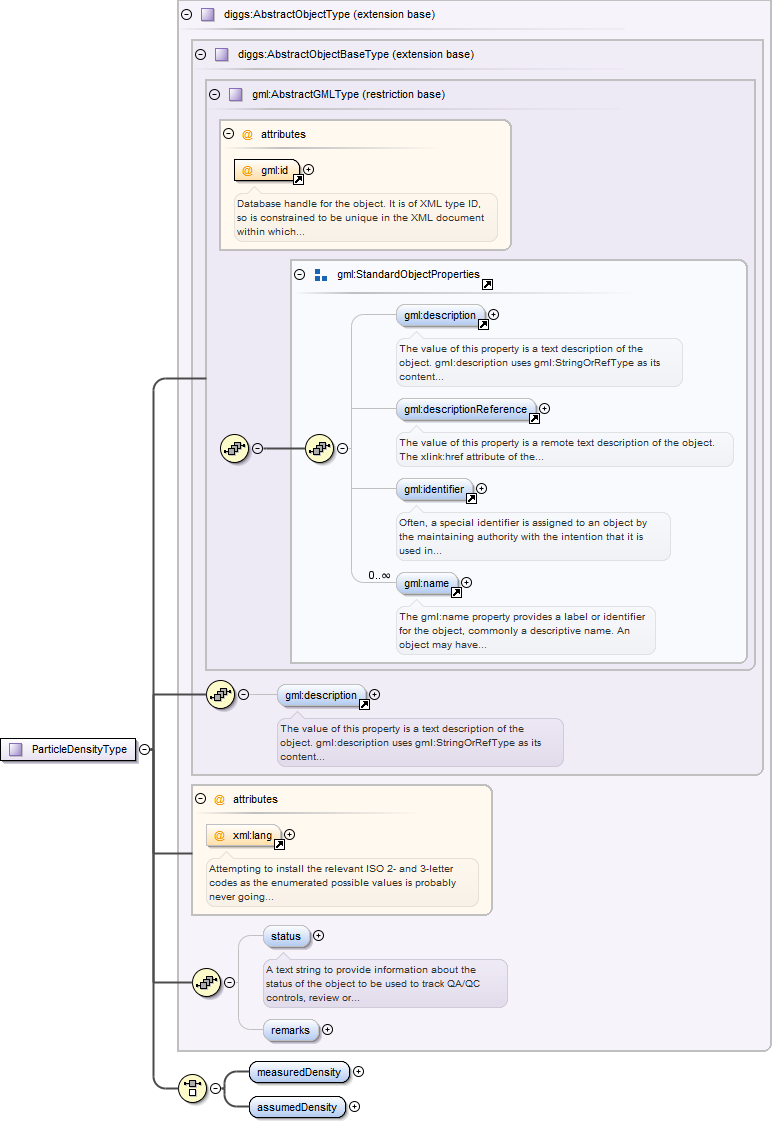
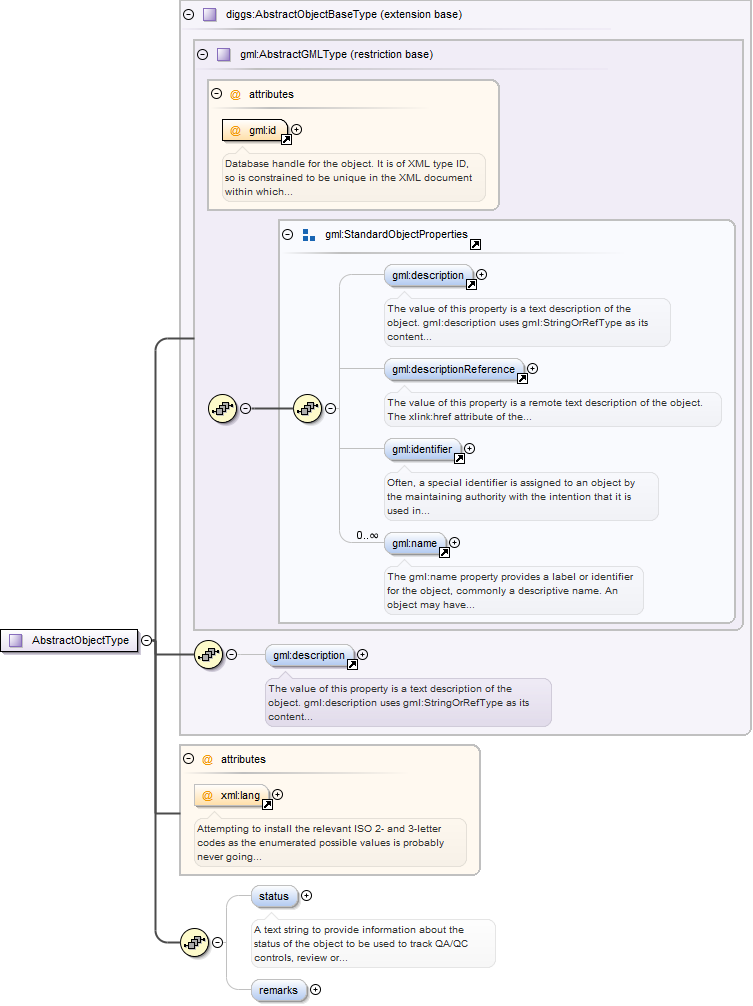
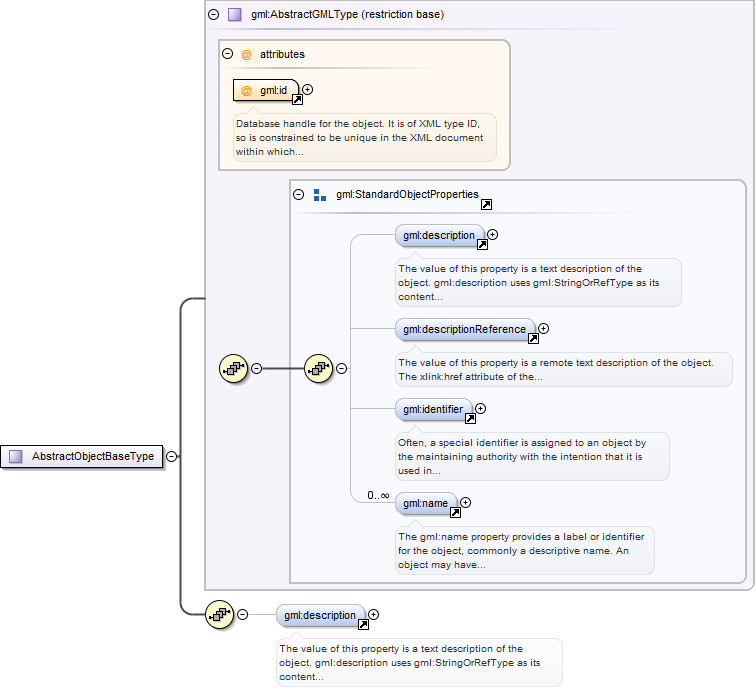
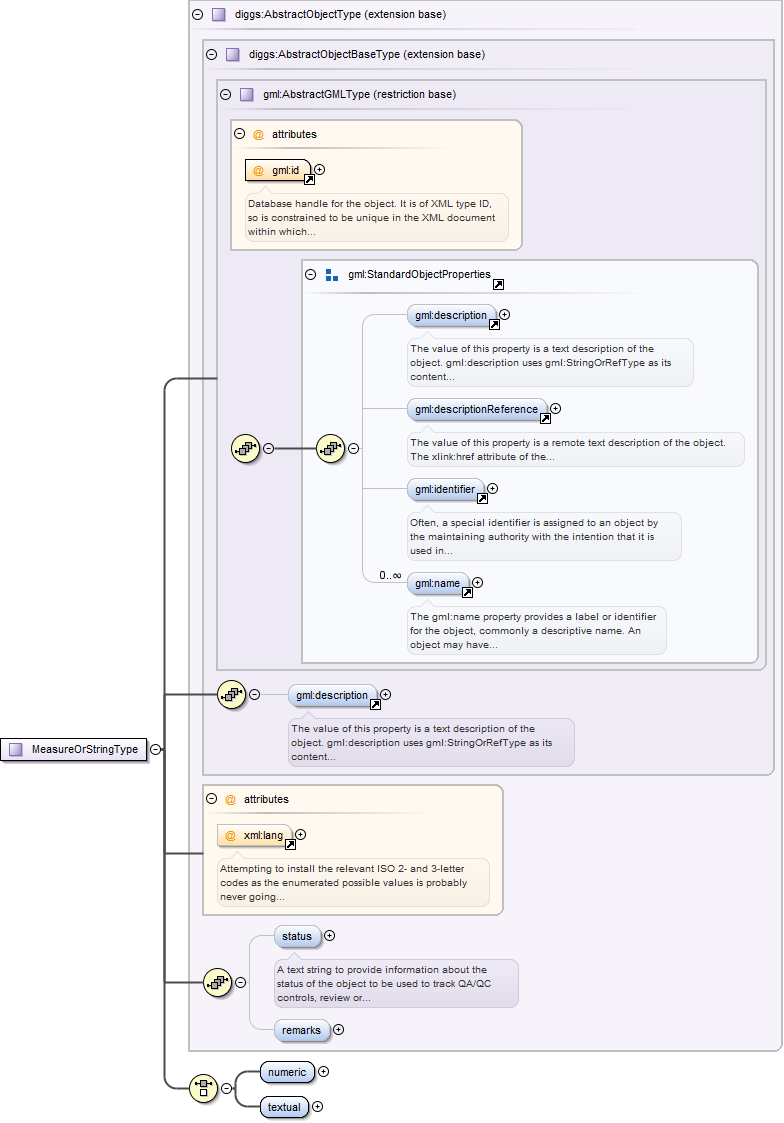
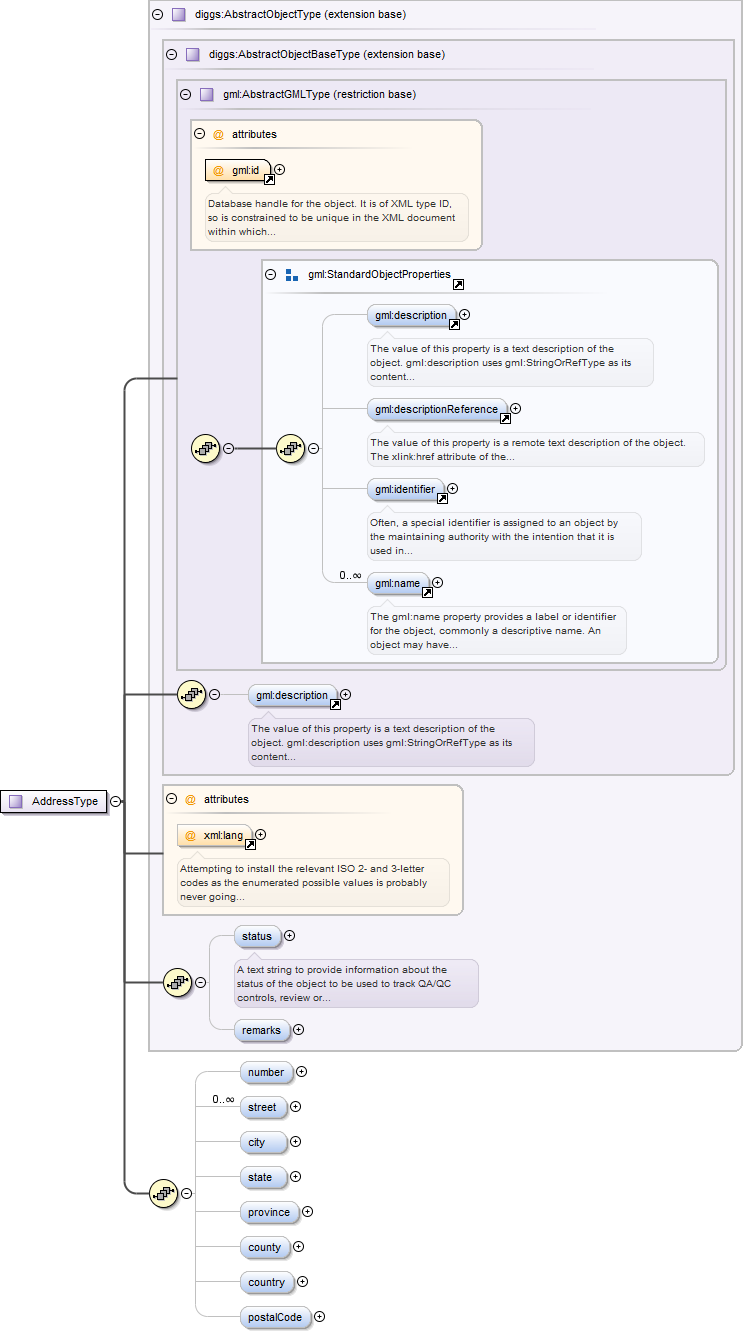
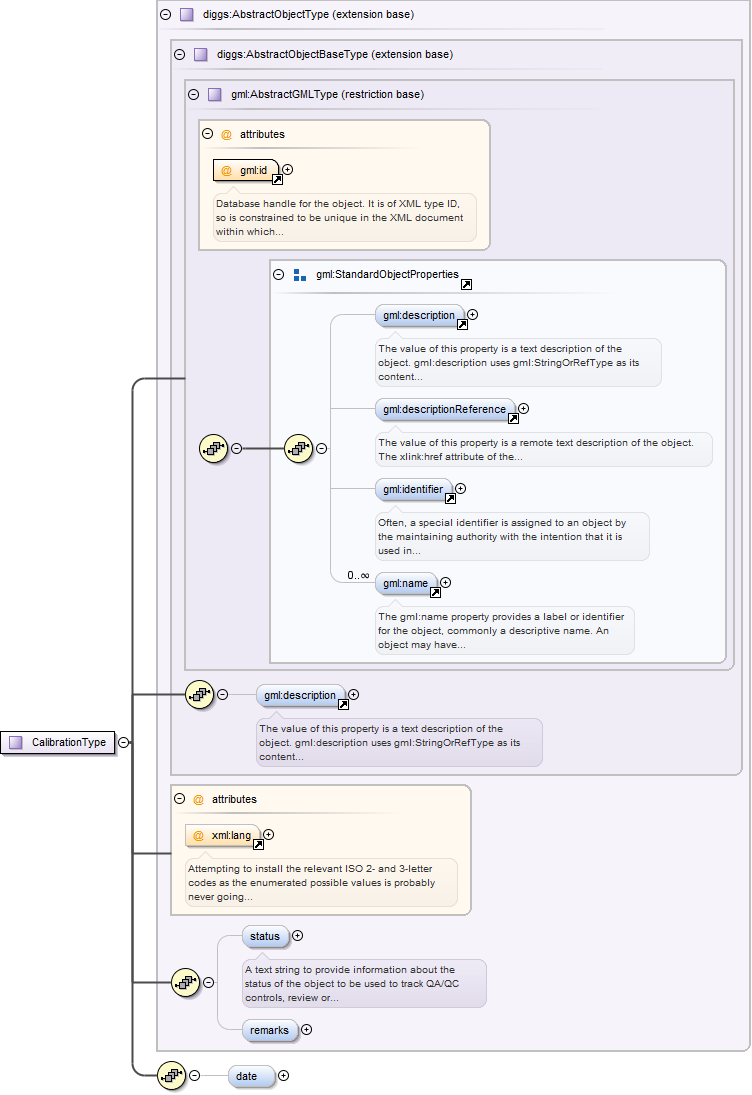
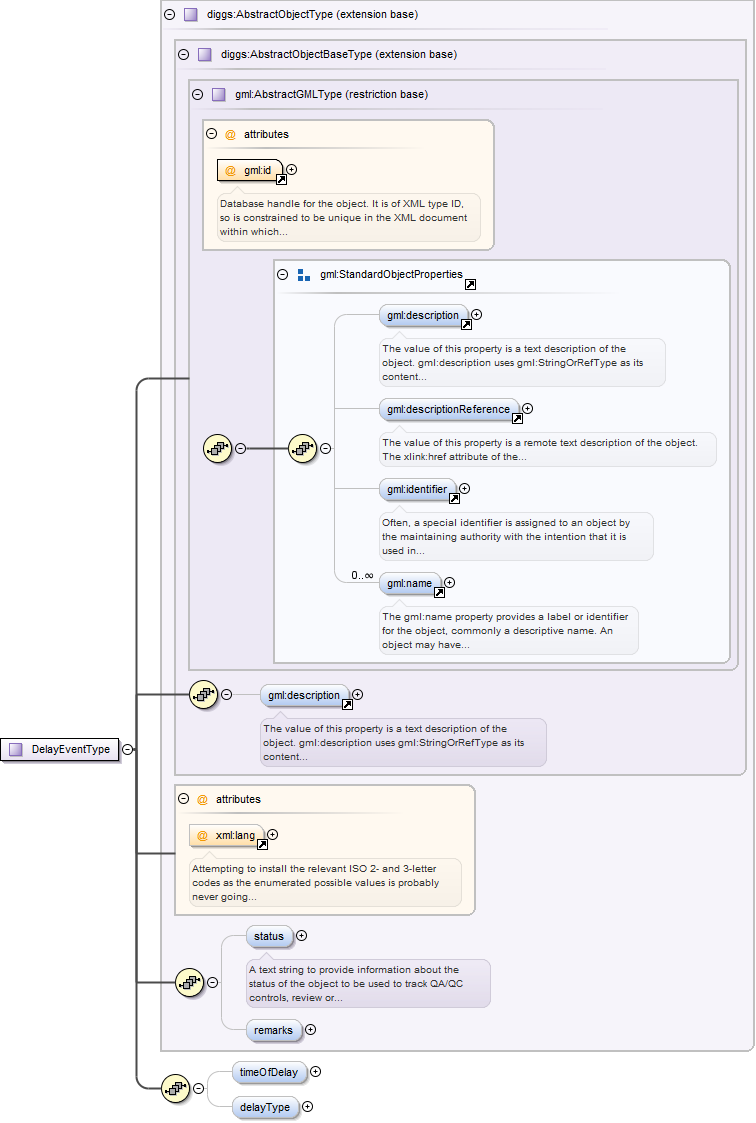
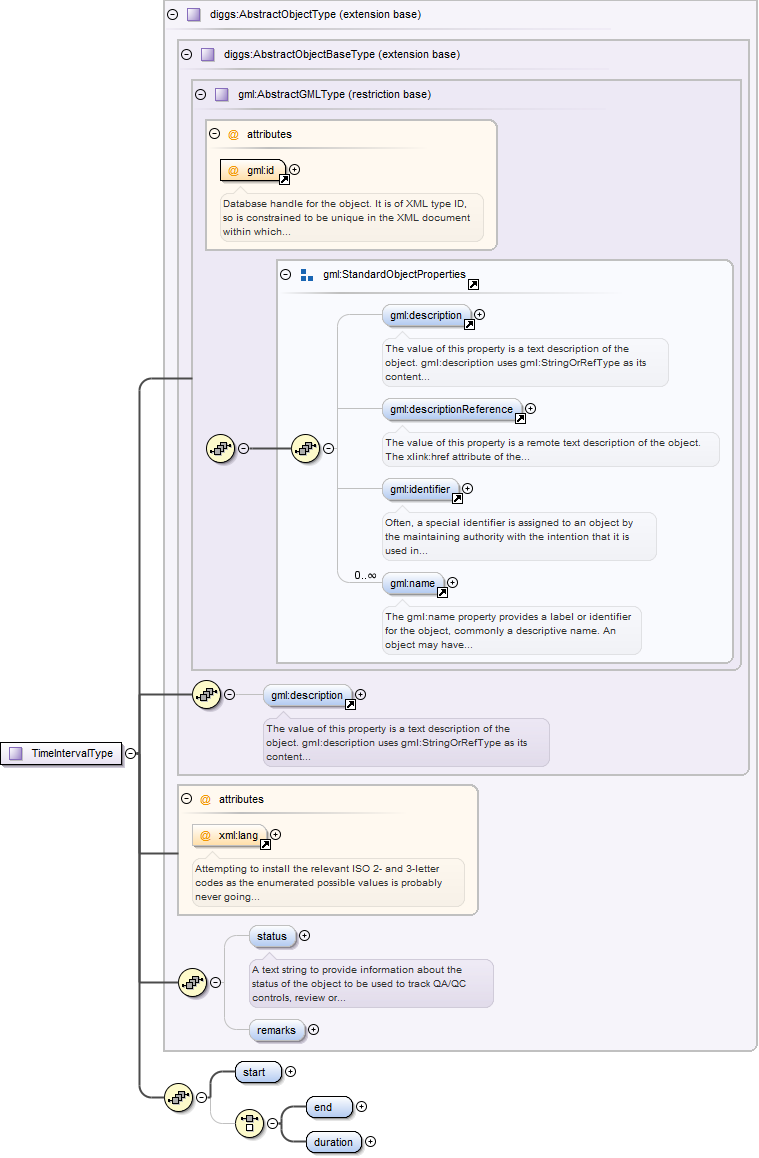
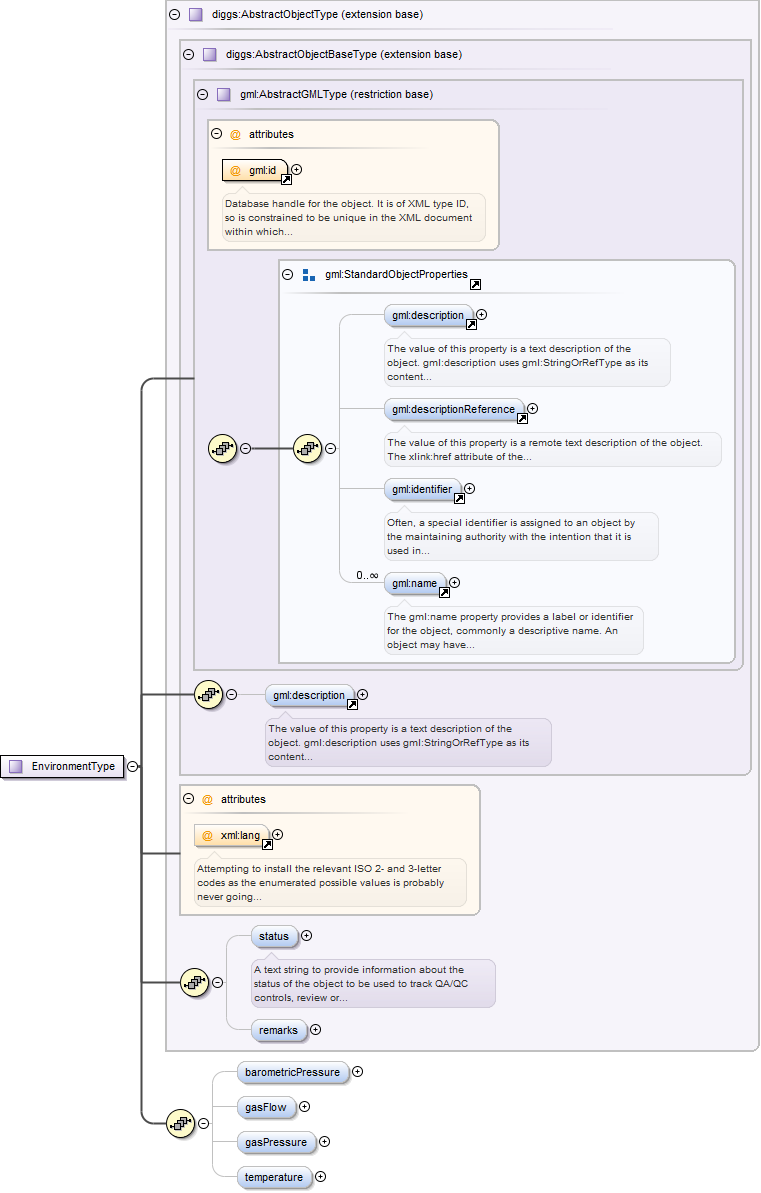
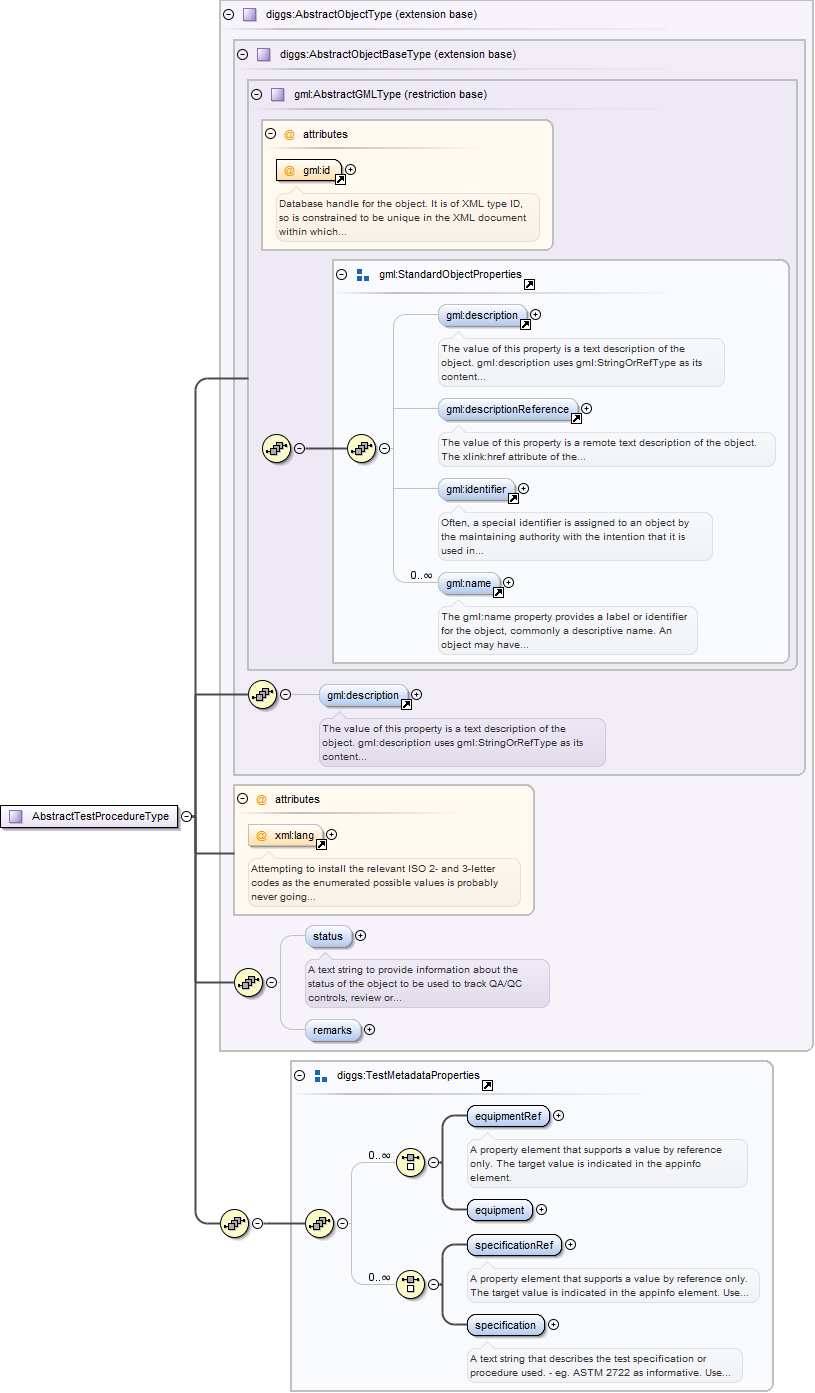
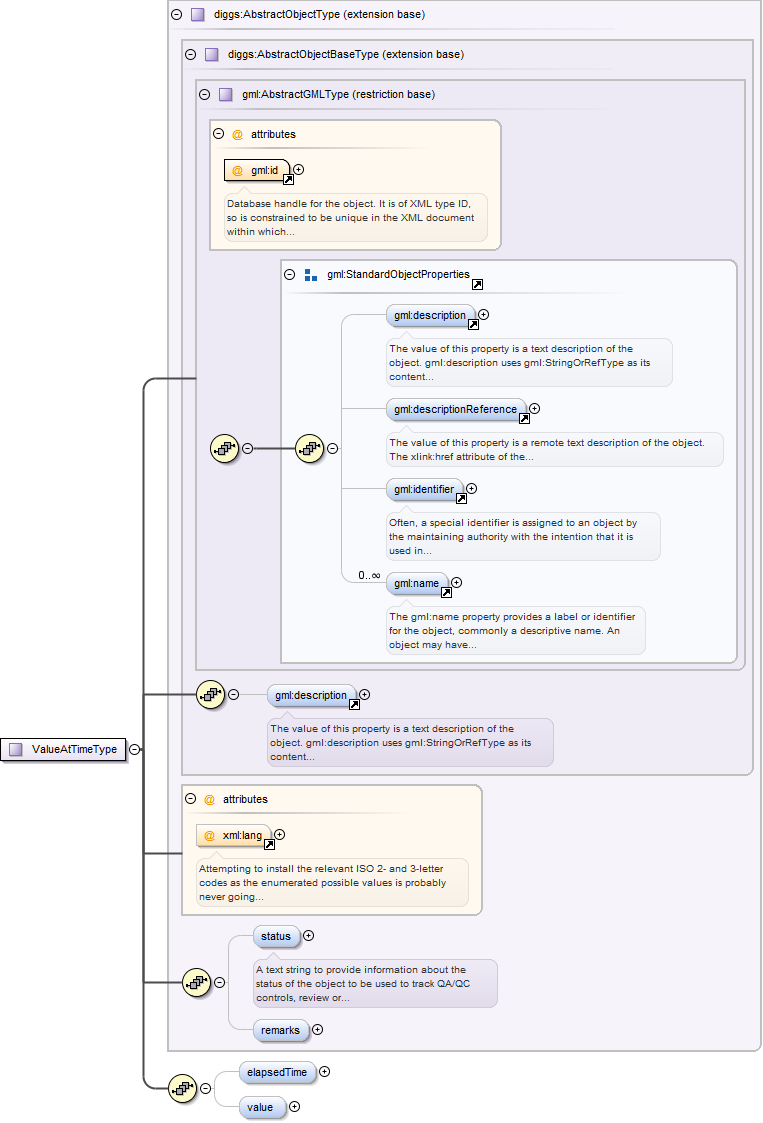
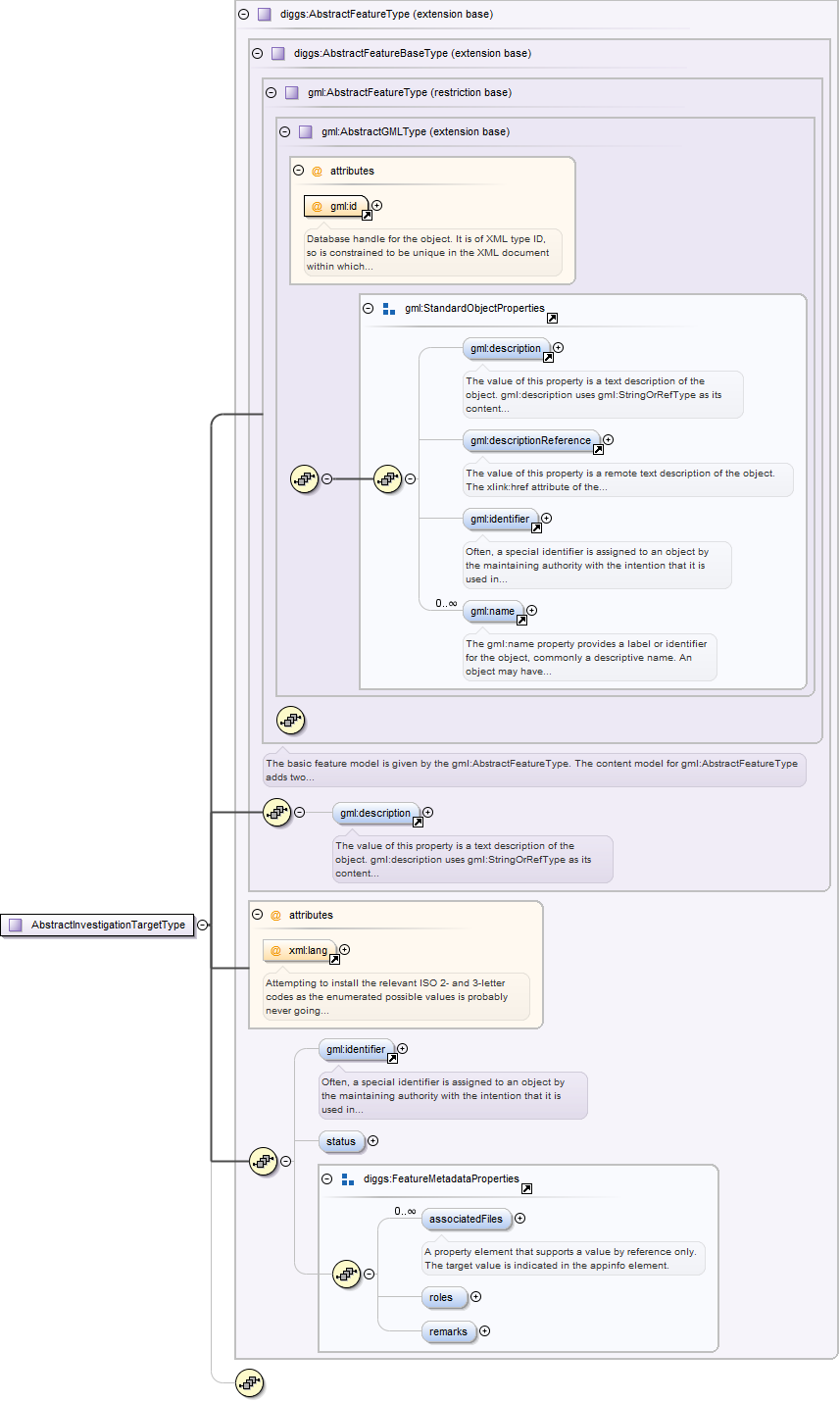
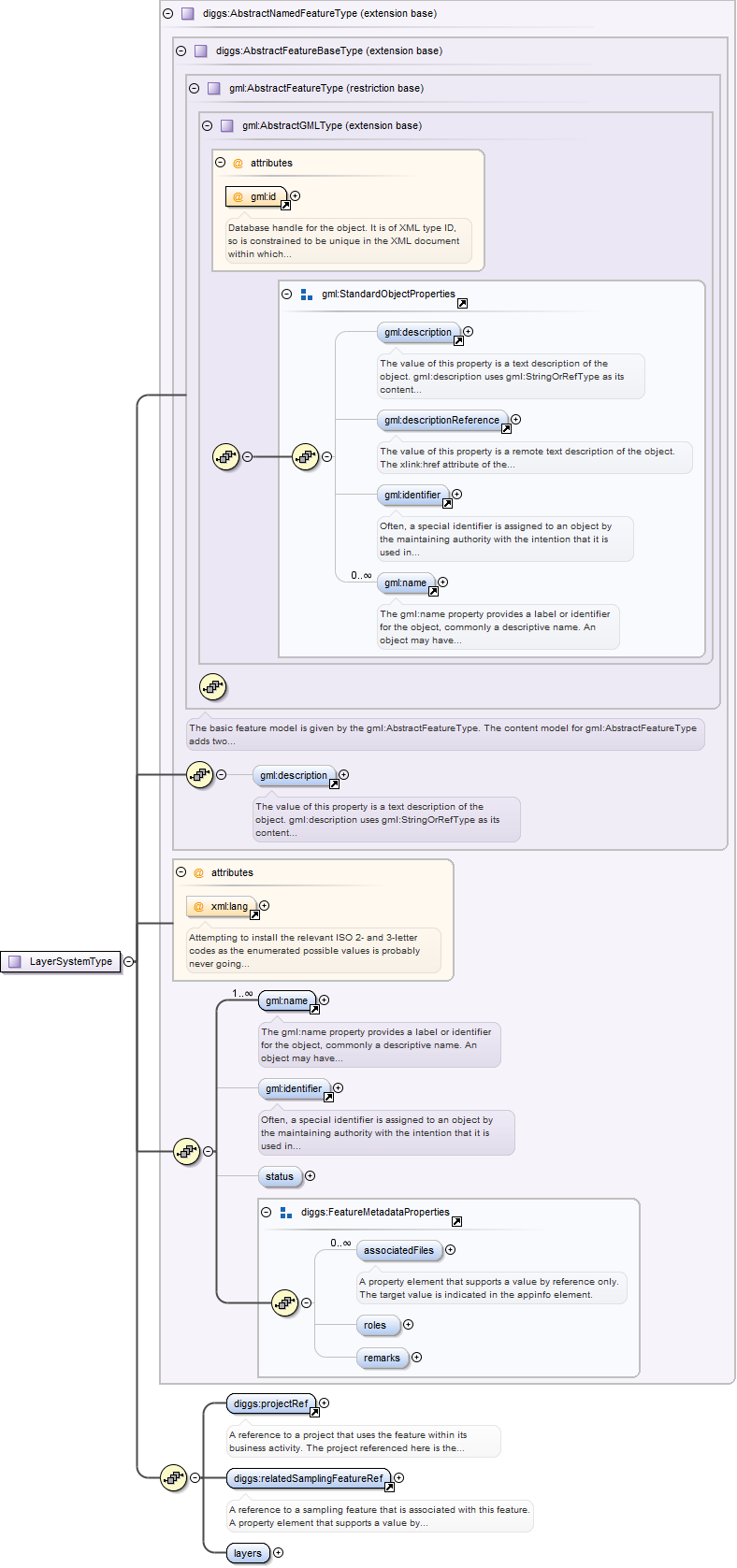
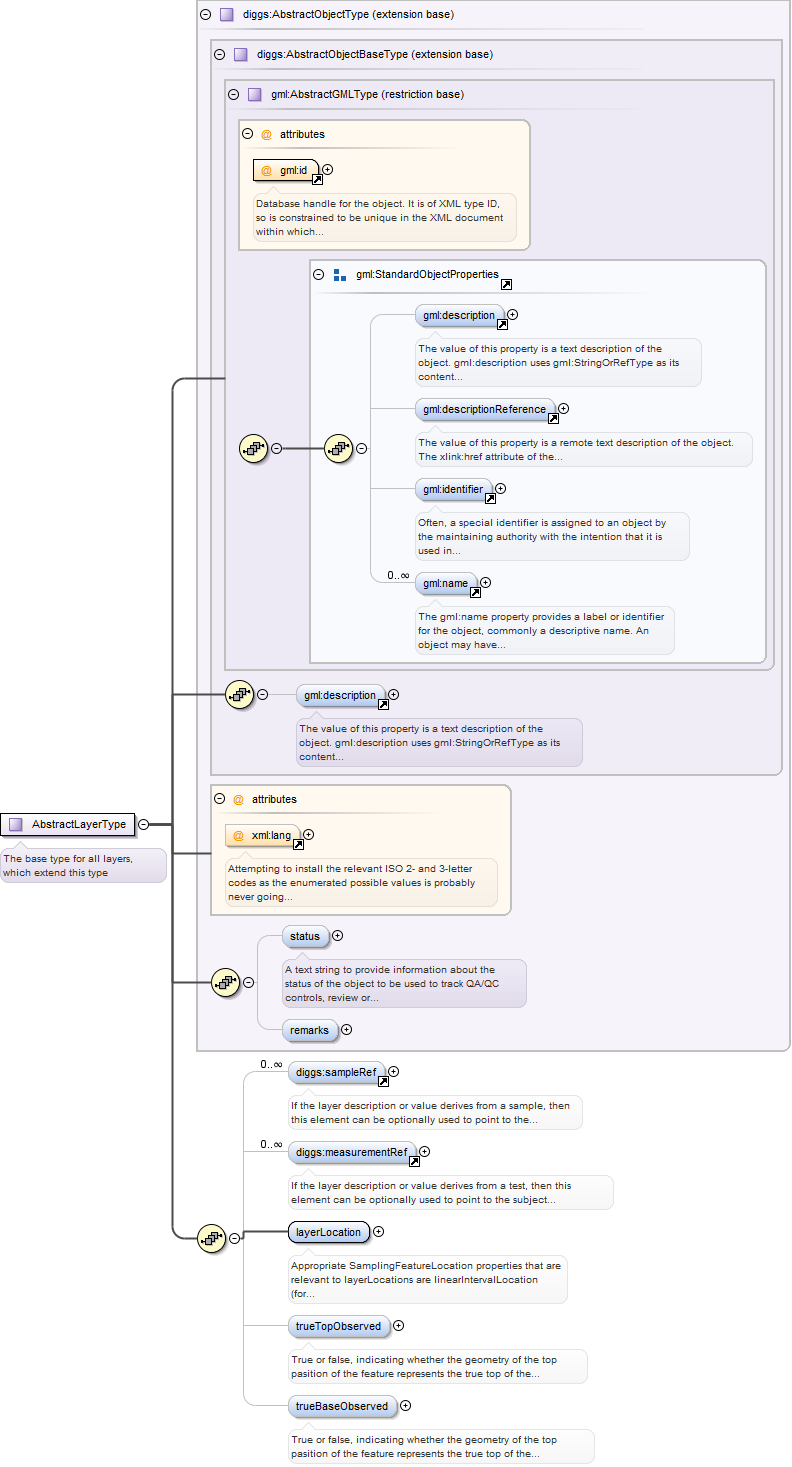
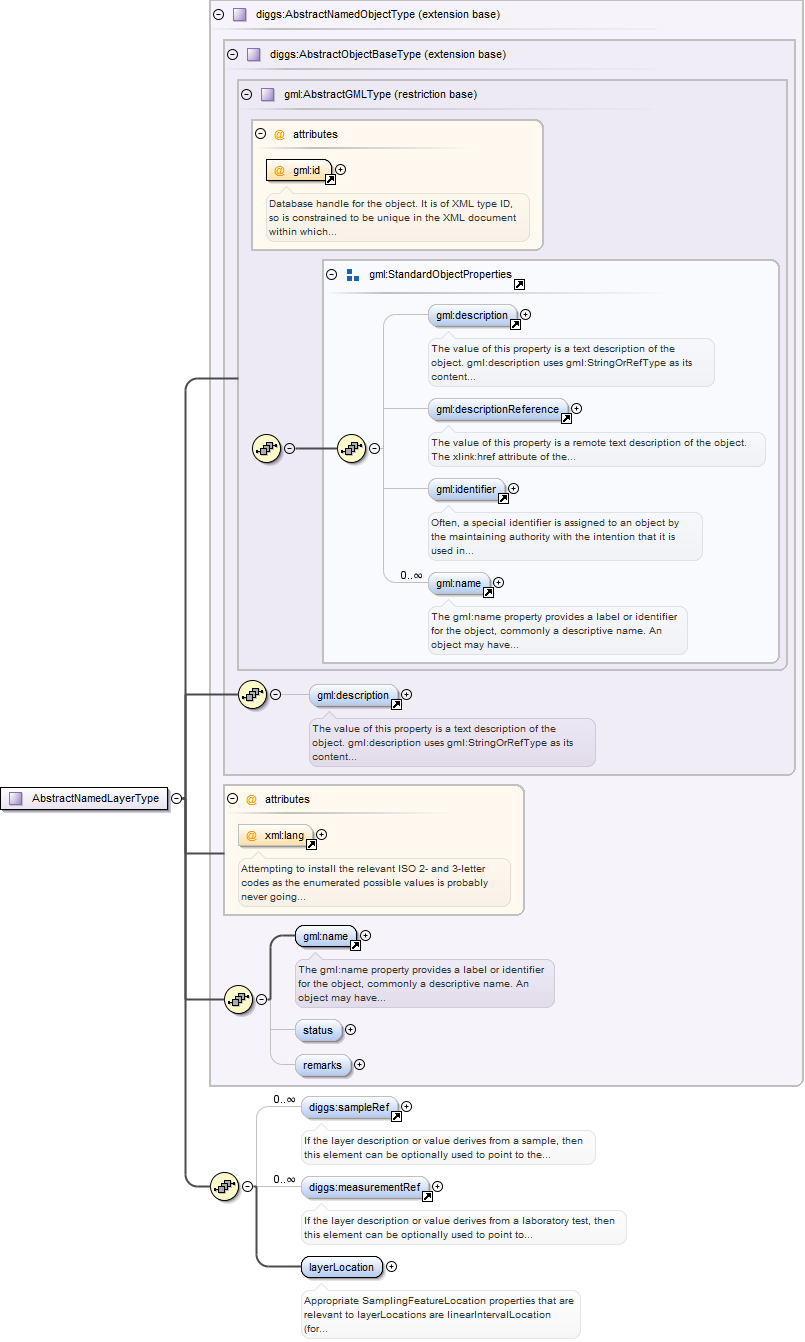
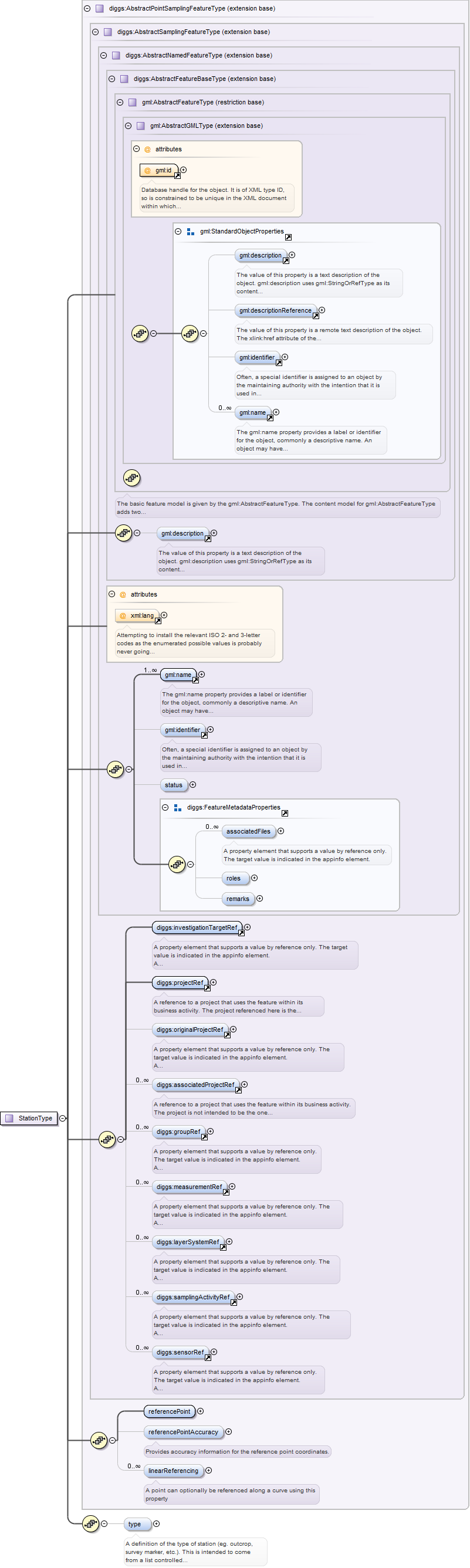
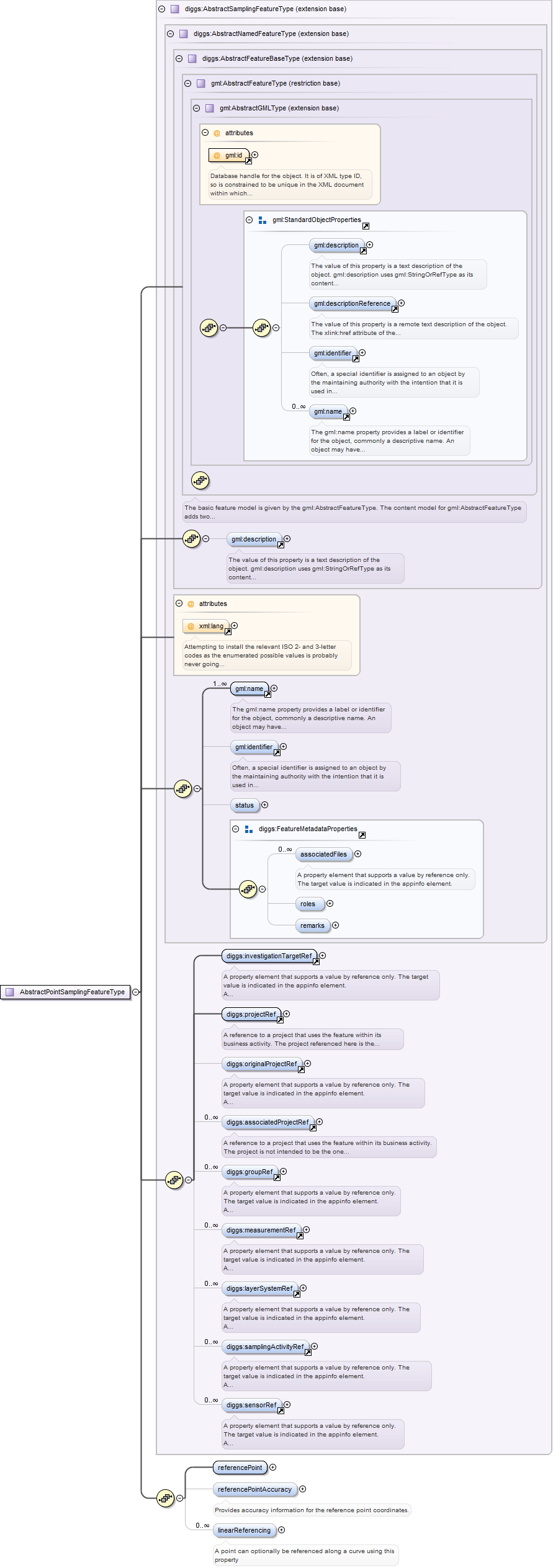
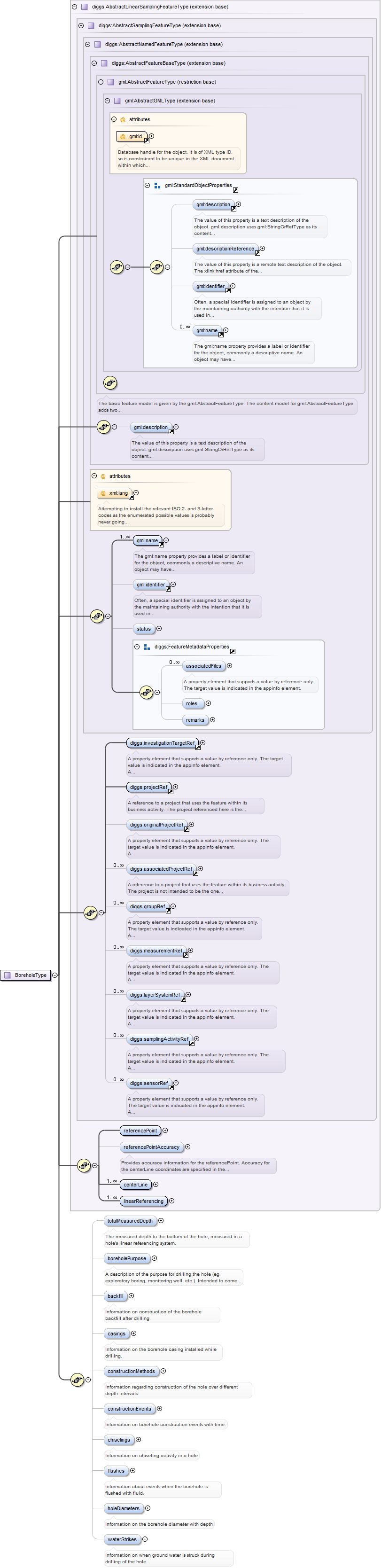
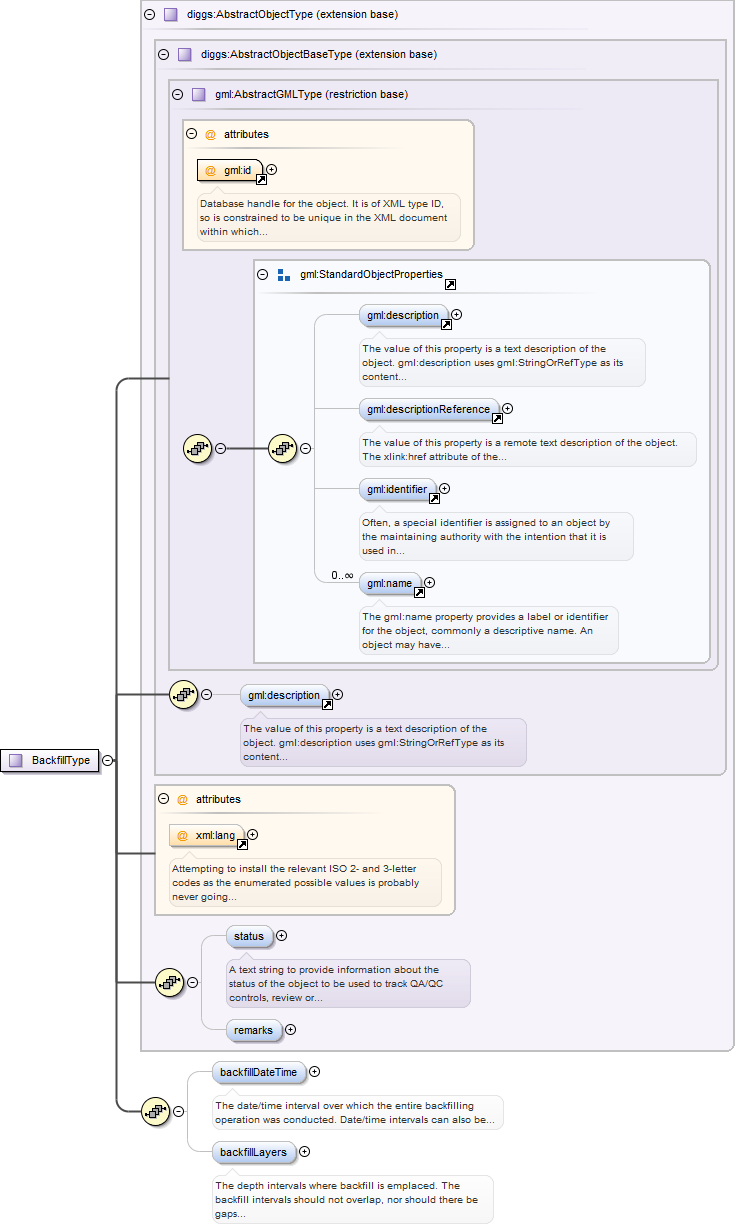
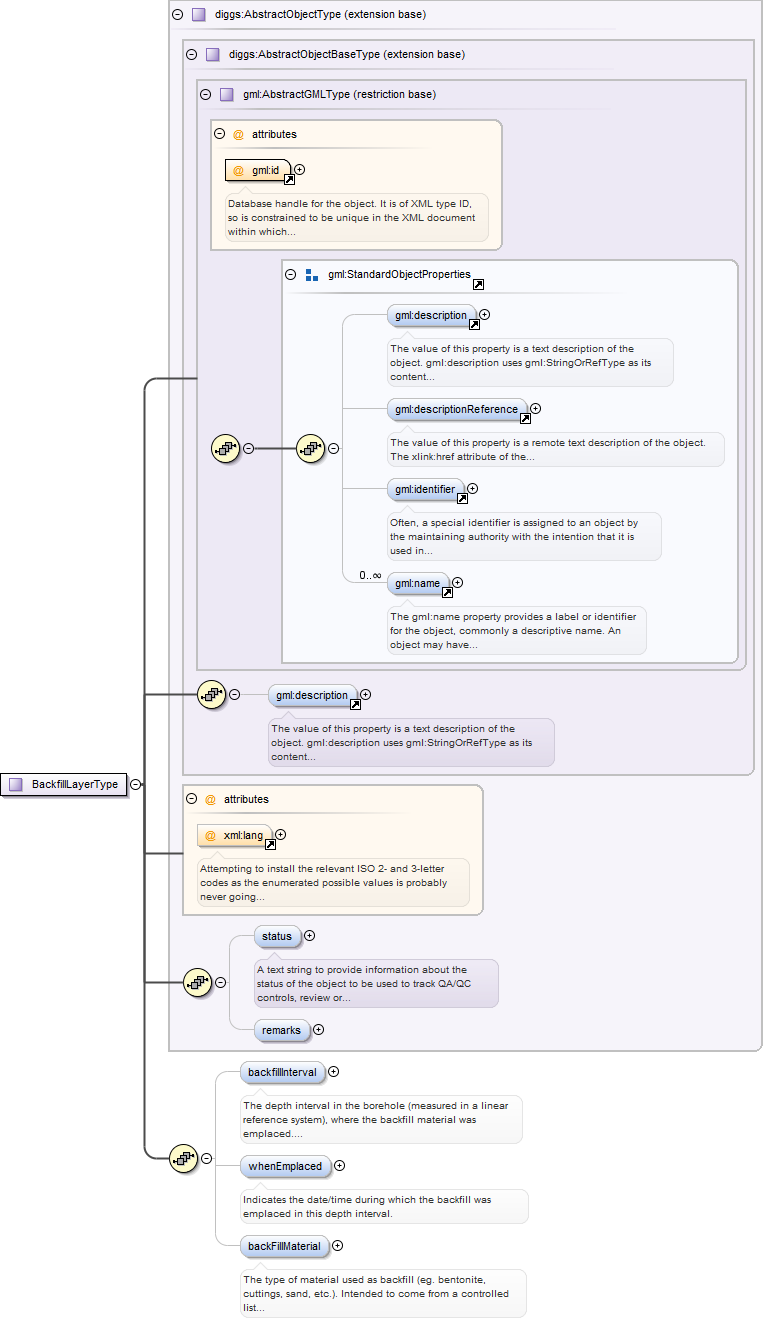
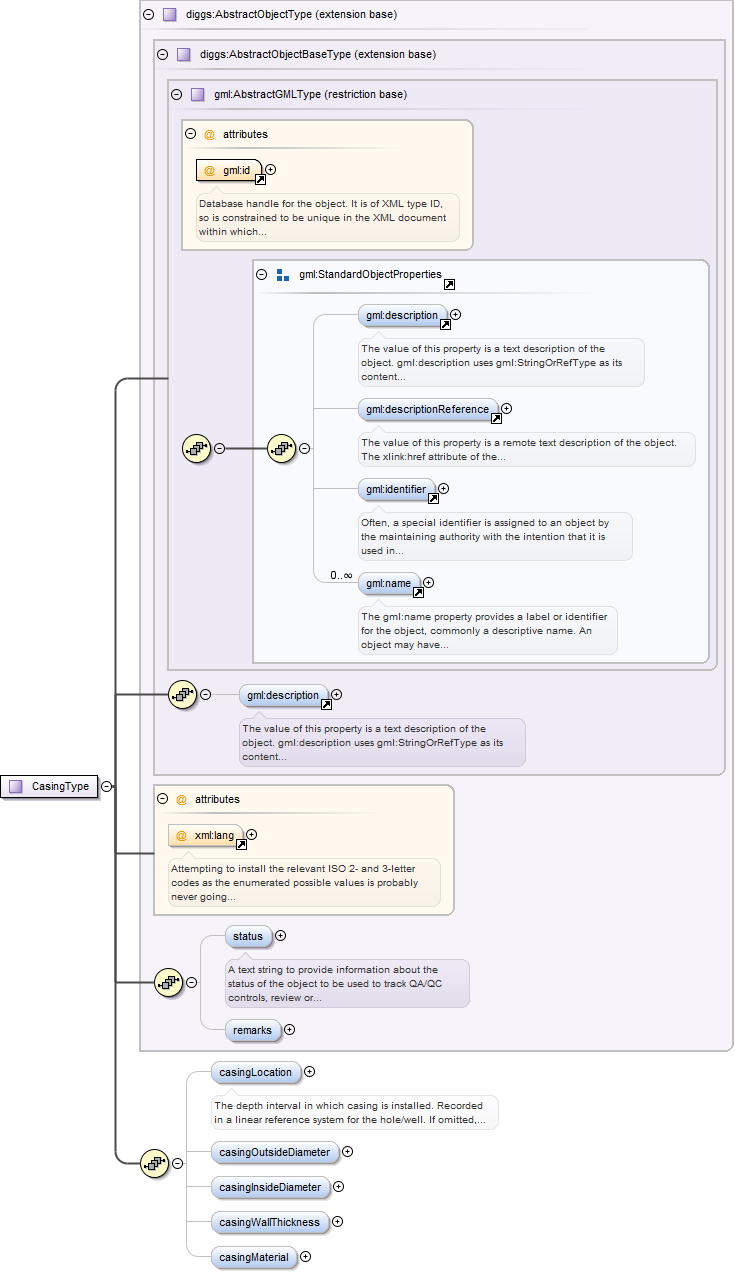
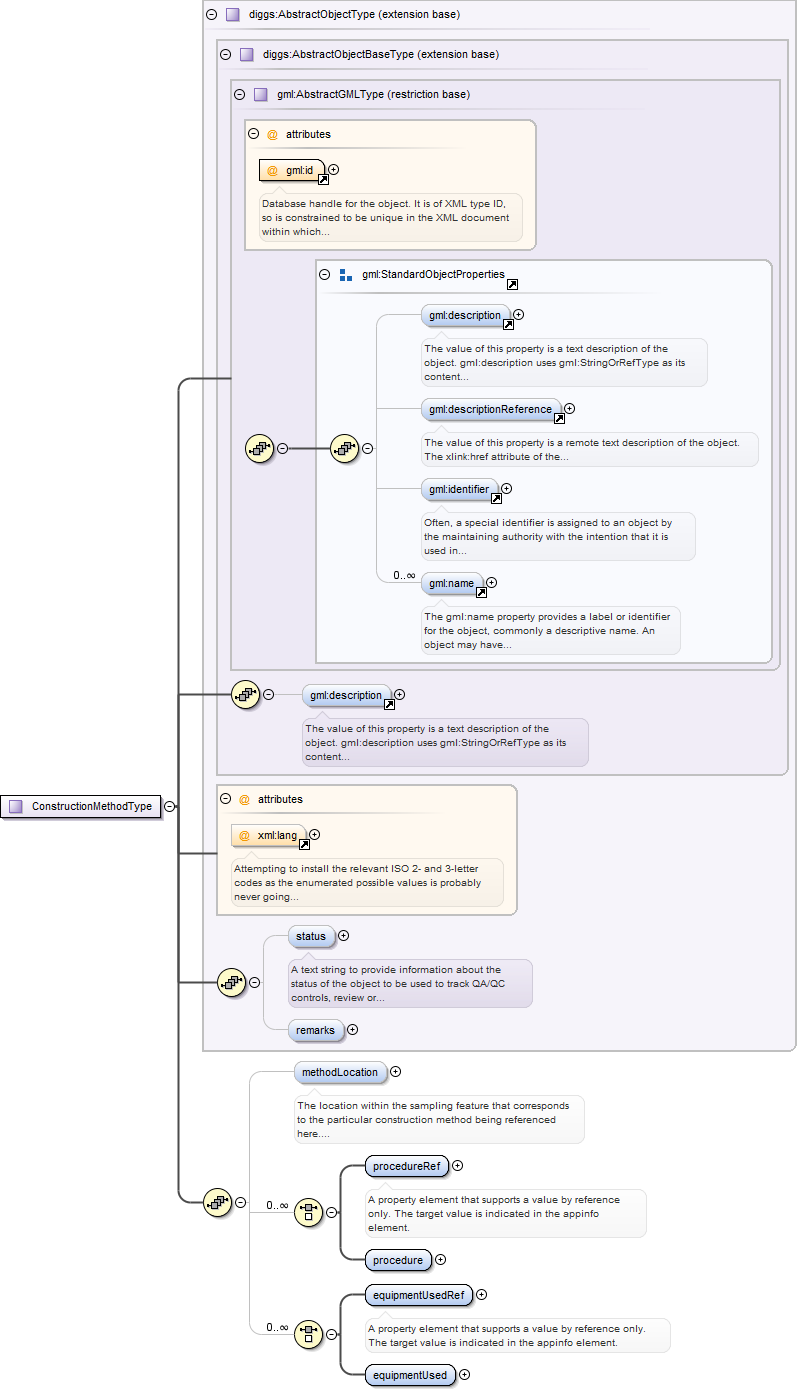
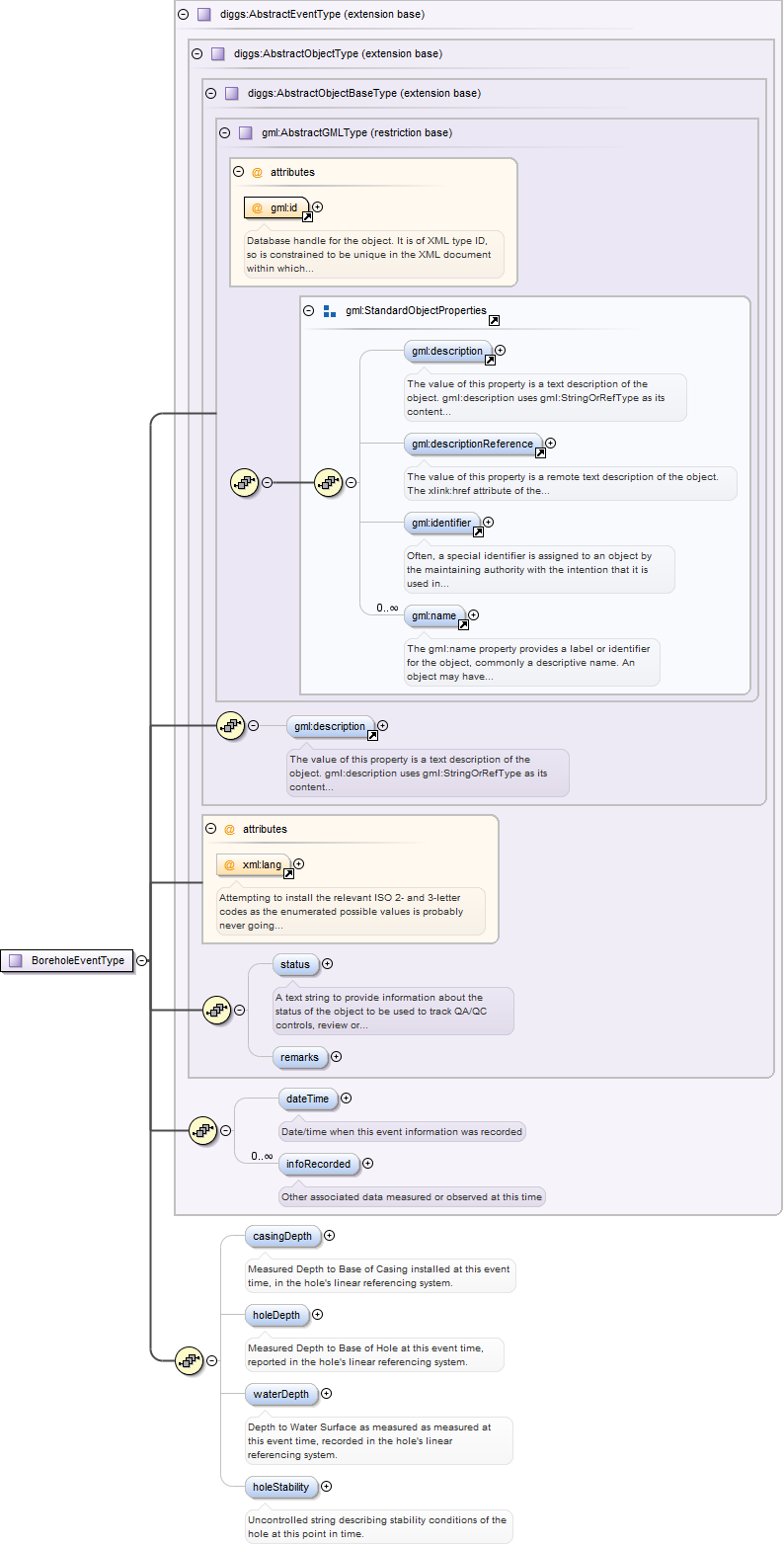
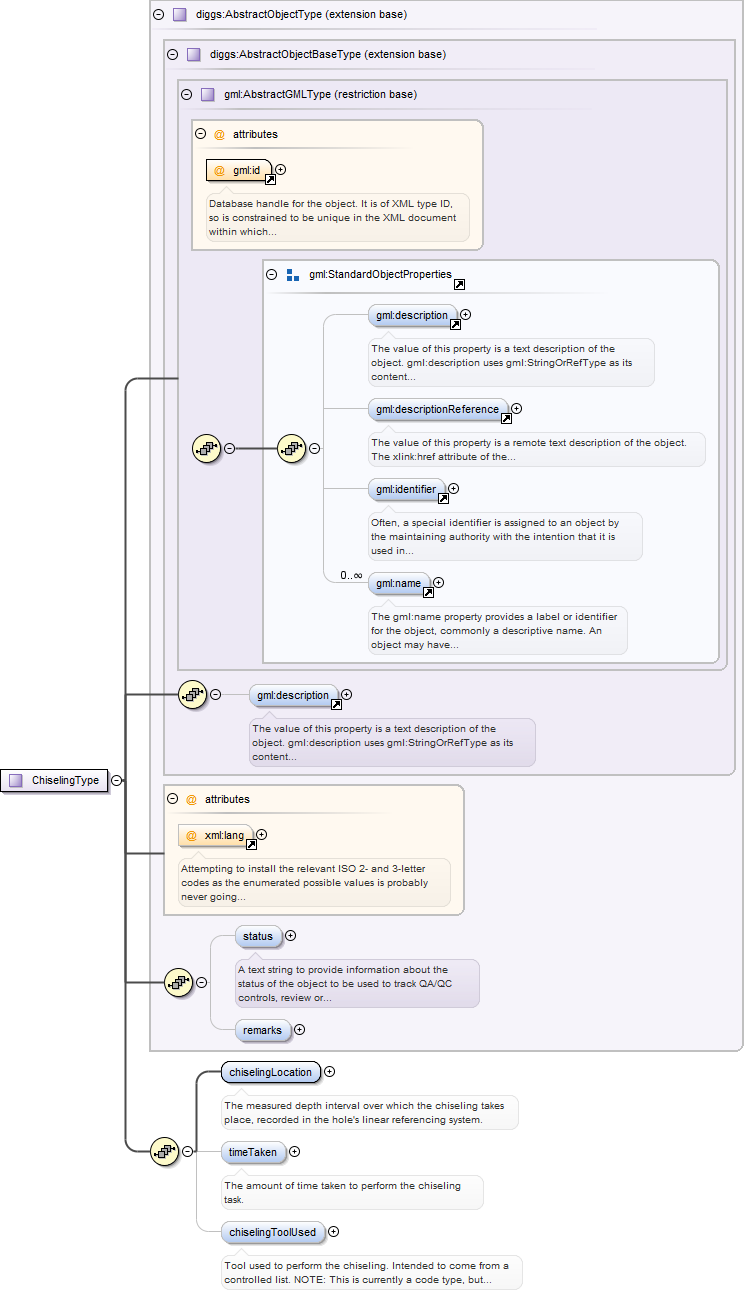
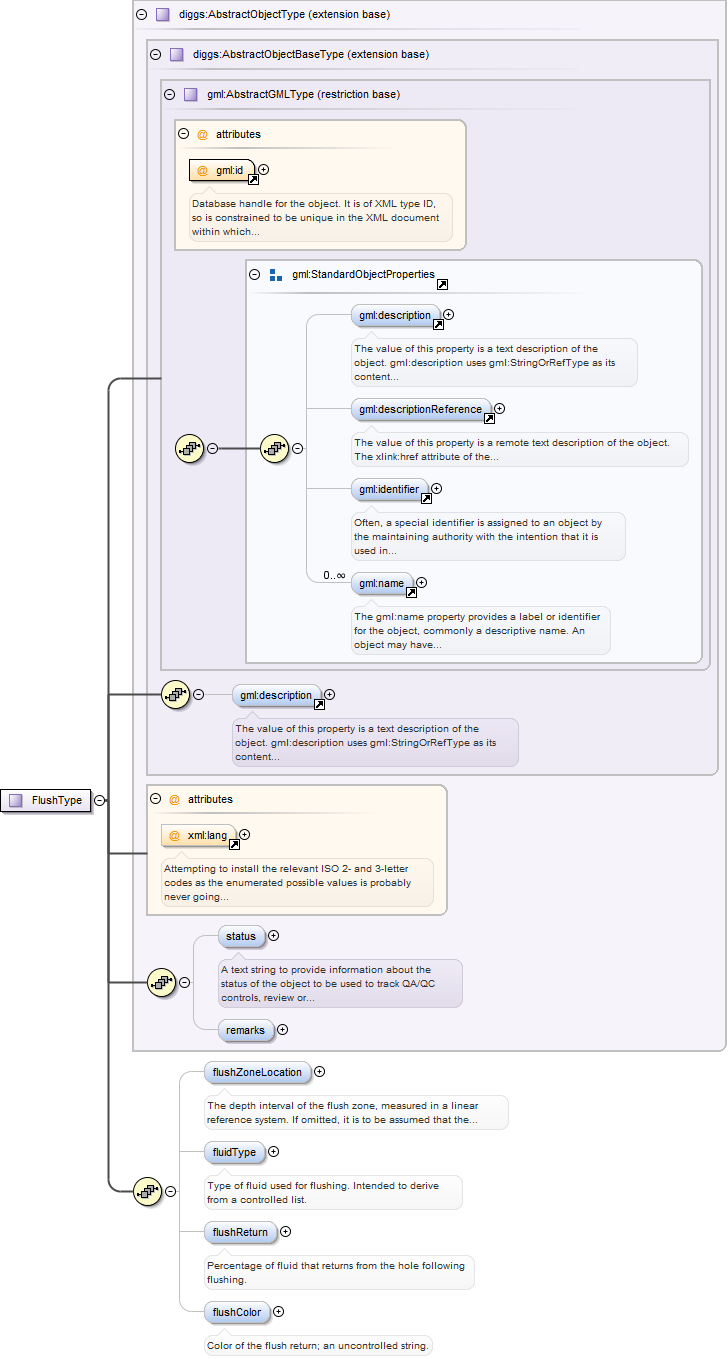
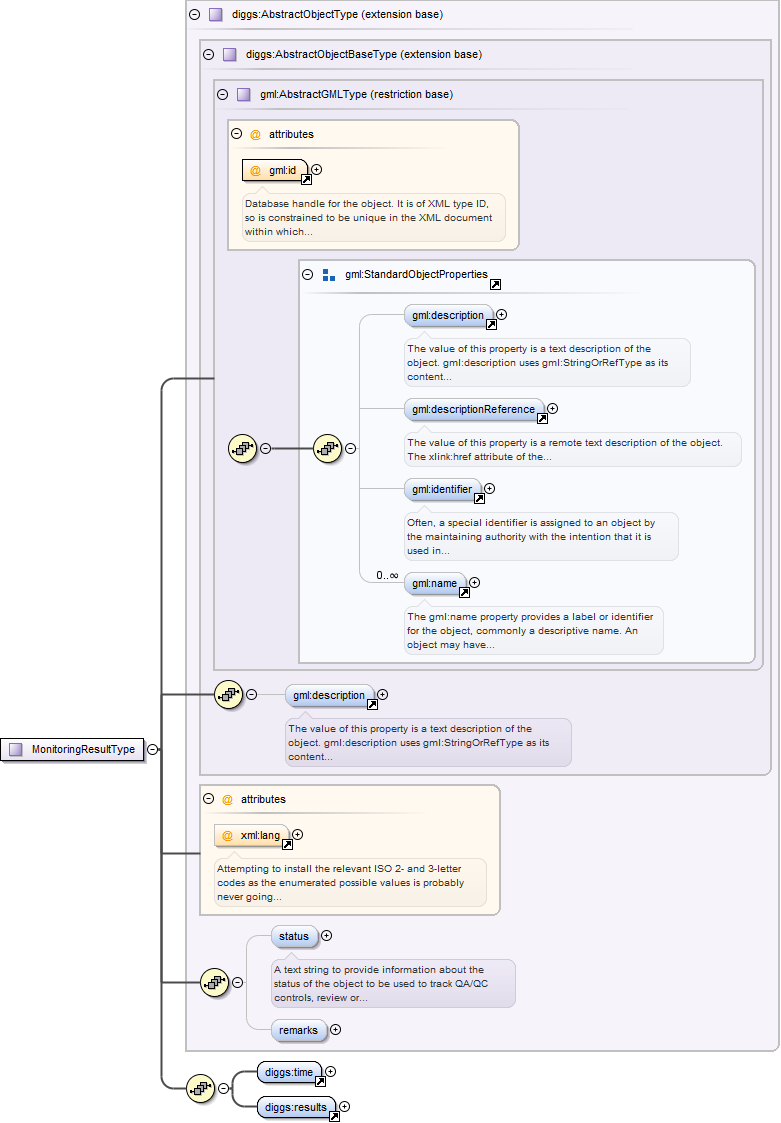
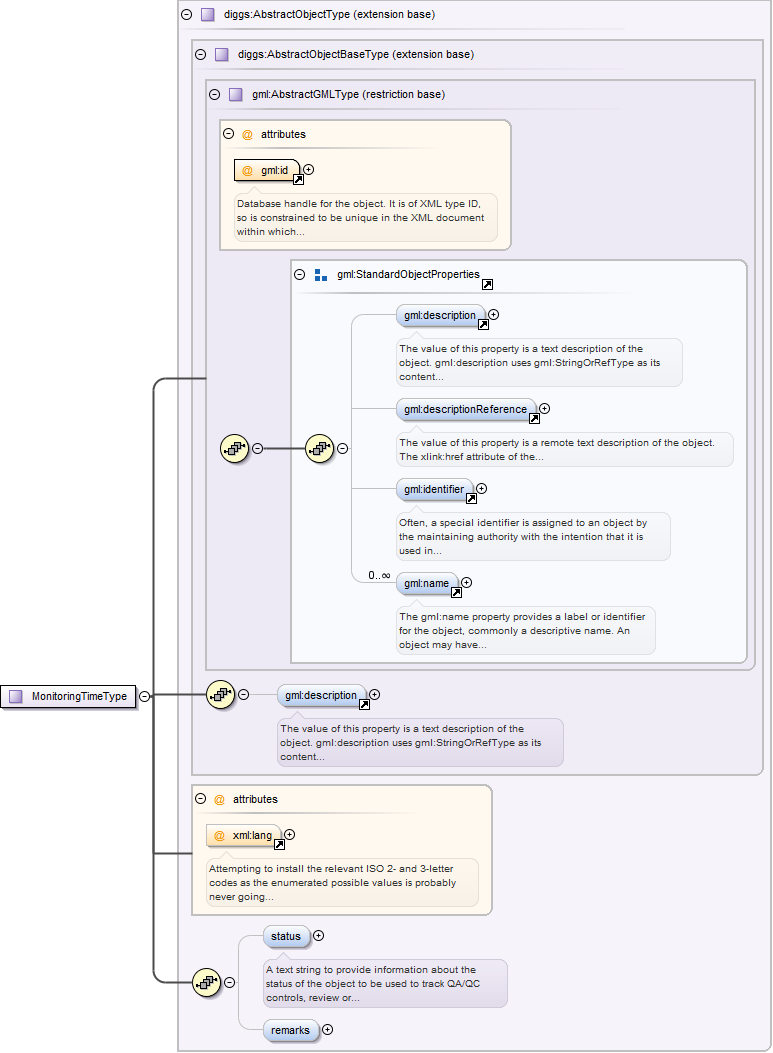
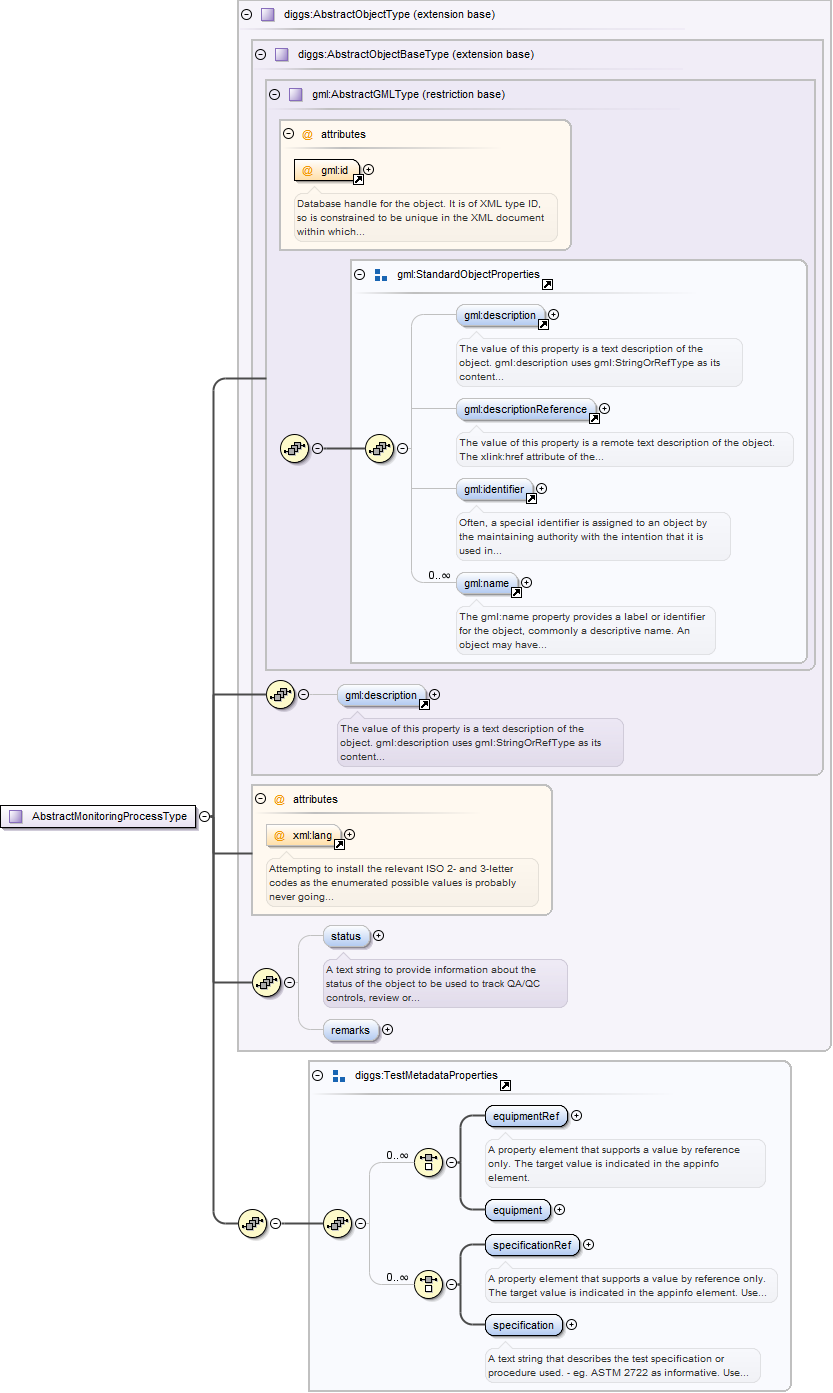
Database handle for the object. It is of XML type ID, so is constrained to beunique in the XML document within which it occurs. An external identifier for the object inthe form of a URI may be constructed using standard XML and XPointer methods. This is doneby concatenating the URI for the document, a fragment separator, and the value of the idattribute.
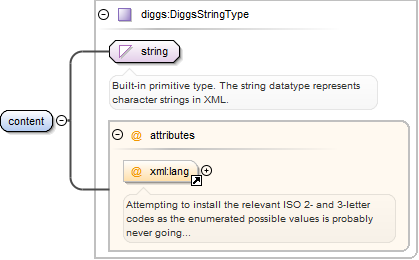
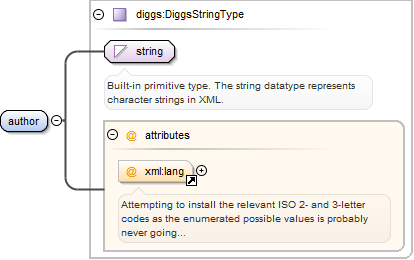
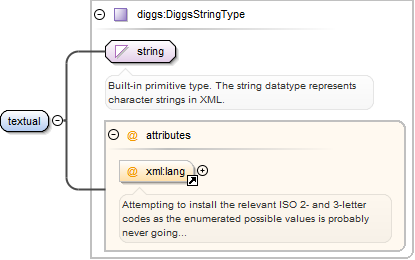
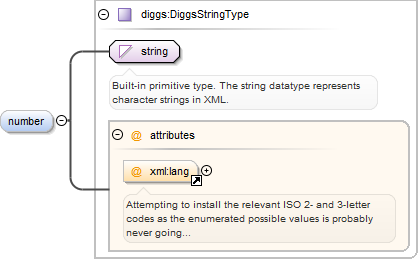
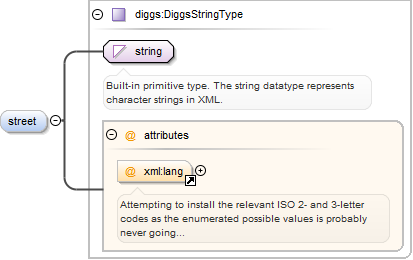
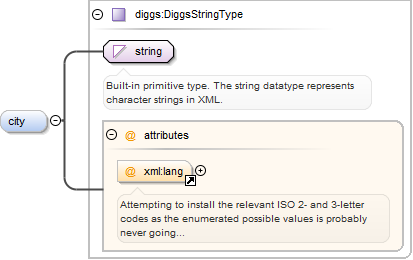
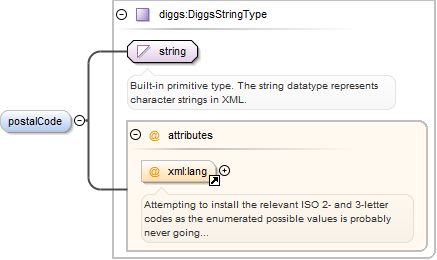
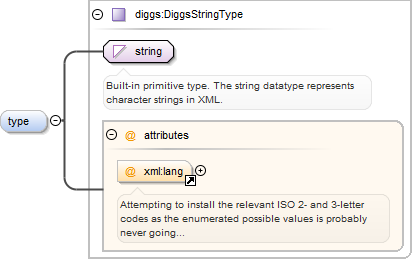
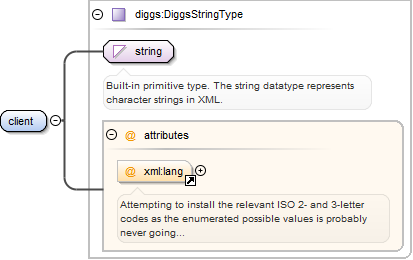
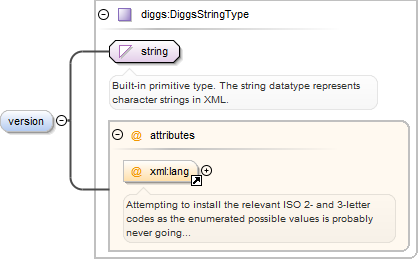
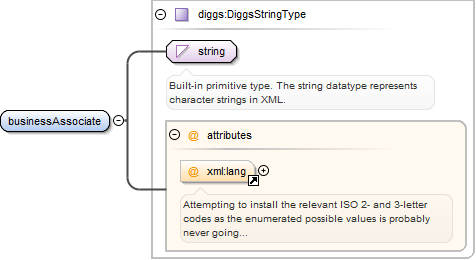
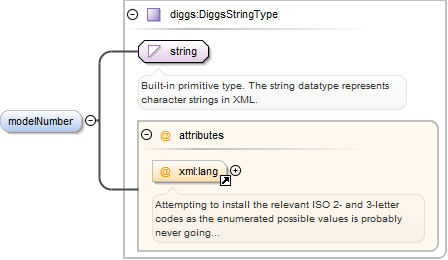
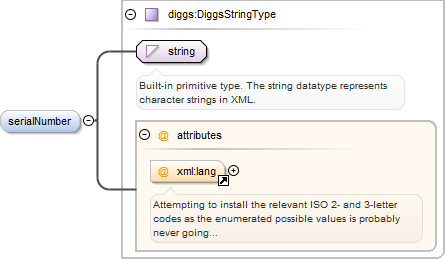
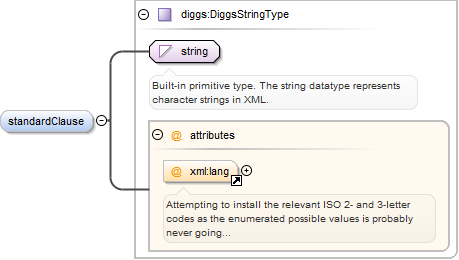
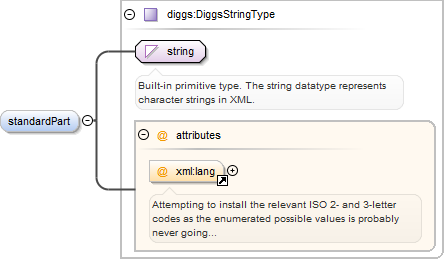
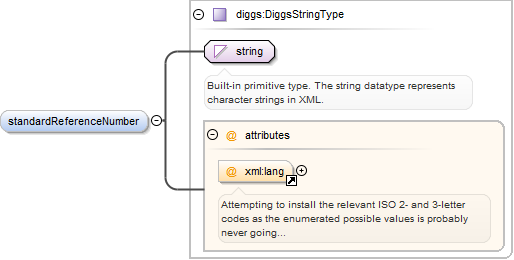
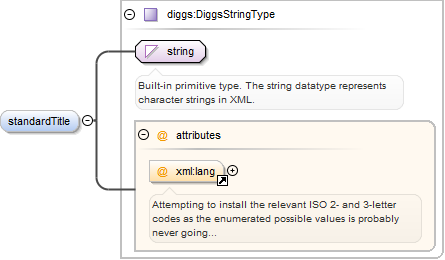
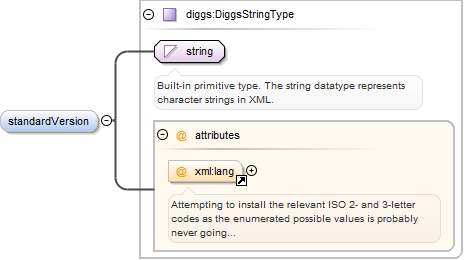
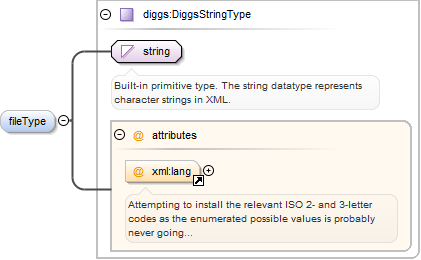
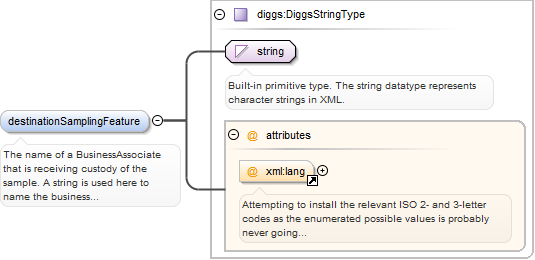
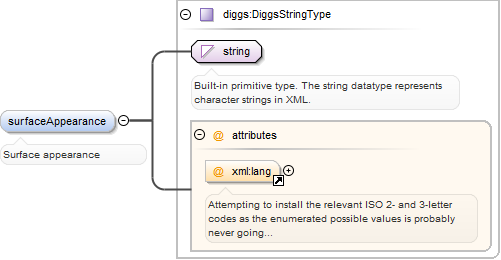
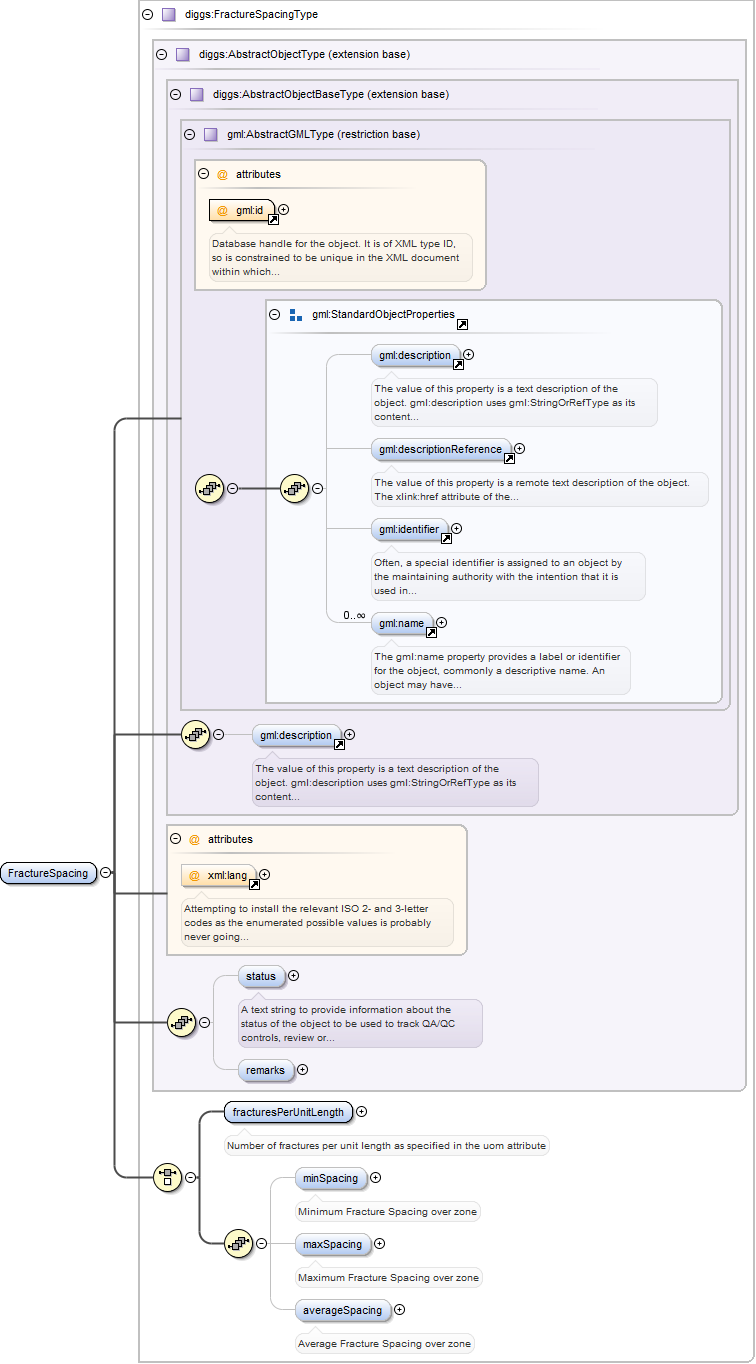
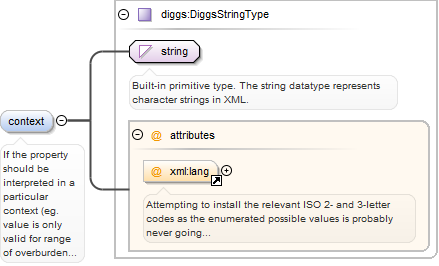
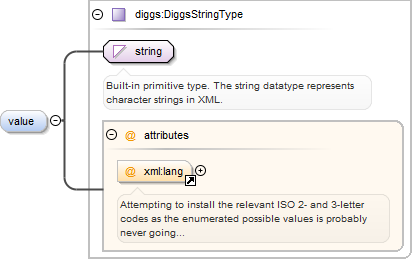
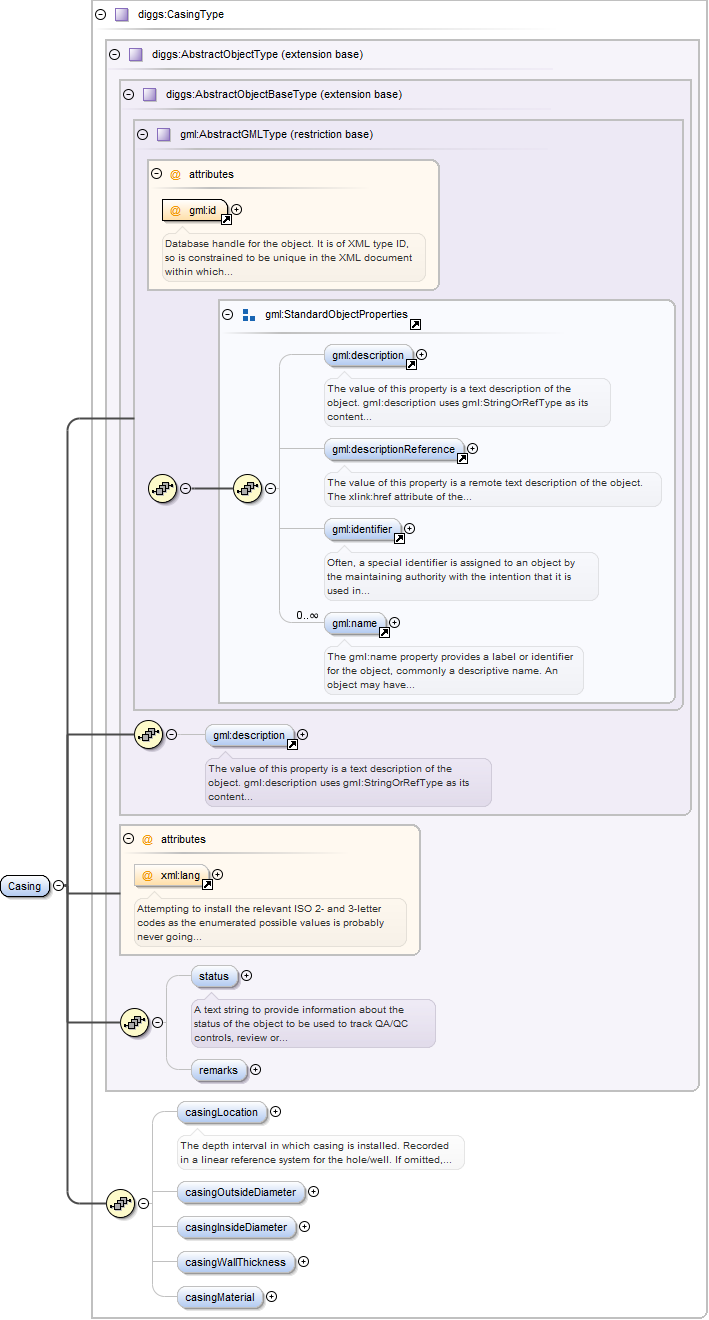
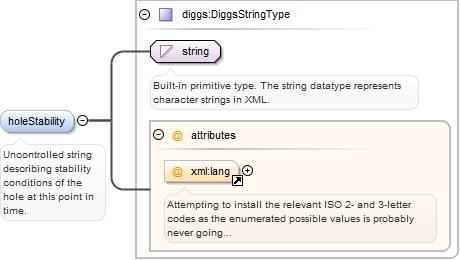
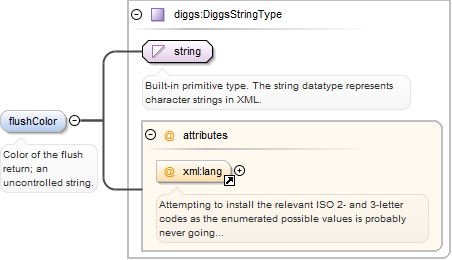
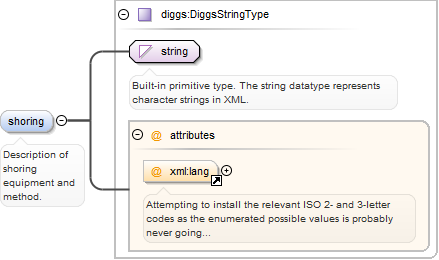
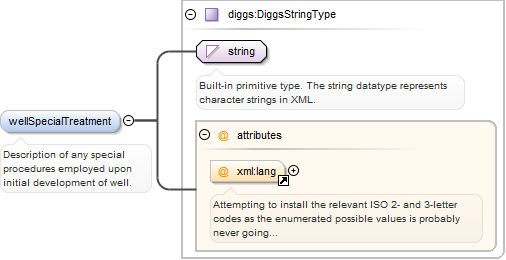
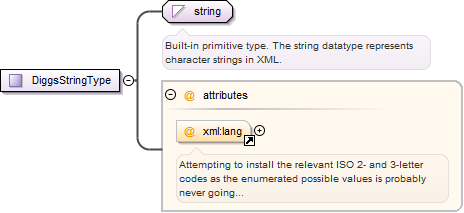
Attempting to install the relevant ISO 2- and 3-letter codes as the enumerated possible values is probably never going to be a realistic possibility. See RFC 3066 at http://www.ietf.org/rfc/rfc3066.txt and the IANA registry at http://www.iana.org/assignments/lang-tag-apps.htm for further information. The union allows for the 'un-declaration' of xml:lang with the empty string.
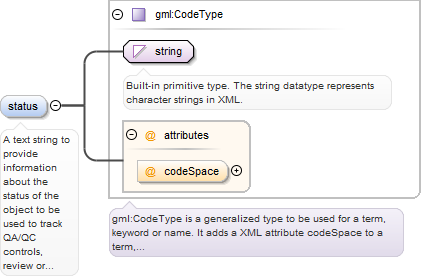
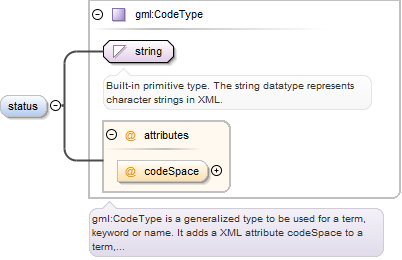
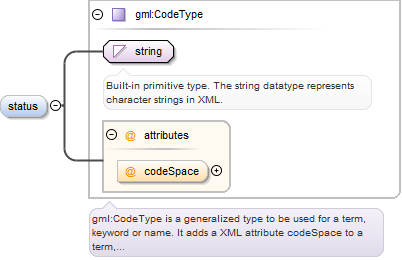
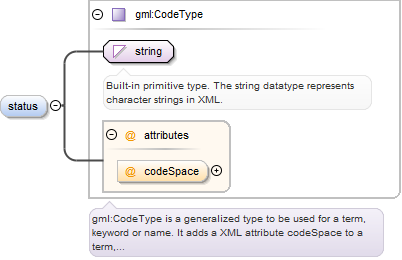
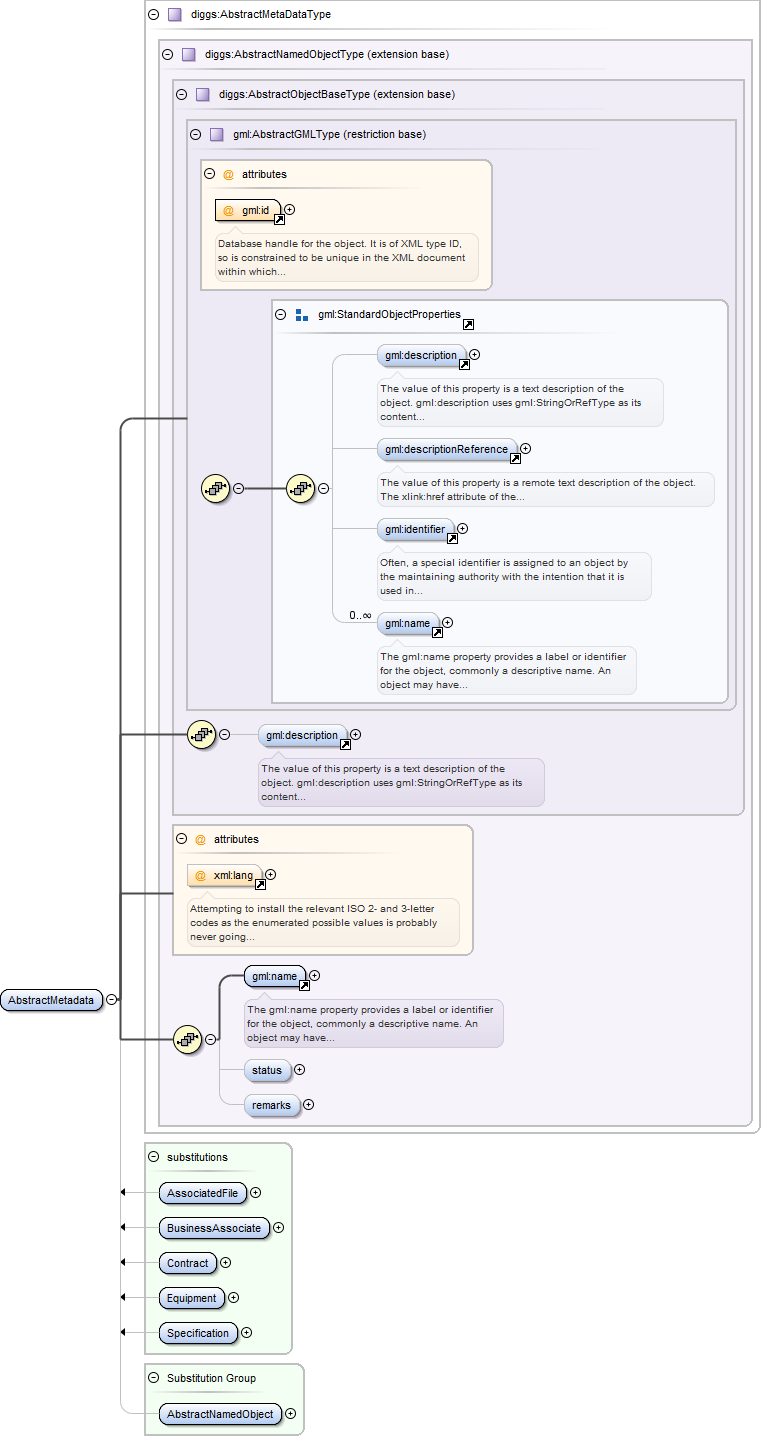
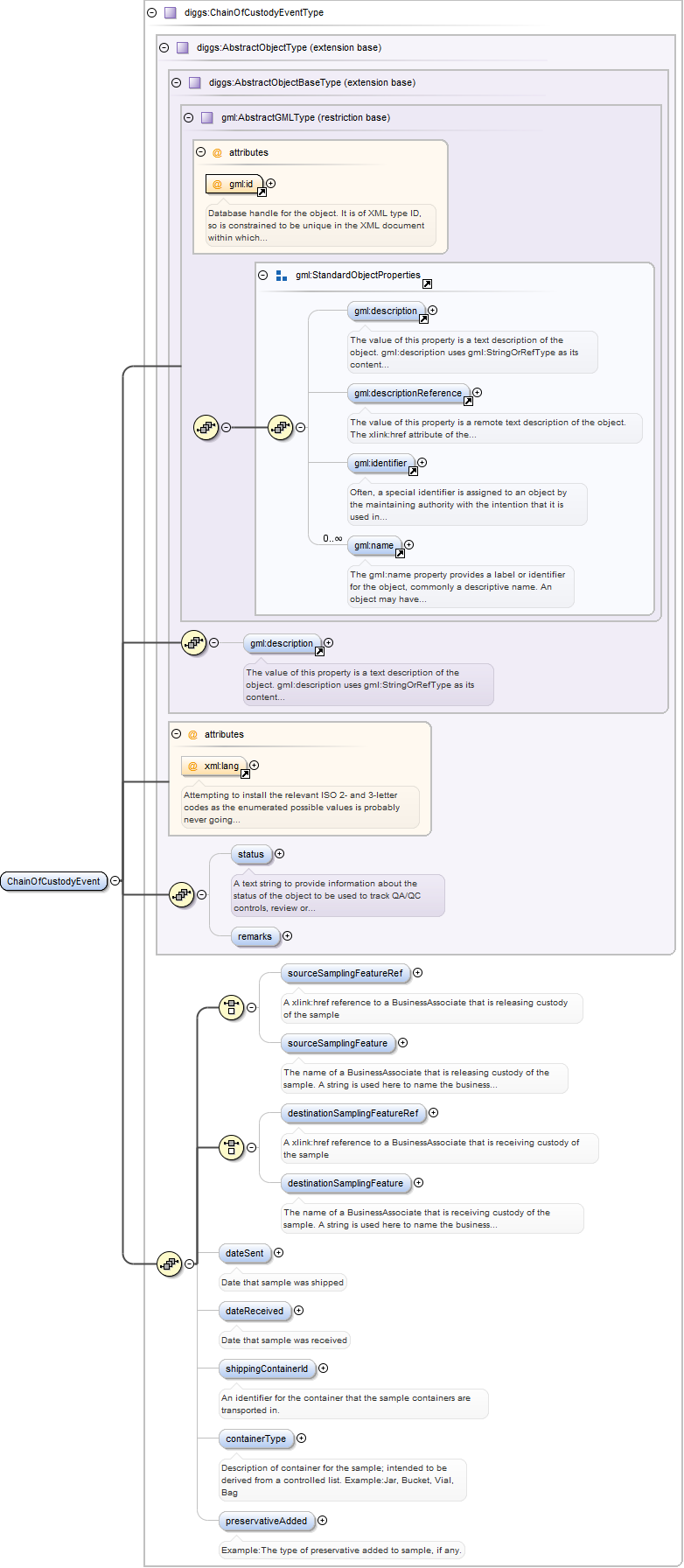
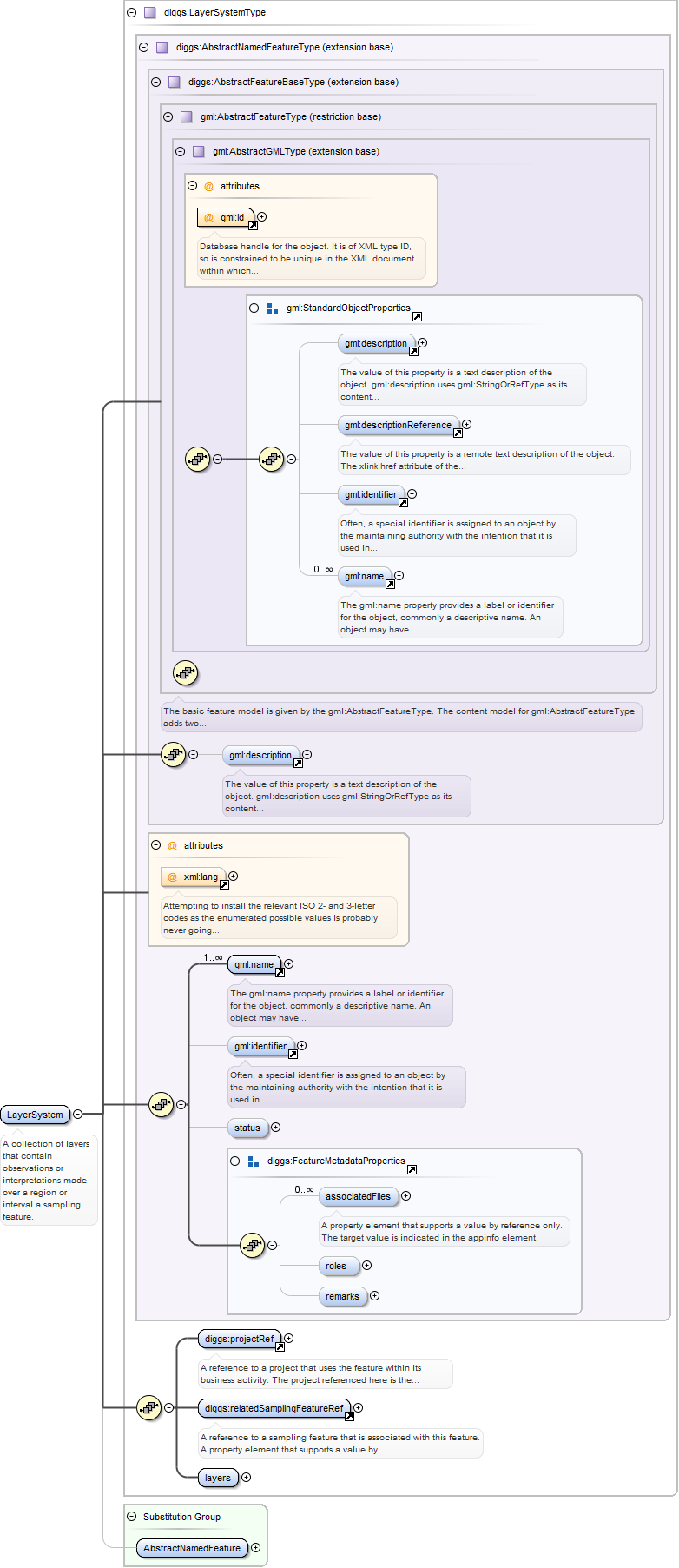
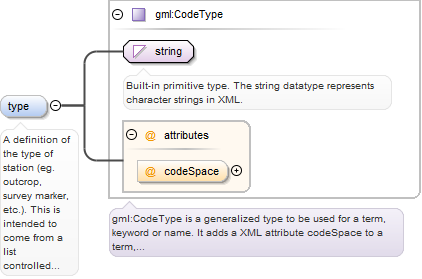
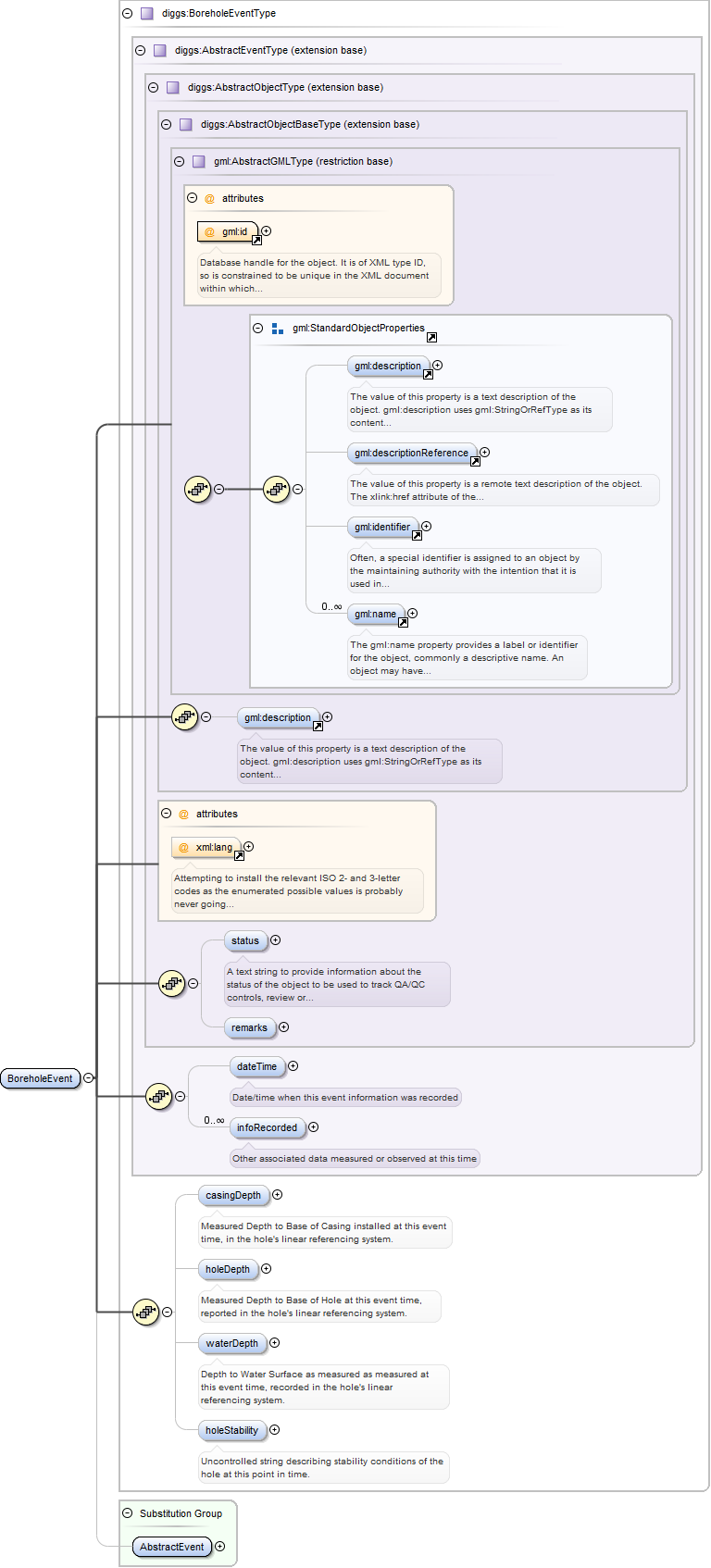
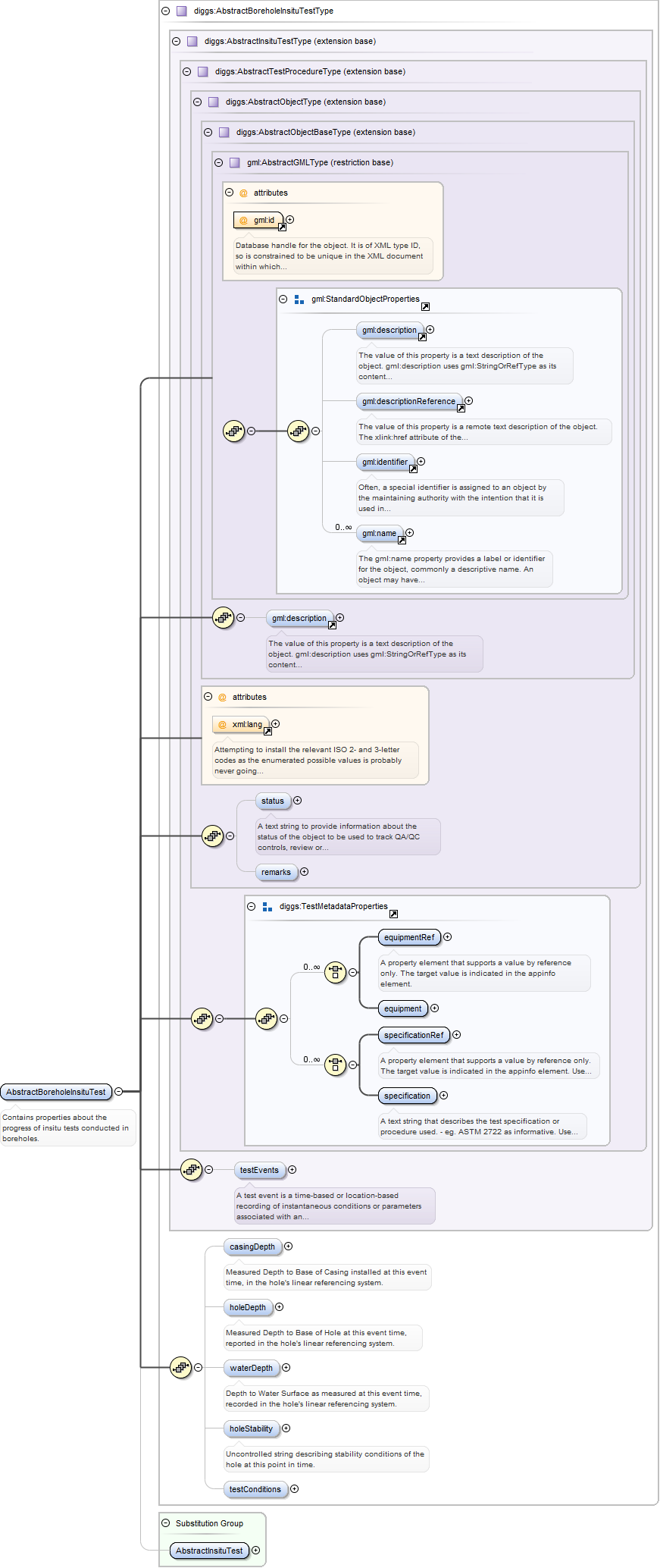
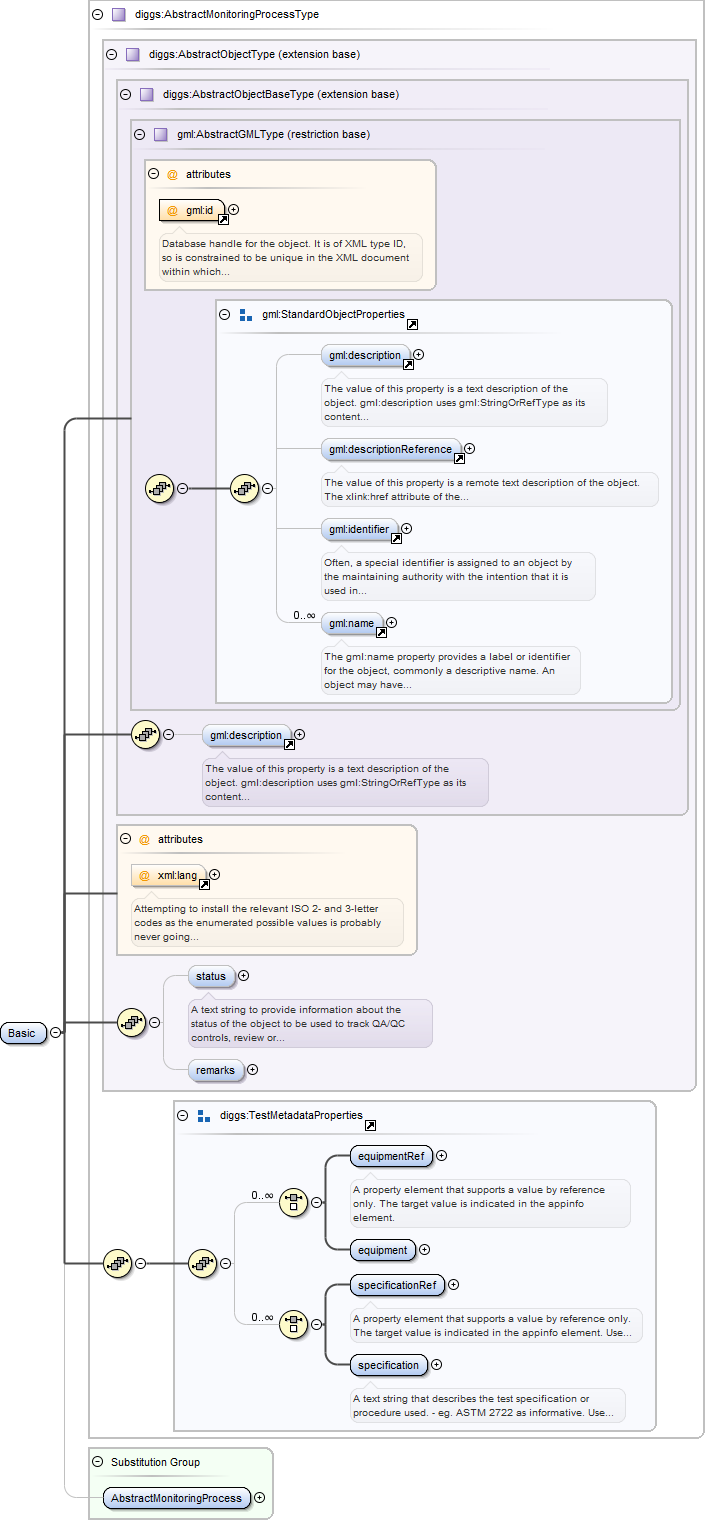
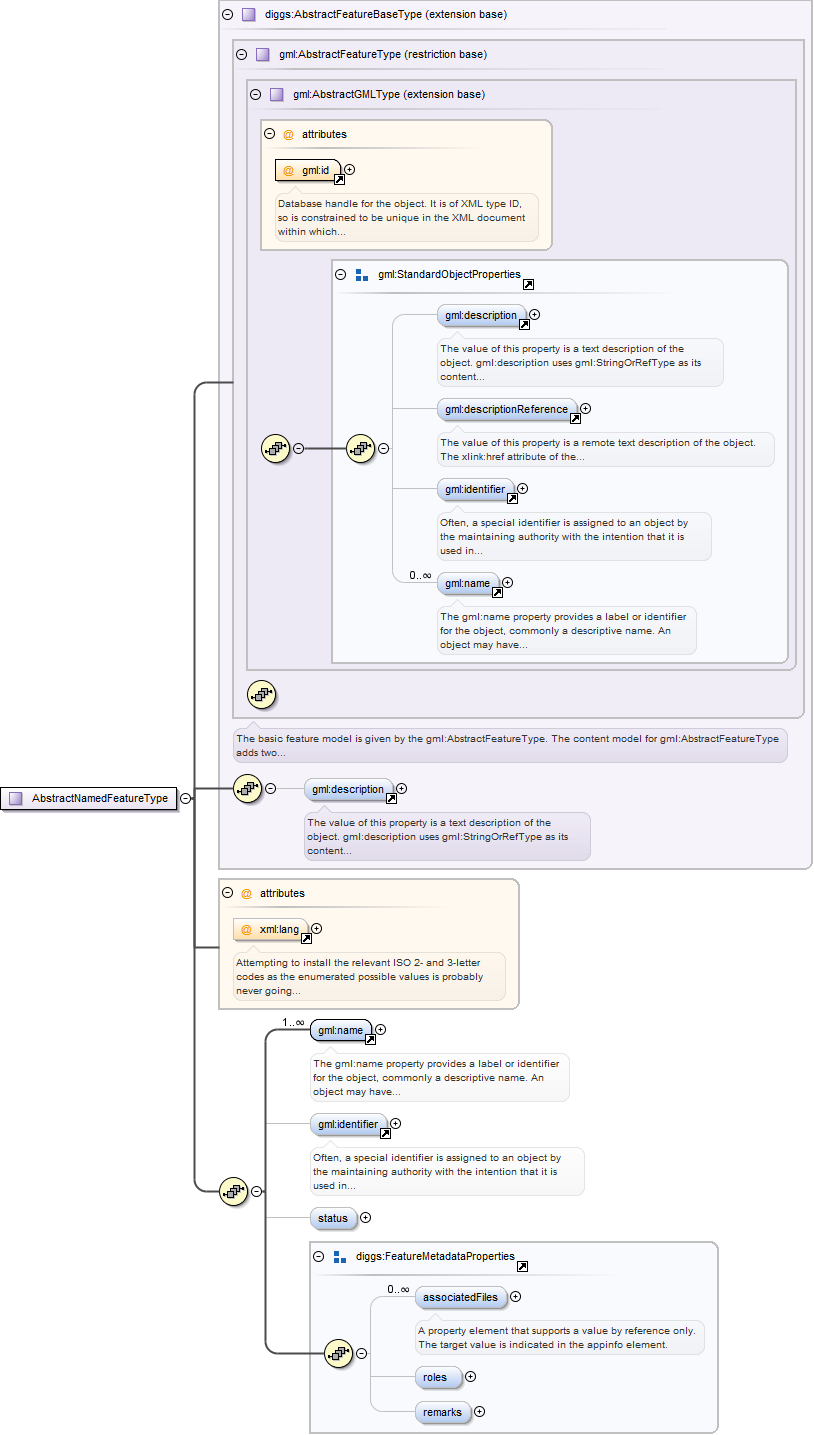
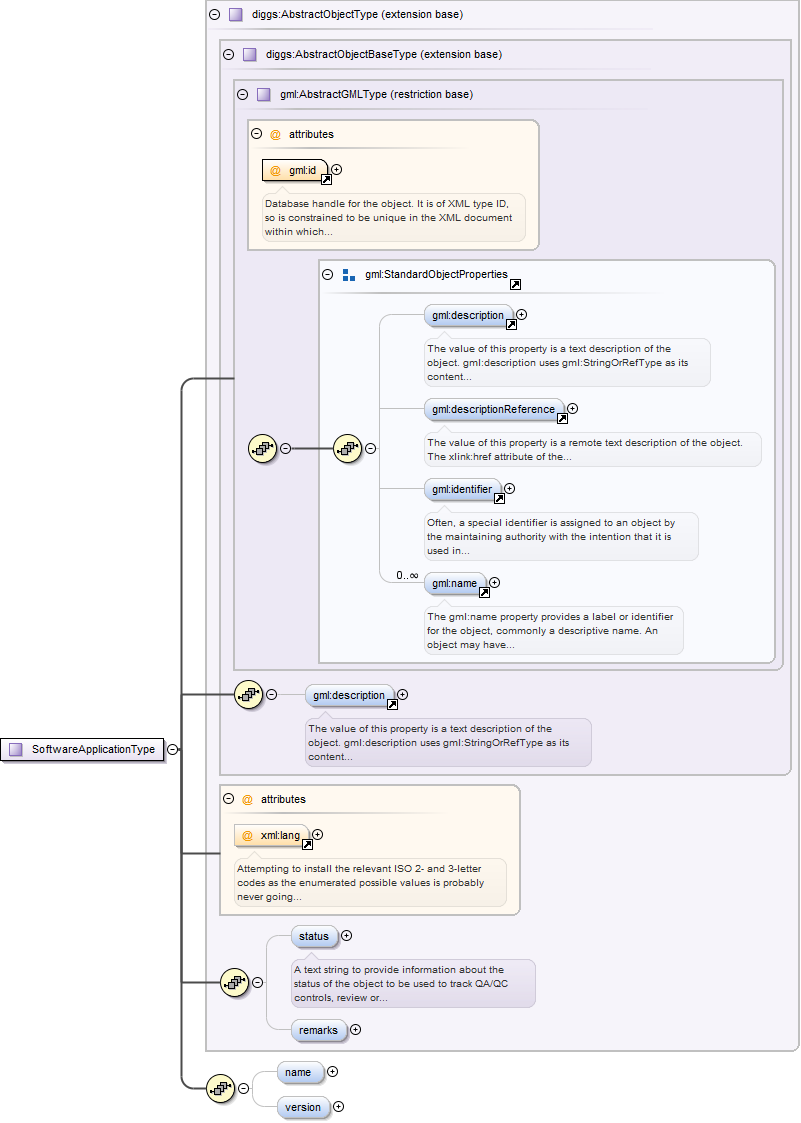
A text string to provide information about the status of the object tobe used to track QA/QC controls, review or release status, etc. The values used areintended to come from a controlled list of terms maintained by anorganization.
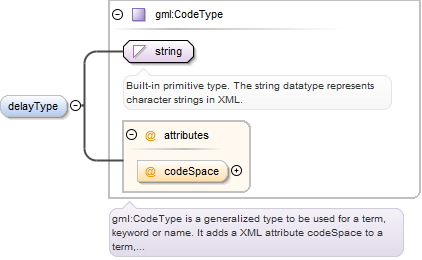
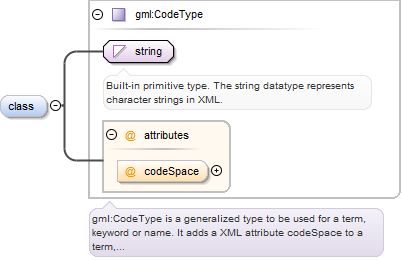
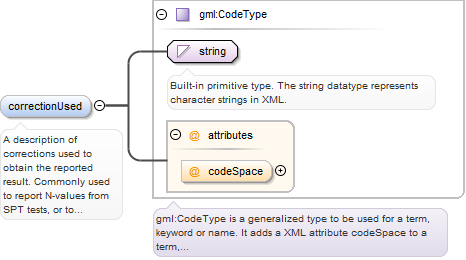
<element minOccurs="0" name="status" type="gml:CodeType"><annotation><documentation>A text string to provide information about the status of the object to be used to track QA/QC controls, review or release status, etc. The values used are intended to come from a controlled list of terms maintained by an organization.</documentation></annotation></element>
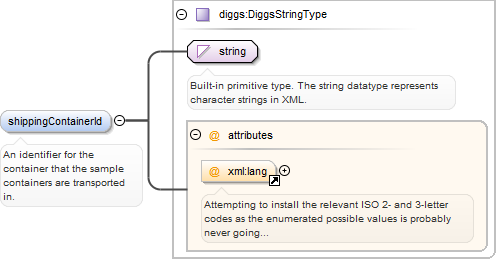
Attempting to install the relevant ISO 2- and 3-letter codes as the enumerated possible values is probably never going to be a realistic possibility. See RFC 3066 at http://www.ietf.org/rfc/rfc3066.txt and the IANA registry at http://www.iana.org/assignments/lang-tag-apps.htm for further information. The union allows for the 'un-declaration' of xml:lang with the empty string.
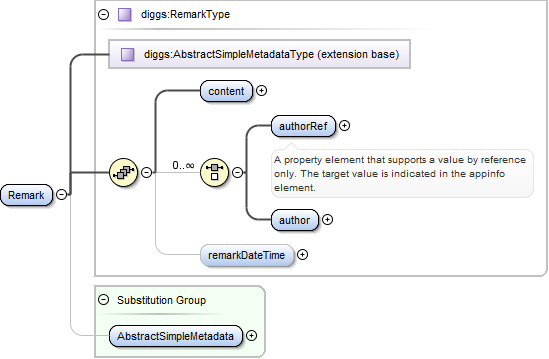
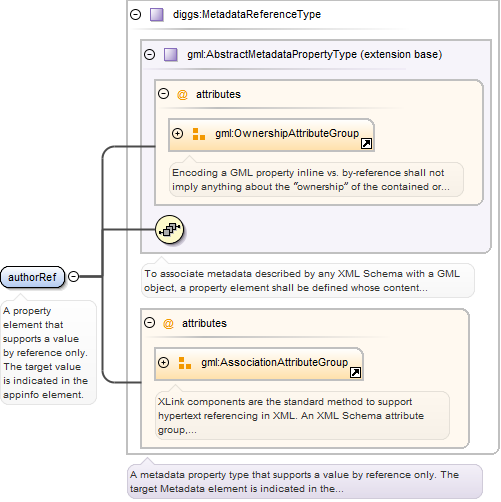
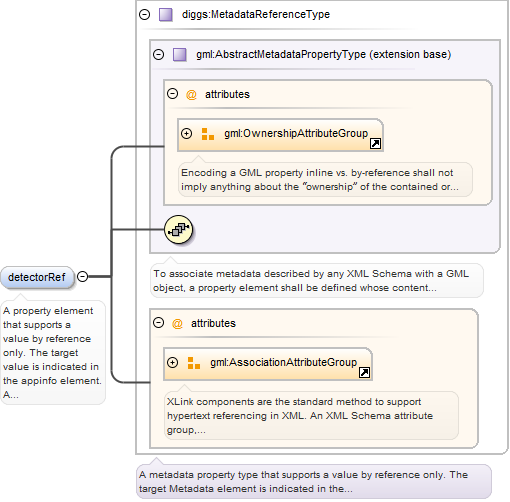
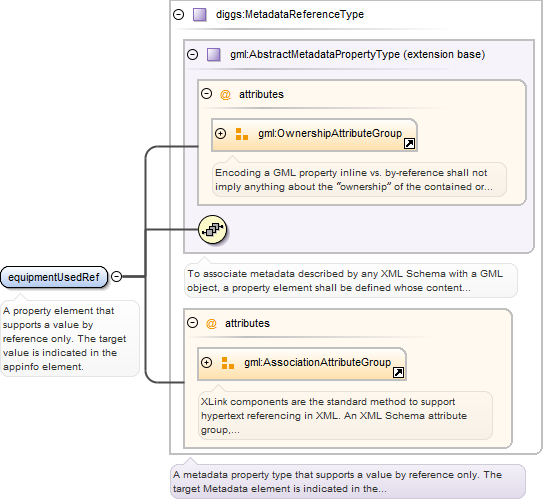
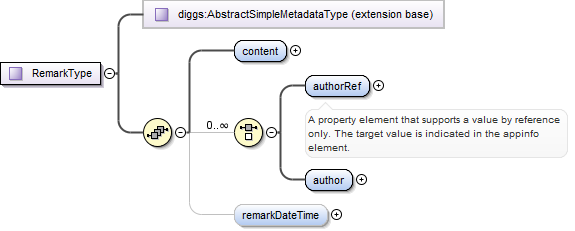
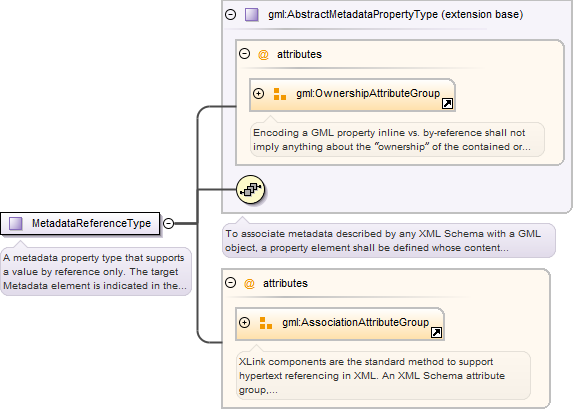
<element name="authorRef" type="diggs:MetadataReferenceType" minOccurs="1" maxOccurs="1"><annotation><documentation>A property element that supports a value by reference only. The target value is indicated in the appinfo element.</documentation><appinfo source="urn:x-gml:targetElement">diggs:BusinessAssociate</appinfo></annotation></element>
Attempting to install the relevant ISO 2- and 3-letter codes as the enumerated possible values is probably never going to be a realistic possibility. See RFC 3066 at http://www.ietf.org/rfc/rfc3066.txt and the IANA registry at http://www.iana.org/assignments/lang-tag-apps.htm for further information. The union allows for the 'un-declaration' of xml:lang with the empty string.
Database handle for the object. It is of XML type ID, so is constrained to beunique in the XML document within which it occurs. An external identifier for the object inthe form of a URI may be constructed using standard XML and XPointer methods. This is doneby concatenating the URI for the document, a fragment separator, and the value of the idattribute.
Attempting to install the relevant ISO 2- and 3-letter codes as the enumerated possible values is probably never going to be a realistic possibility. See RFC 3066 at http://www.ietf.org/rfc/rfc3066.txt and the IANA registry at http://www.iana.org/assignments/lang-tag-apps.htm for further information. The union allows for the 'un-declaration' of xml:lang with the empty string.
Attempting to install the relevant ISO 2- and 3-letter codes as the enumerated possible values is probably never going to be a realistic possibility. See RFC 3066 at http://www.ietf.org/rfc/rfc3066.txt and the IANA registry at http://www.iana.org/assignments/lang-tag-apps.htm for further information. The union allows for the 'un-declaration' of xml:lang with the empty string.
Database handle for the object. It is of XML type ID, so is constrained to beunique in the XML document within which it occurs. An external identifier for the object inthe form of a URI may be constructed using standard XML and XPointer methods. This is doneby concatenating the URI for the document, a fragment separator, and the value of the idattribute.
Attempting to install the relevant ISO 2- and 3-letter codes as the enumerated possible values is probably never going to be a realistic possibility. See RFC 3066 at http://www.ietf.org/rfc/rfc3066.txt and the IANA registry at http://www.iana.org/assignments/lang-tag-apps.htm for further information. The union allows for the 'un-declaration' of xml:lang with the empty string.
Attempting to install the relevant ISO 2- and 3-letter codes as the enumerated possible values is probably never going to be a realistic possibility. See RFC 3066 at http://www.ietf.org/rfc/rfc3066.txt and the IANA registry at http://www.iana.org/assignments/lang-tag-apps.htm for further information. The union allows for the 'un-declaration' of xml:lang with the empty string.
Attempting to install the relevant ISO 2- and 3-letter codes as the enumerated possible values is probably never going to be a realistic possibility. See RFC 3066 at http://www.ietf.org/rfc/rfc3066.txt and the IANA registry at http://www.iana.org/assignments/lang-tag-apps.htm for further information. The union allows for the 'un-declaration' of xml:lang with the empty string.
Attempting to install the relevant ISO 2- and 3-letter codes as the enumerated possible values is probably never going to be a realistic possibility. See RFC 3066 at http://www.ietf.org/rfc/rfc3066.txt and the IANA registry at http://www.iana.org/assignments/lang-tag-apps.htm for further information. The union allows for the 'un-declaration' of xml:lang with the empty string.
Attempting to install the relevant ISO 2- and 3-letter codes as the enumerated possible values is probably never going to be a realistic possibility. See RFC 3066 at http://www.ietf.org/rfc/rfc3066.txt and the IANA registry at http://www.iana.org/assignments/lang-tag-apps.htm for further information. The union allows for the 'un-declaration' of xml:lang with the empty string.
Attempting to install the relevant ISO 2- and 3-letter codes as the enumerated possible values is probably never going to be a realistic possibility. See RFC 3066 at http://www.ietf.org/rfc/rfc3066.txt and the IANA registry at http://www.iana.org/assignments/lang-tag-apps.htm for further information. The union allows for the 'un-declaration' of xml:lang with the empty string.
Attempting to install the relevant ISO 2- and 3-letter codes as the enumerated possible values is probably never going to be a realistic possibility. See RFC 3066 at http://www.ietf.org/rfc/rfc3066.txt and the IANA registry at http://www.iana.org/assignments/lang-tag-apps.htm for further information. The union allows for the 'un-declaration' of xml:lang with the empty string.
Attempting to install the relevant ISO 2- and 3-letter codes as the enumerated possible values is probably never going to be a realistic possibility. See RFC 3066 at http://www.ietf.org/rfc/rfc3066.txt and the IANA registry at http://www.iana.org/assignments/lang-tag-apps.htm for further information. The union allows for the 'un-declaration' of xml:lang with the empty string.
Attempting to install the relevant ISO 2- and 3-letter codes as the enumerated possible values is probably never going to be a realistic possibility. See RFC 3066 at http://www.ietf.org/rfc/rfc3066.txt and the IANA registry at http://www.iana.org/assignments/lang-tag-apps.htm for further information. The union allows for the 'un-declaration' of xml:lang with the empty string.
Database handle for the object. It is of XML type ID, so is constrained to beunique in the XML document within which it occurs. An external identifier for the object inthe form of a URI may be constructed using standard XML and XPointer methods. This is doneby concatenating the URI for the document, a fragment separator, and the value of the idattribute.
Attempting to install the relevant ISO 2- and 3-letter codes as the enumerated possible values is probably never going to be a realistic possibility. See RFC 3066 at http://www.ietf.org/rfc/rfc3066.txt and the IANA registry at http://www.iana.org/assignments/lang-tag-apps.htm for further information. The union allows for the 'un-declaration' of xml:lang with the empty string.
Database handle for the object. It is of XML type ID, so is constrained to beunique in the XML document within which it occurs. An external identifier for the object inthe form of a URI may be constructed using standard XML and XPointer methods. This is doneby concatenating the URI for the document, a fragment separator, and the value of the idattribute.
Attempting to install the relevant ISO 2- and 3-letter codes as the enumerated possible values is probably never going to be a realistic possibility. See RFC 3066 at http://www.ietf.org/rfc/rfc3066.txt and the IANA registry at http://www.iana.org/assignments/lang-tag-apps.htm for further information. The union allows for the 'un-declaration' of xml:lang with the empty string.
Database handle for the object. It is of XML type ID, so is constrained to beunique in the XML document within which it occurs. An external identifier for the object inthe form of a URI may be constructed using standard XML and XPointer methods. This is doneby concatenating the URI for the document, a fragment separator, and the value of the idattribute.
Attempting to install the relevant ISO 2- and 3-letter codes as the enumerated possible values is probably never going to be a realistic possibility. See RFC 3066 at http://www.ietf.org/rfc/rfc3066.txt and the IANA registry at http://www.iana.org/assignments/lang-tag-apps.htm for further information. The union allows for the 'un-declaration' of xml:lang with the empty string.
Database handle for the object. It is of XML type ID, so is constrained to beunique in the XML document within which it occurs. An external identifier for the object inthe form of a URI may be constructed using standard XML and XPointer methods. This is doneby concatenating the URI for the document, a fragment separator, and the value of the idattribute.
Attempting to install the relevant ISO 2- and 3-letter codes as the enumerated possible values is probably never going to be a realistic possibility. See RFC 3066 at http://www.ietf.org/rfc/rfc3066.txt and the IANA registry at http://www.iana.org/assignments/lang-tag-apps.htm for further information. The union allows for the 'un-declaration' of xml:lang with the empty string.
Database handle for the object. It is of XML type ID, so is constrained to beunique in the XML document within which it occurs. An external identifier for the object inthe form of a URI may be constructed using standard XML and XPointer methods. This is doneby concatenating the URI for the document, a fragment separator, and the value of the idattribute.
Attempting to install the relevant ISO 2- and 3-letter codes as the enumerated possible values is probably never going to be a realistic possibility. See RFC 3066 at http://www.ietf.org/rfc/rfc3066.txt and the IANA registry at http://www.iana.org/assignments/lang-tag-apps.htm for further information. The union allows for the 'un-declaration' of xml:lang with the empty string.
Database handle for the object. It is of XML type ID, so is constrained to beunique in the XML document within which it occurs. An external identifier for the object inthe form of a URI may be constructed using standard XML and XPointer methods. This is doneby concatenating the URI for the document, a fragment separator, and the value of the idattribute.
Attempting to install the relevant ISO 2- and 3-letter codes as the enumerated possible values is probably never going to be a realistic possibility. See RFC 3066 at http://www.ietf.org/rfc/rfc3066.txt and the IANA registry at http://www.iana.org/assignments/lang-tag-apps.htm for further information. The union allows for the 'un-declaration' of xml:lang with the empty string.
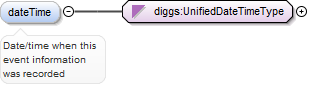
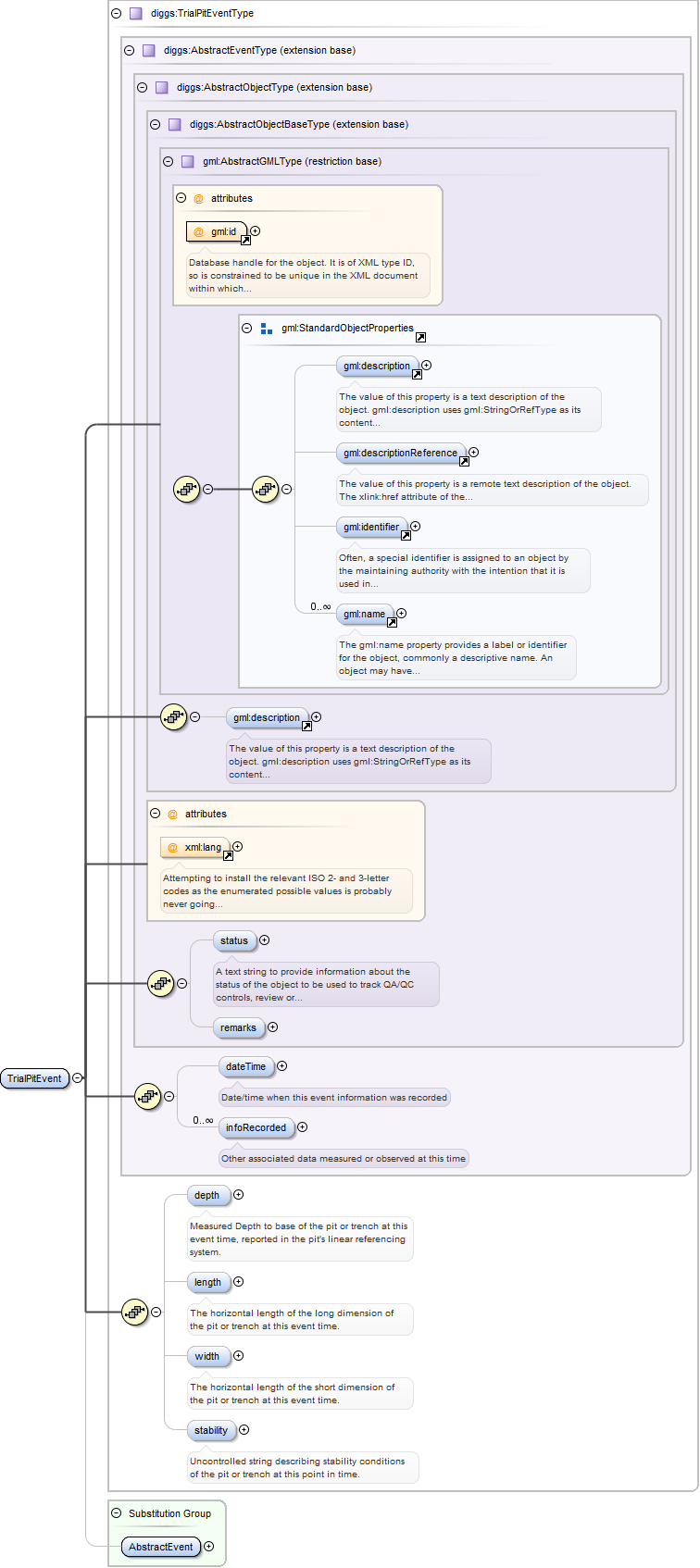
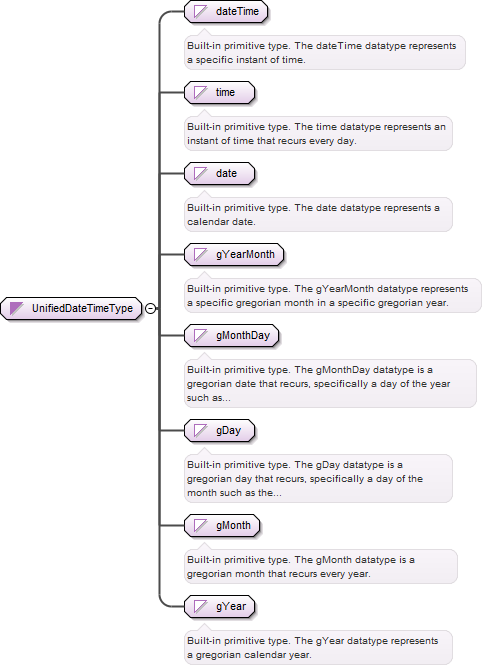
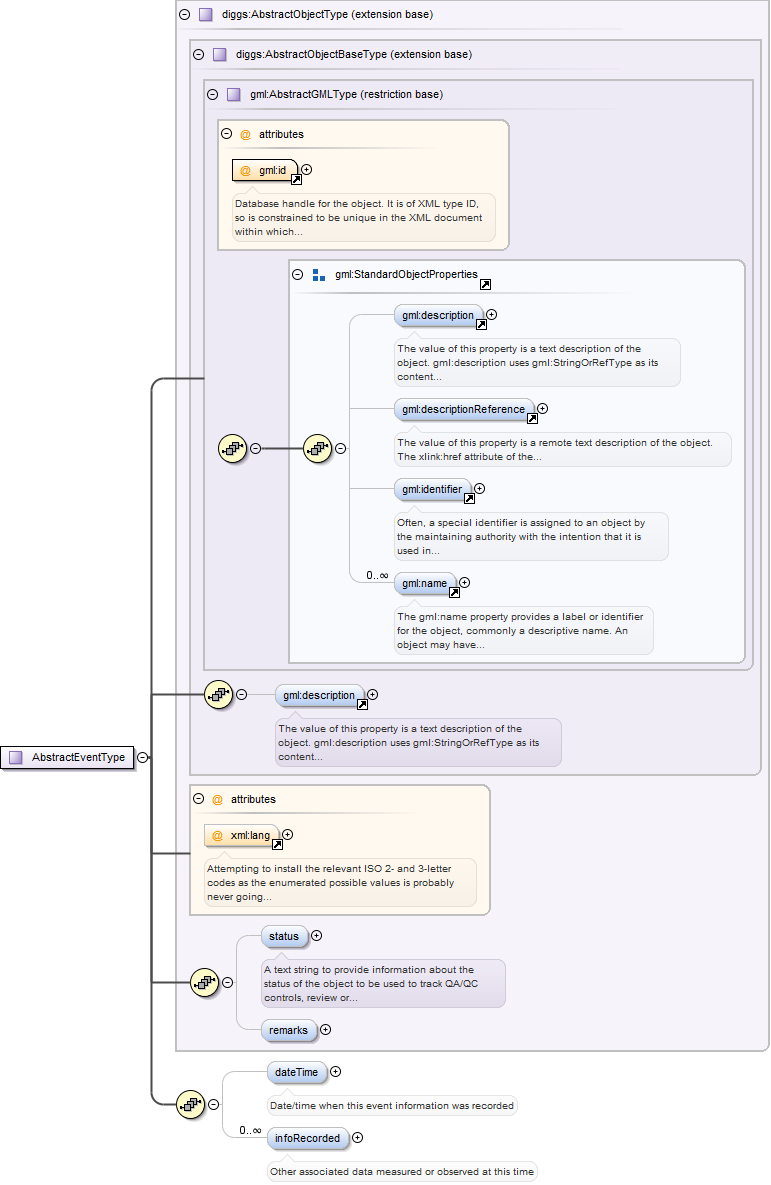
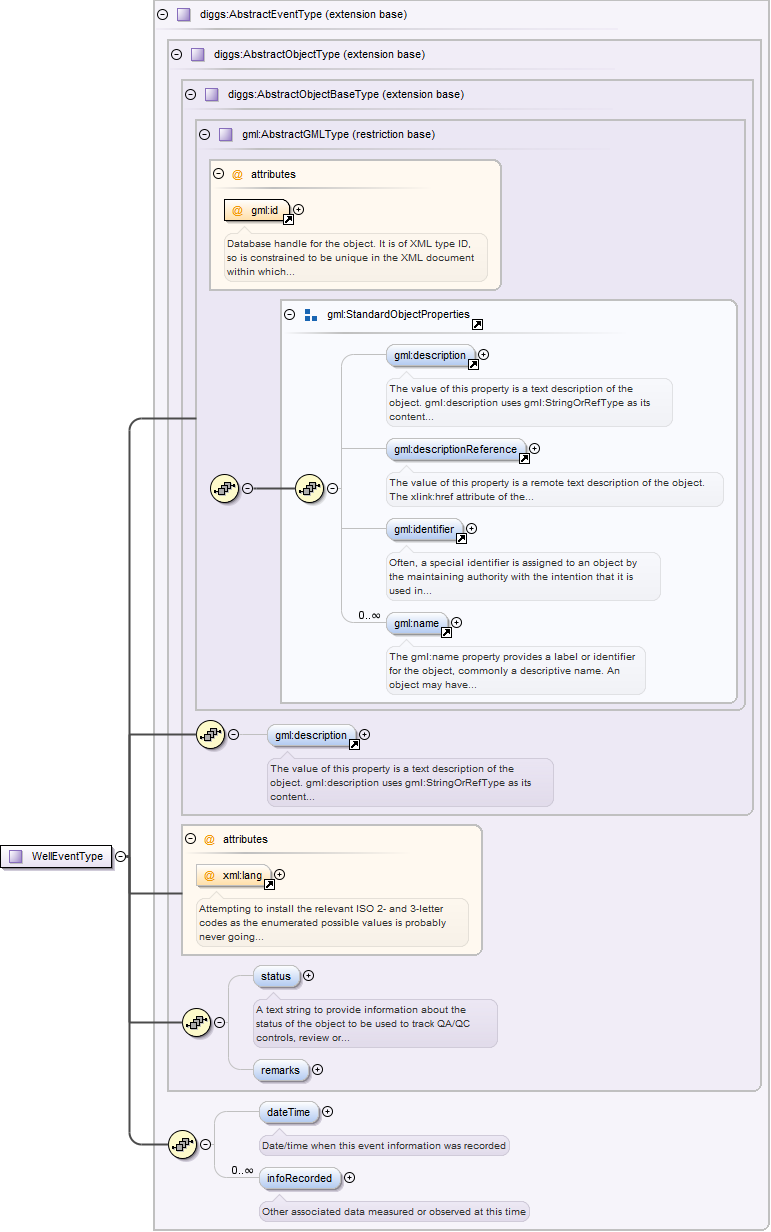
<element name="dateTime" type="diggs:UnifiedDateTimeType" minOccurs="0"><annotation><documentation>Date/time when this event information was recorded</documentation></annotation></element>
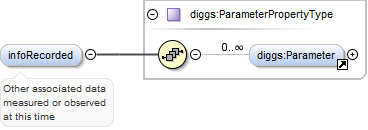
<element maxOccurs="unbounded" minOccurs="0" name="infoRecorded" type="diggs:ParameterPropertyType"><annotation><documentation><![CDATA[Other associated data measured or observed at this time]]></documentation></annotation></element>
Database handle for the object. It is of XML type ID, so is constrained to beunique in the XML document within which it occurs. An external identifier for the object inthe form of a URI may be constructed using standard XML and XPointer methods. This is doneby concatenating the URI for the document, a fragment separator, and the value of the idattribute.
Attempting to install the relevant ISO 2- and 3-letter codes as the enumerated possible values is probably never going to be a realistic possibility. See RFC 3066 at http://www.ietf.org/rfc/rfc3066.txt and the IANA registry at http://www.iana.org/assignments/lang-tag-apps.htm for further information. The union allows for the 'un-declaration' of xml:lang with the empty string.
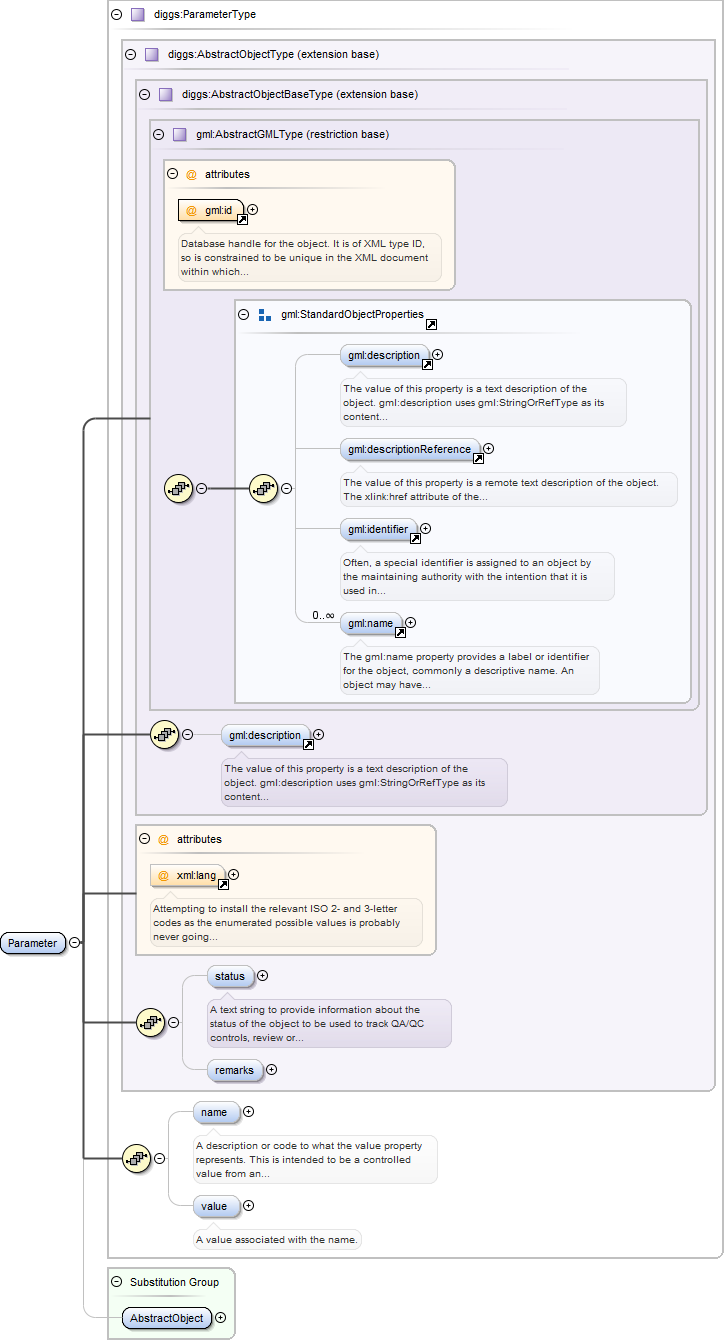
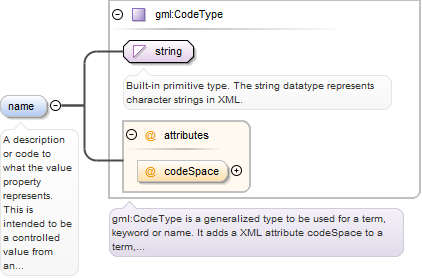
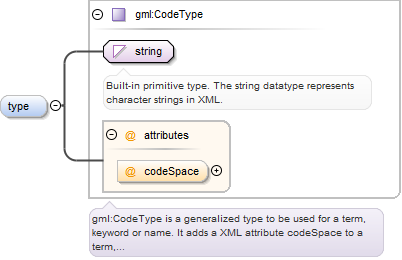
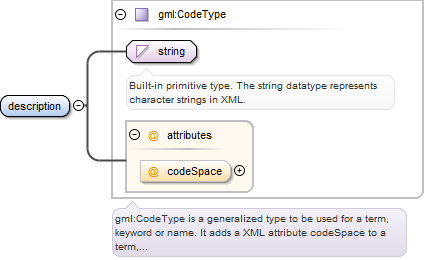
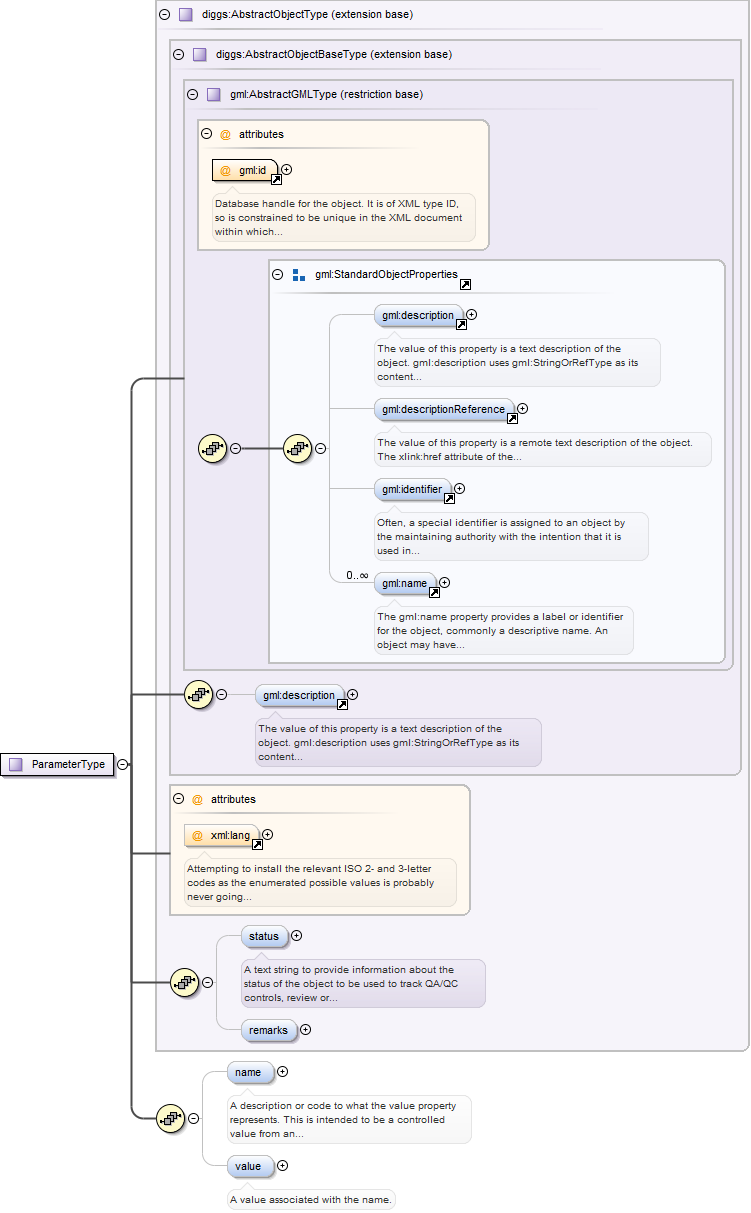
<element minOccurs="0" name="name" type="gml:CodeType"><annotation><documentation>A description or code to what the value property represents. This is intended to be a controlled value from an authority.</documentation></annotation></element>
Attempting to install the relevant ISO 2- and 3-letter codes as the enumerated possible values is probably never going to be a realistic possibility. See RFC 3066 at http://www.ietf.org/rfc/rfc3066.txt and the IANA registry at http://www.iana.org/assignments/lang-tag-apps.htm for further information. The union allows for the 'un-declaration' of xml:lang with the empty string.
Source
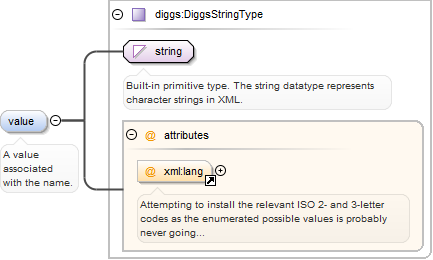
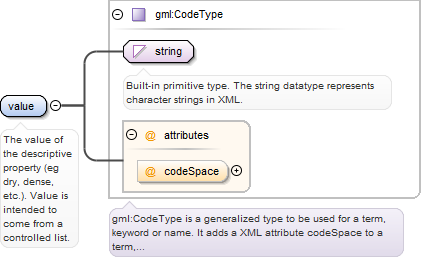
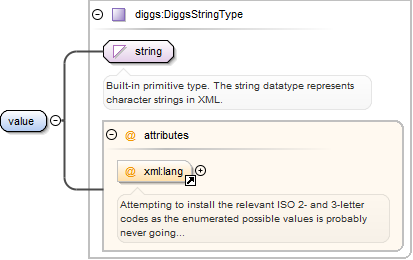
<element minOccurs="0" name="value" type="diggs:DiggsStringType"><annotation><documentation>A value associated with the name.</documentation></annotation></element>
Database handle for the object. It is of XML type ID, so is constrained to beunique in the XML document within which it occurs. An external identifier for the object inthe form of a URI may be constructed using standard XML and XPointer methods. This is doneby concatenating the URI for the document, a fragment separator, and the value of the idattribute.
Attempting to install the relevant ISO 2- and 3-letter codes as the enumerated possible values is probably never going to be a realistic possibility. See RFC 3066 at http://www.ietf.org/rfc/rfc3066.txt and the IANA registry at http://www.iana.org/assignments/lang-tag-apps.htm for further information. The union allows for the 'un-declaration' of xml:lang with the empty string.
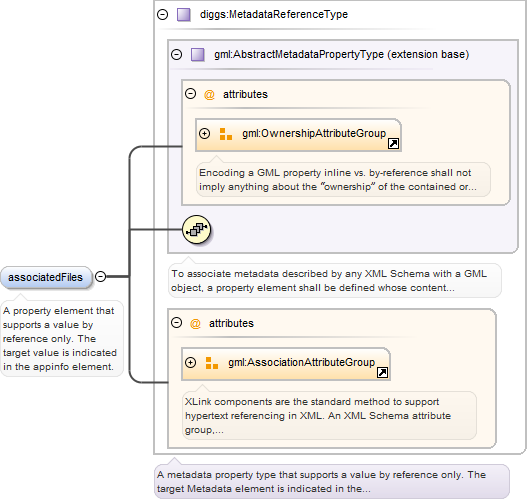
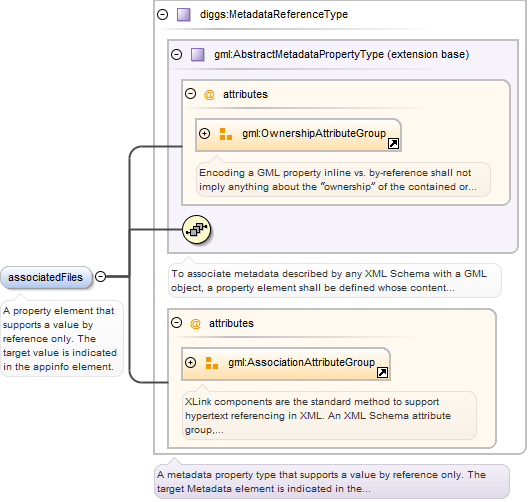
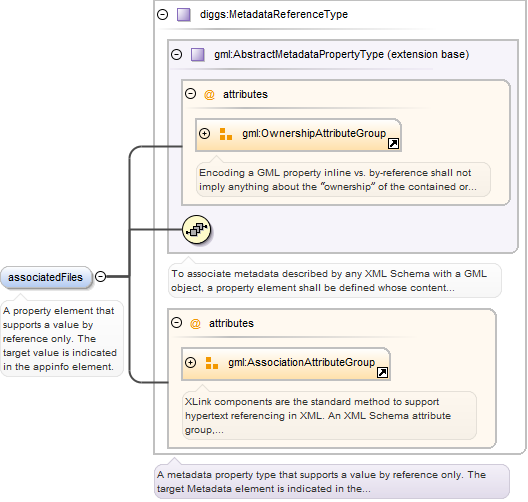
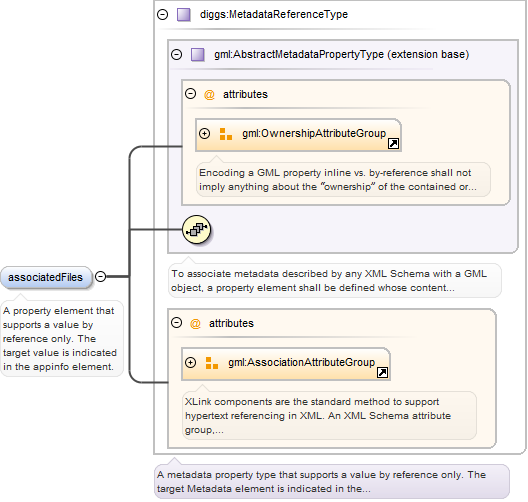
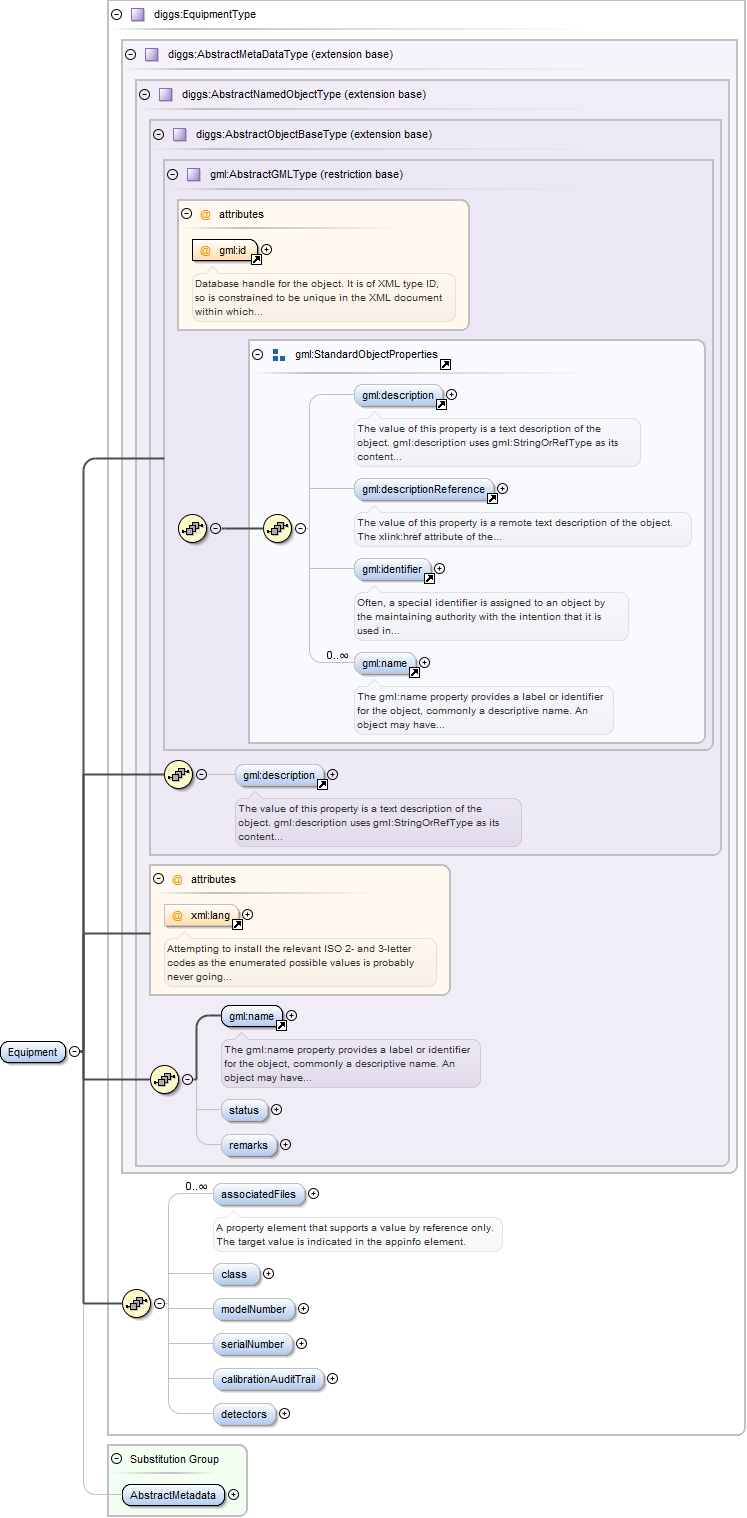
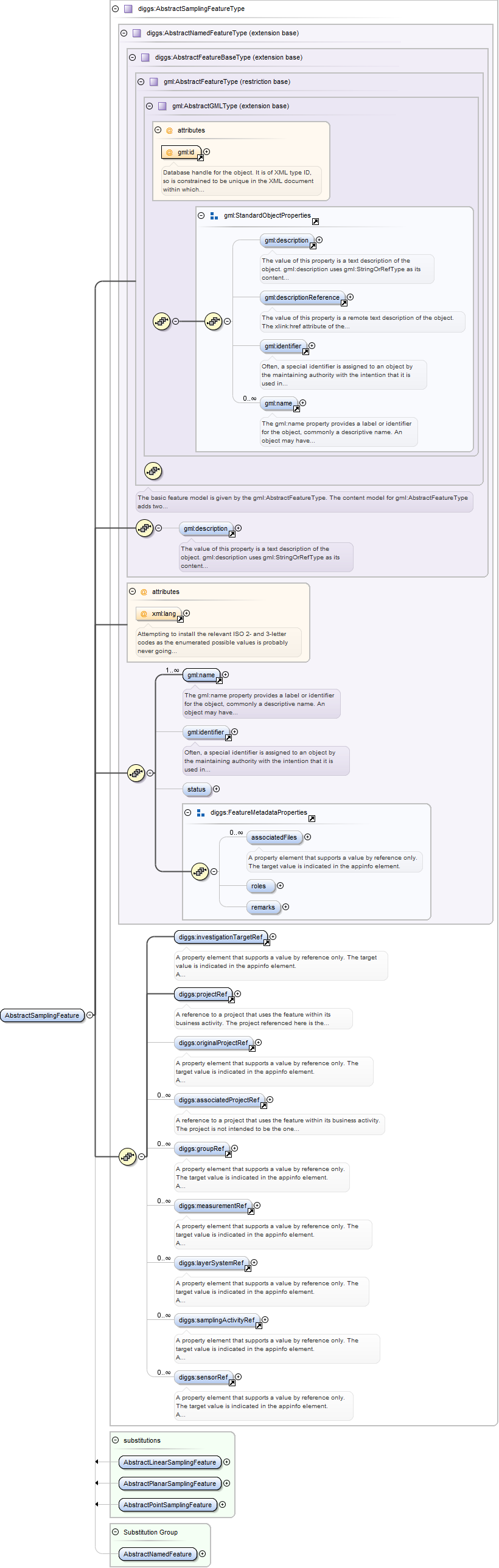
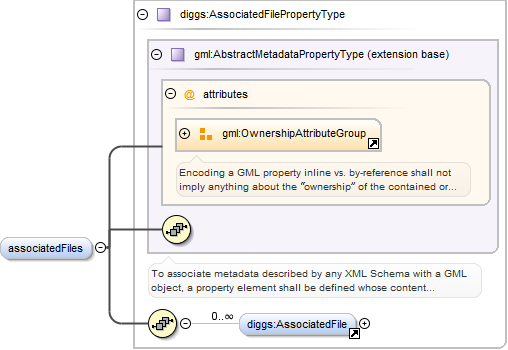
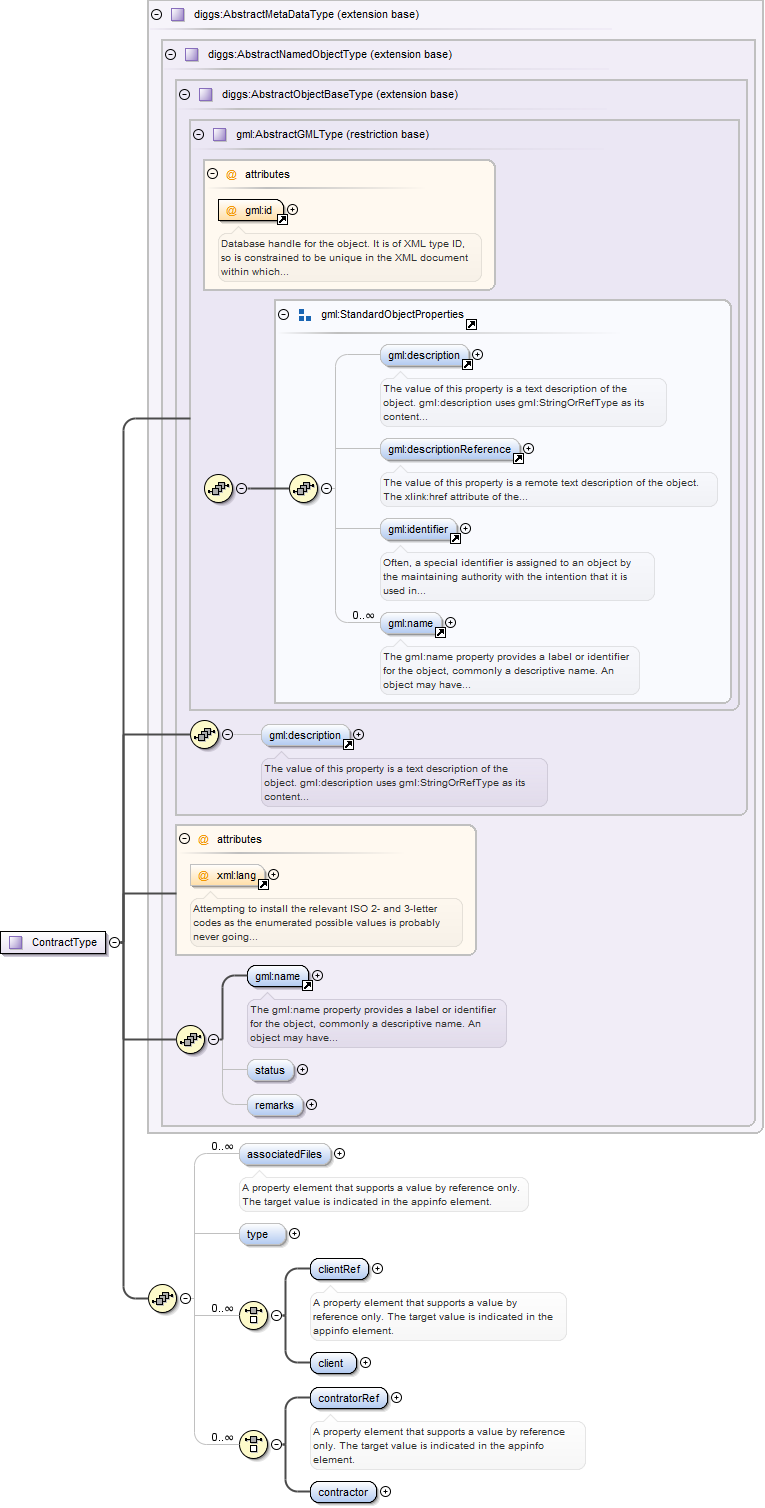
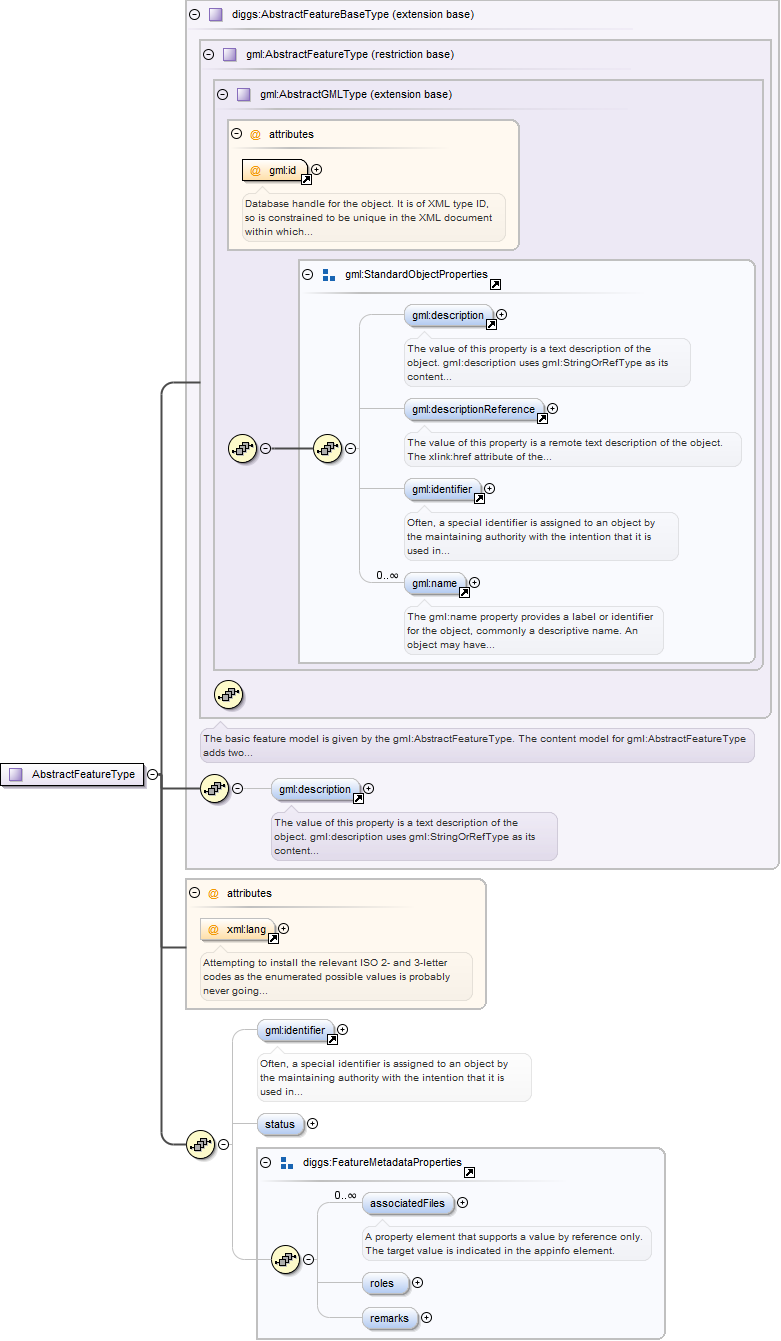
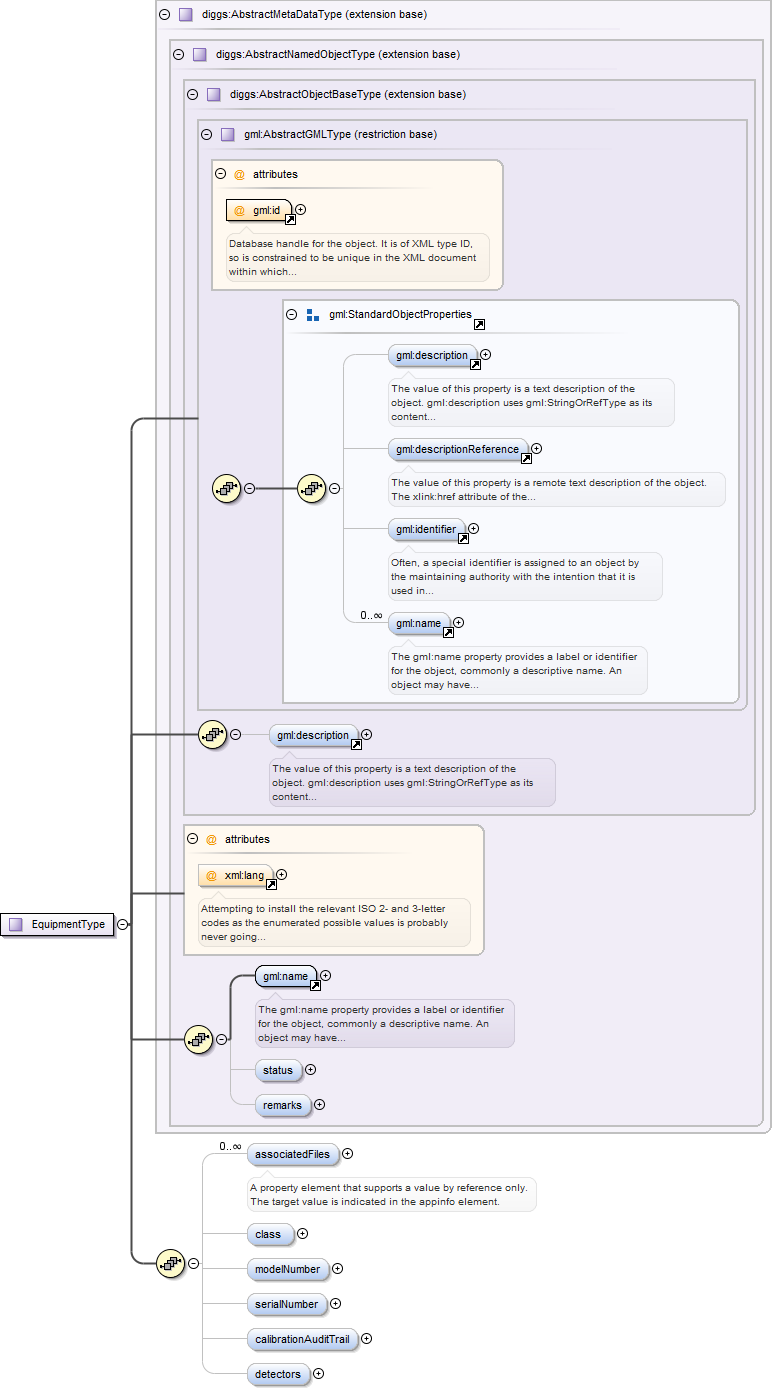
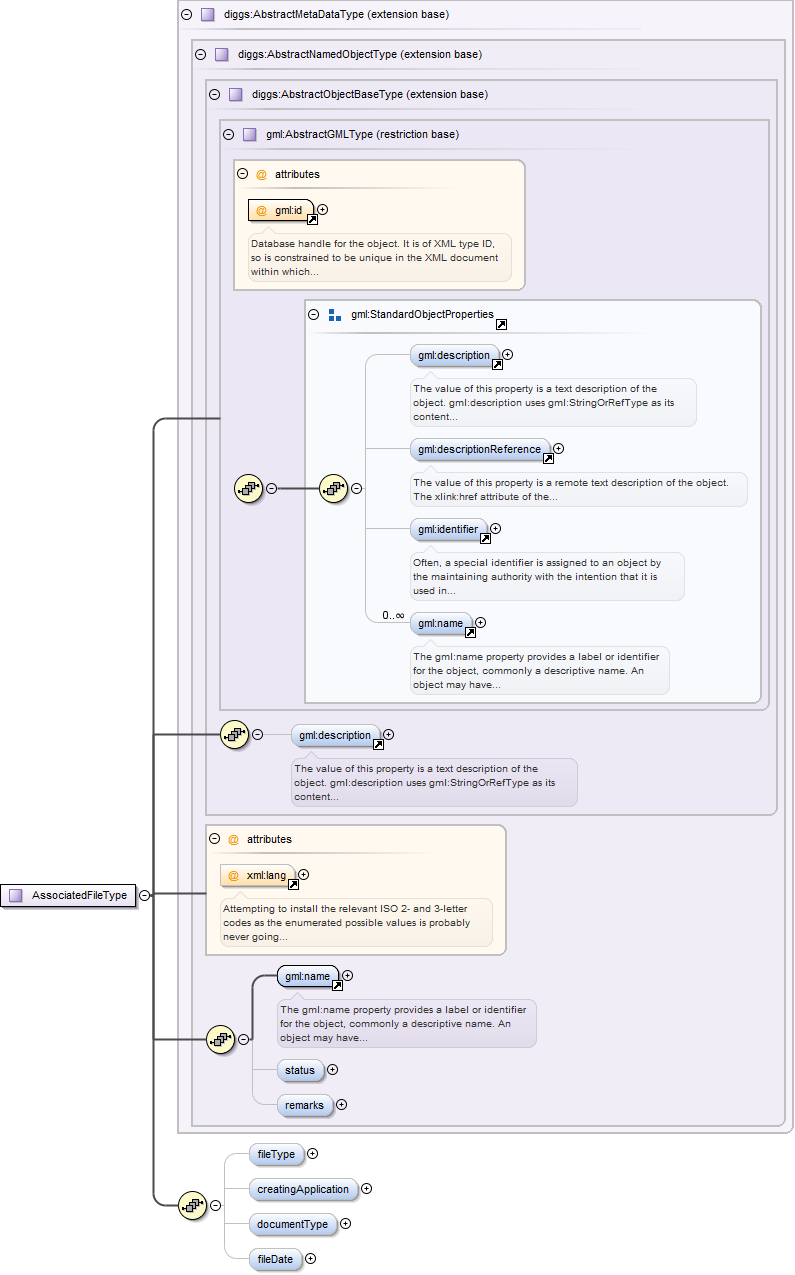
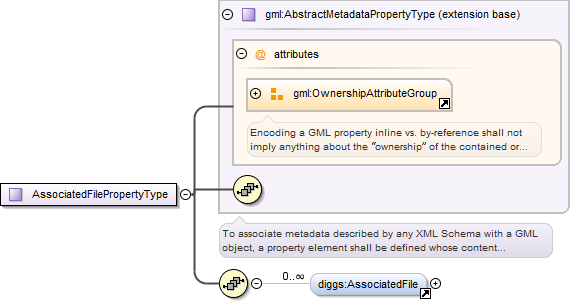
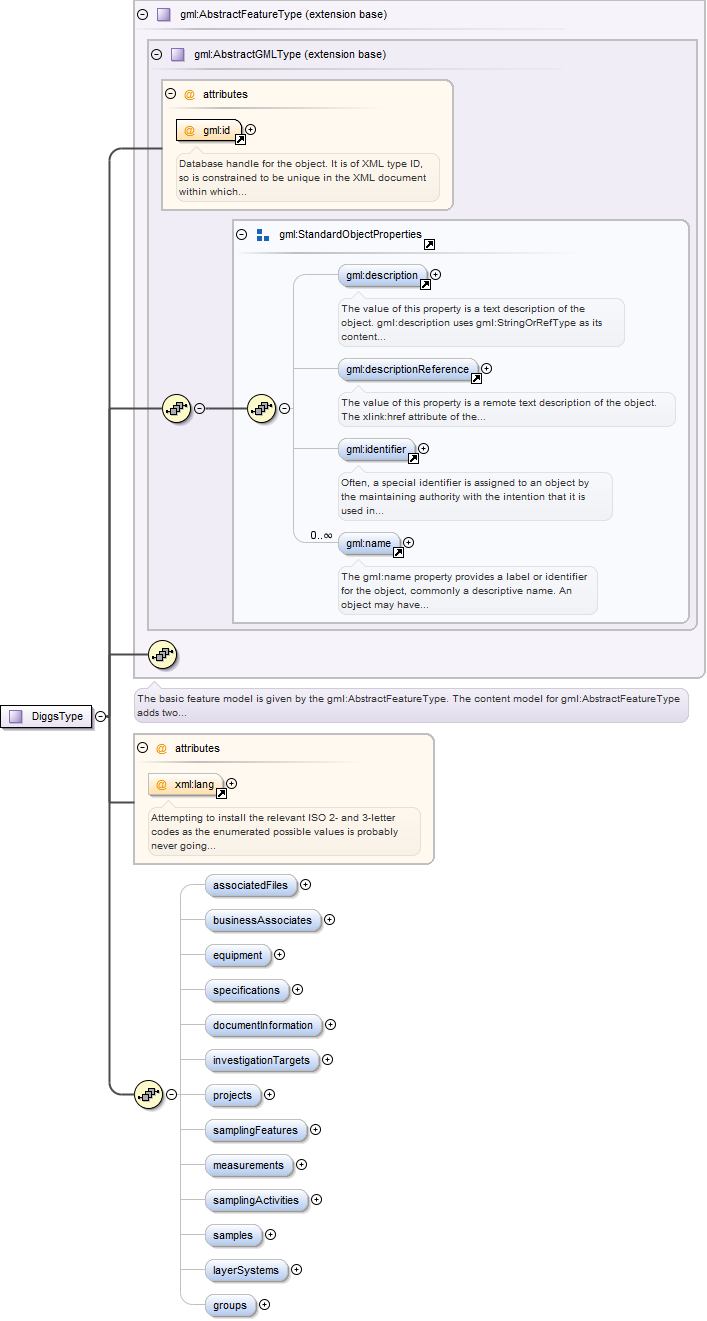
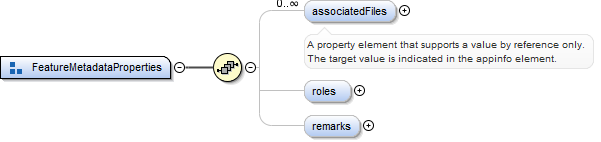
<element name="associatedFiles" type="diggs:MetadataReferenceType" minOccurs="0" maxOccurs="unbounded"><annotation><documentation>A property element that supports a value by reference only. The target value is indicated in the appinfo element.</documentation><appinfo source="urn:x-gml:targetElement">diggs:AssociatedFile</appinfo></annotation></element>
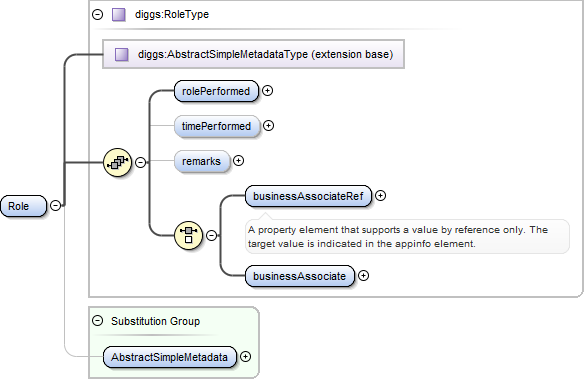
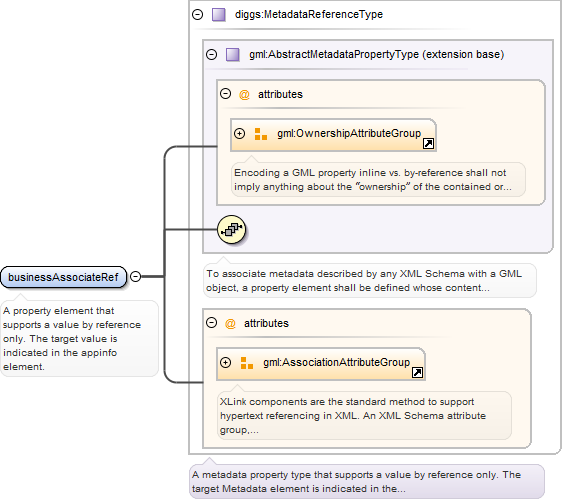
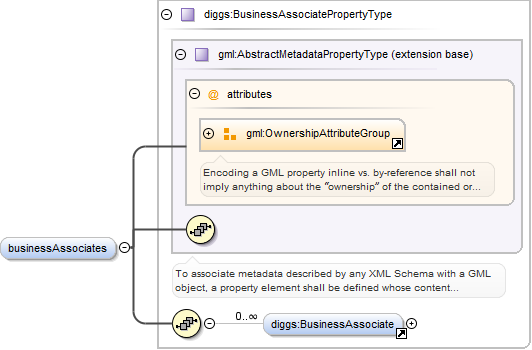
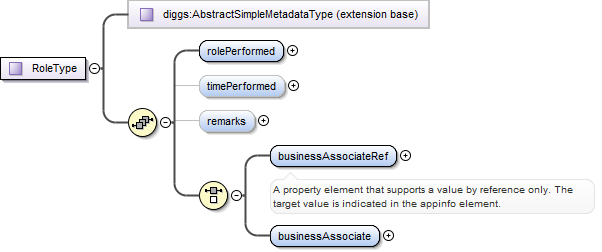
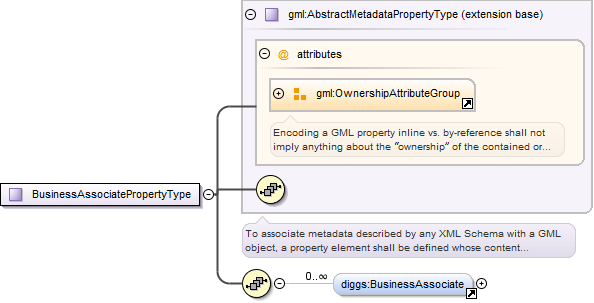
<element name="businessAssociateRef" type="diggs:MetadataReferenceType" minOccurs="1" maxOccurs="1"><annotation><appinfo source="urn:x-gml:targetElement">diggs:BusinessAssociate</appinfo><documentation>A property element that supports a value by reference only. The target value is indicated in the appinfo element.</documentation></annotation></element>
Attempting to install the relevant ISO 2- and 3-letter codes as the enumerated possible values is probably never going to be a realistic possibility. See RFC 3066 at http://www.ietf.org/rfc/rfc3066.txt and the IANA registry at http://www.iana.org/assignments/lang-tag-apps.htm for further information. The union allows for the 'un-declaration' of xml:lang with the empty string.
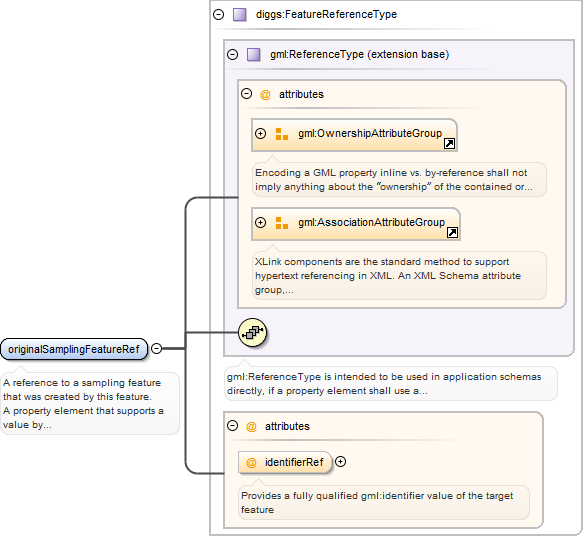
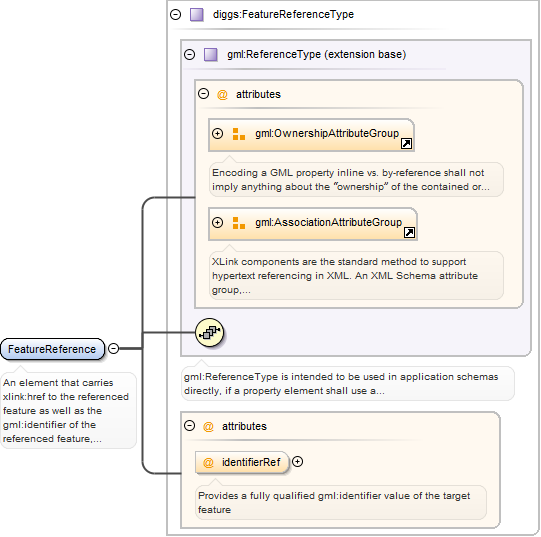
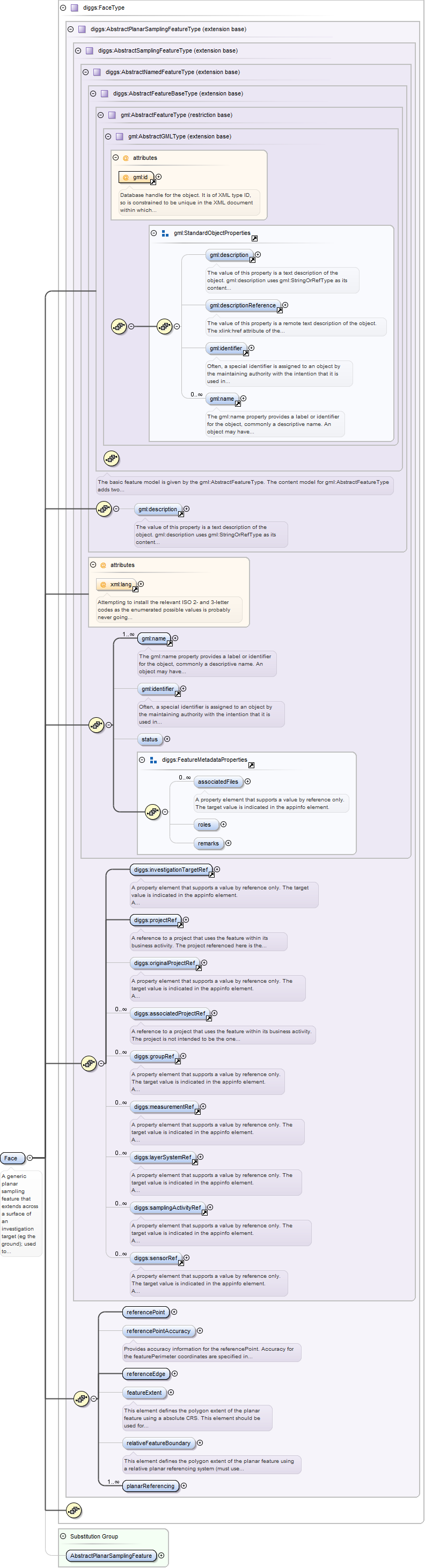
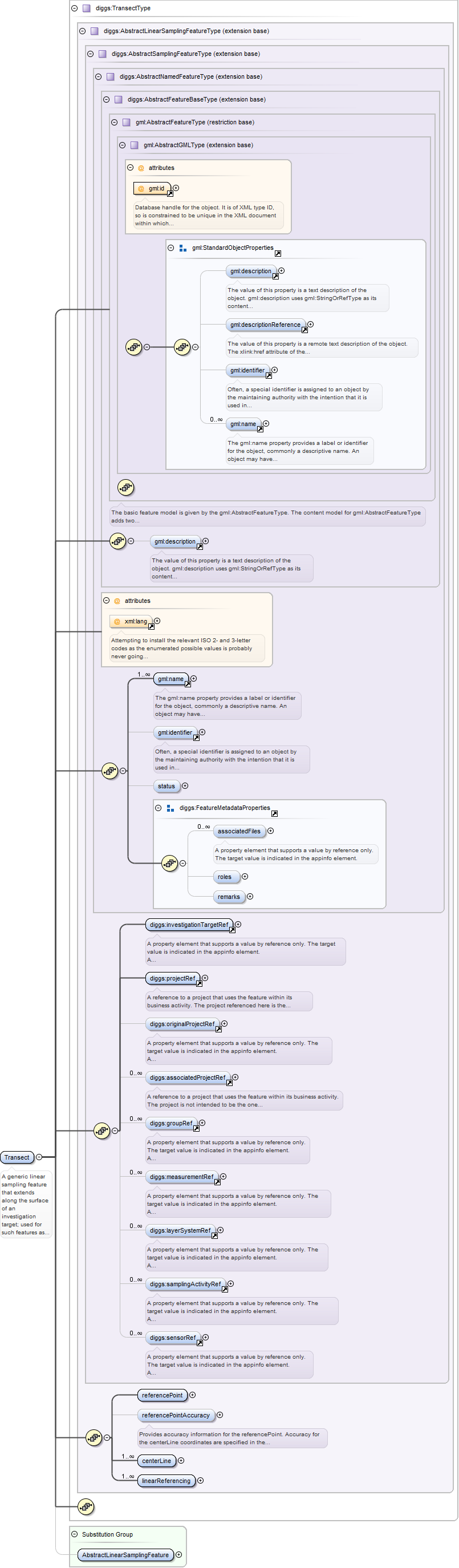
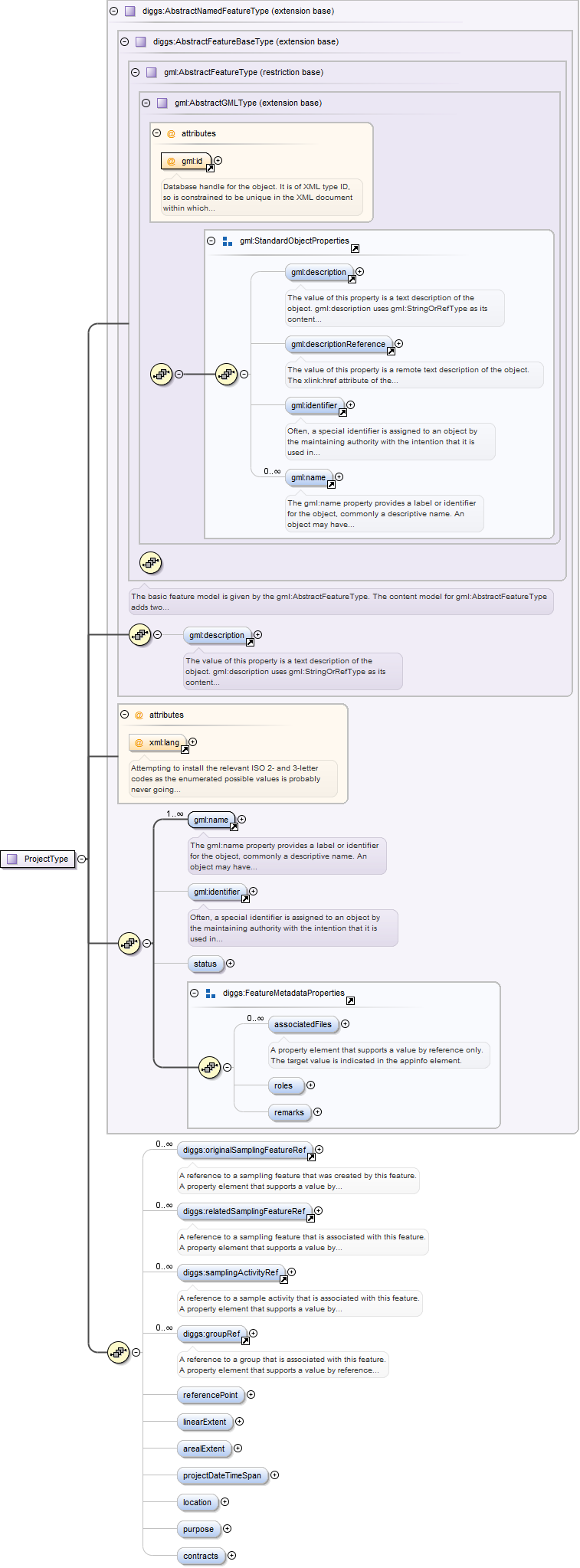
<element name="originalSamplingFeatureRef" type="diggs:FeatureReferenceType"><annotation><appinfo source="urn:x-gml:targetElement">Diggs:AbstractSamplingFeature</appinfo><documentation>A reference to a sampling feature that was created by this feature.</documentation><documentation>A property element that supports a value by reference only. The target value is indicated in the appinfo element.</documentation></annotation></element>
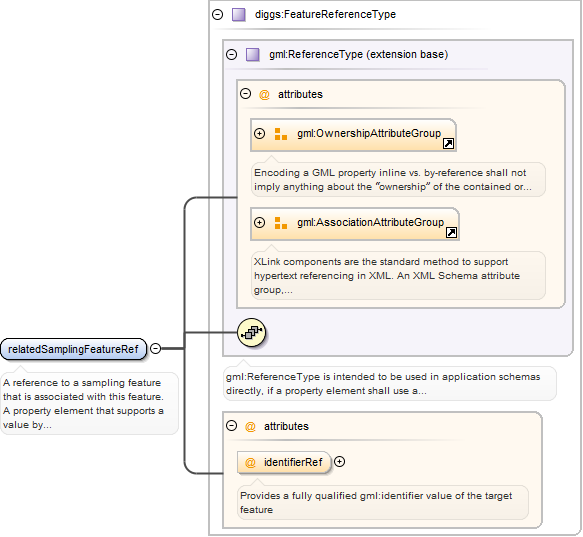
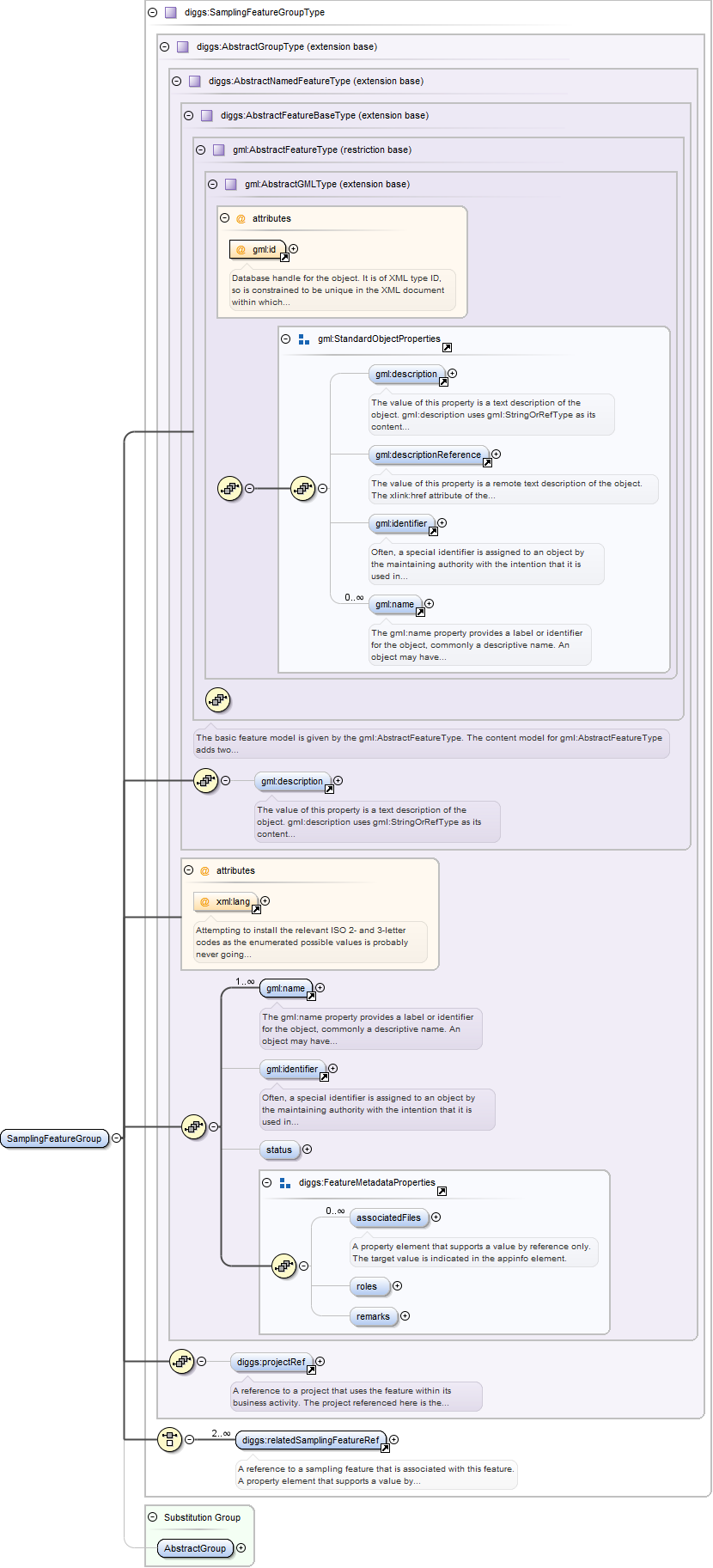
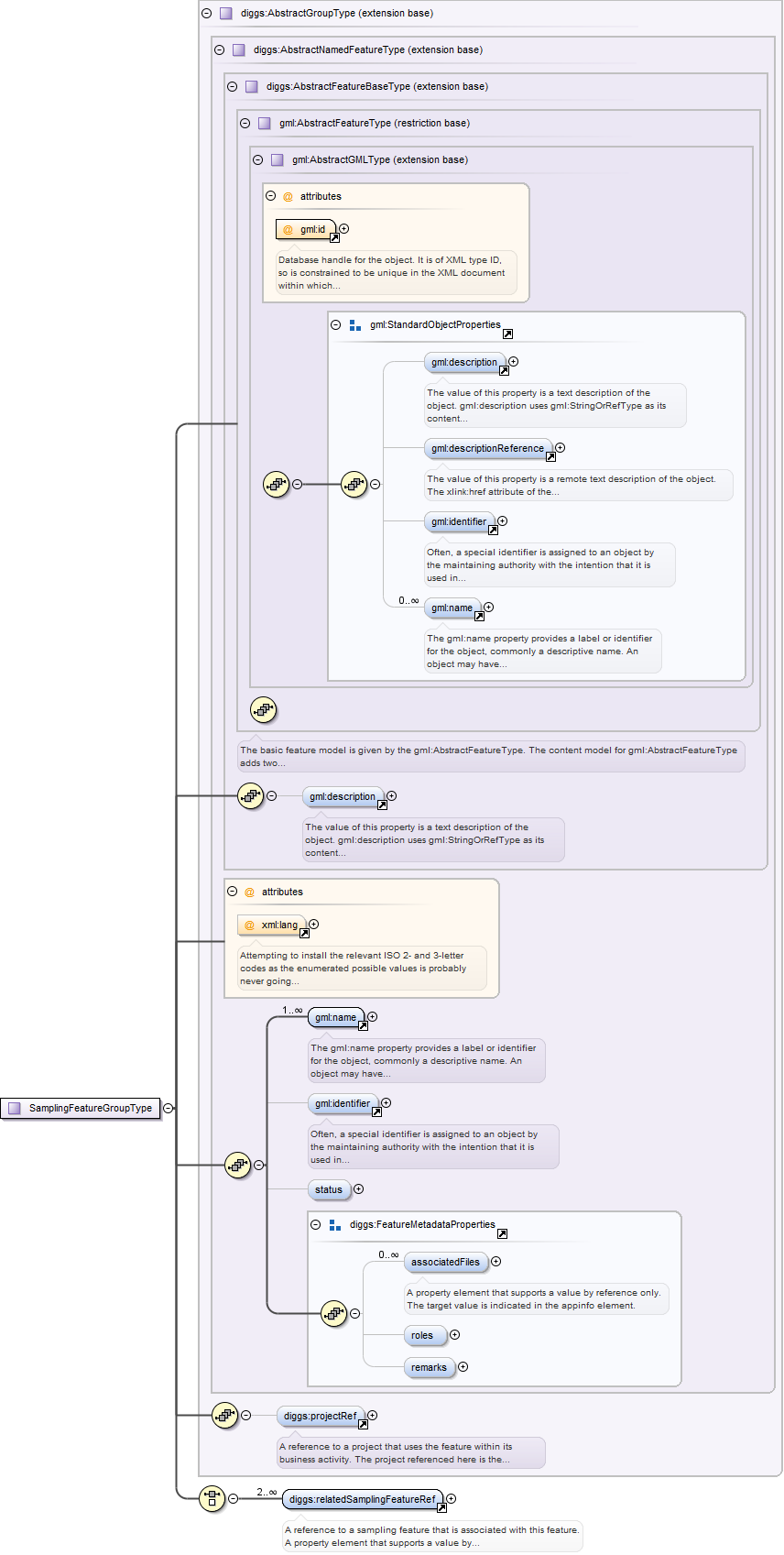
<element name="relatedSamplingFeatureRef" type="diggs:FeatureReferenceType"><annotation><appinfo source="urn:x-gml:targetElement">Diggs:AbstractSamplingFeature</appinfo><documentation>A reference to a sampling feature that is associated with this feature.</documentation><documentation>A property element that supports a value by reference only. The target value is indicated in the appinfo element.</documentation></annotation></element>
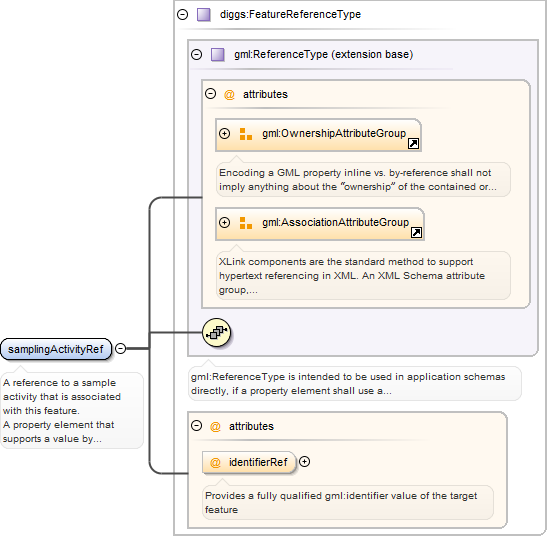
<element name="samplingActivityRef" type="diggs:FeatureReferenceType"><annotation><appinfo source="urn:x-gml:targetElement">Diggs:SamplingActivity</appinfo><documentation>A reference to a sample activity that is associated with this feature.</documentation><documentation>A property element that supports a value by reference only. The target value is indicated in the appinfo element.</documentation></annotation></element>
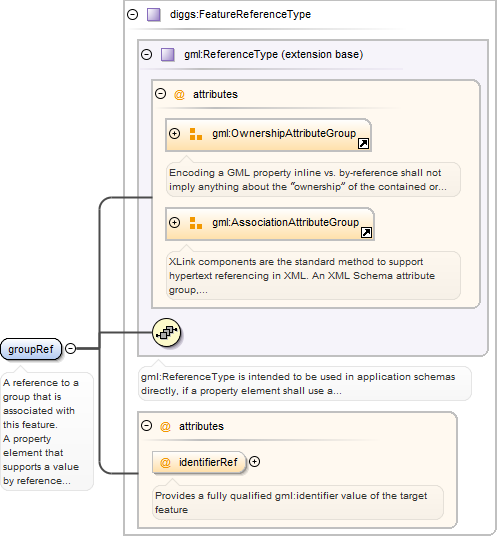
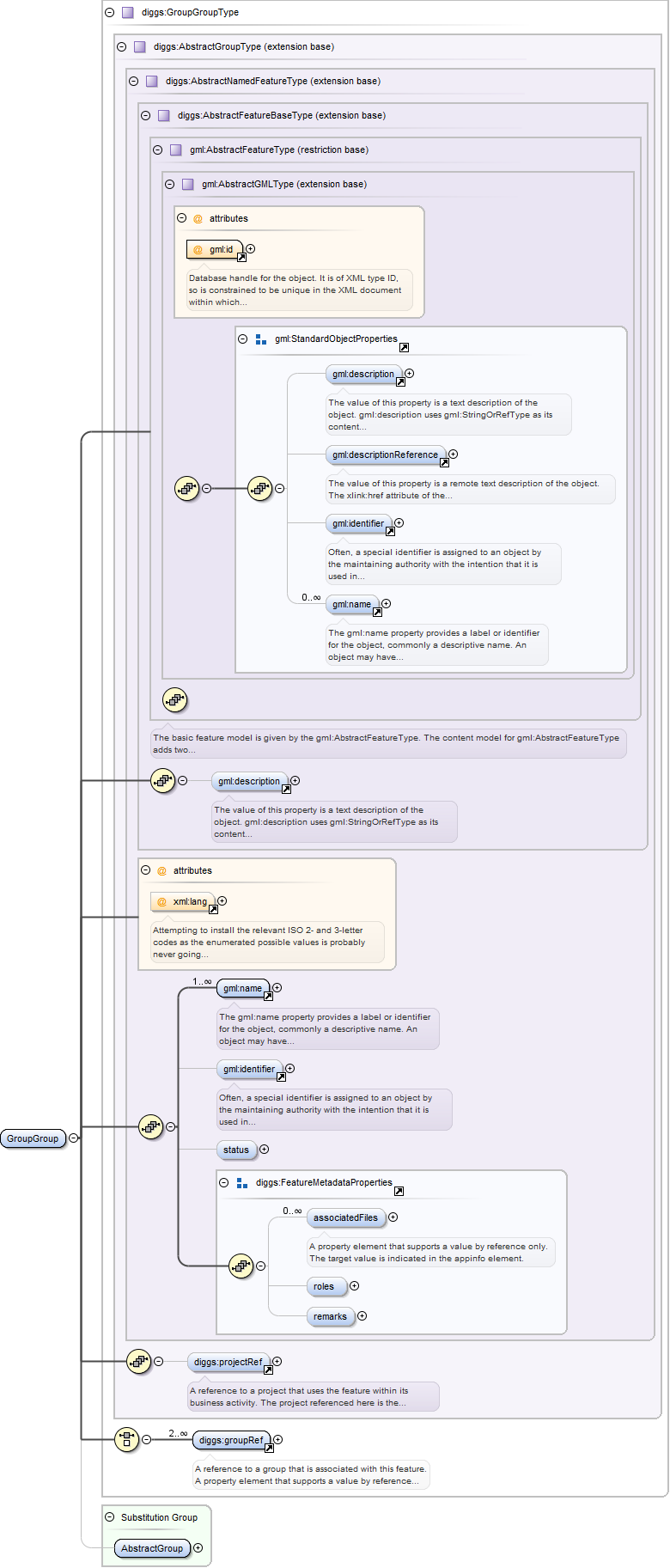
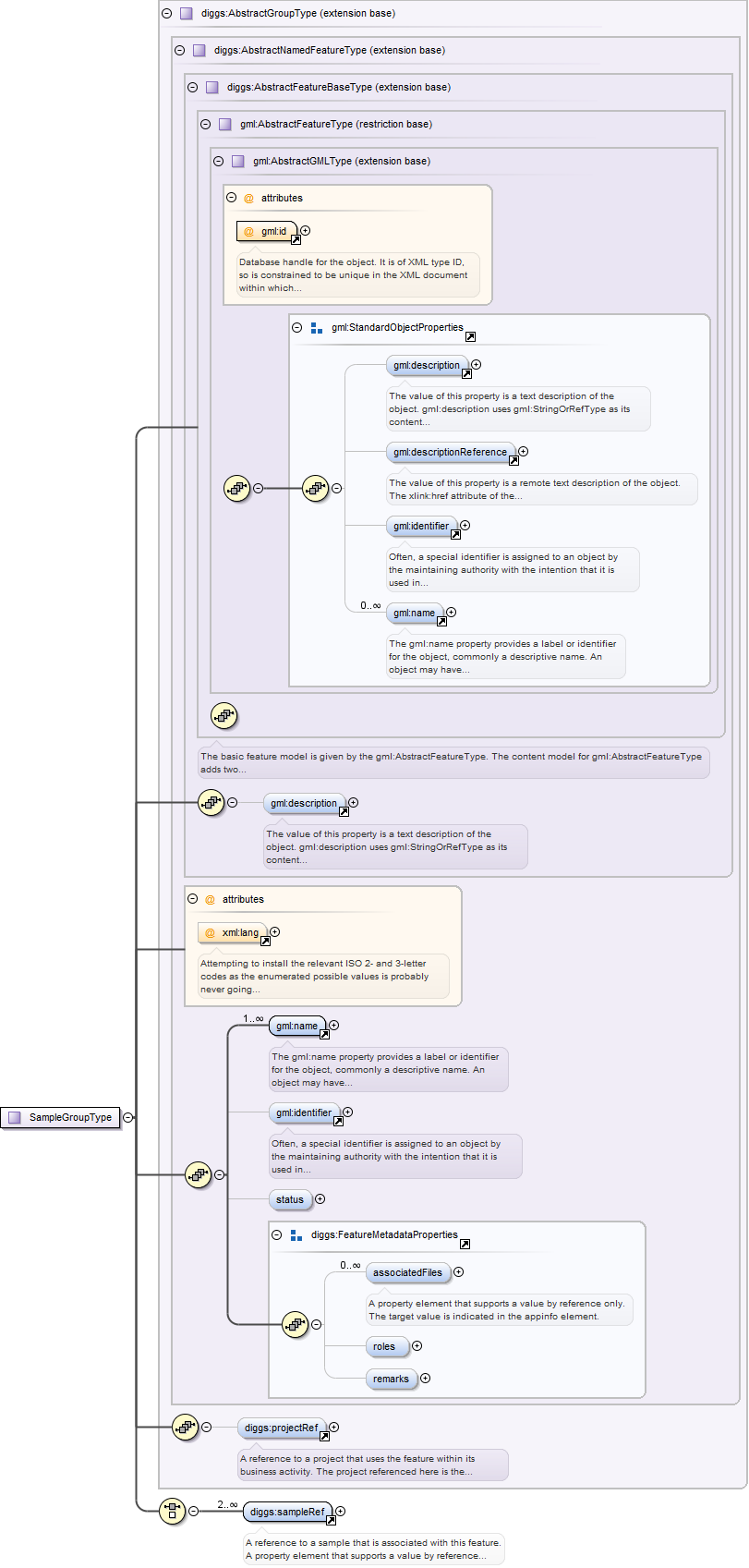
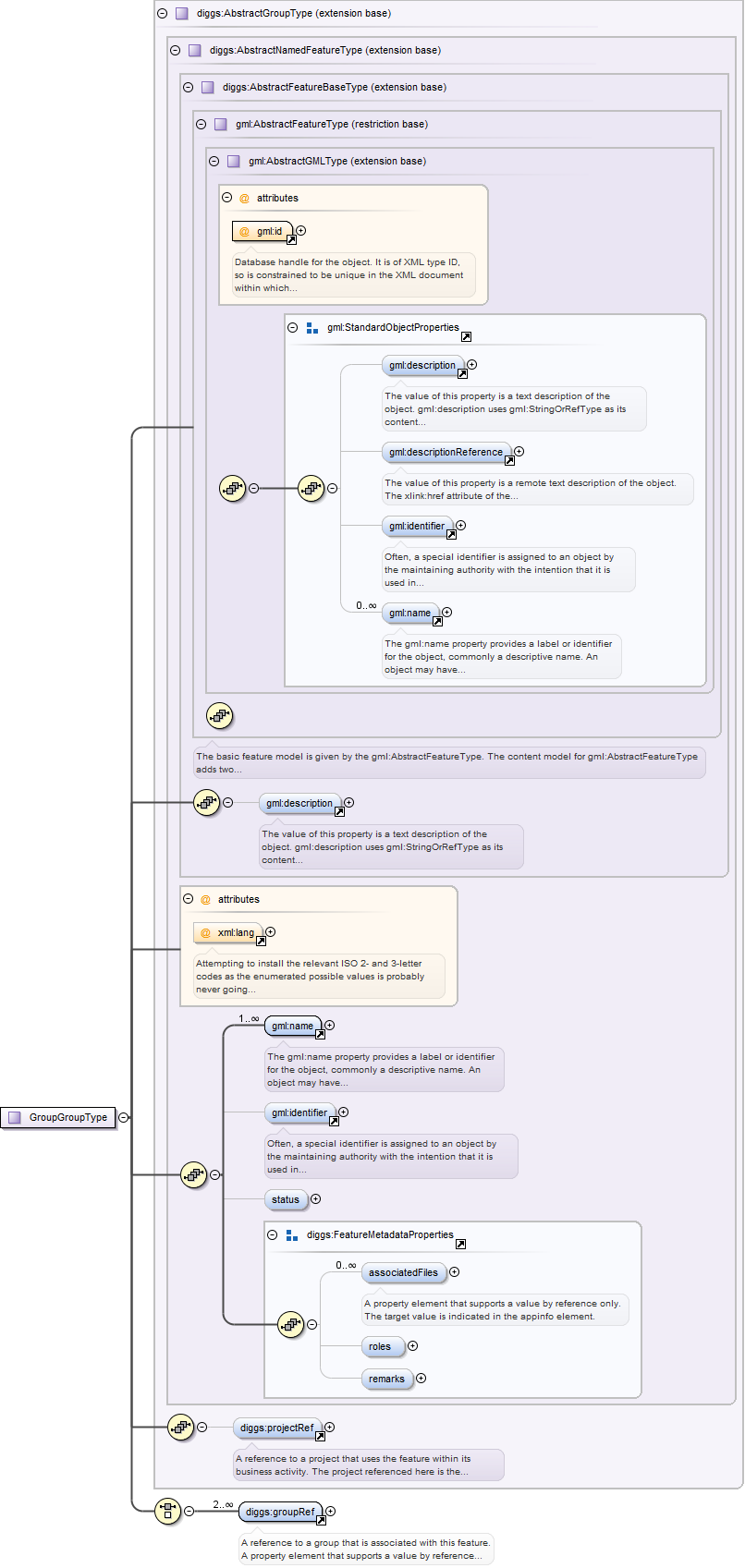
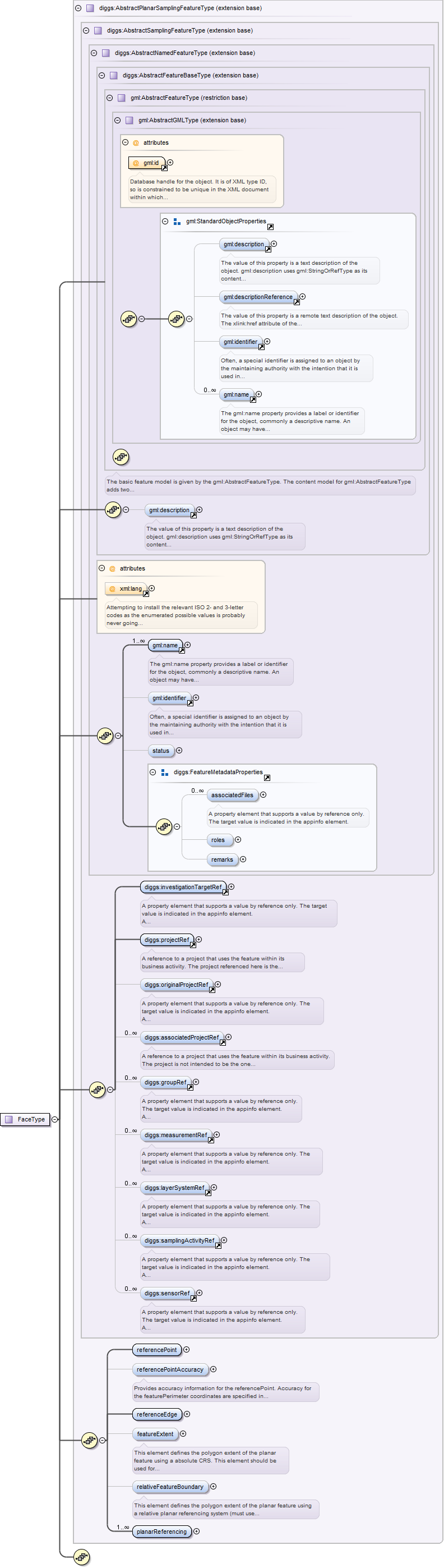
<element name="groupRef" type="diggs:FeatureReferenceType"><annotation><appinfo source="urn:x-gml:targetElement">Diggs:AbstractGroup</appinfo><documentation>A reference to a group that is associated with this feature.</documentation><documentation>A property element that supports a value by reference only. The target value is indicated in the appinfo element.</documentation></annotation></element>
Database handle for the object. It is of XML type ID, so is constrained to beunique in the XML document within which it occurs. An external identifier for the object inthe form of a URI may be constructed using standard XML and XPointer methods. This is doneby concatenating the URI for the document, a fragment separator, and the value of the idattribute.
Database handle for the object. It is of XML type ID, so is constrained to beunique in the XML document within which it occurs. An external identifier for the object inthe form of a URI may be constructed using standard XML and XPointer methods. This is doneby concatenating the URI for the document, a fragment separator, and the value of the idattribute.
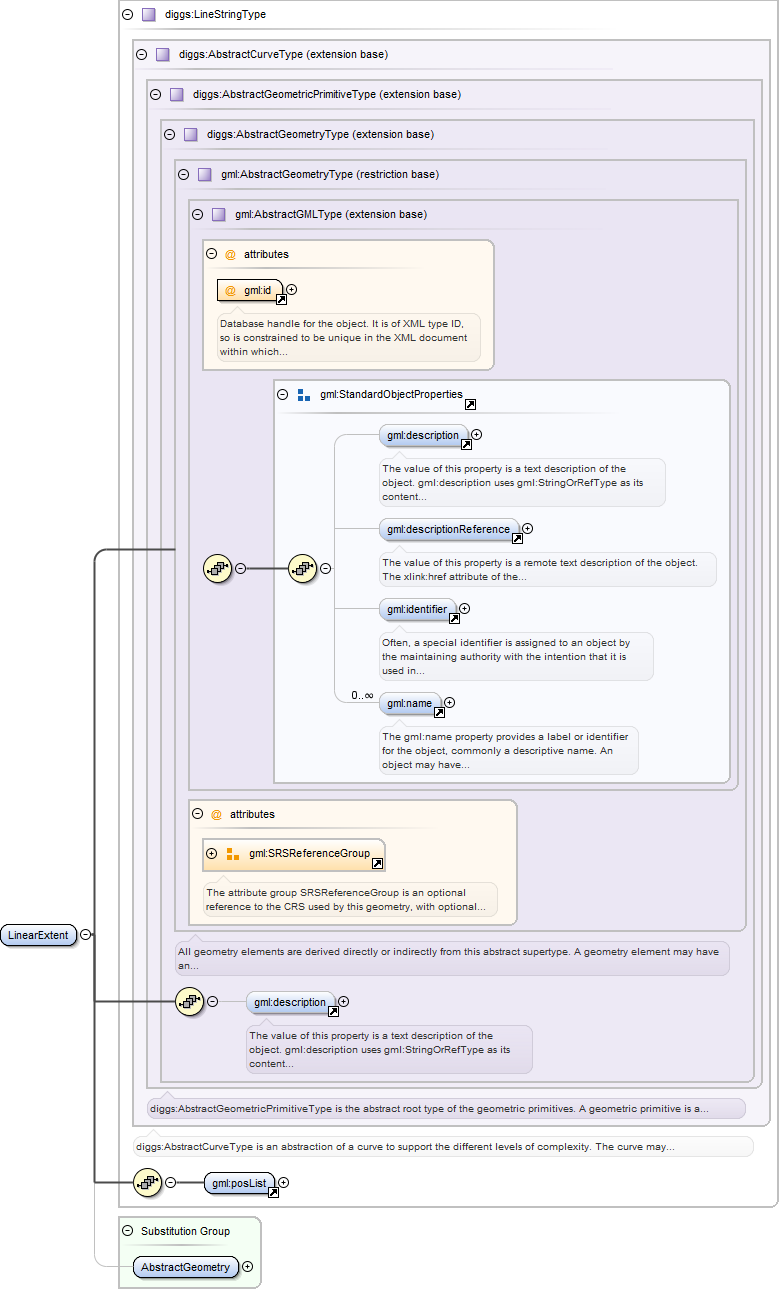
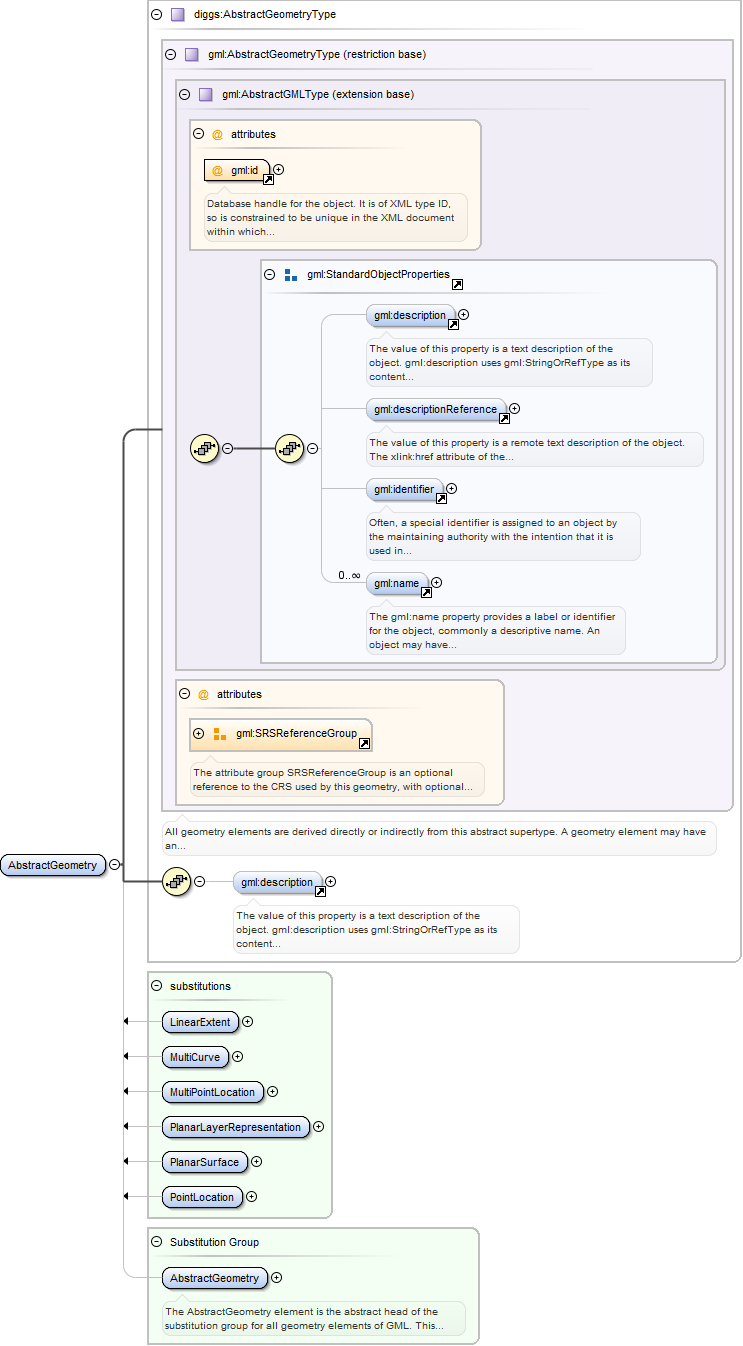
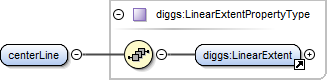
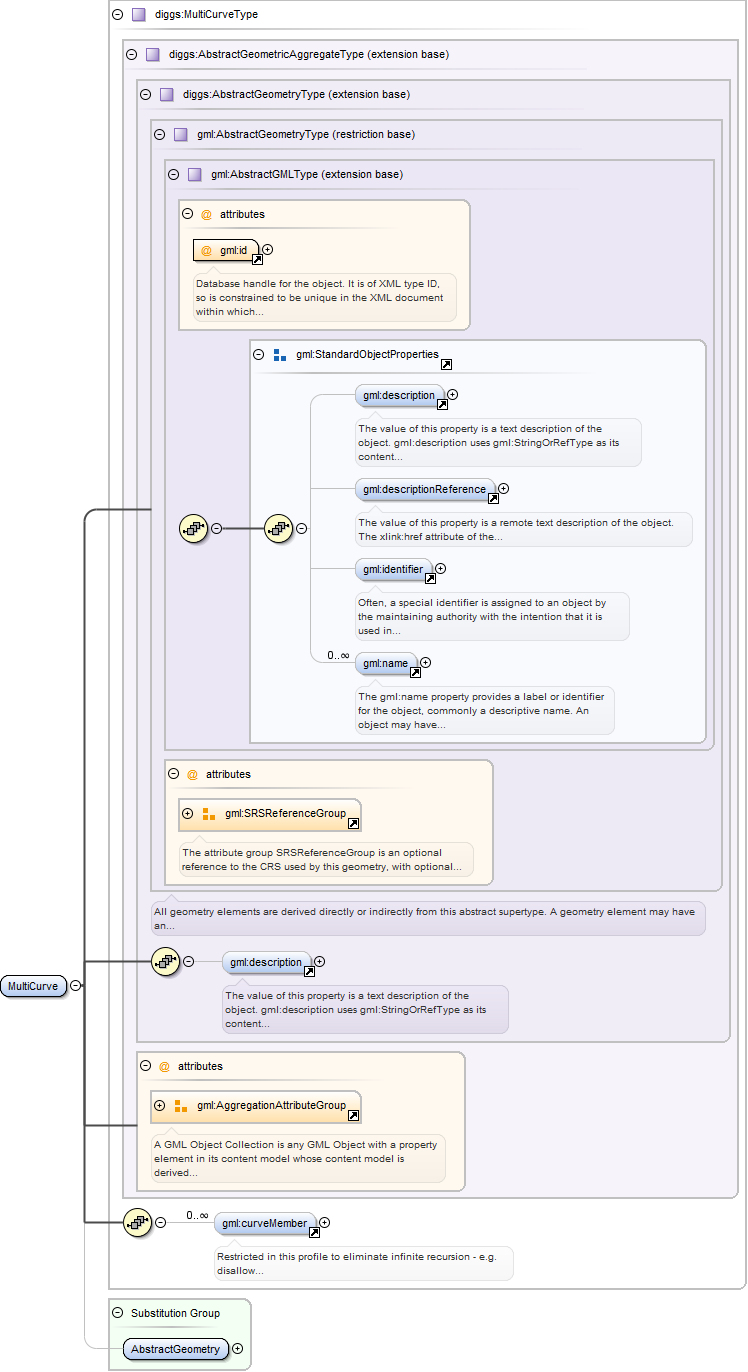
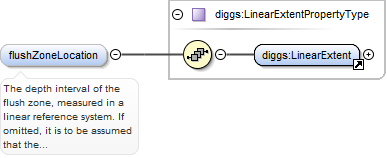
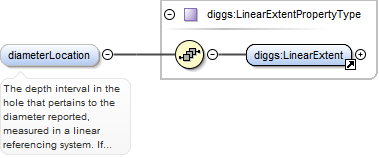
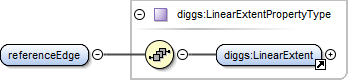
<element name="LinearExtent" substitutionGroup="diggs:AbstractGeometry" type="diggs:LineStringType"><!--DB need to fix this, it breaks the test instance--></element>
Database handle for the object. It is of XML type ID, so is constrained to beunique in the XML document within which it occurs. An external identifier for the object inthe form of a URI may be constructed using standard XML and XPointer methods. This is doneby concatenating the URI for the document, a fragment separator, and the value of the idattribute.
Database handle for the object. It is of XML type ID, so is constrained to beunique in the XML document within which it occurs. An external identifier for the object inthe form of a URI may be constructed using standard XML and XPointer methods. This is doneby concatenating the URI for the document, a fragment separator, and the value of the idattribute.
Attempting to install the relevant ISO 2- and 3-letter codes as the enumerated possible values is probably never going to be a realistic possibility. See RFC 3066 at http://www.ietf.org/rfc/rfc3066.txt and the IANA registry at http://www.iana.org/assignments/lang-tag-apps.htm for further information. The union allows for the 'un-declaration' of xml:lang with the empty string.
<element name="associatedFiles" type="diggs:MetadataReferenceType" minOccurs="0" maxOccurs="unbounded"><annotation><documentation>A property element that supports a value by reference only. The target value is indicated in the appinfo element.</documentation><appinfo source="urn:x-gml:targetElement">diggs:AssociatedFile</appinfo></annotation></element>
Attempting to install the relevant ISO 2- and 3-letter codes as the enumerated possible values is probably never going to be a realistic possibility. See RFC 3066 at http://www.ietf.org/rfc/rfc3066.txt and the IANA registry at http://www.iana.org/assignments/lang-tag-apps.htm for further information. The union allows for the 'un-declaration' of xml:lang with the empty string.
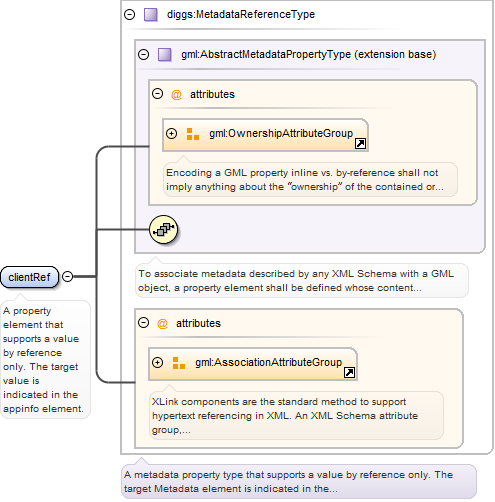
<element name="clientRef" type="diggs:MetadataReferenceType" minOccurs="1" maxOccurs="1"><annotation><documentation>A property element that supports a value by reference only. The target value is indicated in the appinfo element.</documentation><appinfo source="urn:x-gml:targetElement">diggs:BusinessAssociate</appinfo></annotation></element>
Attempting to install the relevant ISO 2- and 3-letter codes as the enumerated possible values is probably never going to be a realistic possibility. See RFC 3066 at http://www.ietf.org/rfc/rfc3066.txt and the IANA registry at http://www.iana.org/assignments/lang-tag-apps.htm for further information. The union allows for the 'un-declaration' of xml:lang with the empty string.
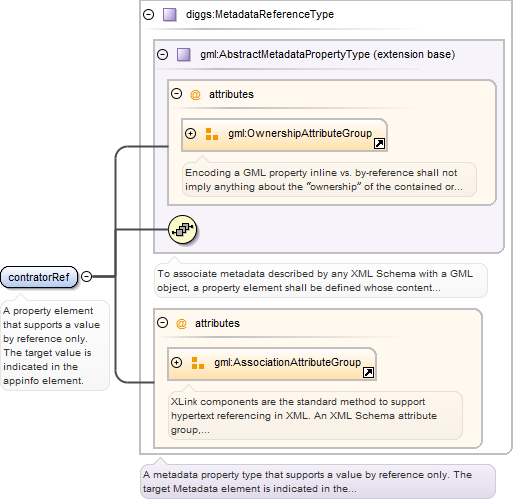
<element name="contratorRef" type="diggs:MetadataReferenceType" minOccurs="1" maxOccurs="1"><annotation><documentation>A property element that supports a value by reference only. The target value is indicated in the appinfo element.</documentation><appinfo source="urn:x-gml:targetElement">diggs:BusinessAssociate</appinfo></annotation></element>
Attempting to install the relevant ISO 2- and 3-letter codes as the enumerated possible values is probably never going to be a realistic possibility. See RFC 3066 at http://www.ietf.org/rfc/rfc3066.txt and the IANA registry at http://www.iana.org/assignments/lang-tag-apps.htm for further information. The union allows for the 'un-declaration' of xml:lang with the empty string.
Database handle for the object. It is of XML type ID, so is constrained to beunique in the XML document within which it occurs. An external identifier for the object inthe form of a URI may be constructed using standard XML and XPointer methods. This is doneby concatenating the URI for the document, a fragment separator, and the value of the idattribute.
Attempting to install the relevant ISO 2- and 3-letter codes as the enumerated possible values is probably never going to be a realistic possibility. See RFC 3066 at http://www.ietf.org/rfc/rfc3066.txt and the IANA registry at http://www.iana.org/assignments/lang-tag-apps.htm for further information. The union allows for the 'un-declaration' of xml:lang with the empty string.
Attempting to install the relevant ISO 2- and 3-letter codes as the enumerated possible values is probably never going to be a realistic possibility. See RFC 3066 at http://www.ietf.org/rfc/rfc3066.txt and the IANA registry at http://www.iana.org/assignments/lang-tag-apps.htm for further information. The union allows for the 'un-declaration' of xml:lang with the empty string.
Attempting to install the relevant ISO 2- and 3-letter codes as the enumerated possible values is probably never going to be a realistic possibility. See RFC 3066 at http://www.ietf.org/rfc/rfc3066.txt and the IANA registry at http://www.iana.org/assignments/lang-tag-apps.htm for further information. The union allows for the 'un-declaration' of xml:lang with the empty string.
Database handle for the object. It is of XML type ID, so is constrained to beunique in the XML document within which it occurs. An external identifier for the object inthe form of a URI may be constructed using standard XML and XPointer methods. This is doneby concatenating the URI for the document, a fragment separator, and the value of the idattribute.
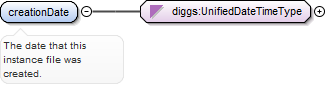
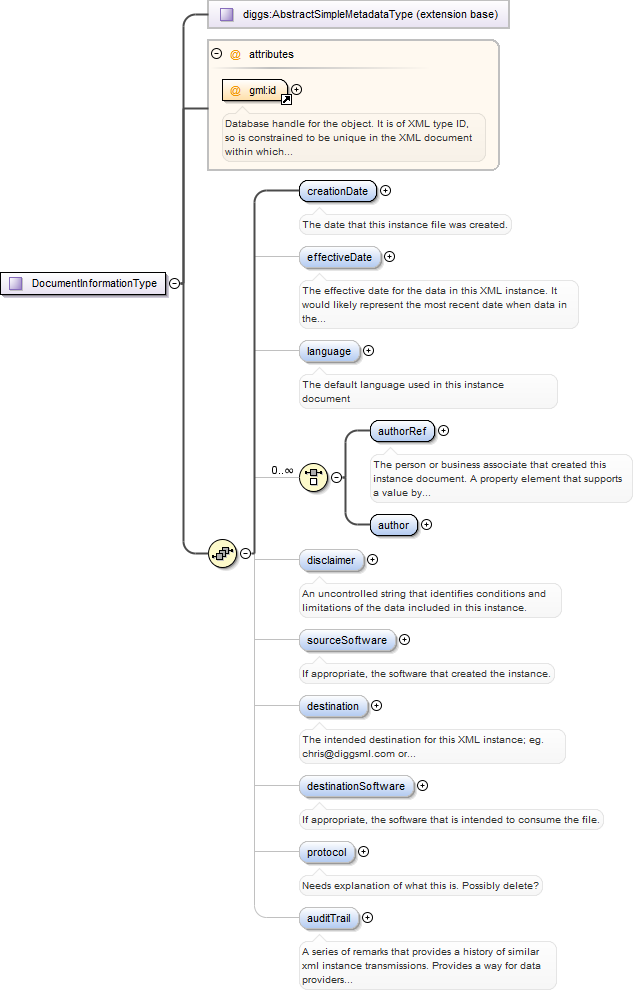
<element name="creationDate" type="diggs:UnifiedDateTimeType"><annotation><documentation>The date that this instance file was created.</documentation></annotation></element>
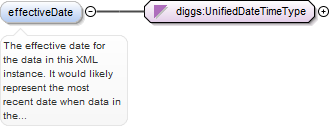
The effective date for the data in this XML instance. It would likelyrepresent the most recent date when data in the instance was last added to ormodified.
<element minOccurs="0" name="effectiveDate" type="diggs:UnifiedDateTimeType"><annotation><documentation>The effective date for the data in this XML instance. It would likely represent the most recent date when data in the instance was last added to or modified.</documentation></annotation></element>
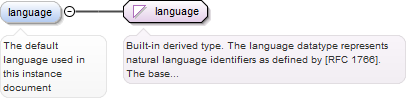
The default language used in this instance document
Diagram
Type
language
Properties
content:
simple
minOccurs:
0
Source
<element minOccurs="0" name="language" type="language"><annotation><documentation>The default language used in this instance document</documentation></annotation></element>
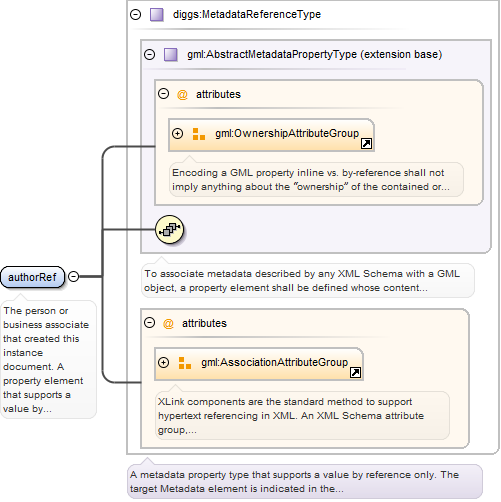
The person or business associate that created this instance document.A property element that supports a value by reference only. The target value isindicated in the appinfo element.
<element name="authorRef" type="diggs:MetadataReferenceType" minOccurs="1" maxOccurs="1"><annotation><appinfo source="urn:x-gml:targetElement">diggs:BusinessAssociate</appinfo><documentation>The person or business associate that created this instance document. A property element that supports a value by reference only. The target value is indicated in the appinfo element.</documentation></annotation></element>
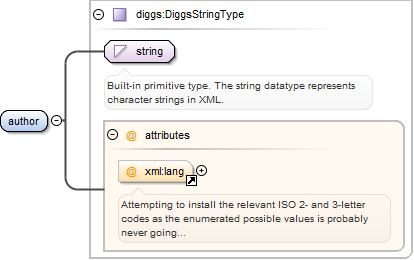
Attempting to install the relevant ISO 2- and 3-letter codes as the enumerated possible values is probably never going to be a realistic possibility. See RFC 3066 at http://www.ietf.org/rfc/rfc3066.txt and the IANA registry at http://www.iana.org/assignments/lang-tag-apps.htm for further information. The union allows for the 'un-declaration' of xml:lang with the empty string.
Attempting to install the relevant ISO 2- and 3-letter codes as the enumerated possible values is probably never going to be a realistic possibility. See RFC 3066 at http://www.ietf.org/rfc/rfc3066.txt and the IANA registry at http://www.iana.org/assignments/lang-tag-apps.htm for further information. The union allows for the 'un-declaration' of xml:lang with the empty string.
Source
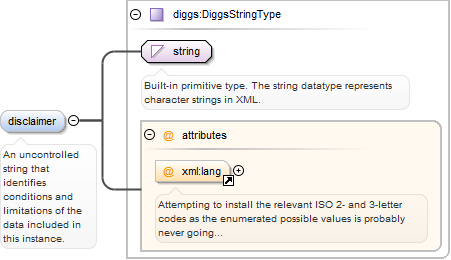
<element name="disclaimer" type="diggs:DiggsStringType" minOccurs="0" maxOccurs="1"><annotation><documentation>An uncontrolled string that identifies conditions and limitations of the data included in this instance.</documentation></annotation></element>
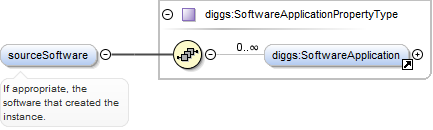
<element name="sourceSoftware" type="diggs:SoftwareApplicationPropertyType" minOccurs="0" maxOccurs="1"><annotation><documentation>If appropriate, the software that created the instance.</documentation></annotation></element>
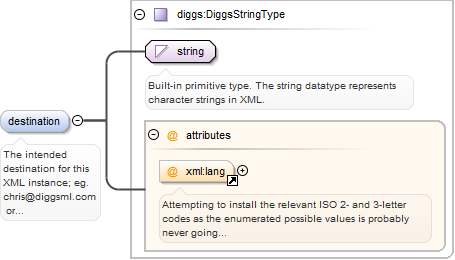
Attempting to install the relevant ISO 2- and 3-letter codes as the enumerated possible values is probably never going to be a realistic possibility. See RFC 3066 at http://www.ietf.org/rfc/rfc3066.txt and the IANA registry at http://www.iana.org/assignments/lang-tag-apps.htm for further information. The union allows for the 'un-declaration' of xml:lang with the empty string.
Source
<element minOccurs="0" name="destination" type="diggs:DiggsStringType"><annotation><documentation>The intended destination for this XML instance; eg. chris@diggsml.com or ftp://uploaduser:password@ftp.diggsml.com/auto_import</documentation></annotation></element>
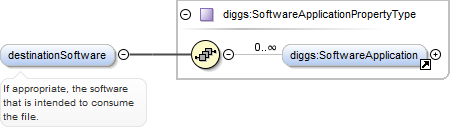
<element name="destinationSoftware" type="diggs:SoftwareApplicationPropertyType" minOccurs="0" maxOccurs="1"><annotation><documentation>If appropriate, the software that is intended to consume the file.</documentation></annotation></element>
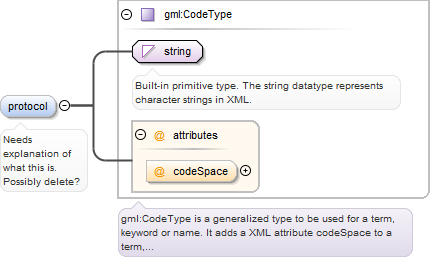
<element name="protocol" type="gml:CodeType" minOccurs="0" maxOccurs="1"><annotation><documentation>Needs explanation of what this is. Possibly delete?</documentation></annotation></element>
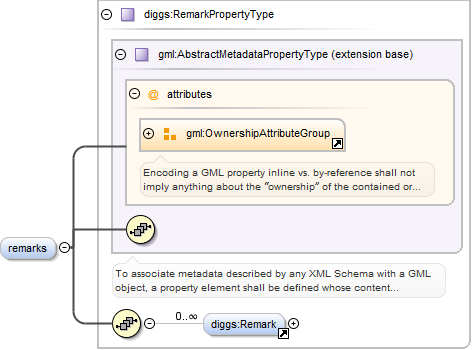
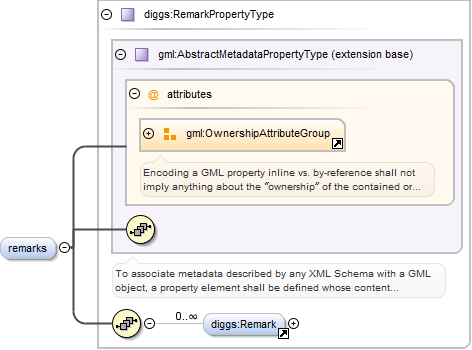
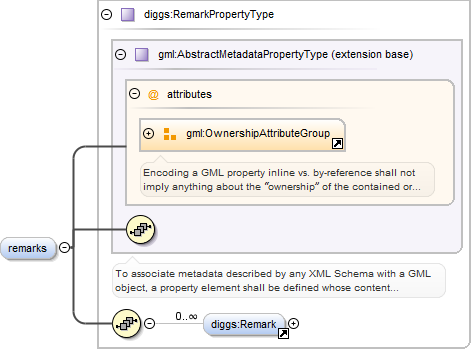
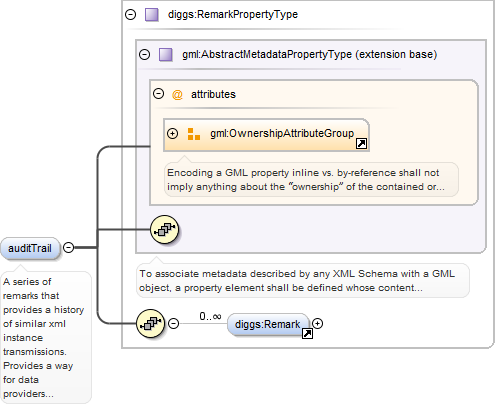
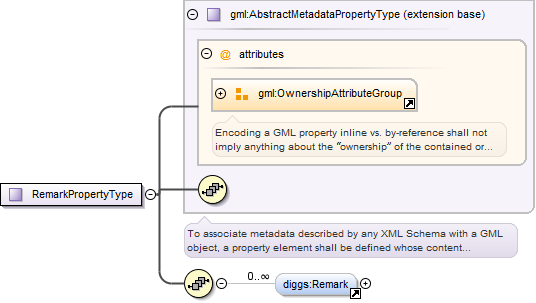
A series of remarks that provides a history of similar xml instancetransmissions. Provides a way for data providers and receivers to track multipleversions of similar data transmissions.
<element name="auditTrail" type="diggs:RemarkPropertyType" minOccurs="0" maxOccurs="1"><annotation><documentation>A series of remarks that provides a history of similar xml instance transmissions. Provides a way for data providers and receivers to track multiple versions of similar data transmissions.</documentation></annotation></element>
Database handle for the object. It is of XML type ID, so is constrained to beunique in the XML document within which it occurs. An external identifier for the object inthe form of a URI may be constructed using standard XML and XPointer methods. This is doneby concatenating the URI for the document, a fragment separator, and the value of the idattribute.
Attempting to install the relevant ISO 2- and 3-letter codes as the enumerated possible values is probably never going to be a realistic possibility. See RFC 3066 at http://www.ietf.org/rfc/rfc3066.txt and the IANA registry at http://www.iana.org/assignments/lang-tag-apps.htm for further information. The union allows for the 'un-declaration' of xml:lang with the empty string.
Database handle for the object. It is of XML type ID, so is constrained to beunique in the XML document within which it occurs. An external identifier for the object inthe form of a URI may be constructed using standard XML and XPointer methods. This is doneby concatenating the URI for the document, a fragment separator, and the value of the idattribute.
Database handle for the object. It is of XML type ID, so is constrained to beunique in the XML document within which it occurs. An external identifier for the object inthe form of a URI may be constructed using standard XML and XPointer methods. This is doneby concatenating the URI for the document, a fragment separator, and the value of the idattribute.
Attempting to install the relevant ISO 2- and 3-letter codes as the enumerated possible values is probably never going to be a realistic possibility. See RFC 3066 at http://www.ietf.org/rfc/rfc3066.txt and the IANA registry at http://www.iana.org/assignments/lang-tag-apps.htm for further information. The union allows for the 'un-declaration' of xml:lang with the empty string.
Database handle for the object. It is of XML type ID, so is constrained to beunique in the XML document within which it occurs. An external identifier for the object inthe form of a URI may be constructed using standard XML and XPointer methods. This is doneby concatenating the URI for the document, a fragment separator, and the value of the idattribute.
Attempting to install the relevant ISO 2- and 3-letter codes as the enumerated possible values is probably never going to be a realistic possibility. See RFC 3066 at http://www.ietf.org/rfc/rfc3066.txt and the IANA registry at http://www.iana.org/assignments/lang-tag-apps.htm for further information. The union allows for the 'un-declaration' of xml:lang with the empty string.
Database handle for the object. It is of XML type ID, so is constrained to beunique in the XML document within which it occurs. An external identifier for the object inthe form of a URI may be constructed using standard XML and XPointer methods. This is doneby concatenating the URI for the document, a fragment separator, and the value of the idattribute.
Database handle for the object. It is of XML type ID, so is constrained to beunique in the XML document within which it occurs. An external identifier for the object inthe form of a URI may be constructed using standard XML and XPointer methods. This is doneby concatenating the URI for the document, a fragment separator, and the value of the idattribute.
Attempting to install the relevant ISO 2- and 3-letter codes as the enumerated possible values is probably never going to be a realistic possibility. See RFC 3066 at http://www.ietf.org/rfc/rfc3066.txt and the IANA registry at http://www.iana.org/assignments/lang-tag-apps.htm for further information. The union allows for the 'un-declaration' of xml:lang with the empty string.
Database handle for the object. It is of XML type ID, so is constrained to beunique in the XML document within which it occurs. An external identifier for the object inthe form of a URI may be constructed using standard XML and XPointer methods. This is doneby concatenating the URI for the document, a fragment separator, and the value of the idattribute.
Attempting to install the relevant ISO 2- and 3-letter codes as the enumerated possible values is probably never going to be a realistic possibility. See RFC 3066 at http://www.ietf.org/rfc/rfc3066.txt and the IANA registry at http://www.iana.org/assignments/lang-tag-apps.htm for further information. The union allows for the 'un-declaration' of xml:lang with the empty string.
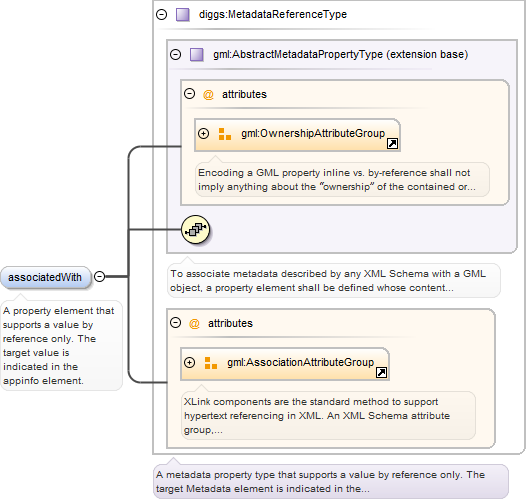
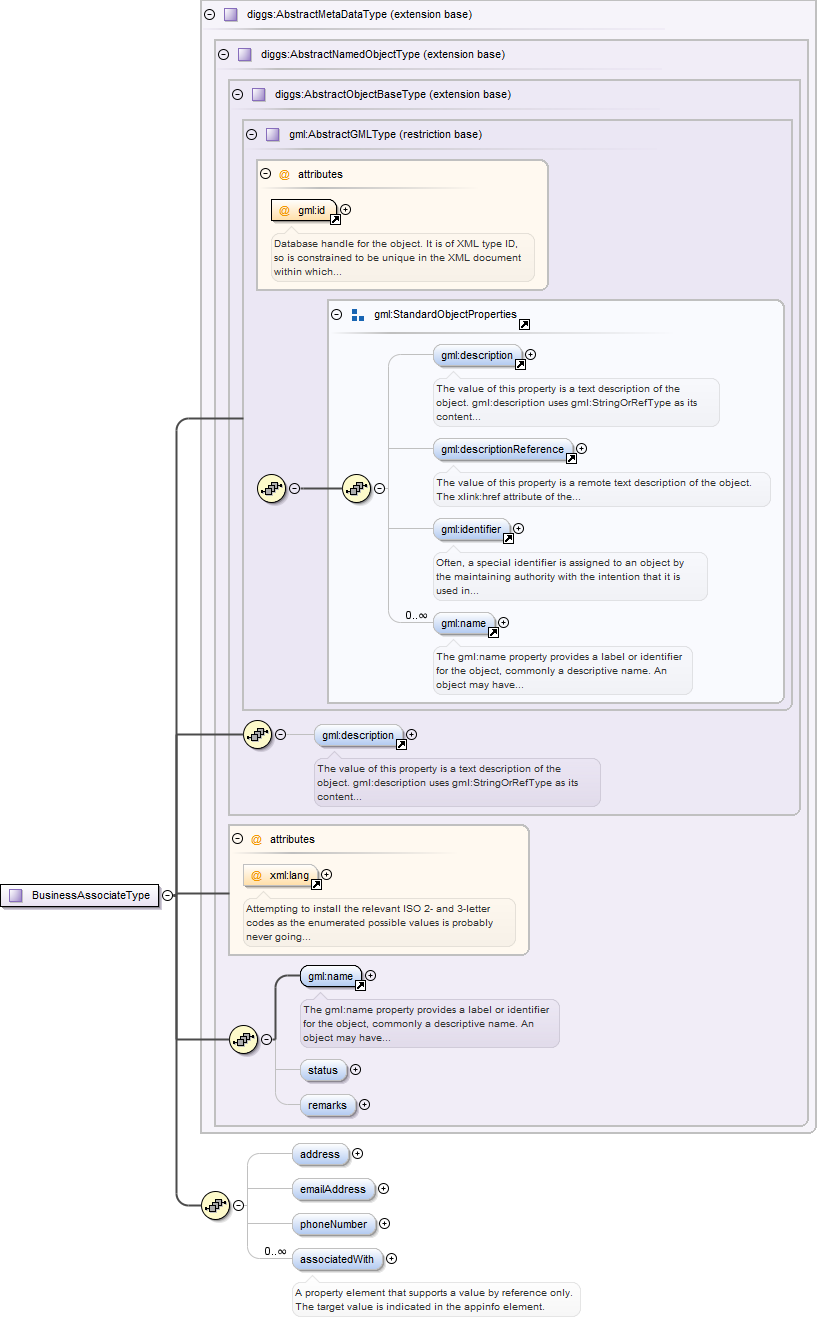
<element name="associatedWith" type="diggs:MetadataReferenceType" minOccurs="0" maxOccurs="unbounded"><annotation><documentation>A property element that supports a value by reference only. The target value is indicated in the appinfo element.</documentation><appinfo source="urn:x-gml:targetElement">diggs:BusinessAssociate</appinfo></annotation></element>
Database handle for the object. It is of XML type ID, so is constrained to beunique in the XML document within which it occurs. An external identifier for the object inthe form of a URI may be constructed using standard XML and XPointer methods. This is doneby concatenating the URI for the document, a fragment separator, and the value of the idattribute.
Attempting to install the relevant ISO 2- and 3-letter codes as the enumerated possible values is probably never going to be a realistic possibility. See RFC 3066 at http://www.ietf.org/rfc/rfc3066.txt and the IANA registry at http://www.iana.org/assignments/lang-tag-apps.htm for further information. The union allows for the 'un-declaration' of xml:lang with the empty string.
<element name="associatedFiles" type="diggs:MetadataReferenceType" minOccurs="0" maxOccurs="unbounded"><annotation><appinfo source="urn:x-gml:targetElement">diggs:AssociatedFile</appinfo><documentation>A property element that supports a value by reference only. The target value is indicated in the appinfo element.</documentation></annotation></element>
Attempting to install the relevant ISO 2- and 3-letter codes as the enumerated possible values is probably never going to be a realistic possibility. See RFC 3066 at http://www.ietf.org/rfc/rfc3066.txt and the IANA registry at http://www.iana.org/assignments/lang-tag-apps.htm for further information. The union allows for the 'un-declaration' of xml:lang with the empty string.
Attempting to install the relevant ISO 2- and 3-letter codes as the enumerated possible values is probably never going to be a realistic possibility. See RFC 3066 at http://www.ietf.org/rfc/rfc3066.txt and the IANA registry at http://www.iana.org/assignments/lang-tag-apps.htm for further information. The union allows for the 'un-declaration' of xml:lang with the empty string.
Database handle for the object. It is of XML type ID, so is constrained to beunique in the XML document within which it occurs. An external identifier for the object inthe form of a URI may be constructed using standard XML and XPointer methods. This is doneby concatenating the URI for the document, a fragment separator, and the value of the idattribute.
Attempting to install the relevant ISO 2- and 3-letter codes as the enumerated possible values is probably never going to be a realistic possibility. See RFC 3066 at http://www.ietf.org/rfc/rfc3066.txt and the IANA registry at http://www.iana.org/assignments/lang-tag-apps.htm for further information. The union allows for the 'un-declaration' of xml:lang with the empty string.
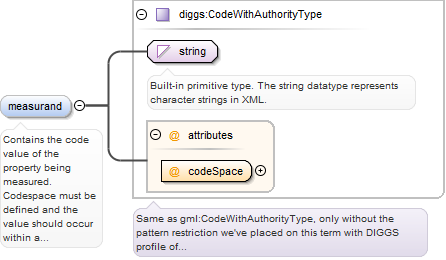
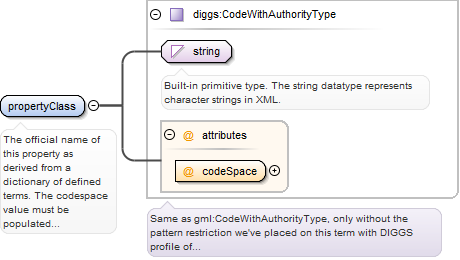
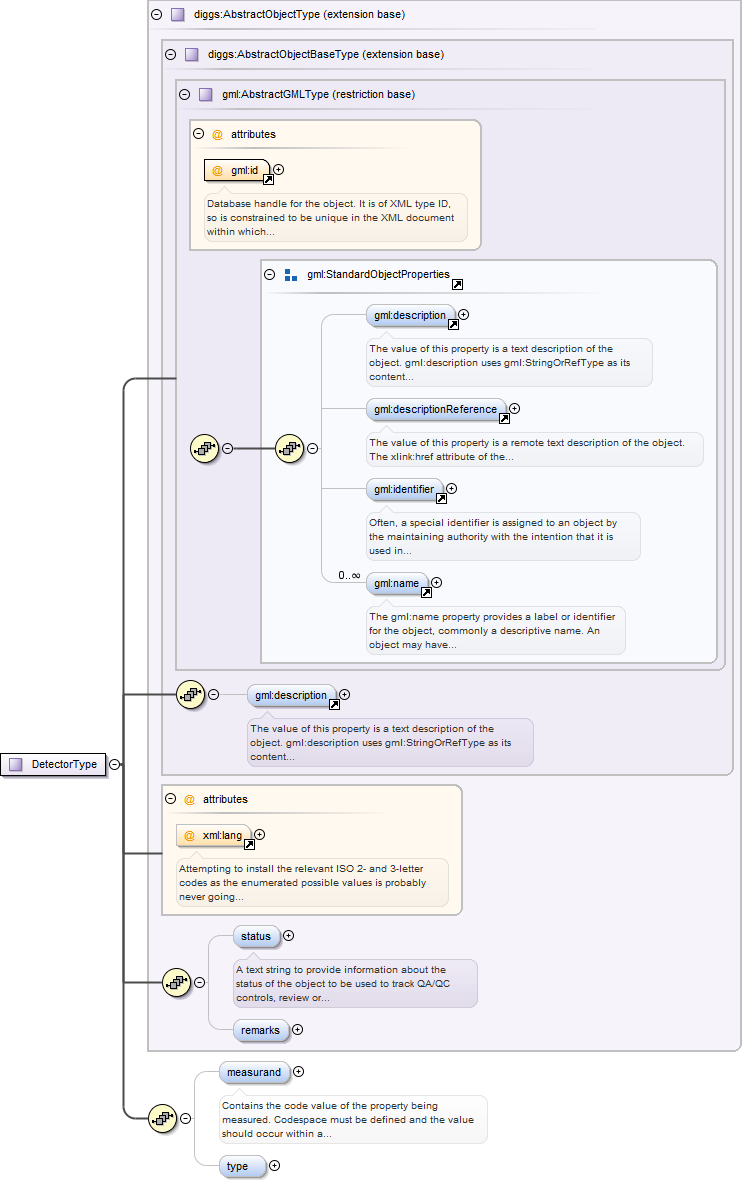
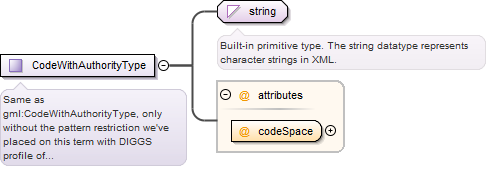
<element maxOccurs="1" minOccurs="0" name="measurand" type="diggs:CodeWithAuthorityType"><annotation><documentation>Contains the code value of the property being measured. Codespace must be defined and the value should occur within a dictionary</documentation></annotation></element>
Database handle for the object. It is of XML type ID, so is constrained to beunique in the XML document within which it occurs. An external identifier for the object inthe form of a URI may be constructed using standard XML and XPointer methods. This is doneby concatenating the URI for the document, a fragment separator, and the value of the idattribute.
Attempting to install the relevant ISO 2- and 3-letter codes as the enumerated possible values is probably never going to be a realistic possibility. See RFC 3066 at http://www.ietf.org/rfc/rfc3066.txt and the IANA registry at http://www.iana.org/assignments/lang-tag-apps.htm for further information. The union allows for the 'un-declaration' of xml:lang with the empty string.
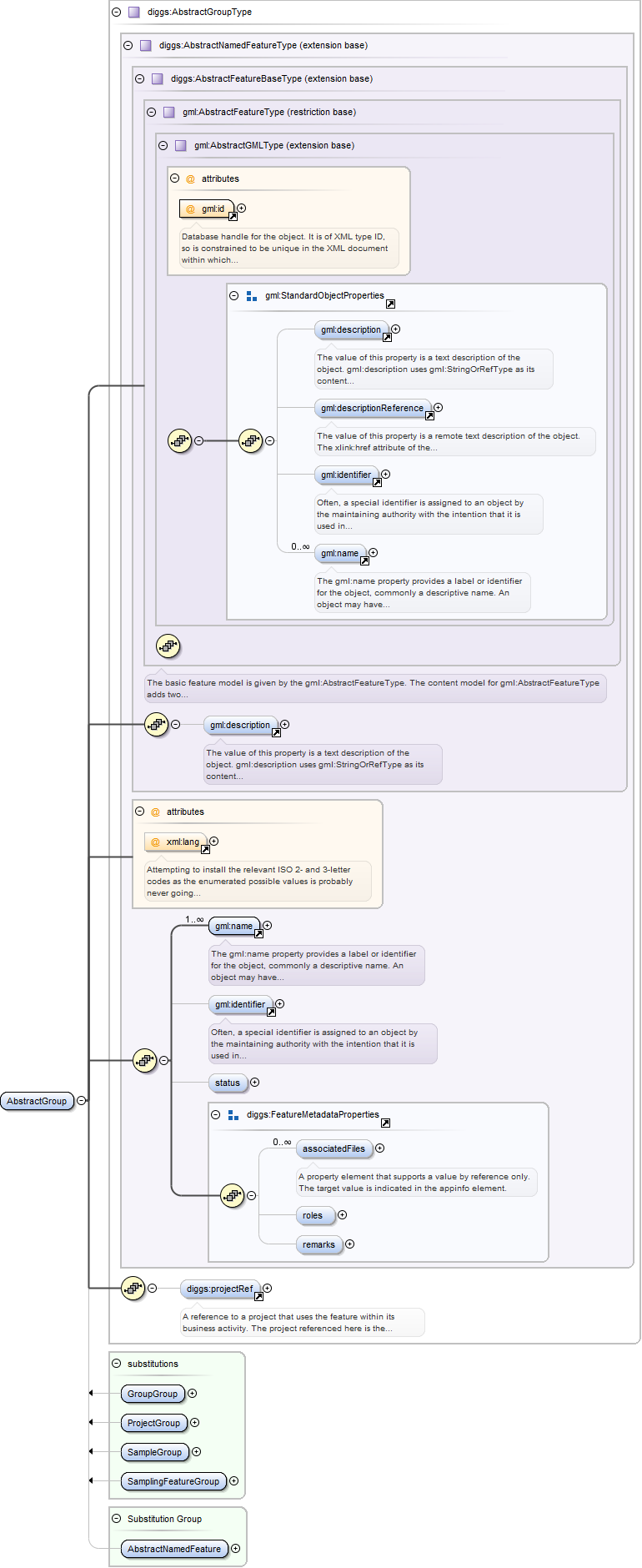
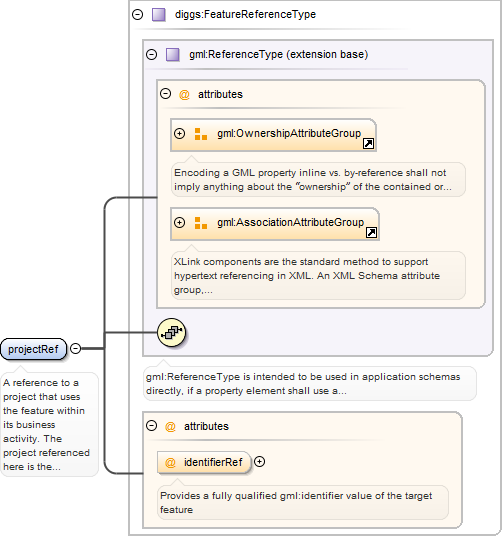
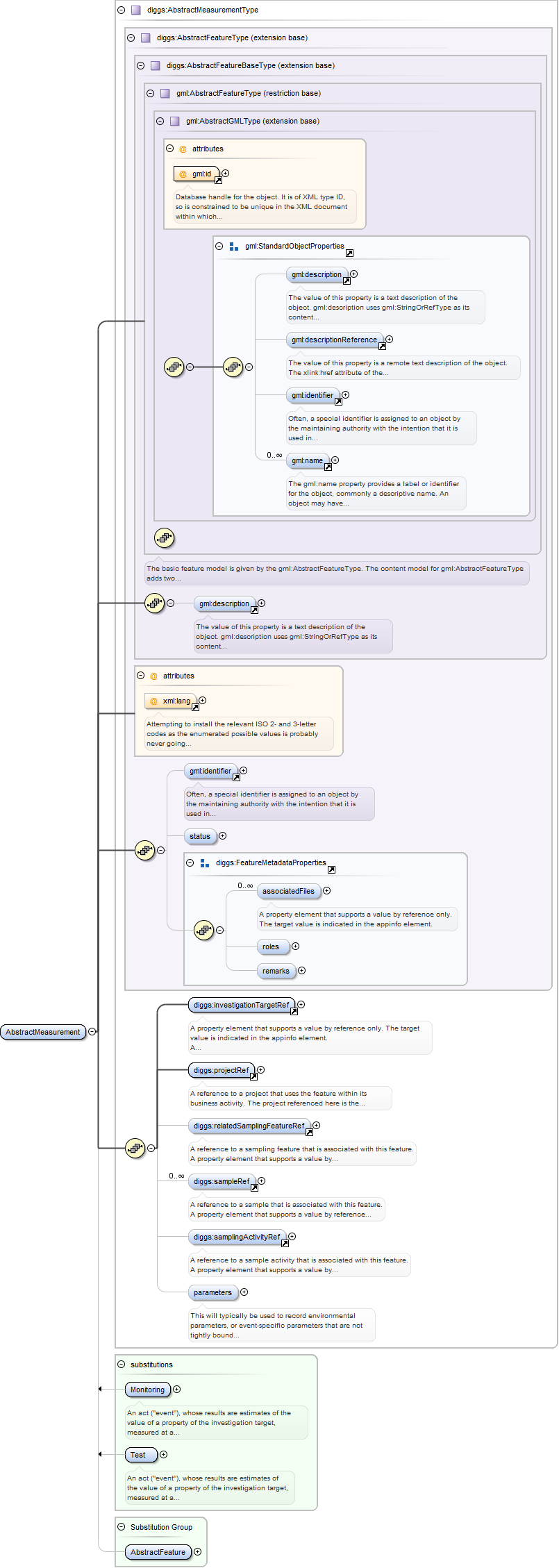
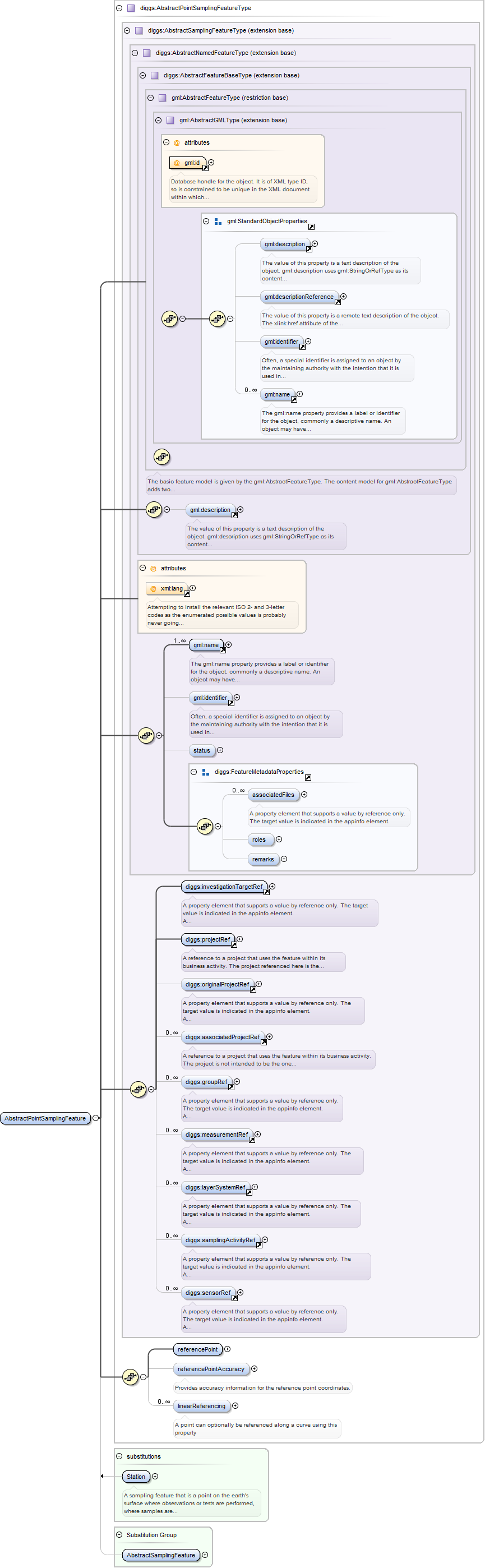
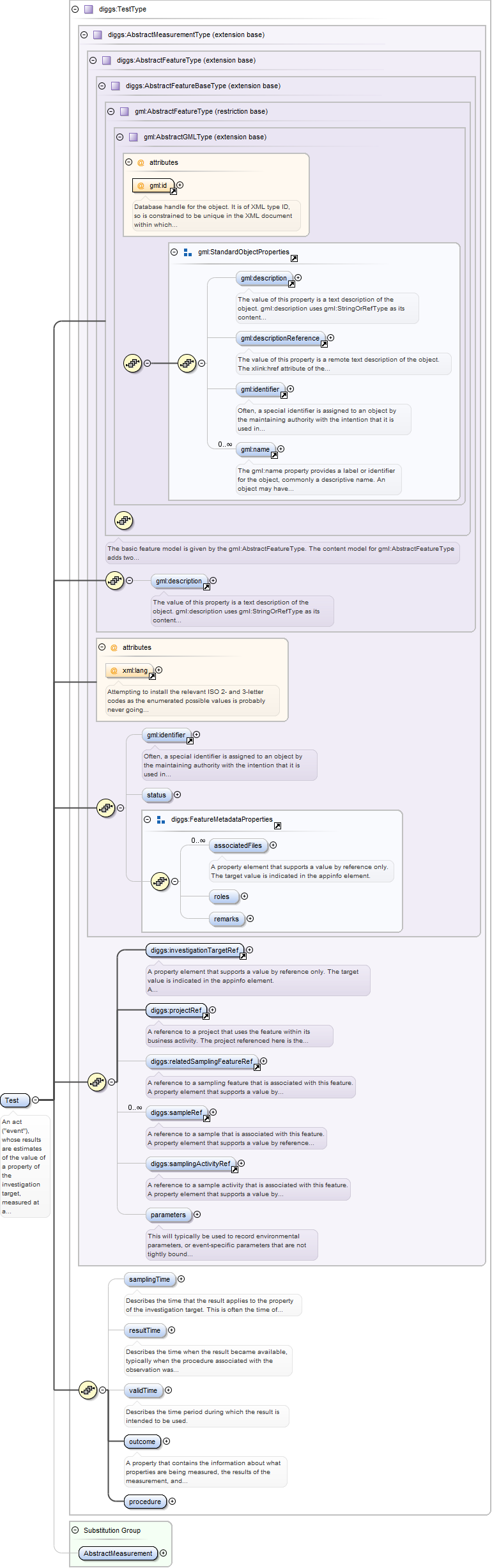
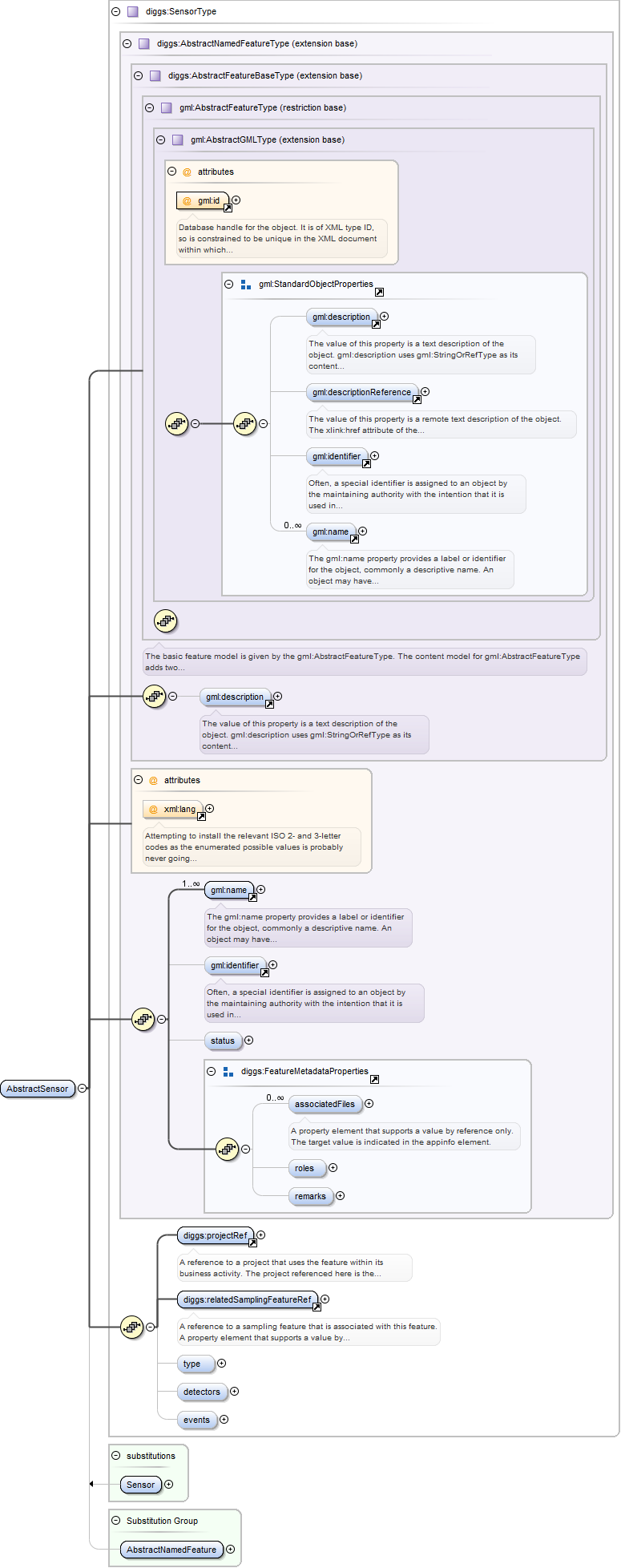
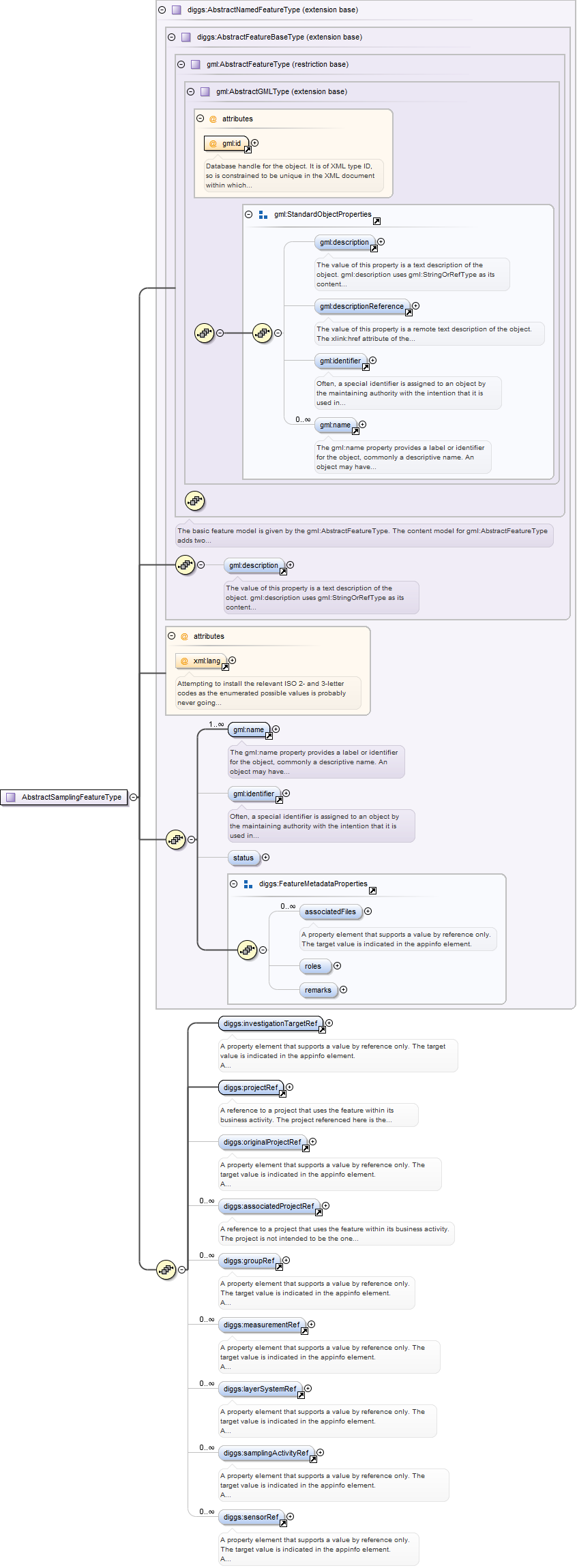
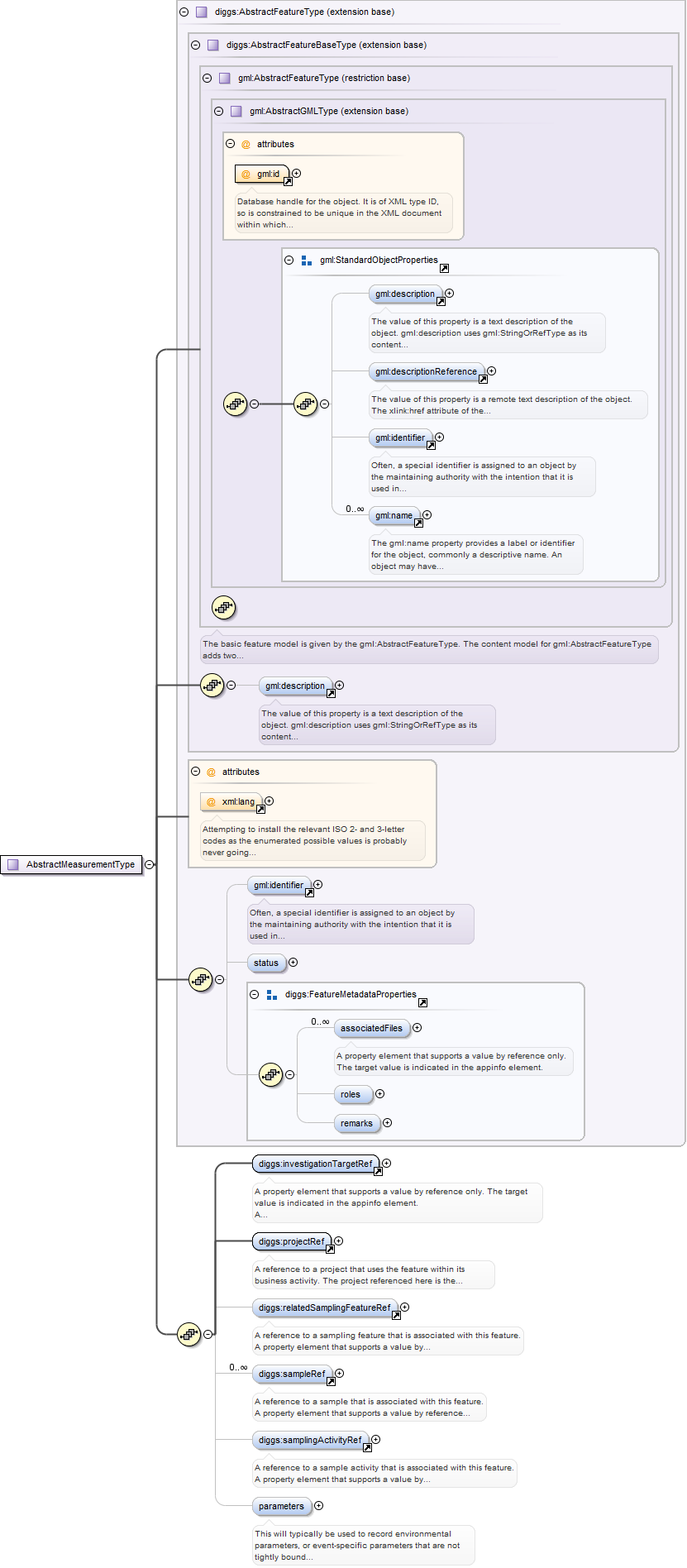
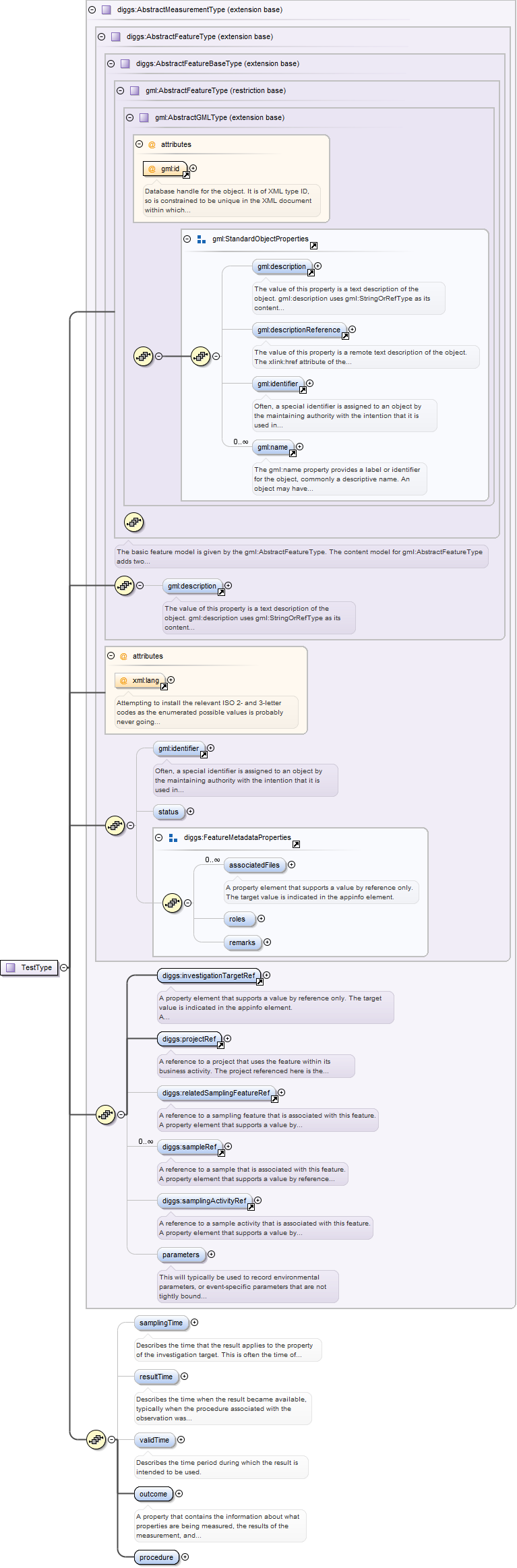
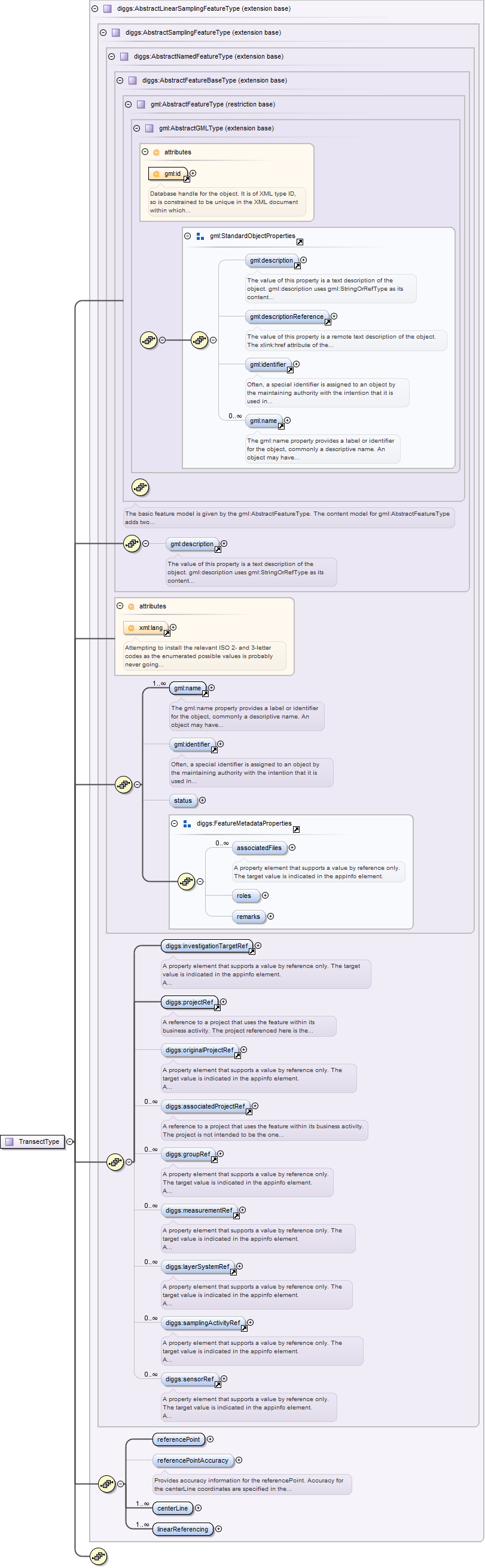
A reference to a project that uses the feature within its business activity.The project referenced here is the associated project for this instance. Other projectreferences can be transmitted using the associatedProjectRef element. To identify thecreating project for a feature, the property originalProjectRef should be used.
A property element that supports a value by reference only. The target value isindicated in the appinfo element.
<element name="projectRef" type="diggs:FeatureReferenceType"><annotation><appinfo source="urn:x-gml:targetElement">Diggs:Project</appinfo><documentation>A reference to a project that uses the feature within its business activity. The project referenced here is the associated project for this instance. Other project references can be transmitted using the associatedProjectRef element. To identify the creating project for a feature, the property originalProjectRef should be used.</documentation><documentation>A property element that supports a value by reference only. The target value is indicated in the appinfo element.</documentation></annotation></element>
Database handle for the object. It is of XML type ID, so is constrained to beunique in the XML document within which it occurs. An external identifier for the object inthe form of a URI may be constructed using standard XML and XPointer methods. This is doneby concatenating the URI for the document, a fragment separator, and the value of the idattribute.
Attempting to install the relevant ISO 2- and 3-letter codes as the enumerated possible values is probably never going to be a realistic possibility. See RFC 3066 at http://www.ietf.org/rfc/rfc3066.txt and the IANA registry at http://www.iana.org/assignments/lang-tag-apps.htm for further information. The union allows for the 'un-declaration' of xml:lang with the empty string.
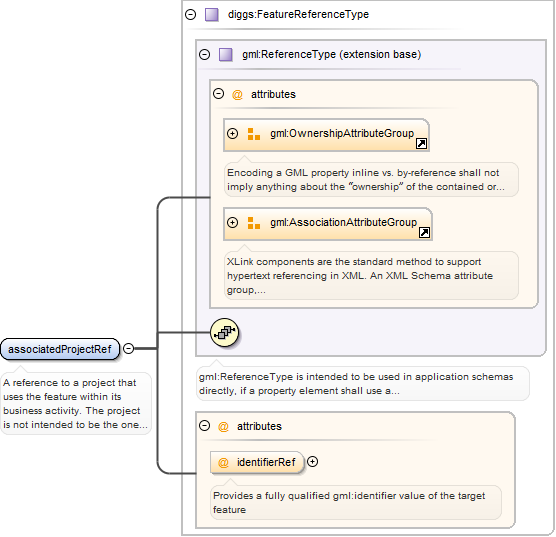
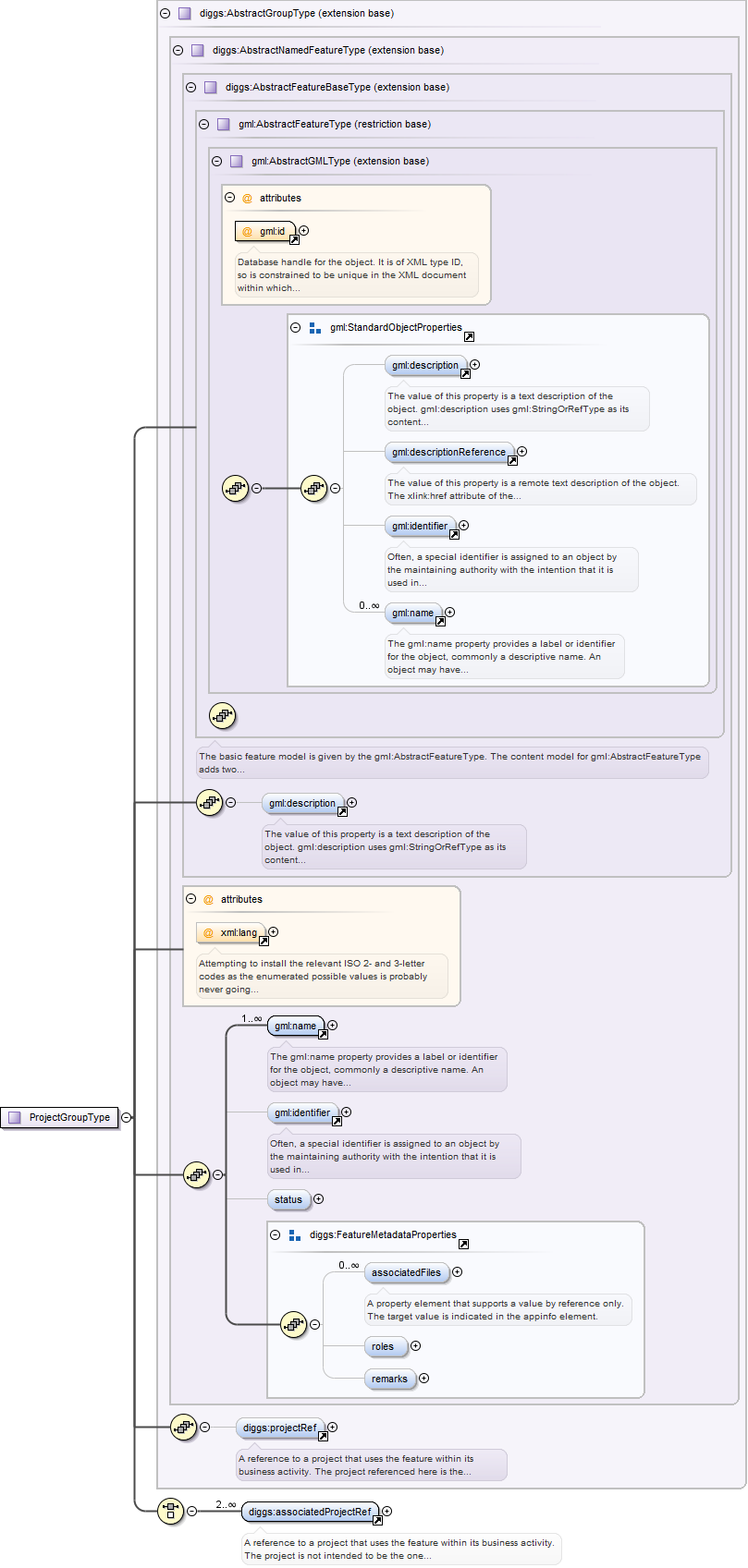
A reference to a project that uses the feature within its business activity.The project is not intended to be the one that established the feature in the first place.The property originalProjectRef should be used for that purpose.
A property element that supports a value by reference only. The target value isindicated in the appinfo element.
<element name="associatedProjectRef" type="diggs:FeatureReferenceType"><annotation><appinfo source="urn:x-gml:targetElement">Diggs:Project</appinfo><documentation>A reference to a project that uses the feature within its business activity. The project is not intended to be the one that established the feature in the first place. The property originalProjectRef should be used for that purpose.</documentation><documentation>A property element that supports a value by reference only. The target value is indicated in the appinfo element.</documentation></annotation></element>
Database handle for the object. It is of XML type ID, so is constrained to beunique in the XML document within which it occurs. An external identifier for the object inthe form of a URI may be constructed using standard XML and XPointer methods. This is doneby concatenating the URI for the document, a fragment separator, and the value of the idattribute.
Attempting to install the relevant ISO 2- and 3-letter codes as the enumerated possible values is probably never going to be a realistic possibility. See RFC 3066 at http://www.ietf.org/rfc/rfc3066.txt and the IANA registry at http://www.iana.org/assignments/lang-tag-apps.htm for further information. The union allows for the 'un-declaration' of xml:lang with the empty string.
Database handle for the object. It is of XML type ID, so is constrained to beunique in the XML document within which it occurs. An external identifier for the object inthe form of a URI may be constructed using standard XML and XPointer methods. This is doneby concatenating the URI for the document, a fragment separator, and the value of the idattribute.
Attempting to install the relevant ISO 2- and 3-letter codes as the enumerated possible values is probably never going to be a realistic possibility. See RFC 3066 at http://www.ietf.org/rfc/rfc3066.txt and the IANA registry at http://www.iana.org/assignments/lang-tag-apps.htm for further information. The union allows for the 'un-declaration' of xml:lang with the empty string.
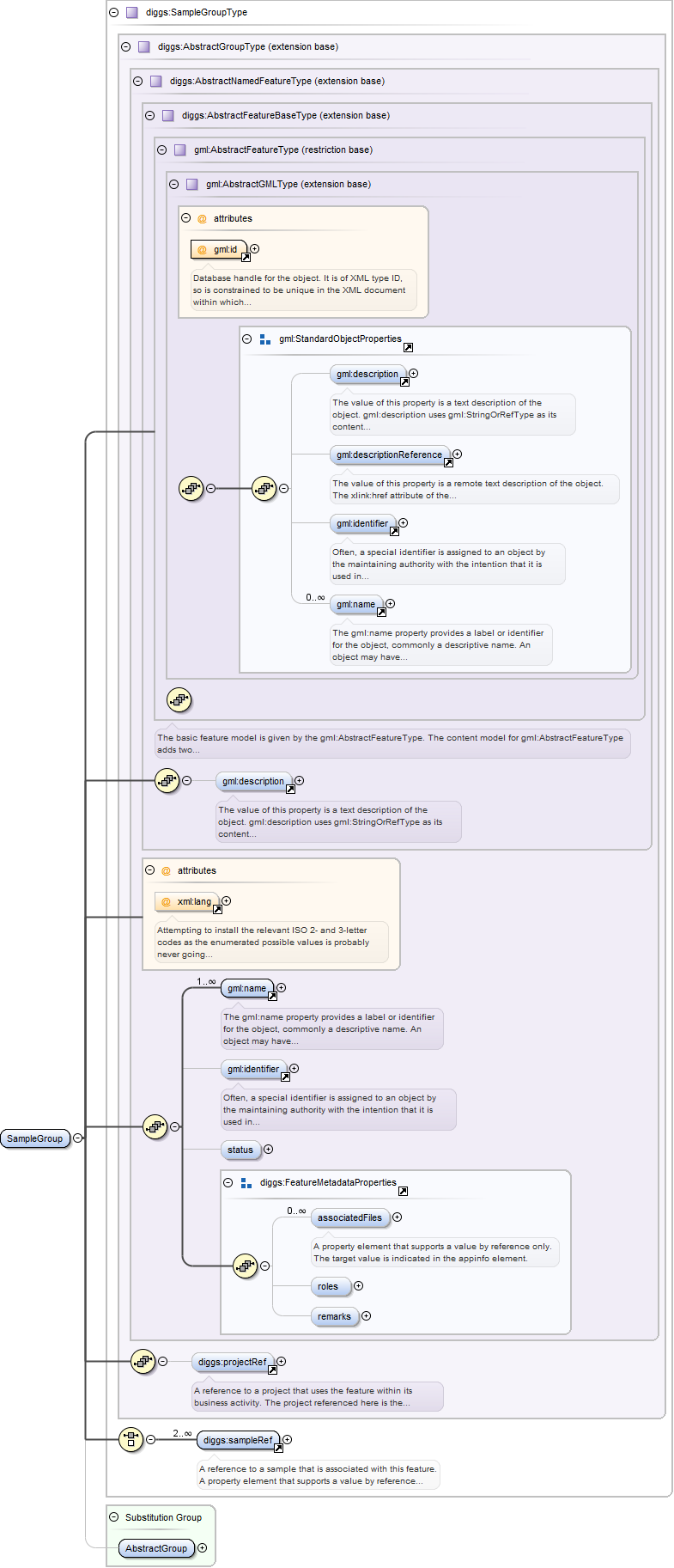
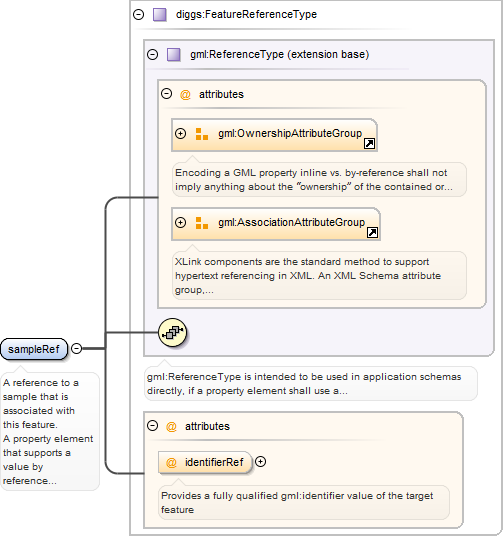
<element name="sampleRef" type="diggs:FeatureReferenceType"><annotation><appinfo source="urn:x-gml:targetElement">Diggs:Sample</appinfo><documentation>A reference to a sample that is associated with this feature.</documentation><documentation>A property element that supports a value by reference only. The target value is indicated in the appinfo element.</documentation></annotation></element>
Database handle for the object. It is of XML type ID, so is constrained to beunique in the XML document within which it occurs. An external identifier for the object inthe form of a URI may be constructed using standard XML and XPointer methods. This is doneby concatenating the URI for the document, a fragment separator, and the value of the idattribute.
Attempting to install the relevant ISO 2- and 3-letter codes as the enumerated possible values is probably never going to be a realistic possibility. See RFC 3066 at http://www.ietf.org/rfc/rfc3066.txt and the IANA registry at http://www.iana.org/assignments/lang-tag-apps.htm for further information. The union allows for the 'un-declaration' of xml:lang with the empty string.
Database handle for the object. It is of XML type ID, so is constrained to beunique in the XML document within which it occurs. An external identifier for the object inthe form of a URI may be constructed using standard XML and XPointer methods. This is doneby concatenating the URI for the document, a fragment separator, and the value of the idattribute.
Attempting to install the relevant ISO 2- and 3-letter codes as the enumerated possible values is probably never going to be a realistic possibility. See RFC 3066 at http://www.ietf.org/rfc/rfc3066.txt and the IANA registry at http://www.iana.org/assignments/lang-tag-apps.htm for further information. The union allows for the 'un-declaration' of xml:lang with the empty string.
<element name="associatedFiles" type="diggs:MetadataReferenceType" minOccurs="0" maxOccurs="unbounded"><annotation><appinfo source="urn:x-gml:targetElement">diggs:AssociatedFile</appinfo><documentation>A property element that supports a value by reference only. The target value is indicated in the appinfo element.</documentation></annotation></element>
Attempting to install the relevant ISO 2- and 3-letter codes as the enumerated possible values is probably never going to be a realistic possibility. See RFC 3066 at http://www.ietf.org/rfc/rfc3066.txt and the IANA registry at http://www.iana.org/assignments/lang-tag-apps.htm for further information. The union allows for the 'un-declaration' of xml:lang with the empty string.
Attempting to install the relevant ISO 2- and 3-letter codes as the enumerated possible values is probably never going to be a realistic possibility. See RFC 3066 at http://www.ietf.org/rfc/rfc3066.txt and the IANA registry at http://www.iana.org/assignments/lang-tag-apps.htm for further information. The union allows for the 'un-declaration' of xml:lang with the empty string.
Attempting to install the relevant ISO 2- and 3-letter codes as the enumerated possible values is probably never going to be a realistic possibility. See RFC 3066 at http://www.ietf.org/rfc/rfc3066.txt and the IANA registry at http://www.iana.org/assignments/lang-tag-apps.htm for further information. The union allows for the 'un-declaration' of xml:lang with the empty string.
Attempting to install the relevant ISO 2- and 3-letter codes as the enumerated possible values is probably never going to be a realistic possibility. See RFC 3066 at http://www.ietf.org/rfc/rfc3066.txt and the IANA registry at http://www.iana.org/assignments/lang-tag-apps.htm for further information. The union allows for the 'un-declaration' of xml:lang with the empty string.
Attempting to install the relevant ISO 2- and 3-letter codes as the enumerated possible values is probably never going to be a realistic possibility. See RFC 3066 at http://www.ietf.org/rfc/rfc3066.txt and the IANA registry at http://www.iana.org/assignments/lang-tag-apps.htm for further information. The union allows for the 'un-declaration' of xml:lang with the empty string.
Attempting to install the relevant ISO 2- and 3-letter codes as the enumerated possible values is probably never going to be a realistic possibility. See RFC 3066 at http://www.ietf.org/rfc/rfc3066.txt and the IANA registry at http://www.iana.org/assignments/lang-tag-apps.htm for further information. The union allows for the 'un-declaration' of xml:lang with the empty string.
Attempting to install the relevant ISO 2- and 3-letter codes as the enumerated possible values is probably never going to be a realistic possibility. See RFC 3066 at http://www.ietf.org/rfc/rfc3066.txt and the IANA registry at http://www.iana.org/assignments/lang-tag-apps.htm for further information. The union allows for the 'un-declaration' of xml:lang with the empty string.
Attempting to install the relevant ISO 2- and 3-letter codes as the enumerated possible values is probably never going to be a realistic possibility. See RFC 3066 at http://www.ietf.org/rfc/rfc3066.txt and the IANA registry at http://www.iana.org/assignments/lang-tag-apps.htm for further information. The union allows for the 'un-declaration' of xml:lang with the empty string.
Database handle for the object. It is of XML type ID, so is constrained to beunique in the XML document within which it occurs. An external identifier for the object inthe form of a URI may be constructed using standard XML and XPointer methods. This is doneby concatenating the URI for the document, a fragment separator, and the value of the idattribute.
Attempting to install the relevant ISO 2- and 3-letter codes as the enumerated possible values is probably never going to be a realistic possibility. See RFC 3066 at http://www.ietf.org/rfc/rfc3066.txt and the IANA registry at http://www.iana.org/assignments/lang-tag-apps.htm for further information. The union allows for the 'un-declaration' of xml:lang with the empty string.
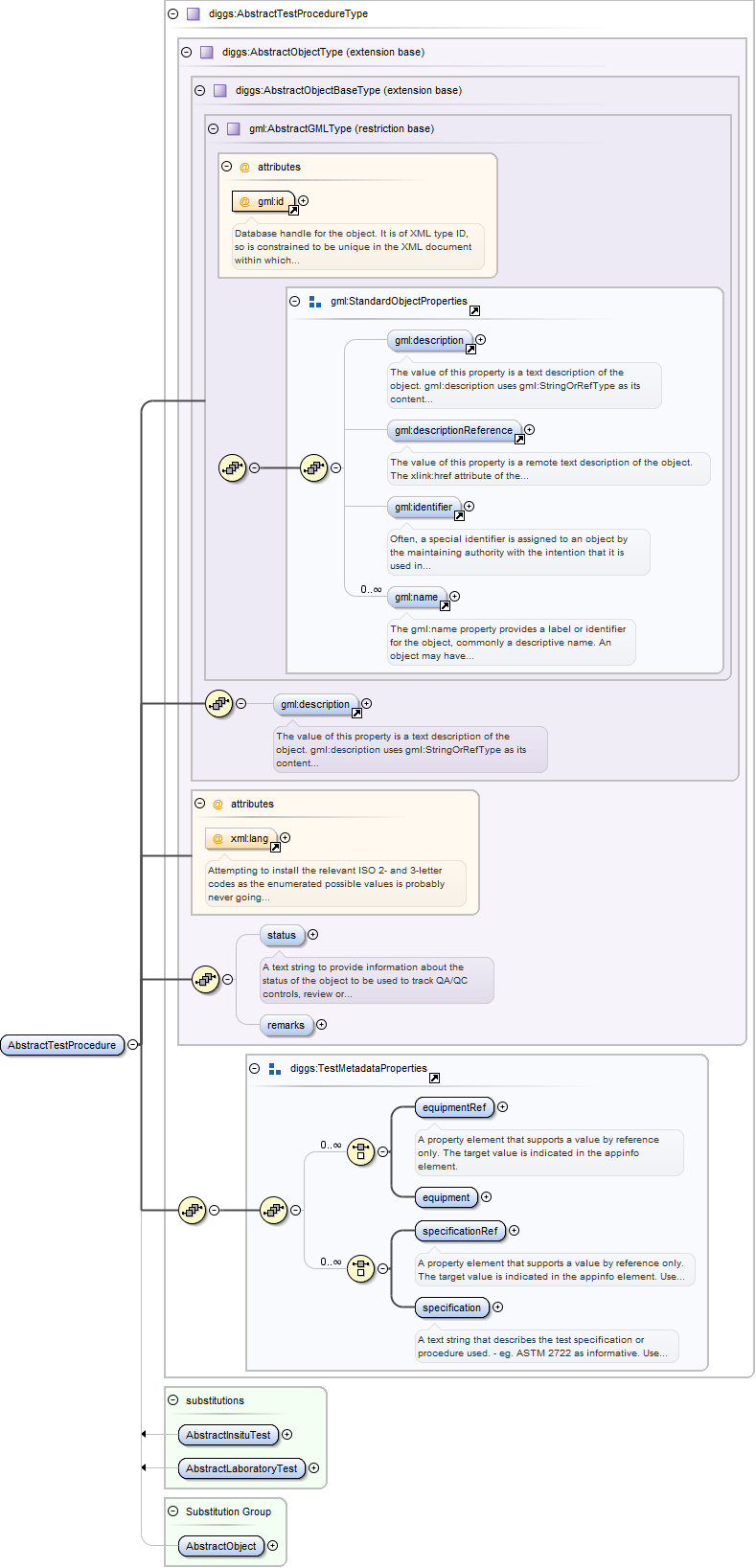
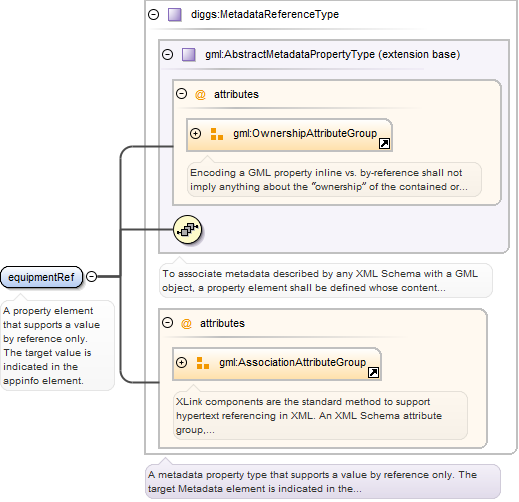
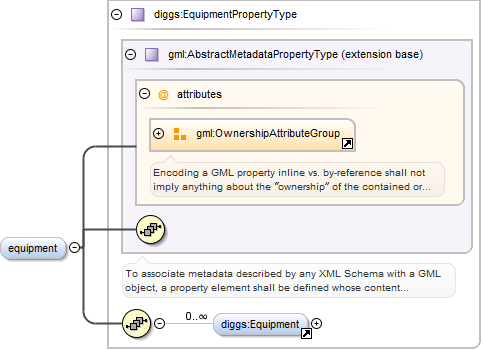
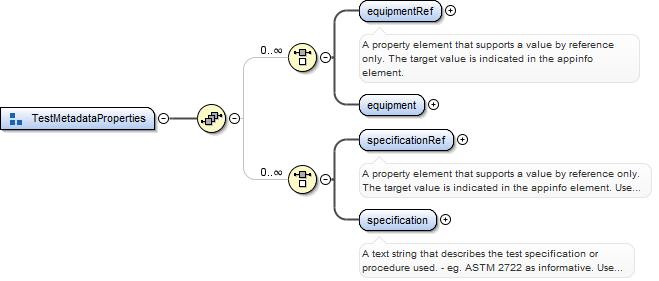
<element name="equipmentRef" type="diggs:MetadataReferenceType" minOccurs="1" maxOccurs="1"><annotation><appinfo source="urn:x-gml:targetElement">diggs:BusinessAssociate</appinfo><documentation>A property element that supports a value by reference only. The target value is indicated in the appinfo element.</documentation></annotation></element>
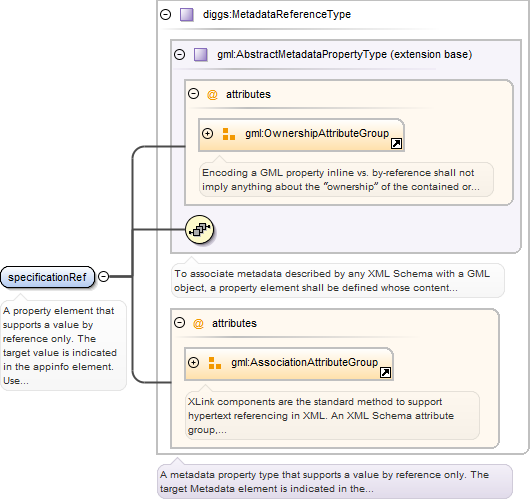
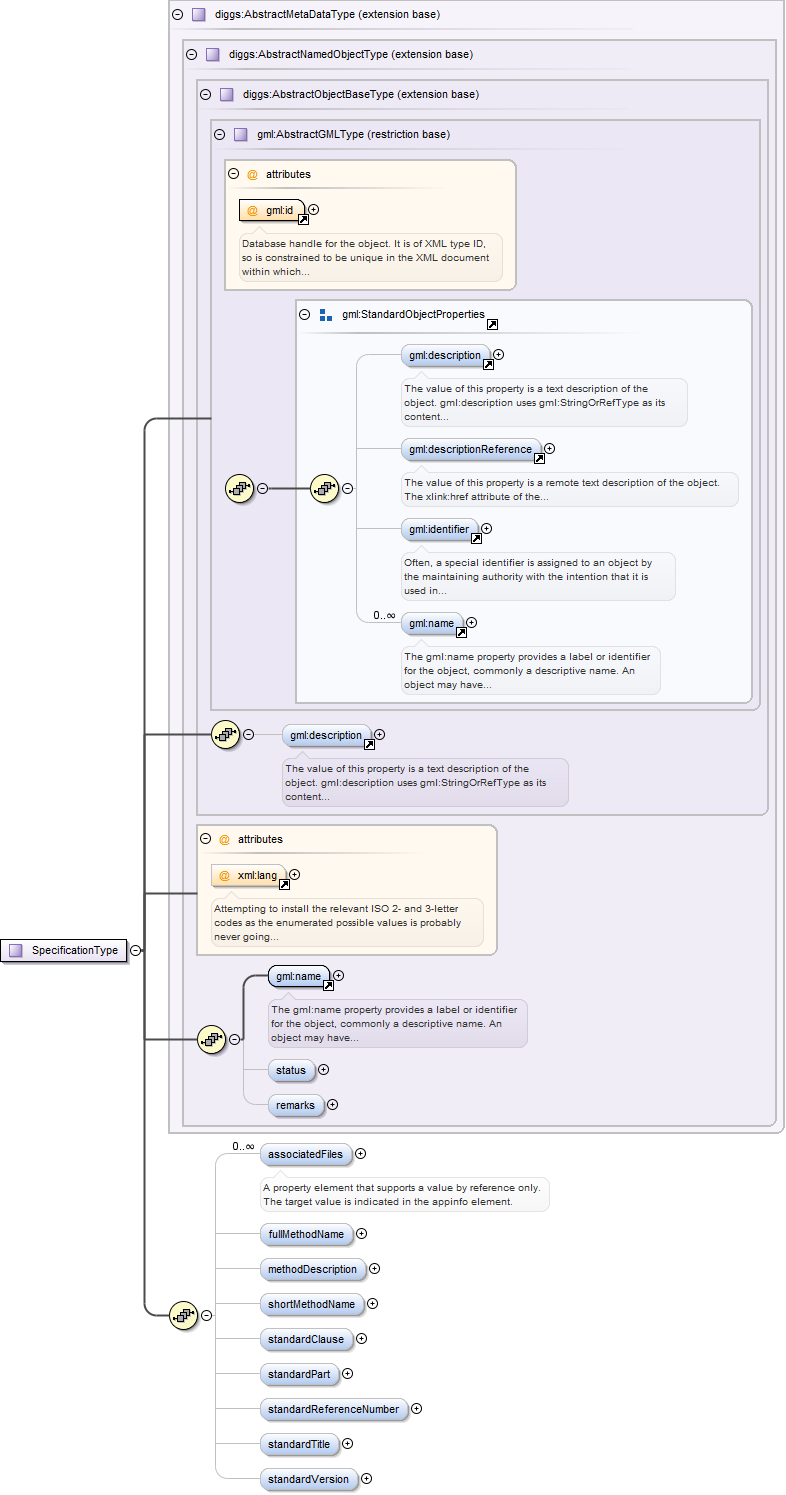
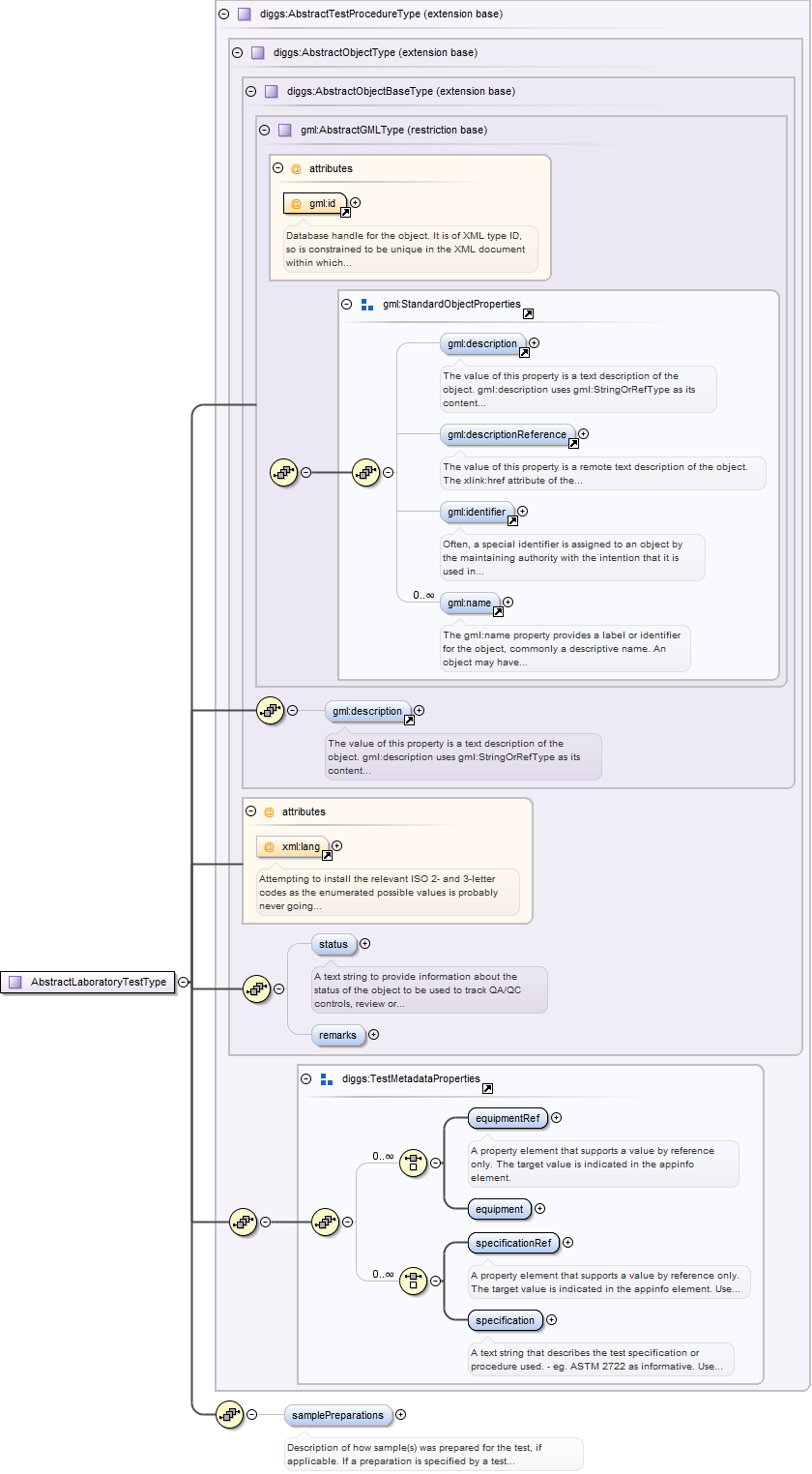
A property element that supports a value by reference only. The targetvalue is indicated in the appinfo element. Use specificationRef to refer to a DIGGSspecification object or to an external URN that describes the procedure. For a simpledescription of the specification or to refer to a standard for information purposesonly, use specification.
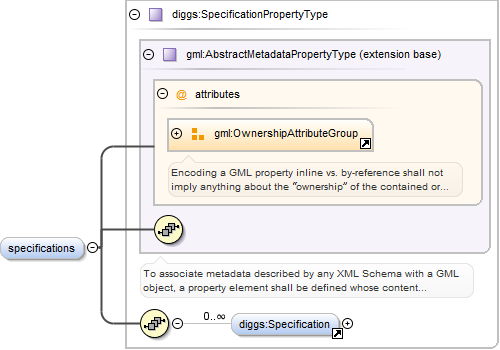
<element name="specificationRef" type="diggs:MetadataReferenceType" minOccurs="1" maxOccurs="1"><annotation><appinfo source="urn:x-gml:targetElement">diggs:Specification</appinfo><documentation>A property element that supports a value by reference only. The target value is indicated in the appinfo element. Use specificationRef to refer to a DIGGS specification object or to an external URN that describes the procedure. For a simple description of the specification or to refer to a standard for information purposes only, use specification.</documentation></annotation></element>
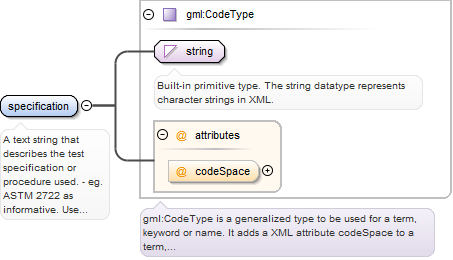
A text string that describes the test specification or procedure used. -eg. ASTM 2722 as informative. Use specificationRef to refer to a DIGGS specificationobject or to an external URN that describes the procedure.
<element name="specification" type="gml:CodeType"><annotation><documentation>A text string that describes the test specification or procedure used. - eg. ASTM 2722 as informative. Use specificationRef to refer to a DIGGS specification object or to an external URN that describes the procedure.</documentation></annotation></element>
Database handle for the object. It is of XML type ID, so is constrained to beunique in the XML document within which it occurs. An external identifier for the object inthe form of a URI may be constructed using standard XML and XPointer methods. This is doneby concatenating the URI for the document, a fragment separator, and the value of the idattribute.
Attempting to install the relevant ISO 2- and 3-letter codes as the enumerated possible values is probably never going to be a realistic possibility. See RFC 3066 at http://www.ietf.org/rfc/rfc3066.txt and the IANA registry at http://www.iana.org/assignments/lang-tag-apps.htm for further information. The union allows for the 'un-declaration' of xml:lang with the empty string.
Database handle for the object. It is of XML type ID, so is constrained to beunique in the XML document within which it occurs. An external identifier for the object inthe form of a URI may be constructed using standard XML and XPointer methods. This is doneby concatenating the URI for the document, a fragment separator, and the value of the idattribute.
Attempting to install the relevant ISO 2- and 3-letter codes as the enumerated possible values is probably never going to be a realistic possibility. See RFC 3066 at http://www.ietf.org/rfc/rfc3066.txt and the IANA registry at http://www.iana.org/assignments/lang-tag-apps.htm for further information. The union allows for the 'un-declaration' of xml:lang with the empty string.
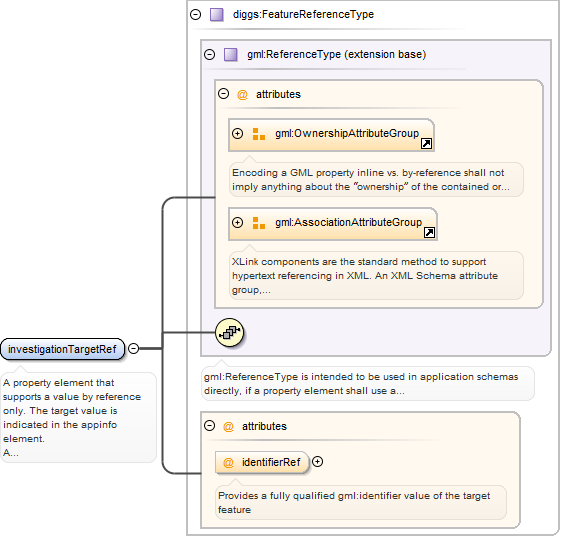
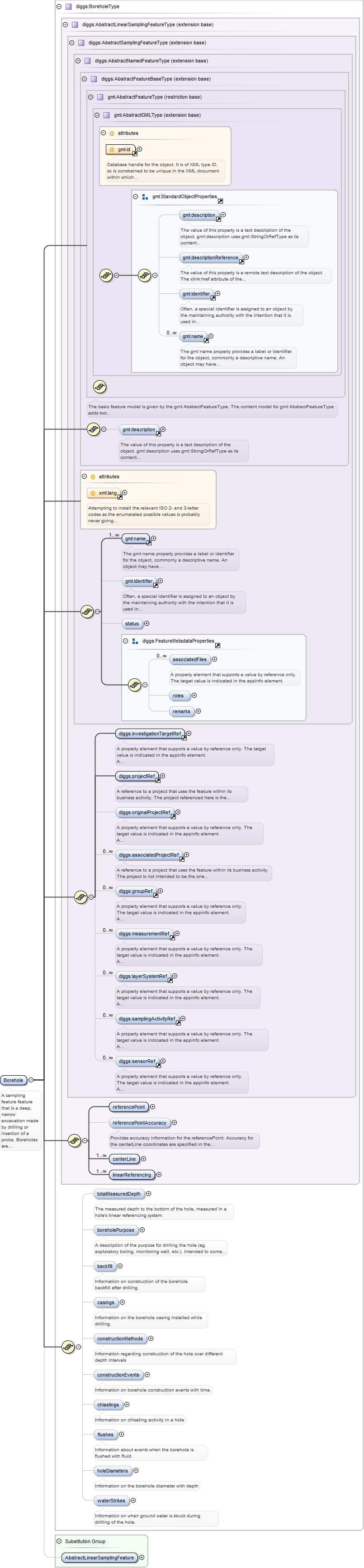
<element name="investigationTargetRef" type="diggs:FeatureReferenceType"><annotation><appinfo>Diggs:AbstractInvestigationTarget</appinfo><documentation>A property element that supports a value by reference only. The target value is indicated in the appinfo element.</documentation><documentation>A reference to the target feature (eg. ground, earthwork) being sampled/measured.</documentation></annotation></element>
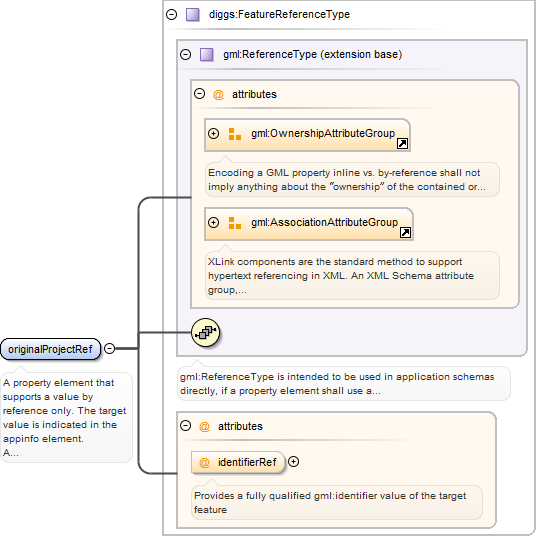
<element name="originalProjectRef" type="diggs:FeatureReferenceType"><annotation><appinfo source="urn:x-gml:targetElement">Diggs:Project</appinfo><documentation>A property element that supports a value by reference only. The target value is indicated in the appinfo element.</documentation><documentation>A reference to the project that first established this feature</documentation></annotation></element>
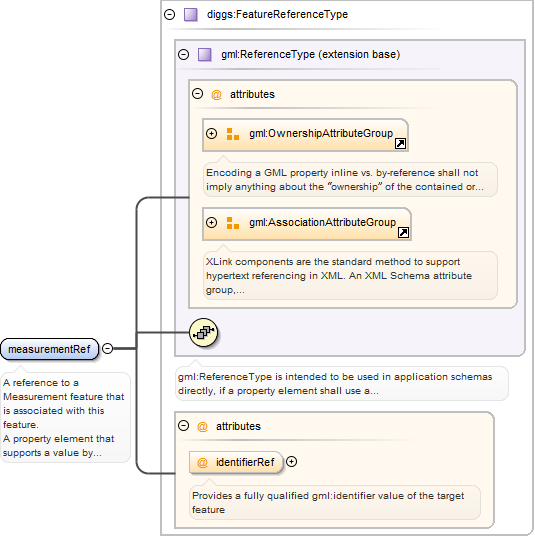
<element name="measurementRef" type="diggs:FeatureReferenceType"><annotation><appinfo source="urn:x-gml:targetElement">Diggs:Measurement</appinfo><documentation>A reference to a Measurement feature that is associated with this feature.</documentation><documentation>A property element that supports a value by reference only. The target value is indicated in the appinfo element.</documentation></annotation></element>
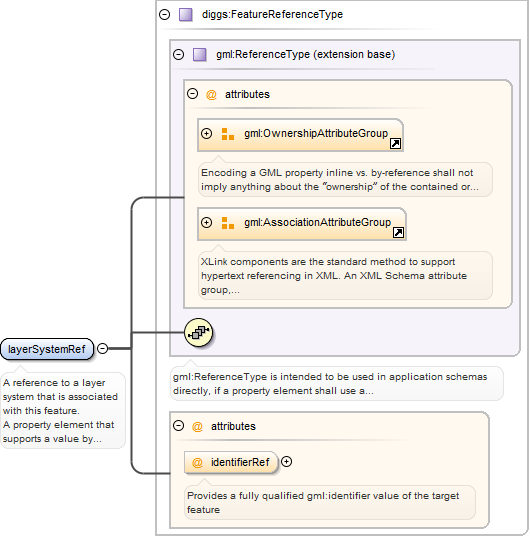
<element name="layerSystemRef" type="diggs:FeatureReferenceType"><annotation><appinfo>Diggs:LayerSystem</appinfo><documentation>A reference to a layer system that is associated with this feature.</documentation><documentation>A property element that supports a value by reference only. The target value is indicated in the appinfo element.</documentation></annotation></element>
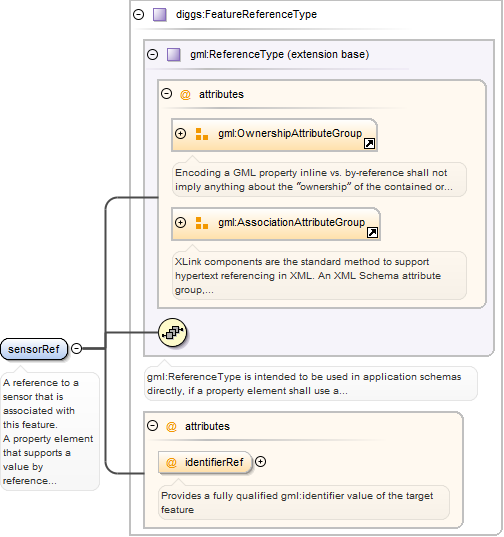
<element name="sensorRef" type="diggs:FeatureReferenceType"><annotation><documentation>A reference to a sensor that is associated with this feature.</documentation><documentation>A property element that supports a value by reference only. The target value is indicated in the appinfo element.</documentation></annotation></element>
Database handle for the object. It is of XML type ID, so is constrained to beunique in the XML document within which it occurs. An external identifier for the object inthe form of a URI may be constructed using standard XML and XPointer methods. This is doneby concatenating the URI for the document, a fragment separator, and the value of the idattribute.
Attempting to install the relevant ISO 2- and 3-letter codes as the enumerated possible values is probably never going to be a realistic possibility. See RFC 3066 at http://www.ietf.org/rfc/rfc3066.txt and the IANA registry at http://www.iana.org/assignments/lang-tag-apps.htm for further information. The union allows for the 'un-declaration' of xml:lang with the empty string.
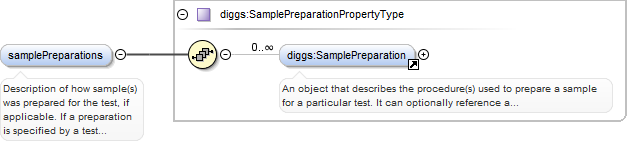
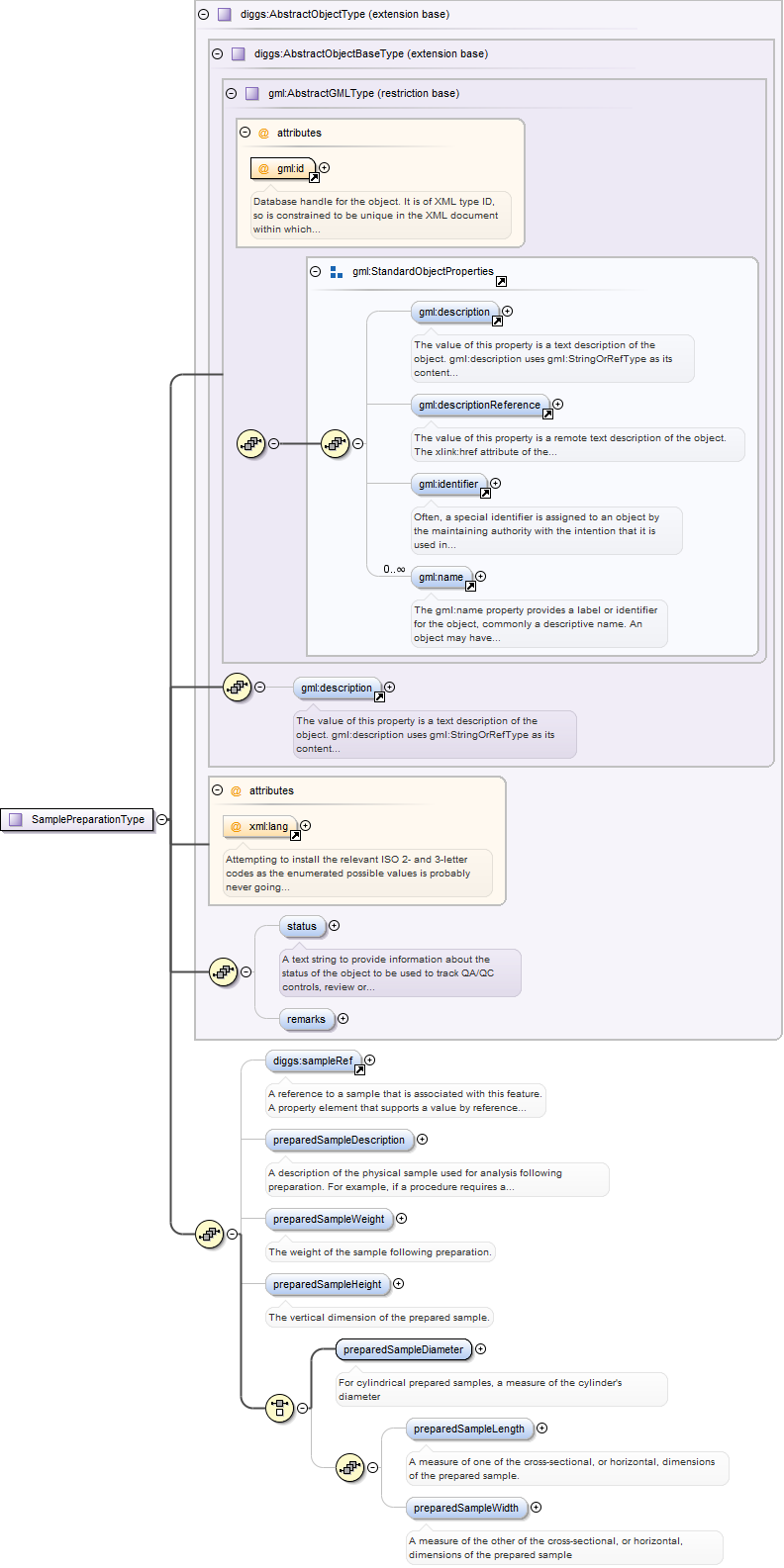
Description of how sample(s) was prepared for the test, if applicable.If a preparation is specified by a test specification, this information can bereferenced using the specificationRef or specifcatiom property and not neededhere
<element name="samplePreparations" type="diggs:SamplePreparationPropertyType" minOccurs="0" maxOccurs="1"><annotation><documentation>Description of how sample(s) was prepared for the test, if applicable. If a preparation is specified by a test specification, this information can be referenced using the specificationRef or specifcatiom property and not needed here</documentation></annotation></element>
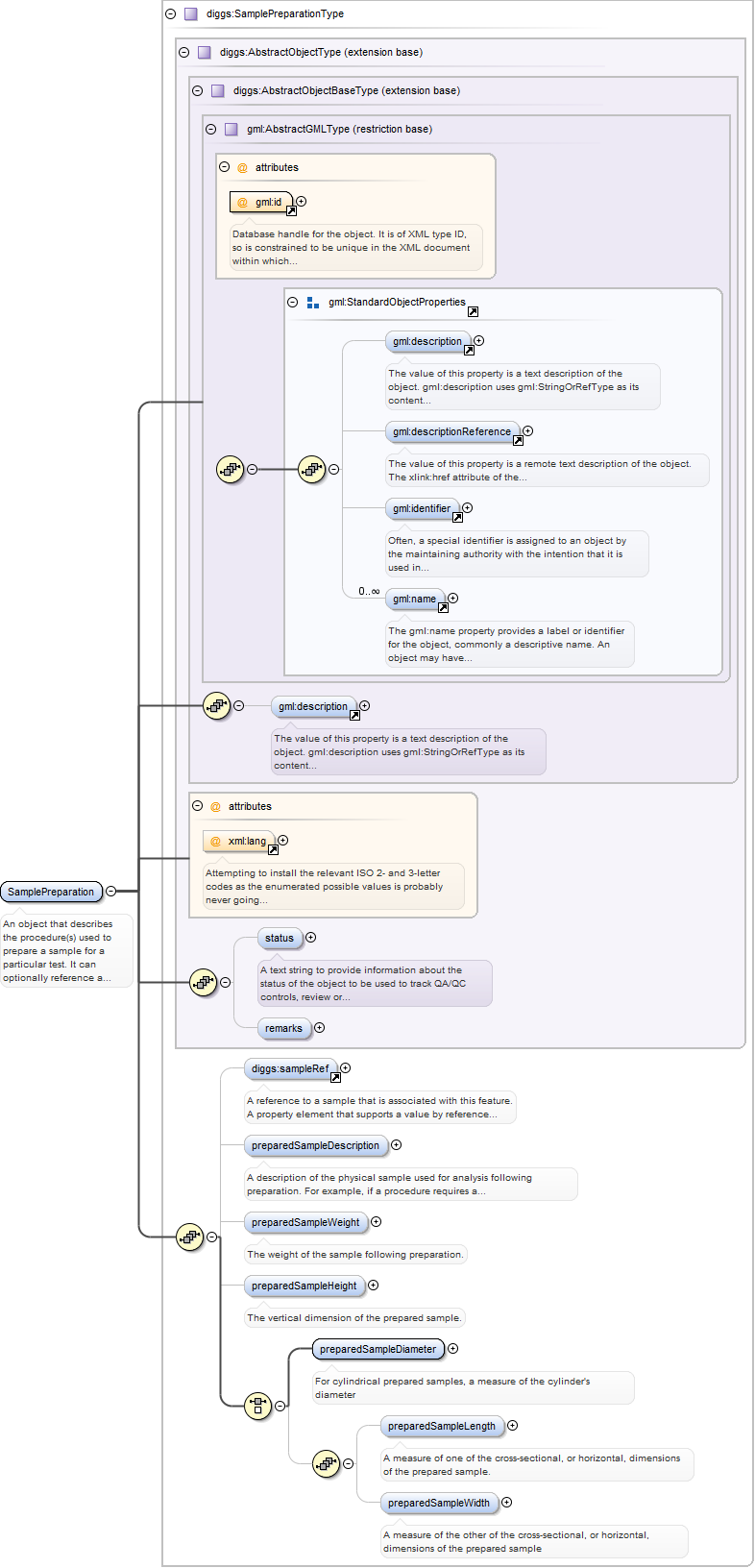
An object that describes the procedure(s) used to prepare a sample for aparticular test. It can optionally reference a sample (if this preparation procedure occurson a specific sample as part of another test procedure that uses more than one sample. Thegml:description field is used to carry the description of the preparationprocedure.
Database handle for the object. It is of XML type ID, so is constrained to beunique in the XML document within which it occurs. An external identifier for the object inthe form of a URI may be constructed using standard XML and XPointer methods. This is doneby concatenating the URI for the document, a fragment separator, and the value of the idattribute.
Attempting to install the relevant ISO 2- and 3-letter codes as the enumerated possible values is probably never going to be a realistic possibility. See RFC 3066 at http://www.ietf.org/rfc/rfc3066.txt and the IANA registry at http://www.iana.org/assignments/lang-tag-apps.htm for further information. The union allows for the 'un-declaration' of xml:lang with the empty string.
Source
<element name="SamplePreparation" type="diggs:SamplePreparationType"><annotation><documentation>An object that describes the procedure(s) used to prepare a sample for a particular test. It can optionally reference a sample (if this preparation procedure occurs on a specific sample as part of another test procedure that uses more than one sample. The gml:description field is used to carry the description of the preparation procedure.</documentation></annotation></element>
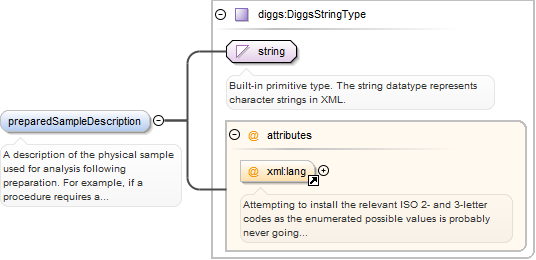
A description of the physical sample used for analysis followingpreparation. For example, if a procedure requires a collected sample to be screenedsuch that the procedure operates on a specific size fraction of an overall soilsample, this description could be used to describe the size fraction(s) used in theprepared sample for analysis. However, if a more detailed and quantitative breakdownof size fractions is needed, the retainedSizeFraction property within the specifictest procedure should be used to detail this information.
Attempting to install the relevant ISO 2- and 3-letter codes as the enumerated possible values is probably never going to be a realistic possibility. See RFC 3066 at http://www.ietf.org/rfc/rfc3066.txt and the IANA registry at http://www.iana.org/assignments/lang-tag-apps.htm for further information. The union allows for the 'un-declaration' of xml:lang with the empty string.
Source
<element minOccurs="0" name="preparedSampleDescription" type="diggs:DiggsStringType"><annotation><documentation>A description of the physical sample used for analysis following preparation. For example, if a procedure requires a collected sample to be screened such that the procedure operates on a specific size fraction of an overall soil sample, this description could be used to describe the size fraction(s) used in the prepared sample for analysis. However, if a more detailed and quantitative breakdown of size fractions is needed, the retainedSizeFraction property within the specific test procedure should be used to detail this information.</documentation></annotation></element>
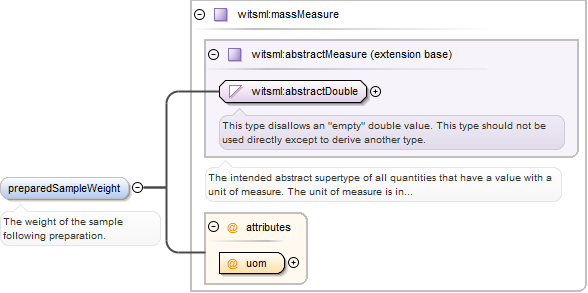
<element minOccurs="0" name="preparedSampleWeight" type="witsml:massMeasure"><annotation><documentation>The weight of the sample following preparation.</documentation></annotation></element>
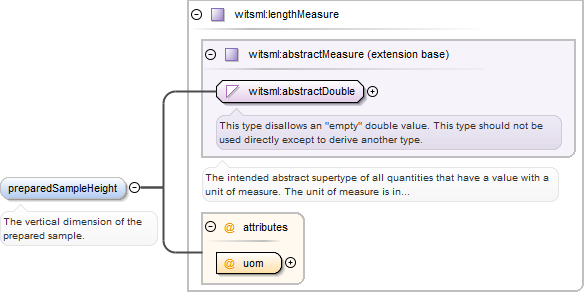
<element minOccurs="0" name="preparedSampleHeight" type="witsml:lengthMeasure"><annotation><documentation>The vertical dimension of the prepared sample.</documentation></annotation></element>
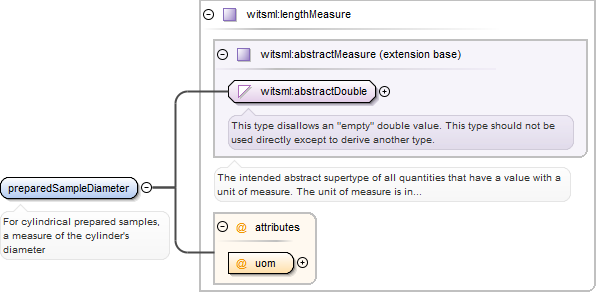
<element minOccurs="1" name="preparedSampleDiameter" type="witsml:lengthMeasure"><annotation><documentation>For cylindrical prepared samples, a measure of the cylinder's diameter</documentation></annotation></element>
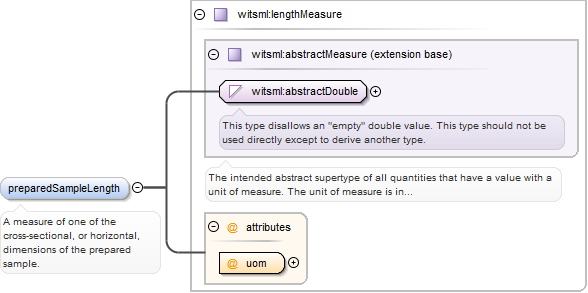
<element minOccurs="0" name="preparedSampleLength" type="witsml:lengthMeasure"><annotation><documentation>A measure of one of the cross-sectional, or horizontal, dimensions of the prepared sample.</documentation></annotation></element>
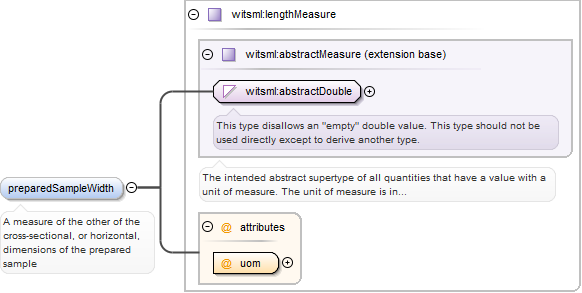
<element minOccurs="0" name="preparedSampleWidth" type="witsml:lengthMeasure"><annotation><documentation>A measure of the other of the cross-sectional, or horizontal, dimensions of the prepared sample</documentation></annotation></element>
Database handle for the object. It is of XML type ID, so is constrained to beunique in the XML document within which it occurs. An external identifier for the object inthe form of a URI may be constructed using standard XML and XPointer methods. This is doneby concatenating the URI for the document, a fragment separator, and the value of the idattribute.
Attempting to install the relevant ISO 2- and 3-letter codes as the enumerated possible values is probably never going to be a realistic possibility. See RFC 3066 at http://www.ietf.org/rfc/rfc3066.txt and the IANA registry at http://www.iana.org/assignments/lang-tag-apps.htm for further information. The union allows for the 'un-declaration' of xml:lang with the empty string.
Attempting to install the relevant ISO 2- and 3-letter codes as the enumerated possible values is probably never going to be a realistic possibility. See RFC 3066 at http://www.ietf.org/rfc/rfc3066.txt and the IANA registry at http://www.iana.org/assignments/lang-tag-apps.htm for further information. The union allows for the 'un-declaration' of xml:lang with the empty string.
Database handle for the object. It is of XML type ID, so is constrained to beunique in the XML document within which it occurs. An external identifier for the object inthe form of a URI may be constructed using standard XML and XPointer methods. This is doneby concatenating the URI for the document, a fragment separator, and the value of the idattribute.
Attempting to install the relevant ISO 2- and 3-letter codes as the enumerated possible values is probably never going to be a realistic possibility. See RFC 3066 at http://www.ietf.org/rfc/rfc3066.txt and the IANA registry at http://www.iana.org/assignments/lang-tag-apps.htm for further information. The union allows for the 'un-declaration' of xml:lang with the empty string.
Database handle for the object. It is of XML type ID, so is constrained to beunique in the XML document within which it occurs. An external identifier for the object inthe form of a URI may be constructed using standard XML and XPointer methods. This is doneby concatenating the URI for the document, a fragment separator, and the value of the idattribute.
Attempting to install the relevant ISO 2- and 3-letter codes as the enumerated possible values is probably never going to be a realistic possibility. See RFC 3066 at http://www.ietf.org/rfc/rfc3066.txt and the IANA registry at http://www.iana.org/assignments/lang-tag-apps.htm for further information. The union allows for the 'un-declaration' of xml:lang with the empty string.
Database handle for the object. It is of XML type ID, so is constrained to beunique in the XML document within which it occurs. An external identifier for the object inthe form of a URI may be constructed using standard XML and XPointer methods. This is doneby concatenating the URI for the document, a fragment separator, and the value of the idattribute.
Attempting to install the relevant ISO 2- and 3-letter codes as the enumerated possible values is probably never going to be a realistic possibility. See RFC 3066 at http://www.ietf.org/rfc/rfc3066.txt and the IANA registry at http://www.iana.org/assignments/lang-tag-apps.htm for further information. The union allows for the 'un-declaration' of xml:lang with the empty string.
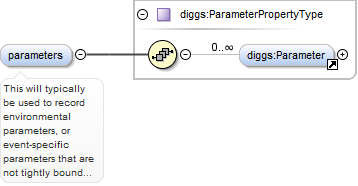
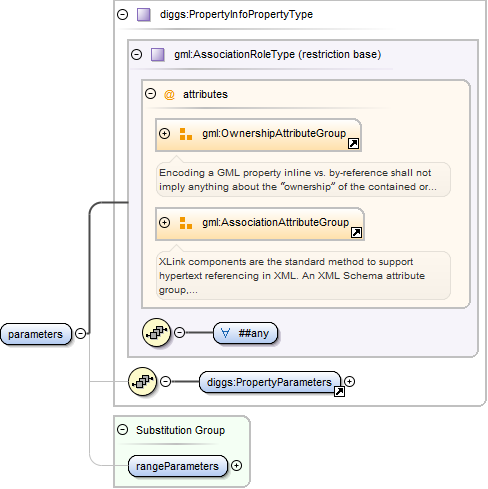
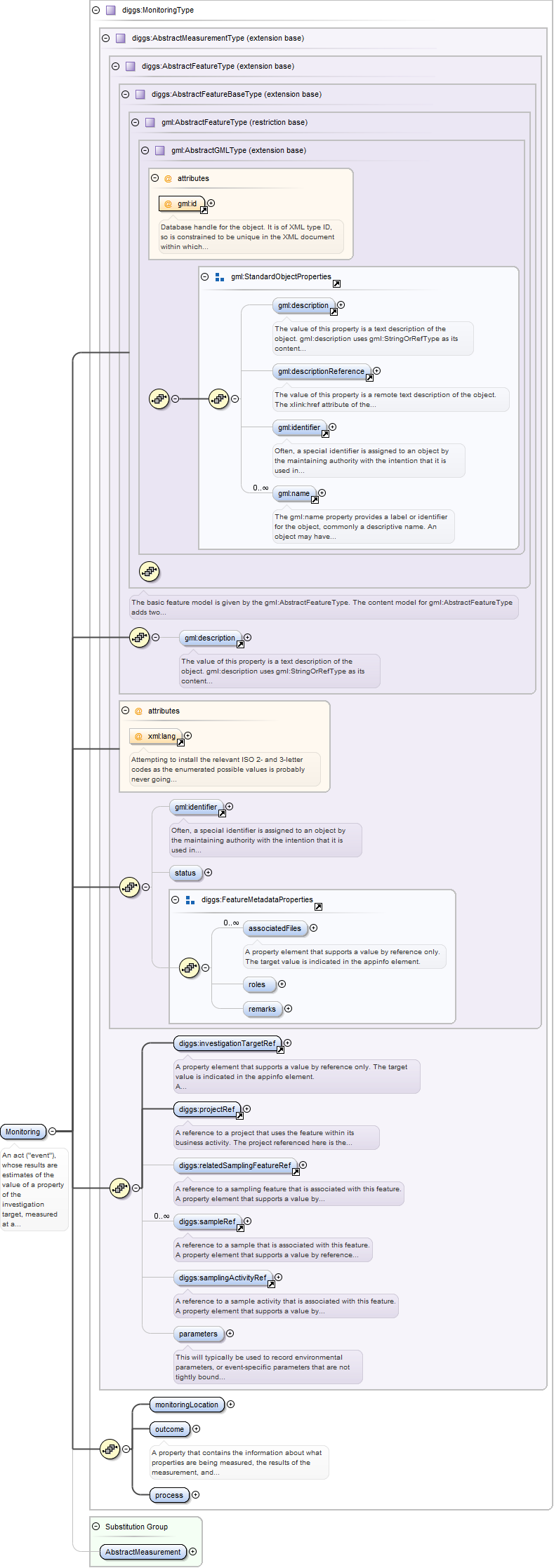
This will typically be used to record environmental parameters, orevent-specific parameters that are not tightly bound to either the earth materialsfor which properties are being estimated, or the procedure. Parameters that aretightly bound to the procedure should be encoded within the procedureobject.
<element minOccurs="0" name="parameters" type="diggs:ParameterPropertyType"><annotation><documentation>This will typically be used to record environmental parameters, or event-specific parameters that are not tightly bound to either the earth materials for which properties are being estimated, or the procedure. Parameters that are tightly bound to the procedure should be encoded within the procedure object.</documentation></annotation></element>
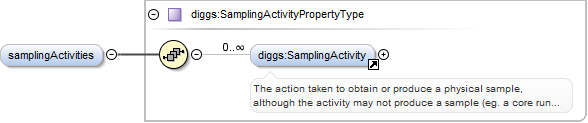
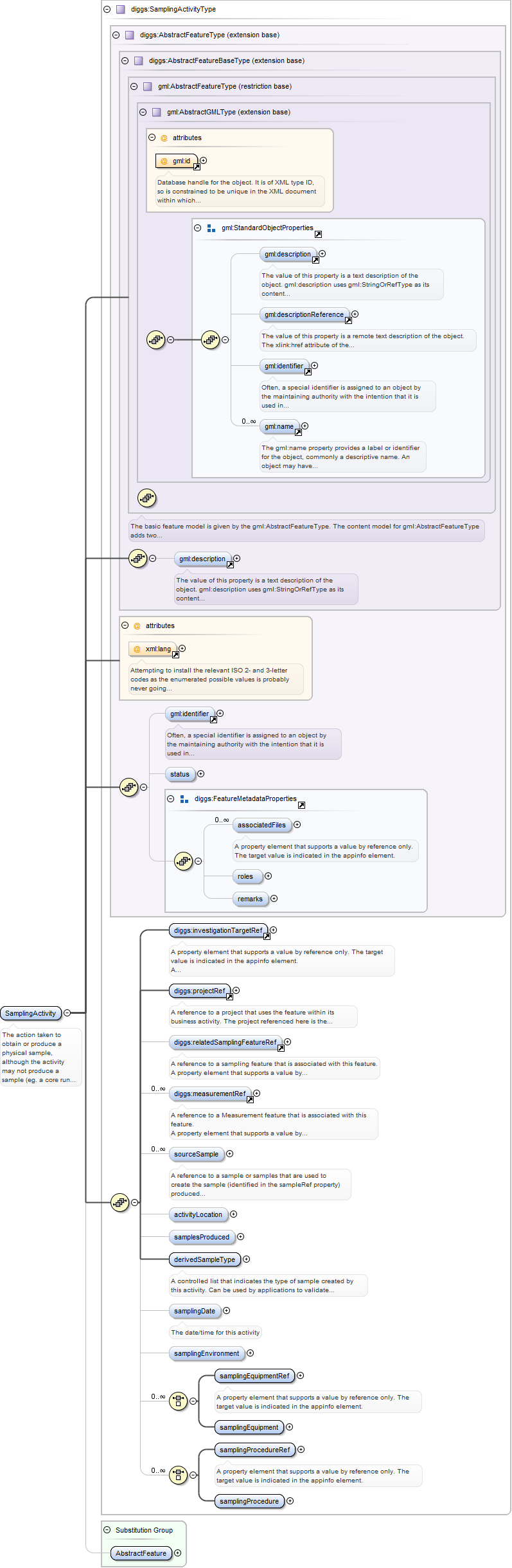
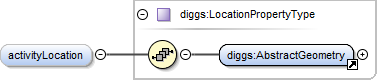
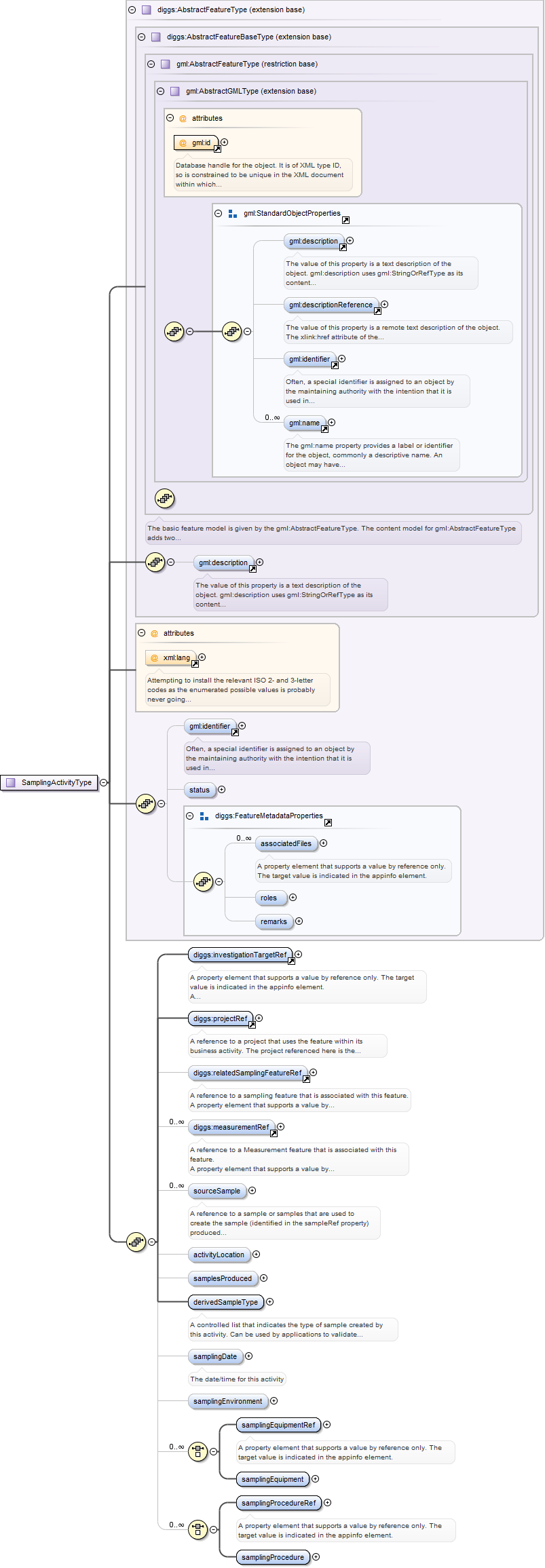
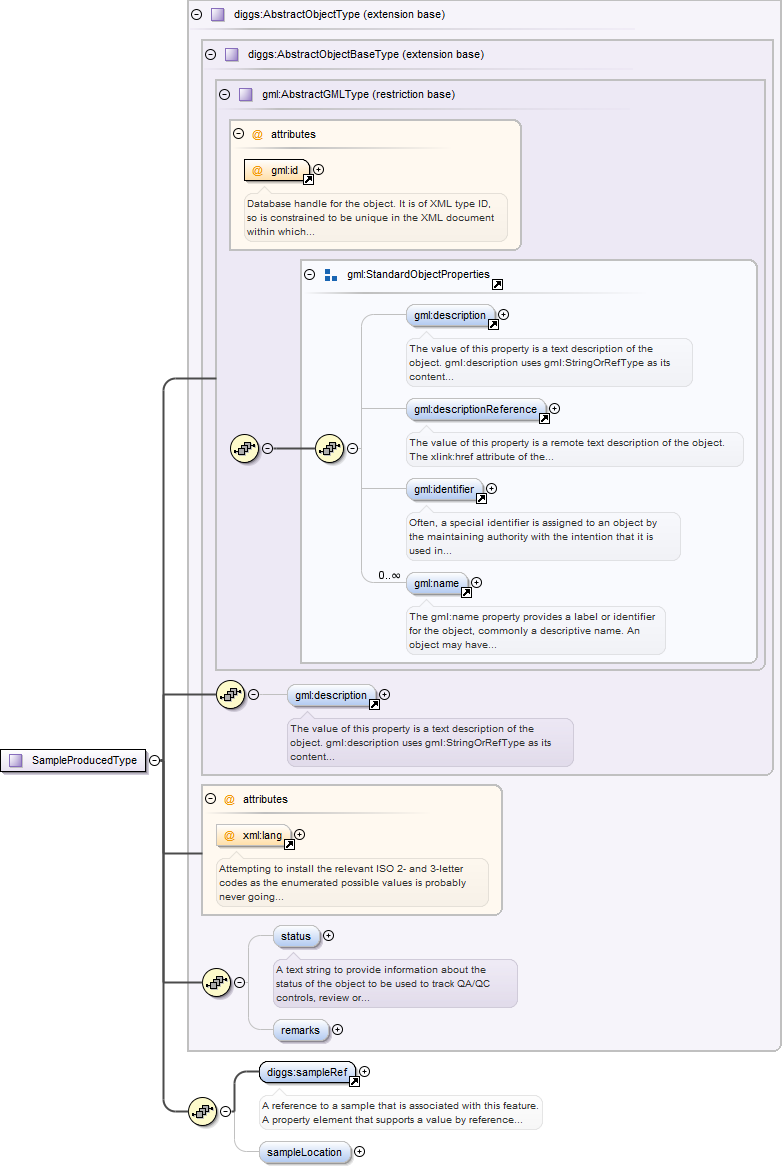
The action taken to obtain or produce a physical sample, although the activitymay not produce a sample (eg. a core run that produces no recovery). This activity typicallyoccurs at a location on a sampling feature, or could occur elsewhere (eg. a laboratory) inthe case of test or blank samples, or can produce aggregate samples where the location ofthe samples produced have no meaning. All Sample features must refer to a SamplingActivityfeature.
Database handle for the object. It is of XML type ID, so is constrained to beunique in the XML document within which it occurs. An external identifier for the object inthe form of a URI may be constructed using standard XML and XPointer methods. This is doneby concatenating the URI for the document, a fragment separator, and the value of the idattribute.
Attempting to install the relevant ISO 2- and 3-letter codes as the enumerated possible values is probably never going to be a realistic possibility. See RFC 3066 at http://www.ietf.org/rfc/rfc3066.txt and the IANA registry at http://www.iana.org/assignments/lang-tag-apps.htm for further information. The union allows for the 'un-declaration' of xml:lang with the empty string.
Source
<element abstract="false" name="SamplingActivity" substitutionGroup="diggs:AbstractFeature" type="diggs:SamplingActivityType"><annotation><documentation>The action taken to obtain or produce a physical sample, although the activity may not produce a sample (eg. a core run that produces no recovery). This activity typically occurs at a location on a sampling feature, or could occur elsewhere (eg. a laboratory) in the case of test or blank samples, or can produce aggregate samples where the location of the samples produced have no meaning. All Sample features must refer to a SamplingActivity feature.</documentation></annotation></element>
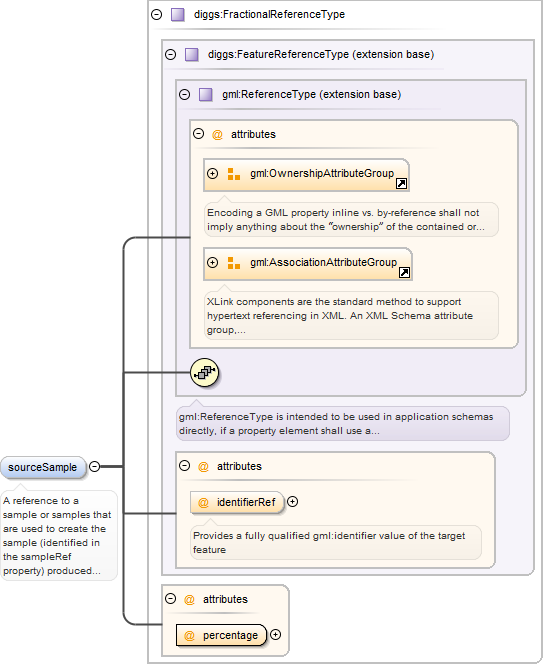
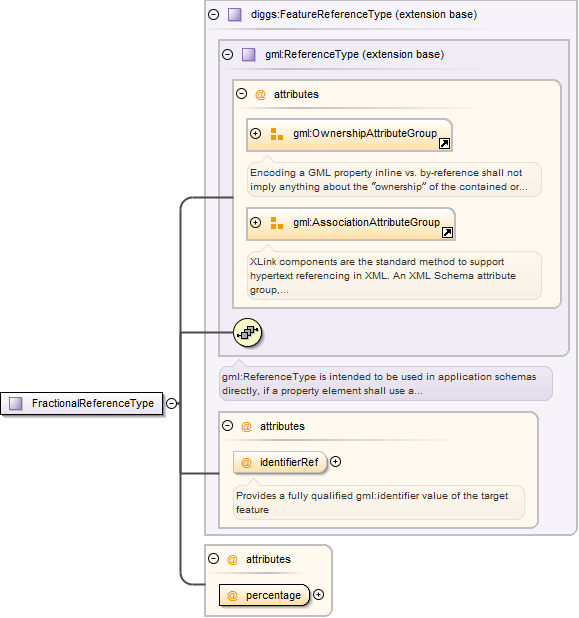
A reference to a sample or samples that are used to create the sample(identified in the sampleRef property) produced by this activity. This element isonly used for activities that subsample or aggregate samples from other samples. Foraggregate samples, the percentage attribute optionally defines how much of the totalnew sample is composed from the source sample.
<element minOccurs="0" name="sourceSample" maxOccurs="unbounded" type="diggs:FractionalReferenceType"><annotation><appinfo source="urn:x-gml:targetElement">diggs:Sample/@gml:id</appinfo><documentation>A reference to a sample or samples that are used to create the sample (identified in the sampleRef property) produced by this activity. This element is only used for activities that subsample or aggregate samples from other samples. For aggregate samples, the percentage attribute optionally defines how much of the total new sample is composed from the source sample.</documentation></annotation></element>
Database handle for the object. It is of XML type ID, so is constrained to beunique in the XML document within which it occurs. An external identifier for the object inthe form of a URI may be constructed using standard XML and XPointer methods. This is doneby concatenating the URI for the document, a fragment separator, and the value of the idattribute.
Database handle for the object. It is of XML type ID, so is constrained to beunique in the XML document within which it occurs. An external identifier for the object inthe form of a URI may be constructed using standard XML and XPointer methods. This is doneby concatenating the URI for the document, a fragment separator, and the value of the idattribute.
Attempting to install the relevant ISO 2- and 3-letter codes as the enumerated possible values is probably never going to be a realistic possibility. See RFC 3066 at http://www.ietf.org/rfc/rfc3066.txt and the IANA registry at http://www.iana.org/assignments/lang-tag-apps.htm for further information. The union allows for the 'un-declaration' of xml:lang with the empty string.
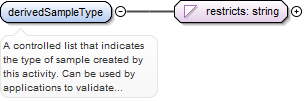
A controlled list that indicates the type of sample created by thisactivity. Can be used by applications to validate other activity info. collected -sample was created by collection at a sampling feature; aggregate - activity createda sample by aggregating existing samples; sourceSamples should have more than onesubelement subsample - activity created a sample by subsampling an existing sample;only one sourceSampleRef should be specified. test - activity produced a test,standard or blank sample that does not relate to any field sample; activity shouldbe related to a project and no sourceSampleRef should be specified. none - thesample activity failed to produce a physical sample.
Diagram
Type
restriction of string
Properties
content:
simple
Facets
enumeration
aggregate
enumeration
collected
enumeration
none
enumeration
subsample
enumeration
test
Source
<element name="derivedSampleType"><annotation><documentation>A controlled list that indicates the type of sample created by this activity. Can be used by applications to validate other activity info. collected - sample was created by collection at a sampling feature; aggregate - activity created a sample by aggregating existing samples; sourceSamples should have more than one subelement subsample - activity created a sample by subsampling an existing sample; only one sourceSampleRef should be specified. test - activity produced a test, standard or blank sample that does not relate to any field sample; activity should be related to a project and no sourceSampleRef should be specified. none - the sample activity failed to produce a physical sample.</documentation></annotation><simpleType><restriction base="string"><enumeration value="aggregate"/><enumeration value="collected"/><enumeration value="none"/><enumeration value="subsample"/><enumeration value="test"/></restriction></simpleType></element>
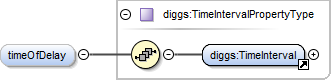
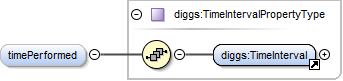
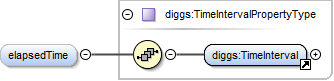
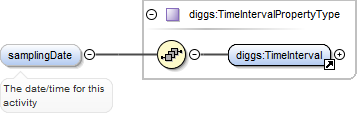
<element minOccurs="0" name="samplingDate" type="diggs:TimeIntervalPropertyType"><annotation><documentation>The date/time for this activity</documentation></annotation></element>
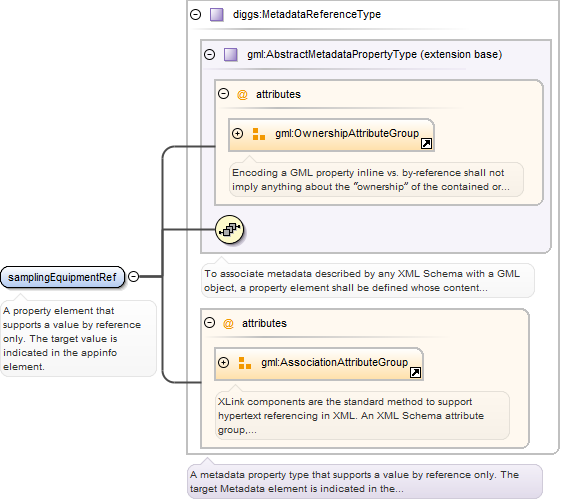
<element name="samplingEquipmentRef" type="diggs:MetadataReferenceType" minOccurs="1" maxOccurs="1"><annotation><appinfo source="urn:x-gml:targetElement">diggs:Equipment</appinfo><documentation>A property element that supports a value by reference only. The target value is indicated in the appinfo element.</documentation></annotation></element>
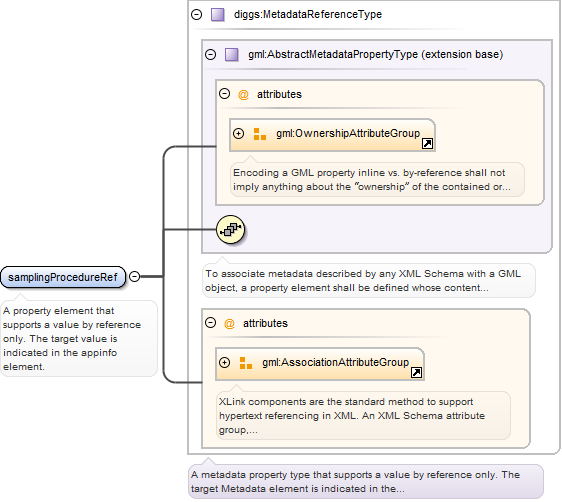
<element name="samplingProcedureRef" type="diggs:MetadataReferenceType" minOccurs="1" maxOccurs="1"><annotation><appinfo source="urn:x-gml:targetElement">diggs:Specifications</appinfo><documentation>A property element that supports a value by reference only. The target value is indicated in the appinfo element.</documentation></annotation></element>
Database handle for the object. It is of XML type ID, so is constrained to beunique in the XML document within which it occurs. An external identifier for the object inthe form of a URI may be constructed using standard XML and XPointer methods. This is doneby concatenating the URI for the document, a fragment separator, and the value of the idattribute.
Attempting to install the relevant ISO 2- and 3-letter codes as the enumerated possible values is probably never going to be a realistic possibility. See RFC 3066 at http://www.ietf.org/rfc/rfc3066.txt and the IANA registry at http://www.iana.org/assignments/lang-tag-apps.htm for further information. The union allows for the 'un-declaration' of xml:lang with the empty string.
Source
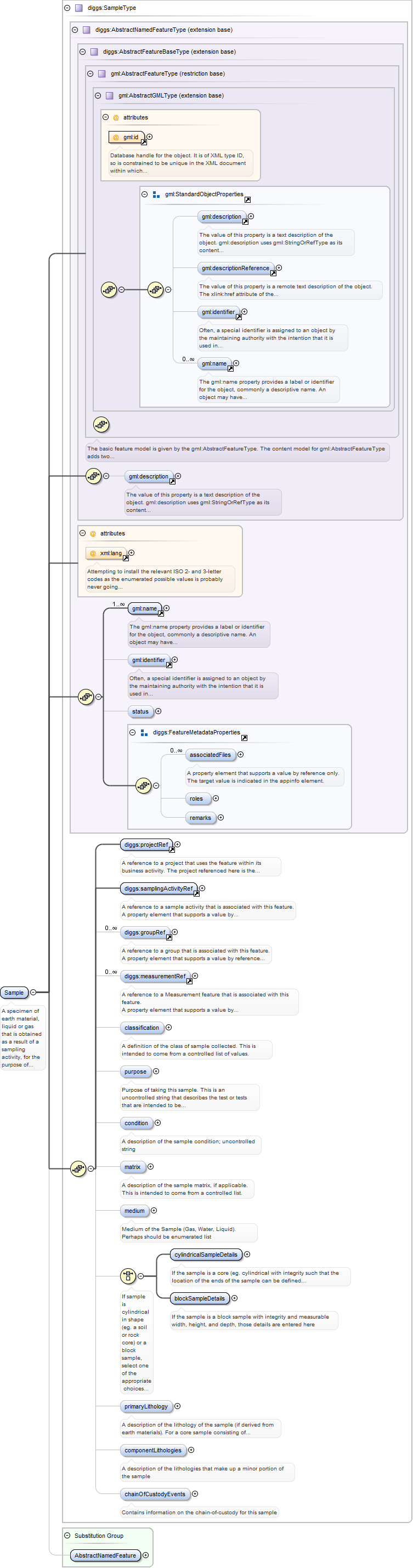
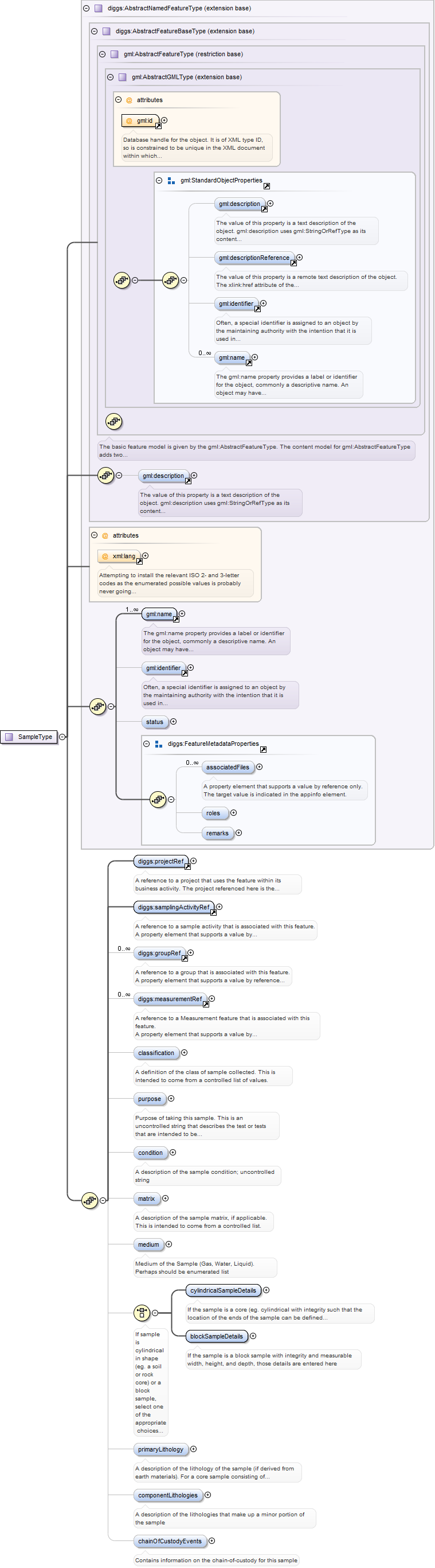
<element abstract="false" name="Sample" substitutionGroup="diggs:AbstractNamedFeature" type="diggs:SampleType"><annotation><documentation>A specimen of earth material, liquid or gas that is obtained as a result of a sampling activity, for the purpose of testing and/or observation</documentation></annotation></element>
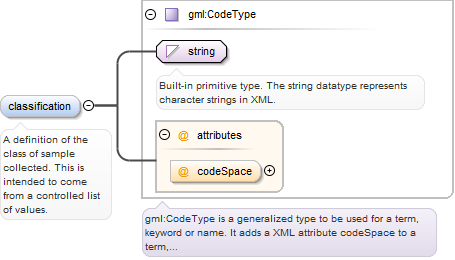
<element minOccurs="0" name="classification" type="gml:CodeType"><annotation><documentation>A definition of the class of sample collected. This is intended to come from a controlled list of values.</documentation></annotation></element>
Attempting to install the relevant ISO 2- and 3-letter codes as the enumerated possible values is probably never going to be a realistic possibility. See RFC 3066 at http://www.ietf.org/rfc/rfc3066.txt and the IANA registry at http://www.iana.org/assignments/lang-tag-apps.htm for further information. The union allows for the 'un-declaration' of xml:lang with the empty string.
Source
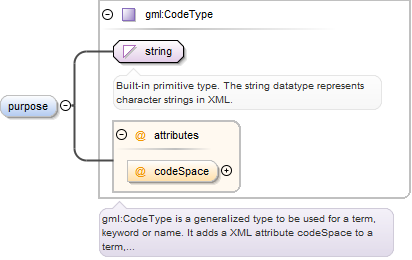
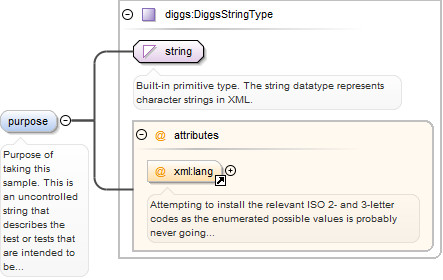
<element minOccurs="0" name="purpose" type="diggs:DiggsStringType"><annotation><documentation>Purpose of taking this sample. This is an uncontrolled string that describes the test or tests that are intended to be run on this sample.</documentation></annotation></element>
Attempting to install the relevant ISO 2- and 3-letter codes as the enumerated possible values is probably never going to be a realistic possibility. See RFC 3066 at http://www.ietf.org/rfc/rfc3066.txt and the IANA registry at http://www.iana.org/assignments/lang-tag-apps.htm for further information. The union allows for the 'un-declaration' of xml:lang with the empty string.
Source
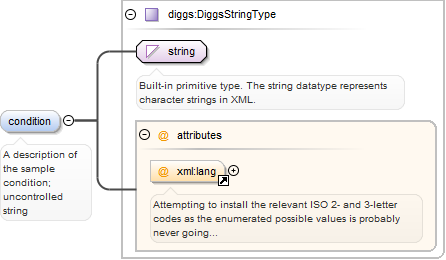
<element minOccurs="0" name="condition" type="diggs:DiggsStringType"><annotation><documentation>A description of the sample condition; uncontrolled string</documentation></annotation></element>
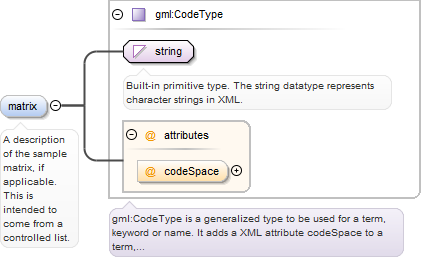
<element minOccurs="0" name="matrix" type="gml:CodeType"><annotation><documentation>A description of the sample matrix, if applicable. This is intended to come from a controlled list.</documentation></annotation></element>
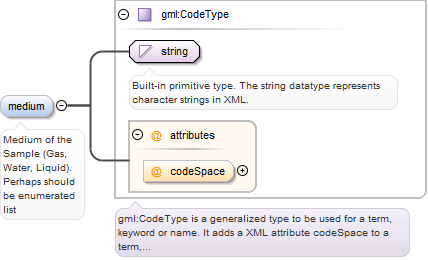
<element minOccurs="0" name="medium" type="gml:CodeType"><annotation><documentation>Medium of the Sample (Gas, Water, Liquid). Perhaps should be enumerated list</documentation></annotation></element>
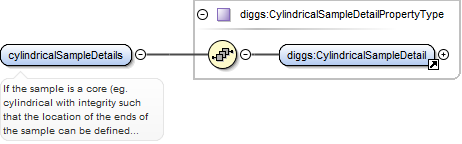
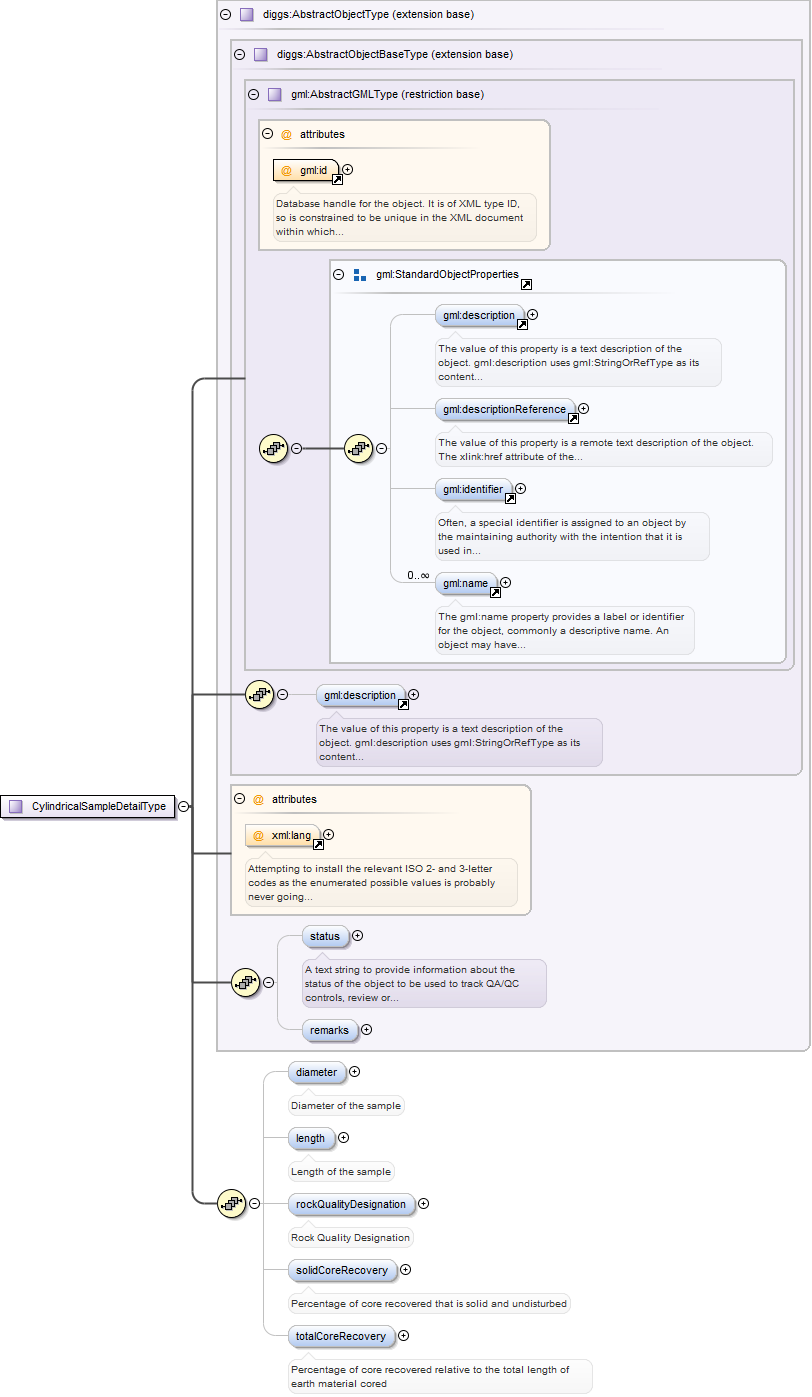
If the sample is a core (eg. cylindrical with integrity such that the location of the ends of the sample can be defined in space), then these elements may be used to further describe the sample.
<element minOccurs="1" name="cylindricalSampleDetails" type="diggs:CylindricalSampleDetailPropertyType"><annotation><documentation>If the sample is a core (eg. cylindrical with integrity such that the location of the ends of the sample can be defined in space), then these elements may be used to further describe the sample.</documentation></annotation></element>
Database handle for the object. It is of XML type ID, so is constrained to beunique in the XML document within which it occurs. An external identifier for the object inthe form of a URI may be constructed using standard XML and XPointer methods. This is doneby concatenating the URI for the document, a fragment separator, and the value of the idattribute.
Attempting to install the relevant ISO 2- and 3-letter codes as the enumerated possible values is probably never going to be a realistic possibility. See RFC 3066 at http://www.ietf.org/rfc/rfc3066.txt and the IANA registry at http://www.iana.org/assignments/lang-tag-apps.htm for further information. The union allows for the 'un-declaration' of xml:lang with the empty string.
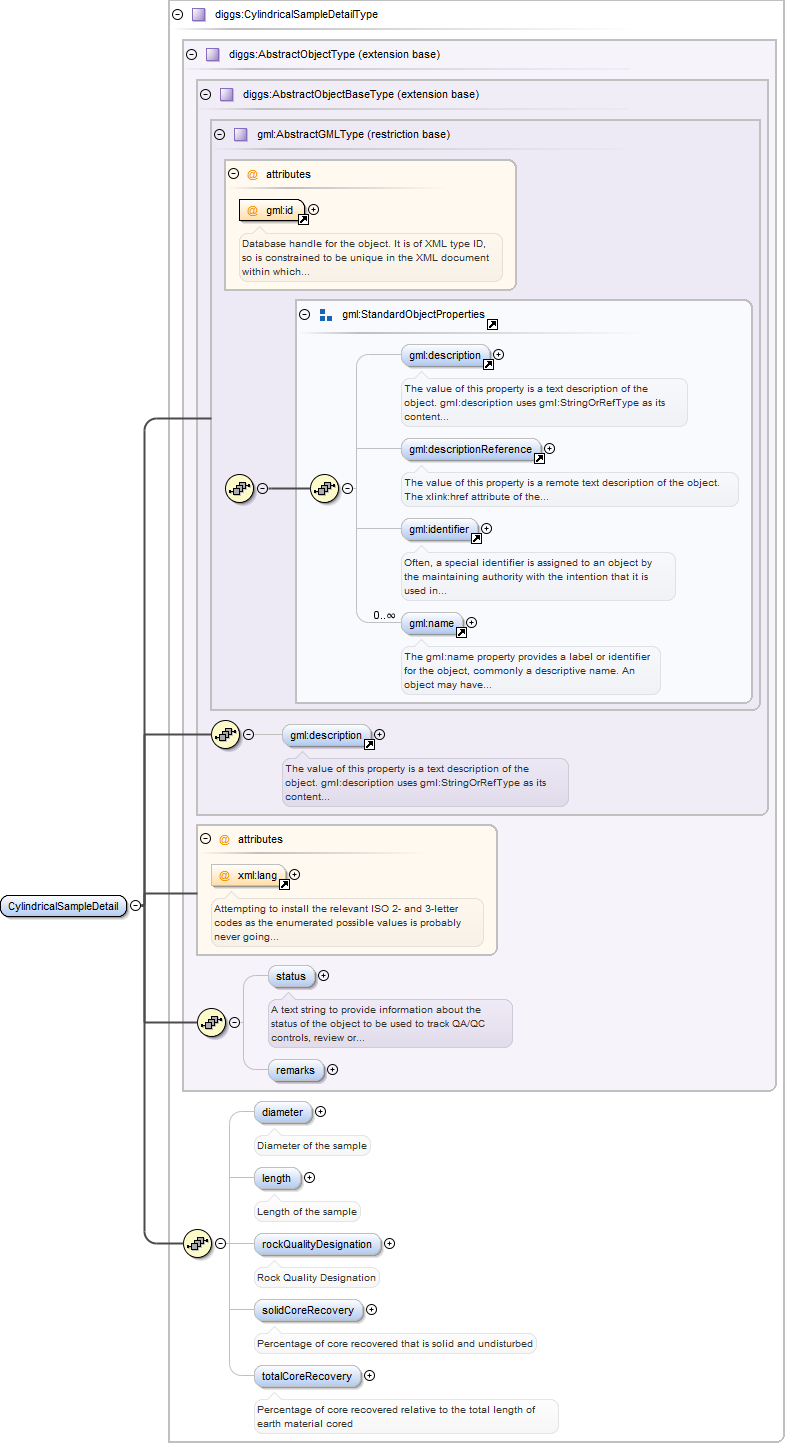
<element minOccurs="0" name="diameter" type="witsml:lengthMeasure"><annotation><documentation><![CDATA[Diameter of the sample]]></documentation></annotation></element>
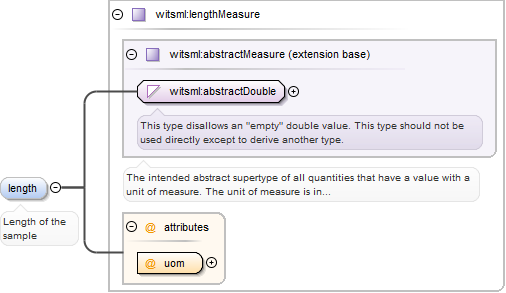
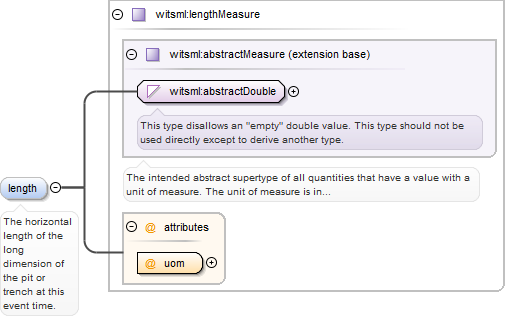
<element minOccurs="0" name="length" type="witsml:lengthMeasure"><annotation><documentation><![CDATA[Length of the sample]]></documentation></annotation></element>
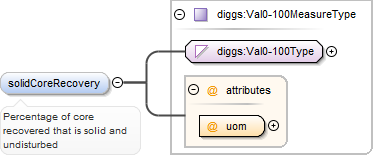
<element minOccurs="0" name="solidCoreRecovery" type="diggs:Val0-100MeasureType"><annotation><documentation><![CDATA[Percentage of core recovered that is solid and undisturbed]]></documentation></annotation></element>
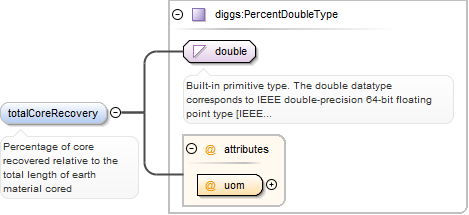
<element minOccurs="0" name="totalCoreRecovery" type="diggs:PercentDoubleType"><annotation><documentation><![CDATA[Percentage of core recovered relative to the total length of earth material cored]]></documentation></annotation></element>
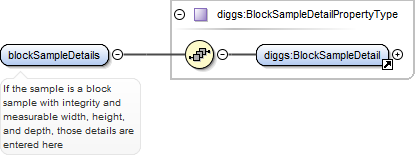
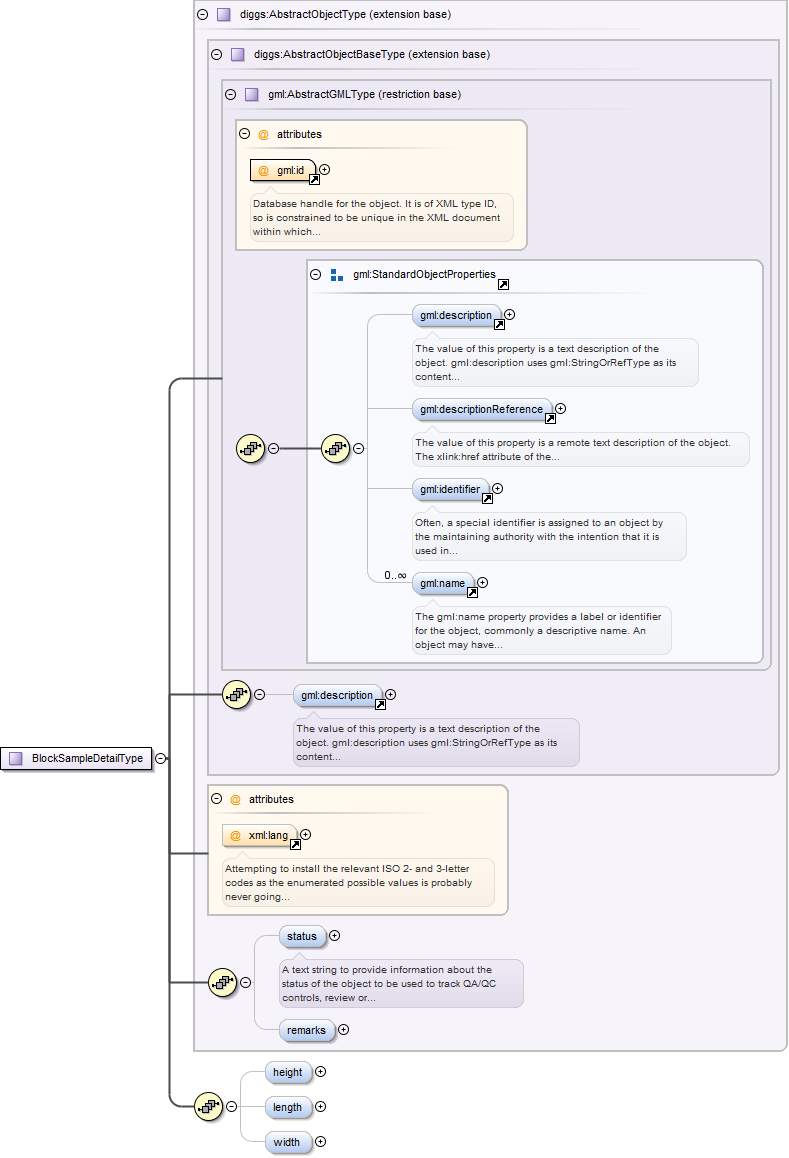
<element name="blockSampleDetails" type="diggs:BlockSampleDetailPropertyType"><annotation><documentation>If the sample is a block sample with integrity and measurable width, height, and depth, those details are entered here</documentation></annotation></element>
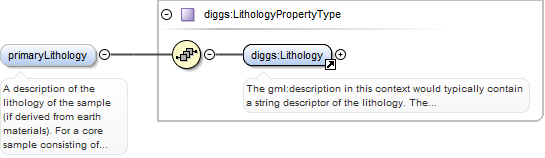
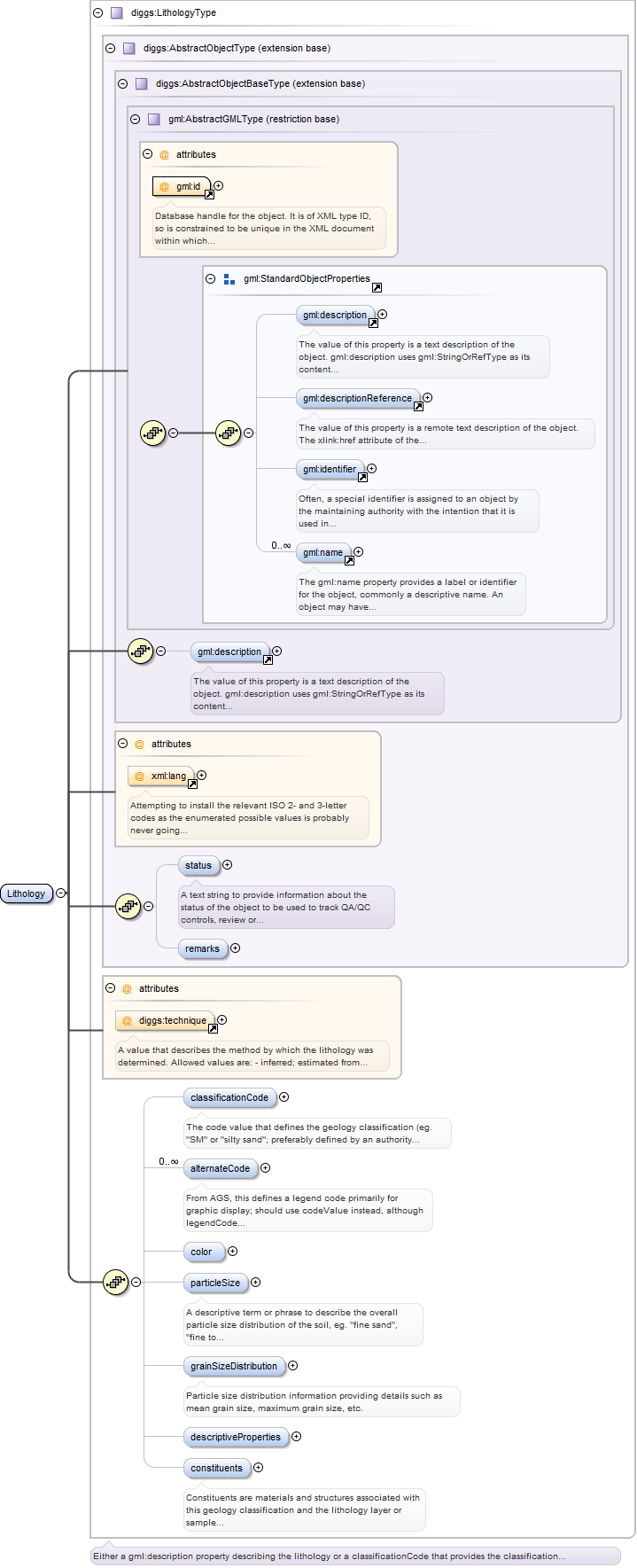
A description of the lithology of the sample (if derived from earthmaterials). For a core sample consisting of multiple lithologies, this elementshould generally be left blank and a lithologyLayerSystem should be created to carrythe lithologic descriptions related to core samples.
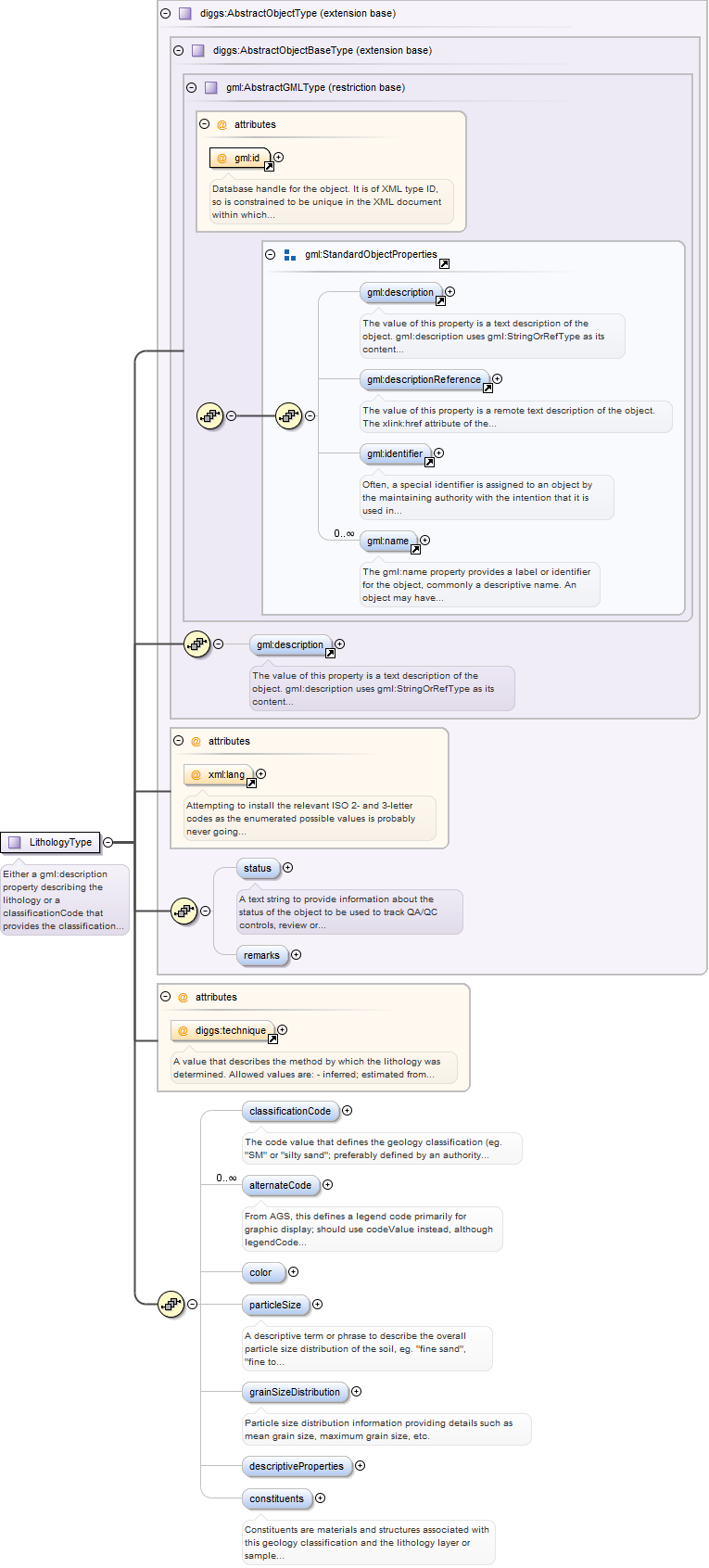
<element minOccurs="0" name="primaryLithology" type="diggs:LithologyPropertyType"><annotation><documentation>A description of the lithology of the sample (if derived from earth materials). For a core sample consisting of multiple lithologies, this element should generally be left blank and a lithologyLayerSystem should be created to carry the lithologic descriptions related to core samples.</documentation></annotation></element>
Database handle for the object. It is of XML type ID, so is constrained to beunique in the XML document within which it occurs. An external identifier for the object inthe form of a URI may be constructed using standard XML and XPointer methods. This is doneby concatenating the URI for the document, a fragment separator, and the value of the idattribute.
Attempting to install the relevant ISO 2- and 3-letter codes as the enumerated possible values is probably never going to be a realistic possibility. See RFC 3066 at http://www.ietf.org/rfc/rfc3066.txt and the IANA registry at http://www.iana.org/assignments/lang-tag-apps.htm for further information. The union allows for the 'un-declaration' of xml:lang with the empty string.
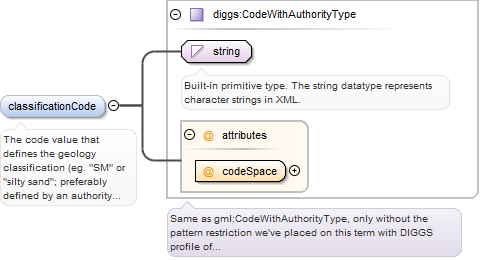
The code value that defines the geology classification (eg. "SM" or"silty sand"; preferably defined by an authority identified in the codespaceattribute
<element name="classificationCode" type="diggs:CodeWithAuthorityType" minOccurs="0"><annotation><documentation>The code value that defines the geology classification (eg. "SM" or "silty sand"; preferably defined by an authority identified in the codespace attribute</documentation></annotation></element>
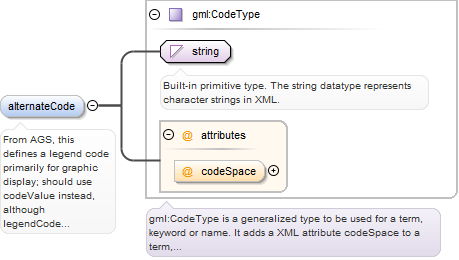
From AGS, this defines a legend code primarily for graphic display;should use codeValue instead, although legendCode can be optionally used as anotherclassification identifier; eg. "silty clay" and "clayey silt" could be assigned to adifferent alternate classification called "silt"
<element maxOccurs="unbounded" minOccurs="0" name="alternateCode" type="gml:CodeType"><annotation><documentation>From AGS, this defines a legend code primarily for graphic display; should use codeValue instead, although legendCode can be optionally used as another classification identifier; eg. "silty clay" and "clayey silt" could be assigned to a different alternate classification called "silt"</documentation></annotation></element>
Database handle for the object. It is of XML type ID, so is constrained to beunique in the XML document within which it occurs. An external identifier for the object inthe form of a URI may be constructed using standard XML and XPointer methods. This is doneby concatenating the URI for the document, a fragment separator, and the value of the idattribute.
Attempting to install the relevant ISO 2- and 3-letter codes as the enumerated possible values is probably never going to be a realistic possibility. See RFC 3066 at http://www.ietf.org/rfc/rfc3066.txt and the IANA registry at http://www.iana.org/assignments/lang-tag-apps.htm for further information. The union allows for the 'un-declaration' of xml:lang with the empty string.
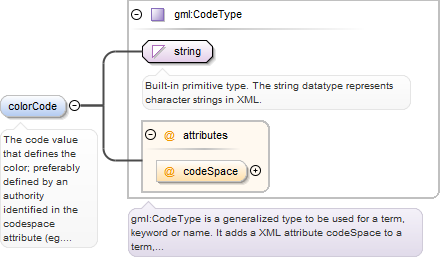
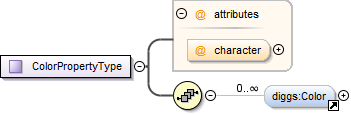
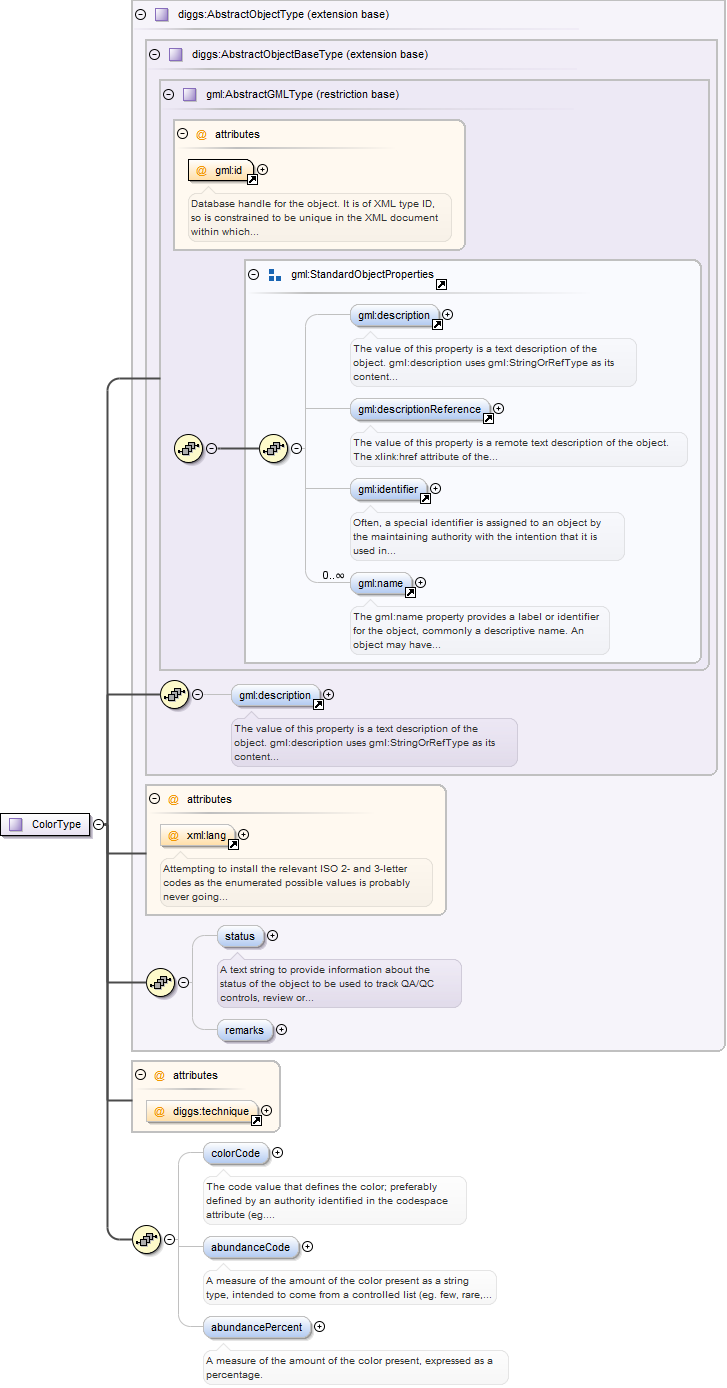
<element name="colorCode" type="gml:CodeType" minOccurs="0"><annotation><documentation>The code value that defines the color; preferably defined by an authority identified in the codespace attribute (eg. 10YR4/3)</documentation></annotation></element>
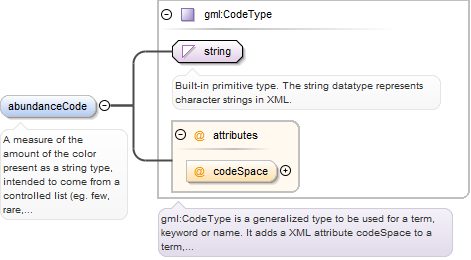
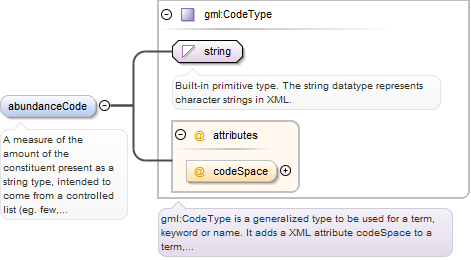
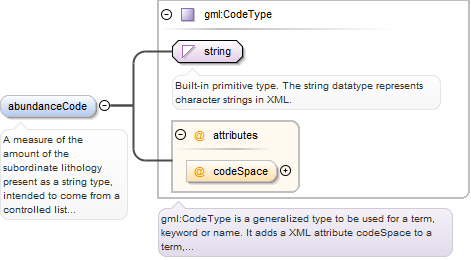
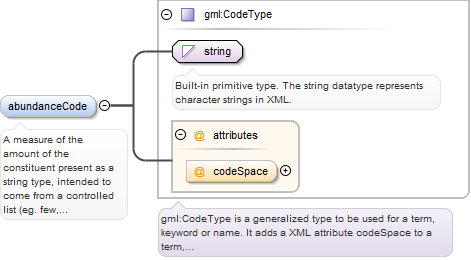
<element name="abundanceCode" type="gml:CodeType" minOccurs="0"><annotation><documentation>A measure of the amount of the color present as a string type, intended to come from a controlled list (eg. few, rare, common, etc.)</documentation></annotation></element>
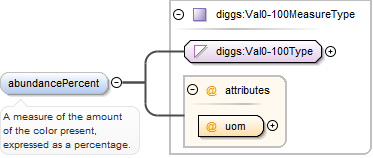
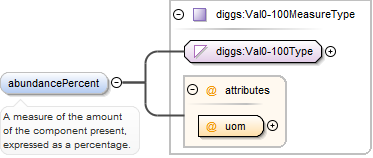
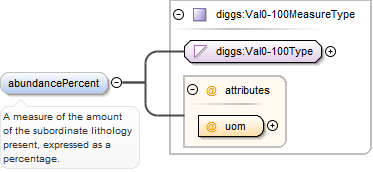
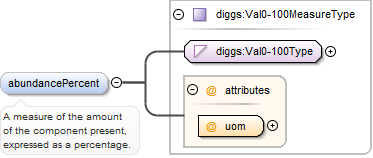
<element name="abundancePercent" type="diggs:Val0-100MeasureType" minOccurs="0"><annotation><documentation>A measure of the amount of the color present, expressed as a percentage.</documentation></annotation></element>
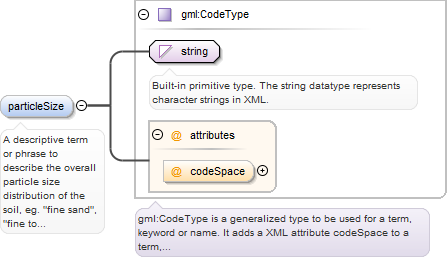
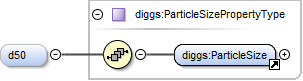
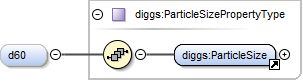
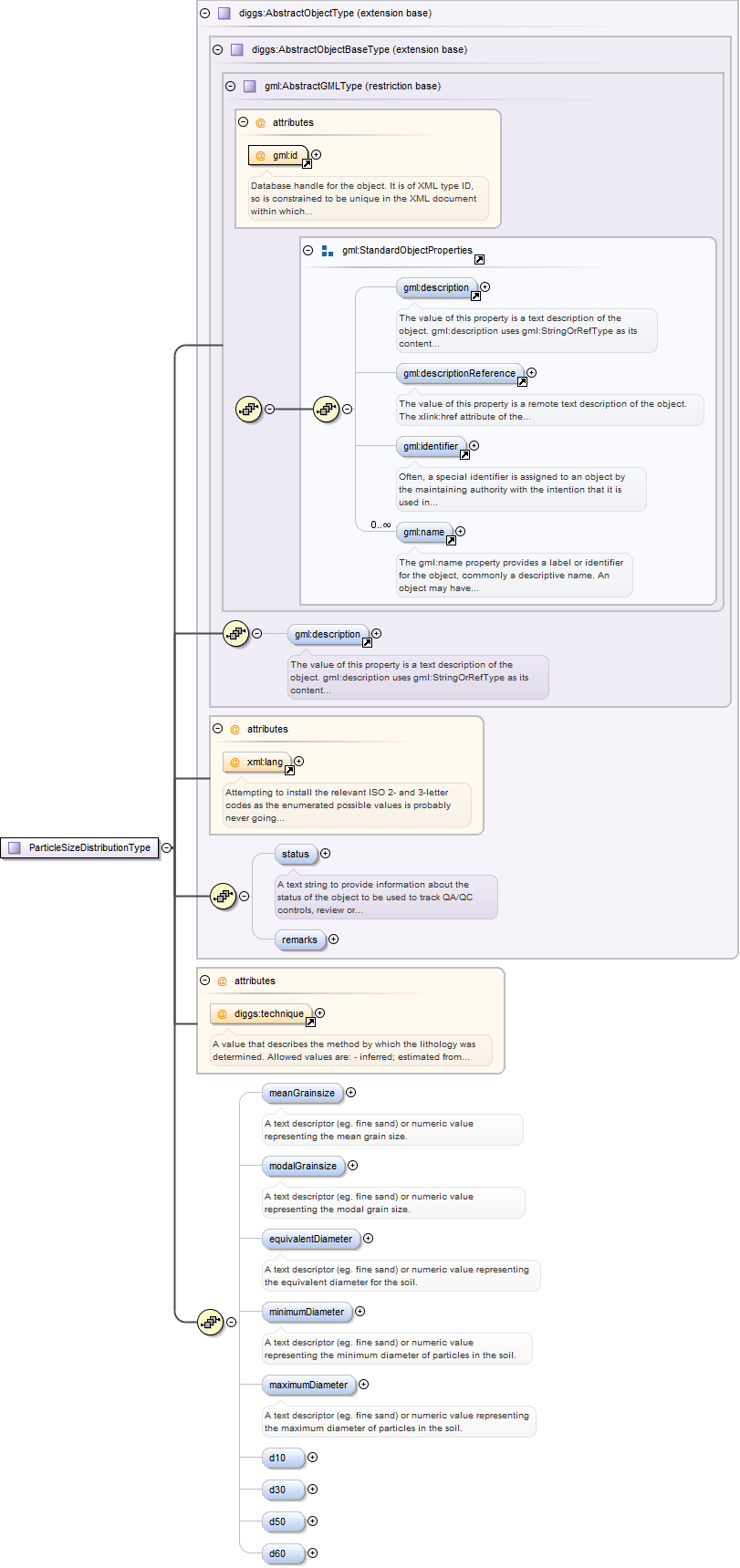
A descriptive term or phrase to describe the overall particle sizedistribution of the soil, eg. "fine sand", "fine to coarse". "silt and very finesand". Intended to come from a controlled list
<element minOccurs="0" name="particleSize" type="gml:CodeType"><annotation><documentation>A descriptive term or phrase to describe the overall particle size distribution of the soil, eg. "fine sand", "fine to coarse". "silt and very fine sand". Intended to come from a controlled list</documentation></annotation></element>
<element minOccurs="0" name="grainSizeDistribution" type="diggs:ParticleSizeDistributionPropertyType"><annotation><documentation>Particle size distribution information providing details such as mean grain size, maximum grain size, etc.</documentation></annotation></element>
Database handle for the object. It is of XML type ID, so is constrained to beunique in the XML document within which it occurs. An external identifier for the object inthe form of a URI may be constructed using standard XML and XPointer methods. This is doneby concatenating the URI for the document, a fragment separator, and the value of the idattribute.
Attempting to install the relevant ISO 2- and 3-letter codes as the enumerated possible values is probably never going to be a realistic possibility. See RFC 3066 at http://www.ietf.org/rfc/rfc3066.txt and the IANA registry at http://www.iana.org/assignments/lang-tag-apps.htm for further information. The union allows for the 'un-declaration' of xml:lang with the empty string.
<element minOccurs="0" name="meanGrainsize" type="diggs:ParticleSizePropertyType"><annotation><documentation>A text descriptor (eg. fine sand) or numeric value representing the mean grain size.</documentation></annotation></element>
Database handle for the object. It is of XML type ID, so is constrained to beunique in the XML document within which it occurs. An external identifier for the object inthe form of a URI may be constructed using standard XML and XPointer methods. This is doneby concatenating the URI for the document, a fragment separator, and the value of the idattribute.
Attempting to install the relevant ISO 2- and 3-letter codes as the enumerated possible values is probably never going to be a realistic possibility. See RFC 3066 at http://www.ietf.org/rfc/rfc3066.txt and the IANA registry at http://www.iana.org/assignments/lang-tag-apps.htm for further information. The union allows for the 'un-declaration' of xml:lang with the empty string.
<element name="value" type="diggs:ParticleSizeValueType" minOccurs="0"><annotation><documentation>A numeric value for the particle size, in length units such as mm diameter, or phi.</documentation></annotation></element>
<element name="descriptor" type="gml:CodeType" minOccurs="0"><annotation><documentation>A text description for the particle size, such as "very fine sand", etc.</documentation></annotation></element>
<element minOccurs="0" name="modalGrainsize" type="diggs:ParticleSizePropertyType"><annotation><documentation>A text descriptor (eg. fine sand) or numeric value representing the modal grain size.</documentation></annotation></element>
<element minOccurs="0" name="equivalentDiameter" type="diggs:ParticleSizePropertyType"><annotation><documentation>A text descriptor (eg. fine sand) or numeric value representing the equivalent diameter for the soil.</documentation></annotation></element>
<element minOccurs="0" name="minimumDiameter" type="diggs:ParticleSizePropertyType"><annotation><documentation>A text descriptor (eg. fine sand) or numeric value representing the minimum diameter of particles in the soil.</documentation></annotation></element>
<element minOccurs="0" name="maximumDiameter" type="diggs:ParticleSizePropertyType"><annotation><documentation>A text descriptor (eg. fine sand) or numeric value representing the maximum diameter of particles in the soil.</documentation></annotation></element>
Database handle for the object. It is of XML type ID, so is constrained to beunique in the XML document within which it occurs. An external identifier for the object inthe form of a URI may be constructed using standard XML and XPointer methods. This is doneby concatenating the URI for the document, a fragment separator, and the value of the idattribute.
Attempting to install the relevant ISO 2- and 3-letter codes as the enumerated possible values is probably never going to be a realistic possibility. See RFC 3066 at http://www.ietf.org/rfc/rfc3066.txt and the IANA registry at http://www.iana.org/assignments/lang-tag-apps.htm for further information. The union allows for the 'un-declaration' of xml:lang with the empty string.
<element name="value" type="gml:CodeType"><annotation><documentation>The value of the descriptive property (eg dry, dense, etc.). Value is intended to come from a controlled list.</documentation></annotation></element>
Constituents are materials and structures associated with this geologyclassification and the lithology layer or sample which this lithology relates to,but not considered significant enough to record as part of a separate layer systemor where location within a lithology layer or sample is not important to preserve(except as a comment). Constituents of a lithology are descriptions that generallyfall into one of the following classes: 1) types of sedimentary or physicalstructures, 2) types of lithologic, mineralogic or organic accessories (eg. presenceof calcite, gas odor, etc.), 3) types and degree of bioturbation features, 4) typesof diagenetic structures, 5) types of physical structures produced by sampling, 6)types of fossils, 7) types of trace fossils, 8) types of fractures
<element minOccurs="0" name="constituents" type="diggs:ConstituentPropertyType"><annotation><documentation>Constituents are materials and structures associated with this geology classification and the lithology layer or sample which this lithology relates to, but not considered significant enough to record as part of a separate layer system or where location within a lithology layer or sample is not important to preserve (except as a comment). Constituents of a lithology are descriptions that generally fall into one of the following classes: 1) types of sedimentary or physical structures, 2) types of lithologic, mineralogic or organic accessories (eg. presence of calcite, gas odor, etc.), 3) types and degree of bioturbation features, 4) types of diagenetic structures, 5) types of physical structures produced by sampling, 6) types of fossils, 7) types of trace fossils, 8) types of fractures</documentation></annotation></element>
Database handle for the object. It is of XML type ID, so is constrained to beunique in the XML document within which it occurs. An external identifier for the object inthe form of a URI may be constructed using standard XML and XPointer methods. This is doneby concatenating the URI for the document, a fragment separator, and the value of the idattribute.
Attempting to install the relevant ISO 2- and 3-letter codes as the enumerated possible values is probably never going to be a realistic possibility. See RFC 3066 at http://www.ietf.org/rfc/rfc3066.txt and the IANA registry at http://www.iana.org/assignments/lang-tag-apps.htm for further information. The union allows for the 'un-declaration' of xml:lang with the empty string.
<element name="abundanceCode" type="gml:CodeType" minOccurs="0"><annotation><documentation>A measure of the amount of the constituent present as a string type, intended to come from a controlled list (eg. few, rare, common, etc.)</documentation></annotation></element>
<element name="abundancePercent" type="diggs:Val0-100MeasureType" minOccurs="0"><annotation><documentation>A measure of the amount of the component present, expressed as a percentage.</documentation></annotation></element>
A description of how the constituent is distributed within the interval(eg. scattered, sporadic, locally, etc.). Intended to come from a controlledlist
<element name="distribution" type="gml:CodeType" minOccurs="0"><annotation><documentation>A description of how the constituent is distributed within the interval (eg. scattered, sporadic, locally, etc.). Intended to come from a controlled list</documentation></annotation></element>
<element minOccurs="0" name="componentLithologies" type="diggs:ComponentLithologyPropertyType"><annotation><documentation>A description of the lithologies that make up a minor portion of the sample</documentation></annotation></element>
Database handle for the object. It is of XML type ID, so is constrained to beunique in the XML document within which it occurs. An external identifier for the object inthe form of a URI may be constructed using standard XML and XPointer methods. This is doneby concatenating the URI for the document, a fragment separator, and the value of the idattribute.
Attempting to install the relevant ISO 2- and 3-letter codes as the enumerated possible values is probably never going to be a realistic possibility. See RFC 3066 at http://www.ietf.org/rfc/rfc3066.txt and the IANA registry at http://www.iana.org/assignments/lang-tag-apps.htm for further information. The union allows for the 'un-declaration' of xml:lang with the empty string.
<element name="abundanceCode" type="gml:CodeType" minOccurs="0"><annotation><documentation>A measure of the amount of the subordinate lithology present as a string type, intended to come from a controlled list (eg. few, rare, common, etc.)</documentation></annotation></element>
<element name="abundancePercent" type="diggs:Val0-100MeasureType" minOccurs="0"><annotation><documentation>A measure of the amount of the subordinate lithology present, expressed as a percentage.</documentation></annotation></element>
<element minOccurs="0" name="chainOfCustodyEvents" type="diggs:ChainOfCustodyEventPropertyType"><annotation><documentation>Contains information on the chain-of-custody for this sample</documentation></annotation></element>
Database handle for the object. It is of XML type ID, so is constrained to beunique in the XML document within which it occurs. An external identifier for the object inthe form of a URI may be constructed using standard XML and XPointer methods. This is doneby concatenating the URI for the document, a fragment separator, and the value of the idattribute.
Attempting to install the relevant ISO 2- and 3-letter codes as the enumerated possible values is probably never going to be a realistic possibility. See RFC 3066 at http://www.ietf.org/rfc/rfc3066.txt and the IANA registry at http://www.iana.org/assignments/lang-tag-apps.htm for further information. The union allows for the 'un-declaration' of xml:lang with the empty string.
<element minOccurs="0" name="sourceSamplingFeatureRef" type="diggs:MetadataReferenceType"><annotation><appinfo source="urn:x-gml:targetElement">diggs:BusinessAssociate</appinfo><documentation>A xlink:href reference to a BusinessAssociate that is releasing custody of the sample</documentation></annotation></element>
The name of a BusinessAssociate that is releasing custody of thesample. A string is used here to name the business associate and does not requirethat a BusinessAssociate feature be instantiated.
Attempting to install the relevant ISO 2- and 3-letter codes as the enumerated possible values is probably never going to be a realistic possibility. See RFC 3066 at http://www.ietf.org/rfc/rfc3066.txt and the IANA registry at http://www.iana.org/assignments/lang-tag-apps.htm for further information. The union allows for the 'un-declaration' of xml:lang with the empty string.
Source
<element minOccurs="0" name="sourceSamplingFeature" type="diggs:DiggsStringType"><annotation><documentation>The name of a BusinessAssociate that is releasing custody of the sample. A string is used here to name the business associate and does not require that a BusinessAssociate feature be instantiated.</documentation></annotation></element>
<element name="destinationSamplingFeatureRef" type="diggs:MetadataReferenceType" minOccurs="0"><annotation><appinfo source="urn:x-gml:targetElement">diggs:businessAssociates/BusinessAssociate/@gml:id</appinfo><documentation>A xlink:href reference to a BusinessAssociate that is receiving custody of the sample</documentation></annotation></element>
The name of a BusinessAssociate that is receiving custody of thesample. A string is used here to name the business associate and does not requirethat a BusinessAssociate feature be instantiated.
Attempting to install the relevant ISO 2- and 3-letter codes as the enumerated possible values is probably never going to be a realistic possibility. See RFC 3066 at http://www.ietf.org/rfc/rfc3066.txt and the IANA registry at http://www.iana.org/assignments/lang-tag-apps.htm for further information. The union allows for the 'un-declaration' of xml:lang with the empty string.
Source
<element minOccurs="0" name="destinationSamplingFeature" type="diggs:DiggsStringType"><annotation><documentation>The name of a BusinessAssociate that is receiving custody of the sample. A string is used here to name the business associate and does not require that a BusinessAssociate feature be instantiated.</documentation></annotation></element>
<element minOccurs="0" name="dateSent" type="diggs:UnifiedDateTimeType"><annotation><documentation><![CDATA[Date that sample was shipped]]></documentation></annotation></element>
<element name="dateReceived" type="diggs:UnifiedDateTimeType" minOccurs="0"><annotation><documentation><![CDATA[Date that sample was received]]></documentation></annotation></element>
Attempting to install the relevant ISO 2- and 3-letter codes as the enumerated possible values is probably never going to be a realistic possibility. See RFC 3066 at http://www.ietf.org/rfc/rfc3066.txt and the IANA registry at http://www.iana.org/assignments/lang-tag-apps.htm for further information. The union allows for the 'un-declaration' of xml:lang with the empty string.
Source
<element minOccurs="0" name="shippingContainerId" type="diggs:DiggsStringType"><annotation><documentation><![CDATA[An identifier for the container that the sample containers are transported in.]]></documentation></annotation></element>
<element minOccurs="0" name="containerType" type="gml:CodeType"><annotation><documentation>Description of container for the sample; intended to be derived from a controlled list. Example:<![CDATA[Jar, Bucket, Vial, Bag]]></documentation></annotation></element>
<element minOccurs="0" name="preservativeAdded" type="gml:CodeType"><annotation><documentation>Example:<![CDATA[The type of preservative added to sample, if any.]]></documentation></annotation></element>
Database handle for the object. It is of XML type ID, so is constrained to beunique in the XML document within which it occurs. An external identifier for the object inthe form of a URI may be constructed using standard XML and XPointer methods. This is doneby concatenating the URI for the document, a fragment separator, and the value of the idattribute.
Attempting to install the relevant ISO 2- and 3-letter codes as the enumerated possible values is probably never going to be a realistic possibility. See RFC 3066 at http://www.ietf.org/rfc/rfc3066.txt and the IANA registry at http://www.iana.org/assignments/lang-tag-apps.htm for further information. The union allows for the 'un-declaration' of xml:lang with the empty string.
Source
<element abstract="false" name="LayerSystem" substitutionGroup="diggs:AbstractNamedFeature" type="diggs:LayerSystemType"><annotation><documentation>A collection of layers that contain observations or interpretations made over a region or interval a sampling feature.</documentation></annotation></element>
Database handle for the object. It is of XML type ID, so is constrained to beunique in the XML document within which it occurs. An external identifier for the object inthe form of a URI may be constructed using standard XML and XPointer methods. This is doneby concatenating the URI for the document, a fragment separator, and the value of the idattribute.
Attempting to install the relevant ISO 2- and 3-letter codes as the enumerated possible values is probably never going to be a realistic possibility. See RFC 3066 at http://www.ietf.org/rfc/rfc3066.txt and the IANA registry at http://www.iana.org/assignments/lang-tag-apps.htm for further information. The union allows for the 'un-declaration' of xml:lang with the empty string.
Source
<element abstract="true" name="AbstractLayer" type="diggs:AbstractLayerType" substitutionGroup="diggs:AbstractObject"><annotation><documentation>An interval or region defined at a sampling feature that contains observations or interpretations.</documentation></annotation></element>
Appropriate SamplingFeatureLocation properties that are relevant tolayerLocations are linearIntervalLocation (for linear sampling features where thefull layer is contained within a linear sampling feature) and linearPointLocation(for linear sampling features where only one boundary of layer is within thesampling feature), planarIntervalLocation (one boundary in a planar samplingfeature) and planarSurfaceLocation (surface on a planar feature).
<element name="layerLocation" type="diggs:LocationPropertyType"><annotation><documentation>Appropriate SamplingFeatureLocation properties that are relevant to layerLocations are linearIntervalLocation (for linear sampling features where the full layer is contained within a linear sampling feature) and linearPointLocation (for linear sampling features where only one boundary of layer is within the sampling feature), planarIntervalLocation (one boundary in a planar sampling feature) and planarSurfaceLocation (surface on a planar feature).</documentation></annotation></element>
True or false, indicating whether the geometry of the top pasition ofthe feature represents the true top of the feature being defined (true) or (false)whether the top represents the upper extent of the feature that is defined by theextent of the sampling feature itself.
Diagram
Type
boolean
Properties
content:
simple
minOccurs:
0
Source
<element minOccurs="0" name="trueTopObserved" type="boolean"><annotation><documentation>True or false, indicating whether the geometry of the top pasition of the feature represents the true top of the feature being defined (true) or (false) whether the top represents the upper extent of the feature that is defined by the extent of the sampling feature itself.</documentation></annotation></element>
True or false, indicating whether the geometry of the top pasition ofthe feature represents the true top of the feature being defined (true) or (false)whether the top represents the upper extent of the feature that is defined by theextent of the sampling feature itself.
Diagram
Type
boolean
Properties
content:
simple
minOccurs:
0
Source
<element minOccurs="0" name="trueBaseObserved" type="boolean"><annotation><documentation>True or false, indicating whether the geometry of the top pasition of the feature represents the true top of the feature being defined (true) or (false) whether the top represents the upper extent of the feature that is defined by the extent of the sampling feature itself.</documentation></annotation></element>
Database handle for the object. It is of XML type ID, so is constrained to beunique in the XML document within which it occurs. An external identifier for the object inthe form of a URI may be constructed using standard XML and XPointer methods. This is doneby concatenating the URI for the document, a fragment separator, and the value of the idattribute.
Attempting to install the relevant ISO 2- and 3-letter codes as the enumerated possible values is probably never going to be a realistic possibility. See RFC 3066 at http://www.ietf.org/rfc/rfc3066.txt and the IANA registry at http://www.iana.org/assignments/lang-tag-apps.htm for further information. The union allows for the 'un-declaration' of xml:lang with the empty string.
Appropriate SamplingFeatureLocation properties that are relevant tolayerLocations are linearIntervalLocation (for linear sampling features where thefull layer is contained within a linear sampling feature) and linearPointLocation(for linear sampling features where only one boundary of layer is within thesampling feature), planarIntervalLocation (one boundary in a planar samplingfeature) and planarSurfaceLocation (surface on a planar feature).
<element name="layerLocation" type="diggs:LocationPropertyType"><annotation><documentation>Appropriate SamplingFeatureLocation properties that are relevant to layerLocations are linearIntervalLocation (for linear sampling features where the full layer is contained within a linear sampling feature) and linearPointLocation (for linear sampling features where only one boundary of layer is within the sampling feature), planarIntervalLocation (one boundary in a planar sampling feature) and planarSurfaceLocation (surface on a planar feature).</documentation></annotation></element>
A sampling feature that is a point on the earth's surface where observations ortests are performed, where samples are collected, or where monitoring devices areinstalled.
Database handle for the object. It is of XML type ID, so is constrained to beunique in the XML document within which it occurs. An external identifier for the object inthe form of a URI may be constructed using standard XML and XPointer methods. This is doneby concatenating the URI for the document, a fragment separator, and the value of the idattribute.
Attempting to install the relevant ISO 2- and 3-letter codes as the enumerated possible values is probably never going to be a realistic possibility. See RFC 3066 at http://www.ietf.org/rfc/rfc3066.txt and the IANA registry at http://www.iana.org/assignments/lang-tag-apps.htm for further information. The union allows for the 'un-declaration' of xml:lang with the empty string.
Source
<element name="Station" type="diggs:StationType" abstract="false" substitutionGroup="diggs:AbstractPointSamplingFeature"><annotation><documentation>A sampling feature that is a point on the earth's surface where observations or tests are performed, where samples are collected, or where monitoring devices are installed.</documentation></annotation></element>
<element minOccurs="0" name="referencePointAccuracy" type="diggs:LocationAccuracyPropertyType"><annotation><documentation>Provides accuracy information for the reference point coordinates.</documentation></annotation></element>
<element name="LocationAccuracy" substitutionGroup="diggs:AbstractSimpleMetadata" type="diggs:LocationAccuracyType"><annotation><documentation>Closeness of reported coordinate or relative distance values to values accepted as or being true.</documentation></annotation></element>
<element name="linearReferencing" type="diggs:LinearSpatialReferenceSystemPropertyType" minOccurs="0" maxOccurs="unbounded"><annotation><documentation>A point can optionally be referenced along a curve using this property</documentation></annotation></element>
Database handle for the object. It is of XML type ID, so is constrained to beunique in the XML document within which it occurs. An external identifier for the object inthe form of a URI may be constructed using standard XML and XPointer methods. This is doneby concatenating the URI for the document, a fragment separator, and the value of the idattribute.
<element minOccurs="0" name="linearElementAccuracy" type="diggs:LocationAccuracyPropertyType"><annotation><documentation>Provides accuracy information for the linear element referenced by this reference system.</documentation></annotation></element>
Provides accuracy information for the location (geometry) elements thatuse this linear reference system for their SRS. For example, for depths in a hole,this property could provide information as to the source and accuracy of depthvalues that relate to this reference system.
<element minOccurs="0" name="linearReferencingMethodAccuracy" type="diggs:LocationAccuracyPropertyType"><annotation><documentation>Provides accuracy information for the location (geometry) elements that use this linear reference system for their SRS. For example, for depths in a hole, this property could provide information as to the source and accuracy of depth values that relate to this reference system.</documentation></annotation></element>
<element name="type" type="gml:CodeType" minOccurs="0"><annotation><documentation>A definition of the type of station (eg. outcrop, survey marker, etc.). This is intended to come from a list controlled by an authority.</documentation></annotation></element>
Database handle for the object. It is of XML type ID, so is constrained to beunique in the XML document within which it occurs. An external identifier for the object inthe form of a URI may be constructed using standard XML and XPointer methods. This is doneby concatenating the URI for the document, a fragment separator, and the value of the idattribute.
Attempting to install the relevant ISO 2- and 3-letter codes as the enumerated possible values is probably never going to be a realistic possibility. See RFC 3066 at http://www.ietf.org/rfc/rfc3066.txt and the IANA registry at http://www.iana.org/assignments/lang-tag-apps.htm for further information. The union allows for the 'un-declaration' of xml:lang with the empty string.
Database handle for the object. It is of XML type ID, so is constrained to beunique in the XML document within which it occurs. An external identifier for the object inthe form of a URI may be constructed using standard XML and XPointer methods. This is doneby concatenating the URI for the document, a fragment separator, and the value of the idattribute.
Attempting to install the relevant ISO 2- and 3-letter codes as the enumerated possible values is probably never going to be a realistic possibility. See RFC 3066 at http://www.ietf.org/rfc/rfc3066.txt and the IANA registry at http://www.iana.org/assignments/lang-tag-apps.htm for further information. The union allows for the 'un-declaration' of xml:lang with the empty string.
Provides accuracy information for the referencePoint. Accuracy for thecenterLine coordinates are specified in the linearElementAccuracy property of theLinearSpatialReferenceSystem that uses the centerLine as the linearelement.
<element minOccurs="0" name="referencePointAccuracy" type="diggs:LocationAccuracyPropertyType"><annotation><documentation>Provides accuracy information for the referencePoint. Accuracy for the centerLine coordinates are specified in the linearElementAccuracy property of the LinearSpatialReferenceSystem that uses the centerLine as the linear element.</documentation></annotation></element>
<element name="FeatureReference" type="diggs:FeatureReferenceType"><annotation><documentation>An element that carries xlink:href to the referenced feature as well as the gml:identifier of the referenced feature, as information</documentation></annotation></element>
Database handle for the object. It is of XML type ID, so is constrained to beunique in the XML document within which it occurs. An external identifier for the object inthe form of a URI may be constructed using standard XML and XPointer methods. This is doneby concatenating the URI for the document, a fragment separator, and the value of the idattribute.
Attempting to install the relevant ISO 2- and 3-letter codes as the enumerated possible values is probably never going to be a realistic possibility. See RFC 3066 at http://www.ietf.org/rfc/rfc3066.txt and the IANA registry at http://www.iana.org/assignments/lang-tag-apps.htm for further information. The union allows for the 'un-declaration' of xml:lang with the empty string.
A test event is a time-based or location-based recording ofinstantaneous conditions or parameters associated with an in-situ test, such ascasing depth, water level, or any custom parameters. This property holds one or moreEvent objects; Event objects are associated with the type of sampling feature thatthe in-situ test is performed in. For example, for a standard penetration testperformed in a borehole, a BoreholeEvent object would be used in the testEventsproperty to record the depth to water at various times during thetest.
<element minOccurs="0" name="testEvents" type="diggs:EventPropertyType"><annotation><documentation>A test event is a time-based or location-based recording of instantaneous conditions or parameters associated with an in-situ test, such as casing depth, water level, or any custom parameters. This property holds one or more Event objects; Event objects are associated with the type of sampling feature that the in-situ test is performed in. For example, for a standard penetration test performed in a borehole, a BoreholeEvent object would be used in the testEvents property to record the depth to water at various times during the test.</documentation></annotation></element>
<element name="laboratoryTestRef" type="diggs:FeatureReferenceType"><annotation><appinfo source="urn:x-gml:targetElement">Diggs:AbstractLaboratoryTest</appinfo><documentation>A reference to a laboratory test that is associated with this feature.</documentation><documentation>A property element that supports a value by reference only. The target value is indicated in the appinfo element.</documentation></annotation></element>
A color layer describes the color of materials encountered. All layers within acolor layer system must not overlap, although multiple colors can be described within asingle zone.
Database handle for the object. It is of XML type ID, so is constrained to beunique in the XML document within which it occurs. An external identifier for the object inthe form of a URI may be constructed using standard XML and XPointer methods. This is doneby concatenating the URI for the document, a fragment separator, and the value of the idattribute.
Attempting to install the relevant ISO 2- and 3-letter codes as the enumerated possible values is probably never going to be a realistic possibility. See RFC 3066 at http://www.ietf.org/rfc/rfc3066.txt and the IANA registry at http://www.iana.org/assignments/lang-tag-apps.htm for further information. The union allows for the 'un-declaration' of xml:lang with the empty string.
Source
<element name="ColorLayer" substitutionGroup="diggs:AbstractLayer" type="diggs:ColorLayerType"><annotation><documentation>A color layer describes the color of materials encountered. All layers within a color layer system must not overlap, although multiple colors can be described within a single zone.</documentation></annotation></element>
<element minOccurs="0" name="baseBoundary" type="diggs:BoundaryPropertyType"><annotation><documentation>Description of the boundary at the base of the layer</documentation></annotation></element>
Database handle for the object. It is of XML type ID, so is constrained to beunique in the XML document within which it occurs. An external identifier for the object inthe form of a URI may be constructed using standard XML and XPointer methods. This is doneby concatenating the URI for the document, a fragment separator, and the value of the idattribute.
Attempting to install the relevant ISO 2- and 3-letter codes as the enumerated possible values is probably never going to be a realistic possibility. See RFC 3066 at http://www.ietf.org/rfc/rfc3066.txt and the IANA registry at http://www.iana.org/assignments/lang-tag-apps.htm for further information. The union allows for the 'un-declaration' of xml:lang with the empty string.
<element minOccurs="0" name="dipAngle" type="witsml:planeAngleMeasure"><annotation><documentation><![CDATA[The inclinaton angle in degrees of the boundary surface, as measured downward from the horizontal.]]></documentation></annotation></element>
<element minOccurs="0" name="dipDirection" type="witsml:planeAngleMeasure"><annotation><documentation><![CDATA[The direction of the true dip of the boundary surface, as measured clockwise with respect to true north.]]></documentation></annotation></element>
A controlled string (preferably) that defines how distinctly the boundary between zones is defined, as governed by both the contrast between adjacent zones and by the width of the boundary. (eg. sharp, gradational)
<element minOccurs="0" name="distinctness" type="gml:CodeType"><annotation><documentation><![CDATA[A controlled string (preferably) that defines how distinctly the boundary between zones is defined, as governed by both the contrast between adjacent zones and by the width of the boundary. (eg. sharp, gradational)]]></documentation></annotation></element>
<element minOccurs="0" name="origin" type="gml:CodeType"><annotation><documentation><![CDATA[A controlled string (preferably) that defines the specific nature or origin of the boundary. (eg. unconformity, fault, etc.)]]></documentation></annotation></element>
<element minOccurs="0" name="topography" type="gml:CodeType"><annotation><documentation><![CDATA[A controlled string (preferably) that defines the shape of the boundary surface between zones. (eg. wavy)]]></documentation></annotation></element>
Constituent layers describe details of earth materials encountered within asampling feature. Constituent layers restricted to a specific lithologic layer are encodedas constituents in the Lithology layers themselves. Layers within a constituent layer systemneed not be continuous and may overlap, but layers with the same named constituents cannotoverlap.
Database handle for the object. It is of XML type ID, so is constrained to beunique in the XML document within which it occurs. An external identifier for the object inthe form of a URI may be constructed using standard XML and XPointer methods. This is doneby concatenating the URI for the document, a fragment separator, and the value of the idattribute.
Attempting to install the relevant ISO 2- and 3-letter codes as the enumerated possible values is probably never going to be a realistic possibility. See RFC 3066 at http://www.ietf.org/rfc/rfc3066.txt and the IANA registry at http://www.iana.org/assignments/lang-tag-apps.htm for further information. The union allows for the 'un-declaration' of xml:lang with the empty string.
Source
<element name="ConstituentLayer" substitutionGroup="diggs:AbstractLayer" type="diggs:ComponentLayerType"><annotation><documentation>Constituent layers describe details of earth materials encountered within a sampling feature. Constituent layers restricted to a specific lithologic layer are encoded as constituents in the Lithology layers themselves. Layers within a constituent layer system need not be continuous and may overlap, but layers with the same named constituents cannot overlap.</documentation></annotation></element>
Database handle for the object. It is of XML type ID, so is constrained to beunique in the XML document within which it occurs. An external identifier for the object inthe form of a URI may be constructed using standard XML and XPointer methods. This is doneby concatenating the URI for the document, a fragment separator, and the value of the idattribute.
Attempting to install the relevant ISO 2- and 3-letter codes as the enumerated possible values is probably never going to be a realistic possibility. See RFC 3066 at http://www.ietf.org/rfc/rfc3066.txt and the IANA registry at http://www.iana.org/assignments/lang-tag-apps.htm for further information. The union allows for the 'un-declaration' of xml:lang with the empty string.
<element name="codeValue" type="gml:CodeType" minOccurs="0"><annotation><documentation>The code value that defines the consituent (eg. "SM" or "gastropod"; preferably defined by an authority identified in the codespace attribute</documentation></annotation></element>
<element name="abundanceCode" type="gml:CodeType" minOccurs="0"><annotation><documentation>A measure of the amount of the constituent present as a string type, intended to come from a controlled list (eg. few, rare, common, etc.)</documentation></annotation></element>
<element name="abundancePercent" type="diggs:Val0-100MeasureType" minOccurs="0"><annotation><documentation>A measure of the amount of the component present, expressed as a percentage.</documentation></annotation></element>
Describes fractures and joints and their spacing. Individual discontinuities orzone of discontinuities within a discontinuity layer system may overlap.
Database handle for the object. It is of XML type ID, so is constrained to beunique in the XML document within which it occurs. An external identifier for the object inthe form of a URI may be constructed using standard XML and XPointer methods. This is doneby concatenating the URI for the document, a fragment separator, and the value of the idattribute.
Attempting to install the relevant ISO 2- and 3-letter codes as the enumerated possible values is probably never going to be a realistic possibility. See RFC 3066 at http://www.ietf.org/rfc/rfc3066.txt and the IANA registry at http://www.iana.org/assignments/lang-tag-apps.htm for further information. The union allows for the 'un-declaration' of xml:lang with the empty string.
Source
<element name="DiscontinuityLayer" substitutionGroup="diggs:AbstractLayer" type="diggs:DiscontinuityLayerType"><annotation><documentation>Describes fractures and joints and their spacing. Individual discontinuities or zone of discontinuities within a discontinuity layer system may overlap.</documentation></annotation></element>
Database handle for the object. It is of XML type ID, so is constrained to beunique in the XML document within which it occurs. An external identifier for the object inthe form of a URI may be constructed using standard XML and XPointer methods. This is doneby concatenating the URI for the document, a fragment separator, and the value of the idattribute.
Attempting to install the relevant ISO 2- and 3-letter codes as the enumerated possible values is probably never going to be a realistic possibility. See RFC 3066 at http://www.ietf.org/rfc/rfc3066.txt and the IANA registry at http://www.iana.org/assignments/lang-tag-apps.htm for further information. The union allows for the 'un-declaration' of xml:lang with the empty string.
Attempting to install the relevant ISO 2- and 3-letter codes as the enumerated possible values is probably never going to be a realistic possibility. See RFC 3066 at http://www.ietf.org/rfc/rfc3066.txt and the IANA registry at http://www.iana.org/assignments/lang-tag-apps.htm for further information. The union allows for the 'un-declaration' of xml:lang with the empty string.
<element minOccurs="0" name="dipDirection" type="witsml:planeAngleMeasure"><annotation><documentation><![CDATA[Dip direction of discontinuity]]></documentation></annotation></element>
Attempting to install the relevant ISO 2- and 3-letter codes as the enumerated possible values is probably never going to be a realistic possibility. See RFC 3066 at http://www.ietf.org/rfc/rfc3066.txt and the IANA registry at http://www.iana.org/assignments/lang-tag-apps.htm for further information. The union allows for the 'un-declaration' of xml:lang with the empty string.
Source
<element minOccurs="0" name="fractureSetNumber" type="diggs:DiggsStringType"><annotation><documentation><![CDATA[Discontinuity set reference number]]></documentation></annotation></element>
<element minOccurs="0" name="infillHardness" type="gml:CodeType"><annotation><documentation>Hardness of the infill material</documentation></annotation></element>
Attempting to install the relevant ISO 2- and 3-letter codes as the enumerated possible values is probably never going to be a realistic possibility. See RFC 3066 at http://www.ietf.org/rfc/rfc3066.txt and the IANA registry at http://www.iana.org/assignments/lang-tag-apps.htm for further information. The union allows for the 'un-declaration' of xml:lang with the empty string.
Attempting to install the relevant ISO 2- and 3-letter codes as the enumerated possible values is probably never going to be a realistic possibility. See RFC 3066 at http://www.ietf.org/rfc/rfc3066.txt and the IANA registry at http://www.iana.org/assignments/lang-tag-apps.htm for further information. The union allows for the 'un-declaration' of xml:lang with the empty string.
Database handle for the object. It is of XML type ID, so is constrained to beunique in the XML document within which it occurs. An external identifier for the object inthe form of a URI may be constructed using standard XML and XPointer methods. This is doneby concatenating the URI for the document, a fragment separator, and the value of the idattribute.
Attempting to install the relevant ISO 2- and 3-letter codes as the enumerated possible values is probably never going to be a realistic possibility. See RFC 3066 at http://www.ietf.org/rfc/rfc3066.txt and the IANA registry at http://www.iana.org/assignments/lang-tag-apps.htm for further information. The union allows for the 'un-declaration' of xml:lang with the empty string.
<element minOccurs="1" name="fracturesPerUnitLength" type="witsml:lengthMeasure"><annotation><documentation><![CDATA[Number of fractures per unit length as specified in the uom attribute]]></documentation></annotation></element>
Lithology layers that describe the earth materials encountered at a samplingfeature defined by the layer's location. Layers within a lithology layer system must notoverlap.
Database handle for the object. It is of XML type ID, so is constrained to beunique in the XML document within which it occurs. An external identifier for the object inthe form of a URI may be constructed using standard XML and XPointer methods. This is doneby concatenating the URI for the document, a fragment separator, and the value of the idattribute.
Attempting to install the relevant ISO 2- and 3-letter codes as the enumerated possible values is probably never going to be a realistic possibility. See RFC 3066 at http://www.ietf.org/rfc/rfc3066.txt and the IANA registry at http://www.iana.org/assignments/lang-tag-apps.htm for further information. The union allows for the 'un-declaration' of xml:lang with the empty string.
Source
<element name="LithologyLayer" substitutionGroup="diggs:AbstractLayer" type="diggs:LithologyLayerType"><annotation><documentation>Lithology layers that describe the earth materials encountered at a sampling feature defined by the layer's location. Layers within a lithology layer system must not overlap.</documentation></annotation></element>
A description of the lithologies that make up a subsidiary portion ofthe overall lithologic classification of the layer, or exist as specific componentsof the primarylithologic classification
<element minOccurs="0" name="componentLithologies" type="diggs:ComponentLithologyPropertyType"><annotation><documentation>A description of the lithologies that make up a subsidiary portion of the overall lithologic classification of the layer, or exist as specific components of the primarylithologic classification</documentation></annotation></element>
Orientation layers describe the geometry of vectors or planar surfacesencountered at a sampling feature, such as bedding, joints, cross-beds, etc. These layersare designed to characterize regions with generalized geometries. Individual measurements ofplanar geometries of boundaries or faults are recorded in Discontinuity or Lithology layers.Layers within an orientation zone system must not overlap.
Database handle for the object. It is of XML type ID, so is constrained to beunique in the XML document within which it occurs. An external identifier for the object inthe form of a URI may be constructed using standard XML and XPointer methods. This is doneby concatenating the URI for the document, a fragment separator, and the value of the idattribute.
Attempting to install the relevant ISO 2- and 3-letter codes as the enumerated possible values is probably never going to be a realistic possibility. See RFC 3066 at http://www.ietf.org/rfc/rfc3066.txt and the IANA registry at http://www.iana.org/assignments/lang-tag-apps.htm for further information. The union allows for the 'un-declaration' of xml:lang with the empty string.
Source
<element name="OrientationLayer" substitutionGroup="diggs:AbstractLayer" type="diggs:OrientationLayerType"><annotation><documentation>Orientation layers describe the geometry of vectors or planar surfaces encountered at a sampling feature, such as bedding, joints, cross-beds, etc. These layers are designed to characterize regions with generalized geometries. Individual measurements of planar geometries of boundaries or faults are recorded in Discontinuity or Lithology layers. Layers within an orientation zone system must not overlap.</documentation></annotation></element>
Database handle for the object. It is of XML type ID, so is constrained to beunique in the XML document within which it occurs. An external identifier for the object inthe form of a URI may be constructed using standard XML and XPointer methods. This is doneby concatenating the URI for the document, a fragment separator, and the value of the idattribute.
Attempting to install the relevant ISO 2- and 3-letter codes as the enumerated possible values is probably never going to be a realistic possibility. See RFC 3066 at http://www.ietf.org/rfc/rfc3066.txt and the IANA registry at http://www.iana.org/assignments/lang-tag-apps.htm for further information. The union allows for the 'un-declaration' of xml:lang with the empty string.
<element name="strikeOrBearing" type="witsml:planeAngleMeasure"><annotation><documentation>The compass bearing of the feature (if linear) or strike of the plane, from north (range 0-360), where 0 is north and 90 east, etc.</documentation></annotation></element>
<element name="dipOrPlunge" type="witsml:planeAngleMeasure"><annotation><documentation>The inclination of the feature from horizontal (eg. 0 is vertical, 90 degrees is vertical DOWN)</documentation></annotation></element>
A property layer system contains layer that are defined by simple text ornumeric values - usually interpreted as a result of some lab or in-situ test. Layers withina property layer system must not overlap and the value of the gml:name of each propertylayer must be the same among all layers in the system
Database handle for the object. It is of XML type ID, so is constrained to beunique in the XML document within which it occurs. An external identifier for the object inthe form of a URI may be constructed using standard XML and XPointer methods. This is doneby concatenating the URI for the document, a fragment separator, and the value of the idattribute.
Attempting to install the relevant ISO 2- and 3-letter codes as the enumerated possible values is probably never going to be a realistic possibility. See RFC 3066 at http://www.ietf.org/rfc/rfc3066.txt and the IANA registry at http://www.iana.org/assignments/lang-tag-apps.htm for further information. The union allows for the 'un-declaration' of xml:lang with the empty string.
Source
<element name="PropertyLayer" substitutionGroup="diggs:AbstractLayer" type="diggs:PropertyLayerType"><annotation><documentation>A property layer system contains layer that are defined by simple text or numeric values - usually interpreted as a result of some lab or in-situ test. Layers within a property layer system must not overlap and the value of the gml:name of each property layer must be the same among all layers in the system</documentation></annotation></element>
Database handle for the object. It is of XML type ID, so is constrained to beunique in the XML document within which it occurs. An external identifier for the object inthe form of a URI may be constructed using standard XML and XPointer methods. This is doneby concatenating the URI for the document, a fragment separator, and the value of the idattribute.
Attempting to install the relevant ISO 2- and 3-letter codes as the enumerated possible values is probably never going to be a realistic possibility. See RFC 3066 at http://www.ietf.org/rfc/rfc3066.txt and the IANA registry at http://www.iana.org/assignments/lang-tag-apps.htm for further information. The union allows for the 'un-declaration' of xml:lang with the empty string.
A code or name for the property as used by the data provider. Thisvalue can come from a controlled list of terms or be an uncontrolled text string.The value would be commonly used to label a column of a log sheet or provide otherlocal meaning to the property. The value of mnemonic should be unique for all of theproperties included in the dataValue block transmitted as part of thismeasurement.
<element maxOccurs="1" minOccurs="1" name="propertyCode" type="gml:CodeType"><annotation><documentation>A code or name for the property as used by the data provider. This value can come from a controlled list of terms or be an uncontrolled text string. The value would be commonly used to label a column of a log sheet or provide other local meaning to the property. The value of mnemonic should be unique for all of the properties included in the dataValue block transmitted as part of this measurement.</documentation></annotation></element>
Replace tab, line feed and carriage return with a space, collapse contiguous sequences of spaces to a single space and then remove leading and trailing spaces.
minLength
1
The empty string is not allowed.This constraint conbined with the whiteSpace collapse constraint meansthat a blank value is not allowed.
maxLength
40
enumeration
date time
Date with time data value.
enumeration
double
Double precision floating point value.
enumeration
long
Long integer data value.
enumeration
string
Character string data.
enumeration
unknown
The value is not known. This value should not be usedin normal situations. All reasonable attempts should be made to determinethe appropriate value. Use of this value may result in rejection in some situations.
Source
<element maxOccurs="1" minOccurs="1" name="typeData" type="witsml:LogDataType"><annotation><documentation>The data type for this property (eg. double, long, string, etc.)</documentation></annotation></element>
The official name of this property as derived from a dictionary ofdefined terms. The codespace value must be populated and should contain the URN toallow applications to validate this value as a known property.
<element maxOccurs="1" minOccurs="1" name="propertyClass" type="diggs:CodeWithAuthorityType"><annotation><documentation>The official name of this property as derived from a dictionary of defined terms. The codespace value must be populated and should contain the URN to allow applications to validate this value as a known property.</documentation></annotation></element>
<element maxOccurs="1" minOccurs="0" name="uom" type="diggs:AllUnits"><annotation><documentation>Unit of measurement for the property.</documentation></annotation></element>
An empty string is the default representation of a null value for aproperty (i.e. when the null value representation is not explicitly defined). Thisvalue defines a value to be interpreted as null for this property in the dataValuesblock. The reason attribute can be used to define the reason for the null value,(eg. witheld). This can be customized with an other: qualifier (eg. other:belowdetection limit) or reference a URI for a more complete definition.
<element maxOccurs="unbounded" minOccurs="0" name="nullValue" type="diggs:NullDataType"><annotation><documentation>An empty string is the default representation of a null value for a property (i.e. when the null value representation is not explicitly defined). This value defines a value to be interpreted as null for this property in the dataValues block. The reason attribute can be used to define the reason for the null value, (eg. witheld). This can be customized with an other: qualifier (eg. other:below detection limit) or reference a URI for a more complete definition.</documentation></annotation></element>
If the property should be interpreted in a particular context (eg.value is only valid for range of overburden pressures, etc.), then the context ofthe property is described here.
Attempting to install the relevant ISO 2- and 3-letter codes as the enumerated possible values is probably never going to be a realistic possibility. See RFC 3066 at http://www.ietf.org/rfc/rfc3066.txt and the IANA registry at http://www.iana.org/assignments/lang-tag-apps.htm for further information. The union allows for the 'un-declaration' of xml:lang with the empty string.
Source
<element minOccurs="0" name="context" type="diggs:DiggsStringType"><annotation><documentation>If the property should be interpreted in a particular context (eg. value is only valid for range of overburden pressures, etc.), then the context of the property is described here.</documentation></annotation></element>
A description of corrections used to obtain the reported result.Commonly used to report N-values from SPT tests, or to describe any otheradjustments made to the reported data. Can come from a controlledlist.
<element maxOccurs="unbounded" minOccurs="0" name="correctionUsed" type="gml:CodeType"><annotation><documentation>A description of corrections used to obtain the reported result. Commonly used to report N-values from SPT tests, or to describe any other adjustments made to the reported data. Can come from a controlled list.</documentation></annotation></element>
<element minOccurs="0" name="measurementTechnique" type="diggs:DescriptorTechniqueEnumType"><annotation><documentation>The method by which the property value is obtained. From an enumerated list.</documentation></annotation></element>
A property element that supports a value by reference only. The targetvalue is indicated in the appinfo element.
A reference to the source tool, or sensor, of a piece of equipment,used to measure this property, if applicable. Generally used for well log,downholelogging procedures, or monitoring equipment.
<element name="detectorRef" type="diggs:MetadataReferenceType" minOccurs="0" maxOccurs="1"><annotation><appinfo source="urn:x-gml:targetElement">diggs:Equipment</appinfo><documentation>A property element that supports a value by reference only. The target value is indicated in the appinfo element.</documentation><documentation>A reference to the source tool, or sensor, of a piece of equipment, used to measure this property, if applicable. Generally used for well log,downhole logging procedures, or monitoring equipment.</documentation></annotation></element>
True or false, indicates whether the value of this property can bereported outside of the context of transmission via an xml instance.
Diagram
Type
boolean
Properties
content:
simple
minOccurs:
0
maxOccurs:
1
default:
true
Source
<element maxOccurs="1" minOccurs="0" name="reportable" type="boolean" default="true"><annotation><documentation>True or false, indicates whether the value of this property can be reported outside of the context of transmission via an xml instance.</documentation></annotation></element>
Database handle for the object. It is of XML type ID, so is constrained to beunique in the XML document within which it occurs. An external identifier for the object inthe form of a URI may be constructed using standard XML and XPointer methods. This is doneby concatenating the URI for the document, a fragment separator, and the value of the idattribute.
Attempting to install the relevant ISO 2- and 3-letter codes as the enumerated possible values is probably never going to be a realistic possibility. See RFC 3066 at http://www.ietf.org/rfc/rfc3066.txt and the IANA registry at http://www.iana.org/assignments/lang-tag-apps.htm for further information. The union allows for the 'un-declaration' of xml:lang with the empty string.
<element maxOccurs="1" minOccurs="0" name="type" type="gml:CodeType"><annotation><documentation>Needs definition - should be an enum? (eg. lower and upper)</documentation></annotation></element>
Attempting to install the relevant ISO 2- and 3-letter codes as the enumerated possible values is probably never going to be a realistic possibility. See RFC 3066 at http://www.ietf.org/rfc/rfc3066.txt and the IANA registry at http://www.iana.org/assignments/lang-tag-apps.htm for further information. The union allows for the 'un-declaration' of xml:lang with the empty string.
Database handle for the object. It is of XML type ID, so is constrained to beunique in the XML document within which it occurs. An external identifier for the object inthe form of a URI may be constructed using standard XML and XPointer methods. This is doneby concatenating the URI for the document, a fragment separator, and the value of the idattribute.
Attempting to install the relevant ISO 2- and 3-letter codes as the enumerated possible values is probably never going to be a realistic possibility. See RFC 3066 at http://www.ietf.org/rfc/rfc3066.txt and the IANA registry at http://www.iana.org/assignments/lang-tag-apps.htm for further information. The union allows for the 'un-declaration' of xml:lang with the empty string.
Source
<element abstract="false" name="Qualifier" substitutionGroup="gml:AbstractGML" type="diggs:ParameterType"><annotation><documentation>An enumeration of various parameters upon which the property result may be qualified</documentation></annotation></element>
Replace tab, line feed and carriage return with a space, collapse contiguous sequences of spaces to a single space and then remove leading and trailing spaces.
minLength
1
The empty string is not allowed.This constraint conbined with the whiteSpace collapse constraint meansthat a blank value is not allowed.
maxLength
40
enumeration
depth adjusted
enumeration
edited
enumeration
joined
enumeration
processed
enumeration
raw
enumeration
unknown
The value is not known. This value should not be usedin normal situations. All reasonable attempts should be made to determinethe appropriate value. Use of this value may result in rejection in some situations.
Source
<element maxOccurs="1" minOccurs="0" name="curveState" type="witsml:LogTraceState"><annotation><documentation>Used for well logging procedures, to define the state or status of the data described by the well log curve. From an enumerated list.</documentation></annotation></element>
Attempting to install the relevant ISO 2- and 3-letter codes as the enumerated possible values is probably never going to be a realistic possibility. See RFC 3066 at http://www.ietf.org/rfc/rfc3066.txt and the IANA registry at http://www.iana.org/assignments/lang-tag-apps.htm for further information. The union allows for the 'un-declaration' of xml:lang with the empty string.
Stratigraphy layers are ordered bodies of rock or sediment, such as formations,biostratigraphic units or aquifers. Layers within a stratigraphy layer system must notoverlap, and stratUnit values within a layer system cannot repeat (eg. they must be uniquewithin the layer system.
Database handle for the object. It is of XML type ID, so is constrained to beunique in the XML document within which it occurs. An external identifier for the object inthe form of a URI may be constructed using standard XML and XPointer methods. This is doneby concatenating the URI for the document, a fragment separator, and the value of the idattribute.
Attempting to install the relevant ISO 2- and 3-letter codes as the enumerated possible values is probably never going to be a realistic possibility. See RFC 3066 at http://www.ietf.org/rfc/rfc3066.txt and the IANA registry at http://www.iana.org/assignments/lang-tag-apps.htm for further information. The union allows for the 'un-declaration' of xml:lang with the empty string.
Source
<element name="StratigraphyLayer" substitutionGroup="diggs:AbstractLayer" type="diggs:StratigraphyLayerType"><annotation><documentation>Stratigraphy layers are ordered bodies of rock or sediment, such as formations, biostratigraphic units or aquifers. Layers within a stratigraphy layer system must not overlap, and stratUnit values within a layer system cannot repeat (eg. they must be unique within the layer system.</documentation></annotation></element>
The name of the stratigraphic unit (eg. Harold Formation) assigned tothis zone. Should come from a controlled list based on the subtype of the layersystem.
<element name="name" type="gml:CodeType"><annotation><documentation>The name of the stratigraphic unit (eg. Harold Formation) assigned to this zone. Should come from a controlled list based on the subtype of the layer system.</documentation></annotation></element>
Database handle for the object. It is of XML type ID, so is constrained to beunique in the XML document within which it occurs. An external identifier for the object inthe form of a URI may be constructed using standard XML and XPointer methods. This is doneby concatenating the URI for the document, a fragment separator, and the value of the idattribute.
Attempting to install the relevant ISO 2- and 3-letter codes as the enumerated possible values is probably never going to be a realistic possibility. See RFC 3066 at http://www.ietf.org/rfc/rfc3066.txt and the IANA registry at http://www.iana.org/assignments/lang-tag-apps.htm for further information. The union allows for the 'un-declaration' of xml:lang with the empty string.
Source
<element name="OtherLayer" substitutionGroup="diggs:AbstractLayer" type="diggs:OtherLayerType"><annotation><documentation>A structure for defining a layer system of unknown type. Layers consist of name-value pairs, where these names should reference code lists.</documentation></annotation></element>
Database handle for the object. It is of XML type ID, so is constrained to beunique in the XML document within which it occurs. An external identifier for the object inthe form of a URI may be constructed using standard XML and XPointer methods. This is doneby concatenating the URI for the document, a fragment separator, and the value of the idattribute.
The location of the top surface of a layer (a volume of earth material)that intersects a trench wall. Depending on how a trench wall is encoded, therecould be multiple line strings that define this top surface.
<element name="layerTopIntersection" type="diggs:MultiCurvePropertyType"><annotation><documentation>The location of the top surface of a layer (a volume of earth material) that intersects a trench wall. Depending on how a trench wall is encoded, there could be multiple line strings that define this top surface.</documentation></annotation></element>
Database handle for the object. It is of XML type ID, so is constrained to beunique in the XML document within which it occurs. An external identifier for the object inthe form of a URI may be constructed using standard XML and XPointer methods. This is doneby concatenating the URI for the document, a fragment separator, and the value of the idattribute.
The location of the basal surface of a layer (a volume of earthmaterial) that intersects a trench wall. Depending on how a trench wall is encoded,there could be multiple line strings that define this basal surface.
<element name="layerBaseIntersection" type="diggs:MultiCurvePropertyType"><annotation><documentation>The location of the basal surface of a layer (a volume of earth material) that intersects a trench wall. Depending on how a trench wall is encoded, there could be multiple line strings that define this basal surface.</documentation></annotation></element>
One or more polygons that represent the layer volume in the plane ofthe planar sampling feature. This would typically be a ring polygon with curvemembers that consist of the layer top intersection, layer bottom intersection, andtwo edges that would normally be at the lateral extent of the planarfeature.
<element name="representativeSurface" type="diggs:SurfacePropertyType" maxOccurs="unbounded"><annotation><documentation>One or more polygons that represent the layer volume in the plane of the planar sampling feature. This would typically be a ring polygon with curve members that consist of the layer top intersection, layer bottom intersection, and two edges that would normally be at the lateral extent of the planar feature.</documentation></annotation></element>
Database handle for the object. It is of XML type ID, so is constrained to beunique in the XML document within which it occurs. An external identifier for the object inthe form of a URI may be constructed using standard XML and XPointer methods. This is doneby concatenating the URI for the document, a fragment separator, and the value of the idattribute.
<element minOccurs="0" name="linearElementAccuracy" type="diggs:LocationAccuracyPropertyType"><annotation><documentation>Provides accuracy information for the linear element referenced by this reference system.</documentation></annotation></element>
Provides accuracy information for the location (geometry) elements thatuse this linear reference system for their SRS. For example, for depths in a hole,this property could provide information as to the source and accuracy of depthvalues that relate to this reference system.
<element minOccurs="0" name="linearReferencingMethodAccuracy" type="diggs:LocationAccuracyPropertyType"><annotation><documentation>Provides accuracy information for the location (geometry) elements that use this linear reference system for their SRS. For example, for depths in a hole, this property could provide information as to the source and accuracy of depth values that relate to this reference system.</documentation></annotation></element>
A sampling feature feature that is a deep, narrow excavation made by drillingor insertion of a probe. Boreholes are constructed typically for the purpose ofinvestigating subsurface geologic or geotechnical conditions, exploring for water or oil,for installation of wells or other downhole monitoring installations.
Database handle for the object. It is of XML type ID, so is constrained to beunique in the XML document within which it occurs. An external identifier for the object inthe form of a URI may be constructed using standard XML and XPointer methods. This is doneby concatenating the URI for the document, a fragment separator, and the value of the idattribute.
Attempting to install the relevant ISO 2- and 3-letter codes as the enumerated possible values is probably never going to be a realistic possibility. See RFC 3066 at http://www.ietf.org/rfc/rfc3066.txt and the IANA registry at http://www.iana.org/assignments/lang-tag-apps.htm for further information. The union allows for the 'un-declaration' of xml:lang with the empty string.
Source
<element abstract="false" name="Borehole" substitutionGroup="diggs:AbstractLinearSamplingFeature" type="diggs:BoreholeType"><annotation><documentation>A sampling feature feature that is a deep, narrow excavation made by drilling or insertion of a probe. Boreholes are constructed typically for the purpose of investigating subsurface geologic or geotechnical conditions, exploring for water or oil, for installation of wells or other downhole monitoring installations.</documentation></annotation></element>
<element minOccurs="0" name="totalMeasuredDepth" type="diggs:PointLocationPropertyType"><annotation><documentation>The measured depth to the bottom of the hole, measured in a hole's linear referencing system.</documentation></annotation></element>
<element maxOccurs="1" minOccurs="0" name="boreholePurpose" type="gml:CodeType"><annotation><documentation>A description of the purpose for drilling the hole (eg. exploratory boring, monitoring well, etc.). Intended to come from a controlled list.</documentation></annotation></element>
<element minOccurs="0" name="backfill" type="diggs:BackfillPropertyType"><annotation><documentation>Information on construction of the borehole backfill after drilling.</documentation></annotation></element>
Database handle for the object. It is of XML type ID, so is constrained to beunique in the XML document within which it occurs. An external identifier for the object inthe form of a URI may be constructed using standard XML and XPointer methods. This is doneby concatenating the URI for the document, a fragment separator, and the value of the idattribute.
Attempting to install the relevant ISO 2- and 3-letter codes as the enumerated possible values is probably never going to be a realistic possibility. See RFC 3066 at http://www.ietf.org/rfc/rfc3066.txt and the IANA registry at http://www.iana.org/assignments/lang-tag-apps.htm for further information. The union allows for the 'un-declaration' of xml:lang with the empty string.
The date/time interval over which the entire backfilling operation wasconducted. Date/time intervals can also be specified for the emplacement ofindividual backfill layers in the backfillLayers property.
<element minOccurs="0" name="backfillDateTime" type="diggs:TimeIntervalPropertyType"><annotation><documentation>The date/time interval over which the entire backfilling operation was conducted. Date/time intervals can also be specified for the emplacement of individual backfill layers in the backfillLayers property.</documentation></annotation></element>
<element minOccurs="0" name="backfillLayers" type="diggs:BackfillLayerPropertyType"><annotation><documentation>The depth intervals where backfill is emplaced. The backfill intervals should not overlap, nor should there be gaps between intervals.</documentation></annotation></element>
Database handle for the object. It is of XML type ID, so is constrained to beunique in the XML document within which it occurs. An external identifier for the object inthe form of a URI may be constructed using standard XML and XPointer methods. This is doneby concatenating the URI for the document, a fragment separator, and the value of the idattribute.
Attempting to install the relevant ISO 2- and 3-letter codes as the enumerated possible values is probably never going to be a realistic possibility. See RFC 3066 at http://www.ietf.org/rfc/rfc3066.txt and the IANA registry at http://www.iana.org/assignments/lang-tag-apps.htm for further information. The union allows for the 'un-declaration' of xml:lang with the empty string.
The depth interval in the borehole (measured in a linear referencesystem), where the backfill material was emplaced. If omitted, it is assumed thatthe backfill information pertains to the entire length of the hole
<element minOccurs="0" name="backfillInterval" type="diggs:LinearExtentPropertyType"><annotation><documentation>The depth interval in the borehole (measured in a linear reference system), where the backfill material was emplaced. If omitted, it is assumed that the backfill information pertains to the entire length of the hole</documentation></annotation></element>
<element minOccurs="0" name="whenEmplaced" type="diggs:TimeIntervalPropertyType"><annotation><documentation>Indicates the date/time during which the backfill was emplaced in this depth interval.</documentation></annotation></element>
<element name="backFillMaterial" type="gml:CodeType" minOccurs="0"><annotation><documentation>The type of material used as backfill (eg. bentonite, cuttings, sand, etc.). Intended to come from a controlled list assigned to an authority.</documentation></annotation></element>
<element minOccurs="0" name="casings" type="diggs:CasingPropertyType"><annotation><documentation>Information on the borehole casing installed while drilling.</documentation></annotation></element>
Database handle for the object. It is of XML type ID, so is constrained to beunique in the XML document within which it occurs. An external identifier for the object inthe form of a URI may be constructed using standard XML and XPointer methods. This is doneby concatenating the URI for the document, a fragment separator, and the value of the idattribute.
Attempting to install the relevant ISO 2- and 3-letter codes as the enumerated possible values is probably never going to be a realistic possibility. See RFC 3066 at http://www.ietf.org/rfc/rfc3066.txt and the IANA registry at http://www.iana.org/assignments/lang-tag-apps.htm for further information. The union allows for the 'un-declaration' of xml:lang with the empty string.
The depth interval in which casing is installed. Recorded in a linearreference system for the hole/well. If omitted, it is assumed that the casinginformation pertains to the entire length of the borehole or well.
<element minOccurs="0" name="casingLocation" type="diggs:LinearExtentPropertyType"><annotation><documentation>The depth interval in which casing is installed. Recorded in a linear reference system for the hole/well. If omitted, it is assumed that the casing information pertains to the entire length of the borehole or well.</documentation></annotation></element>
<element minOccurs="0" name="constructionMethods" type="diggs:ConstructionMethodPropertyType"><annotation><documentation>Information regarding construction of the hole over different depth intervals</documentation></annotation></element>
Database handle for the object. It is of XML type ID, so is constrained to beunique in the XML document within which it occurs. An external identifier for the object inthe form of a URI may be constructed using standard XML and XPointer methods. This is doneby concatenating the URI for the document, a fragment separator, and the value of the idattribute.
Attempting to install the relevant ISO 2- and 3-letter codes as the enumerated possible values is probably never going to be a realistic possibility. See RFC 3066 at http://www.ietf.org/rfc/rfc3066.txt and the IANA registry at http://www.iana.org/assignments/lang-tag-apps.htm for further information. The union allows for the 'un-declaration' of xml:lang with the empty string.
The location within the sampling feature that corresponds to theparticular construction method being referenced here. If omitted, it is assumed thatthe procedures specified apply to the entire extent of the samplingfeature
<element minOccurs="0" name="methodLocation" type="diggs:LocationPropertyType"><annotation><documentation>The location within the sampling feature that corresponds to the particular construction method being referenced here. If omitted, it is assumed that the procedures specified apply to the entire extent of the sampling feature</documentation></annotation></element>
<element name="procedureRef" type="diggs:MetadataReferenceType" minOccurs="1" maxOccurs="1"><annotation><appinfo source="urn:x-gml:targetElement">diggs:Specification</appinfo><documentation>A property element that supports a value by reference only. The target value is indicated in the appinfo element.</documentation></annotation></element>
<element name="equipmentUsedRef" type="diggs:MetadataReferenceType" minOccurs="1" maxOccurs="1"><annotation><documentation>A property element that supports a value by reference only. The target value is indicated in the appinfo element.</documentation><appinfo source="urn:x-gml:targetElement">diggs:BusinessAssociate</appinfo></annotation></element>
<element minOccurs="0" name="constructionEvents" type="diggs:BoreholeEventPropertyType"><annotation><documentation>Information on borehole construction events with time.</documentation></annotation></element>
Database handle for the object. It is of XML type ID, so is constrained to beunique in the XML document within which it occurs. An external identifier for the object inthe form of a URI may be constructed using standard XML and XPointer methods. This is doneby concatenating the URI for the document, a fragment separator, and the value of the idattribute.
Attempting to install the relevant ISO 2- and 3-letter codes as the enumerated possible values is probably never going to be a realistic possibility. See RFC 3066 at http://www.ietf.org/rfc/rfc3066.txt and the IANA registry at http://www.iana.org/assignments/lang-tag-apps.htm for further information. The union allows for the 'un-declaration' of xml:lang with the empty string.
<element minOccurs="0" name="casingDepth" type="diggs:PointLocationPropertyType"><annotation><documentation>Measured Depth to Base of Casing installed at this event time, in the hole's linear referencing system.</documentation></annotation></element>
<element minOccurs="0" name="holeDepth" type="diggs:PointLocationPropertyType"><annotation><documentation>Measured Depth to Base of Hole at this event time, reported in the hole's linear referencing system.</documentation></annotation></element>
<element minOccurs="0" name="waterDepth" type="diggs:PointLocationPropertyType"><annotation><documentation>Depth to Water Surface as measured as measured at this event time, recorded in the hole's linear referencing system.</documentation></annotation></element>
Attempting to install the relevant ISO 2- and 3-letter codes as the enumerated possible values is probably never going to be a realistic possibility. See RFC 3066 at http://www.ietf.org/rfc/rfc3066.txt and the IANA registry at http://www.iana.org/assignments/lang-tag-apps.htm for further information. The union allows for the 'un-declaration' of xml:lang with the empty string.
Source
<element minOccurs="0" name="holeStability" type="diggs:DiggsStringType"><annotation><documentation>Uncontrolled string describing stability conditions of the hole at this point in time.</documentation></annotation></element>
<element minOccurs="0" name="chiselings" type="diggs:ChiselingPropertyType"><annotation><documentation>Information on chiseling activity in a hole</documentation></annotation></element>
Database handle for the object. It is of XML type ID, so is constrained to beunique in the XML document within which it occurs. An external identifier for the object inthe form of a URI may be constructed using standard XML and XPointer methods. This is doneby concatenating the URI for the document, a fragment separator, and the value of the idattribute.
Attempting to install the relevant ISO 2- and 3-letter codes as the enumerated possible values is probably never going to be a realistic possibility. See RFC 3066 at http://www.ietf.org/rfc/rfc3066.txt and the IANA registry at http://www.iana.org/assignments/lang-tag-apps.htm for further information. The union allows for the 'un-declaration' of xml:lang with the empty string.
<element name="chiselingLocation" type="diggs:LinearExtentPropertyType"><annotation><documentation>The measured depth interval over which the chiseling takes place, recorded in the hole's linear referencing system.</documentation></annotation></element>
<element minOccurs="0" name="timeTaken" type="witsml:timeMeasure"><annotation><documentation>The amount of time taken to perform the chiseling task.</documentation></annotation></element>
Tool used to perform the chiseling. Intended to come from a controlledlist. NOTE: This is currently a code type, but could also be typed as agml:ReferenceType to reference an Equipment metadata object.
<element minOccurs="0" name="chiselingToolUsed" type="gml:CodeType"><annotation><documentation>Tool used to perform the chiseling. Intended to come from a controlled list. NOTE: This is currently a code type, but could also be typed as a gml:ReferenceType to reference an Equipment metadata object.</documentation></annotation></element>
<element minOccurs="0" name="flushes" type="diggs:FlushPropertyType"><annotation><documentation>Information about events when the borehole is flushed with fluid.</documentation></annotation></element>
Database handle for the object. It is of XML type ID, so is constrained to beunique in the XML document within which it occurs. An external identifier for the object inthe form of a URI may be constructed using standard XML and XPointer methods. This is doneby concatenating the URI for the document, a fragment separator, and the value of the idattribute.
Attempting to install the relevant ISO 2- and 3-letter codes as the enumerated possible values is probably never going to be a realistic possibility. See RFC 3066 at http://www.ietf.org/rfc/rfc3066.txt and the IANA registry at http://www.iana.org/assignments/lang-tag-apps.htm for further information. The union allows for the 'un-declaration' of xml:lang with the empty string.
The depth interval of the flush zone, measured in a linear referencesystem. If omitted, it is to be assumed that the flushing activity pertains to theentire hole length.
<element name="flushZoneLocation" type="diggs:LinearExtentPropertyType" minOccurs="0"><annotation><documentation>The depth interval of the flush zone, measured in a linear reference system. If omitted, it is to be assumed that the flushing activity pertains to the entire hole length.</documentation></annotation></element>
<element minOccurs="0" name="fluidType" type="gml:CodeType"><annotation><documentation>Type of fluid used for flushing. Intended to derive from a controlled list.</documentation></annotation></element>
<element minOccurs="0" name="flushReturn" type="diggs:Val0-100MeasureType"><annotation><documentation>Percentage of fluid that returns from the hole following flushing.</documentation></annotation></element>
Attempting to install the relevant ISO 2- and 3-letter codes as the enumerated possible values is probably never going to be a realistic possibility. See RFC 3066 at http://www.ietf.org/rfc/rfc3066.txt and the IANA registry at http://www.iana.org/assignments/lang-tag-apps.htm for further information. The union allows for the 'un-declaration' of xml:lang with the empty string.
Source
<element minOccurs="0" name="flushColor" type="diggs:DiggsStringType"><annotation><documentation>Color of the flush return; an uncontrolled string.</documentation></annotation></element>
<element minOccurs="0" name="holeDiameters" type="diggs:BoreholeDiameterPropertyType"><annotation><documentation>Information on the borehole diameter with depth</documentation></annotation></element>
Database handle for the object. It is of XML type ID, so is constrained to beunique in the XML document within which it occurs. An external identifier for the object inthe form of a URI may be constructed using standard XML and XPointer methods. This is doneby concatenating the URI for the document, a fragment separator, and the value of the idattribute.
Attempting to install the relevant ISO 2- and 3-letter codes as the enumerated possible values is probably never going to be a realistic possibility. See RFC 3066 at http://www.ietf.org/rfc/rfc3066.txt and the IANA registry at http://www.iana.org/assignments/lang-tag-apps.htm for further information. The union allows for the 'un-declaration' of xml:lang with the empty string.
The depth interval in the hole that pertains to the diameter reported,measured in a linear referencing system. If omitted, it is assumed that the diameterreported pertains to the entire length of the hole
<element name="diameterLocation" type="diggs:LinearExtentPropertyType" maxOccurs="unbounded" minOccurs="0"><annotation><documentation>The depth interval in the hole that pertains to the diameter reported, measured in a linear referencing system. If omitted, it is assumed that the diameter reported pertains to the entire length of the hole</documentation></annotation></element>
<element name="diameter" type="witsml:lengthMeasure"><annotation><documentation>The diameter of the borehole over the depth interval reported.</documentation></annotation></element>
<element minOccurs="0" name="waterStrikes" type="diggs:WaterStrikePropertyType"><annotation><documentation>Information on when ground water is struck during drilling of the hole.</documentation></annotation></element>
Database handle for the object. It is of XML type ID, so is constrained to beunique in the XML document within which it occurs. An external identifier for the object inthe form of a URI may be constructed using standard XML and XPointer methods. This is doneby concatenating the URI for the document, a fragment separator, and the value of the idattribute.
Attempting to install the relevant ISO 2- and 3-letter codes as the enumerated possible values is probably never going to be a realistic possibility. See RFC 3066 at http://www.ietf.org/rfc/rfc3066.txt and the IANA registry at http://www.iana.org/assignments/lang-tag-apps.htm for further information. The union allows for the 'un-declaration' of xml:lang with the empty string.
<element name="dateTime" type="diggs:UnifiedDateTimeType"><annotation><documentation><![CDATA[DateTime that water strike occurred.]]></documentation></annotation></element>
<element minOccurs="0" name="casingDepth" type="diggs:PointLocationPropertyType"><annotation><documentation>Measured depth to base of casing at time water strike occurred; measured in borehole linear referencing system.</documentation></annotation></element>
<element name="waterStrikeDepth" type="diggs:PointLocationPropertyType"><annotation><documentation>Measured depth to water level at time of strike;; measured in borehole linear referencing system.</documentation></annotation></element>
<element maxOccurs="unbounded" minOccurs="0" name="postStrikeReadings" type="diggs:PostStrikeReadingPropertyType"><annotation><documentation>A series of water level readings that occur at times following the initial water strike</documentation></annotation></element>
Database handle for the object. It is of XML type ID, so is constrained to beunique in the XML document within which it occurs. An external identifier for the object inthe form of a URI may be constructed using standard XML and XPointer methods. This is doneby concatenating the URI for the document, a fragment separator, and the value of the idattribute.
Attempting to install the relevant ISO 2- and 3-letter codes as the enumerated possible values is probably never going to be a realistic possibility. See RFC 3066 at http://www.ietf.org/rfc/rfc3066.txt and the IANA registry at http://www.iana.org/assignments/lang-tag-apps.htm for further information. The union allows for the 'un-declaration' of xml:lang with the empty string.
<element name="timeFollowingStrike" type="witsml:timeMeasure"><annotation><documentation><![CDATA[The time following initial water strike when water level is again measured]]></documentation></annotation></element>
<element name="waterDepth" type="diggs:PointLocationPropertyType"><annotation><documentation>The measure depth to water; measured in a hole's linear referencing system.</documentation></annotation></element>
<element minOccurs="0" name="sealDepth" type="diggs:PointLocationPropertyType"><annotation><documentation>Depth at which water strike is sealed by casing; measured in borehole linear referencing system.</documentation></annotation></element>
A relatively shallow excavation into the earth's surface, dug either manuallyor by a mechanical excavator. Samples,observations and tests in the trial pit are referencedin a linear referencing system only (1D). This is a legacy sampling feature to support AGStrial pit constructs. The trench wall sampling feature should be used to represent moredetail on walls of pits or trenches in 2D.
Database handle for the object. It is of XML type ID, so is constrained to beunique in the XML document within which it occurs. An external identifier for the object inthe form of a URI may be constructed using standard XML and XPointer methods. This is doneby concatenating the URI for the document, a fragment separator, and the value of the idattribute.
Attempting to install the relevant ISO 2- and 3-letter codes as the enumerated possible values is probably never going to be a realistic possibility. See RFC 3066 at http://www.ietf.org/rfc/rfc3066.txt and the IANA registry at http://www.iana.org/assignments/lang-tag-apps.htm for further information. The union allows for the 'un-declaration' of xml:lang with the empty string.
Source
<element name="TrialPit" substitutionGroup="diggs:AbstractLinearSamplingFeature" type="diggs:TrialPitType"><annotation><documentation>A relatively shallow excavation into the earth's surface, dug either manually or by a mechanical excavator. Samples,observations and tests in the trial pit are referenced in a linear referencing system only (1D). This is a legacy sampling feature to support AGS trial pit constructs. The trench wall sampling feature should be used to represent more detail on walls of pits or trenches in 2D.</documentation></annotation></element>
<element name="totalMeasuredDepth" type="diggs:PointLocationPropertyType"><annotation><documentation>The maximum depth of the pit, referenced to a linear reference system.</documentation></annotation></element>
<element name="pitLength" type="witsml:lengthMeasure" minOccurs="0" maxOccurs="1"><annotation><documentation>The length of the long horizontal dimension of the pit.</documentation></annotation></element>
<element name="pitWidth" type="witsml:lengthMeasure" minOccurs="0" maxOccurs="1"><annotation><documentation>The length of the short horizontal dimension of the pit.</documentation></annotation></element>
Attempting to install the relevant ISO 2- and 3-letter codes as the enumerated possible values is probably never going to be a realistic possibility. See RFC 3066 at http://www.ietf.org/rfc/rfc3066.txt and the IANA registry at http://www.iana.org/assignments/lang-tag-apps.htm for further information. The union allows for the 'un-declaration' of xml:lang with the empty string.
Source
<element name="shoring" type="diggs:DiggsStringType" minOccurs="0" maxOccurs="1"><annotation><documentation>Description of shoring equipment and method.</documentation></annotation></element>
<element maxOccurs="1" minOccurs="0" name="trialPitPurpose" type="gml:CodeType"><annotation><documentation>A description of the purpose for excavating the pit (eg. exploratory). Intended to come from a controlled list.</documentation></annotation></element>
<element minOccurs="0" name="backfill" type="diggs:BackfillPropertyType"><annotation><documentation>Information on construction of the trial pit backfill.</documentation></annotation></element>
<element minOccurs="0" name="constructionMethods" type="diggs:ConstructionMethodPropertyType"><annotation><documentation>Information regarding construction of the pit over different depth intervals</documentation></annotation></element>
<element minOccurs="0" name="constructionEvents" type="diggs:TrialPitEventPropertyType"><annotation><documentation>Information on construction of the trial pit with time</documentation></annotation></element>
Database handle for the object. It is of XML type ID, so is constrained to beunique in the XML document within which it occurs. An external identifier for the object inthe form of a URI may be constructed using standard XML and XPointer methods. This is doneby concatenating the URI for the document, a fragment separator, and the value of the idattribute.
Attempting to install the relevant ISO 2- and 3-letter codes as the enumerated possible values is probably never going to be a realistic possibility. See RFC 3066 at http://www.ietf.org/rfc/rfc3066.txt and the IANA registry at http://www.iana.org/assignments/lang-tag-apps.htm for further information. The union allows for the 'un-declaration' of xml:lang with the empty string.
<element minOccurs="0" name="depth" type="diggs:PointLocationPropertyType"><annotation><documentation>Measured Depth to base of the pit or trench at this event time, reported in the pit's linear referencing system.</documentation></annotation></element>
<element minOccurs="0" name="length" type="witsml:lengthMeasure"><annotation><documentation>The horizontal length of the long dimension of the pit or trench at this event time.</documentation></annotation></element>
<element minOccurs="0" name="width" type="witsml:lengthMeasure"><annotation><documentation>The horizontal length of the short dimension of the pit or trench at this event time.</documentation></annotation></element>
Attempting to install the relevant ISO 2- and 3-letter codes as the enumerated possible values is probably never going to be a realistic possibility. See RFC 3066 at http://www.ietf.org/rfc/rfc3066.txt and the IANA registry at http://www.iana.org/assignments/lang-tag-apps.htm for further information. The union allows for the 'un-declaration' of xml:lang with the empty string.
Source
<element minOccurs="0" name="stability" type="diggs:DiggsStringType"><annotation><documentation>Uncontrolled string describing stability conditions of the pit or trench at this point in time.</documentation></annotation></element>
Database handle for the object. It is of XML type ID, so is constrained to beunique in the XML document within which it occurs. An external identifier for the object inthe form of a URI may be constructed using standard XML and XPointer methods. This is doneby concatenating the URI for the document, a fragment separator, and the value of the idattribute.
Attempting to install the relevant ISO 2- and 3-letter codes as the enumerated possible values is probably never going to be a realistic possibility. See RFC 3066 at http://www.ietf.org/rfc/rfc3066.txt and the IANA registry at http://www.iana.org/assignments/lang-tag-apps.htm for further information. The union allows for the 'un-declaration' of xml:lang with the empty string.
Source
<element name="AbstractBoreholeInsituTest" substitutionGroup="diggs:AbstractInsituTest" type="diggs:AbstractBoreholeInsituTestType" abstract="true"><annotation><documentation>Contains properties about the progress of insitu tests conducted in boreholes.</documentation></annotation></element>
<element minOccurs="0" name="casingDepth" type="diggs:PointLocationPropertyType"><annotation><documentation>Measured Depth to Base of Casing installed at this event time, in the hole's linear referencing system.</documentation></annotation></element>
<element minOccurs="0" name="holeDepth" type="diggs:PointLocationPropertyType"><annotation><documentation>Measured Depth to Base of Hole at this event time, reported in the hole's linear referencing system.</documentation></annotation></element>
<element minOccurs="0" name="waterDepth" type="diggs:PointLocationPropertyType"><annotation><documentation>Depth to Water Surface as measured at this event time, recorded in the hole's linear referencing system.</documentation></annotation></element>
Attempting to install the relevant ISO 2- and 3-letter codes as the enumerated possible values is probably never going to be a realistic possibility. See RFC 3066 at http://www.ietf.org/rfc/rfc3066.txt and the IANA registry at http://www.iana.org/assignments/lang-tag-apps.htm for further information. The union allows for the 'un-declaration' of xml:lang with the empty string.
Source
<element minOccurs="0" name="holeStability" type="diggs:DiggsStringType"><annotation><documentation>Uncontrolled string describing stability conditions of the hole at this point in time.</documentation></annotation></element>
Database handle for the object. It is of XML type ID, so is constrained to beunique in the XML document within which it occurs. An external identifier for the object inthe form of a URI may be constructed using standard XML and XPointer methods. This is doneby concatenating the URI for the document, a fragment separator, and the value of the idattribute.
Attempting to install the relevant ISO 2- and 3-letter codes as the enumerated possible values is probably never going to be a realistic possibility. See RFC 3066 at http://www.ietf.org/rfc/rfc3066.txt and the IANA registry at http://www.iana.org/assignments/lang-tag-apps.htm for further information. The union allows for the 'un-declaration' of xml:lang with the empty string.
Provides accuracy information for the referencePoint. Accuracy for thefeaturePerimeter coordinates are specified in the planarElementAccuracy property ofthe PlanarSpatialReferenceSystem.
<element minOccurs="0" name="referencePointAccuracy" type="diggs:LocationAccuracyPropertyType"><annotation><documentation>Provides accuracy information for the referencePoint. Accuracy for the featurePerimeter coordinates are specified in the planarElementAccuracy property of the PlanarSpatialReferenceSystem.</documentation></annotation></element>
This element defines the polygon extent of the planar feature using aabsolute CRS. This element should be used for visual representations using mappingsoftware that does not support planar referencing.
<element name="featureExtent" type="gml:SurfacePropertyType" maxOccurs="1" minOccurs="0"><annotation><documentation>This element defines the polygon extent of the planar feature using a absolute CRS. This element should be used for visual representations using mapping software that does not support planar referencing.</documentation></annotation></element>
This element defines the polygon extent of the planar feature using arelative planar referencing system (must use planarReferencing property contents).This element should be used for software that can handle planar referencing (e.g.LinearSpatialReferenceSystem in GML 3.3)
<element name="relativeFeatureBoundary" type="gml:SurfacePropertyType" maxOccurs="1" minOccurs="0"><annotation><documentation>This element defines the polygon extent of the planar feature using a relative planar referencing system (must use planarReferencing property contents). This element should be used for software that can handle planar referencing (e.g. LinearSpatialReferenceSystem in GML 3.3)</documentation></annotation></element>
Database handle for the object. It is of XML type ID, so is constrained to beunique in the XML document within which it occurs. An external identifier for the object inthe form of a URI may be constructed using standard XML and XPointer methods. This is doneby concatenating the URI for the document, a fragment separator, and the value of the idattribute.
Attempting to install the relevant ISO 2- and 3-letter codes as the enumerated possible values is probably never going to be a realistic possibility. See RFC 3066 at http://www.ietf.org/rfc/rfc3066.txt and the IANA registry at http://www.iana.org/assignments/lang-tag-apps.htm for further information. The union allows for the 'un-declaration' of xml:lang with the empty string.
Source
<element name="TrenchWall" substitutionGroup="diggs:AbstractPlanarSamplingFeature" type="diggs:TrenchWallType"><annotation><documentation>A wall of a trench or pit dug into the ground and represented by a planar surface.</documentation></annotation></element>
Attempting to install the relevant ISO 2- and 3-letter codes as the enumerated possible values is probably never going to be a realistic possibility. See RFC 3066 at http://www.ietf.org/rfc/rfc3066.txt and the IANA registry at http://www.iana.org/assignments/lang-tag-apps.htm for further information. The union allows for the 'un-declaration' of xml:lang with the empty string.
Source
<element name="shoring" type="diggs:DiggsStringType" minOccurs="0" maxOccurs="1"><annotation><documentation>Description of shoring equipment and method used for the trench.</documentation></annotation></element>
<element maxOccurs="1" minOccurs="0" name="trenchPurpose" type="gml:CodeType"><annotation><documentation>A description of the purpose for excavating the trench (eg. exploratory). Intended to come from a controlled list.</documentation></annotation></element>
<element minOccurs="0" name="backfill" type="diggs:BackfillPropertyType"><annotation><documentation>Information on construction of the trench backfill covering the trench wall exposure.</documentation></annotation></element>
<element minOccurs="0" name="constructionMethods" type="diggs:ConstructionMethodPropertyType"><annotation><documentation>Information regarding construction of the pit over different depth intervals.</documentation></annotation></element>
<element minOccurs="0" name="constructionEvents" type="diggs:TrialPitEventPropertyType"><annotation><documentation>Information on construction of the trench with time.</documentation></annotation></element>
Database handle for the object. It is of XML type ID, so is constrained to beunique in the XML document within which it occurs. An external identifier for the object inthe form of a URI may be constructed using standard XML and XPointer methods. This is doneby concatenating the URI for the document, a fragment separator, and the value of the idattribute.
An act ("event"), whose results are estimates of the value of a property of theinvestigation target, measured at a time instant or within a time interval, and at alocation or series of locations, derived from a test procedure.
Database handle for the object. It is of XML type ID, so is constrained to beunique in the XML document within which it occurs. An external identifier for the object inthe form of a URI may be constructed using standard XML and XPointer methods. This is doneby concatenating the URI for the document, a fragment separator, and the value of the idattribute.
Attempting to install the relevant ISO 2- and 3-letter codes as the enumerated possible values is probably never going to be a realistic possibility. See RFC 3066 at http://www.ietf.org/rfc/rfc3066.txt and the IANA registry at http://www.iana.org/assignments/lang-tag-apps.htm for further information. The union allows for the 'un-declaration' of xml:lang with the empty string.
Source
<element name="Test" type="diggs:TestType" substitutionGroup="diggs:AbstractMeasurement"><annotation><documentation>An act ("event"), whose results are estimates of the value of a property of the investigation target, measured at a time instant or within a time interval, and at a location or series of locations, derived from a test procedure.</documentation></annotation></element>
Describes the time that the result applies to the property of theinvestigation target. This is often the time of interaction by a sampling activityor measurement procedure with a real-world feature.
<element minOccurs="0" name="samplingTime" type="diggs:TimeIntervalPropertyType"><annotation><documentation>Describes the time that the result applies to the property of the investigation target. This is often the time of interaction by a sampling activity or measurement procedure with a real-world feature.</documentation></annotation></element>
Describes the time when the result became available, typically when theprocedure associated with the observation was completed For some observations thisis identical to the samplingTime. However, there are important cases where theydiffer. The resultTime is the time when the procedure associated with themeasurement act was applied. For some measurements this is identical tosamplingTime, in which case the resultTime may be omitted. Example: Where ameasurement is made on a specimen in a laboratory, the samplingTime should recordthe time the specimen was retrieved from its host, while the resultTime shouldrecord the time the laboratory procedure was applied. Example: Where monitoringobservation results are post-processed, the resultTime is the post-processing time,while the samplingTime preserves the time of initial interaction with the world.
<element minOccurs="0" name="resultTime" type="diggs:TimeIntervalPropertyType"><annotation><documentation>Describes the time when the result became available, typically when the procedure associated with the observation was completed For some observations this is identical to the samplingTime. However, there are important cases where they differ. The resultTime is the time when the procedure associated with the measurement act was applied. For some measurements this is identical to samplingTime, in which case the resultTime may be omitted. Example: Where a measurement is made on a specimen in a laboratory, the samplingTime should record the time the specimen was retrieved from its host, while the resultTime should record the time the laboratory procedure was applied. Example: Where monitoring observation results are post-processed, the resultTime is the post-processing time, while the samplingTime preserves the time of initial interaction with the world.</documentation></annotation></element>
<element minOccurs="0" name="validTime" type="diggs:TimeIntervalPropertyType"><annotation><documentation>Describes the time period during which the result is intended to be used.</documentation></annotation></element>
A property that contains the information about what properties arebeing measured, the results of the measurement, and the associated locations thatthe measurement results relate to.
<element name="outcome" type="diggs:TestResultPropertyType"><annotation><documentation>A property that contains the information about what properties are being measured, the results of the measurement, and the associated locations that the measurement results relate to.</documentation></annotation></element>
Database handle for the object. It is of XML type ID, so is constrained to beunique in the XML document within which it occurs. An external identifier for the object inthe form of a URI may be constructed using standard XML and XPointer methods. This is doneby concatenating the URI for the document, a fragment separator, and the value of the idattribute.
Database handle for the object. It is of XML type ID, so is constrained to beunique in the XML document within which it occurs. An external identifier for the object inthe form of a URI may be constructed using standard XML and XPointer methods. This is doneby concatenating the URI for the document, a fragment separator, and the value of the idattribute.
A sampling feature that is an installation within a borehole, used forobserving, withdrawing, or injecting fluids. Although wells are discrete sampling featuresin their own right, they are installed within boreholes, and should reference a boreholefeature within the parentBorehole property, if the associated borehole feature isinstantiated. Multiple wells within a borehole should be contained within a group featureand referenced in the groups property.
Database handle for the object. It is of XML type ID, so is constrained to beunique in the XML document within which it occurs. An external identifier for the object inthe form of a URI may be constructed using standard XML and XPointer methods. This is doneby concatenating the URI for the document, a fragment separator, and the value of the idattribute.
Attempting to install the relevant ISO 2- and 3-letter codes as the enumerated possible values is probably never going to be a realistic possibility. See RFC 3066 at http://www.ietf.org/rfc/rfc3066.txt and the IANA registry at http://www.iana.org/assignments/lang-tag-apps.htm for further information. The union allows for the 'un-declaration' of xml:lang with the empty string.
Source
<element abstract="false" name="Well" substitutionGroup="diggs:AbstractLinearSamplingFeature" type="diggs:WellType"><annotation><documentation>A sampling feature that is an installation within a borehole, used for observing, withdrawing, or injecting fluids. Although wells are discrete sampling features in their own right, they are installed within boreholes, and should reference a borehole feature within the parentBorehole property, if the associated borehole feature is instantiated. Multiple wells within a borehole should be contained within a group feature and referenced in the groups property.</documentation></annotation></element>
<element minOccurs="0" name="parentBorehole" type="diggs:FeatureReferenceType"><annotation><appinfo>diggs:Borehole</appinfo><documentation>A reference to the Borehole feature within which this well is installed</documentation></annotation></element>
<element minOccurs="0" name="wellDepth" type="diggs:PointLocationPropertyType"><annotation><documentation>The measured depth to the bottom of the well, measured in the well's linear referencing system.</documentation></annotation></element>
<element maxOccurs="1" minOccurs="0" name="wellPurpose" type="gml:CodeType"><annotation><documentation>A description of the purpose for installing the hole (eg. ground water withdrawal, observation, etc.). Intended to come from a controlled list.</documentation></annotation></element>
<element minOccurs="0" name="fluidPurpose" type="gml:CodeType"><annotation><documentation>If a production or extraction well, a code or description of the purpose for the fluid (eg. public supply, municipal, etc.)</documentation></annotation></element>
<element minOccurs="0" name="sanitarySealType" type="gml:CodeType"><annotation><documentation>The type of material used for the sanitary or surface seal (eg. bentonite, grout, etc.)</documentation></annotation></element>
<element minOccurs="0" name="sanitarySealDepth" type="diggs:PointLocationPropertyType"><annotation><documentation>Depth to the base of the sanitary seal</documentation></annotation></element>
<element minOccurs="0" name="wellFinishType" type="gml:CodeType"><annotation><documentation>Description of how the well is finished (eg. gravel pack with perforations, open end, sand point, etc.)</documentation></annotation></element>
<element minOccurs="0" name="initialDevelopmentMethod" type="gml:CodeType"><annotation><documentation>Description of the method used to develop the well after initial construction (eg. compressed air, surged, etc.)</documentation></annotation></element>
Attempting to install the relevant ISO 2- and 3-letter codes as the enumerated possible values is probably never going to be a realistic possibility. See RFC 3066 at http://www.ietf.org/rfc/rfc3066.txt and the IANA registry at http://www.iana.org/assignments/lang-tag-apps.htm for further information. The union allows for the 'un-declaration' of xml:lang with the empty string.
Source
<element minOccurs="0" name="wellSpecialTreatment" type="diggs:DiggsStringType"><annotation><documentation>Description of any special procedures employed upon initial development of well.</documentation></annotation></element>
<element minOccurs="0" name="maintenanceEvents" type="diggs:WellEventPropertyType"><annotation><documentation>Information on the occurrence and activities involved in well maintenance and servicing.</documentation></annotation></element>
Database handle for the object. It is of XML type ID, so is constrained to beunique in the XML document within which it occurs. An external identifier for the object inthe form of a URI may be constructed using standard XML and XPointer methods. This is doneby concatenating the URI for the document, a fragment separator, and the value of the idattribute.
Attempting to install the relevant ISO 2- and 3-letter codes as the enumerated possible values is probably never going to be a realistic possibility. See RFC 3066 at http://www.ietf.org/rfc/rfc3066.txt and the IANA registry at http://www.iana.org/assignments/lang-tag-apps.htm for further information. The union allows for the 'un-declaration' of xml:lang with the empty string.
<element minOccurs="0" name="wellAbandonment" type="diggs:WellEventPropertyType"><annotation><documentation>Information on the occurrence and procedures performed upon abandoning the well</documentation></annotation></element>
<element minOccurs="0" name="casings" type="diggs:CasingPropertyType"><annotation><documentation>Information on the well casing installed.</documentation></annotation></element>
<element minOccurs="0" name="openings" type="diggs:WellOpeningPropertyType"><annotation><documentation>Information on the location and type of well openings (perforations) installed to allow fluid communication between the well and adjacent earth material</documentation></annotation></element>
Database handle for the object. It is of XML type ID, so is constrained to beunique in the XML document within which it occurs. An external identifier for the object inthe form of a URI may be constructed using standard XML and XPointer methods. This is doneby concatenating the URI for the document, a fragment separator, and the value of the idattribute.
Attempting to install the relevant ISO 2- and 3-letter codes as the enumerated possible values is probably never going to be a realistic possibility. See RFC 3066 at http://www.ietf.org/rfc/rfc3066.txt and the IANA registry at http://www.iana.org/assignments/lang-tag-apps.htm for further information. The union allows for the 'un-declaration' of xml:lang with the empty string.
<element minOccurs="1" name="openInterval" type="diggs:LinearExtentPropertyType"><annotation><documentation>The depth interval in which the well openings occur. Recorded in a linear reference system for the well.</documentation></annotation></element>
<element minOccurs="0" name="filterPackInterval" type="diggs:LinearExtentPropertyType"><annotation><documentation>The depth interval in which the filter pack surrounding the well screen or well openings occur.</documentation></annotation></element>
<element minOccurs="0" name="openingType" type="gml:CodeType"><annotation><documentation>The type of well screen or perforation (eg. wire-wound screen, louvered or shuttered, perforated casing, etc.)</documentation></annotation></element>
<element minOccurs="0" name="openingMaterial" type="gml:CodeType"><annotation><documentation>The type of material that the well screen or perforation interval is composed of.</documentation></annotation></element>
Database handle for the object. It is of XML type ID, so is constrained to beunique in the XML document within which it occurs. An external identifier for the object inthe form of a URI may be constructed using standard XML and XPointer methods. This is doneby concatenating the URI for the document, a fragment separator, and the value of the idattribute.
Attempting to install the relevant ISO 2- and 3-letter codes as the enumerated possible values is probably never going to be a realistic possibility. See RFC 3066 at http://www.ietf.org/rfc/rfc3066.txt and the IANA registry at http://www.iana.org/assignments/lang-tag-apps.htm for further information. The union allows for the 'un-declaration' of xml:lang with the empty string.
Database handle for the object. It is of XML type ID, so is constrained to beunique in the XML document within which it occurs. An external identifier for the object inthe form of a URI may be constructed using standard XML and XPointer methods. This is doneby concatenating the URI for the document, a fragment separator, and the value of the idattribute.
Attempting to install the relevant ISO 2- and 3-letter codes as the enumerated possible values is probably never going to be a realistic possibility. See RFC 3066 at http://www.ietf.org/rfc/rfc3066.txt and the IANA registry at http://www.iana.org/assignments/lang-tag-apps.htm for further information. The union allows for the 'un-declaration' of xml:lang with the empty string.
Database handle for the object. It is of XML type ID, so is constrained to beunique in the XML document within which it occurs. An external identifier for the object inthe form of a URI may be constructed using standard XML and XPointer methods. This is doneby concatenating the URI for the document, a fragment separator, and the value of the idattribute.
Attempting to install the relevant ISO 2- and 3-letter codes as the enumerated possible values is probably never going to be a realistic possibility. See RFC 3066 at http://www.ietf.org/rfc/rfc3066.txt and the IANA registry at http://www.iana.org/assignments/lang-tag-apps.htm for further information. The union allows for the 'un-declaration' of xml:lang with the empty string.
An act ("event"), whose results are estimates of the value of a property of theinvestigation target, measured at a time instant or within a time interval, and at alocation or series of locations, derived from a test procedure.
Database handle for the object. It is of XML type ID, so is constrained to beunique in the XML document within which it occurs. An external identifier for the object inthe form of a URI may be constructed using standard XML and XPointer methods. This is doneby concatenating the URI for the document, a fragment separator, and the value of the idattribute.
Attempting to install the relevant ISO 2- and 3-letter codes as the enumerated possible values is probably never going to be a realistic possibility. See RFC 3066 at http://www.ietf.org/rfc/rfc3066.txt and the IANA registry at http://www.iana.org/assignments/lang-tag-apps.htm for further information. The union allows for the 'un-declaration' of xml:lang with the empty string.
Source
<element name="Monitoring" type="diggs:MonitoringType" substitutionGroup="diggs:AbstractMeasurement"><annotation><documentation>An act ("event"), whose results are estimates of the value of a property of the investigation target, measured at a time instant or within a time interval, and at a location or series of locations, derived from a test procedure.</documentation></annotation></element>
A property that contains the information about what properties arebeing measured, the results of the measurement, and the associated locations thatthe measurement results relate to.
<element name="outcome" type="diggs:MonitoringResultPropertyType"><annotation><documentation>A property that contains the information about what properties are being measured, the results of the measurement, and the associated locations that the measurement results relate to.</documentation></annotation></element>
Database handle for the object. It is of XML type ID, so is constrained to beunique in the XML document within which it occurs. An external identifier for the object inthe form of a URI may be constructed using standard XML and XPointer methods. This is doneby concatenating the URI for the document, a fragment separator, and the value of the idattribute.
Attempting to install the relevant ISO 2- and 3-letter codes as the enumerated possible values is probably never going to be a realistic possibility. See RFC 3066 at http://www.ietf.org/rfc/rfc3066.txt and the IANA registry at http://www.iana.org/assignments/lang-tag-apps.htm for further information. The union allows for the 'un-declaration' of xml:lang with the empty string.
Database handle for the object. It is of XML type ID, so is constrained to beunique in the XML document within which it occurs. An external identifier for the object inthe form of a URI may be constructed using standard XML and XPointer methods. This is doneby concatenating the URI for the document, a fragment separator, and the value of the idattribute.
Attempting to install the relevant ISO 2- and 3-letter codes as the enumerated possible values is probably never going to be a realistic possibility. See RFC 3066 at http://www.ietf.org/rfc/rfc3066.txt and the IANA registry at http://www.iana.org/assignments/lang-tag-apps.htm for further information. The union allows for the 'un-declaration' of xml:lang with the empty string.
Database handle for the object. It is of XML type ID, so is constrained to beunique in the XML document within which it occurs. An external identifier for the object inthe form of a URI may be constructed using standard XML and XPointer methods. This is doneby concatenating the URI for the document, a fragment separator, and the value of the idattribute.
Attempting to install the relevant ISO 2- and 3-letter codes as the enumerated possible values is probably never going to be a realistic possibility. See RFC 3066 at http://www.ietf.org/rfc/rfc3066.txt and the IANA registry at http://www.iana.org/assignments/lang-tag-apps.htm for further information. The union allows for the 'un-declaration' of xml:lang with the empty string.
A generic planar sampling feature that extends across a surface of aninvestigation target (eg the ground); used to represent features such as outcrop,embankment, etc.)
Database handle for the object. It is of XML type ID, so is constrained to beunique in the XML document within which it occurs. An external identifier for the object inthe form of a URI may be constructed using standard XML and XPointer methods. This is doneby concatenating the URI for the document, a fragment separator, and the value of the idattribute.
Attempting to install the relevant ISO 2- and 3-letter codes as the enumerated possible values is probably never going to be a realistic possibility. See RFC 3066 at http://www.ietf.org/rfc/rfc3066.txt and the IANA registry at http://www.iana.org/assignments/lang-tag-apps.htm for further information. The union allows for the 'un-declaration' of xml:lang with the empty string.
Source
<element name="Face" substitutionGroup="diggs:AbstractPlanarSamplingFeature" type="diggs:FaceType"><annotation><documentation>A generic planar sampling feature that extends across a surface of an investigation target (eg the ground); used to represent features such as outcrop, embankment, etc.)</documentation></annotation></element>
A generic linear sampling feature that extends along the surface of aninvestigation target; used for such features as transects, measured sections,etc.
Database handle for the object. It is of XML type ID, so is constrained to beunique in the XML document within which it occurs. An external identifier for the object inthe form of a URI may be constructed using standard XML and XPointer methods. This is doneby concatenating the URI for the document, a fragment separator, and the value of the idattribute.
Attempting to install the relevant ISO 2- and 3-letter codes as the enumerated possible values is probably never going to be a realistic possibility. See RFC 3066 at http://www.ietf.org/rfc/rfc3066.txt and the IANA registry at http://www.iana.org/assignments/lang-tag-apps.htm for further information. The union allows for the 'un-declaration' of xml:lang with the empty string.
Source
<element abstract="false" name="Transect" substitutionGroup="diggs:AbstractLinearSamplingFeature" type="diggs:TransectType"><annotation><documentation>A generic linear sampling feature that extends along the surface of an investigation target; used for such features as transects, measured sections, etc.</documentation></annotation></element>
Database handle for the object. It is of XML type ID, so is constrained to beunique in the XML document within which it occurs. An external identifier for the object inthe form of a URI may be constructed using standard XML and XPointer methods. This is doneby concatenating the URI for the document, a fragment separator, and the value of the idattribute.
Attempting to install the relevant ISO 2- and 3-letter codes as the enumerated possible values is probably never going to be a realistic possibility. See RFC 3066 at http://www.ietf.org/rfc/rfc3066.txt and the IANA registry at http://www.iana.org/assignments/lang-tag-apps.htm for further information. The union allows for the 'un-declaration' of xml:lang with the empty string.
Attempting to install the relevant ISO 2- and 3-letter codes as the enumerated possible values is probably never going to be a realistic possibility. See RFC 3066 at http://www.ietf.org/rfc/rfc3066.txt and the IANA registry at http://www.iana.org/assignments/lang-tag-apps.htm for further information. The union allows for the 'un-declaration' of xml:lang with the empty string.
Replace tab, line feed and carriage return with a space, collapse contiguous sequences of spaces to a single space and then remove leading and trailing spaces.
minLength
1
The empty string is not allowed.This constraint conbined with the whiteSpace collapse constraint meansthat a blank value is not allowed.
Replace tab, line feed and carriage return with a space, collapse contiguous sequences of spaces to a single space and then remove leading and trailing spaces.
minLength
1
The empty string is not allowed.This constraint conbined with the whiteSpace collapse constraint meansthat a blank value is not allowed.
Replace tab, line feed and carriage return with a space, collapse contiguous sequences of spaces to a single space and then remove leading and trailing spaces.
minLength
1
The empty string is not allowed.This constraint conbined with the whiteSpace collapse constraint meansthat a blank value is not allowed.
<simpleType name="IdentifierReferenceType"><annotation><documentation>Provides a reference to the gml:identifier value, which follows a pattern restriction conforming to the urn structure of identifiers</documentation></annotation><restriction base="string"><pattern value="urn:diggs:def:feature:[A-Z]{1,8}:[A-z0-9_\.\-]{1,200}"/></restriction></simpleType>
Database handle for the object. It is of XML type ID, so is constrained to beunique in the XML document within which it occurs. An external identifier for the object inthe form of a URI may be constructed using standard XML and XPointer methods. This is doneby concatenating the URI for the document, a fragment separator, and the value of the idattribute.
Attempting to install the relevant ISO 2- and 3-letter codes as the enumerated possible values is probably never going to be a realistic possibility. See RFC 3066 at http://www.ietf.org/rfc/rfc3066.txt and the IANA registry at http://www.iana.org/assignments/lang-tag-apps.htm for further information. The union allows for the 'un-declaration' of xml:lang with the empty string.
Database handle for the object. It is of XML type ID, so is constrained to beunique in the XML document within which it occurs. An external identifier for the object inthe form of a URI may be constructed using standard XML and XPointer methods. This is doneby concatenating the URI for the document, a fragment separator, and the value of the idattribute.
Attempting to install the relevant ISO 2- and 3-letter codes as the enumerated possible values is probably never going to be a realistic possibility. See RFC 3066 at http://www.ietf.org/rfc/rfc3066.txt and the IANA registry at http://www.iana.org/assignments/lang-tag-apps.htm for further information. The union allows for the 'un-declaration' of xml:lang with the empty string.
Source
<complexType name="AbstractObjectType"><complexContent><extension base="diggs:AbstractObjectBaseType"><sequence><element minOccurs="0" name="status" type="gml:CodeType"><annotation><documentation>A text string to provide information about the status of the object to be used to track QA/QC controls, review or release status, etc. The values used are intended to come from a controlled list of terms maintained by an organization.</documentation></annotation></element><element name="remarks" type="diggs:RemarkPropertyType" minOccurs="0" maxOccurs="1"/></sequence><attribute ref="xml:lang"/></extension></complexContent></complexType>
Database handle for the object. It is of XML type ID, so is constrained to beunique in the XML document within which it occurs. An external identifier for the object inthe form of a URI may be constructed using standard XML and XPointer methods. This is doneby concatenating the URI for the document, a fragment separator, and the value of the idattribute.
<complexType name="RemarkType"><complexContent><extension base="diggs:AbstractSimpleMetadataType"><sequence><element name="content" type="diggs:DiggsStringType" minOccurs="1" maxOccurs="1"/><choice maxOccurs="unbounded" minOccurs="0"><element name="authorRef" type="diggs:MetadataReferenceType" minOccurs="1" maxOccurs="1"><annotation><documentation>A property element that supports a value by reference only. The target value is indicated in the appinfo element.</documentation><appinfo source="urn:x-gml:targetElement">diggs:BusinessAssociate</appinfo></annotation></element><element name="author" type="diggs:DiggsStringType"/></choice><element name="remarkDateTime" type="diggs:UnifiedDateTimeType" minOccurs="0" maxOccurs="1"/></sequence></extension></complexContent></complexType>
A metadata property type that supports a value by reference only. The targetMetadata element is indicated in the appinfo value of the element whose type isMetadataReferenceType.
<complexType name="MetadataReferenceType"><annotation><documentation>A metadata property type that supports a value by reference only. The target Metadata element is indicated in the appinfo value of the element whose type is MetadataReferenceType.</documentation></annotation><complexContent><extension base="gml:AbstractMetadataPropertyType"><attributeGroup ref="gml:AssociationAttributeGroup"/></extension></complexContent></complexType>
Database handle for the object. It is of XML type ID, so is constrained to beunique in the XML document within which it occurs. An external identifier for the object inthe form of a URI may be constructed using standard XML and XPointer methods. This is doneby concatenating the URI for the document, a fragment separator, and the value of the idattribute.
Attempting to install the relevant ISO 2- and 3-letter codes as the enumerated possible values is probably never going to be a realistic possibility. See RFC 3066 at http://www.ietf.org/rfc/rfc3066.txt and the IANA registry at http://www.iana.org/assignments/lang-tag-apps.htm for further information. The union allows for the 'un-declaration' of xml:lang with the empty string.
Database handle for the object. It is of XML type ID, so is constrained to beunique in the XML document within which it occurs. An external identifier for the object inthe form of a URI may be constructed using standard XML and XPointer methods. This is doneby concatenating the URI for the document, a fragment separator, and the value of the idattribute.
Attempting to install the relevant ISO 2- and 3-letter codes as the enumerated possible values is probably never going to be a realistic possibility. See RFC 3066 at http://www.ietf.org/rfc/rfc3066.txt and the IANA registry at http://www.iana.org/assignments/lang-tag-apps.htm for further information. The union allows for the 'un-declaration' of xml:lang with the empty string.
Database handle for the object. It is of XML type ID, so is constrained to beunique in the XML document within which it occurs. An external identifier for the object inthe form of a URI may be constructed using standard XML and XPointer methods. This is doneby concatenating the URI for the document, a fragment separator, and the value of the idattribute.
Attempting to install the relevant ISO 2- and 3-letter codes as the enumerated possible values is probably never going to be a realistic possibility. See RFC 3066 at http://www.ietf.org/rfc/rfc3066.txt and the IANA registry at http://www.iana.org/assignments/lang-tag-apps.htm for further information. The union allows for the 'un-declaration' of xml:lang with the empty string.
Database handle for the object. It is of XML type ID, so is constrained to beunique in the XML document within which it occurs. An external identifier for the object inthe form of a URI may be constructed using standard XML and XPointer methods. This is doneby concatenating the URI for the document, a fragment separator, and the value of the idattribute.
Attempting to install the relevant ISO 2- and 3-letter codes as the enumerated possible values is probably never going to be a realistic possibility. See RFC 3066 at http://www.ietf.org/rfc/rfc3066.txt and the IANA registry at http://www.iana.org/assignments/lang-tag-apps.htm for further information. The union allows for the 'un-declaration' of xml:lang with the empty string.
Database handle for the object. It is of XML type ID, so is constrained to beunique in the XML document within which it occurs. An external identifier for the object inthe form of a URI may be constructed using standard XML and XPointer methods. This is doneby concatenating the URI for the document, a fragment separator, and the value of the idattribute.
Attempting to install the relevant ISO 2- and 3-letter codes as the enumerated possible values is probably never going to be a realistic possibility. See RFC 3066 at http://www.ietf.org/rfc/rfc3066.txt and the IANA registry at http://www.iana.org/assignments/lang-tag-apps.htm for further information. The union allows for the 'un-declaration' of xml:lang with the empty string.
Database handle for the object. It is of XML type ID, so is constrained to beunique in the XML document within which it occurs. An external identifier for the object inthe form of a URI may be constructed using standard XML and XPointer methods. This is doneby concatenating the URI for the document, a fragment separator, and the value of the idattribute.
Attempting to install the relevant ISO 2- and 3-letter codes as the enumerated possible values is probably never going to be a realistic possibility. See RFC 3066 at http://www.ietf.org/rfc/rfc3066.txt and the IANA registry at http://www.iana.org/assignments/lang-tag-apps.htm for further information. The union allows for the 'un-declaration' of xml:lang with the empty string.
Database handle for the object. It is of XML type ID, so is constrained to beunique in the XML document within which it occurs. An external identifier for the object inthe form of a URI may be constructed using standard XML and XPointer methods. This is doneby concatenating the URI for the document, a fragment separator, and the value of the idattribute.
Attempting to install the relevant ISO 2- and 3-letter codes as the enumerated possible values is probably never going to be a realistic possibility. See RFC 3066 at http://www.ietf.org/rfc/rfc3066.txt and the IANA registry at http://www.iana.org/assignments/lang-tag-apps.htm for further information. The union allows for the 'un-declaration' of xml:lang with the empty string.
Database handle for the object. It is of XML type ID, so is constrained to beunique in the XML document within which it occurs. An external identifier for the object inthe form of a URI may be constructed using standard XML and XPointer methods. This is doneby concatenating the URI for the document, a fragment separator, and the value of the idattribute.
Attempting to install the relevant ISO 2- and 3-letter codes as the enumerated possible values is probably never going to be a realistic possibility. See RFC 3066 at http://www.ietf.org/rfc/rfc3066.txt and the IANA registry at http://www.iana.org/assignments/lang-tag-apps.htm for further information. The union allows for the 'un-declaration' of xml:lang with the empty string.
Source
<complexType mixed="false" name="AbstractEventType" abstract="true"><complexContent><extension base="diggs:AbstractObjectType"><sequence><element name="dateTime" type="diggs:UnifiedDateTimeType" minOccurs="0"><annotation><documentation>Date/time when this event information was recorded</documentation></annotation></element><element maxOccurs="unbounded" minOccurs="0" name="infoRecorded" type="diggs:ParameterPropertyType"><annotation><documentation><![CDATA[Other associated data measured or observed at this time]]></documentation></annotation></element></sequence></extension></complexContent></complexType>
Database handle for the object. It is of XML type ID, so is constrained to beunique in the XML document within which it occurs. An external identifier for the object inthe form of a URI may be constructed using standard XML and XPointer methods. This is doneby concatenating the URI for the document, a fragment separator, and the value of the idattribute.
Attempting to install the relevant ISO 2- and 3-letter codes as the enumerated possible values is probably never going to be a realistic possibility. See RFC 3066 at http://www.ietf.org/rfc/rfc3066.txt and the IANA registry at http://www.iana.org/assignments/lang-tag-apps.htm for further information. The union allows for the 'un-declaration' of xml:lang with the empty string.
Source
<complexType name="ParameterType"><complexContent><extension base="diggs:AbstractObjectType"><sequence><element minOccurs="0" name="name" type="gml:CodeType"><annotation><documentation>A description or code to what the value property represents. This is intended to be a controlled value from an authority.</documentation></annotation></element><element minOccurs="0" name="value" type="diggs:DiggsStringType"><annotation><documentation>A value associated with the name.</documentation></annotation></element></sequence></extension></complexContent></complexType>
<complexType name="ProjectPropertyType"><sequence><element ref="diggs:Project" minOccurs="1" maxOccurs="1"><annotation><documentation>A Project is a collection of sampling features, sampling activities, samples, measurements,<br/>and layer systems that constitutes a business activity. A project may occur at a physical location, in which case it can optionally contain geometries.</documentation></annotation></element></sequence></complexType>
Database handle for the object. It is of XML type ID, so is constrained to beunique in the XML document within which it occurs. An external identifier for the object inthe form of a URI may be constructed using standard XML and XPointer methods. This is doneby concatenating the URI for the document, a fragment separator, and the value of the idattribute.
Attempting to install the relevant ISO 2- and 3-letter codes as the enumerated possible values is probably never going to be a realistic possibility. See RFC 3066 at http://www.ietf.org/rfc/rfc3066.txt and the IANA registry at http://www.iana.org/assignments/lang-tag-apps.htm for further information. The union allows for the 'un-declaration' of xml:lang with the empty string.
Database handle for the object. It is of XML type ID, so is constrained to beunique in the XML document within which it occurs. An external identifier for the object inthe form of a URI may be constructed using standard XML and XPointer methods. This is doneby concatenating the URI for the document, a fragment separator, and the value of the idattribute.
Attempting to install the relevant ISO 2- and 3-letter codes as the enumerated possible values is probably never going to be a realistic possibility. See RFC 3066 at http://www.ietf.org/rfc/rfc3066.txt and the IANA registry at http://www.iana.org/assignments/lang-tag-apps.htm for further information. The union allows for the 'un-declaration' of xml:lang with the empty string.
Database handle for the object. It is of XML type ID, so is constrained to beunique in the XML document within which it occurs. An external identifier for the object inthe form of a URI may be constructed using standard XML and XPointer methods. This is doneby concatenating the URI for the document, a fragment separator, and the value of the idattribute.
<complexType name="RoleType"><complexContent><extension base="diggs:AbstractSimpleMetadataType"><sequence><element name="rolePerformed" type="gml:CodeType" minOccurs="1" maxOccurs="1"/><element name="timePerformed" type="diggs:TimeIntervalPropertyType" minOccurs="0" maxOccurs="1"/><element name="remarks" type="diggs:RemarkPropertyType" minOccurs="0" maxOccurs="1"/><choice maxOccurs="1"><element name="businessAssociateRef" type="diggs:MetadataReferenceType" minOccurs="1" maxOccurs="1"><annotation><appinfo source="urn:x-gml:targetElement">diggs:BusinessAssociate</appinfo><documentation>A property element that supports a value by reference only. The target value is indicated in the appinfo element.</documentation></annotation></element><element name="businessAssociate" type="diggs:DiggsStringType"/></choice></sequence></extension></complexContent></complexType>
<complexType name="FeatureReferenceType"><complexContent><extension base="gml:ReferenceType"><attribute name="identifierRef" type="diggs:IdentifierReferenceType" use="optional"><annotation><documentation>Provides a fully qualified gml:identifier value of the target feature</documentation></annotation></attribute></extension></complexContent></complexType>
Database handle for the object. It is of XML type ID, so is constrained to beunique in the XML document within which it occurs. An external identifier for the object inthe form of a URI may be constructed using standard XML and XPointer methods. This is doneby concatenating the URI for the document, a fragment separator, and the value of the idattribute.
diggs:AbstractGeometricPrimitiveType is the abstract root type of the geometricprimitives. A geometric primitive is a geometric object that is not decomposed further intoother primitives in the system. All primitives are oriented in the direction implied by thesequence of their coordinate tuples.
Database handle for the object. It is of XML type ID, so is constrained to beunique in the XML document within which it occurs. An external identifier for the object inthe form of a URI may be constructed using standard XML and XPointer methods. This is doneby concatenating the URI for the document, a fragment separator, and the value of the idattribute.
<complexType abstract="true" name="AbstractGeometricPrimitiveType"><annotation><documentation>diggs:AbstractGeometricPrimitiveType is the abstract root type of the geometric primitives. A geometric primitive is a geometric object that is not decomposed further into other primitives in the system. All primitives are oriented in the direction implied by the sequence of their coordinate tuples.</documentation></annotation><complexContent><extension base="diggs:AbstractGeometryType"/></complexContent></complexType>
Database handle for the object. It is of XML type ID, so is constrained to beunique in the XML document within which it occurs. An external identifier for the object inthe form of a URI may be constructed using standard XML and XPointer methods. This is doneby concatenating the URI for the document, a fragment separator, and the value of the idattribute.
Database handle for the object. It is of XML type ID, so is constrained to beunique in the XML document within which it occurs. An external identifier for the object inthe form of a URI may be constructed using standard XML and XPointer methods. This is doneby concatenating the URI for the document, a fragment separator, and the value of the idattribute.
diggs:AbstractCurveType is an abstraction of a curve to support the differentlevels of complexity. The curve may always be viewed as a geometric primitive, i.e. iscontinuous.
Database handle for the object. It is of XML type ID, so is constrained to beunique in the XML document within which it occurs. An external identifier for the object inthe form of a URI may be constructed using standard XML and XPointer methods. This is doneby concatenating the URI for the document, a fragment separator, and the value of the idattribute.
<complexType abstract="true" name="AbstractCurveType"><annotation><documentation>diggs:AbstractCurveType is an abstraction of a curve to support the different levels of complexity. The curve may always be viewed as a geometric primitive, i.e. is continuous.</documentation></annotation><complexContent><extension base="diggs:AbstractGeometricPrimitiveType"/></complexContent></complexType>
Database handle for the object. It is of XML type ID, so is constrained to beunique in the XML document within which it occurs. An external identifier for the object inthe form of a URI may be constructed using standard XML and XPointer methods. This is doneby concatenating the URI for the document, a fragment separator, and the value of the idattribute.
gml:AbstractSurfaceType is an abstraction of a surface to support the differentlevels of complexity. A surface is always a continuous region of a plane.
Database handle for the object. It is of XML type ID, so is constrained to beunique in the XML document within which it occurs. An external identifier for the object inthe form of a URI may be constructed using standard XML and XPointer methods. This is doneby concatenating the URI for the document, a fragment separator, and the value of the idattribute.
<complexType abstract="true" name="AbstractSurfaceType"><annotation><documentation>gml:AbstractSurfaceType is an abstraction of a surface to support the different levels of complexity. A surface is always a continuous region of a plane.</documentation></annotation><complexContent><extension base="diggs:AbstractGeometricPrimitiveType"/></complexContent></complexType>
Database handle for the object. It is of XML type ID, so is constrained to beunique in the XML document within which it occurs. An external identifier for the object inthe form of a URI may be constructed using standard XML and XPointer methods. This is doneby concatenating the URI for the document, a fragment separator, and the value of the idattribute.
Attempting to install the relevant ISO 2- and 3-letter codes as the enumerated possible values is probably never going to be a realistic possibility. See RFC 3066 at http://www.ietf.org/rfc/rfc3066.txt and the IANA registry at http://www.iana.org/assignments/lang-tag-apps.htm for further information. The union allows for the 'un-declaration' of xml:lang with the empty string.
Source
<complexType name="ContractType"><complexContent><extension base="diggs:AbstractMetaDataType"><sequence><element name="associatedFiles" type="diggs:MetadataReferenceType" minOccurs="0" maxOccurs="unbounded"><annotation><documentation>A property element that supports a value by reference only. The target value is indicated in the appinfo element.</documentation><appinfo source="urn:x-gml:targetElement">diggs:AssociatedFile</appinfo></annotation></element><element name="type" type="diggs:DiggsStringType" minOccurs="0" maxOccurs="1"/><choice maxOccurs="unbounded" minOccurs="0"><element name="clientRef" type="diggs:MetadataReferenceType" minOccurs="1" maxOccurs="1"><annotation><documentation>A property element that supports a value by reference only. The target value is indicated in the appinfo element.</documentation><appinfo source="urn:x-gml:targetElement">diggs:BusinessAssociate</appinfo></annotation></element><element name="client" type="diggs:DiggsStringType"/></choice><choice maxOccurs="unbounded" minOccurs="0"><element name="contratorRef" type="diggs:MetadataReferenceType" minOccurs="1" maxOccurs="1"><annotation><documentation>A property element that supports a value by reference only. The target value is indicated in the appinfo element.</documentation><appinfo source="urn:x-gml:targetElement">diggs:BusinessAssociate</appinfo></annotation></element><element name="contractor" type="diggs:DiggsStringType"/></choice></sequence></extension></complexContent></complexType>
Database handle for the object. It is of XML type ID, so is constrained to beunique in the XML document within which it occurs. An external identifier for the object inthe form of a URI may be constructed using standard XML and XPointer methods. This is doneby concatenating the URI for the document, a fragment separator, and the value of the idattribute.
Attempting to install the relevant ISO 2- and 3-letter codes as the enumerated possible values is probably never going to be a realistic possibility. See RFC 3066 at http://www.ietf.org/rfc/rfc3066.txt and the IANA registry at http://www.iana.org/assignments/lang-tag-apps.htm for further information. The union allows for the 'un-declaration' of xml:lang with the empty string.
Database handle for the object. It is of XML type ID, so is constrained to beunique in the XML document within which it occurs. An external identifier for the object inthe form of a URI may be constructed using standard XML and XPointer methods. This is doneby concatenating the URI for the document, a fragment separator, and the value of the idattribute.
Attempting to install the relevant ISO 2- and 3-letter codes as the enumerated possible values is probably never going to be a realistic possibility. See RFC 3066 at http://www.ietf.org/rfc/rfc3066.txt and the IANA registry at http://www.iana.org/assignments/lang-tag-apps.htm for further information. The union allows for the 'un-declaration' of xml:lang with the empty string.
Database handle for the object. It is of XML type ID, so is constrained to beunique in the XML document within which it occurs. An external identifier for the object inthe form of a URI may be constructed using standard XML and XPointer methods. This is doneby concatenating the URI for the document, a fragment separator, and the value of the idattribute.
Attempting to install the relevant ISO 2- and 3-letter codes as the enumerated possible values is probably never going to be a realistic possibility. See RFC 3066 at http://www.ietf.org/rfc/rfc3066.txt and the IANA registry at http://www.iana.org/assignments/lang-tag-apps.htm for further information. The union allows for the 'un-declaration' of xml:lang with the empty string.
Database handle for the object. It is of XML type ID, so is constrained to beunique in the XML document within which it occurs. An external identifier for the object inthe form of a URI may be constructed using standard XML and XPointer methods. This is doneby concatenating the URI for the document, a fragment separator, and the value of the idattribute.
Source
<complexType name="DocumentInformationType"><complexContent><extension base="diggs:AbstractSimpleMetadataType"><sequence><element name="creationDate" type="diggs:UnifiedDateTimeType"><annotation><documentation>The date that this instance file was created.</documentation></annotation></element><element minOccurs="0" name="effectiveDate" type="diggs:UnifiedDateTimeType"><annotation><documentation>The effective date for the data in this XML instance. It would likely represent the most recent date when data in the instance was last added to or modified.</documentation></annotation></element><element minOccurs="0" name="language" type="language"><annotation><documentation>The default language used in this instance document</documentation></annotation></element><choice maxOccurs="unbounded" minOccurs="0"><element name="authorRef" type="diggs:MetadataReferenceType" minOccurs="1" maxOccurs="1"><annotation><appinfo source="urn:x-gml:targetElement">diggs:BusinessAssociate</appinfo><documentation>The person or business associate that created this instance document. A property element that supports a value by reference only. The target value is indicated in the appinfo element.</documentation></annotation></element><element name="author" type="diggs:DiggsStringType"/></choice><element name="disclaimer" type="diggs:DiggsStringType" minOccurs="0" maxOccurs="1"><annotation><documentation>An uncontrolled string that identifies conditions and limitations of the data included in this instance.</documentation></annotation></element><element name="sourceSoftware" type="diggs:SoftwareApplicationPropertyType" minOccurs="0" maxOccurs="1"><annotation><documentation>If appropriate, the software that created the instance.</documentation></annotation></element><element minOccurs="0" name="destination" type="diggs:DiggsStringType"><annotation><documentation>The intended destination for this XML instance; eg. chris@diggsml.com or ftp://uploaduser:password@ftp.diggsml.com/auto_import</documentation></annotation></element><element name="destinationSoftware" type="diggs:SoftwareApplicationPropertyType" minOccurs="0" maxOccurs="1"><annotation><documentation>If appropriate, the software that is intended to consume the file.</documentation></annotation></element><element name="protocol" type="gml:CodeType" minOccurs="0" maxOccurs="1"><annotation><documentation>Needs explanation of what this is. Possibly delete?</documentation></annotation></element><element name="auditTrail" type="diggs:RemarkPropertyType" minOccurs="0" maxOccurs="1"><annotation><documentation>A series of remarks that provides a history of similar xml instance transmissions. Provides a way for data providers and receivers to track multiple versions of similar data transmissions.</documentation></annotation></element></sequence><attribute ref="gml:id" use="required"/></extension></complexContent></complexType>
Database handle for the object. It is of XML type ID, so is constrained to beunique in the XML document within which it occurs. An external identifier for the object inthe form of a URI may be constructed using standard XML and XPointer methods. This is doneby concatenating the URI for the document, a fragment separator, and the value of the idattribute.
Attempting to install the relevant ISO 2- and 3-letter codes as the enumerated possible values is probably never going to be a realistic possibility. See RFC 3066 at http://www.ietf.org/rfc/rfc3066.txt and the IANA registry at http://www.iana.org/assignments/lang-tag-apps.htm for further information. The union allows for the 'un-declaration' of xml:lang with the empty string.
Database handle for the object. It is of XML type ID, so is constrained to beunique in the XML document within which it occurs. An external identifier for the object inthe form of a URI may be constructed using standard XML and XPointer methods. This is doneby concatenating the URI for the document, a fragment separator, and the value of the idattribute.
Attempting to install the relevant ISO 2- and 3-letter codes as the enumerated possible values is probably never going to be a realistic possibility. See RFC 3066 at http://www.ietf.org/rfc/rfc3066.txt and the IANA registry at http://www.iana.org/assignments/lang-tag-apps.htm for further information. The union allows for the 'un-declaration' of xml:lang with the empty string.
Source
<complexType name="BusinessAssociateType"><complexContent><extension base="diggs:AbstractMetaDataType"><sequence><element name="address" type="diggs:AddressPropertyType" minOccurs="0" maxOccurs="1"/><element name="emailAddress" type="diggs:EmailType" minOccurs="0" maxOccurs="1"/><element name="phoneNumber" type="diggs:PhoneNumberType" minOccurs="0" maxOccurs="1"/><element name="associatedWith" type="diggs:MetadataReferenceType" minOccurs="0" maxOccurs="unbounded"><annotation><documentation>A property element that supports a value by reference only. The target value is indicated in the appinfo element.</documentation><appinfo source="urn:x-gml:targetElement">diggs:BusinessAssociate</appinfo></annotation></element></sequence></extension></complexContent></complexType>
Database handle for the object. It is of XML type ID, so is constrained to beunique in the XML document within which it occurs. An external identifier for the object inthe form of a URI may be constructed using standard XML and XPointer methods. This is doneby concatenating the URI for the document, a fragment separator, and the value of the idattribute.
Attempting to install the relevant ISO 2- and 3-letter codes as the enumerated possible values is probably never going to be a realistic possibility. See RFC 3066 at http://www.ietf.org/rfc/rfc3066.txt and the IANA registry at http://www.iana.org/assignments/lang-tag-apps.htm for further information. The union allows for the 'un-declaration' of xml:lang with the empty string.
Source
<complexType name="EquipmentType"><complexContent><extension base="diggs:AbstractMetaDataType"><sequence><element name="associatedFiles" type="diggs:MetadataReferenceType" minOccurs="0" maxOccurs="unbounded"><annotation><appinfo source="urn:x-gml:targetElement">diggs:AssociatedFile</appinfo><documentation>A property element that supports a value by reference only. The target value is indicated in the appinfo element.</documentation></annotation></element><element name="class" type="gml:CodeType" minOccurs="0" maxOccurs="1"/><element name="modelNumber" type="diggs:DiggsStringType" minOccurs="0" maxOccurs="1"/><element name="serialNumber" type="diggs:DiggsStringType" minOccurs="0" maxOccurs="1"/><element name="calibrationAuditTrail" type="diggs:CalibrationPropertyType" minOccurs="0" maxOccurs="1"/><element maxOccurs="1" minOccurs="0" name="detectors" type="diggs:DetectorPropertyType"/></sequence></extension></complexContent></complexType>
Database handle for the object. It is of XML type ID, so is constrained to beunique in the XML document within which it occurs. An external identifier for the object inthe form of a URI may be constructed using standard XML and XPointer methods. This is doneby concatenating the URI for the document, a fragment separator, and the value of the idattribute.
Attempting to install the relevant ISO 2- and 3-letter codes as the enumerated possible values is probably never going to be a realistic possibility. See RFC 3066 at http://www.ietf.org/rfc/rfc3066.txt and the IANA registry at http://www.iana.org/assignments/lang-tag-apps.htm for further information. The union allows for the 'un-declaration' of xml:lang with the empty string.
Source
<complexType name="DetectorType"><complexContent><extension base="diggs:AbstractObjectType"><sequence><element maxOccurs="1" minOccurs="0" name="measurand" type="diggs:CodeWithAuthorityType"><annotation><documentation>Contains the code value of the property being measured. Codespace must be defined and the value should occur within a dictionary</documentation></annotation></element><element maxOccurs="1" minOccurs="0" name="type" type="gml:CodeType"/></sequence></extension></complexContent></complexType>
<complexType name="CodeWithAuthorityType"><annotation><documentation>Same as gml:CodeWithAuthorityType, only without the pattern restriction we've placed on this term with DIGGS profile of GML 3.2</documentation></annotation><simpleContent><extension base="string"><attribute name="codeSpace" type="anyURI" use="required"/></extension></simpleContent></complexType>
Database handle for the object. It is of XML type ID, so is constrained to beunique in the XML document within which it occurs. An external identifier for the object inthe form of a URI may be constructed using standard XML and XPointer methods. This is doneby concatenating the URI for the document, a fragment separator, and the value of the idattribute.
Attempting to install the relevant ISO 2- and 3-letter codes as the enumerated possible values is probably never going to be a realistic possibility. See RFC 3066 at http://www.ietf.org/rfc/rfc3066.txt and the IANA registry at http://www.iana.org/assignments/lang-tag-apps.htm for further information. The union allows for the 'un-declaration' of xml:lang with the empty string.
Database handle for the object. It is of XML type ID, so is constrained to beunique in the XML document within which it occurs. An external identifier for the object inthe form of a URI may be constructed using standard XML and XPointer methods. This is doneby concatenating the URI for the document, a fragment separator, and the value of the idattribute.
Attempting to install the relevant ISO 2- and 3-letter codes as the enumerated possible values is probably never going to be a realistic possibility. See RFC 3066 at http://www.ietf.org/rfc/rfc3066.txt and the IANA registry at http://www.iana.org/assignments/lang-tag-apps.htm for further information. The union allows for the 'un-declaration' of xml:lang with the empty string.
Database handle for the object. It is of XML type ID, so is constrained to beunique in the XML document within which it occurs. An external identifier for the object inthe form of a URI may be constructed using standard XML and XPointer methods. This is doneby concatenating the URI for the document, a fragment separator, and the value of the idattribute.
Attempting to install the relevant ISO 2- and 3-letter codes as the enumerated possible values is probably never going to be a realistic possibility. See RFC 3066 at http://www.ietf.org/rfc/rfc3066.txt and the IANA registry at http://www.iana.org/assignments/lang-tag-apps.htm for further information. The union allows for the 'un-declaration' of xml:lang with the empty string.
Database handle for the object. It is of XML type ID, so is constrained to beunique in the XML document within which it occurs. An external identifier for the object inthe form of a URI may be constructed using standard XML and XPointer methods. This is doneby concatenating the URI for the document, a fragment separator, and the value of the idattribute.
Attempting to install the relevant ISO 2- and 3-letter codes as the enumerated possible values is probably never going to be a realistic possibility. See RFC 3066 at http://www.ietf.org/rfc/rfc3066.txt and the IANA registry at http://www.iana.org/assignments/lang-tag-apps.htm for further information. The union allows for the 'un-declaration' of xml:lang with the empty string.
Database handle for the object. It is of XML type ID, so is constrained to beunique in the XML document within which it occurs. An external identifier for the object inthe form of a URI may be constructed using standard XML and XPointer methods. This is doneby concatenating the URI for the document, a fragment separator, and the value of the idattribute.
Attempting to install the relevant ISO 2- and 3-letter codes as the enumerated possible values is probably never going to be a realistic possibility. See RFC 3066 at http://www.ietf.org/rfc/rfc3066.txt and the IANA registry at http://www.iana.org/assignments/lang-tag-apps.htm for further information. The union allows for the 'un-declaration' of xml:lang with the empty string.
Database handle for the object. It is of XML type ID, so is constrained to beunique in the XML document within which it occurs. An external identifier for the object inthe form of a URI may be constructed using standard XML and XPointer methods. This is doneby concatenating the URI for the document, a fragment separator, and the value of the idattribute.
Attempting to install the relevant ISO 2- and 3-letter codes as the enumerated possible values is probably never going to be a realistic possibility. See RFC 3066 at http://www.ietf.org/rfc/rfc3066.txt and the IANA registry at http://www.iana.org/assignments/lang-tag-apps.htm for further information. The union allows for the 'un-declaration' of xml:lang with the empty string.
Source
<complexType name="SpecificationType"><complexContent><extension base="diggs:AbstractMetaDataType"><sequence><element name="associatedFiles" type="diggs:MetadataReferenceType" minOccurs="0" maxOccurs="unbounded"><annotation><appinfo source="urn:x-gml:targetElement">diggs:AssociatedFile</appinfo><documentation>A property element that supports a value by reference only. The target value is indicated in the appinfo element.</documentation></annotation></element><element name="fullMethodName" type="diggs:DiggsStringType" minOccurs="0" maxOccurs="1"/><element name="methodDescription" type="diggs:DiggsStringType" minOccurs="0" maxOccurs="1"/><element name="shortMethodName" type="diggs:DiggsStringType" minOccurs="0" maxOccurs="1"/><element name="standardClause" type="diggs:DiggsStringType" minOccurs="0" maxOccurs="1"/><element name="standardPart" type="diggs:DiggsStringType" minOccurs="0" maxOccurs="1"/><element name="standardReferenceNumber" type="diggs:DiggsStringType" minOccurs="0" maxOccurs="1"/><element name="standardTitle" type="diggs:DiggsStringType" minOccurs="0" maxOccurs="1"/><element name="standardVersion" type="diggs:DiggsStringType" minOccurs="0" maxOccurs="1"/></sequence></extension></complexContent></complexType>
Database handle for the object. It is of XML type ID, so is constrained to beunique in the XML document within which it occurs. An external identifier for the object inthe form of a URI may be constructed using standard XML and XPointer methods. This is doneby concatenating the URI for the document, a fragment separator, and the value of the idattribute.
Attempting to install the relevant ISO 2- and 3-letter codes as the enumerated possible values is probably never going to be a realistic possibility. See RFC 3066 at http://www.ietf.org/rfc/rfc3066.txt and the IANA registry at http://www.iana.org/assignments/lang-tag-apps.htm for further information. The union allows for the 'un-declaration' of xml:lang with the empty string.
Database handle for the object. It is of XML type ID, so is constrained to beunique in the XML document within which it occurs. An external identifier for the object inthe form of a URI may be constructed using standard XML and XPointer methods. This is doneby concatenating the URI for the document, a fragment separator, and the value of the idattribute.
Attempting to install the relevant ISO 2- and 3-letter codes as the enumerated possible values is probably never going to be a realistic possibility. See RFC 3066 at http://www.ietf.org/rfc/rfc3066.txt and the IANA registry at http://www.iana.org/assignments/lang-tag-apps.htm for further information. The union allows for the 'un-declaration' of xml:lang with the empty string.
Source
<complexType name="AbstractSamplingFeatureType" abstract="true"><complexContent><extension base="diggs:AbstractNamedFeatureType"><sequence><element ref="diggs:investigationTargetRef"/><element ref="diggs:projectRef"/><element minOccurs="0" ref="diggs:originalProjectRef"/><element maxOccurs="unbounded" minOccurs="0" ref="diggs:associatedProjectRef"/><element maxOccurs="unbounded" minOccurs="0" ref="diggs:groupRef"><annotation><appinfo source="urn:x-gml:targetElement">diggs:Group</appinfo><documentation>A property element that supports a value by reference only. The target value is indicated in the appinfo element.</documentation><documentation>A reference to a group feature that this feature belongs to.</documentation></annotation></element><element maxOccurs="unbounded" minOccurs="0" ref="diggs:measurementRef"><annotation><appinfo source="urn:x-gml:targetElement">diggs:Group</appinfo><documentation>A property element that supports a value by reference only. The target value is indicated in the appinfo element.</documentation><documentation>A reference to a group feature that this feature belongs to.</documentation></annotation></element><element maxOccurs="unbounded" minOccurs="0" ref="diggs:layerSystemRef"><annotation><appinfo source="urn:x-gml:targetElement">diggs:Group</appinfo><documentation>A property element that supports a value by reference only. The target value is indicated in the appinfo element.</documentation><documentation>A reference to a group feature that this feature belongs to.</documentation></annotation></element><element maxOccurs="unbounded" minOccurs="0" ref="diggs:samplingActivityRef"><annotation><appinfo source="urn:x-gml:targetElement">diggs:Group</appinfo><documentation>A property element that supports a value by reference only. The target value is indicated in the appinfo element.</documentation><documentation>A reference to a group feature that this feature belongs to.</documentation></annotation></element><element maxOccurs="unbounded" minOccurs="0" ref="diggs:sensorRef"><annotation><appinfo source="urn:x-gml:targetElement">diggs:Group</appinfo><documentation>A property element that supports a value by reference only. The target value is indicated in the appinfo element.</documentation><documentation>A reference to a group feature that this feature belongs to.</documentation></annotation></element></sequence></extension></complexContent></complexType>
Database handle for the object. It is of XML type ID, so is constrained to beunique in the XML document within which it occurs. An external identifier for the object inthe form of a URI may be constructed using standard XML and XPointer methods. This is doneby concatenating the URI for the document, a fragment separator, and the value of the idattribute.
Attempting to install the relevant ISO 2- and 3-letter codes as the enumerated possible values is probably never going to be a realistic possibility. See RFC 3066 at http://www.ietf.org/rfc/rfc3066.txt and the IANA registry at http://www.iana.org/assignments/lang-tag-apps.htm for further information. The union allows for the 'un-declaration' of xml:lang with the empty string.
Database handle for the object. It is of XML type ID, so is constrained to beunique in the XML document within which it occurs. An external identifier for the object inthe form of a URI may be constructed using standard XML and XPointer methods. This is doneby concatenating the URI for the document, a fragment separator, and the value of the idattribute.
Attempting to install the relevant ISO 2- and 3-letter codes as the enumerated possible values is probably never going to be a realistic possibility. See RFC 3066 at http://www.ietf.org/rfc/rfc3066.txt and the IANA registry at http://www.iana.org/assignments/lang-tag-apps.htm for further information. The union allows for the 'un-declaration' of xml:lang with the empty string.
Source
<complexType name="AbstractLaboratoryTestType" abstract="false"><complexContent><extension base="diggs:AbstractTestProcedureType"><sequence><element name="samplePreparations" type="diggs:SamplePreparationPropertyType" minOccurs="0" maxOccurs="1"><annotation><documentation>Description of how sample(s) was prepared for the test, if applicable. If a preparation is specified by a test specification, this information can be referenced using the specificationRef or specifcatiom property and not needed here</documentation></annotation></element></sequence></extension></complexContent></complexType>
Database handle for the object. It is of XML type ID, so is constrained to beunique in the XML document within which it occurs. An external identifier for the object inthe form of a URI may be constructed using standard XML and XPointer methods. This is doneby concatenating the URI for the document, a fragment separator, and the value of the idattribute.
Attempting to install the relevant ISO 2- and 3-letter codes as the enumerated possible values is probably never going to be a realistic possibility. See RFC 3066 at http://www.ietf.org/rfc/rfc3066.txt and the IANA registry at http://www.iana.org/assignments/lang-tag-apps.htm for further information. The union allows for the 'un-declaration' of xml:lang with the empty string.
Source
<complexType name="SamplePreparationType"><complexContent><extension base="diggs:AbstractObjectType"><sequence><element minOccurs="0" ref="diggs:sampleRef"/><element minOccurs="0" name="preparedSampleDescription" type="diggs:DiggsStringType"><annotation><documentation>A description of the physical sample used for analysis following preparation. For example, if a procedure requires a collected sample to be screened such that the procedure operates on a specific size fraction of an overall soil sample, this description could be used to describe the size fraction(s) used in the prepared sample for analysis. However, if a more detailed and quantitative breakdown of size fractions is needed, the retainedSizeFraction property within the specific test procedure should be used to detail this information.</documentation></annotation></element><element minOccurs="0" name="preparedSampleWeight" type="witsml:massMeasure"><annotation><documentation>The weight of the sample following preparation.</documentation></annotation></element><element minOccurs="0" name="preparedSampleHeight" type="witsml:lengthMeasure"><annotation><documentation>The vertical dimension of the prepared sample.</documentation></annotation></element><choice><element minOccurs="1" name="preparedSampleDiameter" type="witsml:lengthMeasure"><annotation><documentation>For cylindrical prepared samples, a measure of the cylinder's diameter</documentation></annotation></element><sequence minOccurs="0"><element minOccurs="0" name="preparedSampleLength" type="witsml:lengthMeasure"><annotation><documentation>A measure of one of the cross-sectional, or horizontal, dimensions of the prepared sample.</documentation></annotation></element><element minOccurs="0" name="preparedSampleWidth" type="witsml:lengthMeasure"><annotation><documentation>A measure of the other of the cross-sectional, or horizontal, dimensions of the prepared sample</documentation></annotation></element></sequence></choice></sequence></extension></complexContent></complexType>
Database handle for the object. It is of XML type ID, so is constrained to beunique in the XML document within which it occurs. An external identifier for the object inthe form of a URI may be constructed using standard XML and XPointer methods. This is doneby concatenating the URI for the document, a fragment separator, and the value of the idattribute.
Attempting to install the relevant ISO 2- and 3-letter codes as the enumerated possible values is probably never going to be a realistic possibility. See RFC 3066 at http://www.ietf.org/rfc/rfc3066.txt and the IANA registry at http://www.iana.org/assignments/lang-tag-apps.htm for further information. The union allows for the 'un-declaration' of xml:lang with the empty string.
Database handle for the object. It is of XML type ID, so is constrained to beunique in the XML document within which it occurs. An external identifier for the object inthe form of a URI may be constructed using standard XML and XPointer methods. This is doneby concatenating the URI for the document, a fragment separator, and the value of the idattribute.
Attempting to install the relevant ISO 2- and 3-letter codes as the enumerated possible values is probably never going to be a realistic possibility. See RFC 3066 at http://www.ietf.org/rfc/rfc3066.txt and the IANA registry at http://www.iana.org/assignments/lang-tag-apps.htm for further information. The union allows for the 'un-declaration' of xml:lang with the empty string.
Database handle for the object. It is of XML type ID, so is constrained to beunique in the XML document within which it occurs. An external identifier for the object inthe form of a URI may be constructed using standard XML and XPointer methods. This is doneby concatenating the URI for the document, a fragment separator, and the value of the idattribute.
Attempting to install the relevant ISO 2- and 3-letter codes as the enumerated possible values is probably never going to be a realistic possibility. See RFC 3066 at http://www.ietf.org/rfc/rfc3066.txt and the IANA registry at http://www.iana.org/assignments/lang-tag-apps.htm for further information. The union allows for the 'un-declaration' of xml:lang with the empty string.
Database handle for the object. It is of XML type ID, so is constrained to beunique in the XML document within which it occurs. An external identifier for the object inthe form of a URI may be constructed using standard XML and XPointer methods. This is doneby concatenating the URI for the document, a fragment separator, and the value of the idattribute.
Attempting to install the relevant ISO 2- and 3-letter codes as the enumerated possible values is probably never going to be a realistic possibility. See RFC 3066 at http://www.ietf.org/rfc/rfc3066.txt and the IANA registry at http://www.iana.org/assignments/lang-tag-apps.htm for further information. The union allows for the 'un-declaration' of xml:lang with the empty string.
Source
<complexType name="AbstractMeasurementType"><complexContent><extension base="diggs:AbstractFeatureType"><sequence><element ref="diggs:investigationTargetRef"/><element ref="diggs:projectRef"/><element minOccurs="0" ref="diggs:relatedSamplingFeatureRef"/><element maxOccurs="unbounded" minOccurs="0" ref="diggs:sampleRef"/><element minOccurs="0" ref="diggs:samplingActivityRef"/><element minOccurs="0" name="parameters" type="diggs:ParameterPropertyType"><annotation><documentation>This will typically be used to record environmental parameters, or event-specific parameters that are not tightly bound to either the earth materials for which properties are being estimated, or the procedure. Parameters that are tightly bound to the procedure should be encoded within the procedure object.</documentation></annotation></element></sequence></extension></complexContent></complexType>
Database handle for the object. It is of XML type ID, so is constrained to beunique in the XML document within which it occurs. An external identifier for the object inthe form of a URI may be constructed using standard XML and XPointer methods. This is doneby concatenating the URI for the document, a fragment separator, and the value of the idattribute.
Attempting to install the relevant ISO 2- and 3-letter codes as the enumerated possible values is probably never going to be a realistic possibility. See RFC 3066 at http://www.ietf.org/rfc/rfc3066.txt and the IANA registry at http://www.iana.org/assignments/lang-tag-apps.htm for further information. The union allows for the 'un-declaration' of xml:lang with the empty string.
Source
<complexType name="SamplingActivityType"><complexContent><extension base="diggs:AbstractFeatureType"><sequence><element ref="diggs:investigationTargetRef"/><element ref="diggs:projectRef"/><element ref="diggs:relatedSamplingFeatureRef" minOccurs="0"/><element minOccurs="0" ref="diggs:measurementRef" maxOccurs="unbounded"/><element minOccurs="0" name="sourceSample" maxOccurs="unbounded" type="diggs:FractionalReferenceType"><annotation><appinfo source="urn:x-gml:targetElement">diggs:Sample/@gml:id</appinfo><documentation>A reference to a sample or samples that are used to create the sample (identified in the sampleRef property) produced by this activity. This element is only used for activities that subsample or aggregate samples from other samples. For aggregate samples, the percentage attribute optionally defines how much of the total new sample is composed from the source sample.</documentation></annotation></element><element name="activityLocation" type="diggs:LocationPropertyType" minOccurs="0"/><element maxOccurs="1" minOccurs="0" name="samplesProduced" type="diggs:SampleProducedPropertyType"/><element name="derivedSampleType"><annotation><documentation>A controlled list that indicates the type of sample created by this activity. Can be used by applications to validate other activity info. collected - sample was created by collection at a sampling feature; aggregate - activity created a sample by aggregating existing samples; sourceSamples should have more than one subelement subsample - activity created a sample by subsampling an existing sample; only one sourceSampleRef should be specified. test - activity produced a test, standard or blank sample that does not relate to any field sample; activity should be related to a project and no sourceSampleRef should be specified. none - the sample activity failed to produce a physical sample.</documentation></annotation><simpleType><restriction base="string"><enumeration value="aggregate"/><enumeration value="collected"/><enumeration value="none"/><enumeration value="subsample"/><enumeration value="test"/></restriction></simpleType></element><element minOccurs="0" name="samplingDate" type="diggs:TimeIntervalPropertyType"><annotation><documentation>The date/time for this activity</documentation></annotation></element><element minOccurs="0" name="samplingEnvironment" type="diggs:EnvironmentPropertyType"/><choice maxOccurs="unbounded" minOccurs="0"><element name="samplingEquipmentRef" type="diggs:MetadataReferenceType" minOccurs="1" maxOccurs="1"><annotation><appinfo source="urn:x-gml:targetElement">diggs:Equipment</appinfo><documentation>A property element that supports a value by reference only. The target value is indicated in the appinfo element.</documentation></annotation></element><element name="samplingEquipment" type="gml:CodeType"/></choice><choice maxOccurs="unbounded" minOccurs="0"><element name="samplingProcedureRef" type="diggs:MetadataReferenceType" minOccurs="1" maxOccurs="1"><annotation><appinfo source="urn:x-gml:targetElement">diggs:Specifications</appinfo><documentation>A property element that supports a value by reference only. The target value is indicated in the appinfo element.</documentation></annotation></element><element name="samplingProcedure" type="gml:CodeType"/></choice></sequence></extension></complexContent></complexType>
Database handle for the object. It is of XML type ID, so is constrained to beunique in the XML document within which it occurs. An external identifier for the object inthe form of a URI may be constructed using standard XML and XPointer methods. This is doneby concatenating the URI for the document, a fragment separator, and the value of the idattribute.
Attempting to install the relevant ISO 2- and 3-letter codes as the enumerated possible values is probably never going to be a realistic possibility. See RFC 3066 at http://www.ietf.org/rfc/rfc3066.txt and the IANA registry at http://www.iana.org/assignments/lang-tag-apps.htm for further information. The union allows for the 'un-declaration' of xml:lang with the empty string.
Database handle for the object. It is of XML type ID, so is constrained to beunique in the XML document within which it occurs. An external identifier for the object inthe form of a URI may be constructed using standard XML and XPointer methods. This is doneby concatenating the URI for the document, a fragment separator, and the value of the idattribute.
Attempting to install the relevant ISO 2- and 3-letter codes as the enumerated possible values is probably never going to be a realistic possibility. See RFC 3066 at http://www.ietf.org/rfc/rfc3066.txt and the IANA registry at http://www.iana.org/assignments/lang-tag-apps.htm for further information. The union allows for the 'un-declaration' of xml:lang with the empty string.
Source
<complexType name="SampleType"><complexContent><extension base="diggs:AbstractNamedFeatureType"><sequence><element ref="diggs:projectRef"/><element ref="diggs:samplingActivityRef"></element><element minOccurs="0" maxOccurs="unbounded" ref="diggs:groupRef"></element><element maxOccurs="unbounded" minOccurs="0" ref="diggs:measurementRef"/><element minOccurs="0" name="classification" type="gml:CodeType"><annotation><documentation>A definition of the class of sample collected. This is intended to come from a controlled list of values.</documentation></annotation></element><element minOccurs="0" name="purpose" type="diggs:DiggsStringType"><annotation><documentation>Purpose of taking this sample. This is an uncontrolled string that describes the test or tests that are intended to be run on this sample.</documentation></annotation></element><element minOccurs="0" name="condition" type="diggs:DiggsStringType"><annotation><documentation>A description of the sample condition; uncontrolled string</documentation></annotation></element><element minOccurs="0" name="matrix" type="gml:CodeType"><annotation><documentation>A description of the sample matrix, if applicable. This is intended to come from a controlled list.</documentation></annotation></element><element minOccurs="0" name="medium" type="gml:CodeType"><annotation><documentation>Medium of the Sample (Gas, Water, Liquid). Perhaps should be enumerated list</documentation></annotation></element><choice minOccurs="0"><annotation><documentation>If sample is cylindrical in shape (eg. a soil or rock core) or a block sample, select one of the appropriate choices and enter related information in either cylindricalSampleDetails or blockSampleDetails properties.</documentation></annotation><element minOccurs="1" name="cylindricalSampleDetails" type="diggs:CylindricalSampleDetailPropertyType"><annotation><documentation>If the sample is a core (eg. cylindrical with integrity such that the location of the ends of the sample can be defined in space), then these elements may be used to further describe the sample.</documentation></annotation></element><element name="blockSampleDetails" type="diggs:BlockSampleDetailPropertyType"><annotation><documentation>If the sample is a block sample with integrity and measurable width, height, and depth, those details are entered here</documentation></annotation></element></choice><element minOccurs="0" name="primaryLithology" type="diggs:LithologyPropertyType"><annotation><documentation>A description of the lithology of the sample (if derived from earth materials). For a core sample consisting of multiple lithologies, this element should generally be left blank and a lithologyLayerSystem should be created to carry the lithologic descriptions related to core samples.</documentation></annotation></element><element minOccurs="0" name="componentLithologies" type="diggs:ComponentLithologyPropertyType"><annotation><documentation>A description of the lithologies that make up a minor portion of the sample</documentation></annotation></element><element minOccurs="0" name="chainOfCustodyEvents" type="diggs:ChainOfCustodyEventPropertyType"><annotation><documentation>Contains information on the chain-of-custody for this sample</documentation></annotation></element></sequence></extension></complexContent></complexType>
Database handle for the object. It is of XML type ID, so is constrained to beunique in the XML document within which it occurs. An external identifier for the object inthe form of a URI may be constructed using standard XML and XPointer methods. This is doneby concatenating the URI for the document, a fragment separator, and the value of the idattribute.
Attempting to install the relevant ISO 2- and 3-letter codes as the enumerated possible values is probably never going to be a realistic possibility. See RFC 3066 at http://www.ietf.org/rfc/rfc3066.txt and the IANA registry at http://www.iana.org/assignments/lang-tag-apps.htm for further information. The union allows for the 'un-declaration' of xml:lang with the empty string.
Source
<complexType name="CylindricalSampleDetailType"><complexContent><extension base="diggs:AbstractObjectType"><sequence><element minOccurs="0" name="diameter" type="witsml:lengthMeasure"><annotation><documentation><![CDATA[Diameter of the sample]]></documentation></annotation></element><element minOccurs="0" name="length" type="witsml:lengthMeasure"><annotation><documentation><![CDATA[Length of the sample]]></documentation></annotation></element><element minOccurs="0" name="rockQualityDesignation" type="diggs:Val0-100MeasureType"><annotation><documentation><![CDATA[Rock Quality Designation]]></documentation></annotation></element><element minOccurs="0" name="solidCoreRecovery" type="diggs:Val0-100MeasureType"><annotation><documentation><![CDATA[Percentage of core recovered that is solid and undisturbed]]></documentation></annotation></element><element minOccurs="0" name="totalCoreRecovery" type="diggs:PercentDoubleType"><annotation><documentation><![CDATA[Percentage of core recovered relative to the total length of earth material cored]]></documentation></annotation></element></sequence></extension></complexContent></complexType>
<complexType name="LithologyPropertyType"><sequence><element ref="diggs:Lithology"><annotation><documentation>The gml:description in this context would typically contain a string descriptor of the lithology. The classificationCode would contain a short code or descriptor for the lithology, such as "sand" or "SM" used often for lithologic symbology on logs or maps. Either gml:Description or primaryCodeValue must be included for the object to be valid (both can be populated). This rule must be checked with schematron.</documentation></annotation></element></sequence></complexType>
Either a gml:description property describing the lithology or aclassificationCode that provides the classification code for the lihology should be present(or both). This should be enforced in Schematron.
Database handle for the object. It is of XML type ID, so is constrained to beunique in the XML document within which it occurs. An external identifier for the object inthe form of a URI may be constructed using standard XML and XPointer methods. This is doneby concatenating the URI for the document, a fragment separator, and the value of the idattribute.
Attempting to install the relevant ISO 2- and 3-letter codes as the enumerated possible values is probably never going to be a realistic possibility. See RFC 3066 at http://www.ietf.org/rfc/rfc3066.txt and the IANA registry at http://www.iana.org/assignments/lang-tag-apps.htm for further information. The union allows for the 'un-declaration' of xml:lang with the empty string.
Source
<complexType name="LithologyType" mixed="false"><annotation><documentation>Either a gml:description property describing the lithology or a classificationCode that provides the classification code for the lihology should be present (or both). This should be enforced in Schematron.</documentation></annotation><complexContent><extension base="diggs:AbstractObjectType"><sequence><element name="classificationCode" type="diggs:CodeWithAuthorityType" minOccurs="0"><annotation><documentation>The code value that defines the geology classification (eg. "SM" or "silty sand"; preferably defined by an authority identified in the codespace attribute</documentation></annotation></element><element maxOccurs="unbounded" minOccurs="0" name="alternateCode" type="gml:CodeType"><annotation><documentation>From AGS, this defines a legend code primarily for graphic display; should use codeValue instead, although legendCode can be optionally used as another classification identifier; eg. "silty clay" and "clayey silt" could be assigned to a different alternate classification called "silt"</documentation></annotation></element><element maxOccurs="1" name="color" type="diggs:ColorPropertyType" minOccurs="0"/><element minOccurs="0" name="particleSize" type="gml:CodeType"><annotation><documentation>A descriptive term or phrase to describe the overall particle size distribution of the soil, eg. "fine sand", "fine to coarse". "silt and very fine sand". Intended to come from a controlled list</documentation></annotation></element><element minOccurs="0" name="grainSizeDistribution" type="diggs:ParticleSizeDistributionPropertyType"><annotation><documentation>Particle size distribution information providing details such as mean grain size, maximum grain size, etc.</documentation></annotation></element><element minOccurs="0" name="descriptiveProperties" type="diggs:DescriptivePropertyPropertyType"/><element minOccurs="0" name="constituents" type="diggs:ConstituentPropertyType"><annotation><documentation>Constituents are materials and structures associated with this geology classification and the lithology layer or sample which this lithology relates to, but not considered significant enough to record as part of a separate layer system or where location within a lithology layer or sample is not important to preserve (except as a comment). Constituents of a lithology are descriptions that generally fall into one of the following classes: 1) types of sedimentary or physical structures, 2) types of lithologic, mineralogic or organic accessories (eg. presence of calcite, gas odor, etc.), 3) types and degree of bioturbation features, 4) types of diagenetic structures, 5) types of physical structures produced by sampling, 6) types of fossils, 7) types of trace fossils, 8) types of fractures</documentation></annotation></element></sequence><attribute ref="diggs:technique"><annotation><documentation>A value that describes the method by which the lithology was determined. Allowed values are: - inferred; estimated from some indirect measurement such as elog - lab test; determined from laboratory analysis (such as particle size - missing; method known but not reported here - other; method other than the choices in this list. Further information should be provided in the remarks property - reported; description comes from a third party source - unknown; method of description unknown and can likely not be determined - visual; description comes from visual description of the material</documentation></annotation></attribute></extension></complexContent></complexType>
Database handle for the object. It is of XML type ID, so is constrained to beunique in the XML document within which it occurs. An external identifier for the object inthe form of a URI may be constructed using standard XML and XPointer methods. This is doneby concatenating the URI for the document, a fragment separator, and the value of the idattribute.
Attempting to install the relevant ISO 2- and 3-letter codes as the enumerated possible values is probably never going to be a realistic possibility. See RFC 3066 at http://www.ietf.org/rfc/rfc3066.txt and the IANA registry at http://www.iana.org/assignments/lang-tag-apps.htm for further information. The union allows for the 'un-declaration' of xml:lang with the empty string.
Source
<complexType name="ColorType"><complexContent><extension base="diggs:AbstractObjectType"><sequence><element name="colorCode" type="gml:CodeType" minOccurs="0"><annotation><documentation>The code value that defines the color; preferably defined by an authority identified in the codespace attribute (eg. 10YR4/3)</documentation></annotation></element><element name="abundanceCode" type="gml:CodeType" minOccurs="0"><annotation><documentation>A measure of the amount of the color present as a string type, intended to come from a controlled list (eg. few, rare, common, etc.)</documentation></annotation></element><element name="abundancePercent" type="diggs:Val0-100MeasureType" minOccurs="0"><annotation><documentation>A measure of the amount of the color present, expressed as a percentage.</documentation></annotation></element></sequence><attribute ref="diggs:technique"></attribute></extension></complexContent></complexType>
A value that describes the method by which the observation or measurement wasdetermined. Allowed values are: - assigned; value is assigned a priori - inferred; estimatedfrom some indirect measurement such as elog - measured; determined from laboratory analysis(such as particle size or other measurement means - missing; method known but not reportedhere - other; method other than the choices in this list. Further information should beprovided in the remarks property - reported; description comes from a third party source -unknown; method of description unknown and can likely not be determined - visual;observation comes from visual inspection
<simpleType name="DescriptorTechniqueEnumType"><annotation><documentation>A value that describes the method by which the observation or measurement was determined. Allowed values are: - assigned; value is assigned a priori - inferred; estimated from some indirect measurement such as elog - measured; determined from laboratory analysis (such as particle size or other measurement means - missing; method known but not reported here - other; method other than the choices in this list. Further information should be provided in the remarks property - reported; description comes from a third party source - unknown; method of description unknown and can likely not be determined - visual; observation comes from visual inspection</documentation></annotation><restriction base="string"><enumeration value="assigned"/><enumeration value="calculated"/><enumeration value="inferred"/><enumeration value="measured"/><enumeration value="missing"/><enumeration value="other"/><enumeration value="reported"/><enumeration value="unknown"/><enumeration value="visual"/></restriction></simpleType>
Database handle for the object. It is of XML type ID, so is constrained to beunique in the XML document within which it occurs. An external identifier for the object inthe form of a URI may be constructed using standard XML and XPointer methods. This is doneby concatenating the URI for the document, a fragment separator, and the value of the idattribute.
Attempting to install the relevant ISO 2- and 3-letter codes as the enumerated possible values is probably never going to be a realistic possibility. See RFC 3066 at http://www.ietf.org/rfc/rfc3066.txt and the IANA registry at http://www.iana.org/assignments/lang-tag-apps.htm for further information. The union allows for the 'un-declaration' of xml:lang with the empty string.
Source
<complexType name="ParticleSizeDistributionType"><complexContent><extension base="diggs:AbstractObjectType"><sequence><element minOccurs="0" name="meanGrainsize" type="diggs:ParticleSizePropertyType"><annotation><documentation>A text descriptor (eg. fine sand) or numeric value representing the mean grain size.</documentation></annotation></element><element minOccurs="0" name="modalGrainsize" type="diggs:ParticleSizePropertyType"><annotation><documentation>A text descriptor (eg. fine sand) or numeric value representing the modal grain size.</documentation></annotation></element><element minOccurs="0" name="equivalentDiameter" type="diggs:ParticleSizePropertyType"><annotation><documentation>A text descriptor (eg. fine sand) or numeric value representing the equivalent diameter for the soil.</documentation></annotation></element><element minOccurs="0" name="minimumDiameter" type="diggs:ParticleSizePropertyType"><annotation><documentation>A text descriptor (eg. fine sand) or numeric value representing the minimum diameter of particles in the soil.</documentation></annotation></element><element minOccurs="0" name="maximumDiameter" type="diggs:ParticleSizePropertyType"><annotation><documentation>A text descriptor (eg. fine sand) or numeric value representing the maximum diameter of particles in the soil.</documentation></annotation></element><element minOccurs="0" name="d10" type="diggs:ParticleSizePropertyType"/><element minOccurs="0" name="d30" type="diggs:ParticleSizePropertyType"/><element minOccurs="0" name="d50" type="diggs:ParticleSizePropertyType"/><element minOccurs="0" name="d60" type="diggs:ParticleSizePropertyType"/></sequence><attribute ref="diggs:technique"><annotation><documentation>A value that describes the method by which the lithology was determined. Allowed values are: - inferred; estimated from some indirect measurement such as elog - lab test; determined from laboratory analysis (such as particle size - missing; method known but not reported here - other; method other than the choices in this list. Further information should be provided in the remarks property - reported; description comes from a third party source - unknown; method of description unknown and can likely not be determined - visual; description comes from visual description of the material</documentation></annotation></attribute></extension></complexContent></complexType>
Database handle for the object. It is of XML type ID, so is constrained to beunique in the XML document within which it occurs. An external identifier for the object inthe form of a URI may be constructed using standard XML and XPointer methods. This is doneby concatenating the URI for the document, a fragment separator, and the value of the idattribute.
Attempting to install the relevant ISO 2- and 3-letter codes as the enumerated possible values is probably never going to be a realistic possibility. See RFC 3066 at http://www.ietf.org/rfc/rfc3066.txt and the IANA registry at http://www.iana.org/assignments/lang-tag-apps.htm for further information. The union allows for the 'un-declaration' of xml:lang with the empty string.
Source
<complexType name="ParticleSizeType"><complexContent><extension base="diggs:AbstractObjectType"><sequence><annotation><documentation>Either value or descriptor should be present. Both are allowed.</documentation></annotation><element name="value" type="diggs:ParticleSizeValueType" minOccurs="0"><annotation><documentation>A numeric value for the particle size, in length units such as mm diameter, or phi.</documentation></annotation></element><element name="descriptor" type="gml:CodeType" minOccurs="0"><annotation><documentation>A text description for the particle size, such as "very fine sand", etc.</documentation></annotation></element></sequence></extension></complexContent></complexType>
Replace tab, line feed and carriage return with a space, collapse contiguous sequences of spaces to a single space and then remove leading and trailing spaces.
minLength
1
The empty string is not allowed.This constraint conbined with the whiteSpace collapse constraint meansthat a blank value is not allowed.
Database handle for the object. It is of XML type ID, so is constrained to beunique in the XML document within which it occurs. An external identifier for the object inthe form of a URI may be constructed using standard XML and XPointer methods. This is doneby concatenating the URI for the document, a fragment separator, and the value of the idattribute.
Attempting to install the relevant ISO 2- and 3-letter codes as the enumerated possible values is probably never going to be a realistic possibility. See RFC 3066 at http://www.ietf.org/rfc/rfc3066.txt and the IANA registry at http://www.iana.org/assignments/lang-tag-apps.htm for further information. The union allows for the 'un-declaration' of xml:lang with the empty string.
Source
<complexType name="DescriptivePropertyType"><complexContent><extension base="diggs:AbstractObjectType"><sequence><element name="propertyClass" type="diggs:CodeWithAuthorityType"/><element name="value" type="gml:CodeType"><annotation><documentation>The value of the descriptive property (eg dry, dense, etc.). Value is intended to come from a controlled list.</documentation></annotation></element></sequence></extension></complexContent></complexType>
<complexType name="ConstituentPropertyType"><sequence><element maxOccurs="unbounded" minOccurs="0" ref="diggs:Constituent"><annotation><documentation>A name that provides the classification code for the constituent (required) and optional description, along with a description of the abundance of this constituent (if applicable).</documentation></annotation></element></sequence></complexType>
Database handle for the object. It is of XML type ID, so is constrained to beunique in the XML document within which it occurs. An external identifier for the object inthe form of a URI may be constructed using standard XML and XPointer methods. This is doneby concatenating the URI for the document, a fragment separator, and the value of the idattribute.
Attempting to install the relevant ISO 2- and 3-letter codes as the enumerated possible values is probably never going to be a realistic possibility. See RFC 3066 at http://www.ietf.org/rfc/rfc3066.txt and the IANA registry at http://www.iana.org/assignments/lang-tag-apps.htm for further information. The union allows for the 'un-declaration' of xml:lang with the empty string.
Source
<complexType name="ConstituentType"><complexContent><extension base="diggs:AbstractNamedObjectType"><sequence><element name="abundanceCode" type="gml:CodeType" minOccurs="0"><annotation><documentation>A measure of the amount of the constituent present as a string type, intended to come from a controlled list (eg. few, rare, common, etc.)</documentation></annotation></element><element name="abundancePercent" type="diggs:Val0-100MeasureType" minOccurs="0"><annotation><documentation>A measure of the amount of the component present, expressed as a percentage.</documentation></annotation></element><element name="distribution" type="gml:CodeType" minOccurs="0"><annotation><documentation>A description of how the constituent is distributed within the interval (eg. scattered, sporadic, locally, etc.). Intended to come from a controlled list</documentation></annotation></element></sequence><attribute ref="diggs:technique"/></extension></complexContent></complexType>
Database handle for the object. It is of XML type ID, so is constrained to beunique in the XML document within which it occurs. An external identifier for the object inthe form of a URI may be constructed using standard XML and XPointer methods. This is doneby concatenating the URI for the document, a fragment separator, and the value of the idattribute.
Attempting to install the relevant ISO 2- and 3-letter codes as the enumerated possible values is probably never going to be a realistic possibility. See RFC 3066 at http://www.ietf.org/rfc/rfc3066.txt and the IANA registry at http://www.iana.org/assignments/lang-tag-apps.htm for further information. The union allows for the 'un-declaration' of xml:lang with the empty string.
Source
<complexType name="ComponentLithologyType"><complexContent><extension base="diggs:AbstractObjectType"><sequence maxOccurs="1" minOccurs="1"><element maxOccurs="1" minOccurs="1" name="lithology" type="diggs:LithologyPropertyType"/><element name="abundanceCode" type="gml:CodeType" minOccurs="0"><annotation><documentation>A measure of the amount of the subordinate lithology present as a string type, intended to come from a controlled list (eg. few, rare, common, etc.)</documentation></annotation></element><element name="abundancePercent" type="diggs:Val0-100MeasureType" minOccurs="0"><annotation><documentation>A measure of the amount of the subordinate lithology present, expressed as a percentage.</documentation></annotation></element></sequence><attribute name="association" type="diggs:LithologyCharacterEnumType"/></extension></complexContent></complexType>
<simpleType name="LithologyCharacterEnumType"><union><simpleType><restriction base="string"><enumeration value="uniformly distributed as a component of the primary lithology"/><enumeration value="interbedded with the primary lithology"/><enumeration value="incorporated as inclusions within the primary lithology"/></restriction></simpleType><simpleType><restriction base="string"><pattern value="other:\w{2,}"/></restriction></simpleType></union></simpleType>
Database handle for the object. It is of XML type ID, so is constrained to beunique in the XML document within which it occurs. An external identifier for the object inthe form of a URI may be constructed using standard XML and XPointer methods. This is doneby concatenating the URI for the document, a fragment separator, and the value of the idattribute.
Attempting to install the relevant ISO 2- and 3-letter codes as the enumerated possible values is probably never going to be a realistic possibility. See RFC 3066 at http://www.ietf.org/rfc/rfc3066.txt and the IANA registry at http://www.iana.org/assignments/lang-tag-apps.htm for further information. The union allows for the 'un-declaration' of xml:lang with the empty string.
Source
<complexType mixed="false" name="ChainOfCustodyEventType"><complexContent><extension base="diggs:AbstractObjectType"><sequence><choice><element minOccurs="0" name="sourceSamplingFeatureRef" type="diggs:MetadataReferenceType"><annotation><appinfo source="urn:x-gml:targetElement">diggs:BusinessAssociate</appinfo><documentation>A xlink:href reference to a BusinessAssociate that is releasing custody of the sample</documentation></annotation></element><element minOccurs="0" name="sourceSamplingFeature" type="diggs:DiggsStringType"><annotation><documentation>The name of a BusinessAssociate that is releasing custody of the sample. A string is used here to name the business associate and does not require that a BusinessAssociate feature be instantiated.</documentation></annotation></element></choice><choice><element name="destinationSamplingFeatureRef" type="diggs:MetadataReferenceType" minOccurs="0"><annotation><appinfo source="urn:x-gml:targetElement">diggs:businessAssociates/BusinessAssociate/@gml:id</appinfo><documentation>A xlink:href reference to a BusinessAssociate that is receiving custody of the sample</documentation></annotation></element><element minOccurs="0" name="destinationSamplingFeature" type="diggs:DiggsStringType"><annotation><documentation>The name of a BusinessAssociate that is receiving custody of the sample. A string is used here to name the business associate and does not require that a BusinessAssociate feature be instantiated.</documentation></annotation></element></choice><element minOccurs="0" name="dateSent" type="diggs:UnifiedDateTimeType"><annotation><documentation><![CDATA[Date that sample was shipped]]></documentation></annotation></element><element name="dateReceived" type="diggs:UnifiedDateTimeType" minOccurs="0"><annotation><documentation><![CDATA[Date that sample was received]]></documentation></annotation></element><element minOccurs="0" name="shippingContainerId" type="diggs:DiggsStringType"><annotation><documentation><![CDATA[An identifier for the container that the sample containers are transported in.]]></documentation></annotation></element><element minOccurs="0" name="containerType" type="gml:CodeType"><annotation><documentation>Description of container for the sample; intended to be derived from a controlled list. Example:<![CDATA[Jar, Bucket, Vial, Bag]]></documentation></annotation></element><element minOccurs="0" name="preservativeAdded" type="gml:CodeType"><annotation><documentation>Example:<![CDATA[The type of preservative added to sample, if any.]]></documentation></annotation></element></sequence></extension></complexContent></complexType>
Database handle for the object. It is of XML type ID, so is constrained to beunique in the XML document within which it occurs. An external identifier for the object inthe form of a URI may be constructed using standard XML and XPointer methods. This is doneby concatenating the URI for the document, a fragment separator, and the value of the idattribute.
Attempting to install the relevant ISO 2- and 3-letter codes as the enumerated possible values is probably never going to be a realistic possibility. See RFC 3066 at http://www.ietf.org/rfc/rfc3066.txt and the IANA registry at http://www.iana.org/assignments/lang-tag-apps.htm for further information. The union allows for the 'un-declaration' of xml:lang with the empty string.
<complexType name="LayerPropertyType"><choice><element ref="diggs:AbstractLayer" maxOccurs="unbounded" minOccurs="0"/><element maxOccurs="unbounded" minOccurs="0" ref="diggs:AbstractNamedLayer"><annotation><documentation>An interval or region defined at a sampling feature that contains observations or interpretations. A named layer is defined by its gml:name, which describes the type of information contained in the layer definition.</documentation></annotation></element></choice></complexType>
Database handle for the object. It is of XML type ID, so is constrained to beunique in the XML document within which it occurs. An external identifier for the object inthe form of a URI may be constructed using standard XML and XPointer methods. This is doneby concatenating the URI for the document, a fragment separator, and the value of the idattribute.
Attempting to install the relevant ISO 2- and 3-letter codes as the enumerated possible values is probably never going to be a realistic possibility. See RFC 3066 at http://www.ietf.org/rfc/rfc3066.txt and the IANA registry at http://www.iana.org/assignments/lang-tag-apps.htm for further information. The union allows for the 'un-declaration' of xml:lang with the empty string.
Source
<complexType abstract="true" name="AbstractLayerType"><annotation><documentation>The base type for all layers, which extend this type</documentation></annotation><complexContent><extension base="diggs:AbstractObjectType"><sequence><element maxOccurs="unbounded" minOccurs="0" ref="diggs:sampleRef"><annotation><documentation>If the layer description or value derives from a sample, then this element can be optionally used to point to the subject Sample feature via the xlink:href attribute</documentation></annotation></element><element maxOccurs="unbounded" minOccurs="0" ref="diggs:measurementRef"><annotation><documentation>If the layer description or value derives from a test, then this element can be optionally used to point to the subject test feature via the xlink:href attribute</documentation></annotation></element><element name="layerLocation" type="diggs:LocationPropertyType"><annotation><documentation>Appropriate SamplingFeatureLocation properties that are relevant to layerLocations are linearIntervalLocation (for linear sampling features where the full layer is contained within a linear sampling feature) and linearPointLocation (for linear sampling features where only one boundary of layer is within the sampling feature), planarIntervalLocation (one boundary in a planar sampling feature) and planarSurfaceLocation (surface on a planar feature).</documentation></annotation></element><element minOccurs="0" name="trueTopObserved" type="boolean"><annotation><documentation>True or false, indicating whether the geometry of the top pasition of the feature represents the true top of the feature being defined (true) or (false) whether the top represents the upper extent of the feature that is defined by the extent of the sampling feature itself.</documentation></annotation></element><element minOccurs="0" name="trueBaseObserved" type="boolean"><annotation><documentation>True or false, indicating whether the geometry of the top pasition of the feature represents the true top of the feature being defined (true) or (false) whether the top represents the upper extent of the feature that is defined by the extent of the sampling feature itself.</documentation></annotation></element></sequence></extension></complexContent></complexType>
Database handle for the object. It is of XML type ID, so is constrained to beunique in the XML document within which it occurs. An external identifier for the object inthe form of a URI may be constructed using standard XML and XPointer methods. This is doneby concatenating the URI for the document, a fragment separator, and the value of the idattribute.
Attempting to install the relevant ISO 2- and 3-letter codes as the enumerated possible values is probably never going to be a realistic possibility. See RFC 3066 at http://www.ietf.org/rfc/rfc3066.txt and the IANA registry at http://www.iana.org/assignments/lang-tag-apps.htm for further information. The union allows for the 'un-declaration' of xml:lang with the empty string.
Source
<complexType name="AbstractNamedLayerType"><complexContent><extension base="diggs:AbstractNamedObjectType"><sequence><element maxOccurs="unbounded" minOccurs="0" ref="diggs:sampleRef"><annotation><documentation>If the layer description or value derives from a sample, then this element can be optionally used to point to the subject Sample feature via the xlink:href attribute</documentation></annotation></element><element maxOccurs="unbounded" minOccurs="0" ref="diggs:measurementRef"><annotation><documentation>If the layer description or value derives from a laboratory test, then this element can be optionally used to point to the subject laboratory test feature via the xlink:href attribute</documentation></annotation></element><element name="layerLocation" type="diggs:LocationPropertyType"><annotation><documentation>Appropriate SamplingFeatureLocation properties that are relevant to layerLocations are linearIntervalLocation (for linear sampling features where the full layer is contained within a linear sampling feature) and linearPointLocation (for linear sampling features where only one boundary of layer is within the sampling feature), planarIntervalLocation (one boundary in a planar sampling feature) and planarSurfaceLocation (surface on a planar feature).</documentation></annotation></element></sequence></extension></complexContent></complexType>
Database handle for the object. It is of XML type ID, so is constrained to beunique in the XML document within which it occurs. An external identifier for the object inthe form of a URI may be constructed using standard XML and XPointer methods. This is doneby concatenating the URI for the document, a fragment separator, and the value of the idattribute.
Attempting to install the relevant ISO 2- and 3-letter codes as the enumerated possible values is probably never going to be a realistic possibility. See RFC 3066 at http://www.ietf.org/rfc/rfc3066.txt and the IANA registry at http://www.iana.org/assignments/lang-tag-apps.htm for further information. The union allows for the 'un-declaration' of xml:lang with the empty string.
Source
<complexType name="StationType"><complexContent><extension base="diggs:AbstractPointSamplingFeatureType"><sequence><element name="type" type="gml:CodeType" minOccurs="0"><annotation><documentation>A definition of the type of station (eg. outcrop, survey marker, etc.). This is intended to come from a list controlled by an authority.</documentation></annotation></element></sequence></extension></complexContent></complexType>
Database handle for the object. It is of XML type ID, so is constrained to beunique in the XML document within which it occurs. An external identifier for the object inthe form of a URI may be constructed using standard XML and XPointer methods. This is doneby concatenating the URI for the document, a fragment separator, and the value of the idattribute.
Attempting to install the relevant ISO 2- and 3-letter codes as the enumerated possible values is probably never going to be a realistic possibility. See RFC 3066 at http://www.ietf.org/rfc/rfc3066.txt and the IANA registry at http://www.iana.org/assignments/lang-tag-apps.htm for further information. The union allows for the 'un-declaration' of xml:lang with the empty string.
Source
<complexType name="AbstractPointSamplingFeatureType"><complexContent><extension base="diggs:AbstractSamplingFeatureType"><sequence><element name="referencePoint" type="diggs:PointLocationPropertyType"/><element minOccurs="0" name="referencePointAccuracy" type="diggs:LocationAccuracyPropertyType"><annotation><documentation>Provides accuracy information for the reference point coordinates.</documentation></annotation></element><element name="linearReferencing" type="diggs:LinearSpatialReferenceSystemPropertyType" minOccurs="0" maxOccurs="unbounded"><annotation><documentation>A point can optionally be referenced along a curve using this property</documentation></annotation></element></sequence></extension></complexContent></complexType>
Database handle for the object. It is of XML type ID, so is constrained to beunique in the XML document within which it occurs. An external identifier for the object inthe form of a URI may be constructed using standard XML and XPointer methods. This is doneby concatenating the URI for the document, a fragment separator, and the value of the idattribute.
Source
<complexType name="LinearSpatialReferenceSystemType"><complexContent><extension base="glr:LinearSRSType"><sequence><element minOccurs="0" name="linearElementAccuracy" type="diggs:LocationAccuracyPropertyType"><annotation><documentation>Provides accuracy information for the linear element referenced by this reference system.</documentation></annotation></element><element minOccurs="0" name="linearReferencingMethodAccuracy" type="diggs:LocationAccuracyPropertyType"><annotation><documentation>Provides accuracy information for the location (geometry) elements that use this linear reference system for their SRS. For example, for depths in a hole, this property could provide information as to the source and accuracy of depth values that relate to this reference system.</documentation></annotation></element></sequence></extension></complexContent></complexType>
Database handle for the object. It is of XML type ID, so is constrained to beunique in the XML document within which it occurs. An external identifier for the object inthe form of a URI may be constructed using standard XML and XPointer methods. This is doneby concatenating the URI for the document, a fragment separator, and the value of the idattribute.
Attempting to install the relevant ISO 2- and 3-letter codes as the enumerated possible values is probably never going to be a realistic possibility. See RFC 3066 at http://www.ietf.org/rfc/rfc3066.txt and the IANA registry at http://www.iana.org/assignments/lang-tag-apps.htm for further information. The union allows for the 'un-declaration' of xml:lang with the empty string.
Source
<complexType name="AbstractLinearSamplingFeatureType"><complexContent><extension base="diggs:AbstractSamplingFeatureType"><sequence><element name="referencePoint" type="diggs:PointLocationPropertyType" minOccurs="1"/><element minOccurs="0" name="referencePointAccuracy" type="diggs:LocationAccuracyPropertyType"><annotation><documentation>Provides accuracy information for the referencePoint. Accuracy for the centerLine coordinates are specified in the linearElementAccuracy property of the LinearSpatialReferenceSystem that uses the centerLine as the linear element.</documentation></annotation></element><element name="centerLine" type="diggs:LinearExtentPropertyType" maxOccurs="unbounded" minOccurs="1"/><element name="linearReferencing" type="diggs:LinearSpatialReferenceSystemPropertyType" minOccurs="1" maxOccurs="unbounded"/></sequence></extension></complexContent></complexType>
Database handle for the object. It is of XML type ID, so is constrained to beunique in the XML document within which it occurs. An external identifier for the object inthe form of a URI may be constructed using standard XML and XPointer methods. This is doneby concatenating the URI for the document, a fragment separator, and the value of the idattribute.
Attempting to install the relevant ISO 2- and 3-letter codes as the enumerated possible values is probably never going to be a realistic possibility. See RFC 3066 at http://www.ietf.org/rfc/rfc3066.txt and the IANA registry at http://www.iana.org/assignments/lang-tag-apps.htm for further information. The union allows for the 'un-declaration' of xml:lang with the empty string.
Source
<complexType abstract="false" name="AbstractInsituTestType"><complexContent><extension base="diggs:AbstractTestProcedureType"><sequence><element minOccurs="0" name="testEvents" type="diggs:EventPropertyType"><annotation><documentation>A test event is a time-based or location-based recording of instantaneous conditions or parameters associated with an in-situ test, such as casing depth, water level, or any custom parameters. This property holds one or more Event objects; Event objects are associated with the type of sampling feature that the in-situ test is performed in. For example, for a standard penetration test performed in a borehole, a BoreholeEvent object would be used in the testEvents property to record the depth to water at various times during the test.</documentation></annotation></element></sequence></extension></complexContent></complexType>
Database handle for the object. It is of XML type ID, so is constrained to beunique in the XML document within which it occurs. An external identifier for the object inthe form of a URI may be constructed using standard XML and XPointer methods. This is doneby concatenating the URI for the document, a fragment separator, and the value of the idattribute.
Attempting to install the relevant ISO 2- and 3-letter codes as the enumerated possible values is probably never going to be a realistic possibility. See RFC 3066 at http://www.ietf.org/rfc/rfc3066.txt and the IANA registry at http://www.iana.org/assignments/lang-tag-apps.htm for further information. The union allows for the 'un-declaration' of xml:lang with the empty string.
Source
<complexType name="ColorLayerType"><annotation><documentation>Color layers must not overlap</documentation></annotation><complexContent><extension base="diggs:AbstractLayerType"><sequence><element maxOccurs="1" name="colors" type="diggs:ColorPropertyType"/><element minOccurs="0" name="baseBoundary" type="diggs:BoundaryPropertyType"><annotation><documentation>Description of the boundary at the base of the layer</documentation></annotation></element></sequence></extension></complexContent></complexType>
Database handle for the object. It is of XML type ID, so is constrained to beunique in the XML document within which it occurs. An external identifier for the object inthe form of a URI may be constructed using standard XML and XPointer methods. This is doneby concatenating the URI for the document, a fragment separator, and the value of the idattribute.
Attempting to install the relevant ISO 2- and 3-letter codes as the enumerated possible values is probably never going to be a realistic possibility. See RFC 3066 at http://www.ietf.org/rfc/rfc3066.txt and the IANA registry at http://www.iana.org/assignments/lang-tag-apps.htm for further information. The union allows for the 'un-declaration' of xml:lang with the empty string.
Source
<complexType name="BoundaryType"><complexContent><extension base="diggs:AbstractObjectType"><sequence><element minOccurs="0" name="dipAngle" type="witsml:planeAngleMeasure"><annotation><documentation><![CDATA[The inclinaton angle in degrees of the boundary surface, as measured downward from the horizontal.]]></documentation></annotation></element><element minOccurs="0" name="dipDirection" type="witsml:planeAngleMeasure"><annotation><documentation><![CDATA[The direction of the true dip of the boundary surface, as measured clockwise with respect to true north.]]></documentation></annotation></element><element minOccurs="0" name="distinctness" type="gml:CodeType"><annotation><documentation><![CDATA[A controlled string (preferably) that defines how distinctly the boundary between zones is defined, as governed by both the contrast between adjacent zones and by the width of the boundary. (eg. sharp, gradational)]]></documentation></annotation></element><element minOccurs="0" name="origin" type="gml:CodeType"><annotation><documentation><![CDATA[A controlled string (preferably) that defines the specific nature or origin of the boundary. (eg. unconformity, fault, etc.)]]></documentation></annotation></element><element minOccurs="0" name="topography" type="gml:CodeType"><annotation><documentation><![CDATA[A controlled string (preferably) that defines the shape of the boundary surface between zones. (eg. wavy)]]></documentation></annotation></element></sequence><attribute default="unknown" ref="diggs:technique"/></extension></complexContent></complexType>
Database handle for the object. It is of XML type ID, so is constrained to beunique in the XML document within which it occurs. An external identifier for the object inthe form of a URI may be constructed using standard XML and XPointer methods. This is doneby concatenating the URI for the document, a fragment separator, and the value of the idattribute.
Attempting to install the relevant ISO 2- and 3-letter codes as the enumerated possible values is probably never going to be a realistic possibility. See RFC 3066 at http://www.ietf.org/rfc/rfc3066.txt and the IANA registry at http://www.iana.org/assignments/lang-tag-apps.htm for further information. The union allows for the 'un-declaration' of xml:lang with the empty string.
Source
<complexType name="ComponentLayerType"><complexContent><extension base="diggs:AbstractLayerType"><sequence><element name="constituents" type="diggs:ConstituentPropertyType"/></sequence><attribute ref="diggs:technique"><annotation><documentation>A term selected from an enumerated list that defines the method or observation process that defines this object. Choices are: inferred, measured, missing, other, reported, unknown, or visual.</documentation></annotation></attribute></extension></complexContent></complexType>
Database handle for the object. It is of XML type ID, so is constrained to beunique in the XML document within which it occurs. An external identifier for the object inthe form of a URI may be constructed using standard XML and XPointer methods. This is doneby concatenating the URI for the document, a fragment separator, and the value of the idattribute.
Attempting to install the relevant ISO 2- and 3-letter codes as the enumerated possible values is probably never going to be a realistic possibility. See RFC 3066 at http://www.ietf.org/rfc/rfc3066.txt and the IANA registry at http://www.iana.org/assignments/lang-tag-apps.htm for further information. The union allows for the 'un-declaration' of xml:lang with the empty string.
Source
<complexType name="ComponentType"><complexContent><extension base="diggs:AbstractObjectType"><sequence><element name="codeValue" type="gml:CodeType" minOccurs="0"><annotation><documentation>The code value that defines the consituent (eg. "SM" or "gastropod"; preferably defined by an authority identified in the codespace attribute</documentation></annotation></element><element name="abundanceCode" type="gml:CodeType" minOccurs="0"><annotation><documentation>A measure of the amount of the constituent present as a string type, intended to come from a controlled list (eg. few, rare, common, etc.)</documentation></annotation></element><element name="abundancePercent" type="diggs:Val0-100MeasureType" minOccurs="0"><annotation><documentation>A measure of the amount of the component present, expressed as a percentage.</documentation></annotation></element></sequence><attribute ref="diggs:technique"/></extension></complexContent></complexType>
<complexType name="ComponentPropertyType"><sequence><element maxOccurs="unbounded" minOccurs="0" ref="diggs:Component"><annotation><documentation>Either a gml:description property describing the constituent or a CodeValue that provides the classification code for the constituent should be present (or both). This should be enforced in Schematron.</documentation></annotation></element></sequence></complexType>
Database handle for the object. It is of XML type ID, so is constrained to beunique in the XML document within which it occurs. An external identifier for the object inthe form of a URI may be constructed using standard XML and XPointer methods. This is doneby concatenating the URI for the document, a fragment separator, and the value of the idattribute.
Attempting to install the relevant ISO 2- and 3-letter codes as the enumerated possible values is probably never going to be a realistic possibility. See RFC 3066 at http://www.ietf.org/rfc/rfc3066.txt and the IANA registry at http://www.iana.org/assignments/lang-tag-apps.htm for further information. The union allows for the 'un-declaration' of xml:lang with the empty string.
Source
<complexType name="DiscontinuityLayerType"><annotation><documentation>A discontinuity or zone of discontinuities</documentation></annotation><complexContent><extension base="diggs:AbstractLayerType"><sequence><element name="fractures" type="diggs:FractureDescriptionPropertyType" minOccurs="0"></element><element name="spacing" minOccurs="0" type="diggs:FractureSpacingPropertyType"></element></sequence></extension></complexContent></complexType>
Database handle for the object. It is of XML type ID, so is constrained to beunique in the XML document within which it occurs. An external identifier for the object inthe form of a URI may be constructed using standard XML and XPointer methods. This is doneby concatenating the URI for the document, a fragment separator, and the value of the idattribute.
Attempting to install the relevant ISO 2- and 3-letter codes as the enumerated possible values is probably never going to be a realistic possibility. See RFC 3066 at http://www.ietf.org/rfc/rfc3066.txt and the IANA registry at http://www.iana.org/assignments/lang-tag-apps.htm for further information. The union allows for the 'un-declaration' of xml:lang with the empty string.
Database handle for the object. It is of XML type ID, so is constrained to beunique in the XML document within which it occurs. An external identifier for the object inthe form of a URI may be constructed using standard XML and XPointer methods. This is doneby concatenating the URI for the document, a fragment separator, and the value of the idattribute.
Attempting to install the relevant ISO 2- and 3-letter codes as the enumerated possible values is probably never going to be a realistic possibility. See RFC 3066 at http://www.ietf.org/rfc/rfc3066.txt and the IANA registry at http://www.iana.org/assignments/lang-tag-apps.htm for further information. The union allows for the 'un-declaration' of xml:lang with the empty string.
Source
<complexType name="FractureSpacingType"><complexContent><extension base="diggs:AbstractObjectType"><choice><element minOccurs="1" name="fracturesPerUnitLength" type="witsml:lengthMeasure"><annotation><documentation><![CDATA[Number of fractures per unit length as specified in the uom attribute]]></documentation></annotation></element><sequence minOccurs="1"><element minOccurs="0" name="minSpacing" type="witsml:lengthMeasure"><annotation><documentation><![CDATA[Minimum Fracture Spacing over zone]]></documentation></annotation></element><element minOccurs="0" name="maxSpacing" type="witsml:lengthMeasure"><annotation><documentation><![CDATA[Maximum Fracture Spacing over zone]]></documentation></annotation></element><element minOccurs="0" name="averageSpacing" type="witsml:lengthMeasure"><annotation><documentation><![CDATA[Average Fracture Spacing over zone]]></documentation></annotation></element></sequence></choice></extension></complexContent></complexType>
Database handle for the object. It is of XML type ID, so is constrained to beunique in the XML document within which it occurs. An external identifier for the object inthe form of a URI may be constructed using standard XML and XPointer methods. This is doneby concatenating the URI for the document, a fragment separator, and the value of the idattribute.
Attempting to install the relevant ISO 2- and 3-letter codes as the enumerated possible values is probably never going to be a realistic possibility. See RFC 3066 at http://www.ietf.org/rfc/rfc3066.txt and the IANA registry at http://www.iana.org/assignments/lang-tag-apps.htm for further information. The union allows for the 'un-declaration' of xml:lang with the empty string.
Source
<complexType name="LithologyLayerType"><annotation><documentation>Lithology layers must not overlap within a layer system</documentation></annotation><complexContent><extension base="diggs:AbstractLayerType"><sequence><element name="primaryLithology" type="diggs:LithologyPropertyType"/><element minOccurs="0" name="componentLithologies" type="diggs:ComponentLithologyPropertyType"><annotation><documentation>A description of the lithologies that make up a subsidiary portion of the overall lithologic classification of the layer, or exist as specific components of the primarylithologic classification</documentation></annotation></element><element minOccurs="0" name="baseBoundary" type="diggs:BoundaryPropertyType"/></sequence></extension></complexContent></complexType>
Database handle for the object. It is of XML type ID, so is constrained to beunique in the XML document within which it occurs. An external identifier for the object inthe form of a URI may be constructed using standard XML and XPointer methods. This is doneby concatenating the URI for the document, a fragment separator, and the value of the idattribute.
Attempting to install the relevant ISO 2- and 3-letter codes as the enumerated possible values is probably never going to be a realistic possibility. See RFC 3066 at http://www.ietf.org/rfc/rfc3066.txt and the IANA registry at http://www.iana.org/assignments/lang-tag-apps.htm for further information. The union allows for the 'un-declaration' of xml:lang with the empty string.
Database handle for the object. It is of XML type ID, so is constrained to beunique in the XML document within which it occurs. An external identifier for the object inthe form of a URI may be constructed using standard XML and XPointer methods. This is doneby concatenating the URI for the document, a fragment separator, and the value of the idattribute.
Attempting to install the relevant ISO 2- and 3-letter codes as the enumerated possible values is probably never going to be a realistic possibility. See RFC 3066 at http://www.ietf.org/rfc/rfc3066.txt and the IANA registry at http://www.iana.org/assignments/lang-tag-apps.htm for further information. The union allows for the 'un-declaration' of xml:lang with the empty string.
Source
<complexType name="OrientationType"><complexContent><extension base="diggs:AbstractObjectType"><sequence><element name="strikeOrBearing" type="witsml:planeAngleMeasure"><annotation><documentation>The compass bearing of the feature (if linear) or strike of the plane, from north (range 0-360), where 0 is north and 90 east, etc.</documentation></annotation></element><element name="dipOrPlunge" type="witsml:planeAngleMeasure"><annotation><documentation>The inclination of the feature from horizontal (eg. 0 is vertical, 90 degrees is vertical DOWN)</documentation></annotation></element></sequence></extension></complexContent></complexType>
Database handle for the object. It is of XML type ID, so is constrained to beunique in the XML document within which it occurs. An external identifier for the object inthe form of a URI may be constructed using standard XML and XPointer methods. This is doneby concatenating the URI for the document, a fragment separator, and the value of the idattribute.
Attempting to install the relevant ISO 2- and 3-letter codes as the enumerated possible values is probably never going to be a realistic possibility. See RFC 3066 at http://www.ietf.org/rfc/rfc3066.txt and the IANA registry at http://www.iana.org/assignments/lang-tag-apps.htm for further information. The union allows for the 'un-declaration' of xml:lang with the empty string.
Database handle for the object. It is of XML type ID, so is constrained to beunique in the XML document within which it occurs. An external identifier for the object inthe form of a URI may be constructed using standard XML and XPointer methods. This is doneby concatenating the URI for the document, a fragment separator, and the value of the idattribute.
Attempting to install the relevant ISO 2- and 3-letter codes as the enumerated possible values is probably never going to be a realistic possibility. See RFC 3066 at http://www.ietf.org/rfc/rfc3066.txt and the IANA registry at http://www.iana.org/assignments/lang-tag-apps.htm for further information. The union allows for the 'un-declaration' of xml:lang with the empty string.
Source
<complexType name="PropertyType"><complexContent><extension base="diggs:AbstractObjectType"><sequence><element maxOccurs="1" minOccurs="1" name="propertyCode" type="gml:CodeType"><annotation><documentation>A code or name for the property as used by the data provider. This value can come from a controlled list of terms or be an uncontrolled text string. The value would be commonly used to label a column of a log sheet or provide other local meaning to the property. The value of mnemonic should be unique for all of the properties included in the dataValue block transmitted as part of this measurement.</documentation></annotation></element><element maxOccurs="1" minOccurs="1" name="typeData" type="witsml:LogDataType"><annotation><documentation>The data type for this property (eg. double, long, string, etc.)</documentation></annotation></element><element maxOccurs="1" minOccurs="1" name="propertyClass" type="diggs:CodeWithAuthorityType"><annotation><documentation>The official name of this property as derived from a dictionary of defined terms. The codespace value must be populated and should contain the URN to allow applications to validate this value as a known property.</documentation></annotation></element><element maxOccurs="1" minOccurs="0" name="uom" type="diggs:AllUnits"><annotation><documentation>Unit of measurement for the property.</documentation></annotation></element><element maxOccurs="unbounded" minOccurs="0" name="nullValue" type="diggs:NullDataType"><annotation><documentation>An empty string is the default representation of a null value for a property (i.e. when the null value representation is not explicitly defined). This value defines a value to be interpreted as null for this property in the dataValues block. The reason attribute can be used to define the reason for the null value, (eg. witheld). This can be customized with an other: qualifier (eg. other:below detection limit) or reference a URI for a more complete definition.</documentation></annotation></element><element minOccurs="0" name="context" type="diggs:DiggsStringType"><annotation><documentation>If the property should be interpreted in a particular context (eg. value is only valid for range of overburden pressures, etc.), then the context of the property is described here.</documentation></annotation></element><element maxOccurs="unbounded" minOccurs="0" name="correctionUsed" type="gml:CodeType"><annotation><documentation>A description of corrections used to obtain the reported result. Commonly used to report N-values from SPT tests, or to describe any other adjustments made to the reported data. Can come from a controlled list.</documentation></annotation></element><element minOccurs="0" name="measurementTechnique" type="diggs:DescriptorTechniqueEnumType"><annotation><documentation>The method by which the property value is obtained. From an enumerated list.</documentation></annotation></element><element name="detectorRef" type="diggs:MetadataReferenceType" minOccurs="0" maxOccurs="1"><annotation><appinfo source="urn:x-gml:targetElement">diggs:Equipment</appinfo><documentation>A property element that supports a value by reference only. The target value is indicated in the appinfo element.</documentation><documentation>A reference to the source tool, or sensor, of a piece of equipment, used to measure this property, if applicable. Generally used for well log,downhole logging procedures, or monitoring equipment.</documentation></annotation></element><element maxOccurs="1" minOccurs="0" name="reportable" type="boolean" default="true"><annotation><documentation>True or false, indicates whether the value of this property can be reported outside of the context of transmission via an xml instance.</documentation></annotation></element><element maxOccurs="1" minOccurs="0" name="detectionLimits" type="diggs:DetectionLimitPropertyType"/><element maxOccurs="1" minOccurs="0" name="qualifiers" type="diggs:QualifierPropertyType"/><element maxOccurs="1" minOccurs="0" name="curveState" type="witsml:LogTraceState"><annotation><documentation>Used for well logging procedures, to define the state or status of the data described by the well log curve. From an enumerated list.</documentation></annotation></element></sequence><attribute name="index" type="integer" use="required"><annotation><documentation source="http://schemas.diggsml.com/documentation/user" xml:lang="en">The index order of this property within a tuple in the associated dataValues block (eg. column order).</documentation></annotation></attribute></extension></complexContent></complexType>
Database handle for the object. It is of XML type ID, so is constrained to beunique in the XML document within which it occurs. An external identifier for the object inthe form of a URI may be constructed using standard XML and XPointer methods. This is doneby concatenating the URI for the document, a fragment separator, and the value of the idattribute.
Attempting to install the relevant ISO 2- and 3-letter codes as the enumerated possible values is probably never going to be a realistic possibility. See RFC 3066 at http://www.ietf.org/rfc/rfc3066.txt and the IANA registry at http://www.iana.org/assignments/lang-tag-apps.htm for further information. The union allows for the 'un-declaration' of xml:lang with the empty string.
Source
<complexType name="DetectionLimitType"><complexContent><extension base="diggs:AbstractObjectType"><sequence><element maxOccurs="1" minOccurs="0" name="constraint" type="gml:CodeType"><annotation><documentation>Needs definition</documentation></annotation></element><element maxOccurs="1" minOccurs="0" name="type" type="gml:CodeType"><annotation><documentation>Needs definition - should be an enum? (eg. lower and upper)</documentation></annotation></element><element maxOccurs="1" minOccurs="0" name="value" type="diggs:DiggsStringType"/></sequence></extension></complexContent></complexType>
Database handle for the object. It is of XML type ID, so is constrained to beunique in the XML document within which it occurs. An external identifier for the object inthe form of a URI may be constructed using standard XML and XPointer methods. This is doneby concatenating the URI for the document, a fragment separator, and the value of the idattribute.
Attempting to install the relevant ISO 2- and 3-letter codes as the enumerated possible values is probably never going to be a realistic possibility. See RFC 3066 at http://www.ietf.org/rfc/rfc3066.txt and the IANA registry at http://www.iana.org/assignments/lang-tag-apps.htm for further information. The union allows for the 'un-declaration' of xml:lang with the empty string.
Source
<complexType name="StratigraphyLayerType"><complexContent><extension base="diggs:AbstractLayerType"><sequence><element name="stratigraphyType" type="diggs:StratigraphyLayerEnumType"/><element name="name" type="gml:CodeType"><annotation><documentation>The name of the stratigraphic unit (eg. Harold Formation) assigned to this zone. Should come from a controlled list based on the subtype of the layer system.</documentation></annotation></element></sequence></extension></complexContent></complexType>
Database handle for the object. It is of XML type ID, so is constrained to beunique in the XML document within which it occurs. An external identifier for the object inthe form of a URI may be constructed using standard XML and XPointer methods. This is doneby concatenating the URI for the document, a fragment separator, and the value of the idattribute.
Attempting to install the relevant ISO 2- and 3-letter codes as the enumerated possible values is probably never going to be a realistic possibility. See RFC 3066 at http://www.ietf.org/rfc/rfc3066.txt and the IANA registry at http://www.iana.org/assignments/lang-tag-apps.htm for further information. The union allows for the 'un-declaration' of xml:lang with the empty string.
Database handle for the object. It is of XML type ID, so is constrained to beunique in the XML document within which it occurs. An external identifier for the object inthe form of a URI may be constructed using standard XML and XPointer methods. This is doneby concatenating the URI for the document, a fragment separator, and the value of the idattribute.
<complexType name="PlanarLayerRepresentationType"><complexContent><extension base="diggs:AbstractGeometryType"><sequence><element name="layerTopIntersection" type="diggs:MultiCurvePropertyType"><annotation><documentation>The location of the top surface of a layer (a volume of earth material) that intersects a trench wall. Depending on how a trench wall is encoded, there could be multiple line strings that define this top surface.</documentation></annotation></element><element name="layerBaseIntersection" type="diggs:MultiCurvePropertyType"><annotation><documentation>The location of the basal surface of a layer (a volume of earth material) that intersects a trench wall. Depending on how a trench wall is encoded, there could be multiple line strings that define this basal surface.</documentation></annotation></element><element name="representativeSurface" type="diggs:SurfacePropertyType" maxOccurs="unbounded"><annotation><documentation>One or more polygons that represent the layer volume in the plane of the planar sampling feature. This would typically be a ring polygon with curve members that consist of the layer top intersection, layer bottom intersection, and two edges that would normally be at the lateral extent of the planar feature.</documentation></annotation></element></sequence></extension></complexContent></complexType>
Database handle for the object. It is of XML type ID, so is constrained to beunique in the XML document within which it occurs. An external identifier for the object inthe form of a URI may be constructed using standard XML and XPointer methods. This is doneby concatenating the URI for the document, a fragment separator, and the value of the idattribute.
Database handle for the object. It is of XML type ID, so is constrained to beunique in the XML document within which it occurs. An external identifier for the object inthe form of a URI may be constructed using standard XML and XPointer methods. This is doneby concatenating the URI for the document, a fragment separator, and the value of the idattribute.
Database handle for the object. It is of XML type ID, so is constrained to beunique in the XML document within which it occurs. An external identifier for the object inthe form of a URI may be constructed using standard XML and XPointer methods. This is doneby concatenating the URI for the document, a fragment separator, and the value of the idattribute.
Source
<complexType name="VectorLinearSpatialReferenceSystemType"><complexContent><extension base="glrov:VectorOffsetLinearSRSType"><sequence><element minOccurs="0" name="linearElementAccuracy" type="diggs:LocationAccuracyPropertyType"><annotation><documentation>Provides accuracy information for the linear element referenced by this reference system.</documentation></annotation></element><element minOccurs="0" name="linearReferencingMethodAccuracy" type="diggs:LocationAccuracyPropertyType"><annotation><documentation>Provides accuracy information for the location (geometry) elements that use this linear reference system for their SRS. For example, for depths in a hole, this property could provide information as to the source and accuracy of depth values that relate to this reference system.</documentation></annotation></element></sequence></extension></complexContent></complexType>
Database handle for the object. It is of XML type ID, so is constrained to beunique in the XML document within which it occurs. An external identifier for the object inthe form of a URI may be constructed using standard XML and XPointer methods. This is doneby concatenating the URI for the document, a fragment separator, and the value of the idattribute.
Attempting to install the relevant ISO 2- and 3-letter codes as the enumerated possible values is probably never going to be a realistic possibility. See RFC 3066 at http://www.ietf.org/rfc/rfc3066.txt and the IANA registry at http://www.iana.org/assignments/lang-tag-apps.htm for further information. The union allows for the 'un-declaration' of xml:lang with the empty string.
Source
<complexType name="BoreholeType"><complexContent><extension base="diggs:AbstractLinearSamplingFeatureType"><sequence><element minOccurs="0" name="totalMeasuredDepth" type="diggs:PointLocationPropertyType"><annotation><documentation>The measured depth to the bottom of the hole, measured in a hole's linear referencing system.</documentation></annotation></element><element maxOccurs="1" minOccurs="0" name="boreholePurpose" type="gml:CodeType"><annotation><documentation>A description of the purpose for drilling the hole (eg. exploratory boring, monitoring well, etc.). Intended to come from a controlled list.</documentation></annotation></element><element minOccurs="0" name="backfill" type="diggs:BackfillPropertyType"><annotation><documentation>Information on construction of the borehole backfill after drilling.</documentation></annotation></element><element minOccurs="0" name="casings" type="diggs:CasingPropertyType"><annotation><documentation>Information on the borehole casing installed while drilling.</documentation></annotation></element><element minOccurs="0" name="constructionMethods" type="diggs:ConstructionMethodPropertyType"><annotation><documentation>Information regarding construction of the hole over different depth intervals</documentation></annotation></element><element minOccurs="0" name="constructionEvents" type="diggs:BoreholeEventPropertyType"><annotation><documentation>Information on borehole construction events with time.</documentation></annotation></element><element minOccurs="0" name="chiselings" type="diggs:ChiselingPropertyType"><annotation><documentation>Information on chiseling activity in a hole</documentation></annotation></element><element minOccurs="0" name="flushes" type="diggs:FlushPropertyType"><annotation><documentation>Information about events when the borehole is flushed with fluid.</documentation></annotation></element><element minOccurs="0" name="holeDiameters" type="diggs:BoreholeDiameterPropertyType"><annotation><documentation>Information on the borehole diameter with depth</documentation></annotation></element><element minOccurs="0" name="waterStrikes" type="diggs:WaterStrikePropertyType"><annotation><documentation>Information on when ground water is struck during drilling of the hole.</documentation></annotation></element></sequence></extension></complexContent></complexType>
Database handle for the object. It is of XML type ID, so is constrained to beunique in the XML document within which it occurs. An external identifier for the object inthe form of a URI may be constructed using standard XML and XPointer methods. This is doneby concatenating the URI for the document, a fragment separator, and the value of the idattribute.
Attempting to install the relevant ISO 2- and 3-letter codes as the enumerated possible values is probably never going to be a realistic possibility. See RFC 3066 at http://www.ietf.org/rfc/rfc3066.txt and the IANA registry at http://www.iana.org/assignments/lang-tag-apps.htm for further information. The union allows for the 'un-declaration' of xml:lang with the empty string.
Source
<complexType name="BackfillType"><complexContent><extension base="diggs:AbstractObjectType"><sequence><element minOccurs="0" name="backfillDateTime" type="diggs:TimeIntervalPropertyType"><annotation><documentation>The date/time interval over which the entire backfilling operation was conducted. Date/time intervals can also be specified for the emplacement of individual backfill layers in the backfillLayers property.</documentation></annotation></element><element minOccurs="0" name="backfillLayers" type="diggs:BackfillLayerPropertyType"><annotation><documentation>The depth intervals where backfill is emplaced. The backfill intervals should not overlap, nor should there be gaps between intervals.</documentation></annotation></element></sequence></extension></complexContent></complexType>
Database handle for the object. It is of XML type ID, so is constrained to beunique in the XML document within which it occurs. An external identifier for the object inthe form of a URI may be constructed using standard XML and XPointer methods. This is doneby concatenating the URI for the document, a fragment separator, and the value of the idattribute.
Attempting to install the relevant ISO 2- and 3-letter codes as the enumerated possible values is probably never going to be a realistic possibility. See RFC 3066 at http://www.ietf.org/rfc/rfc3066.txt and the IANA registry at http://www.iana.org/assignments/lang-tag-apps.htm for further information. The union allows for the 'un-declaration' of xml:lang with the empty string.
Source
<complexType name="BackfillLayerType"><complexContent><extension base="diggs:AbstractObjectType"><sequence><element minOccurs="0" name="backfillInterval" type="diggs:LinearExtentPropertyType"><annotation><documentation>The depth interval in the borehole (measured in a linear reference system), where the backfill material was emplaced. If omitted, it is assumed that the backfill information pertains to the entire length of the hole</documentation></annotation></element><element minOccurs="0" name="whenEmplaced" type="diggs:TimeIntervalPropertyType"><annotation><documentation>Indicates the date/time during which the backfill was emplaced in this depth interval.</documentation></annotation></element><element name="backFillMaterial" type="gml:CodeType" minOccurs="0"><annotation><documentation>The type of material used as backfill (eg. bentonite, cuttings, sand, etc.). Intended to come from a controlled list assigned to an authority.</documentation></annotation></element></sequence></extension></complexContent></complexType>
Database handle for the object. It is of XML type ID, so is constrained to beunique in the XML document within which it occurs. An external identifier for the object inthe form of a URI may be constructed using standard XML and XPointer methods. This is doneby concatenating the URI for the document, a fragment separator, and the value of the idattribute.
Attempting to install the relevant ISO 2- and 3-letter codes as the enumerated possible values is probably never going to be a realistic possibility. See RFC 3066 at http://www.ietf.org/rfc/rfc3066.txt and the IANA registry at http://www.iana.org/assignments/lang-tag-apps.htm for further information. The union allows for the 'un-declaration' of xml:lang with the empty string.
Source
<complexType name="CasingType"><complexContent><extension base="diggs:AbstractObjectType"><sequence><element minOccurs="0" name="casingLocation" type="diggs:LinearExtentPropertyType"><annotation><documentation>The depth interval in which casing is installed. Recorded in a linear reference system for the hole/well. If omitted, it is assumed that the casing information pertains to the entire length of the borehole or well.</documentation></annotation></element><element minOccurs="0" name="casingOutsideDiameter" type="witsml:lengthMeasure"/><element minOccurs="0" name="casingInsideDiameter" type="witsml:lengthMeasure"/><element minOccurs="0" name="casingWallThickness" type="witsml:lengthMeasure"/><element minOccurs="0" name="casingMaterial" type="gml:CodeType"/></sequence></extension></complexContent></complexType>
Database handle for the object. It is of XML type ID, so is constrained to beunique in the XML document within which it occurs. An external identifier for the object inthe form of a URI may be constructed using standard XML and XPointer methods. This is doneby concatenating the URI for the document, a fragment separator, and the value of the idattribute.
Attempting to install the relevant ISO 2- and 3-letter codes as the enumerated possible values is probably never going to be a realistic possibility. See RFC 3066 at http://www.ietf.org/rfc/rfc3066.txt and the IANA registry at http://www.iana.org/assignments/lang-tag-apps.htm for further information. The union allows for the 'un-declaration' of xml:lang with the empty string.
Source
<complexType name="ConstructionMethodType"><complexContent><extension base="diggs:AbstractObjectType"><sequence><element minOccurs="0" name="methodLocation" type="diggs:LocationPropertyType"><annotation><documentation>The location within the sampling feature that corresponds to the particular construction method being referenced here. If omitted, it is assumed that the procedures specified apply to the entire extent of the sampling feature</documentation></annotation></element><choice maxOccurs="unbounded" minOccurs="0"><element name="procedureRef" type="diggs:MetadataReferenceType" minOccurs="1" maxOccurs="1"><annotation><appinfo source="urn:x-gml:targetElement">diggs:Specification</appinfo><documentation>A property element that supports a value by reference only. The target value is indicated in the appinfo element.</documentation></annotation></element><element name="procedure" type="gml:CodeType"/></choice><choice maxOccurs="unbounded" minOccurs="0"><element name="equipmentUsedRef" type="diggs:MetadataReferenceType" minOccurs="1" maxOccurs="1"><annotation><documentation>A property element that supports a value by reference only. The target value is indicated in the appinfo element.</documentation><appinfo source="urn:x-gml:targetElement">diggs:BusinessAssociate</appinfo></annotation></element><element name="equipmentUsed" type="gml:CodeType"/></choice></sequence></extension></complexContent></complexType>
Database handle for the object. It is of XML type ID, so is constrained to beunique in the XML document within which it occurs. An external identifier for the object inthe form of a URI may be constructed using standard XML and XPointer methods. This is doneby concatenating the URI for the document, a fragment separator, and the value of the idattribute.
Attempting to install the relevant ISO 2- and 3-letter codes as the enumerated possible values is probably never going to be a realistic possibility. See RFC 3066 at http://www.ietf.org/rfc/rfc3066.txt and the IANA registry at http://www.iana.org/assignments/lang-tag-apps.htm for further information. The union allows for the 'un-declaration' of xml:lang with the empty string.
Source
<complexType name="BoreholeEventType"><complexContent><extension base="diggs:AbstractEventType"><sequence><element minOccurs="0" name="casingDepth" type="diggs:PointLocationPropertyType"><annotation><documentation>Measured Depth to Base of Casing installed at this event time, in the hole's linear referencing system.</documentation></annotation></element><element minOccurs="0" name="holeDepth" type="diggs:PointLocationPropertyType"><annotation><documentation>Measured Depth to Base of Hole at this event time, reported in the hole's linear referencing system.</documentation></annotation></element><element minOccurs="0" name="waterDepth" type="diggs:PointLocationPropertyType"><annotation><documentation>Depth to Water Surface as measured as measured at this event time, recorded in the hole's linear referencing system.</documentation></annotation></element><element minOccurs="0" name="holeStability" type="diggs:DiggsStringType"><annotation><documentation>Uncontrolled string describing stability conditions of the hole at this point in time.</documentation></annotation></element></sequence></extension></complexContent></complexType>
Database handle for the object. It is of XML type ID, so is constrained to beunique in the XML document within which it occurs. An external identifier for the object inthe form of a URI may be constructed using standard XML and XPointer methods. This is doneby concatenating the URI for the document, a fragment separator, and the value of the idattribute.
Attempting to install the relevant ISO 2- and 3-letter codes as the enumerated possible values is probably never going to be a realistic possibility. See RFC 3066 at http://www.ietf.org/rfc/rfc3066.txt and the IANA registry at http://www.iana.org/assignments/lang-tag-apps.htm for further information. The union allows for the 'un-declaration' of xml:lang with the empty string.
Source
<complexType name="ChiselingType"><complexContent><extension base="diggs:AbstractObjectType"><sequence><element name="chiselingLocation" type="diggs:LinearExtentPropertyType"><annotation><documentation>The measured depth interval over which the chiseling takes place, recorded in the hole's linear referencing system.</documentation></annotation></element><element minOccurs="0" name="timeTaken" type="witsml:timeMeasure"><annotation><documentation>The amount of time taken to perform the chiseling task.</documentation></annotation></element><element minOccurs="0" name="chiselingToolUsed" type="gml:CodeType"><annotation><documentation>Tool used to perform the chiseling. Intended to come from a controlled list. NOTE: This is currently a code type, but could also be typed as a gml:ReferenceType to reference an Equipment metadata object.</documentation></annotation></element></sequence></extension></complexContent></complexType>
Database handle for the object. It is of XML type ID, so is constrained to beunique in the XML document within which it occurs. An external identifier for the object inthe form of a URI may be constructed using standard XML and XPointer methods. This is doneby concatenating the URI for the document, a fragment separator, and the value of the idattribute.
Attempting to install the relevant ISO 2- and 3-letter codes as the enumerated possible values is probably never going to be a realistic possibility. See RFC 3066 at http://www.ietf.org/rfc/rfc3066.txt and the IANA registry at http://www.iana.org/assignments/lang-tag-apps.htm for further information. The union allows for the 'un-declaration' of xml:lang with the empty string.
Source
<complexType name="FlushType"><complexContent><extension base="diggs:AbstractObjectType"><sequence><element name="flushZoneLocation" type="diggs:LinearExtentPropertyType" minOccurs="0"><annotation><documentation>The depth interval of the flush zone, measured in a linear reference system. If omitted, it is to be assumed that the flushing activity pertains to the entire hole length.</documentation></annotation></element><element minOccurs="0" name="fluidType" type="gml:CodeType"><annotation><documentation>Type of fluid used for flushing. Intended to derive from a controlled list.</documentation></annotation></element><element minOccurs="0" name="flushReturn" type="diggs:Val0-100MeasureType"><annotation><documentation>Percentage of fluid that returns from the hole following flushing.</documentation></annotation></element><element minOccurs="0" name="flushColor" type="diggs:DiggsStringType"><annotation><documentation>Color of the flush return; an uncontrolled string.</documentation></annotation></element></sequence></extension></complexContent></complexType>
Database handle for the object. It is of XML type ID, so is constrained to beunique in the XML document within which it occurs. An external identifier for the object inthe form of a URI may be constructed using standard XML and XPointer methods. This is doneby concatenating the URI for the document, a fragment separator, and the value of the idattribute.
Attempting to install the relevant ISO 2- and 3-letter codes as the enumerated possible values is probably never going to be a realistic possibility. See RFC 3066 at http://www.ietf.org/rfc/rfc3066.txt and the IANA registry at http://www.iana.org/assignments/lang-tag-apps.htm for further information. The union allows for the 'un-declaration' of xml:lang with the empty string.
Source
<complexType name="BoreholeDiameterType"><complexContent><extension base="diggs:AbstractObjectType"><sequence><element name="diameterLocation" type="diggs:LinearExtentPropertyType" maxOccurs="unbounded" minOccurs="0"><annotation><documentation>The depth interval in the hole that pertains to the diameter reported, measured in a linear referencing system. If omitted, it is assumed that the diameter reported pertains to the entire length of the hole</documentation></annotation></element><element name="diameter" type="witsml:lengthMeasure"><annotation><documentation>The diameter of the borehole over the depth interval reported.</documentation></annotation></element></sequence></extension></complexContent></complexType>
Database handle for the object. It is of XML type ID, so is constrained to beunique in the XML document within which it occurs. An external identifier for the object inthe form of a URI may be constructed using standard XML and XPointer methods. This is doneby concatenating the URI for the document, a fragment separator, and the value of the idattribute.
Attempting to install the relevant ISO 2- and 3-letter codes as the enumerated possible values is probably never going to be a realistic possibility. See RFC 3066 at http://www.ietf.org/rfc/rfc3066.txt and the IANA registry at http://www.iana.org/assignments/lang-tag-apps.htm for further information. The union allows for the 'un-declaration' of xml:lang with the empty string.
Source
<complexType name="WaterStrikeType"><complexContent><extension base="diggs:AbstractObjectType"><sequence><element name="dateTime" type="diggs:UnifiedDateTimeType"><annotation><documentation><![CDATA[DateTime that water strike occurred.]]></documentation></annotation></element><element minOccurs="0" name="casingDepth" type="diggs:PointLocationPropertyType"><annotation><documentation>Measured depth to base of casing at time water strike occurred; measured in borehole linear referencing system.</documentation></annotation></element><element name="waterStrikeDepth" type="diggs:PointLocationPropertyType"><annotation><documentation>Measured depth to water level at time of strike;; measured in borehole linear referencing system.</documentation></annotation></element><element maxOccurs="unbounded" minOccurs="0" name="postStrikeReadings" type="diggs:PostStrikeReadingPropertyType"><annotation><documentation>A series of water level readings that occur at times following the initial water strike</documentation></annotation></element><element minOccurs="0" name="sealDepth" type="diggs:PointLocationPropertyType"><annotation><documentation>Depth at which water strike is sealed by casing; measured in borehole linear referencing system.</documentation></annotation></element></sequence></extension></complexContent></complexType>
Database handle for the object. It is of XML type ID, so is constrained to beunique in the XML document within which it occurs. An external identifier for the object inthe form of a URI may be constructed using standard XML and XPointer methods. This is doneby concatenating the URI for the document, a fragment separator, and the value of the idattribute.
Attempting to install the relevant ISO 2- and 3-letter codes as the enumerated possible values is probably never going to be a realistic possibility. See RFC 3066 at http://www.ietf.org/rfc/rfc3066.txt and the IANA registry at http://www.iana.org/assignments/lang-tag-apps.htm for further information. The union allows for the 'un-declaration' of xml:lang with the empty string.
Source
<complexType name="PostStrikeReadingType"><complexContent><extension base="diggs:AbstractObjectType"><sequence><element name="timeFollowingStrike" type="witsml:timeMeasure"><annotation><documentation><![CDATA[The time following initial water strike when water level is again measured]]></documentation></annotation></element><element name="waterDepth" type="diggs:PointLocationPropertyType"><annotation><documentation>The measure depth to water; measured in a hole's linear referencing system.</documentation></annotation></element></sequence></extension></complexContent></complexType>
Database handle for the object. It is of XML type ID, so is constrained to beunique in the XML document within which it occurs. An external identifier for the object inthe form of a URI may be constructed using standard XML and XPointer methods. This is doneby concatenating the URI for the document, a fragment separator, and the value of the idattribute.
Attempting to install the relevant ISO 2- and 3-letter codes as the enumerated possible values is probably never going to be a realistic possibility. See RFC 3066 at http://www.ietf.org/rfc/rfc3066.txt and the IANA registry at http://www.iana.org/assignments/lang-tag-apps.htm for further information. The union allows for the 'un-declaration' of xml:lang with the empty string.
Source
<complexType name="TrialPitType"><complexContent><extension base="diggs:AbstractLinearSamplingFeatureType"><sequence><element name="totalMeasuredDepth" type="diggs:PointLocationPropertyType"><annotation><documentation>The maximum depth of the pit, referenced to a linear reference system.</documentation></annotation></element><element name="pitLength" type="witsml:lengthMeasure" minOccurs="0" maxOccurs="1"><annotation><documentation>The length of the long horizontal dimension of the pit.</documentation></annotation></element><element name="pitWidth" type="witsml:lengthMeasure" minOccurs="0" maxOccurs="1"><annotation><documentation>The length of the short horizontal dimension of the pit.</documentation></annotation></element><element name="shoring" type="diggs:DiggsStringType" minOccurs="0" maxOccurs="1"><annotation><documentation>Description of shoring equipment and method.</documentation></annotation></element><element maxOccurs="1" minOccurs="0" name="trialPitPurpose" type="gml:CodeType"><annotation><documentation>A description of the purpose for excavating the pit (eg. exploratory). Intended to come from a controlled list.</documentation></annotation></element><element minOccurs="0" name="backfill" type="diggs:BackfillPropertyType"><annotation><documentation>Information on construction of the trial pit backfill.</documentation></annotation></element><element minOccurs="0" name="constructionMethods" type="diggs:ConstructionMethodPropertyType"><annotation><documentation>Information regarding construction of the pit over different depth intervals</documentation></annotation></element><element minOccurs="0" name="constructionEvents" type="diggs:TrialPitEventPropertyType"><annotation><documentation>Information on construction of the trial pit with time</documentation></annotation></element></sequence></extension></complexContent></complexType>
Database handle for the object. It is of XML type ID, so is constrained to beunique in the XML document within which it occurs. An external identifier for the object inthe form of a URI may be constructed using standard XML and XPointer methods. This is doneby concatenating the URI for the document, a fragment separator, and the value of the idattribute.
Attempting to install the relevant ISO 2- and 3-letter codes as the enumerated possible values is probably never going to be a realistic possibility. See RFC 3066 at http://www.ietf.org/rfc/rfc3066.txt and the IANA registry at http://www.iana.org/assignments/lang-tag-apps.htm for further information. The union allows for the 'un-declaration' of xml:lang with the empty string.
Source
<complexType name="TrialPitEventType"><complexContent><extension base="diggs:AbstractEventType"><sequence><element minOccurs="0" name="depth" type="diggs:PointLocationPropertyType"><annotation><documentation>Measured Depth to base of the pit or trench at this event time, reported in the pit's linear referencing system.</documentation></annotation></element><element minOccurs="0" name="length" type="witsml:lengthMeasure"><annotation><documentation>The horizontal length of the long dimension of the pit or trench at this event time.</documentation></annotation></element><element minOccurs="0" name="width" type="witsml:lengthMeasure"><annotation><documentation>The horizontal length of the short dimension of the pit or trench at this event time.</documentation></annotation></element><element minOccurs="0" name="stability" type="diggs:DiggsStringType"><annotation><documentation>Uncontrolled string describing stability conditions of the pit or trench at this point in time.</documentation></annotation></element></sequence></extension></complexContent></complexType>
Database handle for the object. It is of XML type ID, so is constrained to beunique in the XML document within which it occurs. An external identifier for the object inthe form of a URI may be constructed using standard XML and XPointer methods. This is doneby concatenating the URI for the document, a fragment separator, and the value of the idattribute.
Attempting to install the relevant ISO 2- and 3-letter codes as the enumerated possible values is probably never going to be a realistic possibility. See RFC 3066 at http://www.ietf.org/rfc/rfc3066.txt and the IANA registry at http://www.iana.org/assignments/lang-tag-apps.htm for further information. The union allows for the 'un-declaration' of xml:lang with the empty string.
Source
<complexType name="AbstractBoreholeInsituTestType"><complexContent><extension base="diggs:AbstractInsituTestType"><sequence><element minOccurs="0" name="casingDepth" type="diggs:PointLocationPropertyType"><annotation><documentation>Measured Depth to Base of Casing installed at this event time, in the hole's linear referencing system.</documentation></annotation></element><element minOccurs="0" name="holeDepth" type="diggs:PointLocationPropertyType"><annotation><documentation>Measured Depth to Base of Hole at this event time, reported in the hole's linear referencing system.</documentation></annotation></element><element minOccurs="0" name="waterDepth" type="diggs:PointLocationPropertyType"><annotation><documentation>Depth to Water Surface as measured at this event time, recorded in the hole's linear referencing system.</documentation></annotation></element><element minOccurs="0" name="holeStability" type="diggs:DiggsStringType"><annotation><documentation>Uncontrolled string describing stability conditions of the hole at this point in time.</documentation></annotation></element><element minOccurs="0" name="testConditions" type="diggs:BoreholeEventPropertyType"/></sequence></extension></complexContent></complexType>
Database handle for the object. It is of XML type ID, so is constrained to beunique in the XML document within which it occurs. An external identifier for the object inthe form of a URI may be constructed using standard XML and XPointer methods. This is doneby concatenating the URI for the document, a fragment separator, and the value of the idattribute.
Attempting to install the relevant ISO 2- and 3-letter codes as the enumerated possible values is probably never going to be a realistic possibility. See RFC 3066 at http://www.ietf.org/rfc/rfc3066.txt and the IANA registry at http://www.iana.org/assignments/lang-tag-apps.htm for further information. The union allows for the 'un-declaration' of xml:lang with the empty string.
Source
<complexType name="AbstractPlanarSamplingFeatureType" abstract="true"><complexContent><extension base="diggs:AbstractSamplingFeatureType"><sequence><element name="referencePoint" type="diggs:PointLocationPropertyType" minOccurs="1"/><element minOccurs="0" name="referencePointAccuracy" type="diggs:LocationAccuracyPropertyType"><annotation><documentation>Provides accuracy information for the referencePoint. Accuracy for the featurePerimeter coordinates are specified in the planarElementAccuracy property of the PlanarSpatialReferenceSystem.</documentation></annotation></element><!--DB 2012-02-24 was
<element name="referenceEdge" type="gml:CurvePropertyType" minOccurs="1"/>--><element name="referenceEdge" type="diggs:LinearExtentPropertyType" minOccurs="1"/><element name="featureExtent" type="gml:SurfacePropertyType" maxOccurs="1" minOccurs="0"><annotation><documentation>This element defines the polygon extent of the planar feature using a absolute CRS. This element should be used for visual representations using mapping software that does not support planar referencing.</documentation></annotation></element><element name="relativeFeatureBoundary" type="gml:SurfacePropertyType" maxOccurs="1" minOccurs="0"><annotation><documentation>This element defines the polygon extent of the planar feature using a relative planar referencing system (must use planarReferencing property contents). This element should be used for software that can handle planar referencing (e.g. LinearSpatialReferenceSystem in GML 3.3)</documentation></annotation></element><element name="planarReferencing" minOccurs="1" maxOccurs="unbounded" type="diggs:VectorLinearSpatialReferenceSystemPropertyType"/></sequence></extension></complexContent></complexType>
Database handle for the object. It is of XML type ID, so is constrained to beunique in the XML document within which it occurs. An external identifier for the object inthe form of a URI may be constructed using standard XML and XPointer methods. This is doneby concatenating the URI for the document, a fragment separator, and the value of the idattribute.
Attempting to install the relevant ISO 2- and 3-letter codes as the enumerated possible values is probably never going to be a realistic possibility. See RFC 3066 at http://www.ietf.org/rfc/rfc3066.txt and the IANA registry at http://www.iana.org/assignments/lang-tag-apps.htm for further information. The union allows for the 'un-declaration' of xml:lang with the empty string.
Source
<complexType name="TrenchWallType"><complexContent><extension base="diggs:AbstractPlanarSamplingFeatureType"><sequence><element name="shoring" type="diggs:DiggsStringType" minOccurs="0" maxOccurs="1"><annotation><documentation>Description of shoring equipment and method used for the trench.</documentation></annotation></element><element maxOccurs="1" minOccurs="0" name="trenchPurpose" type="gml:CodeType"><annotation><documentation>A description of the purpose for excavating the trench (eg. exploratory). Intended to come from a controlled list.</documentation></annotation></element><element minOccurs="0" name="backfill" type="diggs:BackfillPropertyType"><annotation><documentation>Information on construction of the trench backfill covering the trench wall exposure.</documentation></annotation></element><element minOccurs="0" name="constructionMethods" type="diggs:ConstructionMethodPropertyType"><annotation><documentation>Information regarding construction of the pit over different depth intervals.</documentation></annotation></element><element minOccurs="0" name="constructionEvents" type="diggs:TrialPitEventPropertyType"><annotation><documentation>Information on construction of the trench with time.</documentation></annotation></element></sequence></extension></complexContent></complexType>
<complexType name="IndexedParameterType"><simpleContent><extension base="string"><attribute name="index" type="witsml:positiveCount" use="required"><annotation><documentation>Indexes things with the same name. That is the first one, the second one, etc.</documentation></annotation></attribute><attribute name="name" type="string" use="optional"/><attribute name="uom" type="diggs:AllUnits" use="optional"/><attribute name="description" type="string" use="optional"/></extension></simpleContent></complexType>
Database handle for the object. It is of XML type ID, so is constrained to beunique in the XML document within which it occurs. An external identifier for the object inthe form of a URI may be constructed using standard XML and XPointer methods. This is doneby concatenating the URI for the document, a fragment separator, and the value of the idattribute.
Database handle for the object. It is of XML type ID, so is constrained to beunique in the XML document within which it occurs. An external identifier for the object inthe form of a URI may be constructed using standard XML and XPointer methods. This is doneby concatenating the URI for the document, a fragment separator, and the value of the idattribute.
Attempting to install the relevant ISO 2- and 3-letter codes as the enumerated possible values is probably never going to be a realistic possibility. See RFC 3066 at http://www.ietf.org/rfc/rfc3066.txt and the IANA registry at http://www.iana.org/assignments/lang-tag-apps.htm for further information. The union allows for the 'un-declaration' of xml:lang with the empty string.
Source
<complexType name="TestType"><complexContent><extension base="diggs:AbstractMeasurementType"><sequence><element minOccurs="0" name="samplingTime" type="diggs:TimeIntervalPropertyType"><annotation><documentation>Describes the time that the result applies to the property of the investigation target. This is often the time of interaction by a sampling activity or measurement procedure with a real-world feature.</documentation></annotation></element><element minOccurs="0" name="resultTime" type="diggs:TimeIntervalPropertyType"><annotation><documentation>Describes the time when the result became available, typically when the procedure associated with the observation was completed For some observations this is identical to the samplingTime. However, there are important cases where they differ. The resultTime is the time when the procedure associated with the measurement act was applied. For some measurements this is identical to samplingTime, in which case the resultTime may be omitted. Example: Where a measurement is made on a specimen in a laboratory, the samplingTime should record the time the specimen was retrieved from its host, while the resultTime should record the time the laboratory procedure was applied. Example: Where monitoring observation results are post-processed, the resultTime is the post-processing time, while the samplingTime preserves the time of initial interaction with the world.</documentation></annotation></element><element minOccurs="0" name="validTime" type="diggs:TimeIntervalPropertyType"><annotation><documentation>Describes the time period during which the result is intended to be used.</documentation></annotation></element><element name="outcome" type="diggs:TestResultPropertyType"><annotation><documentation>A property that contains the information about what properties are being measured, the results of the measurement, and the associated locations that the measurement results relate to.</documentation></annotation></element><element minOccurs="1" name="procedure" type="diggs:ProcedurePropertyType"/></sequence></extension></complexContent></complexType>
Database handle for the object. It is of XML type ID, so is constrained to beunique in the XML document within which it occurs. An external identifier for the object inthe form of a URI may be constructed using standard XML and XPointer methods. This is doneby concatenating the URI for the document, a fragment separator, and the value of the idattribute.
Database handle for the object. It is of XML type ID, so is constrained to beunique in the XML document within which it occurs. An external identifier for the object inthe form of a URI may be constructed using standard XML and XPointer methods. This is doneby concatenating the URI for the document, a fragment separator, and the value of the idattribute.
Database handle for the object. It is of XML type ID, so is constrained to beunique in the XML document within which it occurs. An external identifier for the object inthe form of a URI may be constructed using standard XML and XPointer methods. This is doneby concatenating the URI for the document, a fragment separator, and the value of the idattribute.
Attempting to install the relevant ISO 2- and 3-letter codes as the enumerated possible values is probably never going to be a realistic possibility. See RFC 3066 at http://www.ietf.org/rfc/rfc3066.txt and the IANA registry at http://www.iana.org/assignments/lang-tag-apps.htm for further information. The union allows for the 'un-declaration' of xml:lang with the empty string.
Source
<complexType name="WellType"><complexContent><extension base="diggs:AbstractLinearSamplingFeatureType"><sequence><element minOccurs="0" name="parentBorehole" type="diggs:FeatureReferenceType"><annotation><appinfo>diggs:Borehole</appinfo><documentation>A reference to the Borehole feature within which this well is installed</documentation></annotation></element><element minOccurs="0" name="wellDepth" type="diggs:PointLocationPropertyType"><annotation><documentation>The measured depth to the bottom of the well, measured in the well's linear referencing system.</documentation></annotation></element><element maxOccurs="1" minOccurs="0" name="wellPurpose" type="gml:CodeType"><annotation><documentation>A description of the purpose for installing the hole (eg. ground water withdrawal, observation, etc.). Intended to come from a controlled list.</documentation></annotation></element><element minOccurs="0" name="fluidPurpose" type="gml:CodeType"><annotation><documentation>If a production or extraction well, a code or description of the purpose for the fluid (eg. public supply, municipal, etc.)</documentation></annotation></element><element minOccurs="0" name="sanitarySealType" type="gml:CodeType"><annotation><documentation>The type of material used for the sanitary or surface seal (eg. bentonite, grout, etc.)</documentation></annotation></element><element minOccurs="0" name="sanitarySealDepth" type="diggs:PointLocationPropertyType"><annotation><documentation>Depth to the base of the sanitary seal</documentation></annotation></element><element minOccurs="0" name="wellFinishType" type="gml:CodeType"><annotation><documentation>Description of how the well is finished (eg. gravel pack with perforations, open end, sand point, etc.)</documentation></annotation></element><element minOccurs="0" name="initialDevelopmentMethod" type="gml:CodeType"><annotation><documentation>Description of the method used to develop the well after initial construction (eg. compressed air, surged, etc.)</documentation></annotation></element><element minOccurs="0" name="initialDevelopmentTime" type="diggs:TimeIntervalPropertyType"><annotation><documentation>Time required for initial development</documentation></annotation></element><element minOccurs="0" name="wellSpecialTreatment" type="diggs:DiggsStringType"><annotation><documentation>Description of any special procedures employed upon initial development of well.</documentation></annotation></element><element minOccurs="0" name="maintenanceEvents" type="diggs:WellEventPropertyType"><annotation><documentation>Information on the occurrence and activities involved in well maintenance and servicing.</documentation></annotation></element><element minOccurs="0" name="wellAbandonment" type="diggs:WellEventPropertyType"><annotation><documentation>Information on the occurrence and procedures performed upon abandoning the well</documentation></annotation></element><element minOccurs="0" name="casings" type="diggs:CasingPropertyType"><annotation><documentation>Information on the well casing installed.</documentation></annotation></element><element minOccurs="0" name="openings" type="diggs:WellOpeningPropertyType"><annotation><documentation>Information on the location and type of well openings (perforations) installed to allow fluid communication between the well and adjacent earth material</documentation></annotation></element></sequence></extension></complexContent></complexType>
Database handle for the object. It is of XML type ID, so is constrained to beunique in the XML document within which it occurs. An external identifier for the object inthe form of a URI may be constructed using standard XML and XPointer methods. This is doneby concatenating the URI for the document, a fragment separator, and the value of the idattribute.
Attempting to install the relevant ISO 2- and 3-letter codes as the enumerated possible values is probably never going to be a realistic possibility. See RFC 3066 at http://www.ietf.org/rfc/rfc3066.txt and the IANA registry at http://www.iana.org/assignments/lang-tag-apps.htm for further information. The union allows for the 'un-declaration' of xml:lang with the empty string.
Database handle for the object. It is of XML type ID, so is constrained to beunique in the XML document within which it occurs. An external identifier for the object inthe form of a URI may be constructed using standard XML and XPointer methods. This is doneby concatenating the URI for the document, a fragment separator, and the value of the idattribute.
Attempting to install the relevant ISO 2- and 3-letter codes as the enumerated possible values is probably never going to be a realistic possibility. See RFC 3066 at http://www.ietf.org/rfc/rfc3066.txt and the IANA registry at http://www.iana.org/assignments/lang-tag-apps.htm for further information. The union allows for the 'un-declaration' of xml:lang with the empty string.
Source
<complexType name="WellOpeningType"><complexContent><extension base="diggs:AbstractObjectType"><sequence><element minOccurs="1" name="openInterval" type="diggs:LinearExtentPropertyType"><annotation><documentation>The depth interval in which the well openings occur. Recorded in a linear reference system for the well.</documentation></annotation></element><element minOccurs="0" name="filterPackInterval" type="diggs:LinearExtentPropertyType"><annotation><documentation>The depth interval in which the filter pack surrounding the well screen or well openings occur.</documentation></annotation></element><element minOccurs="0" name="openingLength" type="witsml:lengthMeasure"/><element minOccurs="0" name="openingWidth" type="witsml:lengthMeasure"/><element minOccurs="0" name="openingDiameter" type="witsml:lengthMeasure"/><element minOccurs="0" name="openingType" type="gml:CodeType"><annotation><documentation>The type of well screen or perforation (eg. wire-wound screen, louvered or shuttered, perforated casing, etc.)</documentation></annotation></element><element minOccurs="0" name="openingMaterial" type="gml:CodeType"><annotation><documentation>The type of material that the well screen or perforation interval is composed of.</documentation></annotation></element></sequence></extension></complexContent></complexType>
Database handle for the object. It is of XML type ID, so is constrained to beunique in the XML document within which it occurs. An external identifier for the object inthe form of a URI may be constructed using standard XML and XPointer methods. This is doneby concatenating the URI for the document, a fragment separator, and the value of the idattribute.
Attempting to install the relevant ISO 2- and 3-letter codes as the enumerated possible values is probably never going to be a realistic possibility. See RFC 3066 at http://www.ietf.org/rfc/rfc3066.txt and the IANA registry at http://www.iana.org/assignments/lang-tag-apps.htm for further information. The union allows for the 'un-declaration' of xml:lang with the empty string.
Database handle for the object. It is of XML type ID, so is constrained to beunique in the XML document within which it occurs. An external identifier for the object inthe form of a URI may be constructed using standard XML and XPointer methods. This is doneby concatenating the URI for the document, a fragment separator, and the value of the idattribute.
Attempting to install the relevant ISO 2- and 3-letter codes as the enumerated possible values is probably never going to be a realistic possibility. See RFC 3066 at http://www.ietf.org/rfc/rfc3066.txt and the IANA registry at http://www.iana.org/assignments/lang-tag-apps.htm for further information. The union allows for the 'un-declaration' of xml:lang with the empty string.
Database handle for the object. It is of XML type ID, so is constrained to beunique in the XML document within which it occurs. An external identifier for the object inthe form of a URI may be constructed using standard XML and XPointer methods. This is doneby concatenating the URI for the document, a fragment separator, and the value of the idattribute.
Attempting to install the relevant ISO 2- and 3-letter codes as the enumerated possible values is probably never going to be a realistic possibility. See RFC 3066 at http://www.ietf.org/rfc/rfc3066.txt and the IANA registry at http://www.iana.org/assignments/lang-tag-apps.htm for further information. The union allows for the 'un-declaration' of xml:lang with the empty string.
Source
<complexType name="MonitoringType"><complexContent><extension base="diggs:AbstractMeasurementType"><sequence><element name="monitoringLocation" type="diggs:LocationPropertyType"/><element name="outcome" type="diggs:MonitoringResultPropertyType"><annotation><documentation>A property that contains the information about what properties are being measured, the results of the measurement, and the associated locations that the measurement results relate to.</documentation></annotation></element><element name="process" type="diggs:MonitoringProcessPropertyType"/></sequence></extension></complexContent></complexType>
Database handle for the object. It is of XML type ID, so is constrained to beunique in the XML document within which it occurs. An external identifier for the object inthe form of a URI may be constructed using standard XML and XPointer methods. This is doneby concatenating the URI for the document, a fragment separator, and the value of the idattribute.
Attempting to install the relevant ISO 2- and 3-letter codes as the enumerated possible values is probably never going to be a realistic possibility. See RFC 3066 at http://www.ietf.org/rfc/rfc3066.txt and the IANA registry at http://www.iana.org/assignments/lang-tag-apps.htm for further information. The union allows for the 'un-declaration' of xml:lang with the empty string.
Database handle for the object. It is of XML type ID, so is constrained to beunique in the XML document within which it occurs. An external identifier for the object inthe form of a URI may be constructed using standard XML and XPointer methods. This is doneby concatenating the URI for the document, a fragment separator, and the value of the idattribute.
Attempting to install the relevant ISO 2- and 3-letter codes as the enumerated possible values is probably never going to be a realistic possibility. See RFC 3066 at http://www.ietf.org/rfc/rfc3066.txt and the IANA registry at http://www.iana.org/assignments/lang-tag-apps.htm for further information. The union allows for the 'un-declaration' of xml:lang with the empty string.
Database handle for the object. It is of XML type ID, so is constrained to beunique in the XML document within which it occurs. An external identifier for the object inthe form of a URI may be constructed using standard XML and XPointer methods. This is doneby concatenating the URI for the document, a fragment separator, and the value of the idattribute.
Attempting to install the relevant ISO 2- and 3-letter codes as the enumerated possible values is probably never going to be a realistic possibility. See RFC 3066 at http://www.ietf.org/rfc/rfc3066.txt and the IANA registry at http://www.iana.org/assignments/lang-tag-apps.htm for further information. The union allows for the 'un-declaration' of xml:lang with the empty string.
Database handle for the object. It is of XML type ID, so is constrained to beunique in the XML document within which it occurs. An external identifier for the object inthe form of a URI may be constructed using standard XML and XPointer methods. This is doneby concatenating the URI for the document, a fragment separator, and the value of the idattribute.
Attempting to install the relevant ISO 2- and 3-letter codes as the enumerated possible values is probably never going to be a realistic possibility. See RFC 3066 at http://www.ietf.org/rfc/rfc3066.txt and the IANA registry at http://www.iana.org/assignments/lang-tag-apps.htm for further information. The union allows for the 'un-declaration' of xml:lang with the empty string.
Database handle for the object. It is of XML type ID, so is constrained to beunique in the XML document within which it occurs. An external identifier for the object inthe form of a URI may be constructed using standard XML and XPointer methods. This is doneby concatenating the URI for the document, a fragment separator, and the value of the idattribute.
Attempting to install the relevant ISO 2- and 3-letter codes as the enumerated possible values is probably never going to be a realistic possibility. See RFC 3066 at http://www.ietf.org/rfc/rfc3066.txt and the IANA registry at http://www.iana.org/assignments/lang-tag-apps.htm for further information. The union allows for the 'un-declaration' of xml:lang with the empty string.
<group name="FeatureMetadataProperties"><sequence><element name="associatedFiles" type="diggs:MetadataReferenceType" minOccurs="0" maxOccurs="unbounded"><annotation><documentation>A property element that supports a value by reference only. The target value is indicated in the appinfo element.</documentation><appinfo source="urn:x-gml:targetElement">diggs:AssociatedFile</appinfo></annotation></element><element name="roles" type="diggs:RolePropertyType" minOccurs="0" maxOccurs="1"/><element name="remarks" type="diggs:RemarkPropertyType" minOccurs="0" maxOccurs="1"/></sequence></group>
<group name="TestMetadataProperties"><sequence><choice maxOccurs="unbounded" minOccurs="0"><element name="equipmentRef" type="diggs:MetadataReferenceType" minOccurs="1" maxOccurs="1"><annotation><appinfo source="urn:x-gml:targetElement">diggs:BusinessAssociate</appinfo><documentation>A property element that supports a value by reference only. The target value is indicated in the appinfo element.</documentation></annotation></element><element name="equipment" type="gml:CodeType"/></choice><choice maxOccurs="unbounded" minOccurs="0"><element name="specificationRef" type="diggs:MetadataReferenceType" minOccurs="1" maxOccurs="1"><annotation><appinfo source="urn:x-gml:targetElement">diggs:Specification</appinfo><documentation>A property element that supports a value by reference only. The target value is indicated in the appinfo element. Use specificationRef to refer to a DIGGS specification object or to an external URN that describes the procedure. For a simple description of the specification or to refer to a standard for information purposes only, use specification.</documentation></annotation></element><element name="specification" type="gml:CodeType"><annotation><documentation>A text string that describes the test specification or procedure used. - eg. ASTM 2722 as informative. Use specificationRef to refer to a DIGGS specification object or to an external URN that describes the procedure.</documentation></annotation></element></choice></sequence></group>