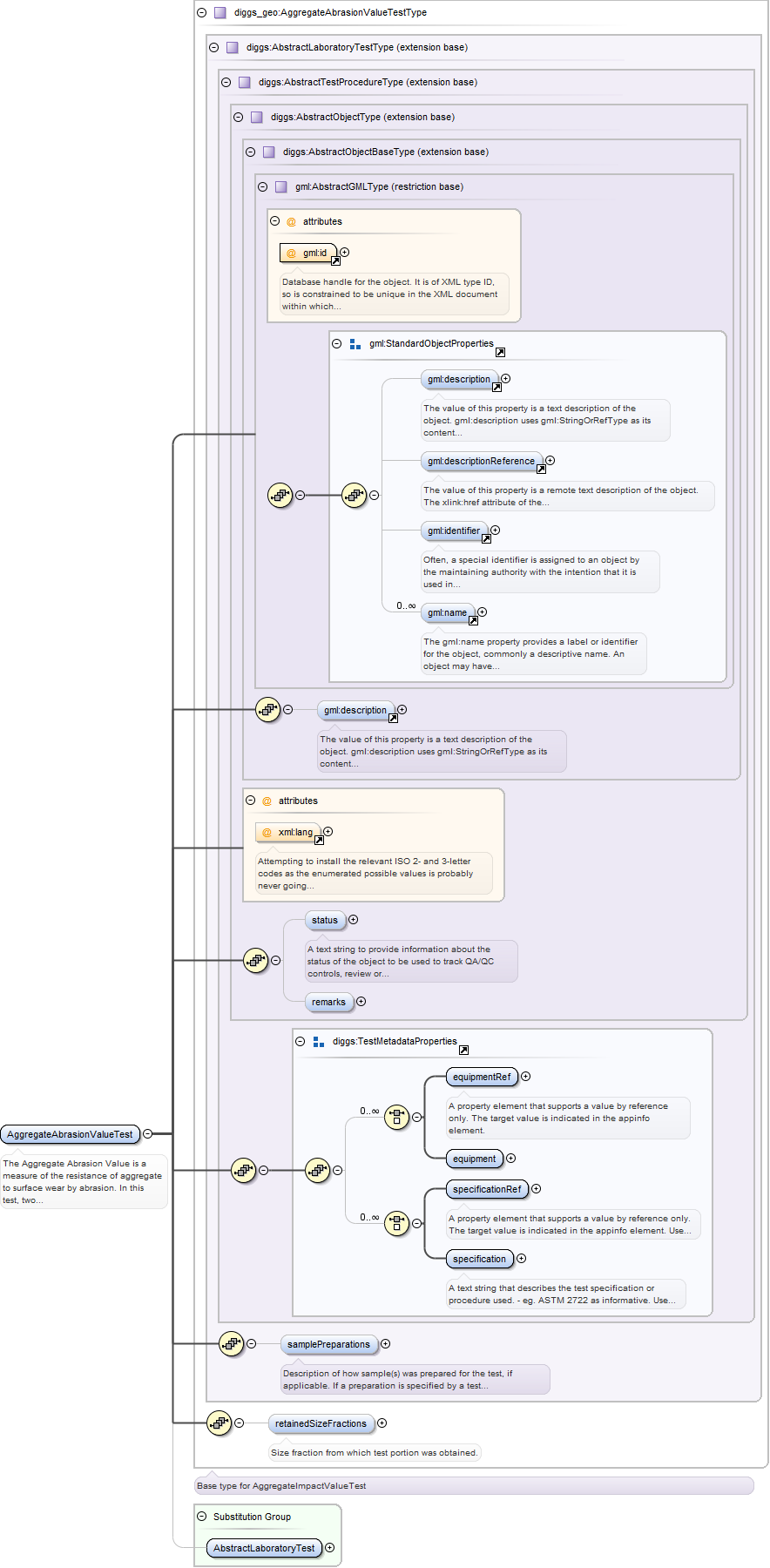
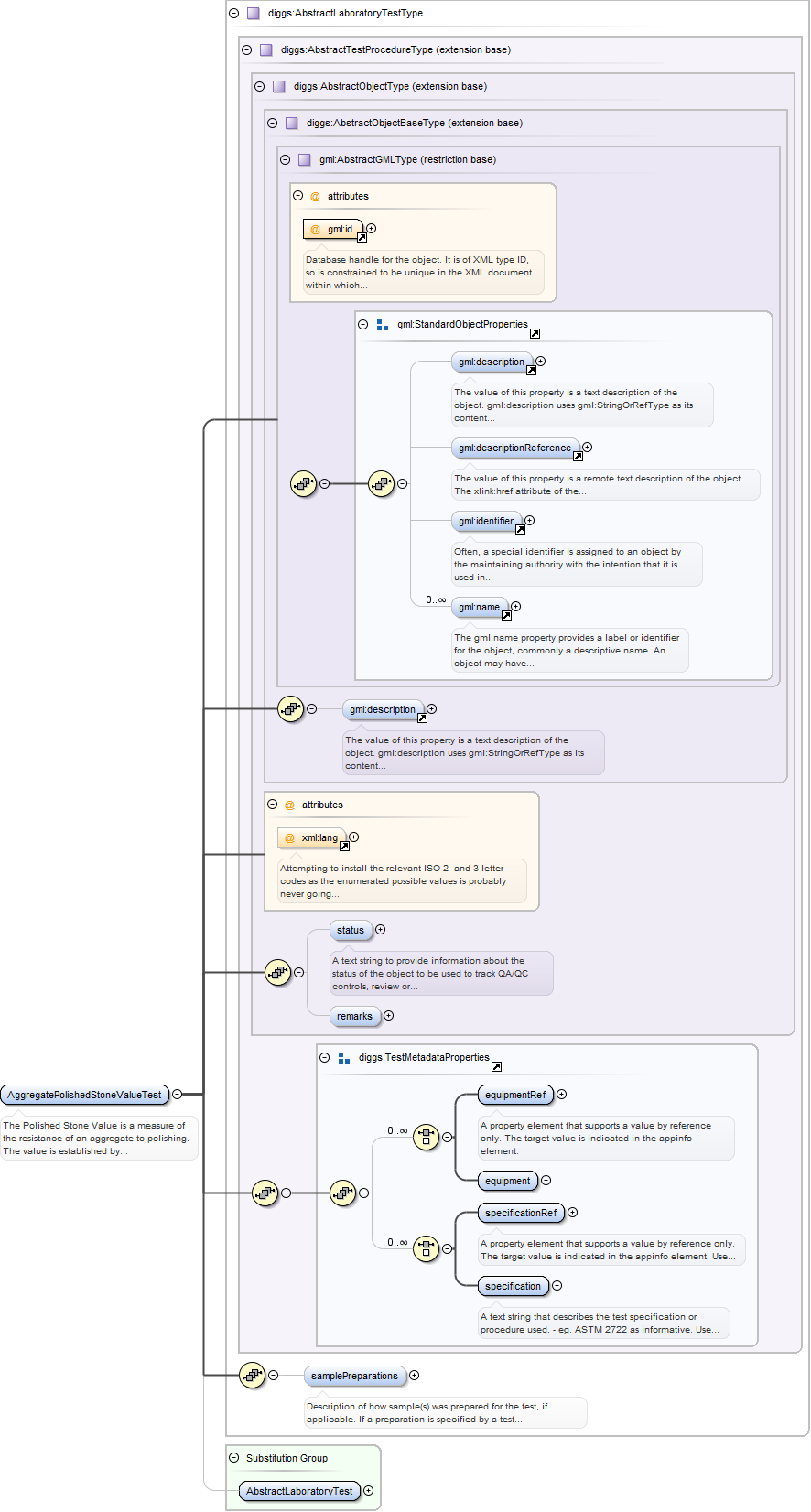
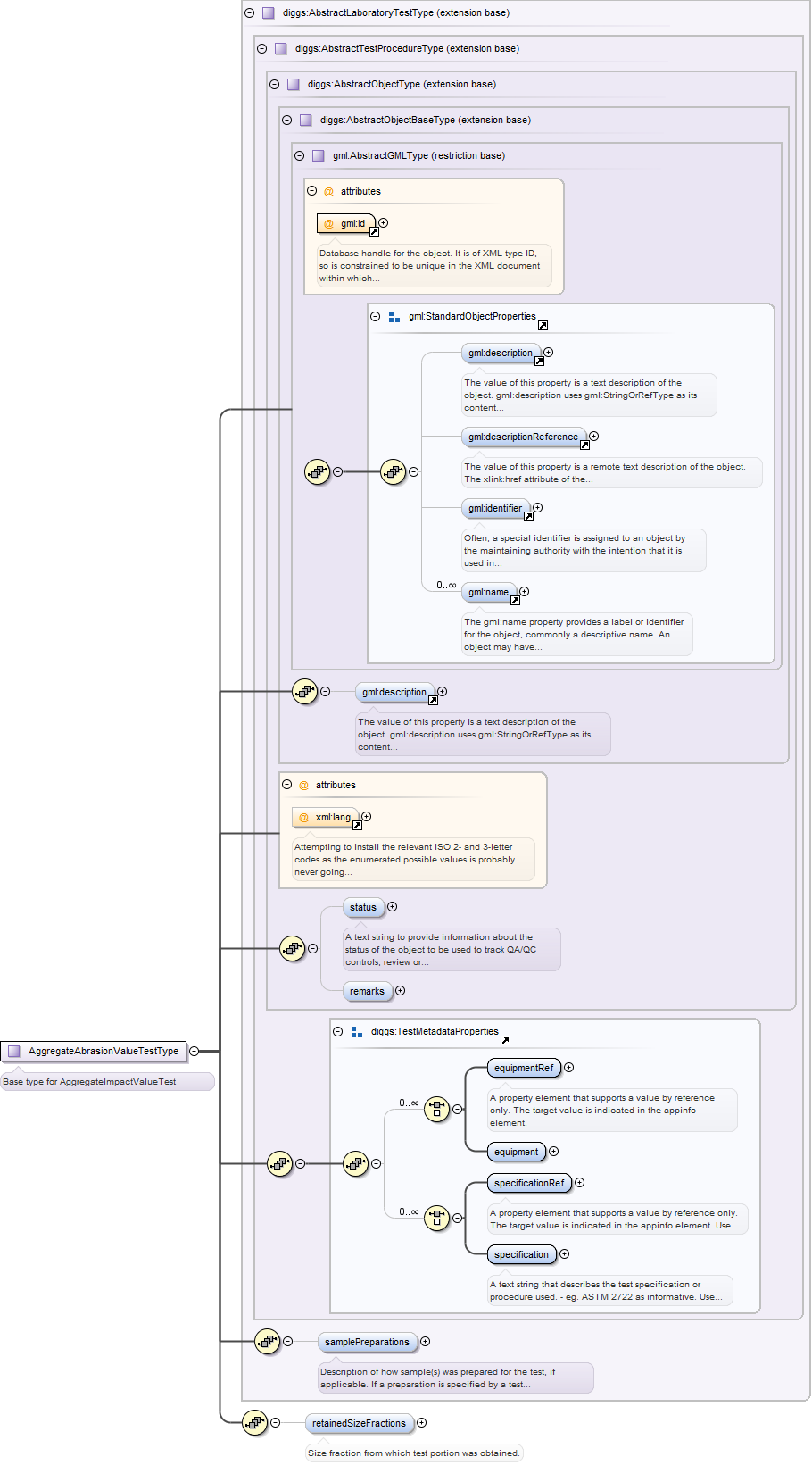
The Aggregate Abrasion Value is a measure of the resistance of aggregateto surface wear by abrasion. In this test, two specimens are pressed against thesurface of a steel disc rotating in a horizontal plane, with a force of 0.365newtons per sq. centimetre. Sand, fed by hoppers, is used as an abrasive. After 500disc revolutions the amount of material abraded is measured by calculation of theweight loss of the aggregate. The percentage loss in mass of chippings as known asthe ‘Aggregate Abrasion Value’ (AAV), and ranges from about 1 for hard flints toover 16 for aggregates normally considered too soft for use in roadsurfacings.
Database handle for the object. It is of XML type ID, so is constrained to beunique in the XML document within which it occurs. An external identifier for the object inthe form of a URI may be constructed using standard XML and XPointer methods. This is doneby concatenating the URI for the document, a fragment separator, and the value of the idattribute.
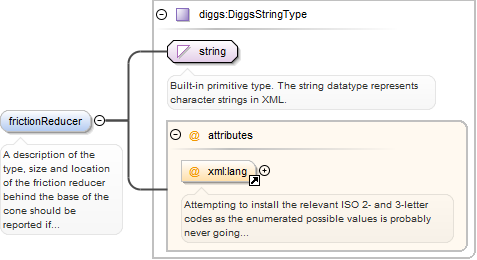
Attempting to install the relevant ISO 2- and 3-letter codes as the enumerated possible values is probably never going to be a realistic possibility. See RFC 3066 at http://www.ietf.org/rfc/rfc3066.txt and the IANA registry at http://www.iana.org/assignments/lang-tag-apps.htm for further information. The union allows for the 'un-declaration' of xml:lang with the empty string.
Source
<element name="AggregateAbrasionValueTest" type="diggs_geo:AggregateAbrasionValueTestType" abstract="false" substitutionGroup="diggs:AbstractLaboratoryTest"><annotation><documentation>The Aggregate Abrasion Value is a measure of the resistance of aggregate to surface wear by abrasion. In this test, two specimens are pressed against the surface of a steel disc rotating in a horizontal plane, with a force of 0.365 newtons per sq. centimetre. Sand, fed by hoppers, is used as an abrasive. After 500 disc revolutions the amount of material abraded is measured by calculation of the weight loss of the aggregate. The percentage loss in mass of chippings as known as the ‘Aggregate Abrasion Value’ (AAV), and ranges from about 1 for hard flints to over 16 for aggregates normally considered too soft for use in road surfacings.</documentation></annotation></element>
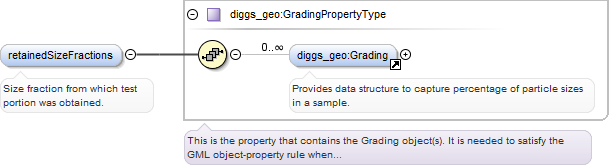
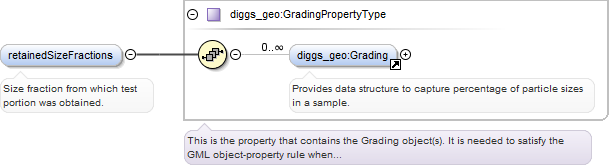
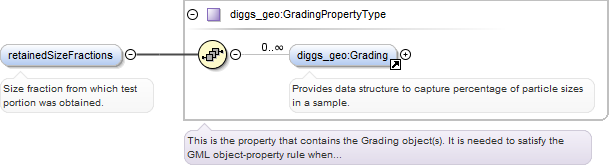
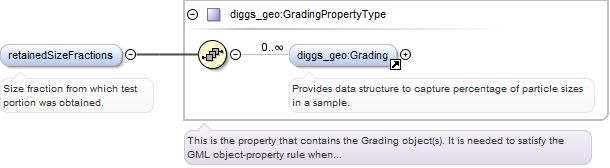
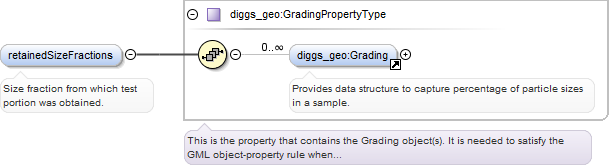
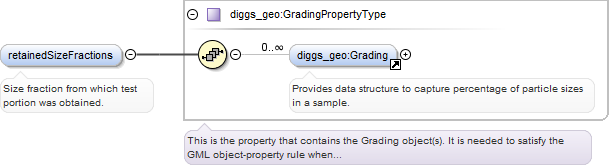
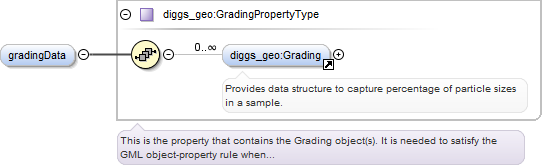
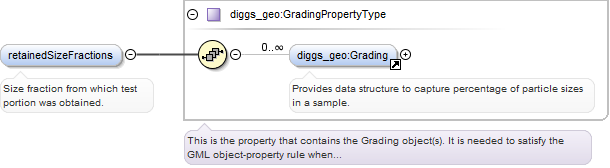
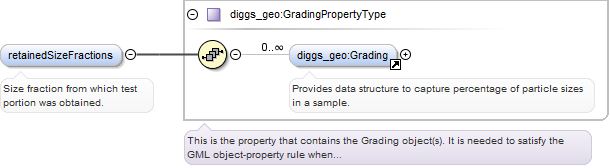
<element name="retainedSizeFractions" type="diggs_geo:GradingPropertyType" minOccurs="0"><annotation><documentation>Size fraction from which test portion was obtained.</documentation></annotation></element>
Schema location
http://diggsml.org/2.0a/schemas/Geotechnical.xsd
Element diggs_geo:Grading
Namespace
http://schemas.diggsml.com/2.0.a/geotechnical
Annotations
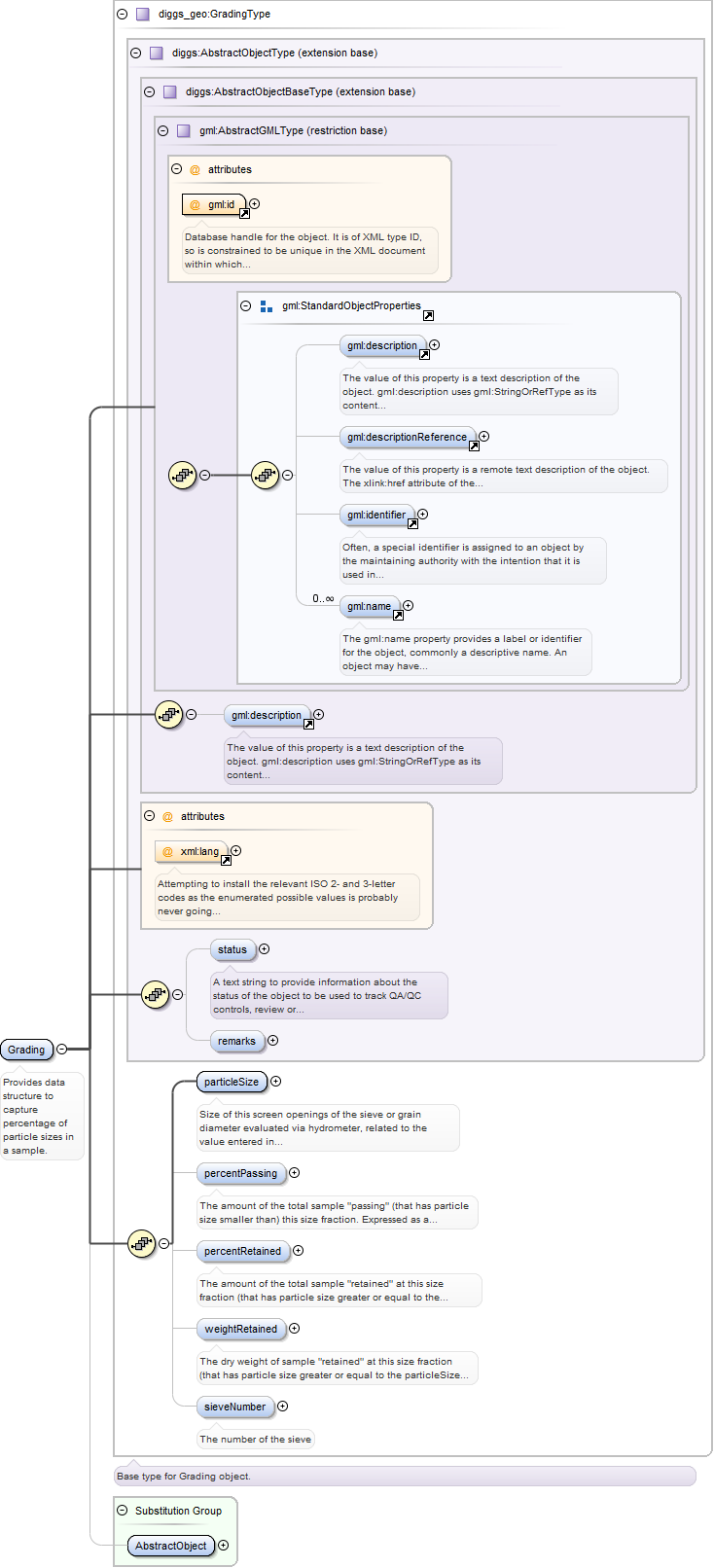
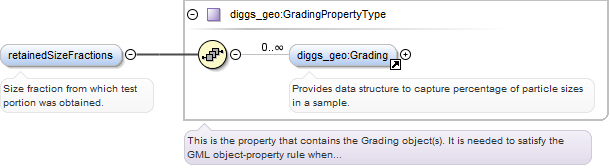
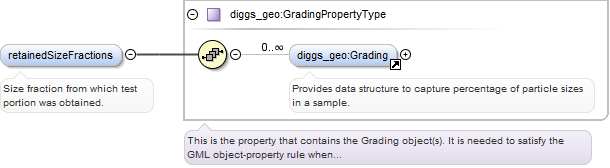
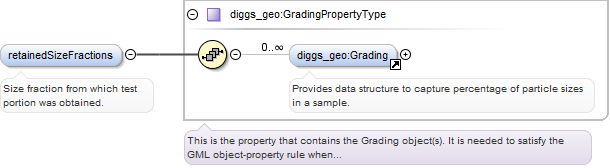
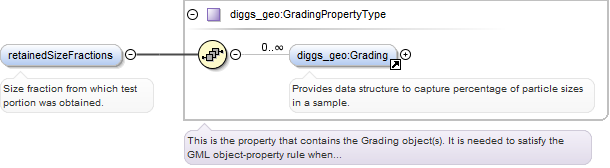
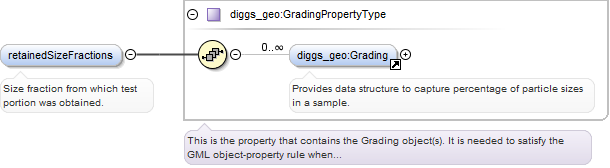
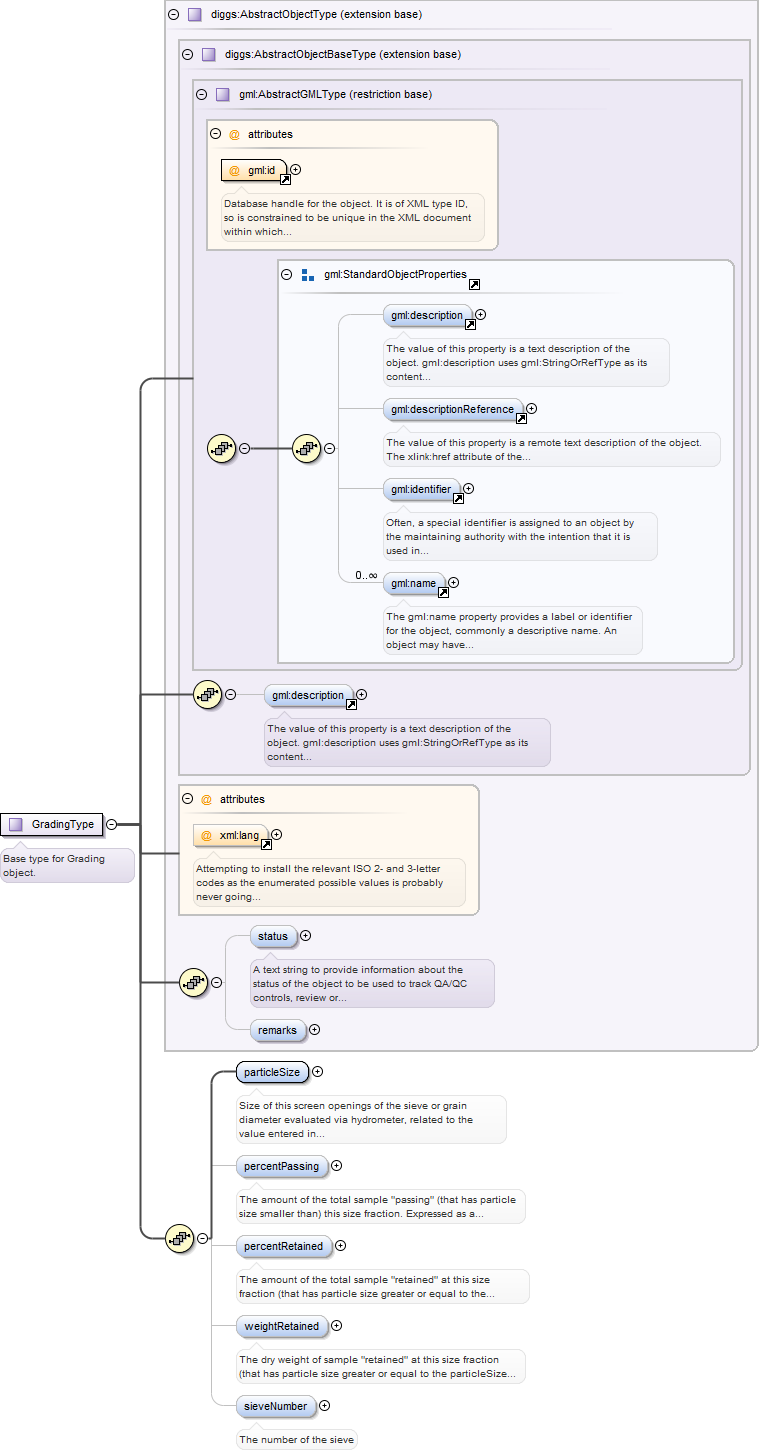
Provides data structure to capture percentage of particle sizes in asample.
Database handle for the object. It is of XML type ID, so is constrained to beunique in the XML document within which it occurs. An external identifier for the object inthe form of a URI may be constructed using standard XML and XPointer methods. This is doneby concatenating the URI for the document, a fragment separator, and the value of the idattribute.
Attempting to install the relevant ISO 2- and 3-letter codes as the enumerated possible values is probably never going to be a realistic possibility. See RFC 3066 at http://www.ietf.org/rfc/rfc3066.txt and the IANA registry at http://www.iana.org/assignments/lang-tag-apps.htm for further information. The union allows for the 'un-declaration' of xml:lang with the empty string.
Source
<element name="Grading" type="diggs_geo:GradingType" abstract="false" substitutionGroup="diggs:AbstractObject"><annotation><documentation>Provides data structure to capture percentage of particle sizes in a sample.</documentation></annotation></element>
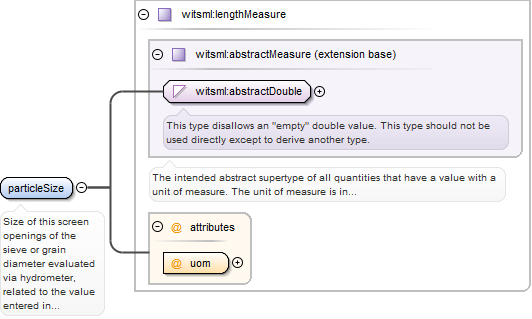
Size of this screen openings of the sieve or graindiameter evaluated via hydrometer, related to the value entered inthe percentPassing or percentRetained property.
<element name="particleSize" type="witsml:lengthMeasure"><annotation><documentation>Size of this screen openings of the sieve or grain diameter evaluated via hydrometer, related to the value entered in the percentPassing or percentRetained property.</documentation></annotation></element>
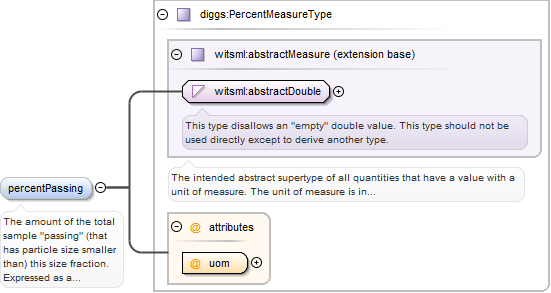
<element name="percentPassing" type="diggs:PercentMeasureType" minOccurs="0"><annotation><documentation>The amount of the total sample "passing" (that has particle size smaller than) this size fraction. Expressed as a weight percent.</documentation></annotation></element>
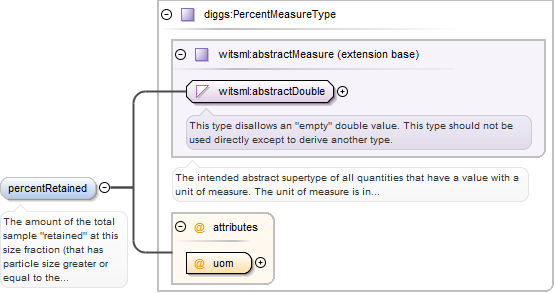
The amount of the total sample "retained" at this sizefraction (that has particle size greater or equal to theparticleSize property, but smaller than any larger gradations.Expressed as a weight percent.
<element name="percentRetained" type="diggs:PercentMeasureType" minOccurs="0"><annotation><documentation>The amount of the total sample "retained" at this size fraction (that has particle size greater or equal to the particleSize property, but smaller than any larger gradations. Expressed as a weight percent.</documentation></annotation></element>
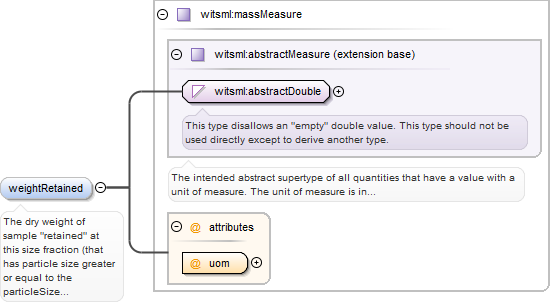
The dry weight of sample "retained" at this size fraction(that has particle size greater or equal to the particleSizeproperty, but smaller than any larger gradations.
<element name="weightRetained" type="witsml:massMeasure" minOccurs="0"><annotation><documentation>The dry weight of sample "retained" at this size fraction (that has particle size greater or equal to the particleSize property, but smaller than any larger gradations.</documentation></annotation></element>
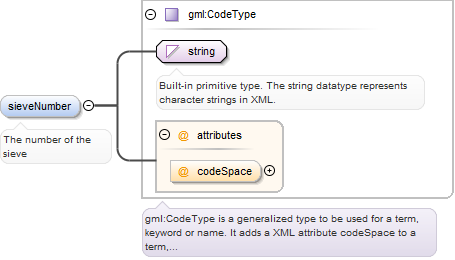
<element name="sieveNumber" type="gml:CodeType" minOccurs="0"><annotation><documentation>The number of the sieve</documentation></annotation></element>
Schema location
http://diggsml.org/2.0a/schemas/Geotechnical.xsd
Element diggs_geo:AggregateCrushingValueTest
Namespace
http://schemas.diggsml.com/2.0.a/geotechnical
Annotations
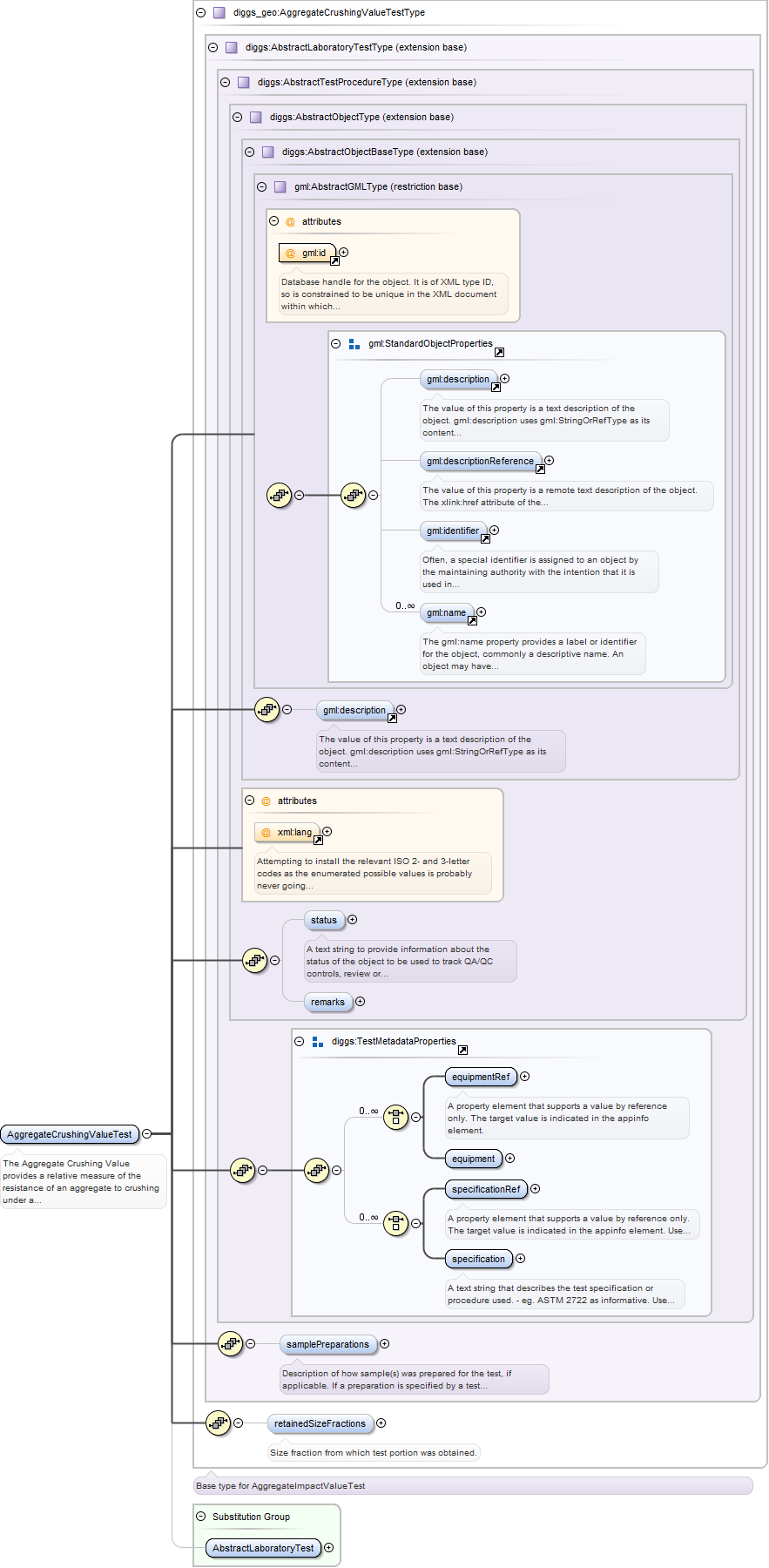
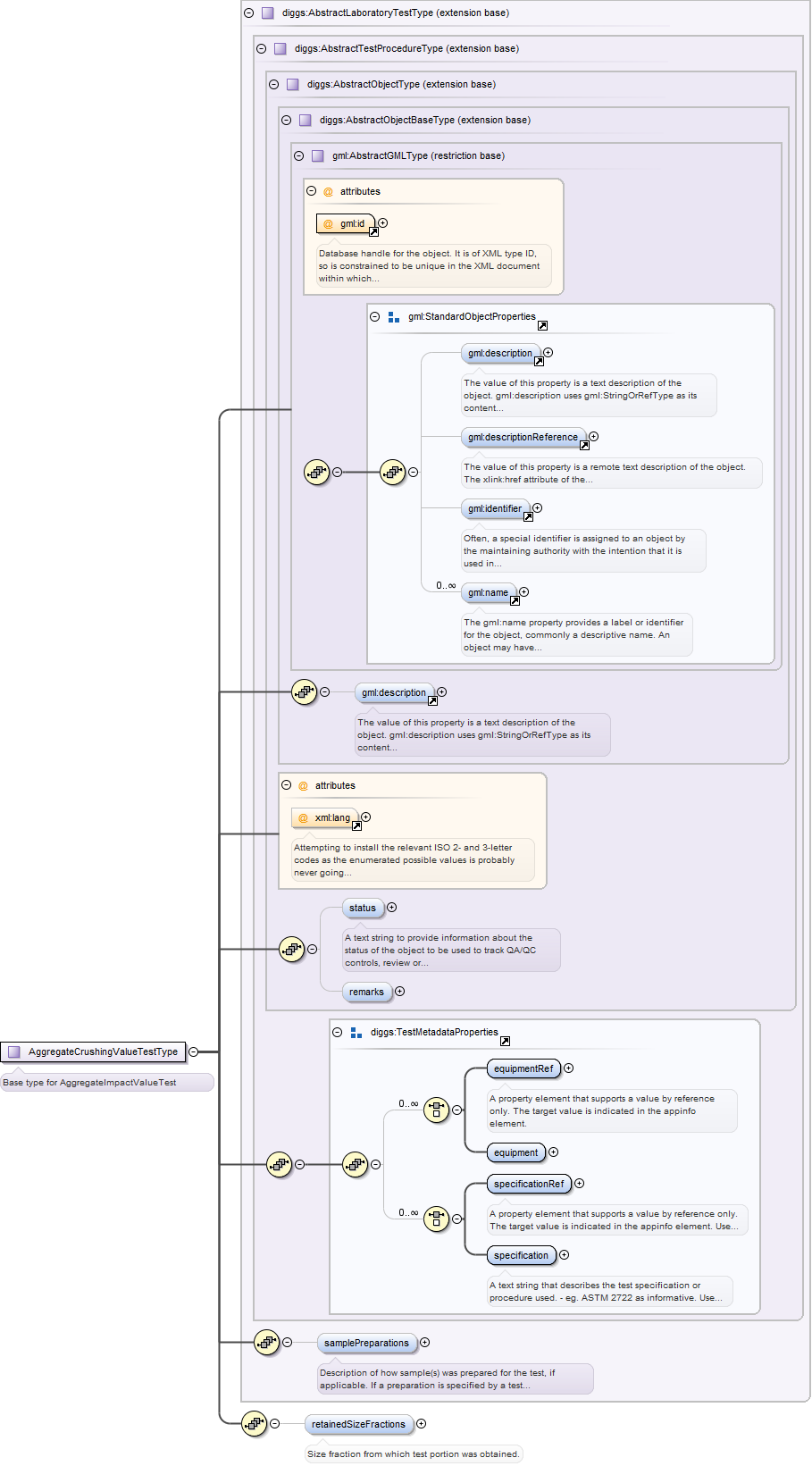
The Aggregate Crushing Value provides a relative measure of theresistance of an aggregate to crushing under a gradually applied compressive load,and is defined as the ratio of the weight of fines passing the specified sieve tothe total weight of the sample expressed as a percentage.
Database handle for the object. It is of XML type ID, so is constrained to beunique in the XML document within which it occurs. An external identifier for the object inthe form of a URI may be constructed using standard XML and XPointer methods. This is doneby concatenating the URI for the document, a fragment separator, and the value of the idattribute.
Attempting to install the relevant ISO 2- and 3-letter codes as the enumerated possible values is probably never going to be a realistic possibility. See RFC 3066 at http://www.ietf.org/rfc/rfc3066.txt and the IANA registry at http://www.iana.org/assignments/lang-tag-apps.htm for further information. The union allows for the 'un-declaration' of xml:lang with the empty string.
Source
<element name="AggregateCrushingValueTest" type="diggs_geo:AggregateCrushingValueTestType" abstract="false" substitutionGroup="diggs:AbstractLaboratoryTest"><annotation><documentation>The Aggregate Crushing Value provides a relative measure of the resistance of an aggregate to crushing under a gradually applied compressive load, and is defined as the ratio of the weight of fines passing the specified sieve to the total weight of the sample expressed as a percentage.</documentation></annotation></element>
<element name="retainedSizeFractions" type="diggs_geo:GradingPropertyType" minOccurs="0"><annotation><documentation>Size fraction from which test portion was obtained.</documentation></annotation></element>
Schema location
http://diggsml.org/2.0a/schemas/Geotechnical.xsd
Element diggs_geo:AggregateElongationIndexTest
Namespace
http://schemas.diggsml.com/2.0.a/geotechnical
Annotations
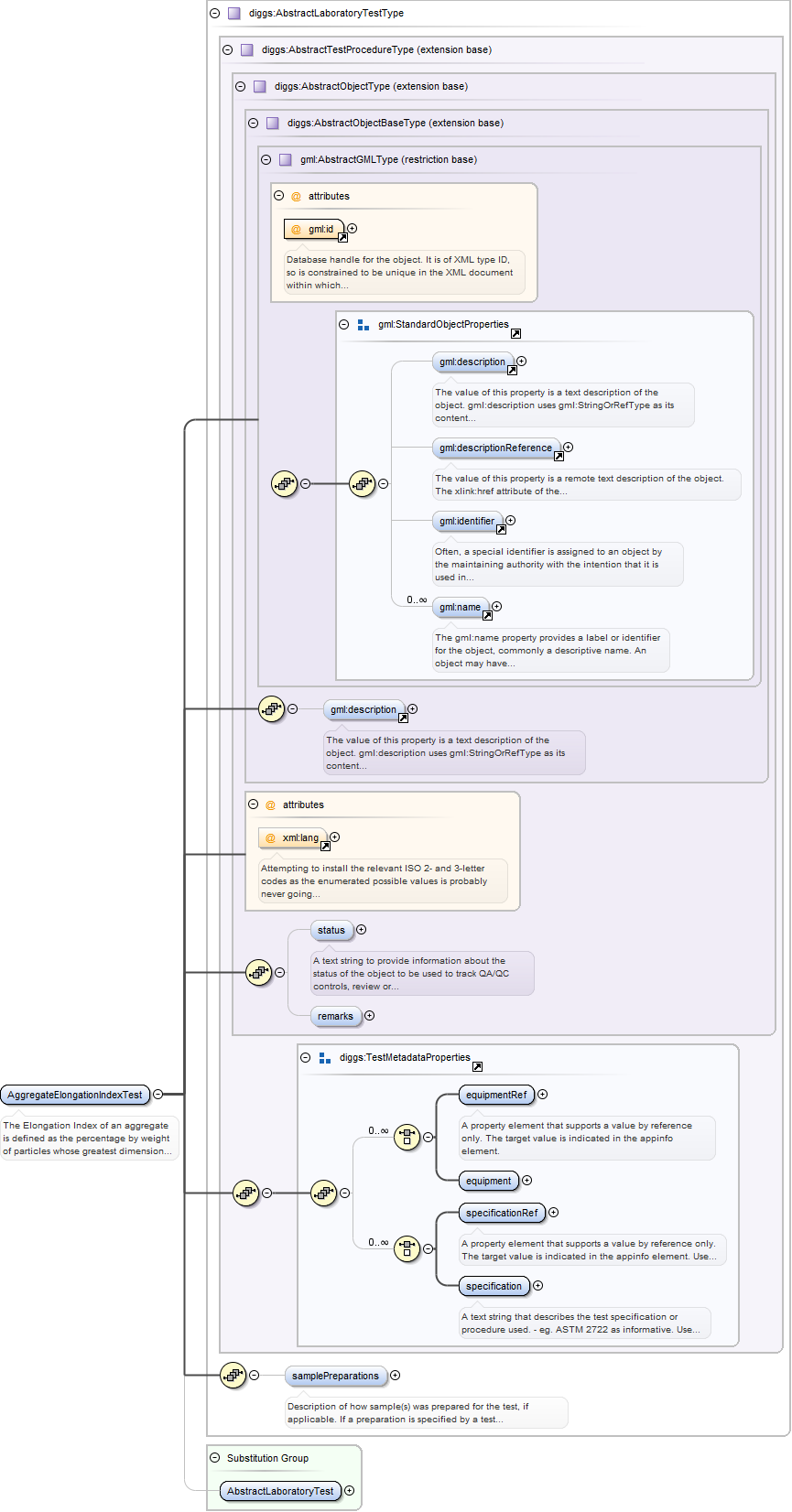
The Elongation Index of an aggregate is defined as the percentage byweight of particles whose greatest dimension (length) is 1.8 times their meandimension. This test is applicable to aggregates larger than 6.3 mm.
Database handle for the object. It is of XML type ID, so is constrained to beunique in the XML document within which it occurs. An external identifier for the object inthe form of a URI may be constructed using standard XML and XPointer methods. This is doneby concatenating the URI for the document, a fragment separator, and the value of the idattribute.
Attempting to install the relevant ISO 2- and 3-letter codes as the enumerated possible values is probably never going to be a realistic possibility. See RFC 3066 at http://www.ietf.org/rfc/rfc3066.txt and the IANA registry at http://www.iana.org/assignments/lang-tag-apps.htm for further information. The union allows for the 'un-declaration' of xml:lang with the empty string.
Source
<element name="AggregateElongationIndexTest" type="diggs:AbstractLaboratoryTestType" abstract="false" substitutionGroup="diggs:AbstractLaboratoryTest"><annotation><documentation>The Elongation Index of an aggregate is defined as the percentage by weight of particles whose greatest dimension (length) is 1.8 times their mean dimension. This test is applicable to aggregates larger than 6.3 mm.</documentation></annotation></element>
Schema location
http://diggsml.org/2.0a/schemas/Geotechnical.xsd
Element diggs_geo:AggregateFlakinessIndexTest
Namespace
http://schemas.diggsml.com/2.0.a/geotechnical
Annotations
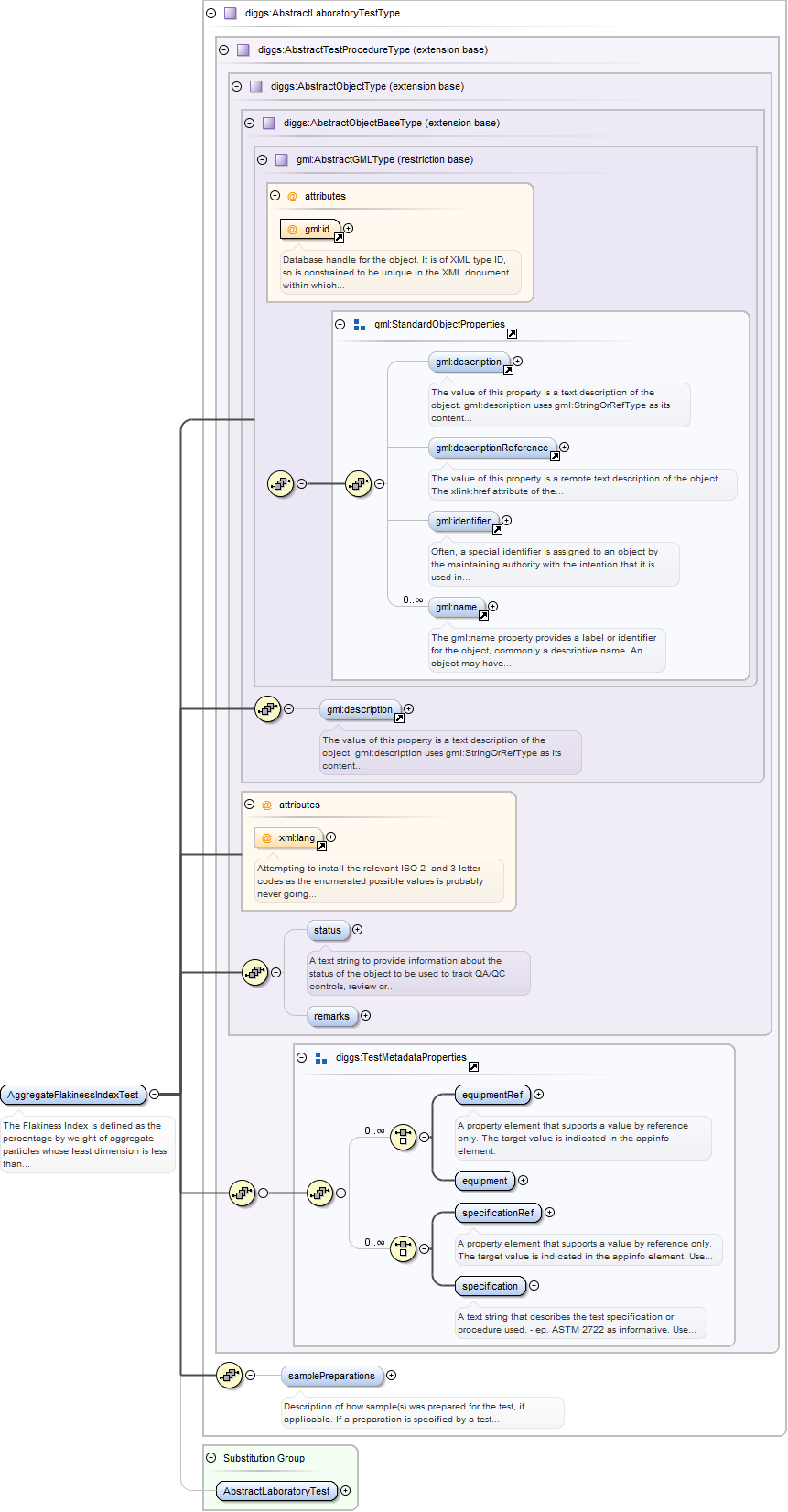
The Flakiness Index is defined as the percentage by weight of aggregateparticles whose least dimension is less than 0.6 times their meansize.
Database handle for the object. It is of XML type ID, so is constrained to beunique in the XML document within which it occurs. An external identifier for the object inthe form of a URI may be constructed using standard XML and XPointer methods. This is doneby concatenating the URI for the document, a fragment separator, and the value of the idattribute.
Attempting to install the relevant ISO 2- and 3-letter codes as the enumerated possible values is probably never going to be a realistic possibility. See RFC 3066 at http://www.ietf.org/rfc/rfc3066.txt and the IANA registry at http://www.iana.org/assignments/lang-tag-apps.htm for further information. The union allows for the 'un-declaration' of xml:lang with the empty string.
Source
<element name="AggregateFlakinessIndexTest" type="diggs:AbstractLaboratoryTestType" abstract="false" substitutionGroup="diggs:AbstractLaboratoryTest"><annotation><documentation>The Flakiness Index is defined as the percentage by weight of aggregate particles whose least dimension is less than 0.6 times their mean size.</documentation></annotation></element>
Schema location
http://diggsml.org/2.0a/schemas/Geotechnical.xsd
Element diggs_geo:AggregateImpactValueTest
Namespace
http://schemas.diggsml.com/2.0.a/geotechnical
Annotations
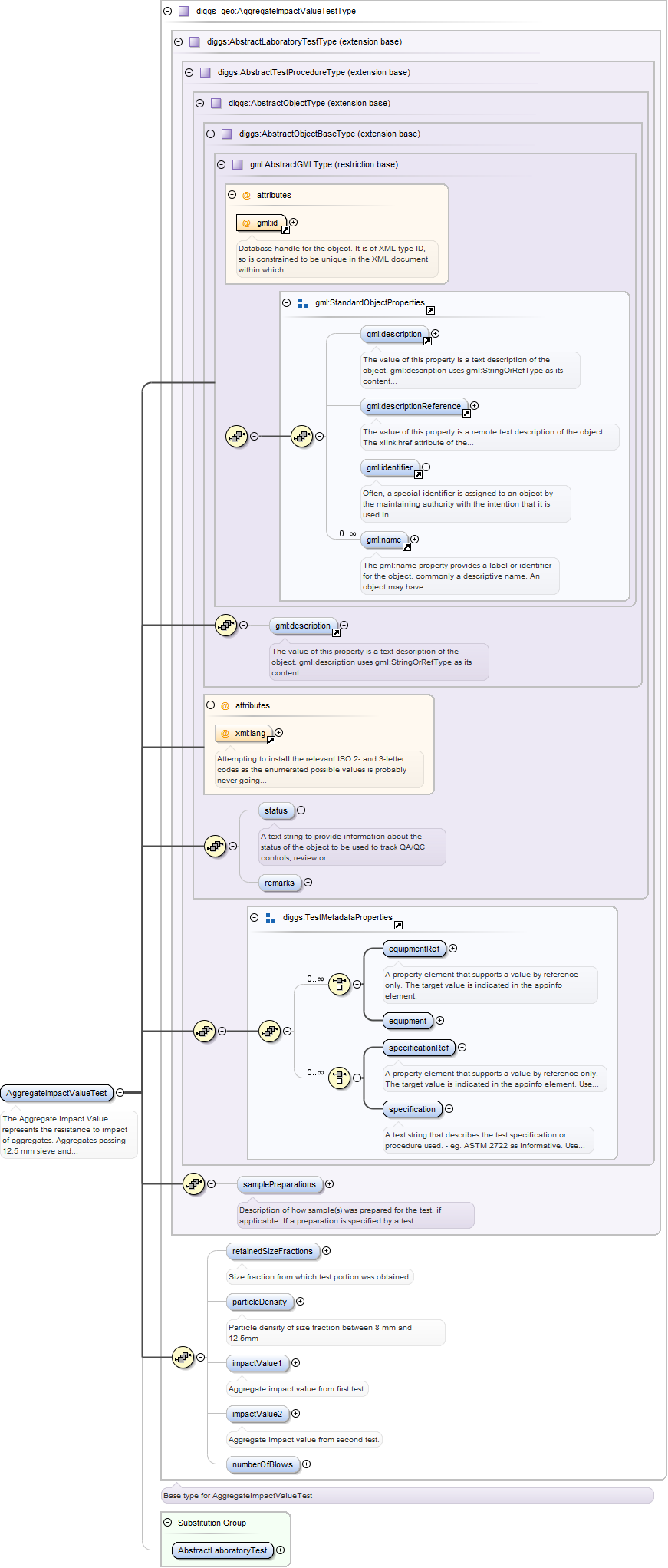
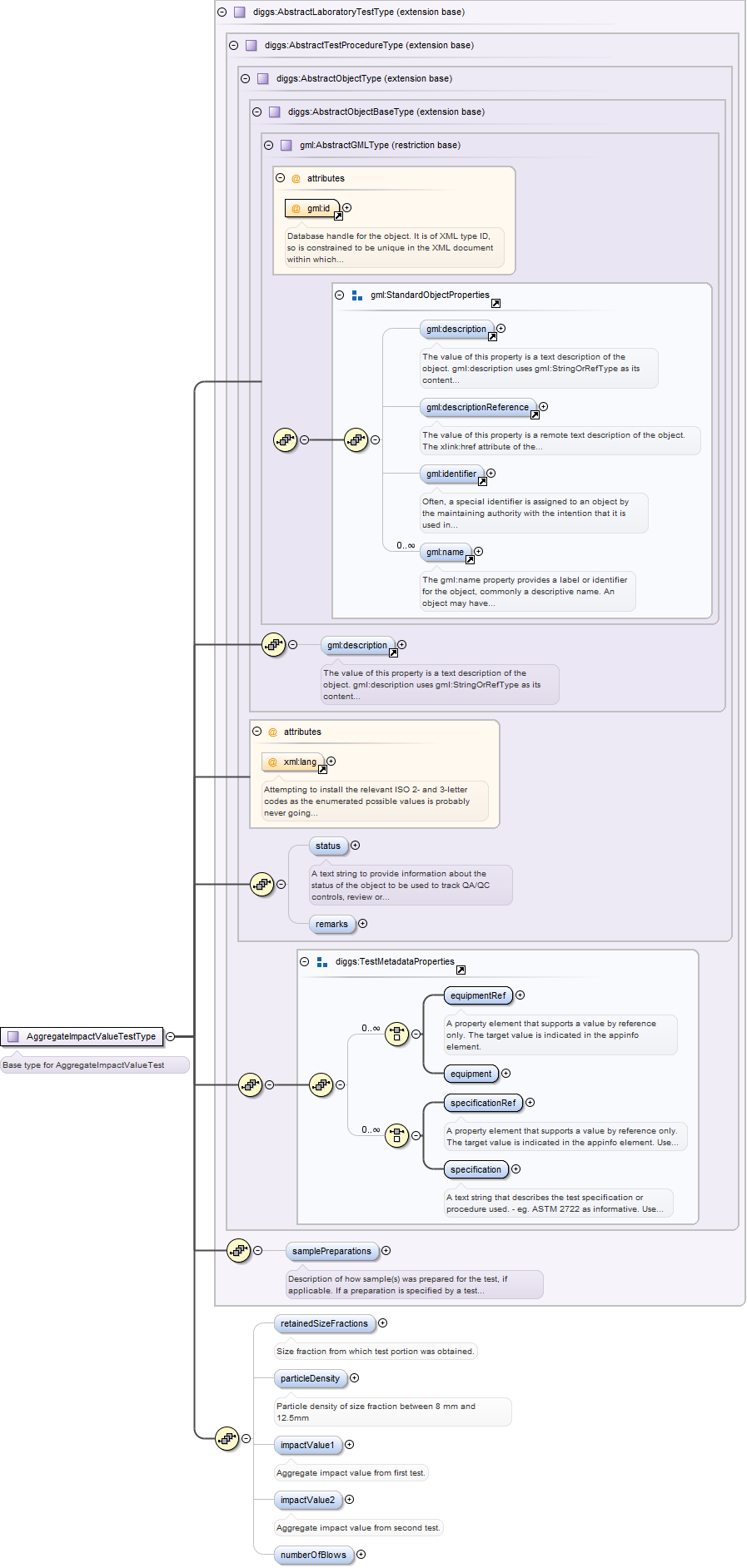
The Aggregate Impact Value represents the resistance to impact ofaggregates. Aggregates passing 12.5 mm sieve and retained on 10 mm sieve is filledin a cylindrical steel cup of internal dia 10.2 mm and depth 5 cm which is attachedto a metal base of impact testing machine. The material is filled in 3 layers whereeach layer is tamped for 25 number of blows. Metal hammer of weight 13.5 to 14 Kg isarranged to drop with a free fall of 38.0 cm by vertical guides and the testspecimen is subjected to 15 number of blows. The crushed aggregate is allowed topass through the 2.36 sieve. And the impact value is measured as percentage ofaggregates passing to the total weight of the sample.
Database handle for the object. It is of XML type ID, so is constrained to beunique in the XML document within which it occurs. An external identifier for the object inthe form of a URI may be constructed using standard XML and XPointer methods. This is doneby concatenating the URI for the document, a fragment separator, and the value of the idattribute.
Attempting to install the relevant ISO 2- and 3-letter codes as the enumerated possible values is probably never going to be a realistic possibility. See RFC 3066 at http://www.ietf.org/rfc/rfc3066.txt and the IANA registry at http://www.iana.org/assignments/lang-tag-apps.htm for further information. The union allows for the 'un-declaration' of xml:lang with the empty string.
Source
<element name="AggregateImpactValueTest" type="diggs_geo:AggregateImpactValueTestType" abstract="false" substitutionGroup="diggs:AbstractLaboratoryTest"><annotation><documentation>The Aggregate Impact Value represents the resistance to impact of aggregates. Aggregates passing 12.5 mm sieve and retained on 10 mm sieve is filled in a cylindrical steel cup of internal dia 10.2 mm and depth 5 cm which is attached to a metal base of impact testing machine. The material is filled in 3 layers where each layer is tamped for 25 number of blows. Metal hammer of weight 13.5 to 14 Kg is arranged to drop with a free fall of 38.0 cm by vertical guides and the test specimen is subjected to 15 number of blows. The crushed aggregate is allowed to pass through the 2.36 sieve. And the impact value is measured as percentage of aggregates passing to the total weight of the sample.</documentation></annotation></element>
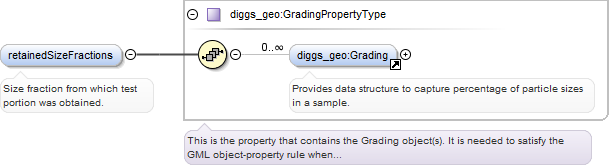
<element name="retainedSizeFractions" type="diggs_geo:GradingPropertyType" minOccurs="0"><annotation><documentation>Size fraction from which test portion was obtained.</documentation></annotation></element>
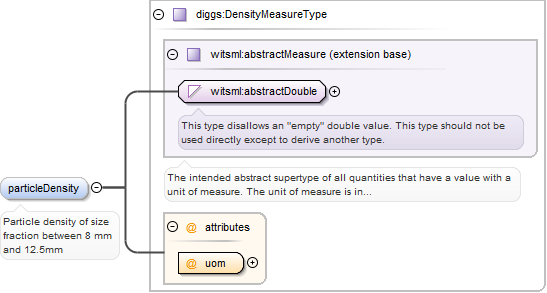
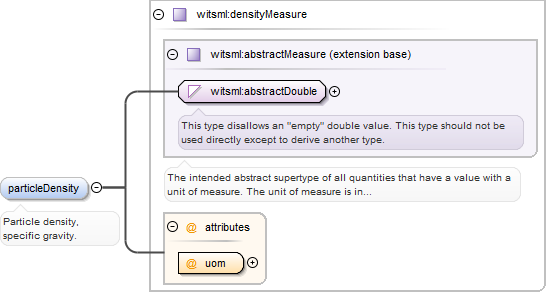
<element name="particleDensity" type="diggs:DensityMeasureType" minOccurs="0"><annotation><documentation>Particle density of size fraction between 8 mm and 12.5mm</documentation></annotation></element>
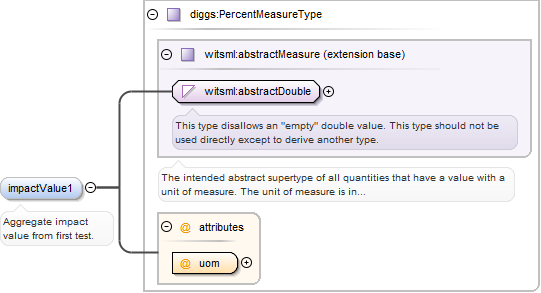
<element name="impactValue1" type="diggs:PercentMeasureType" minOccurs="0"><annotation><documentation>Aggregate impact value from first test.</documentation></annotation></element>
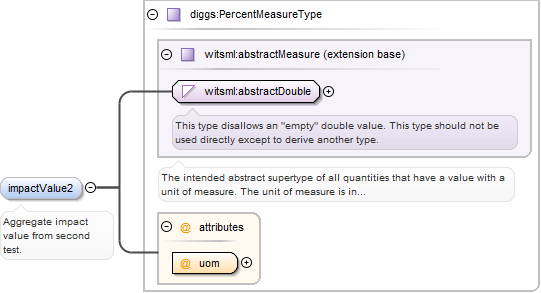
<element name="impactValue2" type="diggs:PercentMeasureType" minOccurs="0"><annotation><documentation>Aggregate impact value from second test.</documentation></annotation></element>
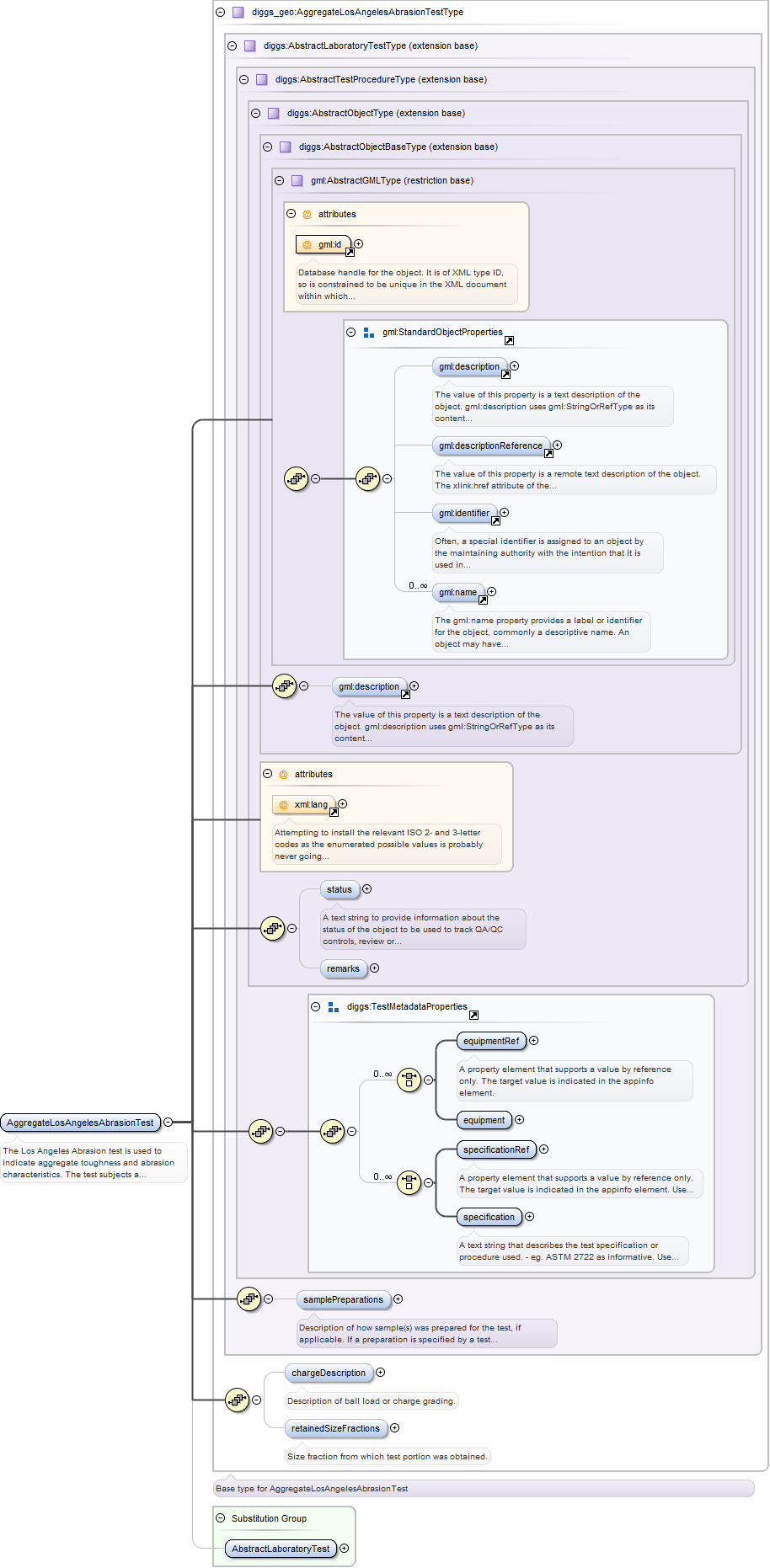
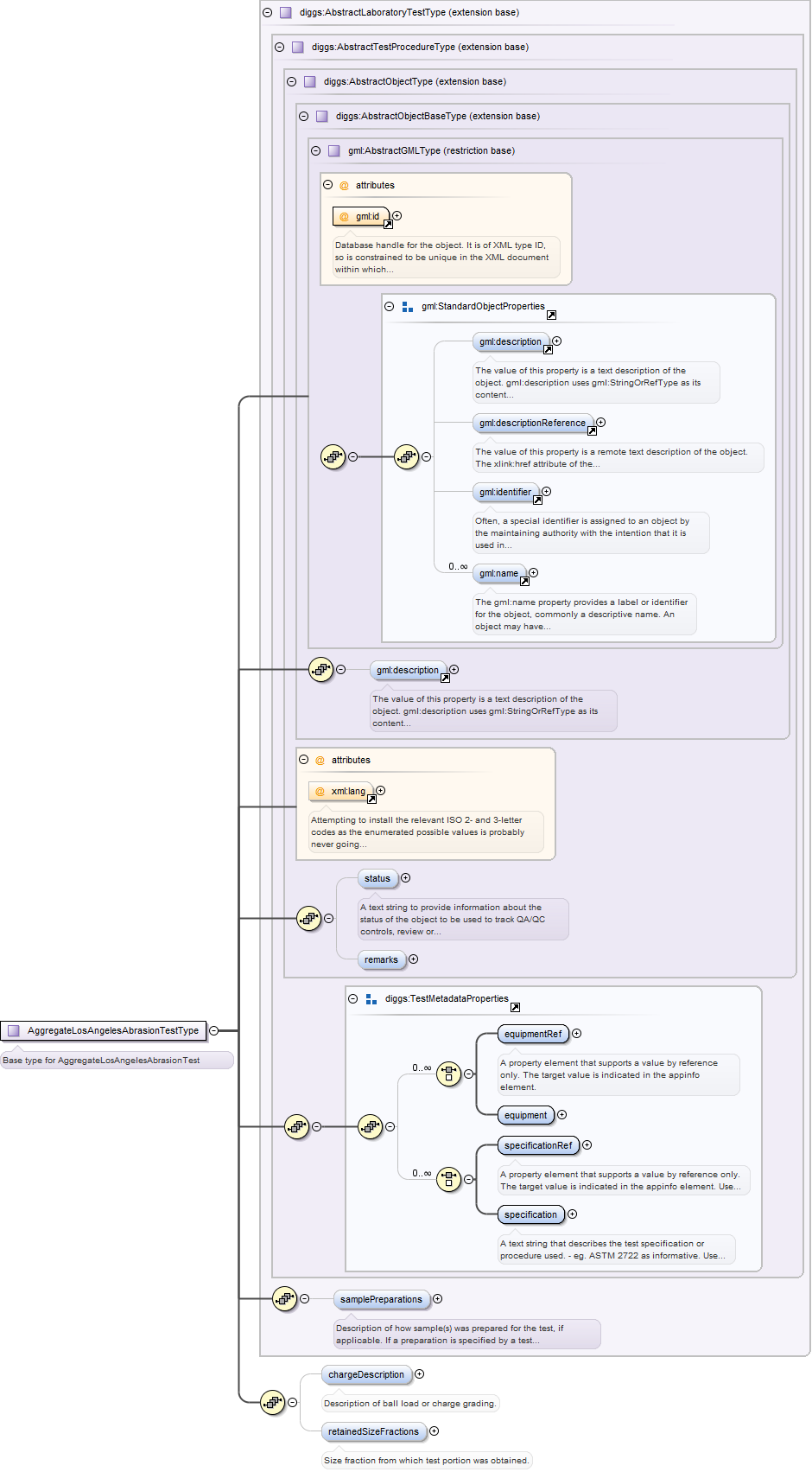
The Los Angeles Abrasion test is used to indicate aggregate toughness andabrasion characteristics. The test subjects a coarse aggregate sample to abrasion,impact, and grinding in a rotating steel drum containing a specified number of steelspheres. After being subjected to the rotating drum, the weight of aggregate that isretained on a specified sieve is subtracted from the original weight to obtain apercentage of the total aggregate weight that has broken down and passed through.Therefore, an L.A. abrasion loss value of 40 indicates that 40% of the originalsample passed through.
Database handle for the object. It is of XML type ID, so is constrained to beunique in the XML document within which it occurs. An external identifier for the object inthe form of a URI may be constructed using standard XML and XPointer methods. This is doneby concatenating the URI for the document, a fragment separator, and the value of the idattribute.
Attempting to install the relevant ISO 2- and 3-letter codes as the enumerated possible values is probably never going to be a realistic possibility. See RFC 3066 at http://www.ietf.org/rfc/rfc3066.txt and the IANA registry at http://www.iana.org/assignments/lang-tag-apps.htm for further information. The union allows for the 'un-declaration' of xml:lang with the empty string.
Source
<element name="AggregateLosAngelesAbrasionTest" type="diggs_geo:AggregateLosAngelesAbrasionTestType" abstract="false" substitutionGroup="diggs:AbstractLaboratoryTest"><annotation><documentation>The Los Angeles Abrasion test is used to indicate aggregate toughness and abrasion characteristics. The test subjects a coarse aggregate sample to abrasion, impact, and grinding in a rotating steel drum containing a specified number of steel spheres. After being subjected to the rotating drum, the weight of aggregate that is retained on a specified sieve is subtracted from the original weight to obtain a percentage of the total aggregate weight that has broken down and passed through. Therefore, an L.A. abrasion loss value of 40 indicates that 40% of the original sample passed through.</documentation></annotation></element>
Attempting to install the relevant ISO 2- and 3-letter codes as the enumerated possible values is probably never going to be a realistic possibility. See RFC 3066 at http://www.ietf.org/rfc/rfc3066.txt and the IANA registry at http://www.iana.org/assignments/lang-tag-apps.htm for further information. The union allows for the 'un-declaration' of xml:lang with the empty string.
Source
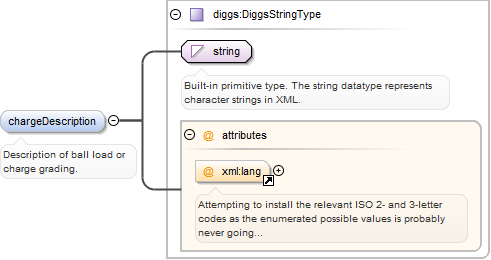
<element name="chargeDescription" type="diggs:DiggsStringType" minOccurs="0"><annotation><documentation>Description of ball load or charge grading.</documentation></annotation></element>
<element name="retainedSizeFractions" type="diggs_geo:GradingPropertyType" minOccurs="0"><annotation><documentation>Size fraction from which test portion was obtained.</documentation></annotation></element>
Schema location
http://diggsml.org/2.0a/schemas/Geotechnical.xsd
Element diggs_geo:AggregatePolishedStoneValueTest
Namespace
http://schemas.diggsml.com/2.0.a/geotechnical
Annotations
The Polished Stone Value is a measure of the resistance of an aggregateto polishing. The value is established by subjecting the aggregate to a standardpolishing process, and then testing the aggregate with the Portable Skid ResistanceTester.
Database handle for the object. It is of XML type ID, so is constrained to beunique in the XML document within which it occurs. An external identifier for the object inthe form of a URI may be constructed using standard XML and XPointer methods. This is doneby concatenating the URI for the document, a fragment separator, and the value of the idattribute.
Attempting to install the relevant ISO 2- and 3-letter codes as the enumerated possible values is probably never going to be a realistic possibility. See RFC 3066 at http://www.ietf.org/rfc/rfc3066.txt and the IANA registry at http://www.iana.org/assignments/lang-tag-apps.htm for further information. The union allows for the 'un-declaration' of xml:lang with the empty string.
Source
<element name="AggregatePolishedStoneValueTest" type="diggs:AbstractLaboratoryTestType" abstract="false" substitutionGroup="diggs:AbstractLaboratoryTest"><annotation><documentation>The Polished Stone Value is a measure of the resistance of an aggregate to polishing. The value is established by subjecting the aggregate to a standard polishing process, and then testing the aggregate with the Portable Skid Resistance Tester.</documentation></annotation></element>
Schema location
http://diggsml.org/2.0a/schemas/Geotechnical.xsd
Element diggs_geo:AggregateSlakeDurabilityTest
Namespace
http://schemas.diggsml.com/2.0.a/geotechnical
Annotations
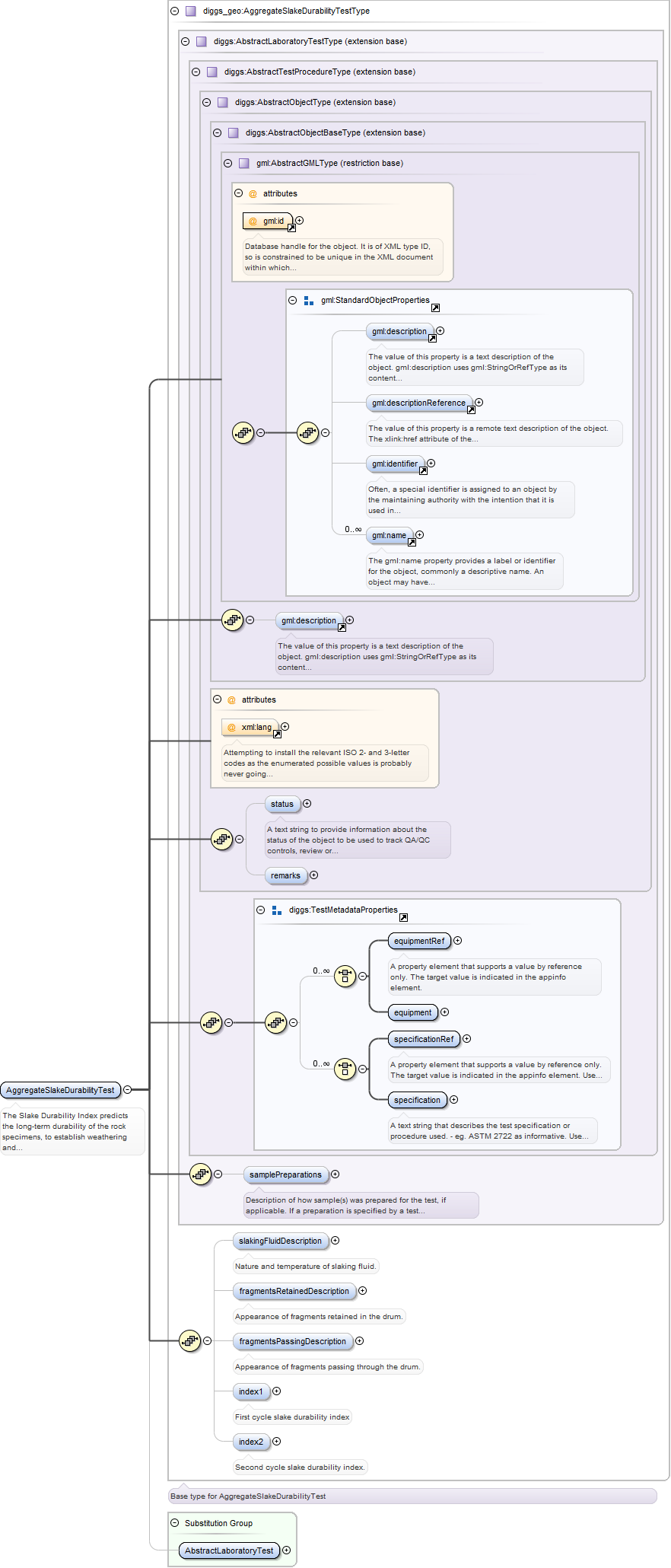
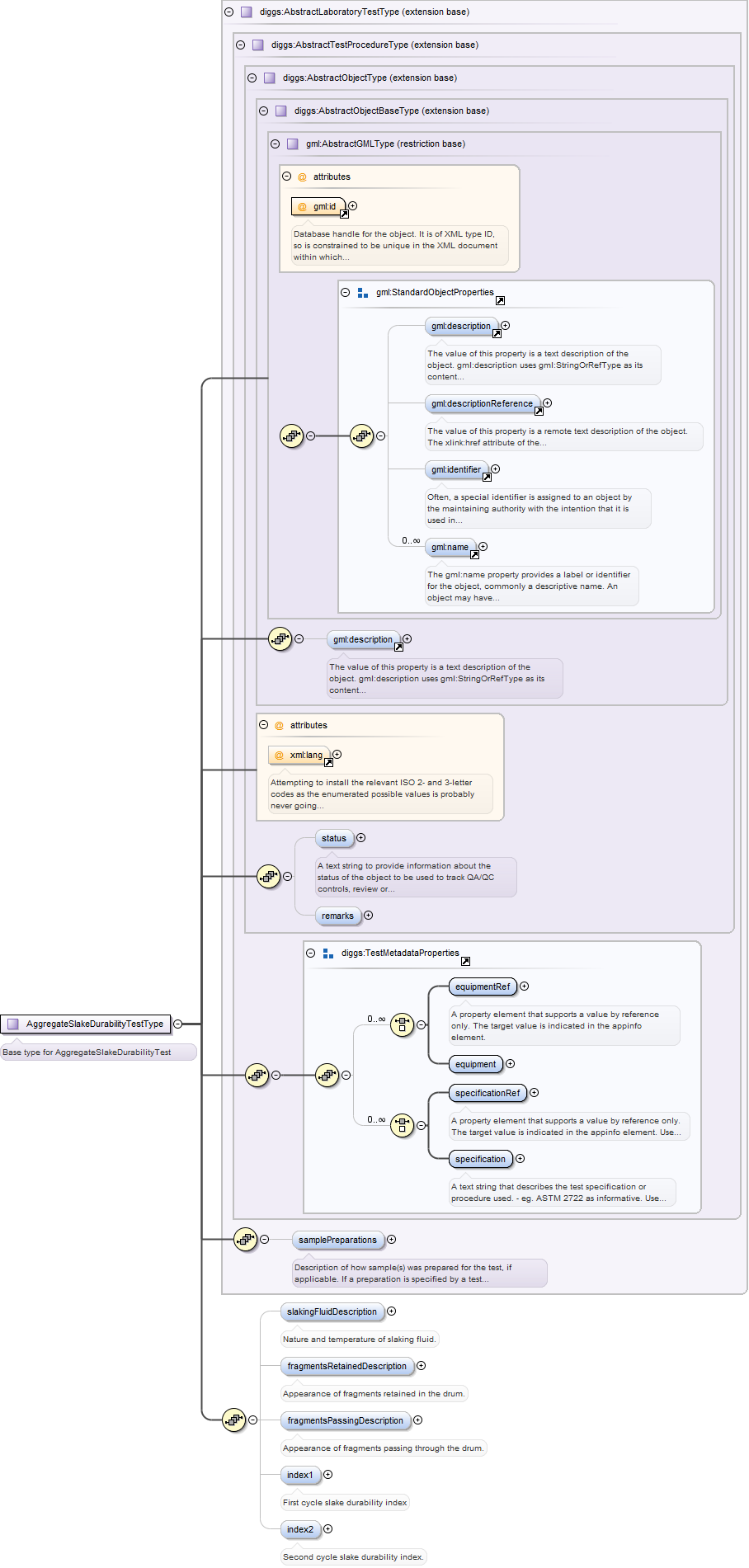
The Slake Durability Index predicts the long-term durability of the rockspecimens, to establish weathering and degradation characteristics of each rocktype, and to assess the impact of water on the rock degradation.
Database handle for the object. It is of XML type ID, so is constrained to beunique in the XML document within which it occurs. An external identifier for the object inthe form of a URI may be constructed using standard XML and XPointer methods. This is doneby concatenating the URI for the document, a fragment separator, and the value of the idattribute.
Attempting to install the relevant ISO 2- and 3-letter codes as the enumerated possible values is probably never going to be a realistic possibility. See RFC 3066 at http://www.ietf.org/rfc/rfc3066.txt and the IANA registry at http://www.iana.org/assignments/lang-tag-apps.htm for further information. The union allows for the 'un-declaration' of xml:lang with the empty string.
Source
<element name="AggregateSlakeDurabilityTest" type="diggs_geo:AggregateSlakeDurabilityTestType" abstract="false" substitutionGroup="diggs:AbstractLaboratoryTest"><annotation><documentation>The Slake Durability Index predicts the long-term durability of the rock specimens, to establish weathering and degradation characteristics of each rock type, and to assess the impact of water on the rock degradation.</documentation></annotation></element>
Attempting to install the relevant ISO 2- and 3-letter codes as the enumerated possible values is probably never going to be a realistic possibility. See RFC 3066 at http://www.ietf.org/rfc/rfc3066.txt and the IANA registry at http://www.iana.org/assignments/lang-tag-apps.htm for further information. The union allows for the 'un-declaration' of xml:lang with the empty string.
Source
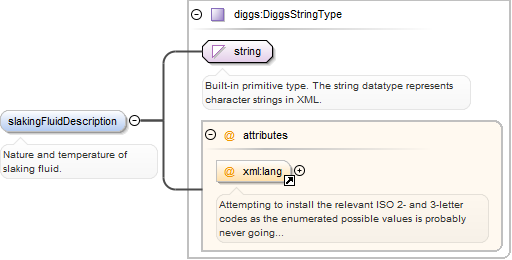
<element name="slakingFluidDescription" type="diggs:DiggsStringType" minOccurs="0"><annotation><documentation>Nature and temperature of slaking fluid.</documentation></annotation></element>
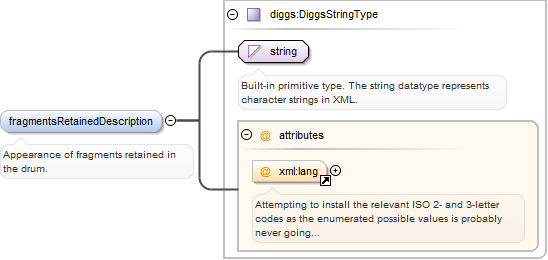
Attempting to install the relevant ISO 2- and 3-letter codes as the enumerated possible values is probably never going to be a realistic possibility. See RFC 3066 at http://www.ietf.org/rfc/rfc3066.txt and the IANA registry at http://www.iana.org/assignments/lang-tag-apps.htm for further information. The union allows for the 'un-declaration' of xml:lang with the empty string.
Source
<element name="fragmentsRetainedDescription" type="diggs:DiggsStringType" minOccurs="0"><annotation><documentation>Appearance of fragments retained in the drum.</documentation></annotation></element>
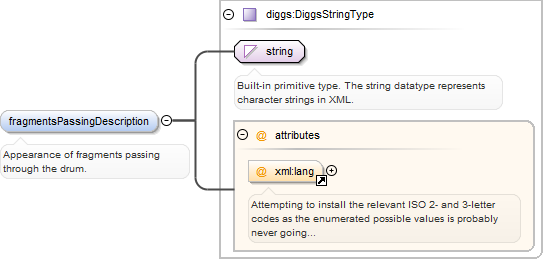
Attempting to install the relevant ISO 2- and 3-letter codes as the enumerated possible values is probably never going to be a realistic possibility. See RFC 3066 at http://www.ietf.org/rfc/rfc3066.txt and the IANA registry at http://www.iana.org/assignments/lang-tag-apps.htm for further information. The union allows for the 'un-declaration' of xml:lang with the empty string.
Source
<element name="fragmentsPassingDescription" type="diggs:DiggsStringType" minOccurs="0"><annotation><documentation>Appearance of fragments passing through the drum.</documentation></annotation></element>
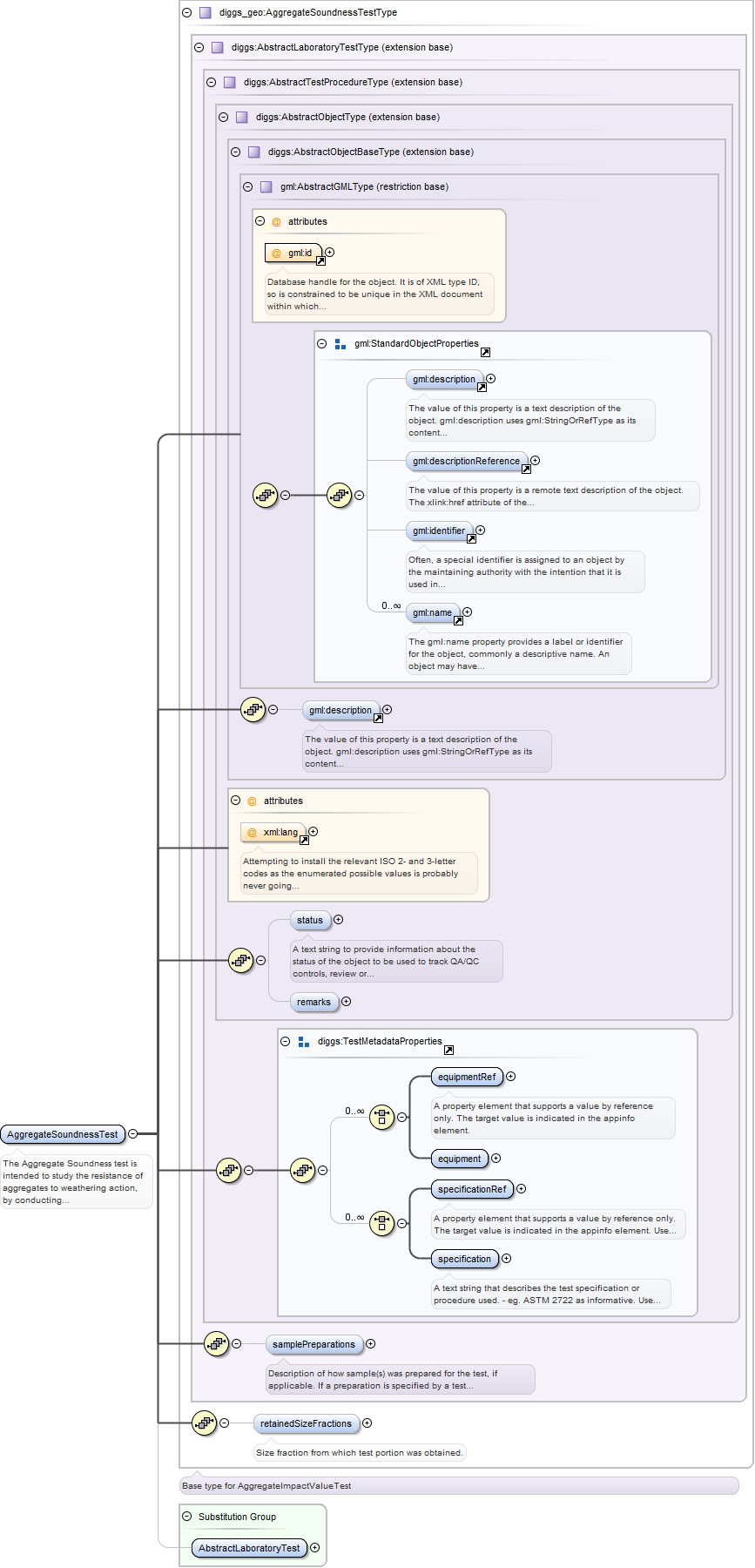
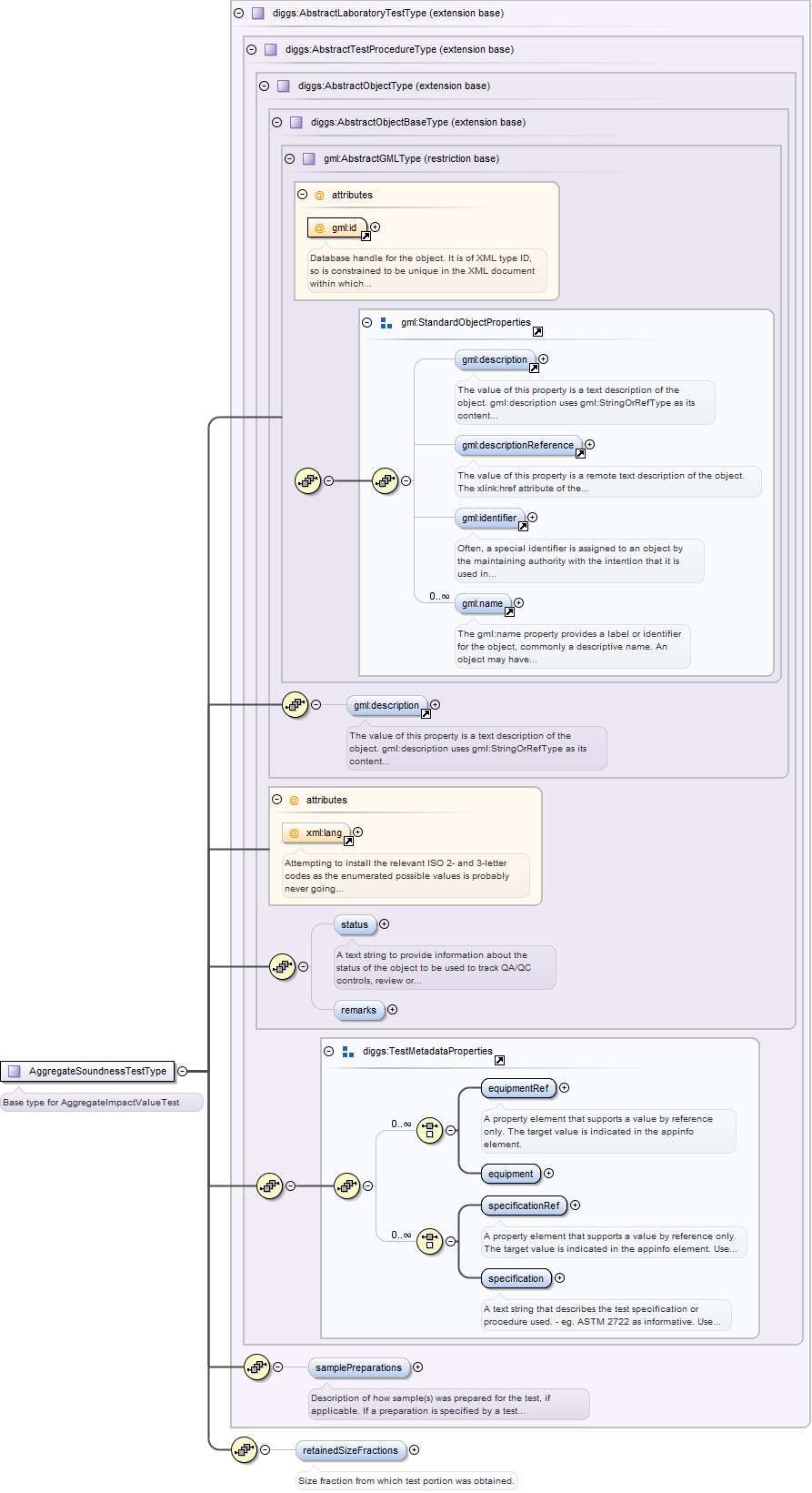
The Aggregate Soundness test is intended to study the resistance ofaggregates to weathering action, by conducting accelerated weathering test cycles.The Porous aggregates subjected to freezing and thawing are likely to disintegrateprematurely. To ascertain the durability of such aggregates, they are subjected tocycles of alternate wetting in a saturated solution of either sodium sulphate ormagnesium sulphate for 16 - 18 hours and then dried in oven at to a constant weight.After five cycles, the loss in weight of aggregates is determined by sieving out allundersized particles and weighing.
Database handle for the object. It is of XML type ID, so is constrained to beunique in the XML document within which it occurs. An external identifier for the object inthe form of a URI may be constructed using standard XML and XPointer methods. This is doneby concatenating the URI for the document, a fragment separator, and the value of the idattribute.
Attempting to install the relevant ISO 2- and 3-letter codes as the enumerated possible values is probably never going to be a realistic possibility. See RFC 3066 at http://www.ietf.org/rfc/rfc3066.txt and the IANA registry at http://www.iana.org/assignments/lang-tag-apps.htm for further information. The union allows for the 'un-declaration' of xml:lang with the empty string.
Source
<element name="AggregateSoundnessTest" type="diggs_geo:AggregateSoundnessTestType" abstract="false" substitutionGroup="diggs:AbstractLaboratoryTest"><annotation><documentation>The Aggregate Soundness test is intended to study the resistance of aggregates to weathering action, by conducting accelerated weathering test cycles. The Porous aggregates subjected to freezing and thawing are likely to disintegrate prematurely. To ascertain the durability of such aggregates, they are subjected to cycles of alternate wetting in a saturated solution of either sodium sulphate or magnesium sulphate for 16 - 18 hours and then dried in oven at to a constant weight. After five cycles, the loss in weight of aggregates is determined by sieving out all undersized particles and weighing.</documentation></annotation></element>
<element name="retainedSizeFractions" type="diggs_geo:GradingPropertyType" minOccurs="0"><annotation><documentation>Size fraction from which test portion was obtained.</documentation></annotation></element>
Schema location
http://diggsml.org/2.0a/schemas/Geotechnical.xsd
Element diggs_geo:AggregateTenPercentFinesTest
Namespace
http://schemas.diggsml.com/2.0.a/geotechnical
Annotations
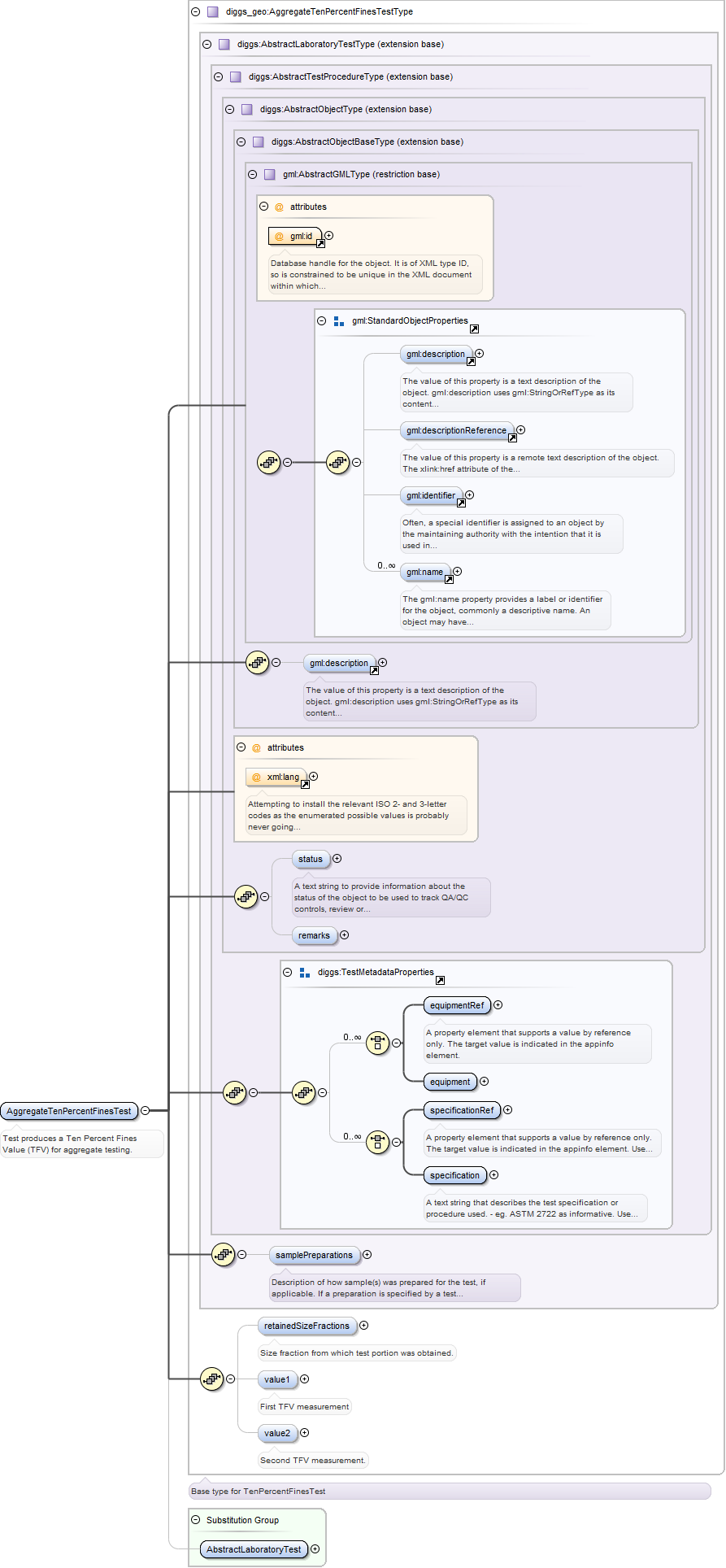
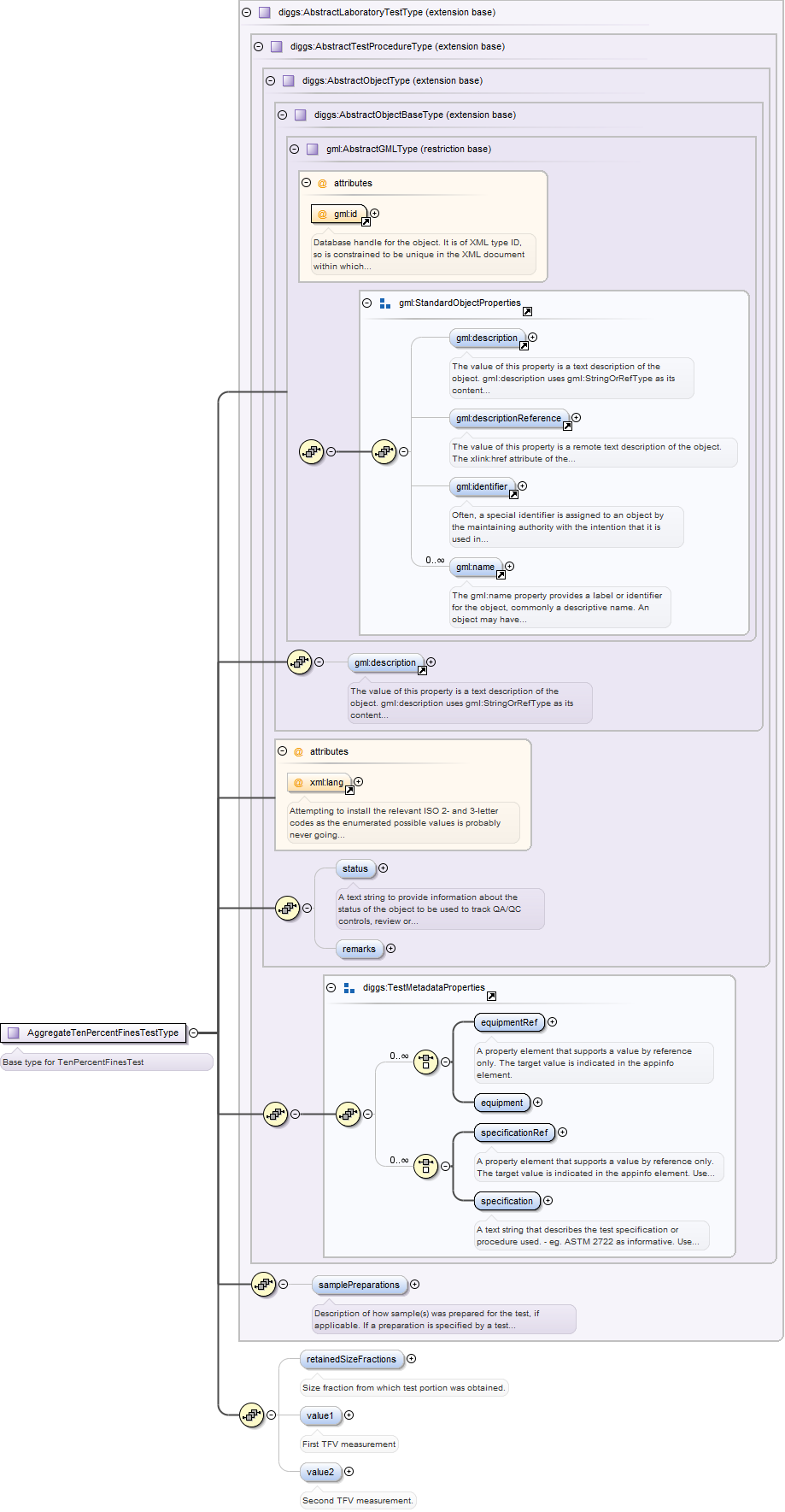
Test produces a Ten Percent Fines Value (TFV) for aggregatetesting.
Database handle for the object. It is of XML type ID, so is constrained to beunique in the XML document within which it occurs. An external identifier for the object inthe form of a URI may be constructed using standard XML and XPointer methods. This is doneby concatenating the URI for the document, a fragment separator, and the value of the idattribute.
Attempting to install the relevant ISO 2- and 3-letter codes as the enumerated possible values is probably never going to be a realistic possibility. See RFC 3066 at http://www.ietf.org/rfc/rfc3066.txt and the IANA registry at http://www.iana.org/assignments/lang-tag-apps.htm for further information. The union allows for the 'un-declaration' of xml:lang with the empty string.
Source
<element name="AggregateTenPercentFinesTest" type="diggs_geo:AggregateTenPercentFinesTestType" abstract="false" substitutionGroup="diggs:AbstractLaboratoryTest"><annotation><documentation>Test produces a Ten Percent Fines Value (TFV) for aggregate testing.</documentation></annotation></element>
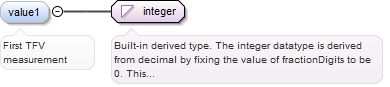
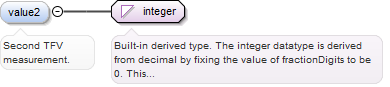
<element name="retainedSizeFractions" type="diggs_geo:GradingPropertyType" minOccurs="0"><annotation><documentation>Size fraction from which test portion was obtained.</documentation></annotation></element>
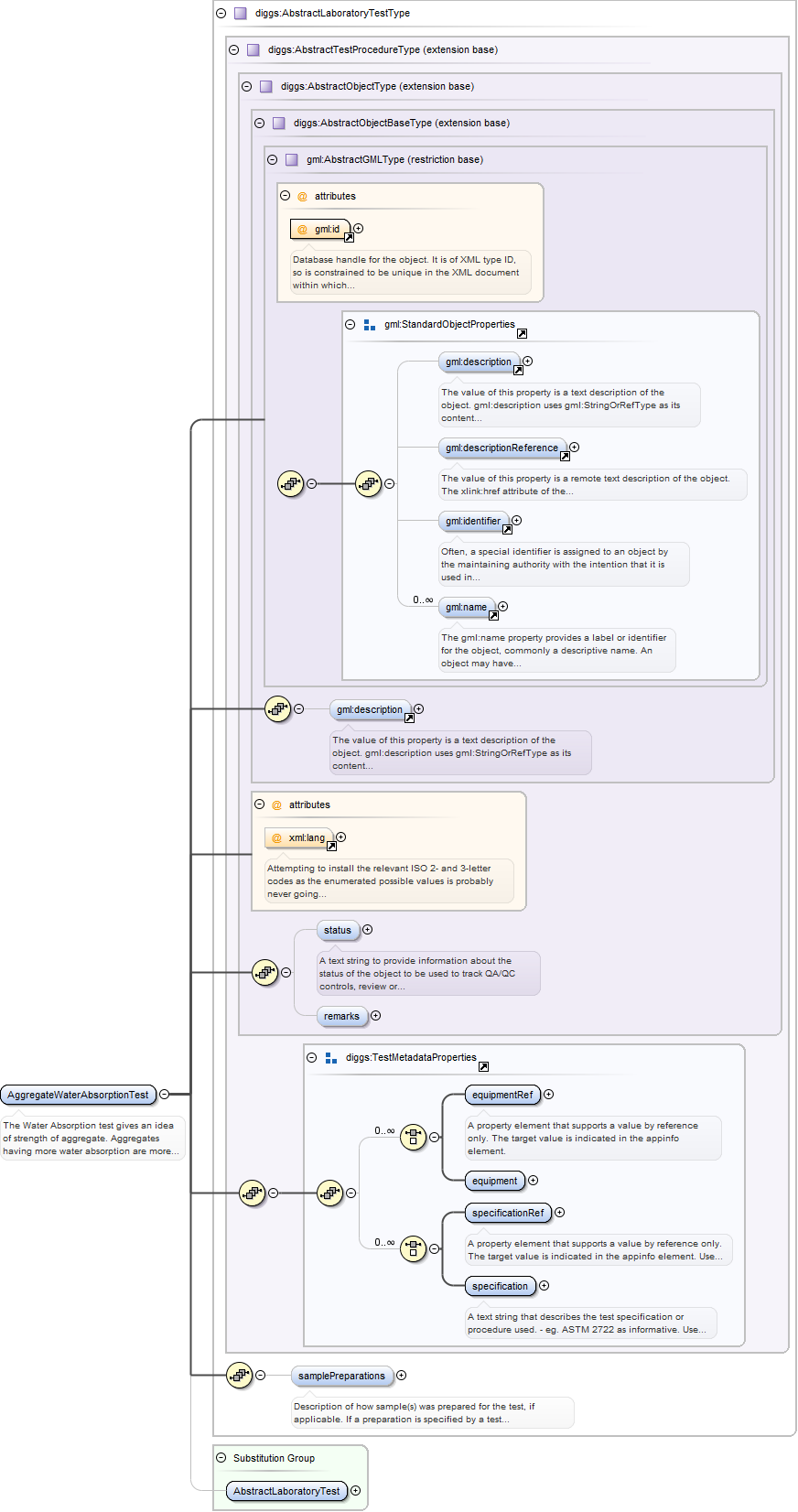
The Water Absorption test gives an idea of strength of aggregate.Aggregates having more water absorption are more porous in nature and are generallyconsidered unsuitable unless they are found to be acceptable based on strength,impact, and hardness tests.
Database handle for the object. It is of XML type ID, so is constrained to beunique in the XML document within which it occurs. An external identifier for the object inthe form of a URI may be constructed using standard XML and XPointer methods. This is doneby concatenating the URI for the document, a fragment separator, and the value of the idattribute.
Attempting to install the relevant ISO 2- and 3-letter codes as the enumerated possible values is probably never going to be a realistic possibility. See RFC 3066 at http://www.ietf.org/rfc/rfc3066.txt and the IANA registry at http://www.iana.org/assignments/lang-tag-apps.htm for further information. The union allows for the 'un-declaration' of xml:lang with the empty string.
Source
<element name="AggregateWaterAbsorptionTest" type="diggs:AbstractLaboratoryTestType" abstract="false" substitutionGroup="diggs:AbstractLaboratoryTest"><annotation><documentation>The Water Absorption test gives an idea of strength of aggregate. Aggregates having more water absorption are more porous in nature and are generally considered unsuitable unless they are found to be acceptable based on strength, impact, and hardness tests.</documentation></annotation></element>
Schema location
http://diggsml.org/2.0a/schemas/Geotechnical.xsd
Element diggs_geo:AtterbergLimitsTest
Namespace
http://schemas.diggsml.com/2.0.a/geotechnical
Annotations
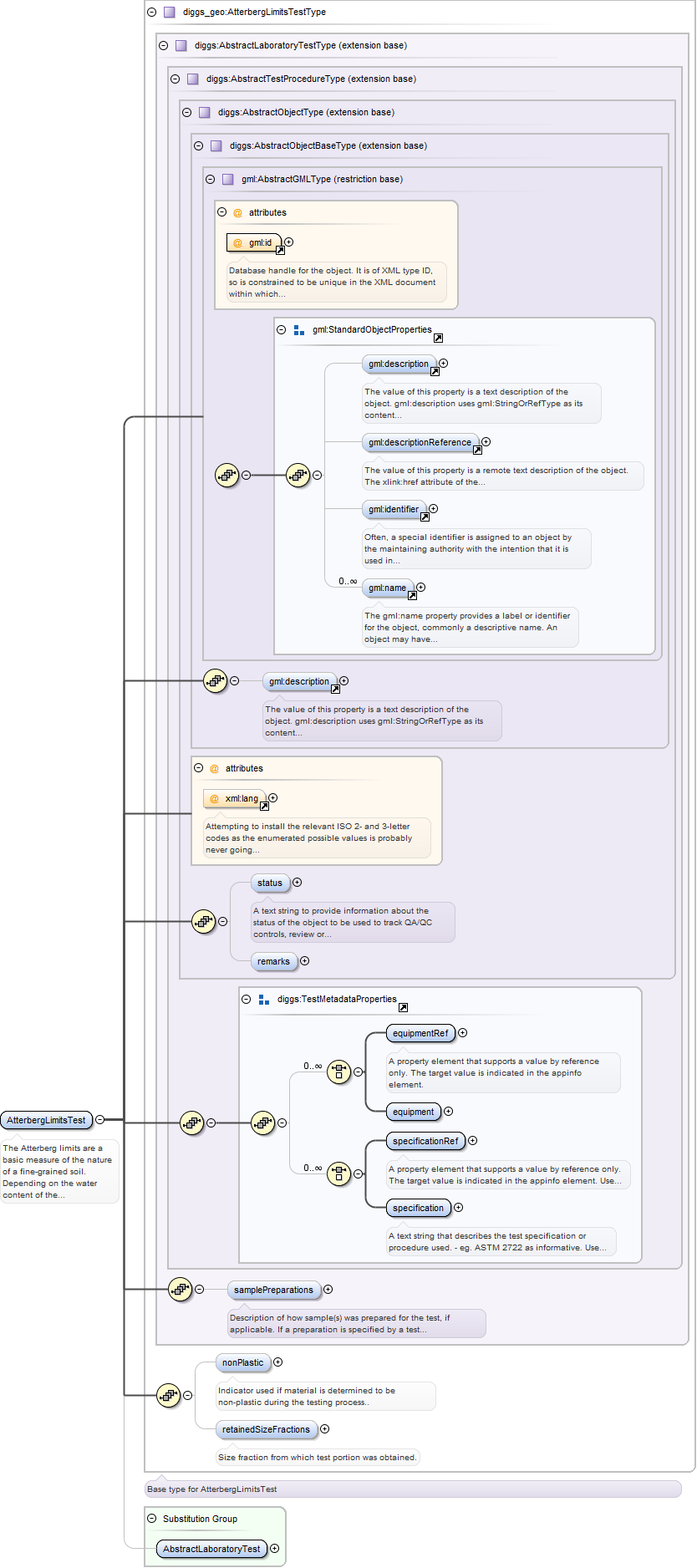
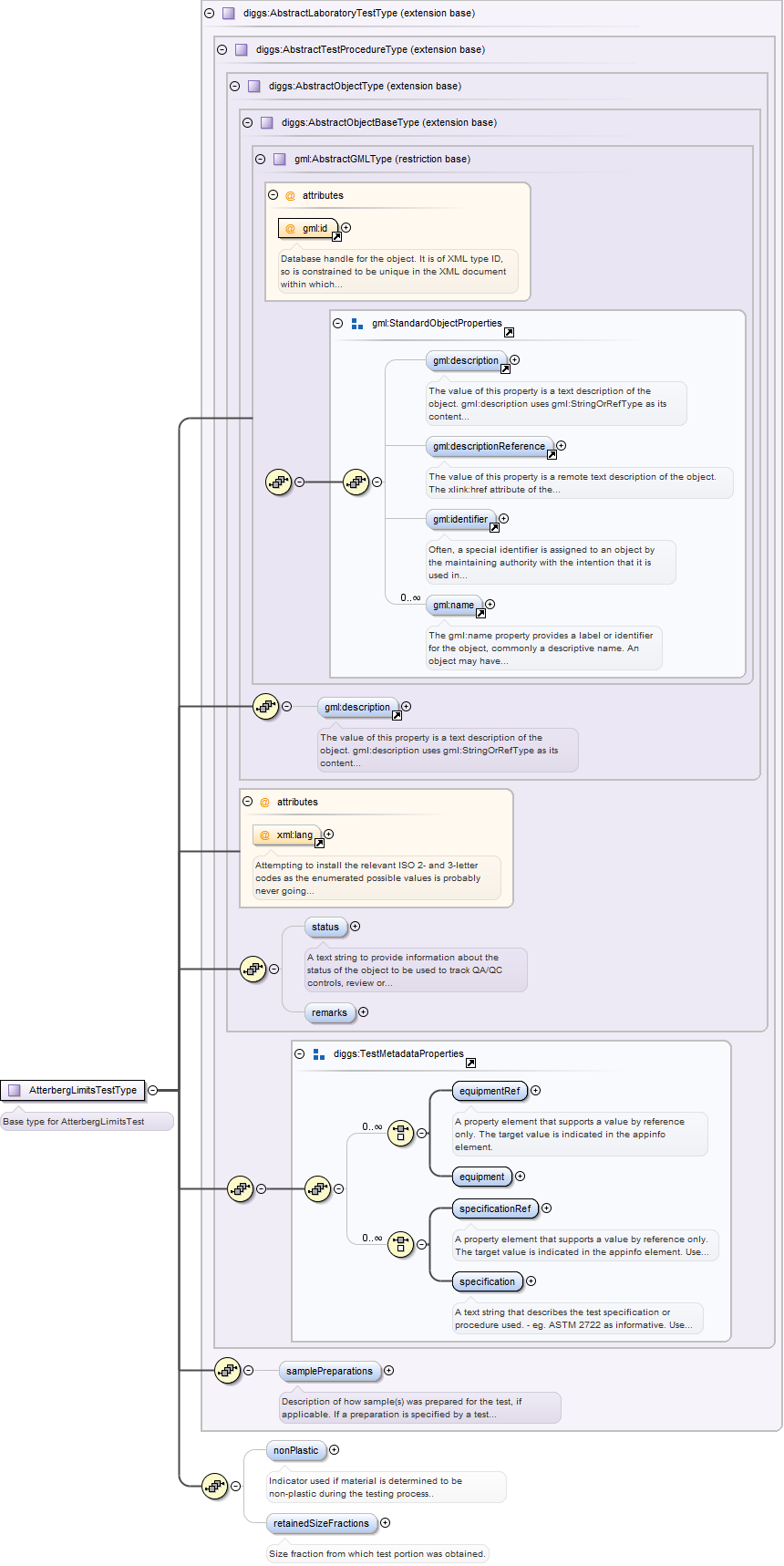
The Atterberg limits are a basic measure of the nature of a fine-grainedsoil. Depending on the water content of the soil, it may appear in four states:solid, semi-solid, plastic and liquid. In each state the consistency and behavior ofa soil is different and thus so are its engineering properties. Thus, the boundarybetween each state can be defined based on a change in the soil's behavior. TheAtterberg limits can be used to distinguish between silt and clay, and it candistinguish between different types of silts and clays.
Database handle for the object. It is of XML type ID, so is constrained to beunique in the XML document within which it occurs. An external identifier for the object inthe form of a URI may be constructed using standard XML and XPointer methods. This is doneby concatenating the URI for the document, a fragment separator, and the value of the idattribute.
Attempting to install the relevant ISO 2- and 3-letter codes as the enumerated possible values is probably never going to be a realistic possibility. See RFC 3066 at http://www.ietf.org/rfc/rfc3066.txt and the IANA registry at http://www.iana.org/assignments/lang-tag-apps.htm for further information. The union allows for the 'un-declaration' of xml:lang with the empty string.
Source
<element name="AtterbergLimitsTest" type="diggs_geo:AtterbergLimitsTestType" abstract="false" substitutionGroup="diggs:AbstractLaboratoryTest"><annotation><documentation>The Atterberg limits are a basic measure of the nature of a fine-grained soil. Depending on the water content of the soil, it may appear in four states: solid, semi-solid, plastic and liquid. In each state the consistency and behavior of a soil is different and thus so are its engineering properties. Thus, the boundary between each state can be defined based on a change in the soil's behavior. The Atterberg limits can be used to distinguish between silt and clay, and it can distinguish between different types of silts and clays.</documentation></annotation></element>
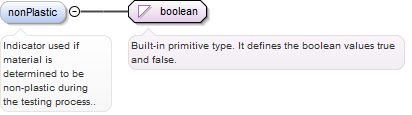
Indicator used if material is determined to benon-plastic during the testing process..
Diagram
Type
boolean
Properties
content:
simple
minOccurs:
0
default:
false
Source
<element name="nonPlastic" type="boolean" default="false" minOccurs="0"><annotation><documentation>Indicator used if material is determined to be non-plastic during the testing process..</documentation></annotation></element>
<element name="retainedSizeFractions" type="diggs_geo:GradingPropertyType" minOccurs="0"><annotation><documentation>Size fraction from which test portion was obtained.</documentation></annotation></element>
Schema location
http://diggsml.org/2.0a/schemas/Geotechnical.xsd
Element diggs_geo:CationExchangeTest
Namespace
http://schemas.diggsml.com/2.0.a/geotechnical
Annotations
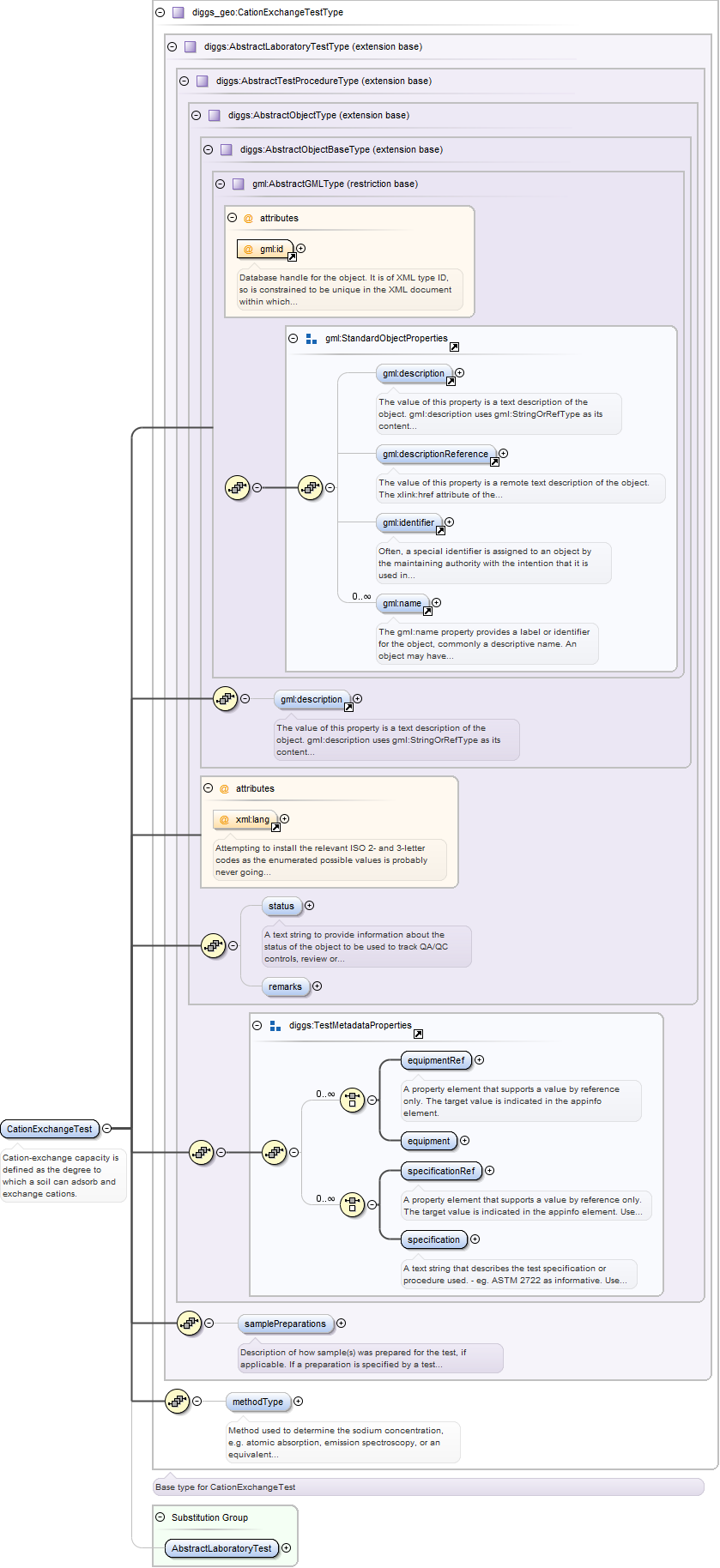
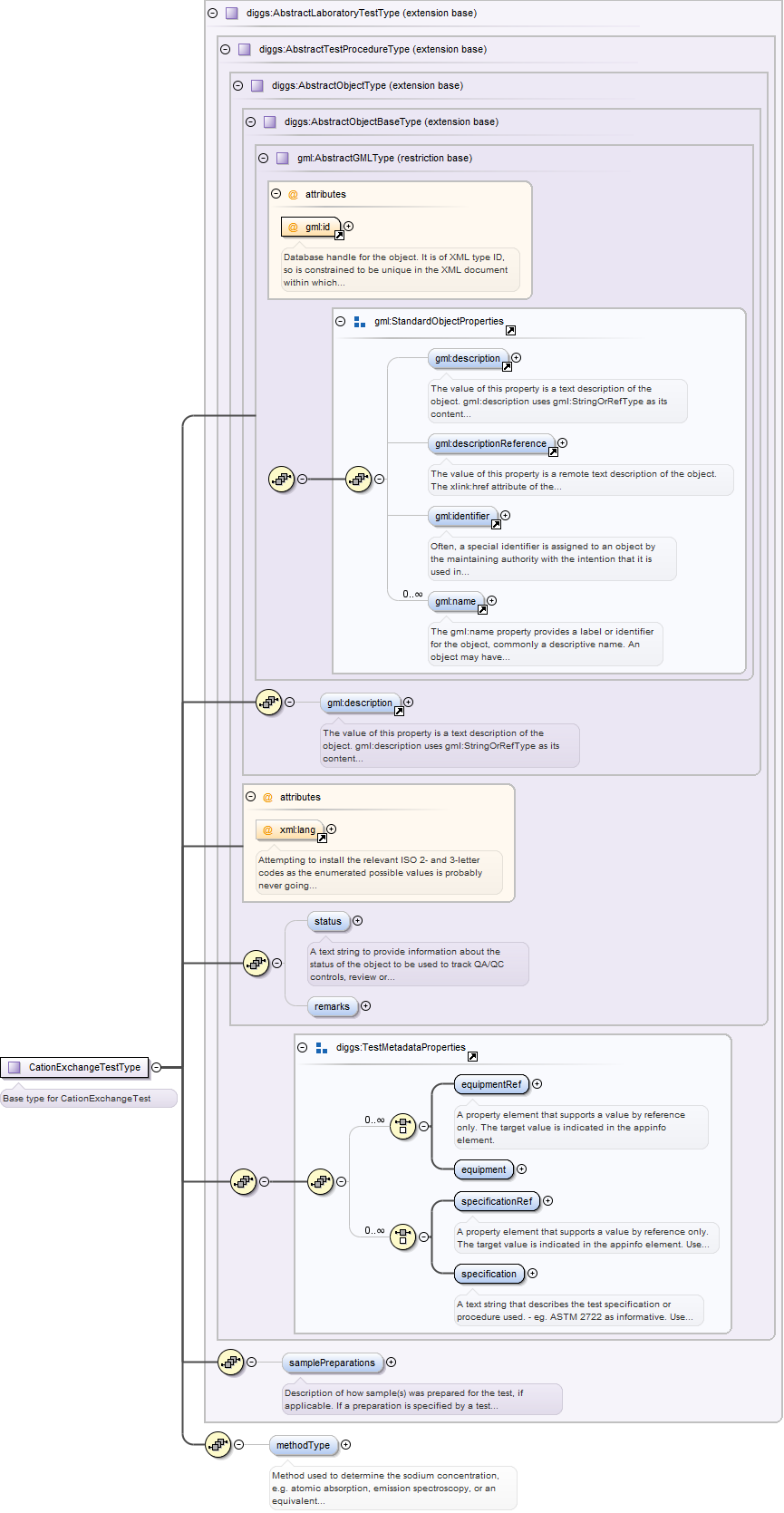
Cation-exchange capacity is defined as the degree to which a soil canadsorb and exchange cations.
Database handle for the object. It is of XML type ID, so is constrained to beunique in the XML document within which it occurs. An external identifier for the object inthe form of a URI may be constructed using standard XML and XPointer methods. This is doneby concatenating the URI for the document, a fragment separator, and the value of the idattribute.
Attempting to install the relevant ISO 2- and 3-letter codes as the enumerated possible values is probably never going to be a realistic possibility. See RFC 3066 at http://www.ietf.org/rfc/rfc3066.txt and the IANA registry at http://www.iana.org/assignments/lang-tag-apps.htm for further information. The union allows for the 'un-declaration' of xml:lang with the empty string.
Source
<element name="CationExchangeTest" type="diggs_geo:CationExchangeTestType" abstract="false" substitutionGroup="diggs:AbstractLaboratoryTest"><annotation><documentation>Cation-exchange capacity is defined as the degree to which a soil can adsorb and exchange cations.</documentation></annotation></element>
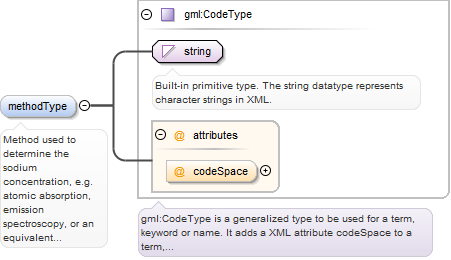
<element name="methodType" type="gml:CodeType" default="false" minOccurs="0"><annotation><documentation>Method used to determine the sodium concentration, e.g. atomic absorption, emission spectroscopy, or an equivalent method.</documentation></annotation></element>
Schema location
http://diggsml.org/2.0a/schemas/Geotechnical.xsd
Element diggs_geo:ChalkCrushingValueTest
Namespace
http://schemas.diggsml.com/2.0.a/geotechnical
Annotations
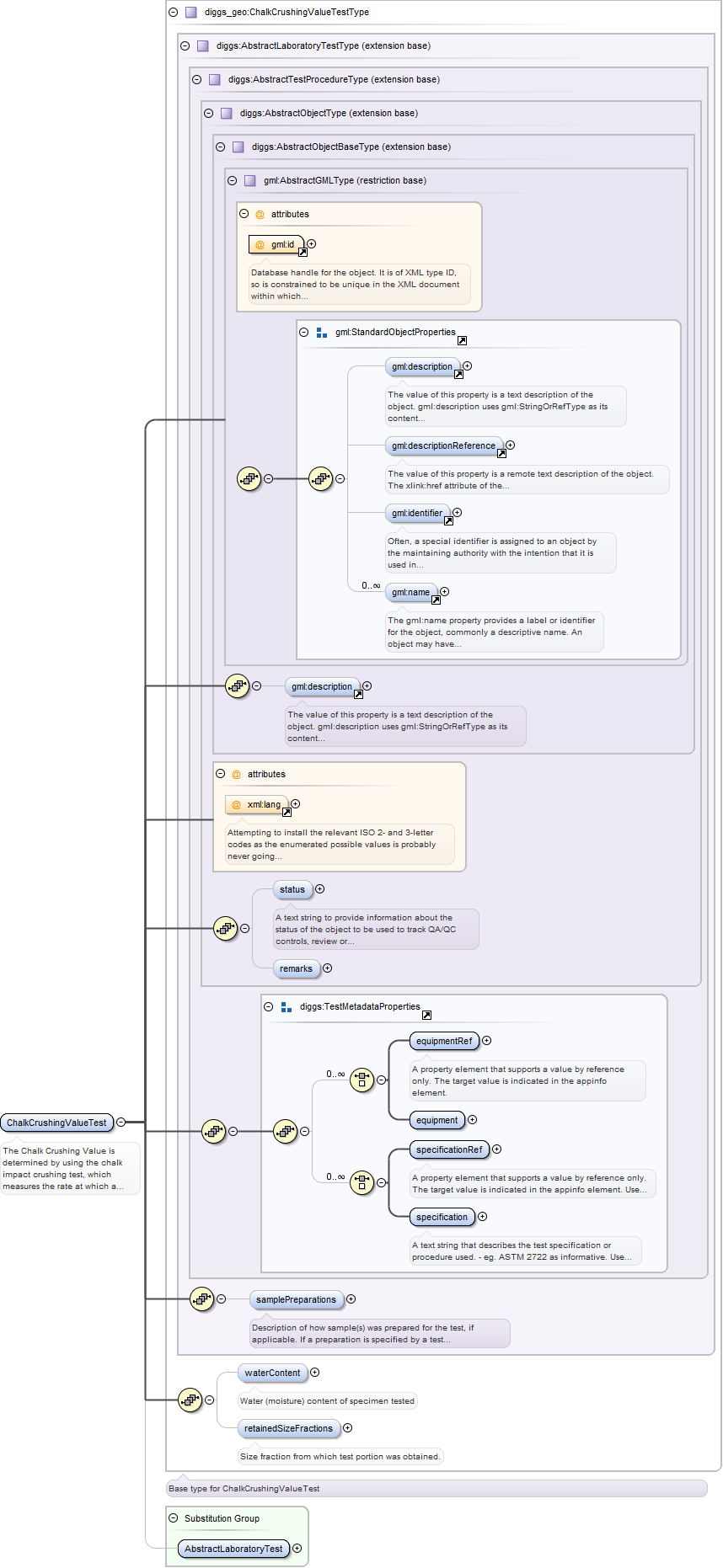
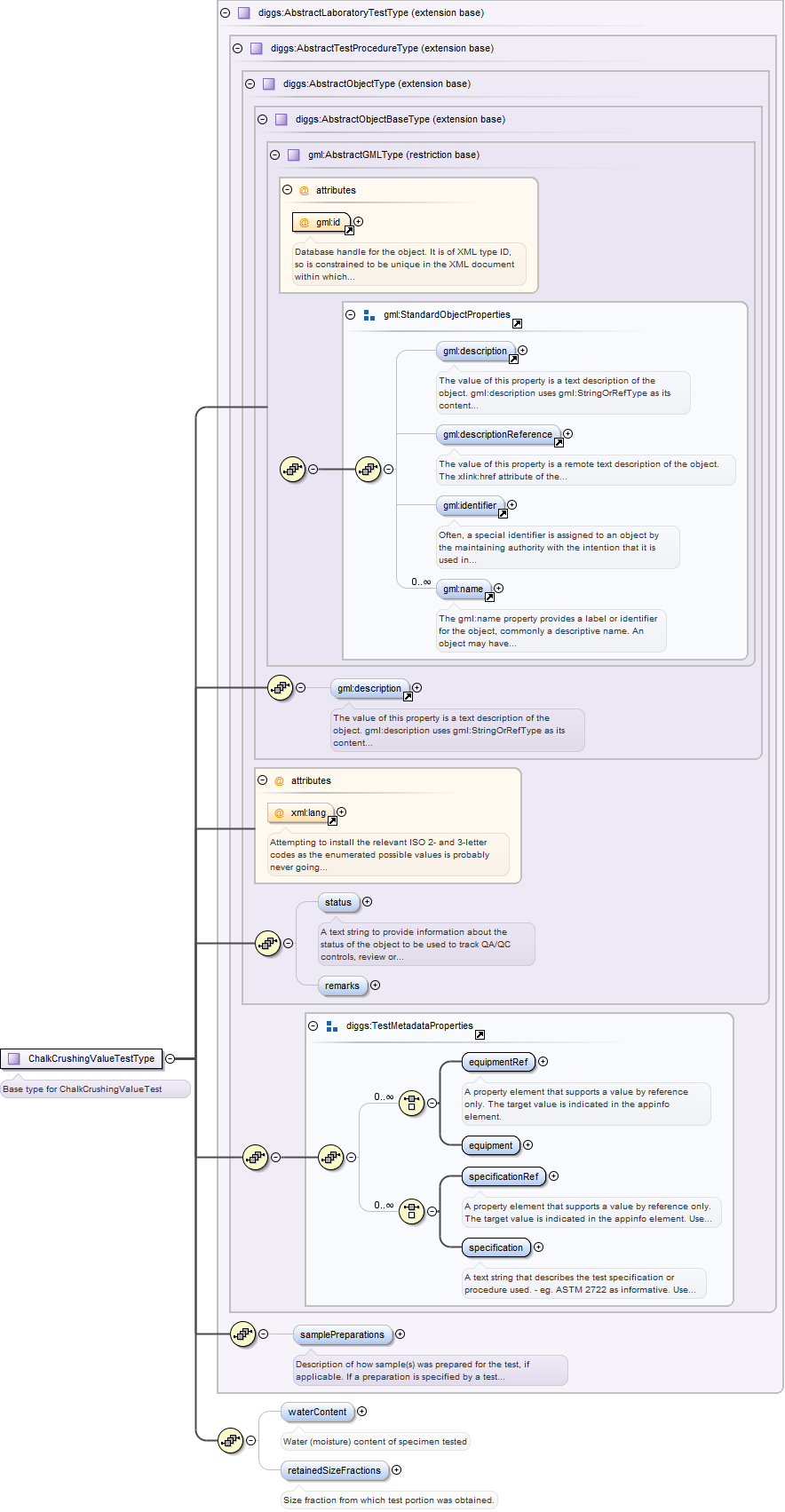
The Chalk Crushing Value is determined by using the chalk impact crushingtest, which measures the rate at which a sample of chalk lumps crushes under impactsfrom a freefalling rammer. The chalk crushing value can be used, together with thesaturation moisture content of the intact chalk lumps, to classify chalk in relationto its behaviour as a freshly placed fill material. The test procedure is describedfor a single sample of chalk lumps, but normal procedure should be to calculate themean value derived from six such tests on representative samples.
Database handle for the object. It is of XML type ID, so is constrained to beunique in the XML document within which it occurs. An external identifier for the object inthe form of a URI may be constructed using standard XML and XPointer methods. This is doneby concatenating the URI for the document, a fragment separator, and the value of the idattribute.
Attempting to install the relevant ISO 2- and 3-letter codes as the enumerated possible values is probably never going to be a realistic possibility. See RFC 3066 at http://www.ietf.org/rfc/rfc3066.txt and the IANA registry at http://www.iana.org/assignments/lang-tag-apps.htm for further information. The union allows for the 'un-declaration' of xml:lang with the empty string.
Source
<element name="ChalkCrushingValueTest" type="diggs_geo:ChalkCrushingValueTestType" abstract="false" substitutionGroup="diggs:AbstractLaboratoryTest"><annotation><documentation>The Chalk Crushing Value is determined by using the chalk impact crushing test, which measures the rate at which a sample of chalk lumps crushes under impacts from a freefalling rammer. The chalk crushing value can be used, together with the saturation moisture content of the intact chalk lumps, to classify chalk in relation to its behaviour as a freshly placed fill material. The test procedure is described for a single sample of chalk lumps, but normal procedure should be to calculate the mean value derived from six such tests on representative samples.</documentation></annotation></element>
<element name="retainedSizeFractions" type="diggs_geo:GradingPropertyType" minOccurs="0"><annotation><documentation>Size fraction from which test portion was obtained.</documentation></annotation></element>
Schema location
http://diggsml.org/2.0a/schemas/Geotechnical.xsd
Element diggs_geo:CompactionTest
Namespace
http://schemas.diggsml.com/2.0.a/geotechnical
Annotations
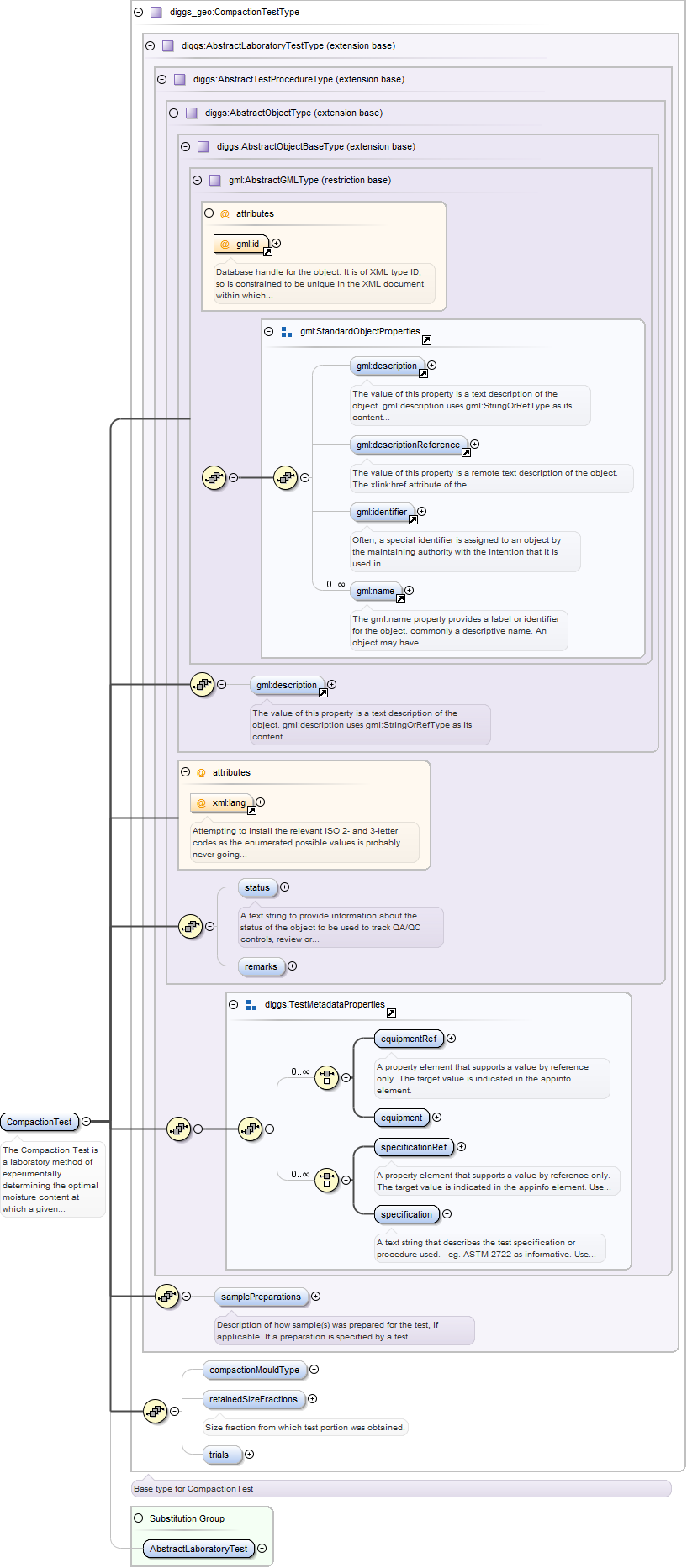
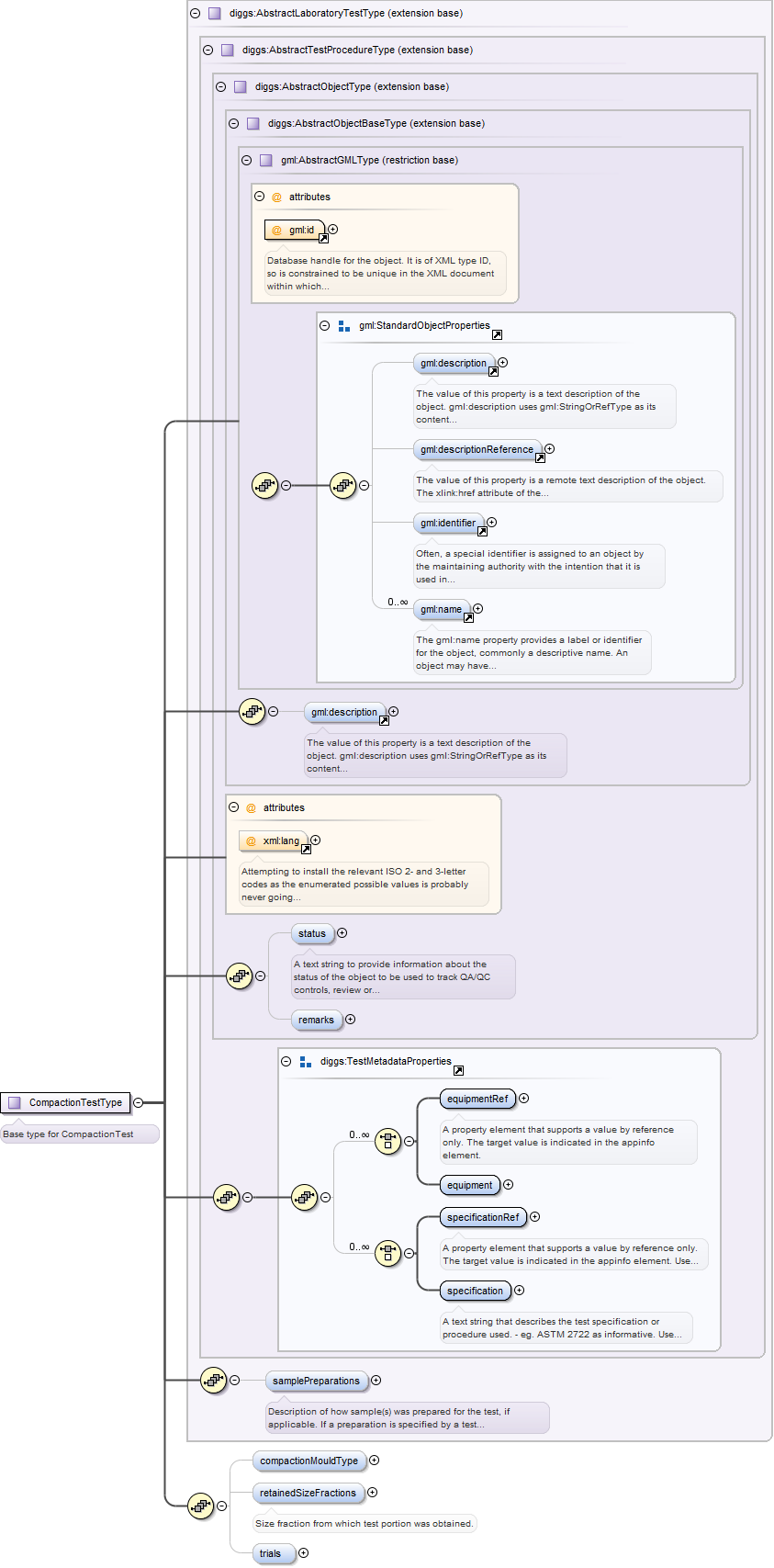
The Compaction Test is a laboratory method of experimentally determiningthe optimal moisture content at which a given soil type will become most dense andachieve its maximum dry density.
Database handle for the object. It is of XML type ID, so is constrained to beunique in the XML document within which it occurs. An external identifier for the object inthe form of a URI may be constructed using standard XML and XPointer methods. This is doneby concatenating the URI for the document, a fragment separator, and the value of the idattribute.
Attempting to install the relevant ISO 2- and 3-letter codes as the enumerated possible values is probably never going to be a realistic possibility. See RFC 3066 at http://www.ietf.org/rfc/rfc3066.txt and the IANA registry at http://www.iana.org/assignments/lang-tag-apps.htm for further information. The union allows for the 'un-declaration' of xml:lang with the empty string.
Source
<element name="CompactionTest" type="diggs_geo:CompactionTestType" abstract="false" substitutionGroup="diggs:AbstractLaboratoryTest"><annotation><documentation>The Compaction Test is a laboratory method of experimentally determining the optimal moisture content at which a given soil type will become most dense and achieve its maximum dry density.</documentation></annotation></element>
<element name="retainedSizeFractions" type="diggs_geo:GradingPropertyType" minOccurs="0"><annotation><documentation>Size fraction from which test portion was obtained.</documentation></annotation></element>
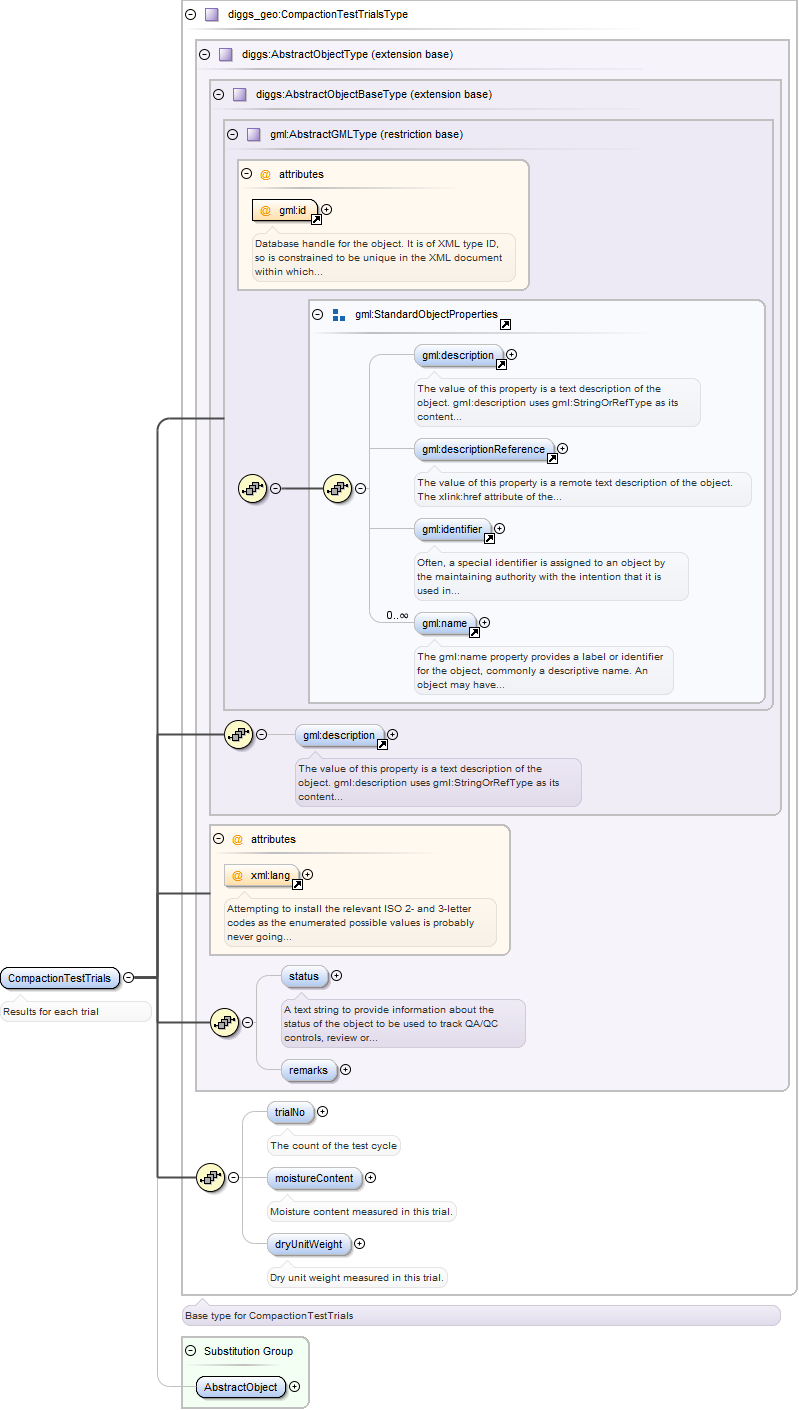
Database handle for the object. It is of XML type ID, so is constrained to beunique in the XML document within which it occurs. An external identifier for the object inthe form of a URI may be constructed using standard XML and XPointer methods. This is doneby concatenating the URI for the document, a fragment separator, and the value of the idattribute.
Attempting to install the relevant ISO 2- and 3-letter codes as the enumerated possible values is probably never going to be a realistic possibility. See RFC 3066 at http://www.ietf.org/rfc/rfc3066.txt and the IANA registry at http://www.iana.org/assignments/lang-tag-apps.htm for further information. The union allows for the 'un-declaration' of xml:lang with the empty string.
Source
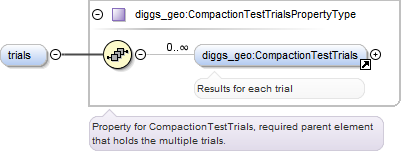
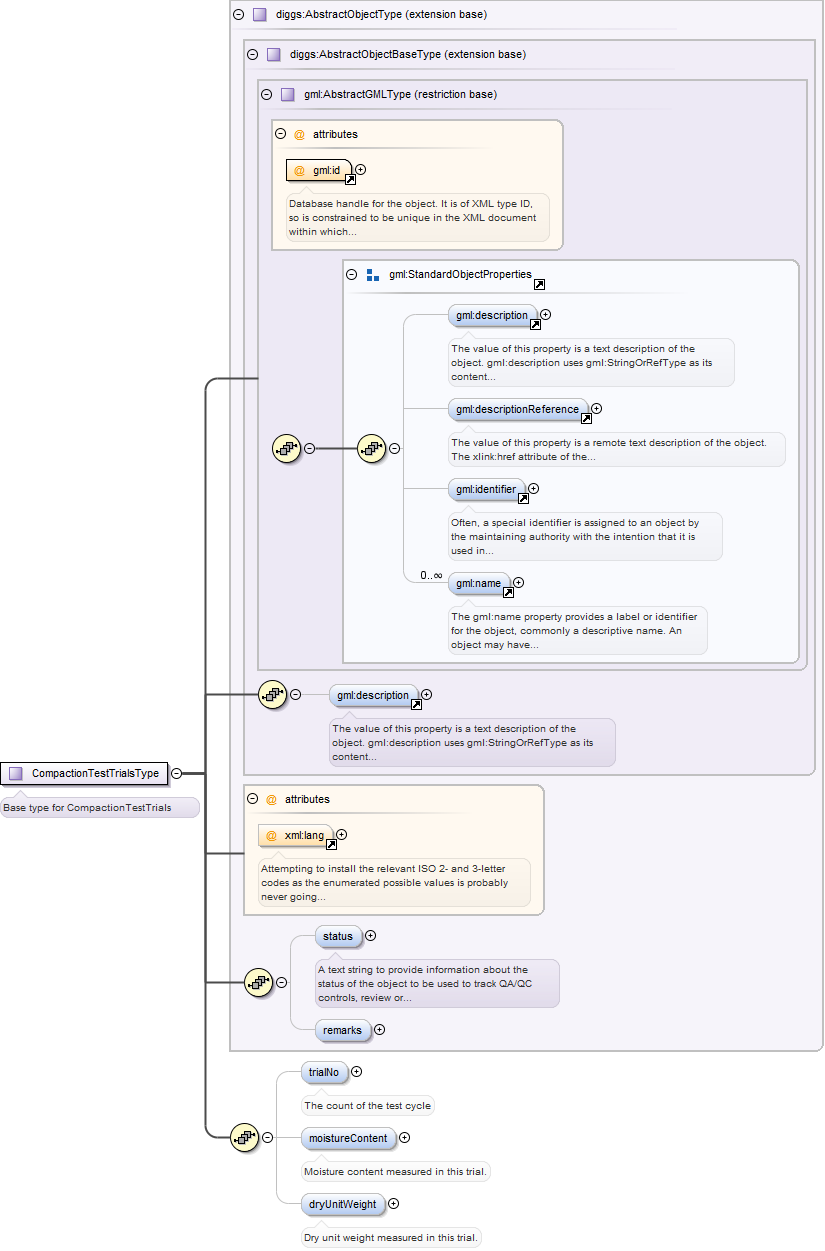
<element name="CompactionTestTrials" type="diggs_geo:CompactionTestTrialsType" abstract="false" substitutionGroup="diggs:AbstractObject"><annotation><documentation>Results for each trial</documentation></annotation></element>
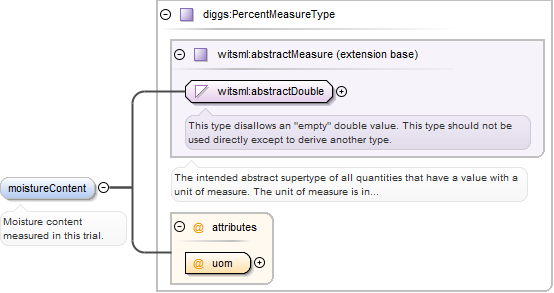
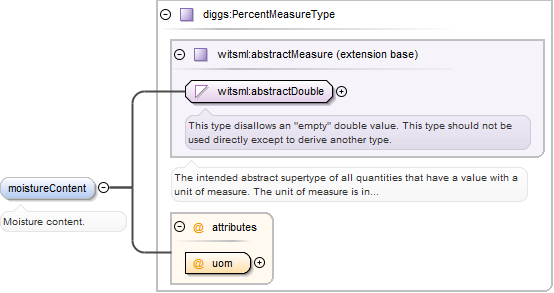
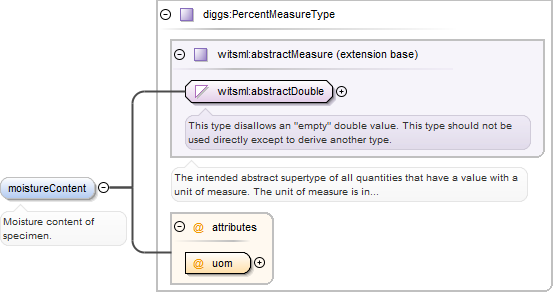
<element name="moistureContent" type="diggs:PercentMeasureType" minOccurs="0"><annotation><documentation>Moisture content measured in this trial.</documentation></annotation></element>
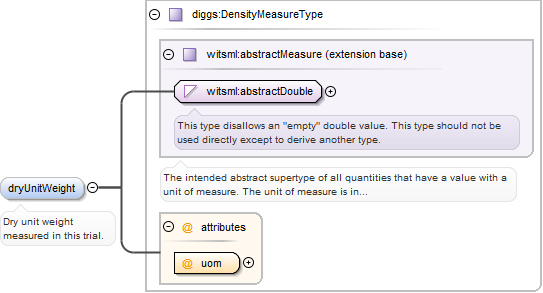
<element name="dryUnitWeight" type="diggs:DensityMeasureType" minOccurs="0"><annotation><documentation>Dry unit weight measured in this trial.</documentation></annotation></element>
Schema location
http://diggsml.org/2.0a/schemas/Geotechnical.xsd
Element diggs_geo:CompressiveStrengthTest
Namespace
http://schemas.diggsml.com/2.0.a/geotechnical
Annotations
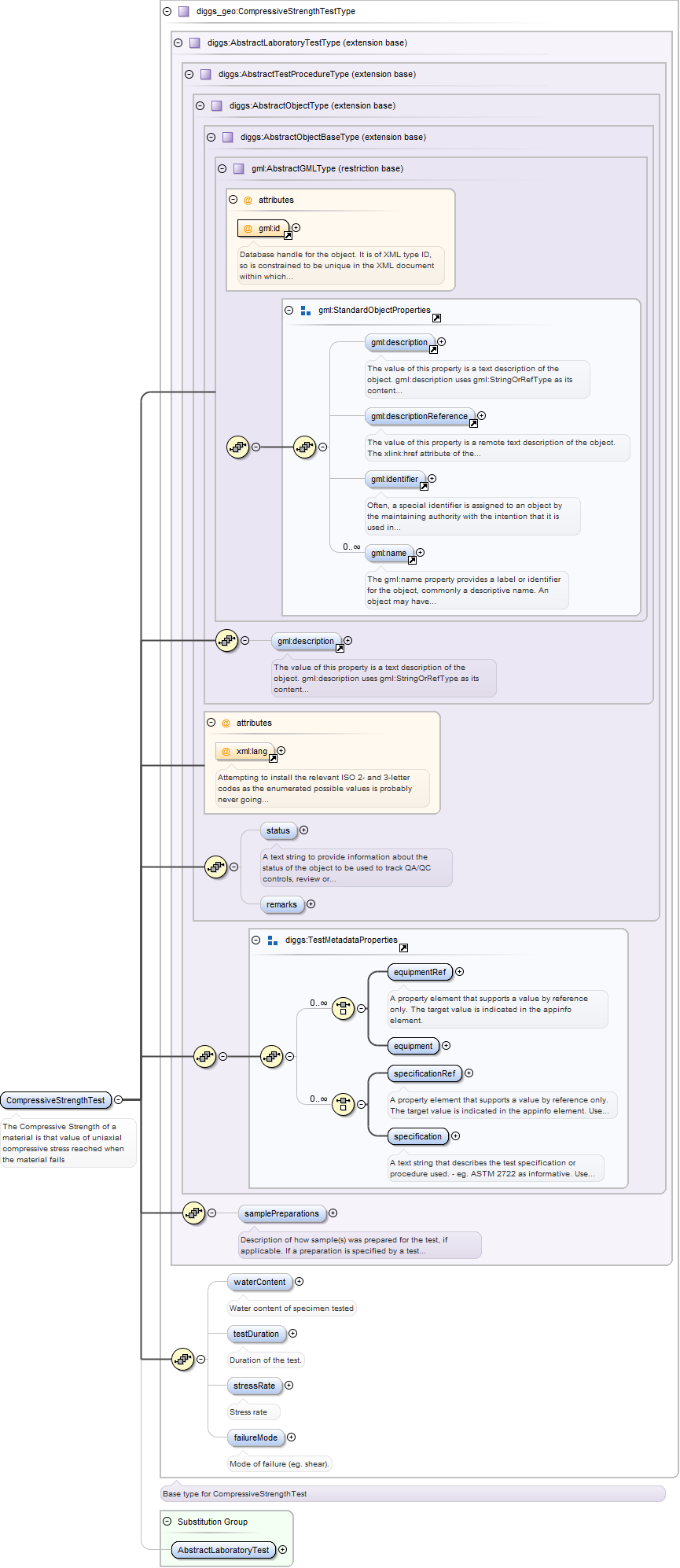
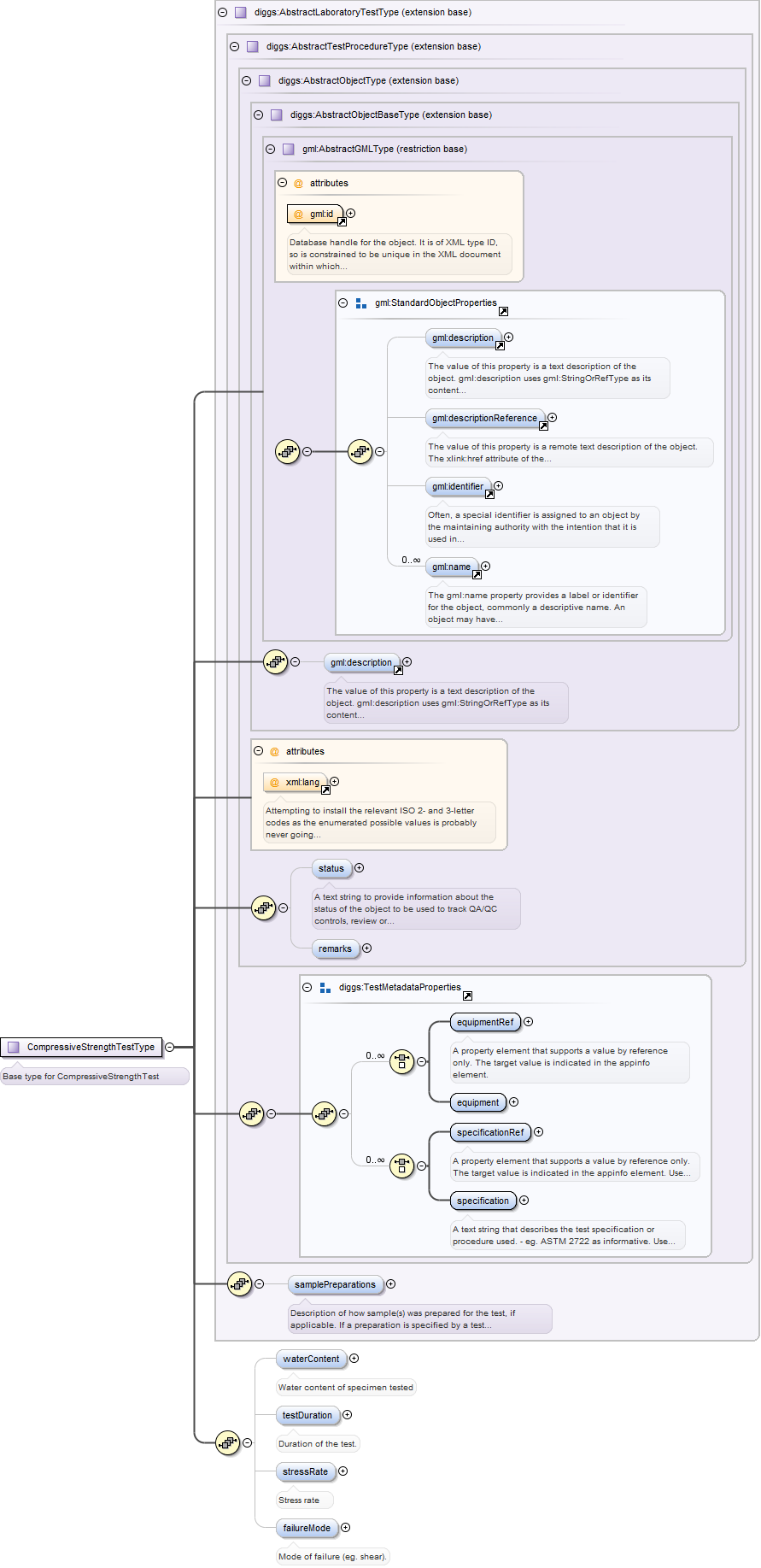
The Compressive Strength of a material is that value of uniaxialcompressive stress reached when the material fails
Database handle for the object. It is of XML type ID, so is constrained to beunique in the XML document within which it occurs. An external identifier for the object inthe form of a URI may be constructed using standard XML and XPointer methods. This is doneby concatenating the URI for the document, a fragment separator, and the value of the idattribute.
Attempting to install the relevant ISO 2- and 3-letter codes as the enumerated possible values is probably never going to be a realistic possibility. See RFC 3066 at http://www.ietf.org/rfc/rfc3066.txt and the IANA registry at http://www.iana.org/assignments/lang-tag-apps.htm for further information. The union allows for the 'un-declaration' of xml:lang with the empty string.
Source
<element name="CompressiveStrengthTest" type="diggs_geo:CompressiveStrengthTestType" abstract="false" substitutionGroup="diggs:AbstractLaboratoryTest"><annotation><documentation>The Compressive Strength of a material is that value of uniaxial compressive stress reached when the material fails</documentation></annotation></element>
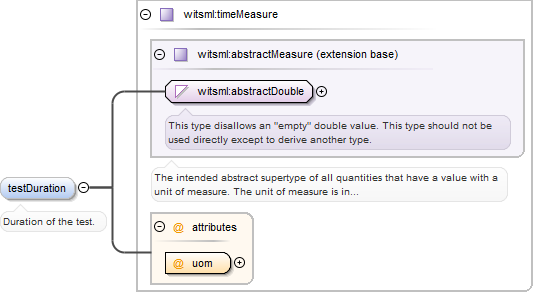
<element name="testDuration" type="witsml:timeMeasure" minOccurs="0"><annotation><documentation>Duration of the test.</documentation></annotation></element>
Replace tab, line feed and carriage return with a space, collapse contiguous sequences of spaces to a single space and then remove leading and trailing spaces.
minLength
1
The empty string is not allowed.This constraint conbined with the whiteSpace collapse constraint meansthat a blank value is not allowed.
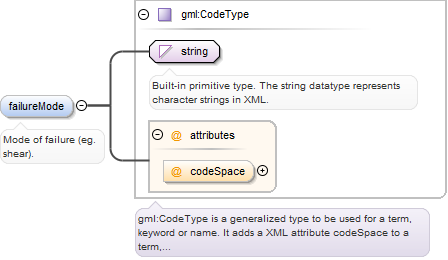
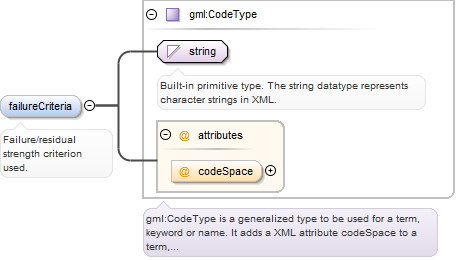
<element name="failureMode" type="gml:CodeType" minOccurs="0"><annotation><documentation>Mode of failure (eg. shear).</documentation></annotation></element>
Schema location
http://diggsml.org/2.0a/schemas/Geotechnical.xsd
Element diggs_geo:ConsolidationTest
Namespace
http://schemas.diggsml.com/2.0.a/geotechnical
Annotations
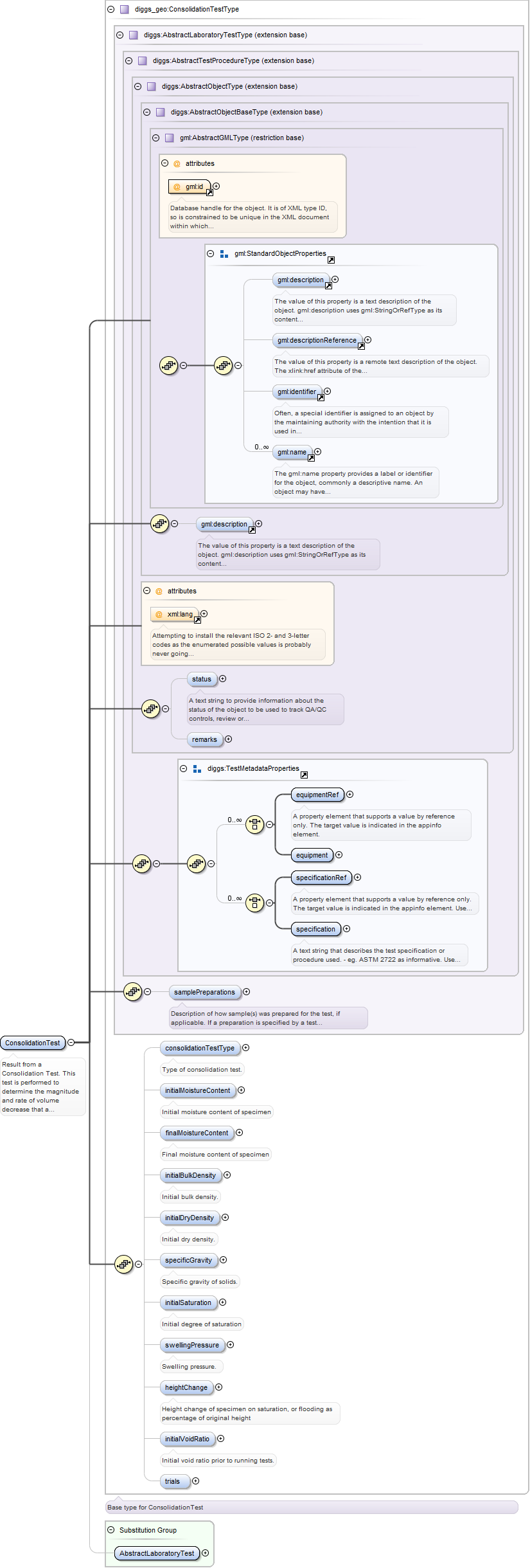
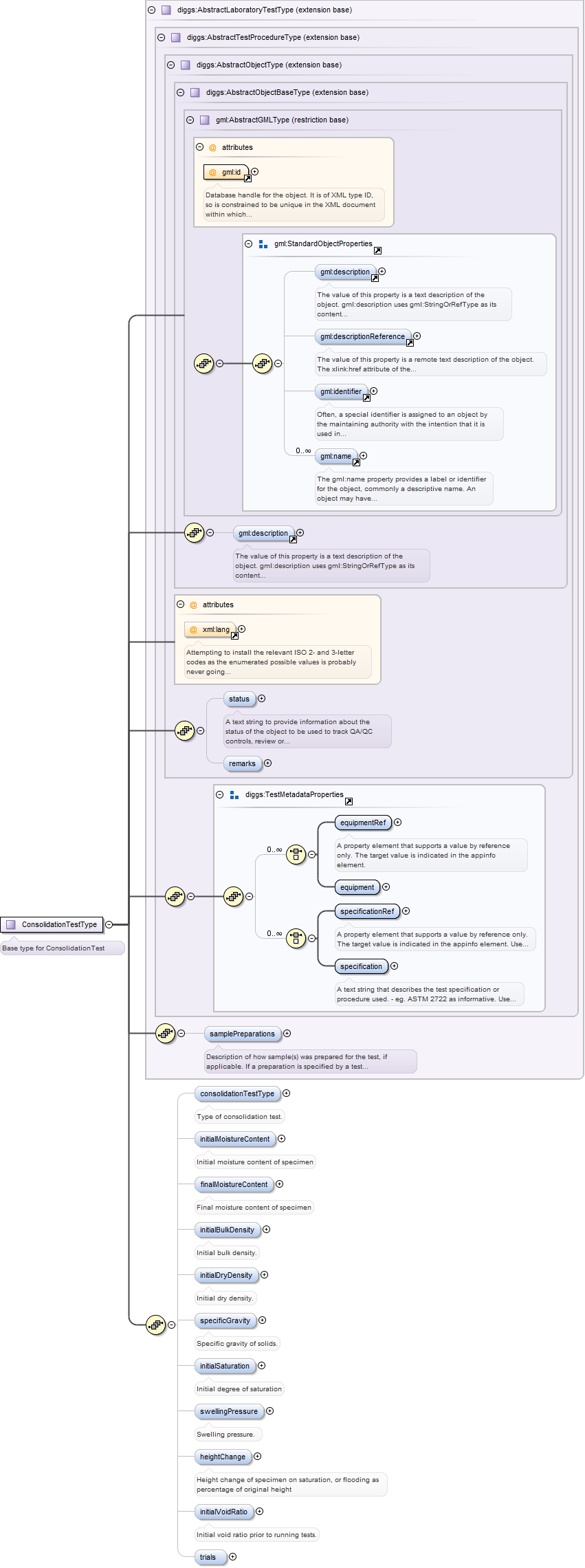
Result from a Consolidation Test. This test is performed to determine themagnitude and rate of volume decrease that a laterally confined soil specimenundergoes when subjected to different vertical pressures. From the measured data,the consolidation curve (pressure-void ratio relationship) can be plotted. This datais useful in determining the compression index (slope of virgin curve), therecompression index (slope of recompression curve) and the preconsolidation pressure(or maximum past pressure) of the soil. In addition, the data obtained can also beused to determine the coefficient of consolidation and the coefficient of secondarycompression of the soil.
Database handle for the object. It is of XML type ID, so is constrained to beunique in the XML document within which it occurs. An external identifier for the object inthe form of a URI may be constructed using standard XML and XPointer methods. This is doneby concatenating the URI for the document, a fragment separator, and the value of the idattribute.
Attempting to install the relevant ISO 2- and 3-letter codes as the enumerated possible values is probably never going to be a realistic possibility. See RFC 3066 at http://www.ietf.org/rfc/rfc3066.txt and the IANA registry at http://www.iana.org/assignments/lang-tag-apps.htm for further information. The union allows for the 'un-declaration' of xml:lang with the empty string.
Source
<element name="ConsolidationTest" type="diggs_geo:ConsolidationTestType" abstract="false" substitutionGroup="diggs:AbstractLaboratoryTest"><annotation><documentation>Result from a Consolidation Test. This test is performed to determine the magnitude and rate of volume decrease that a laterally confined soil specimen undergoes when subjected to different vertical pressures. From the measured data, the consolidation curve (pressure-void ratio relationship) can be plotted. This data is useful in determining the compression index (slope of virgin curve), the recompression index (slope of recompression curve) and the preconsolidation pressure (or maximum past pressure) of the soil. In addition, the data obtained can also be used to determine the coefficient of consolidation and the coefficient of secondary compression of the soil.</documentation></annotation></element>
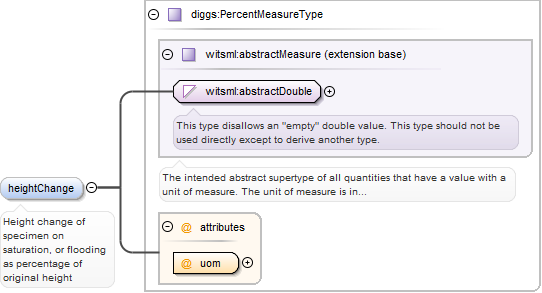
<element name="heightChange" type="diggs:PercentMeasureType" minOccurs="0"><annotation><documentation>Height change of specimen on saturation, or flooding as percentage of original height</documentation></annotation></element>
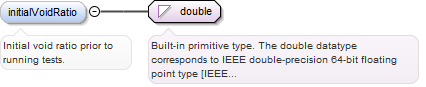
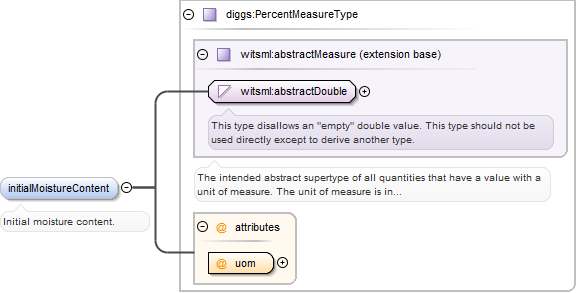
<element name="initialVoidRatio" type="double" minOccurs="0"><annotation><documentation>Initial void ratio prior to running tests.</documentation></annotation></element>
Database handle for the object. It is of XML type ID, so is constrained to beunique in the XML document within which it occurs. An external identifier for the object inthe form of a URI may be constructed using standard XML and XPointer methods. This is doneby concatenating the URI for the document, a fragment separator, and the value of the idattribute.
Attempting to install the relevant ISO 2- and 3-letter codes as the enumerated possible values is probably never going to be a realistic possibility. See RFC 3066 at http://www.ietf.org/rfc/rfc3066.txt and the IANA registry at http://www.iana.org/assignments/lang-tag-apps.htm for further information. The union allows for the 'un-declaration' of xml:lang with the empty string.
Source
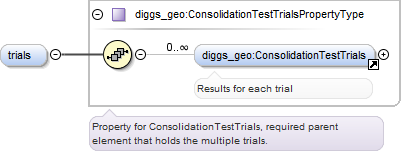
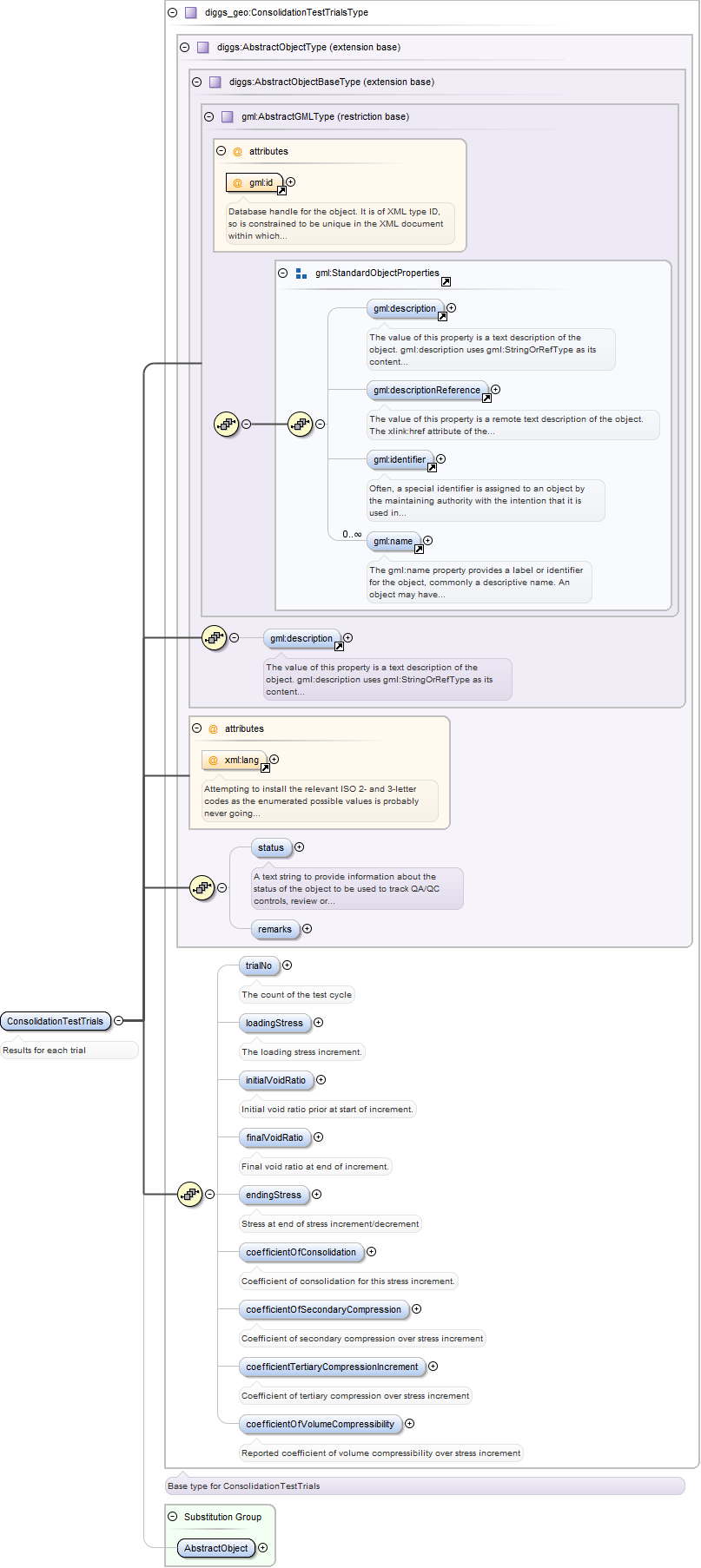
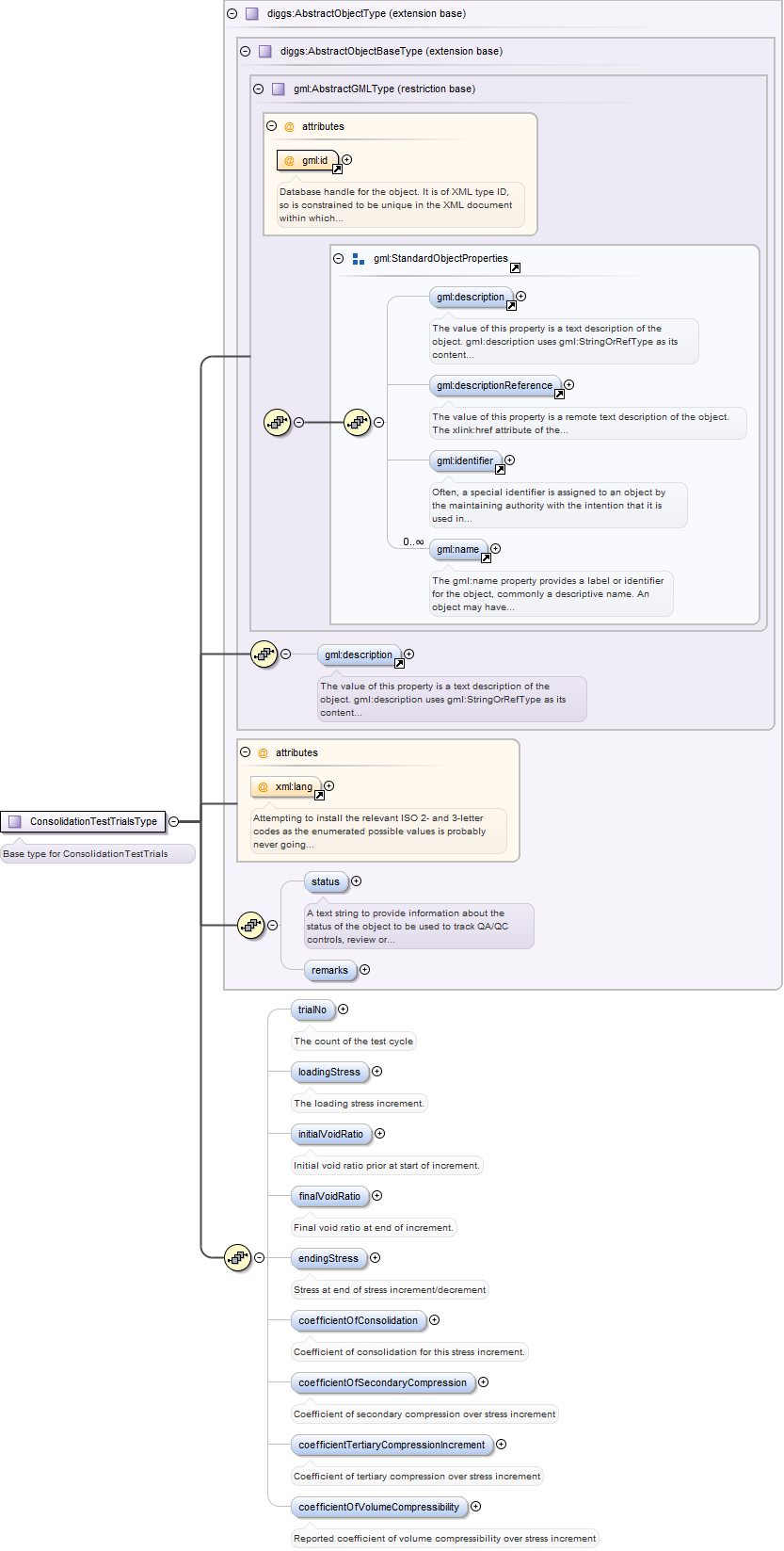
<element name="ConsolidationTestTrials" type="diggs_geo:ConsolidationTestTrialsType" abstract="false" substitutionGroup="diggs:AbstractObject"><annotation><documentation>Results for each trial</documentation></annotation></element>
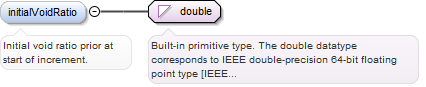
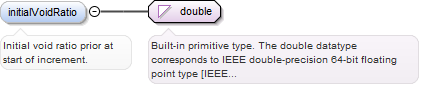
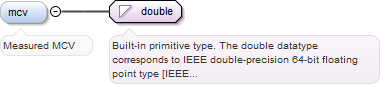
<element name="initialVoidRatio" type="double" minOccurs="0"><annotation><documentation>Initial void ratio prior at start of increment.</documentation></annotation></element>
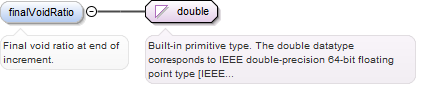
<element name="finalVoidRatio" type="double" minOccurs="0"><annotation><documentation>Final void ratio at end of increment.</documentation></annotation></element>
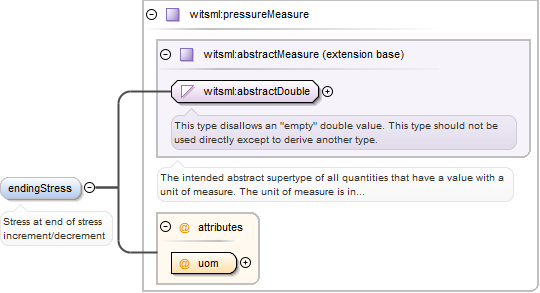
<element name="endingStress" type="witsml:pressureMeasure" minOccurs="0"><annotation><documentation>Stress at end of stress increment/decrement</documentation></annotation></element>
Coefficient of consolidation for this stressincrement.
Diagram
Type
double
Properties
content:
simple
minOccurs:
0
Source
<element name="coefficientOfConsolidation" type="double" minOccurs="0"><annotation><documentation>Coefficient of consolidation for this stress increment.</documentation></annotation></element>
Coefficient of secondary compression over stressincrement
Diagram
Type
double
Properties
content:
simple
minOccurs:
0
Source
<element name="coefficientOfSecondaryCompression" type="double" minOccurs="0"><annotation><documentation>Coefficient of secondary compression over stress increment</documentation></annotation></element>
Coefficient of tertiary compression over stressincrement
Diagram
Type
double
Properties
content:
simple
minOccurs:
0
Source
<element name="coefficientTertiaryCompressionIncrement" type="double" minOccurs="0"><annotation><documentation>Coefficient of tertiary compression over stress increment</documentation></annotation></element>
Database handle for the object. It is of XML type ID, so is constrained to beunique in the XML document within which it occurs. An external identifier for the object inthe form of a URI may be constructed using standard XML and XPointer methods. This is doneby concatenating the URI for the document, a fragment separator, and the value of the idattribute.
Attempting to install the relevant ISO 2- and 3-letter codes as the enumerated possible values is probably never going to be a realistic possibility. See RFC 3066 at http://www.ietf.org/rfc/rfc3066.txt and the IANA registry at http://www.iana.org/assignments/lang-tag-apps.htm for further information. The union allows for the 'un-declaration' of xml:lang with the empty string.
Source
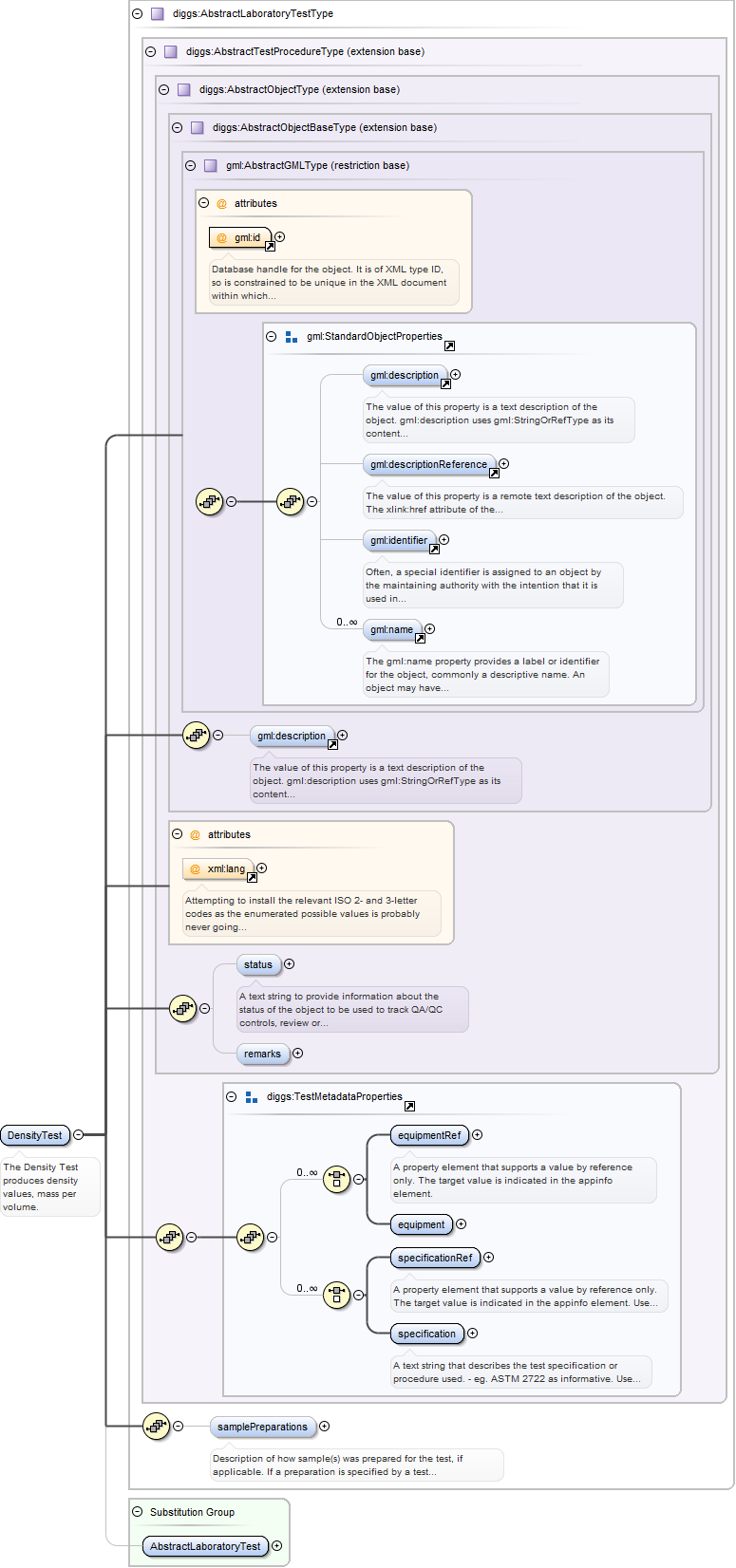
<element name="DensityTest" type="diggs:AbstractLaboratoryTestType" substitutionGroup="diggs:AbstractLaboratoryTest"><annotation><documentation>The Density Test produces density values, mass per volume.</documentation></annotation></element>
Schema location
http://diggsml.org/2.0a/schemas/Geotechnical.xsd
Element diggs_geo:DirectShearTest
Namespace
http://schemas.diggsml.com/2.0.a/geotechnical
Annotations
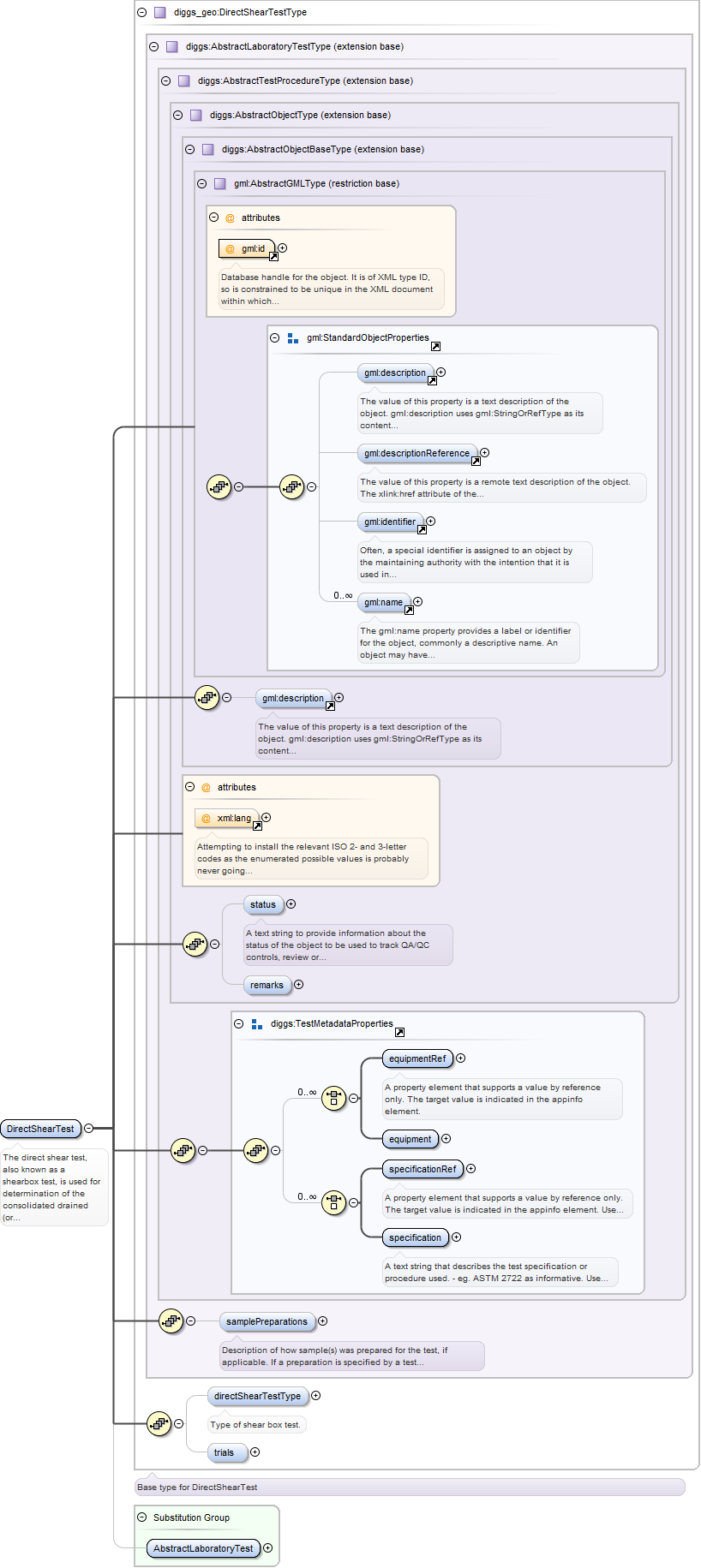
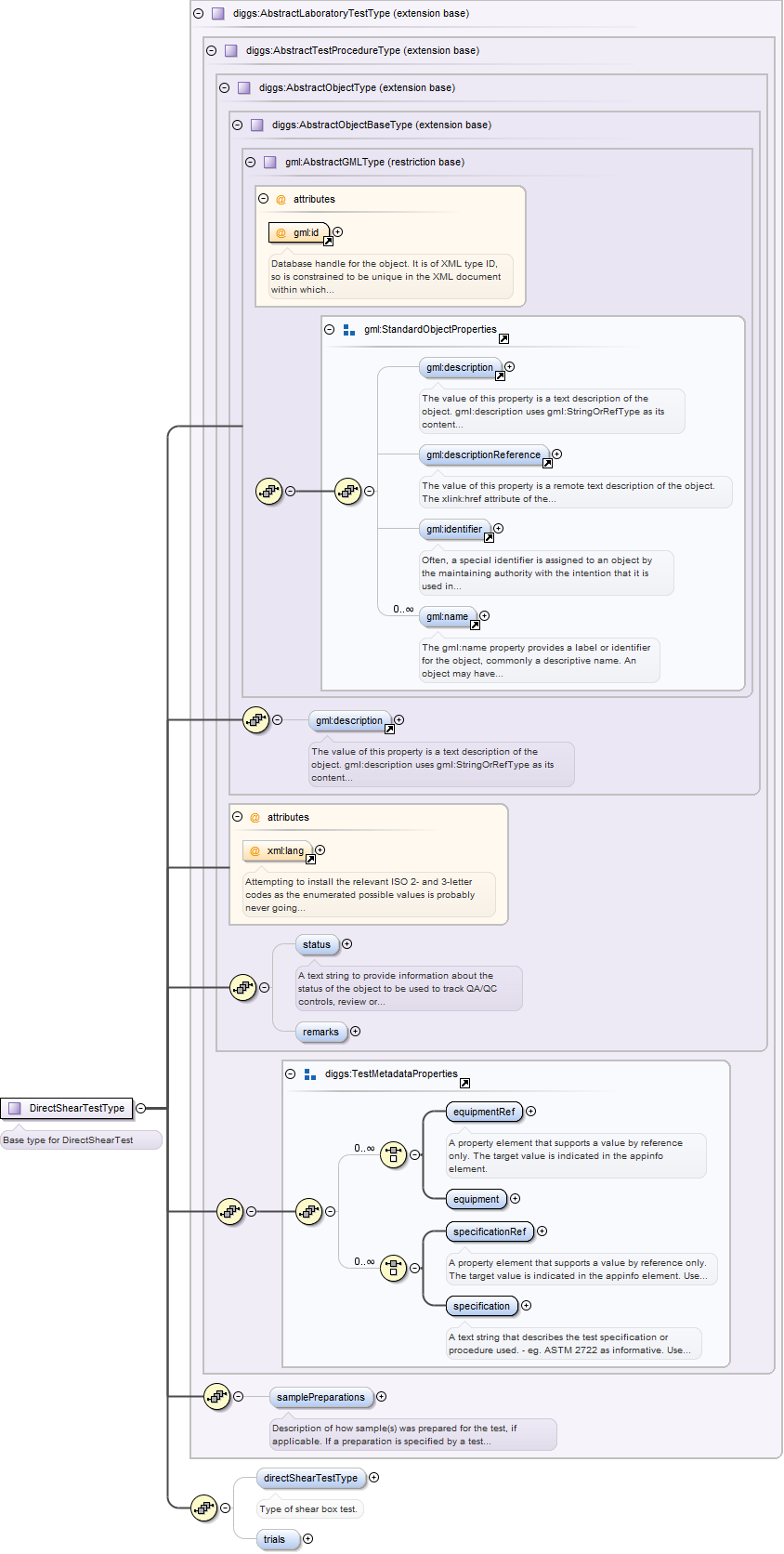
The direct shear test, also known as a shearbox test, is used fordetermination of the consolidated drained (or undrained) shear strength of soils.The test is performed by deforming a specimen at a controlled rate on or near asingle shear plane.
Database handle for the object. It is of XML type ID, so is constrained to beunique in the XML document within which it occurs. An external identifier for the object inthe form of a URI may be constructed using standard XML and XPointer methods. This is doneby concatenating the URI for the document, a fragment separator, and the value of the idattribute.
Attempting to install the relevant ISO 2- and 3-letter codes as the enumerated possible values is probably never going to be a realistic possibility. See RFC 3066 at http://www.ietf.org/rfc/rfc3066.txt and the IANA registry at http://www.iana.org/assignments/lang-tag-apps.htm for further information. The union allows for the 'un-declaration' of xml:lang with the empty string.
Source
<element name="DirectShearTest" type="diggs_geo:DirectShearTestType" abstract="false" substitutionGroup="diggs:AbstractLaboratoryTest"><annotation><documentation>The direct shear test, also known as a shearbox test, is used for determination of the consolidated drained (or undrained) shear strength of soils. The test is performed by deforming a specimen at a controlled rate on or near a single shear plane.</documentation></annotation></element>
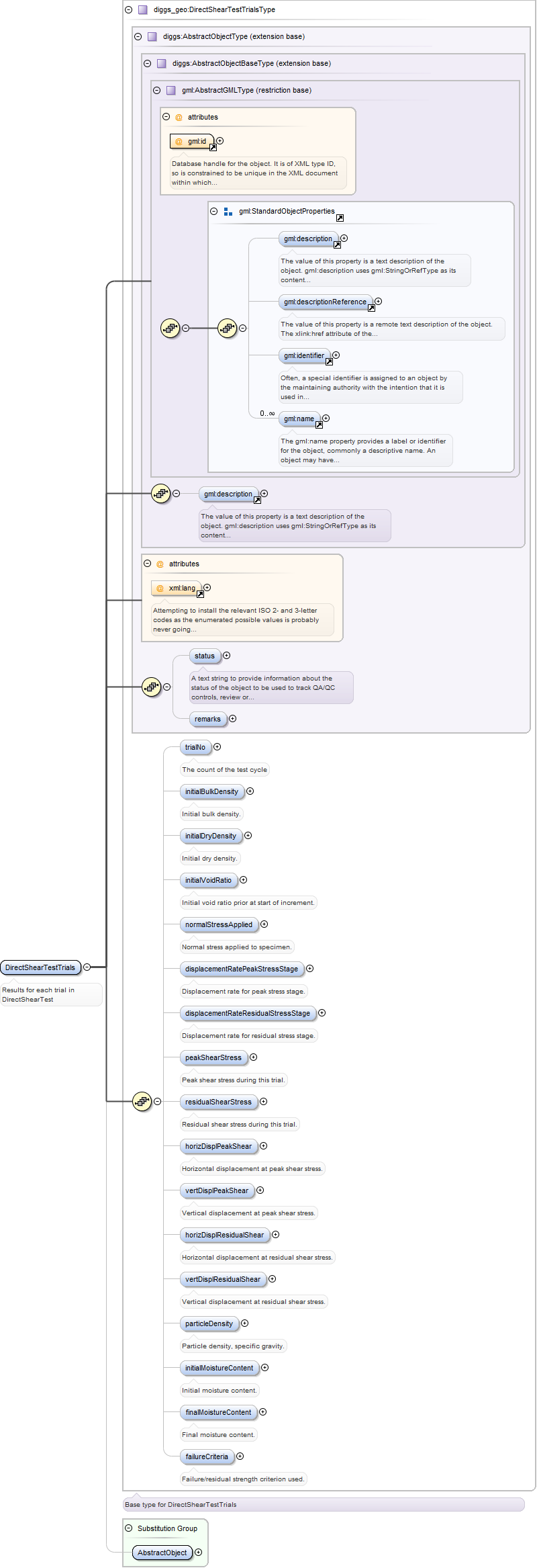
Database handle for the object. It is of XML type ID, so is constrained to beunique in the XML document within which it occurs. An external identifier for the object inthe form of a URI may be constructed using standard XML and XPointer methods. This is doneby concatenating the URI for the document, a fragment separator, and the value of the idattribute.
Attempting to install the relevant ISO 2- and 3-letter codes as the enumerated possible values is probably never going to be a realistic possibility. See RFC 3066 at http://www.ietf.org/rfc/rfc3066.txt and the IANA registry at http://www.iana.org/assignments/lang-tag-apps.htm for further information. The union allows for the 'un-declaration' of xml:lang with the empty string.
Source
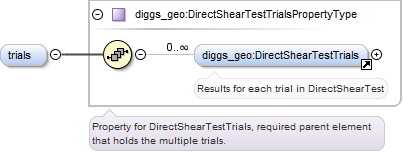
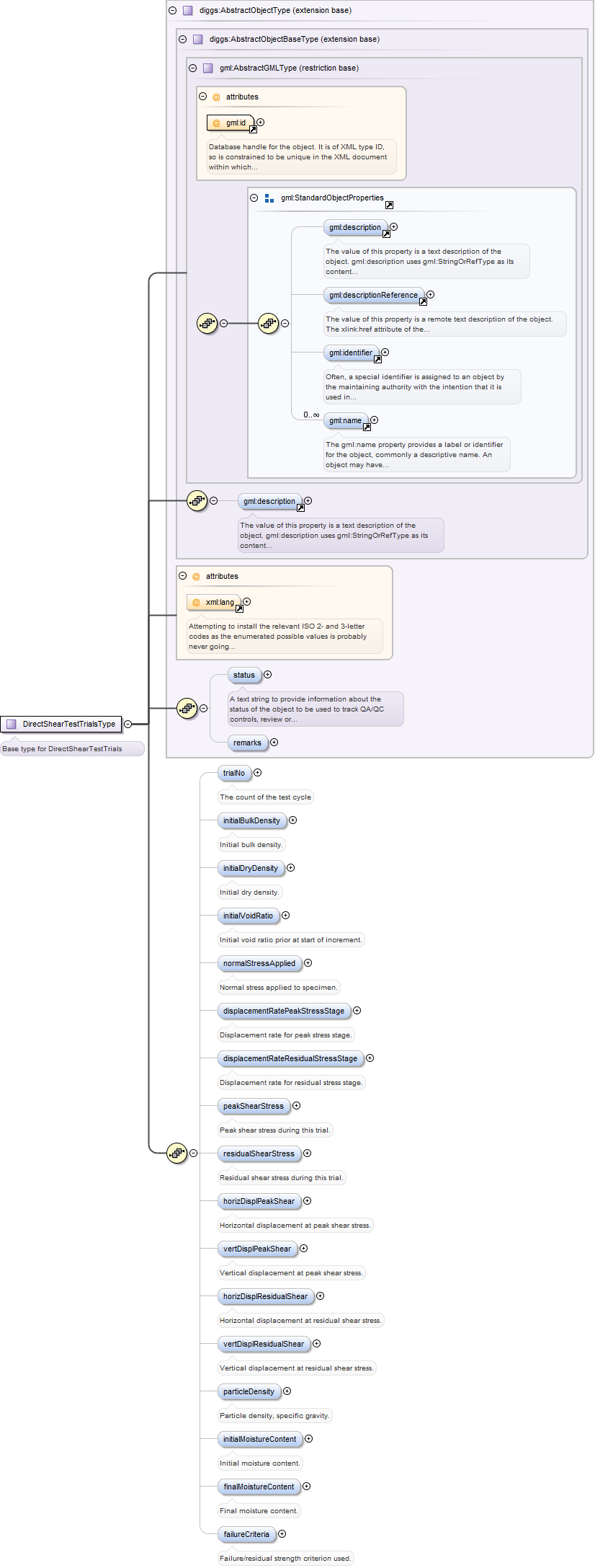
<element name="DirectShearTestTrials" type="diggs_geo:DirectShearTestTrialsType" abstract="false" substitutionGroup="diggs:AbstractObject"><annotation><documentation>Results for each trial in DirectShearTest</documentation></annotation></element>
<element name="initialVoidRatio" type="double" minOccurs="0"><annotation><documentation>Initial void ratio prior at start of increment.</documentation></annotation></element>
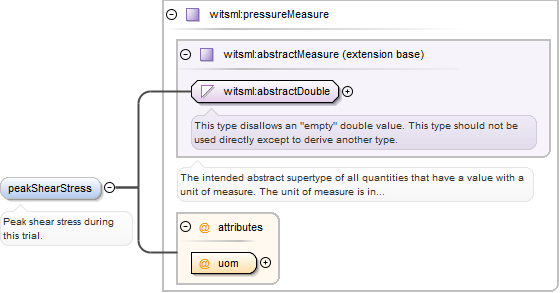
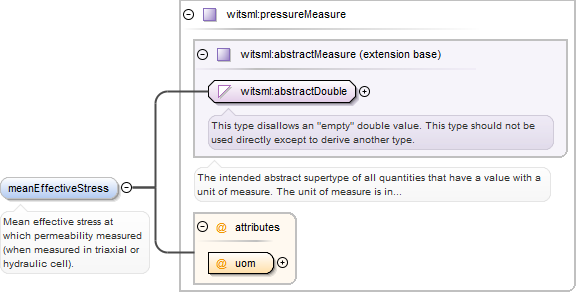
<element name="peakShearStress" type="witsml:pressureMeasure" minOccurs="0"><annotation><documentation>Peak shear stress during this trial.</documentation></annotation></element>
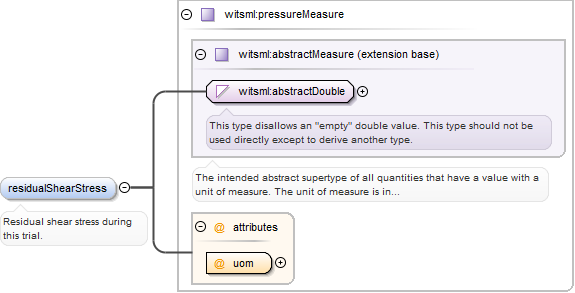
<element name="residualShearStress" type="witsml:pressureMeasure" minOccurs="0"><annotation><documentation>Residual shear stress during this trial.</documentation></annotation></element>
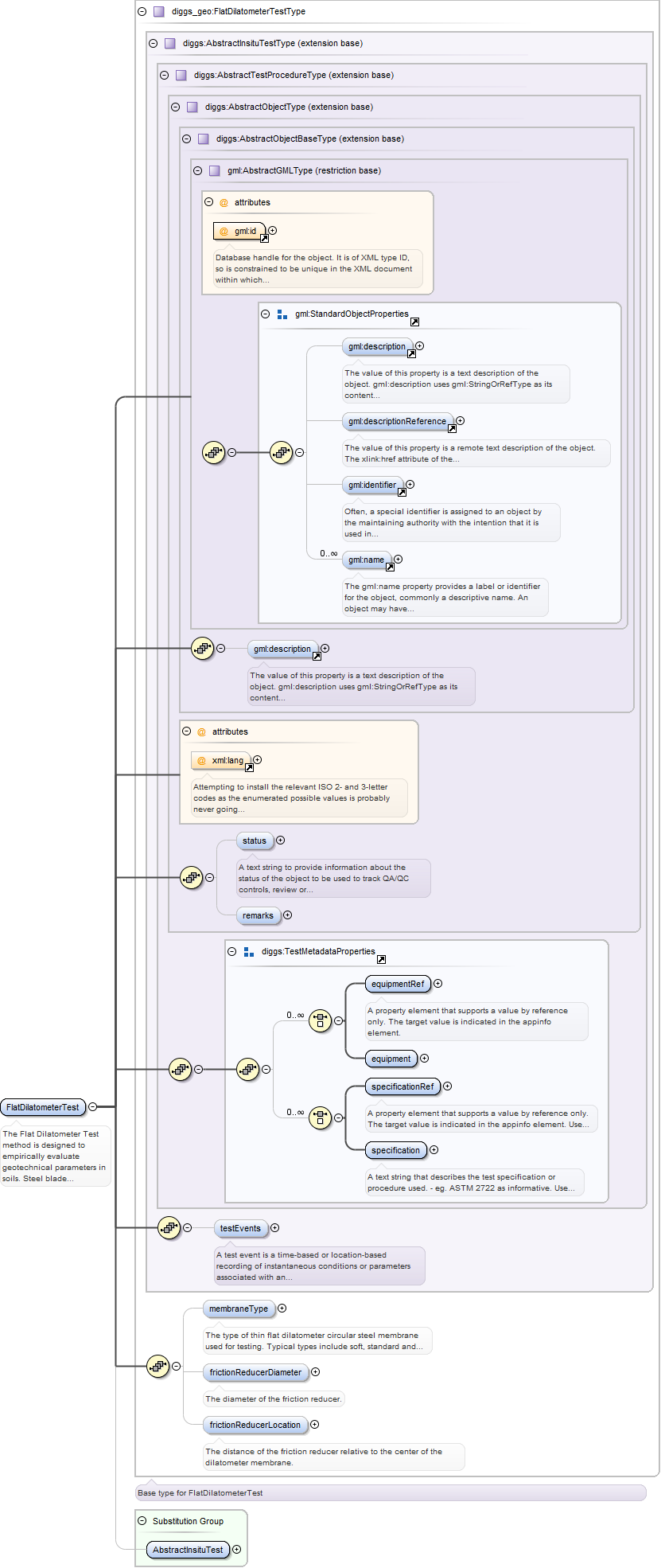
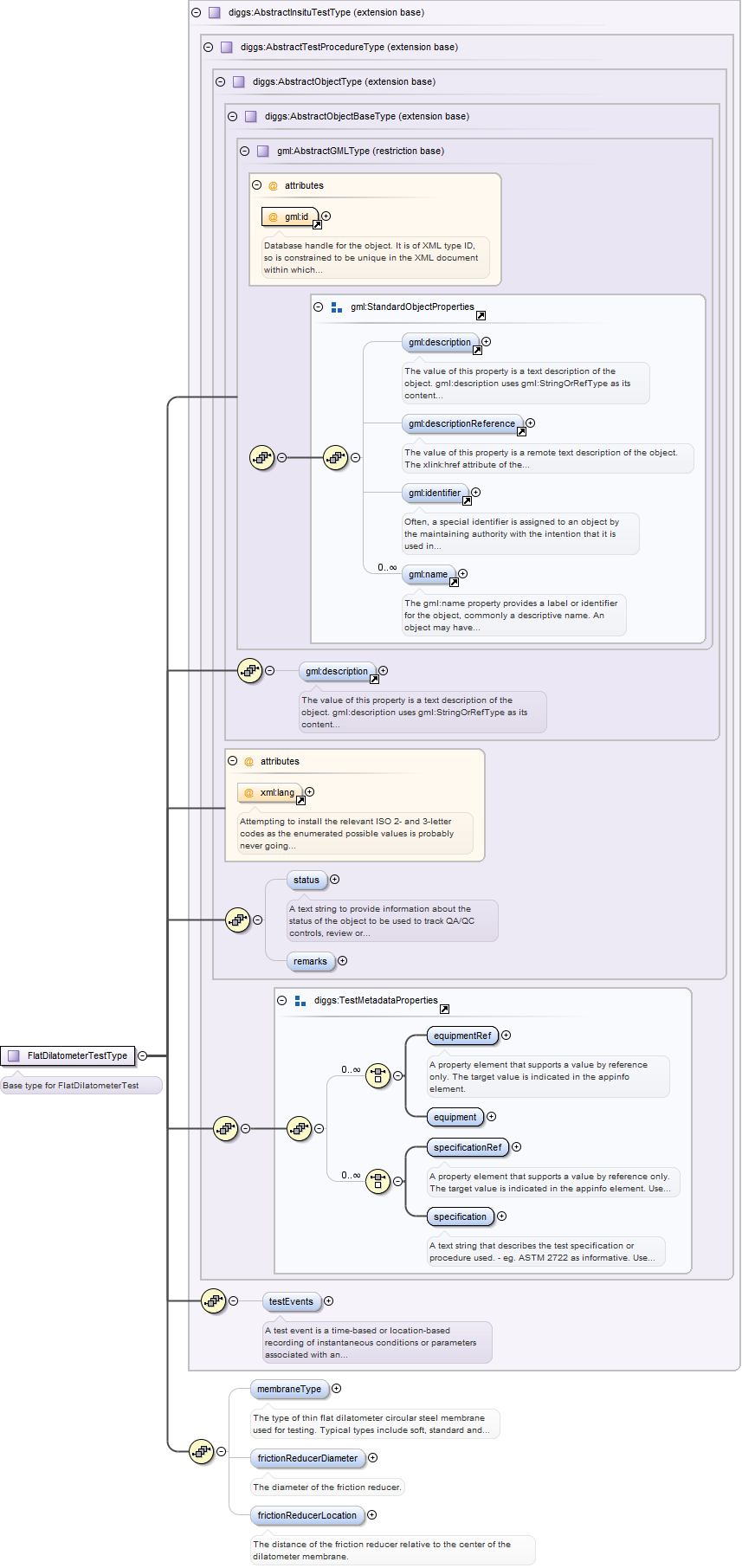
The Flat Dilatometer Test method is designed to empirically evaluategeotechnical parameters in soils. Steel blade inserted into the ground, typicallywith a cone truck or drill rig. The membrane located on face of blade is expandedlaterally into the soil.
Database handle for the object. It is of XML type ID, so is constrained to beunique in the XML document within which it occurs. An external identifier for the object inthe form of a URI may be constructed using standard XML and XPointer methods. This is doneby concatenating the URI for the document, a fragment separator, and the value of the idattribute.
Attempting to install the relevant ISO 2- and 3-letter codes as the enumerated possible values is probably never going to be a realistic possibility. See RFC 3066 at http://www.ietf.org/rfc/rfc3066.txt and the IANA registry at http://www.iana.org/assignments/lang-tag-apps.htm for further information. The union allows for the 'un-declaration' of xml:lang with the empty string.
Source
<element name="FlatDilatometerTest" type="diggs_geo:FlatDilatometerTestType" abstract="false" substitutionGroup="diggs:AbstractInsituTest"><annotation><documentation>The Flat Dilatometer Test method is designed to empirically evaluate geotechnical parameters in soils. Steel blade inserted into the ground, typically with a cone truck or drill rig. The membrane located on face of blade is expanded laterally into the soil.</documentation></annotation></element>
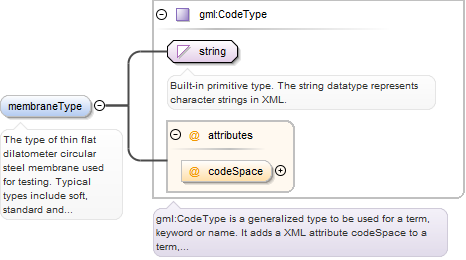
<element name="membraneType" type="gml:CodeType" minOccurs="0"><annotation><documentation>The type of thin flat dilatometer circular steel membrane used for testing. Typical types include soft, standard and hard.</documentation></annotation></element>
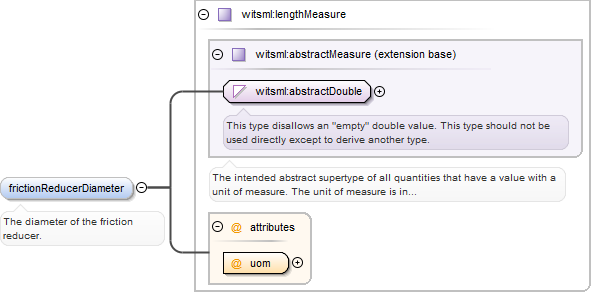
<element name="frictionReducerDiameter" type="witsml:lengthMeasure" minOccurs="0"><annotation><documentation>The diameter of the friction reducer.</documentation></annotation></element>
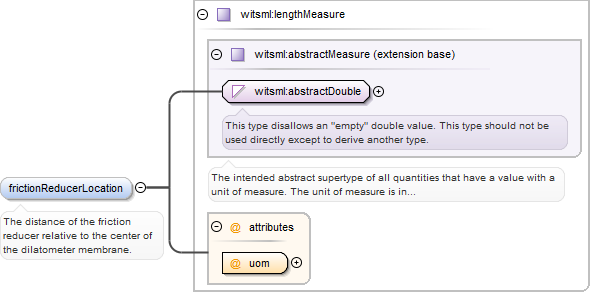
<element name="frictionReducerLocation" type="witsml:lengthMeasure" minOccurs="0"><annotation><documentation>The distance of the friction reducer relative to the center of the dilatometer membrane.</documentation></annotation></element>
Schema location
http://diggsml.org/2.0a/schemas/Geotechnical.xsd
Element diggs_geo:DrivenPenetrationTest
Namespace
http://schemas.diggsml.com/2.0.a/geotechnical
Annotations
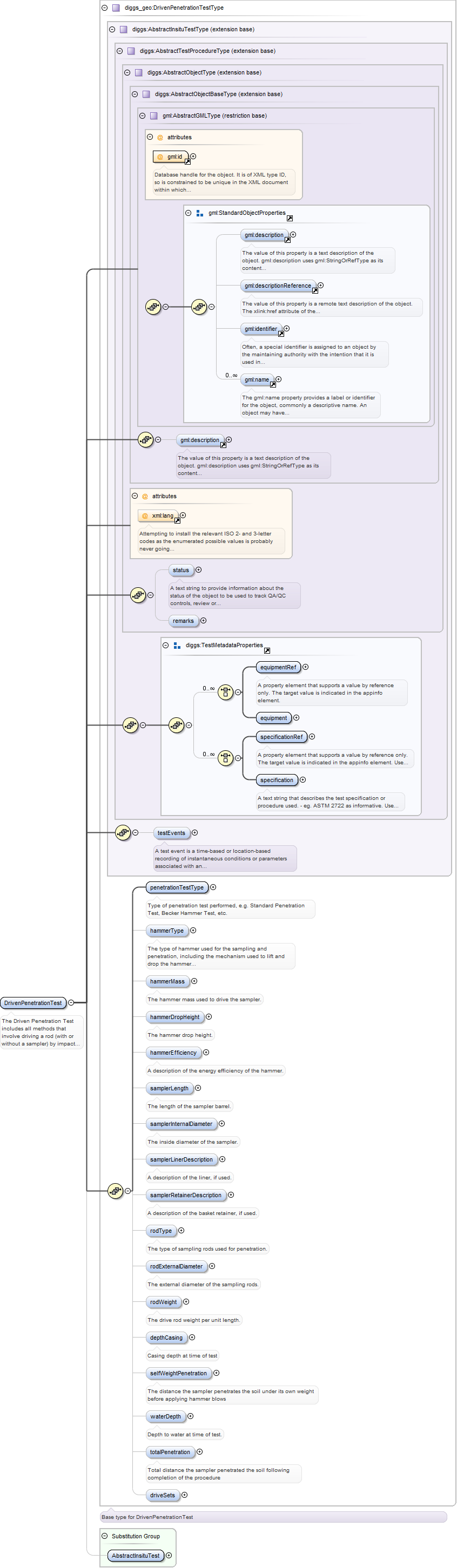
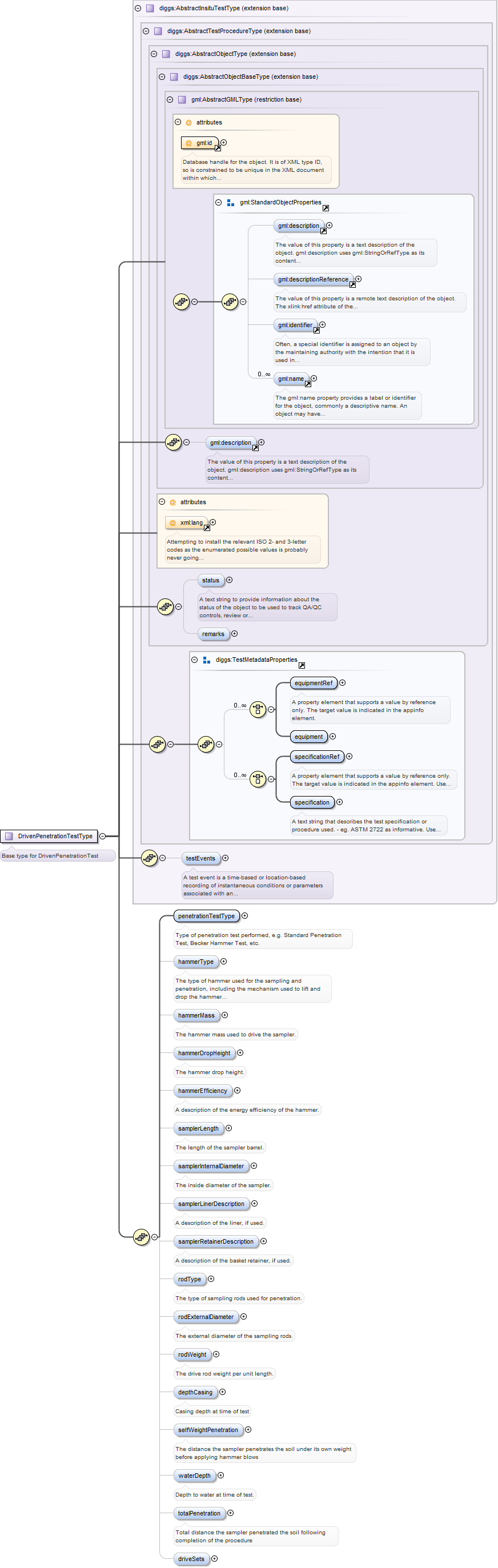
The Driven Penetration Test includes all methods that involve driving arod (with or without a sampler) by impact hammer. The most common test of this typeinclue the Standard Penetration Test and the Becker Hammer Test.
Database handle for the object. It is of XML type ID, so is constrained to beunique in the XML document within which it occurs. An external identifier for the object inthe form of a URI may be constructed using standard XML and XPointer methods. This is doneby concatenating the URI for the document, a fragment separator, and the value of the idattribute.
Attempting to install the relevant ISO 2- and 3-letter codes as the enumerated possible values is probably never going to be a realistic possibility. See RFC 3066 at http://www.ietf.org/rfc/rfc3066.txt and the IANA registry at http://www.iana.org/assignments/lang-tag-apps.htm for further information. The union allows for the 'un-declaration' of xml:lang with the empty string.
Source
<element name="DrivenPenetrationTest" type="diggs_geo:DrivenPenetrationTestType" abstract="false" substitutionGroup="diggs:AbstractInsituTest"><annotation><documentation>The Driven Penetration Test includes all methods that involve driving a rod (with or without a sampler) by impact hammer. The most common test of this type inclue the Standard Penetration Test and the Becker Hammer Test.</documentation></annotation></element>
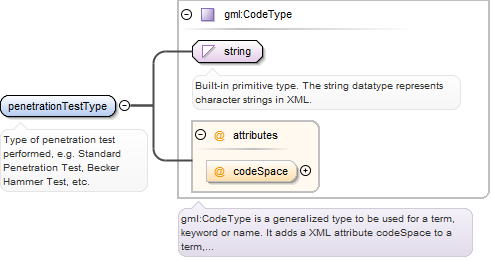
<element name="penetrationTestType" type="gml:CodeType"><annotation><documentation>Type of penetration test performed, e.g. Standard Penetration Test, Becker Hammer Test, etc.</documentation></annotation></element>
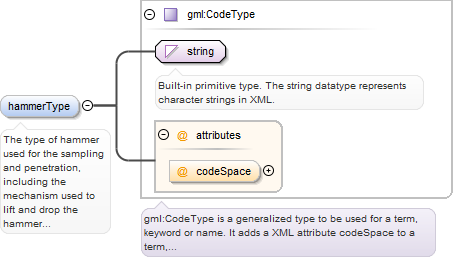
The type of hammer used for the sampling and penetration,including the mechanism used to lift and drop the hammer assembly.Additional details about the sampler (e.g. cathead diameter, numberof turns, etc) can be mapped to the equipmentobject.
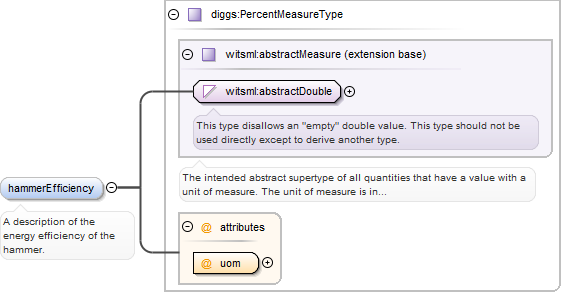
<element name="hammerType" type="gml:CodeType" minOccurs="0"><annotation><documentation>The type of hammer used for the sampling and penetration, including the mechanism used to lift and drop the hammer assembly. Additional details about the sampler (e.g. cathead diameter, number of turns, etc) can be mapped to the equipment object.</documentation></annotation></element>
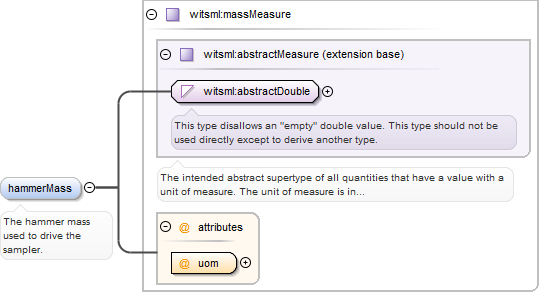
<element name="hammerMass" type="witsml:massMeasure" minOccurs="0"><annotation><documentation>The hammer mass used to drive the sampler.</documentation></annotation></element>
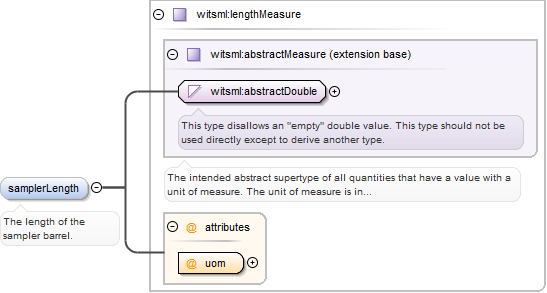
<element name="hammerEfficiency" type="diggs:PercentMeasureType" minOccurs="0"><annotation><documentation>A description of the energy efficiency of the hammer.</documentation></annotation></element>
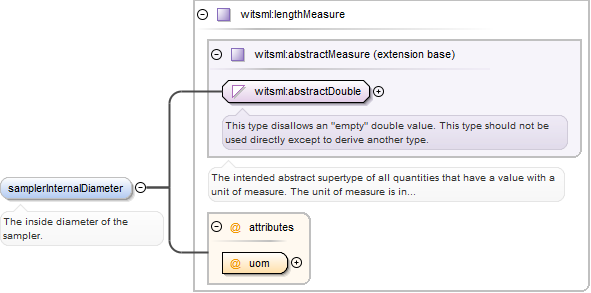
<element name="samplerLength" type="witsml:lengthMeasure" minOccurs="0"><annotation><documentation>The length of the sampler barrel.</documentation></annotation></element>
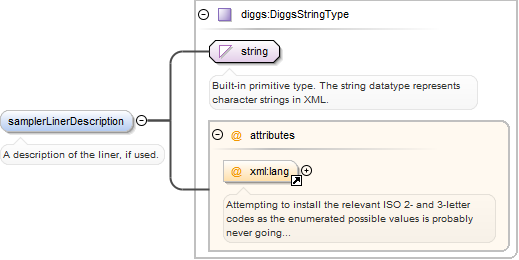
<element name="samplerInternalDiameter" type="witsml:lengthMeasure" minOccurs="0"><annotation><documentation>The inside diameter of the sampler.</documentation></annotation></element>
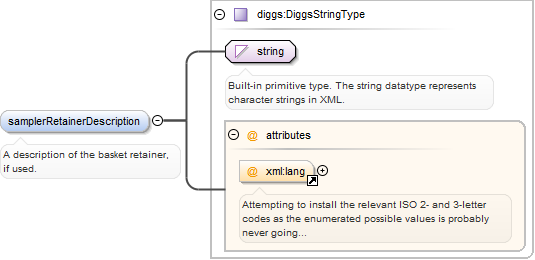
Attempting to install the relevant ISO 2- and 3-letter codes as the enumerated possible values is probably never going to be a realistic possibility. See RFC 3066 at http://www.ietf.org/rfc/rfc3066.txt and the IANA registry at http://www.iana.org/assignments/lang-tag-apps.htm for further information. The union allows for the 'un-declaration' of xml:lang with the empty string.
Source
<element name="samplerLinerDescription" type="diggs:DiggsStringType" minOccurs="0"><annotation><documentation>A description of the liner, if used.</documentation></annotation></element>
Attempting to install the relevant ISO 2- and 3-letter codes as the enumerated possible values is probably never going to be a realistic possibility. See RFC 3066 at http://www.ietf.org/rfc/rfc3066.txt and the IANA registry at http://www.iana.org/assignments/lang-tag-apps.htm for further information. The union allows for the 'un-declaration' of xml:lang with the empty string.
Source
<element name="samplerRetainerDescription" type="diggs:DiggsStringType" minOccurs="0"><annotation><documentation>A description of the basket retainer, if used.</documentation></annotation></element>
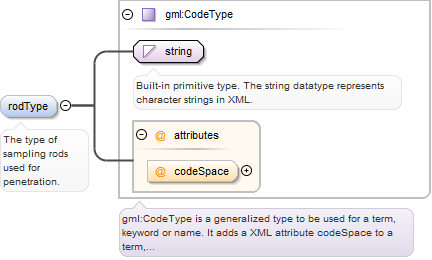
<element name="rodType" type="gml:CodeType" minOccurs="0"><annotation><documentation>The type of sampling rods used for penetration.</documentation></annotation></element>
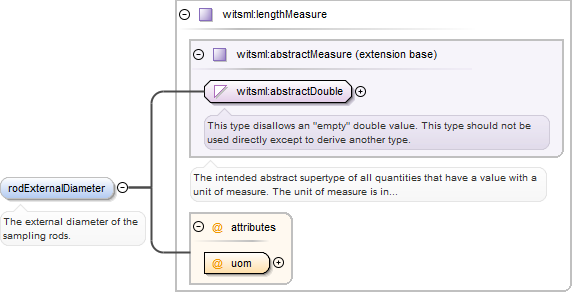
<element name="rodExternalDiameter" type="witsml:lengthMeasure" minOccurs="0"><annotation><documentation>The external diameter of the sampling rods.</documentation></annotation></element>
Replace tab, line feed and carriage return with a space, collapse contiguous sequences of spaces to a single space and then remove leading and trailing spaces.
minLength
1
The empty string is not allowed.This constraint conbined with the whiteSpace collapse constraint meansthat a blank value is not allowed.
maxLength
24
enumeration
1/m
enumeration
1/angstrom
enumeration
1/cm
enumeration
1/ft
enumeration
1/in
enumeration
1/mi
enumeration
1/mm
enumeration
1/nm
enumeration
1/yd
Source
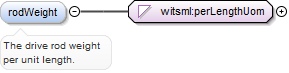
<element name="rodWeight" type="witsml:perLengthUom" minOccurs="0"><annotation><documentation>The drive rod weight per unit length.</documentation></annotation></element>
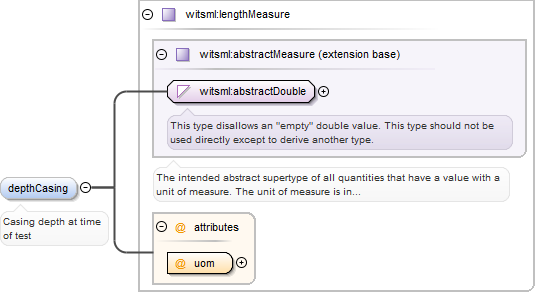
<element name="depthCasing" type="witsml:lengthMeasure" minOccurs="0"><annotation><documentation>Casing depth at time of test</documentation></annotation></element>
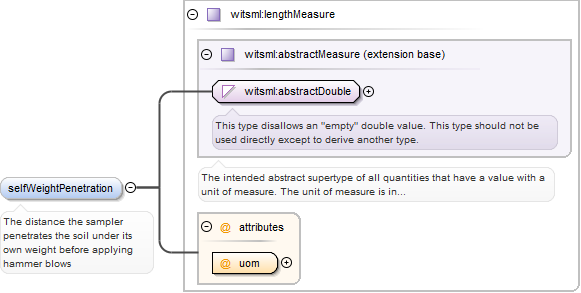
<element name="selfWeightPenetration" type="witsml:lengthMeasure" minOccurs="0"><annotation><documentation>The distance the sampler penetrates the soil under its own weight before applying hammer blows</documentation></annotation></element>
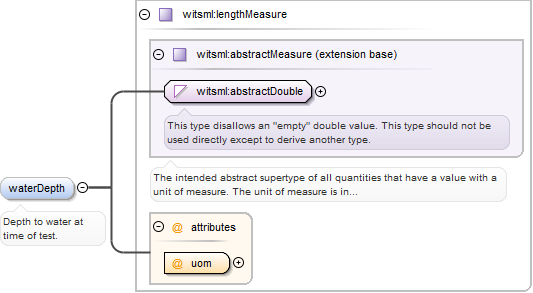
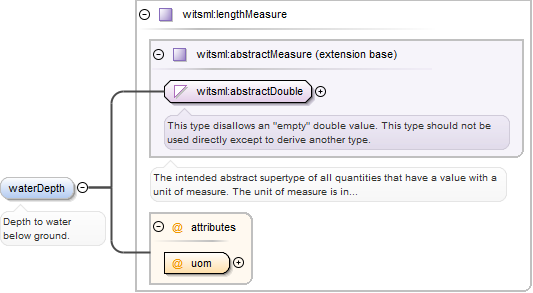
<element name="waterDepth" type="witsml:lengthMeasure" minOccurs="0"><annotation><documentation>Depth to water at time of test.</documentation></annotation></element>
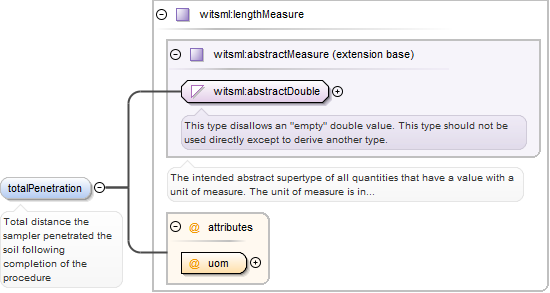
<element name="totalPenetration" type="witsml:lengthMeasure" minOccurs="0"><annotation><documentation>Total distance the sampler penetrated the soil following completion of the procedure</documentation></annotation></element>
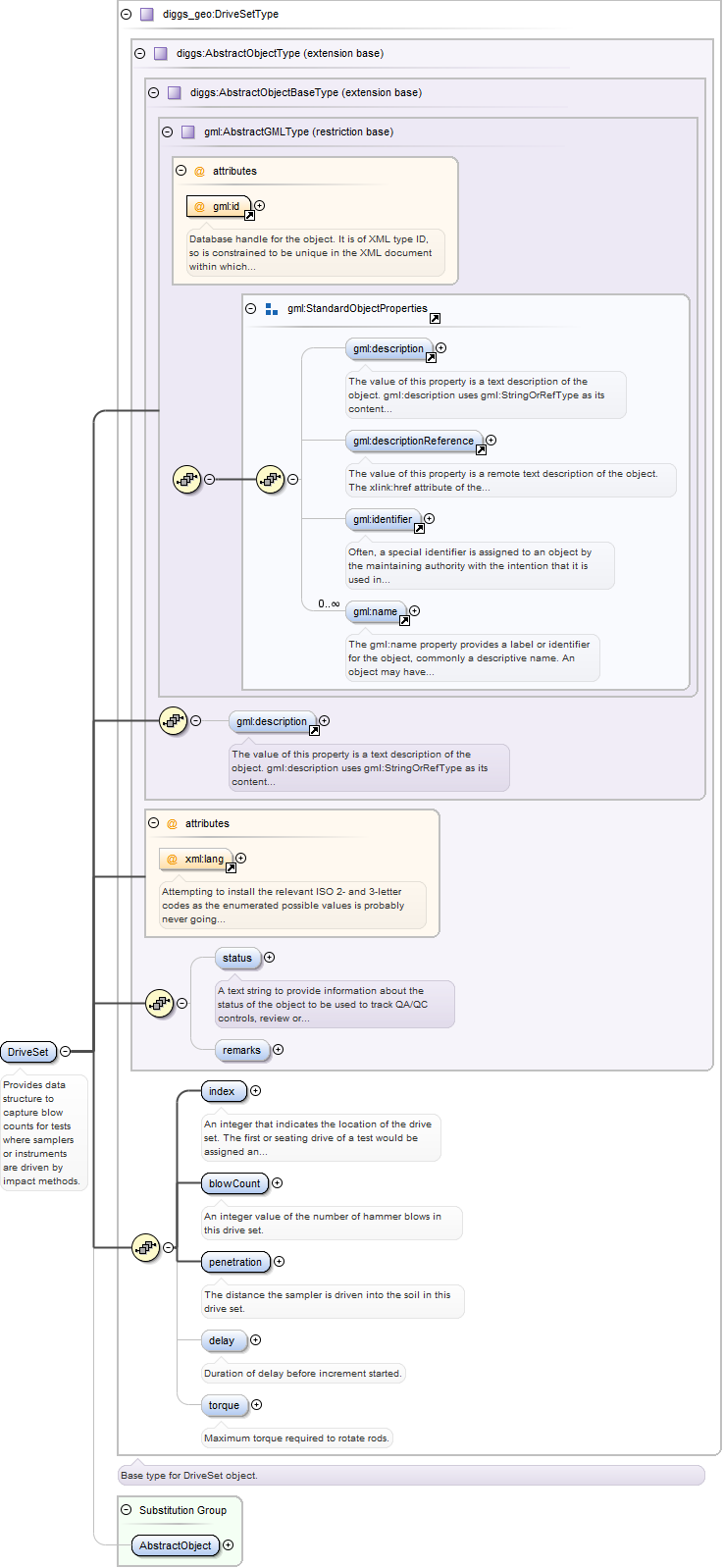
Database handle for the object. It is of XML type ID, so is constrained to beunique in the XML document within which it occurs. An external identifier for the object inthe form of a URI may be constructed using standard XML and XPointer methods. This is doneby concatenating the URI for the document, a fragment separator, and the value of the idattribute.
Attempting to install the relevant ISO 2- and 3-letter codes as the enumerated possible values is probably never going to be a realistic possibility. See RFC 3066 at http://www.ietf.org/rfc/rfc3066.txt and the IANA registry at http://www.iana.org/assignments/lang-tag-apps.htm for further information. The union allows for the 'un-declaration' of xml:lang with the empty string.
Source
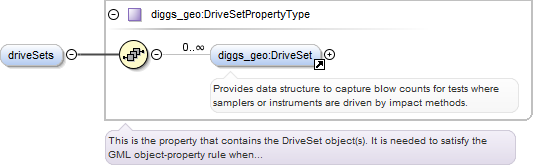
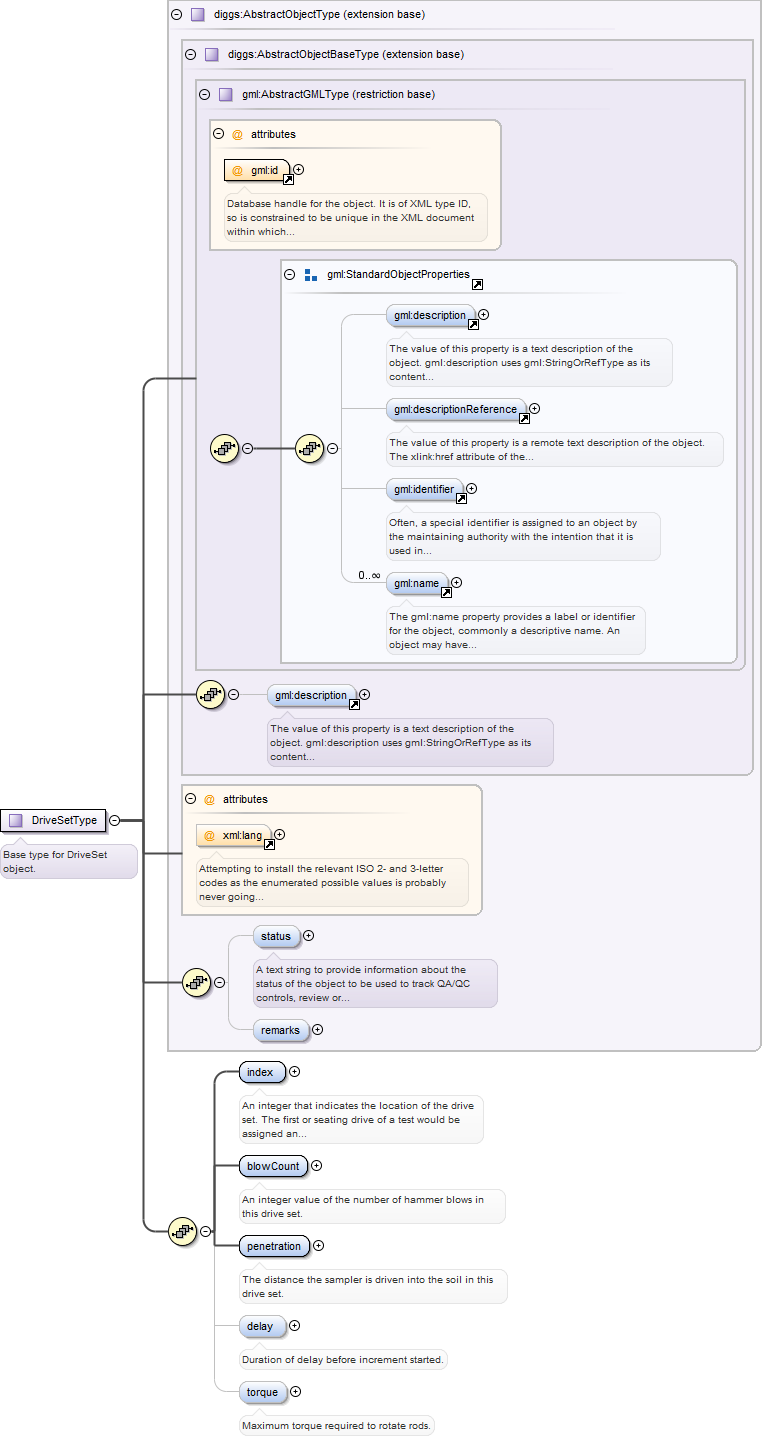
<element name="DriveSet" type="diggs_geo:DriveSetType" abstract="false" substitutionGroup="diggs:AbstractObject"><annotation><documentation>Provides data structure to capture blow counts for tests where samplers or instruments are driven by impact methods.</documentation></annotation></element>
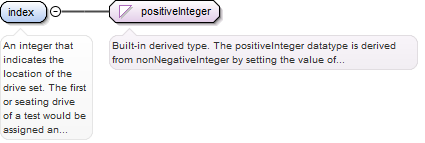
An integer that indicates the location of the drive set.The first or seating drive of a test would be assigned an index of1, the next drive set an index of 2, etc. An index of 1 should onlybe used for the seating drive.
Diagram
Type
positiveInteger
Properties
content:
simple
Source
<element name="index" type="positiveInteger"><annotation><documentation>An integer that indicates the location of the drive set. The first or seating drive of a test would be assigned an index of 1, the next drive set an index of 2, etc. An index of 1 should only be used for the seating drive.</documentation></annotation></element>
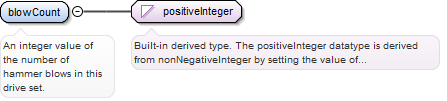
An integer value of the number of hammer blows in thisdrive set.
Diagram
Type
positiveInteger
Properties
content:
simple
Source
<element name="blowCount" type="positiveInteger"><annotation><documentation>An integer value of the number of hammer blows in this drive set.</documentation></annotation></element>
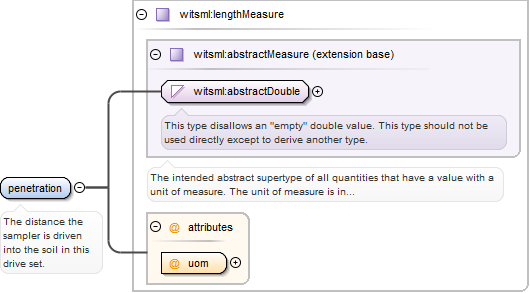
<element name="penetration" type="witsml:lengthMeasure"><annotation><documentation>The distance the sampler is driven into the soil in this drive set.</documentation></annotation></element>
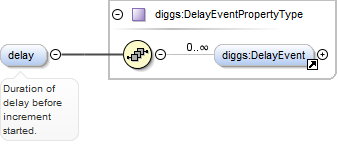
<element name="delay" type="diggs:DelayEventPropertyType" minOccurs="0"><annotation><documentation>Duration of delay before increment started.</documentation></annotation></element>
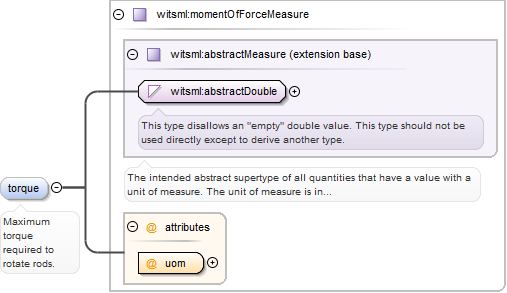
<element name="torque" type="witsml:momentOfForceMeasure" minOccurs="0"><annotation><documentation>Maximum torque required to rotate rods.</documentation></annotation></element>
Schema location
http://diggsml.org/2.0a/schemas/Geotechnical.xsd
Element diggs_geo:FlameIonizationDetectorTest
Namespace
http://schemas.diggsml.com/2.0.a/geotechnical
Annotations
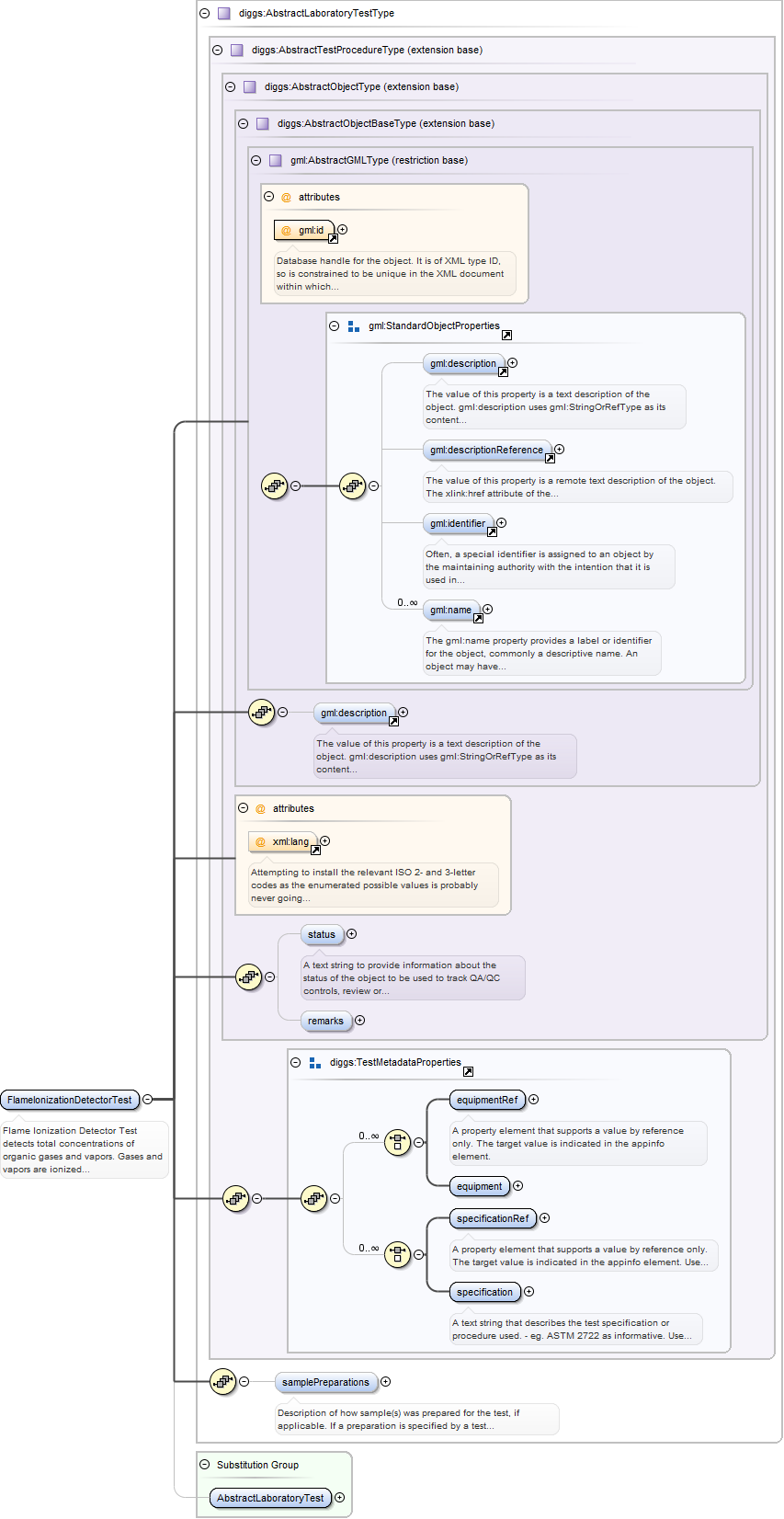
Flame Ionization Detector Test detects total concentrations of organicgases and vapors. Gases and vapors are ionized in a flame; a current is produced inproportion to the number of carbon atoms present.
Database handle for the object. It is of XML type ID, so is constrained to beunique in the XML document within which it occurs. An external identifier for the object inthe form of a URI may be constructed using standard XML and XPointer methods. This is doneby concatenating the URI for the document, a fragment separator, and the value of the idattribute.
Attempting to install the relevant ISO 2- and 3-letter codes as the enumerated possible values is probably never going to be a realistic possibility. See RFC 3066 at http://www.ietf.org/rfc/rfc3066.txt and the IANA registry at http://www.iana.org/assignments/lang-tag-apps.htm for further information. The union allows for the 'un-declaration' of xml:lang with the empty string.
Source
<element name="FlameIonizationDetectorTest" type="diggs:AbstractLaboratoryTestType" abstract="false" substitutionGroup="diggs:AbstractLaboratoryTest"><annotation><documentation>Flame Ionization Detector Test detects total concentrations of organic gases and vapors. Gases and vapors are ionized in a flame; a current is produced in proportion to the number of carbon atoms present.</documentation></annotation></element>
Schema location
http://diggsml.org/2.0a/schemas/Geotechnical.xsd
Element diggs_geo:FrostSusceptibilityTest
Namespace
http://schemas.diggsml.com/2.0.a/geotechnical
Annotations
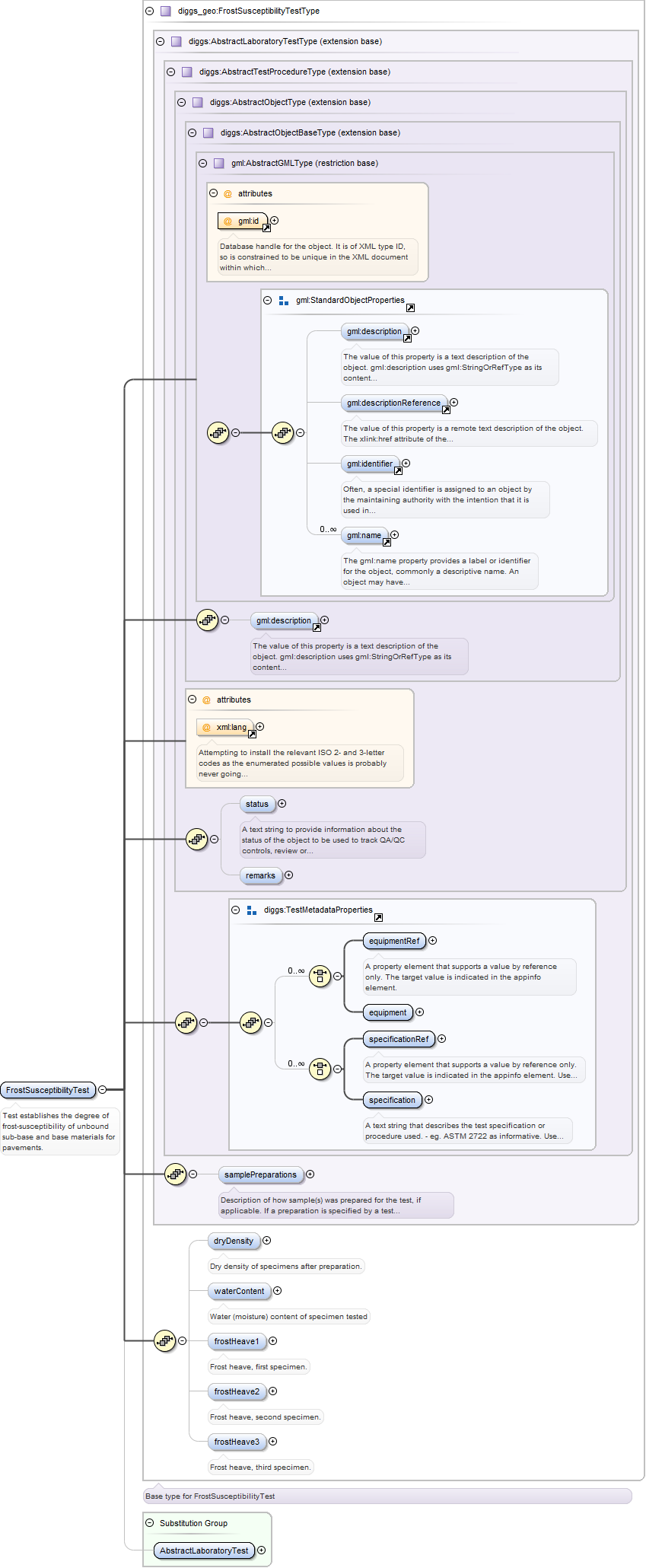
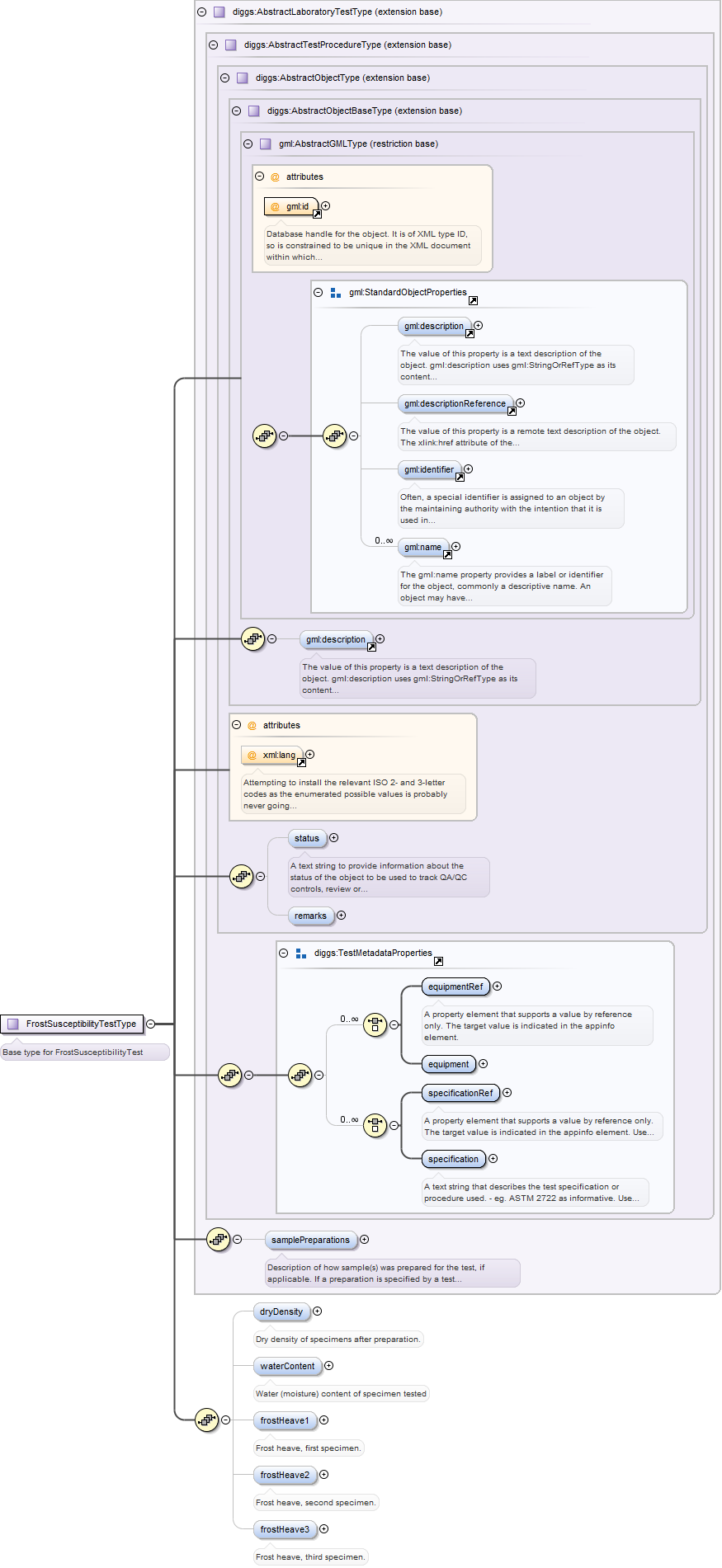
Test establishes the degree of frost-susceptibility of unbound sub-baseand base materials for pavements.
Database handle for the object. It is of XML type ID, so is constrained to beunique in the XML document within which it occurs. An external identifier for the object inthe form of a URI may be constructed using standard XML and XPointer methods. This is doneby concatenating the URI for the document, a fragment separator, and the value of the idattribute.
Attempting to install the relevant ISO 2- and 3-letter codes as the enumerated possible values is probably never going to be a realistic possibility. See RFC 3066 at http://www.ietf.org/rfc/rfc3066.txt and the IANA registry at http://www.iana.org/assignments/lang-tag-apps.htm for further information. The union allows for the 'un-declaration' of xml:lang with the empty string.
Source
<element name="FrostSusceptibilityTest" type="diggs_geo:FrostSusceptibilityTestType" abstract="false" substitutionGroup="diggs:AbstractLaboratoryTest"><annotation><documentation>Test establishes the degree of frost-susceptibility of unbound sub-base and base materials for pavements.</documentation></annotation></element>
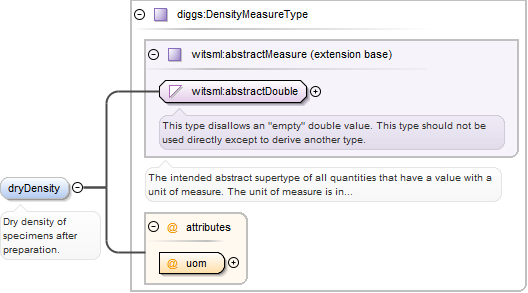
<element name="dryDensity" type="diggs:DensityMeasureType" minOccurs="0"><annotation><documentation>Dry density of specimens after preparation.</documentation></annotation></element>
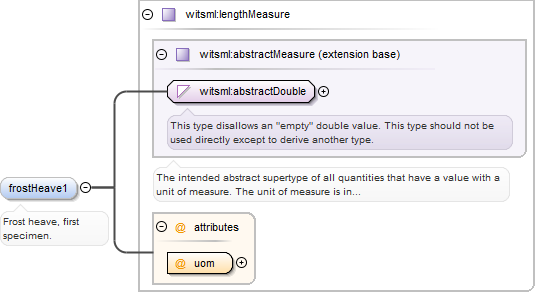
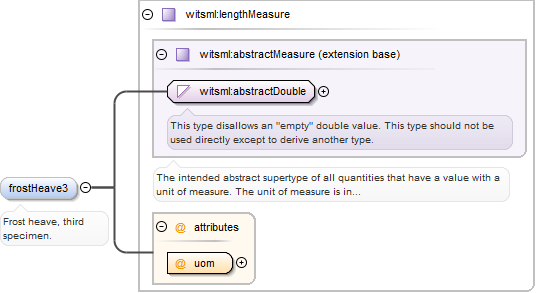
<element name="frostHeave3" type="witsml:lengthMeasure" minOccurs="0"><annotation><documentation>Frost heave, third specimen.</documentation></annotation></element>
Schema location
http://diggsml.org/2.0a/schemas/Geotechnical.xsd
Element diggs_geo:HandVaneTest
Namespace
http://schemas.diggsml.com/2.0.a/geotechnical
Annotations
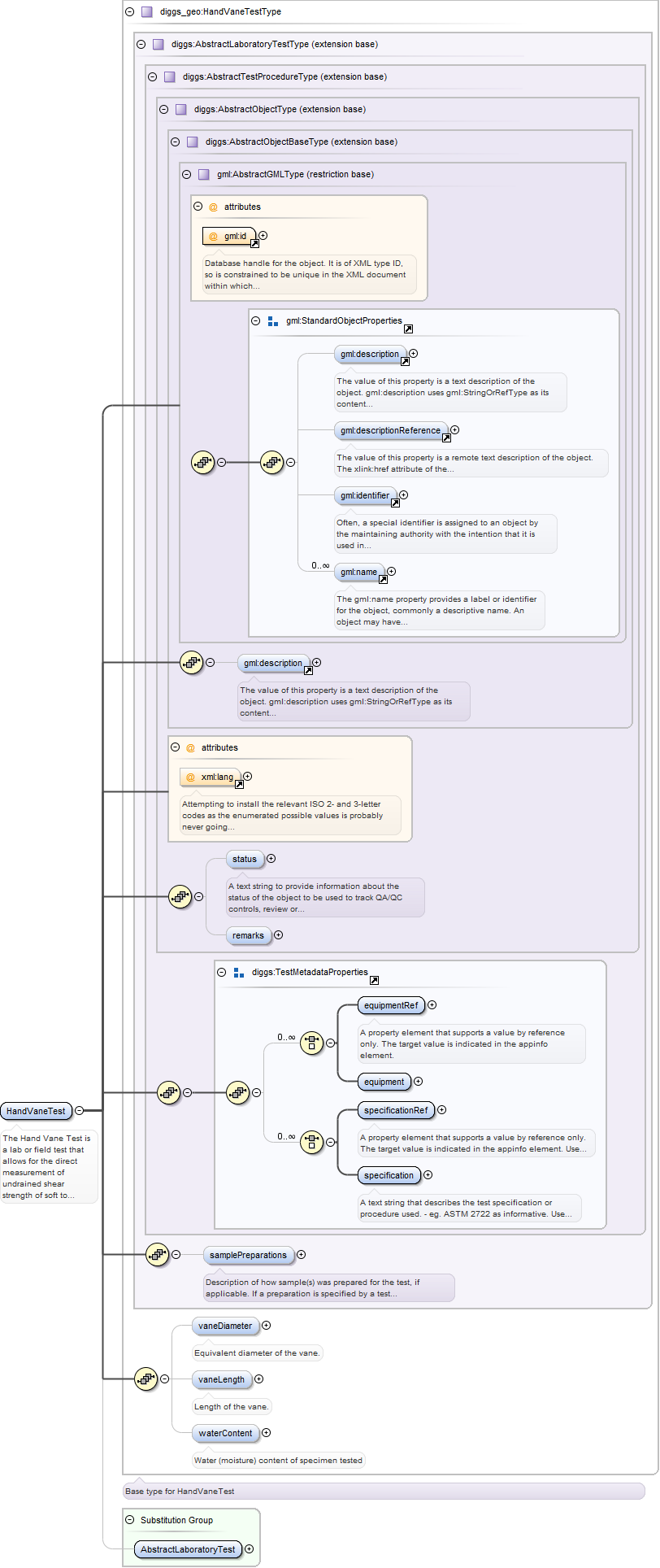
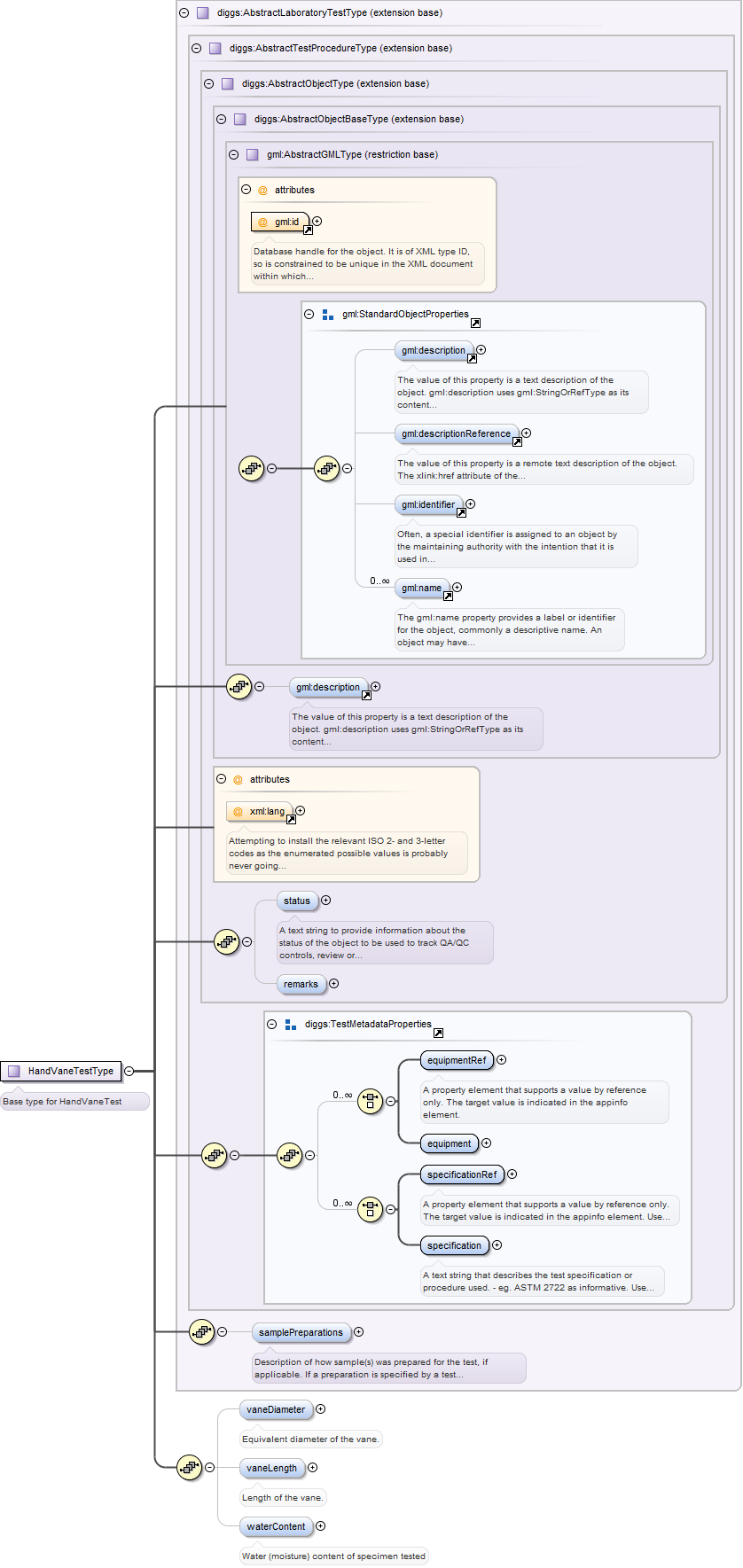
The Hand Vane Test is a lab or field test that allows for the directmeasurement of undrained shear strength of soft to stiff clays, determined by acalibrated scale ring built into the head assembly of the testdevice.
Database handle for the object. It is of XML type ID, so is constrained to beunique in the XML document within which it occurs. An external identifier for the object inthe form of a URI may be constructed using standard XML and XPointer methods. This is doneby concatenating the URI for the document, a fragment separator, and the value of the idattribute.
Attempting to install the relevant ISO 2- and 3-letter codes as the enumerated possible values is probably never going to be a realistic possibility. See RFC 3066 at http://www.ietf.org/rfc/rfc3066.txt and the IANA registry at http://www.iana.org/assignments/lang-tag-apps.htm for further information. The union allows for the 'un-declaration' of xml:lang with the empty string.
Source
<element name="HandVaneTest" type="diggs_geo:HandVaneTestType" abstract="false" substitutionGroup="diggs:AbstractLaboratoryTest"><annotation><documentation>The Hand Vane Test is a lab or field test that allows for the direct measurement of undrained shear strength of soft to stiff clays, determined by a calibrated scale ring built into the head assembly of the test device.</documentation></annotation></element>
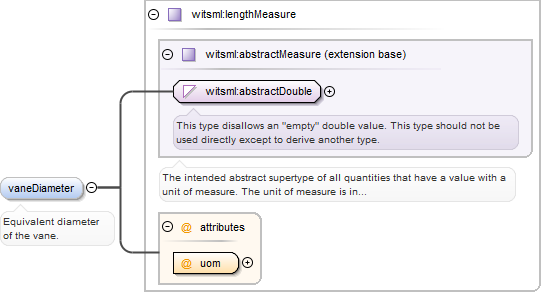
<element name="vaneDiameter" type="witsml:lengthMeasure" minOccurs="0"><annotation><documentation>Equivalent diameter of the vane.</documentation></annotation></element>
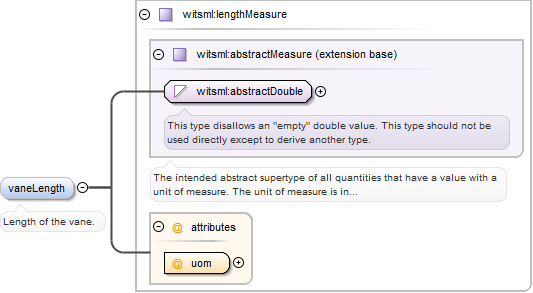
<element name="vaneLength" type="witsml:lengthMeasure" minOccurs="0"><annotation><documentation>Length of the vane.</documentation></annotation></element>
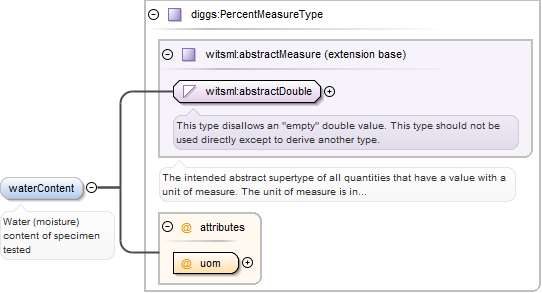
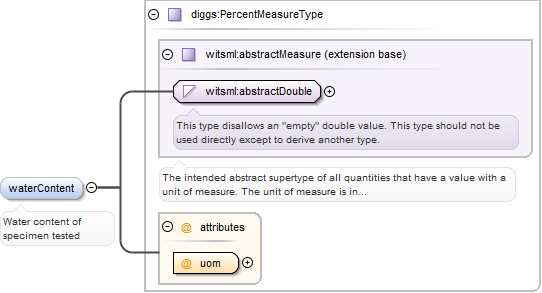
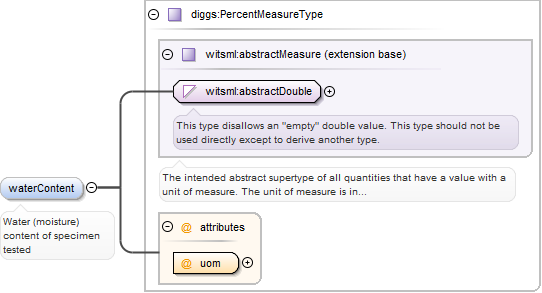
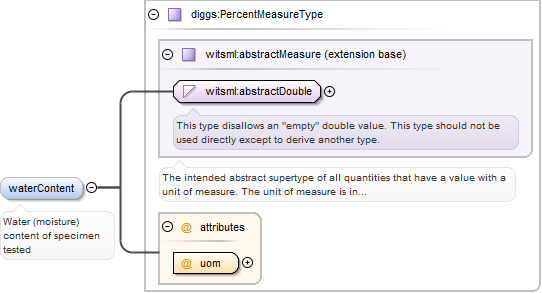
<element name="waterContent" type="diggs:PercentMeasureType" minOccurs="0"><annotation><documentation>Water (moisture) content of specimen tested</documentation></annotation></element>
Schema location
http://diggsml.org/2.0a/schemas/Geotechnical.xsd
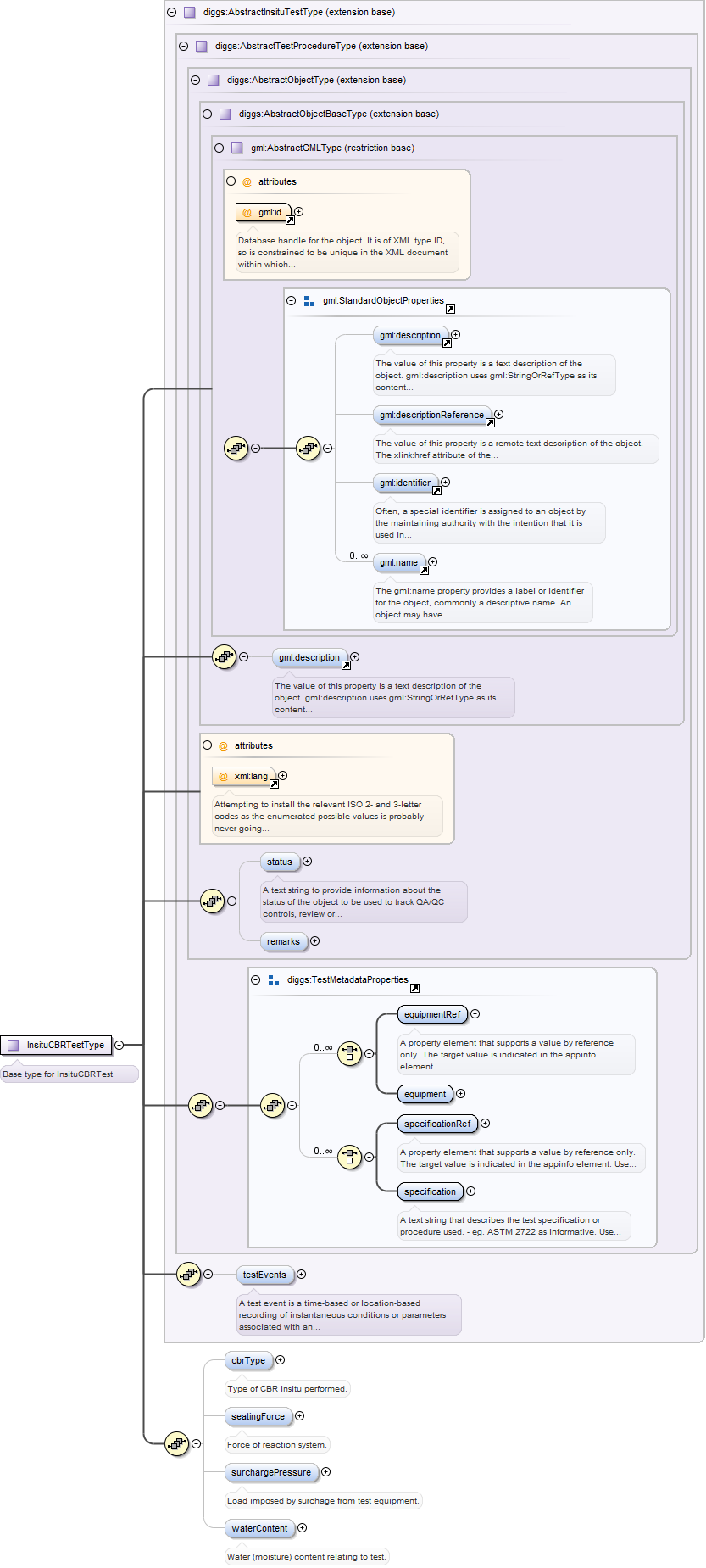
Element diggs_geo:InsituCBRTest
Namespace
http://schemas.diggsml.com/2.0.a/geotechnical
Annotations
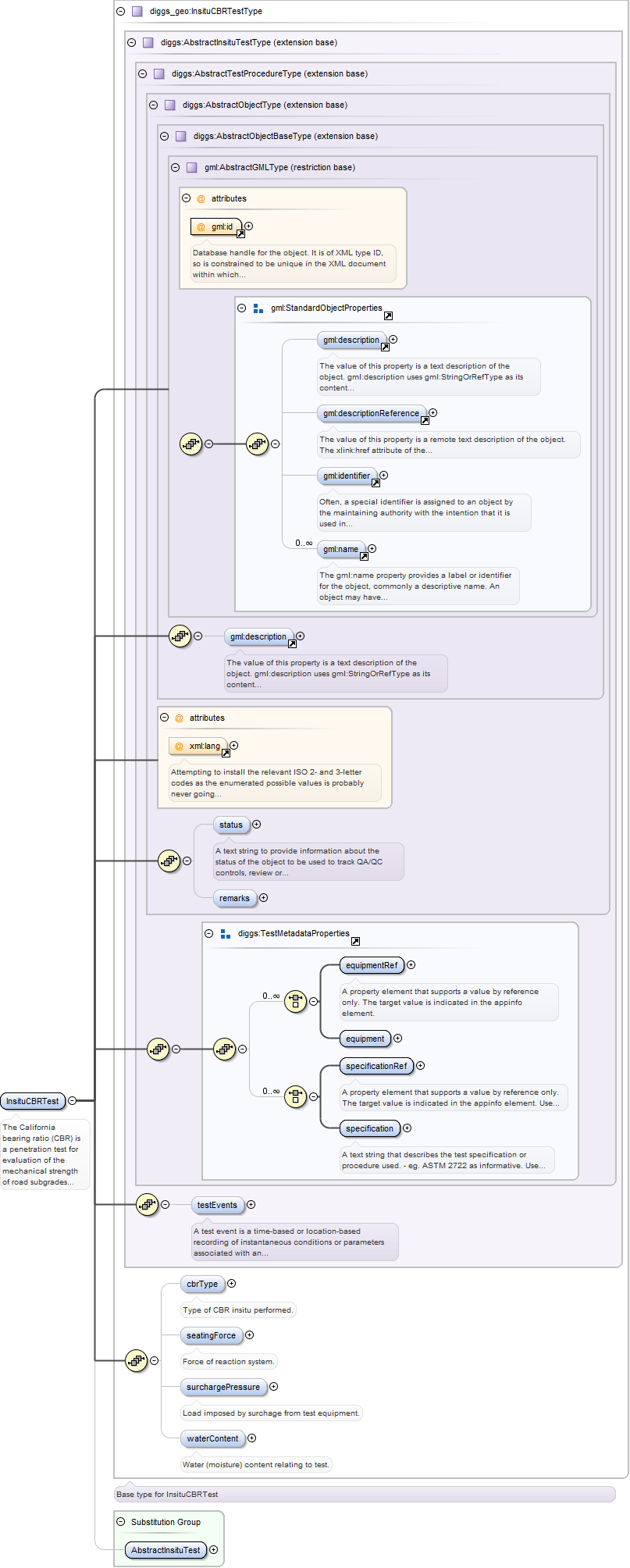
The California bearing ratio (CBR) is a penetration test for evaluationof the mechanical strength of road subgrades and basecourses. The test is performedby measuring the pressure required to penetrate a soil sample with a plunger ofstandard area. The measured pressure is then divided by the pressure required toachieve an equal penetration on a standard crushed rock material.
Database handle for the object. It is of XML type ID, so is constrained to beunique in the XML document within which it occurs. An external identifier for the object inthe form of a URI may be constructed using standard XML and XPointer methods. This is doneby concatenating the URI for the document, a fragment separator, and the value of the idattribute.
Attempting to install the relevant ISO 2- and 3-letter codes as the enumerated possible values is probably never going to be a realistic possibility. See RFC 3066 at http://www.ietf.org/rfc/rfc3066.txt and the IANA registry at http://www.iana.org/assignments/lang-tag-apps.htm for further information. The union allows for the 'un-declaration' of xml:lang with the empty string.
Source
<element name="InsituCBRTest" type="diggs_geo:InsituCBRTestType" abstract="false" substitutionGroup="diggs:AbstractInsituTest"><annotation><documentation>The California bearing ratio (CBR) is a penetration test for evaluation of the mechanical strength of road subgrades and basecourses. The test is performed by measuring the pressure required to penetrate a soil sample with a plunger of standard area. The measured pressure is then divided by the pressure required to achieve an equal penetration on a standard crushed rock material.</documentation></annotation></element>
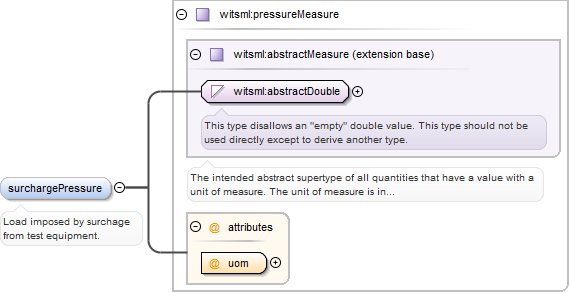
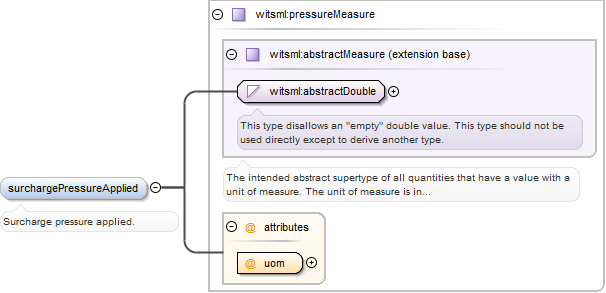
<element name="surchargePressure" type="witsml:pressureMeasure" minOccurs="0"><annotation><documentation>Load imposed by surchage from test equipment.</documentation></annotation></element>
Database handle for the object. It is of XML type ID, so is constrained to beunique in the XML document within which it occurs. An external identifier for the object inthe form of a URI may be constructed using standard XML and XPointer methods. This is doneby concatenating the URI for the document, a fragment separator, and the value of the idattribute.
Attempting to install the relevant ISO 2- and 3-letter codes as the enumerated possible values is probably never going to be a realistic possibility. See RFC 3066 at http://www.ietf.org/rfc/rfc3066.txt and the IANA registry at http://www.iana.org/assignments/lang-tag-apps.htm for further information. The union allows for the 'un-declaration' of xml:lang with the empty string.
Source
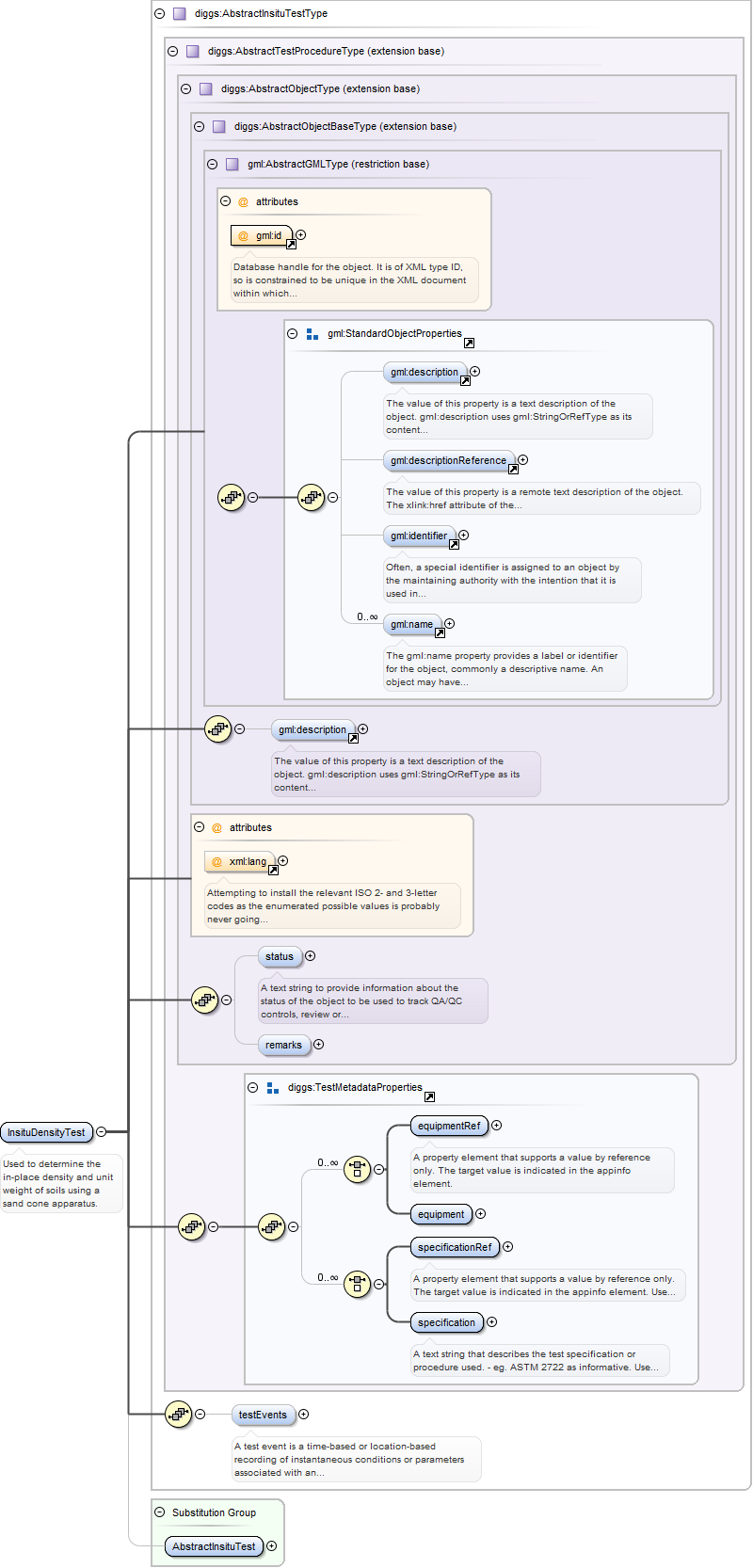
<element name="InsituDensityTest" type="diggs:AbstractInsituTestType" abstract="false" substitutionGroup="diggs:AbstractInsituTest"><annotation><documentation>Used to determine the in-place density and unit weight of soils using a sand cone apparatus.</documentation></annotation></element>
Schema location
http://diggsml.org/2.0a/schemas/Geotechnical.xsd
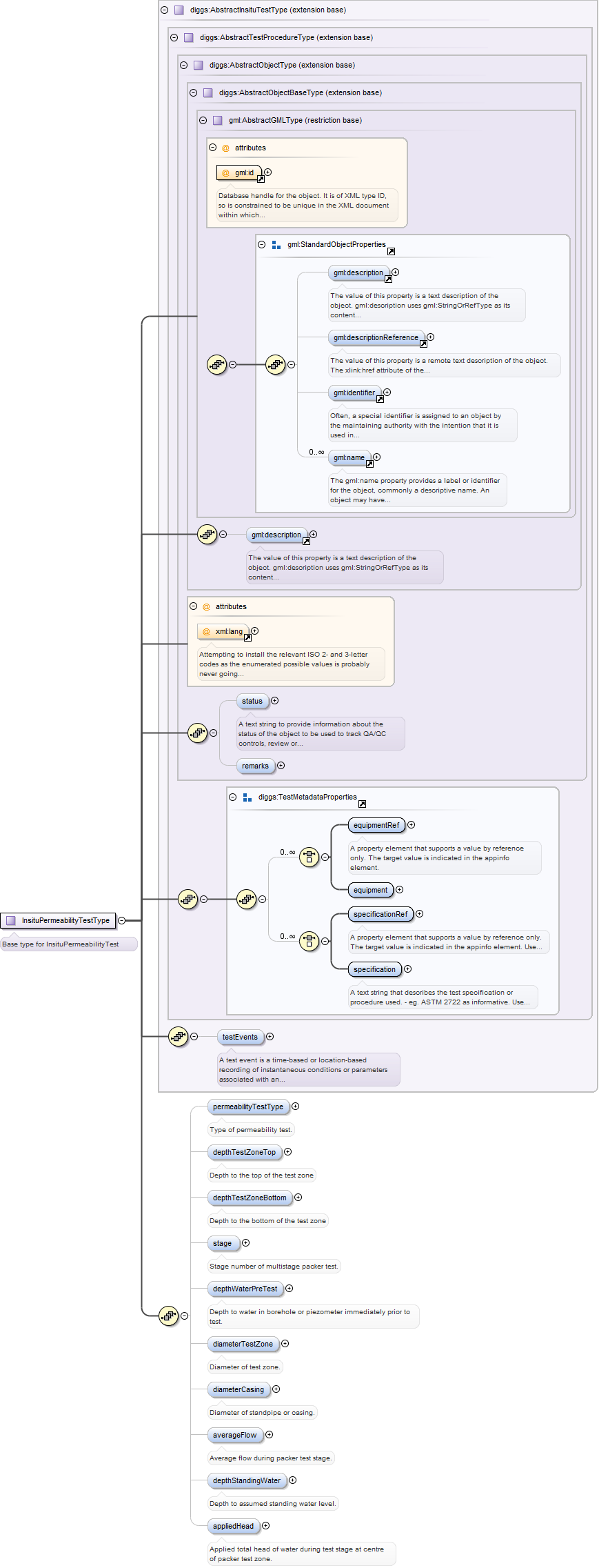
Element diggs_geo:InsituPermeabilityTest
Namespace
http://schemas.diggsml.com/2.0.a/geotechnical
Annotations
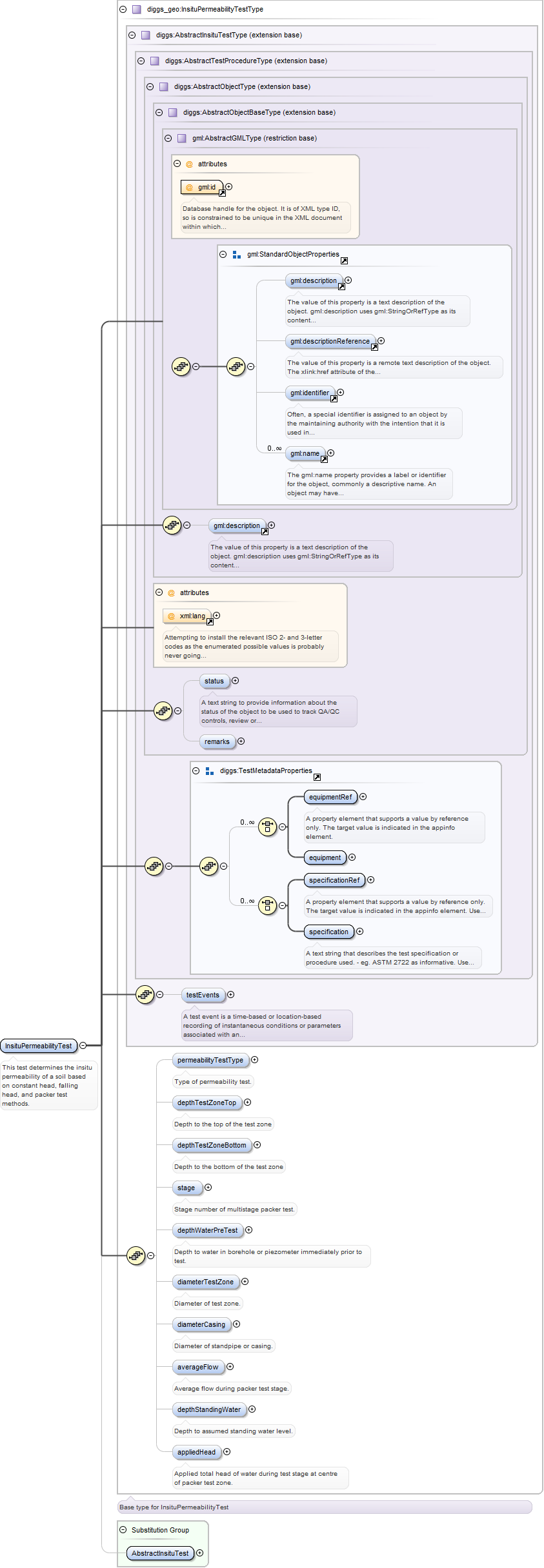
This test determines the insitu permeability of a soil based on constanthead, falling head, and packer test methods.
Database handle for the object. It is of XML type ID, so is constrained to beunique in the XML document within which it occurs. An external identifier for the object inthe form of a URI may be constructed using standard XML and XPointer methods. This is doneby concatenating the URI for the document, a fragment separator, and the value of the idattribute.
Attempting to install the relevant ISO 2- and 3-letter codes as the enumerated possible values is probably never going to be a realistic possibility. See RFC 3066 at http://www.ietf.org/rfc/rfc3066.txt and the IANA registry at http://www.iana.org/assignments/lang-tag-apps.htm for further information. The union allows for the 'un-declaration' of xml:lang with the empty string.
Source
<element name="InsituPermeabilityTest" type="diggs_geo:InsituPermeabilityTestType" abstract="false" substitutionGroup="diggs:AbstractInsituTest"><annotation><documentation>This test determines the insitu permeability of a soil based on constant head, falling head, and packer test methods.</documentation></annotation></element>
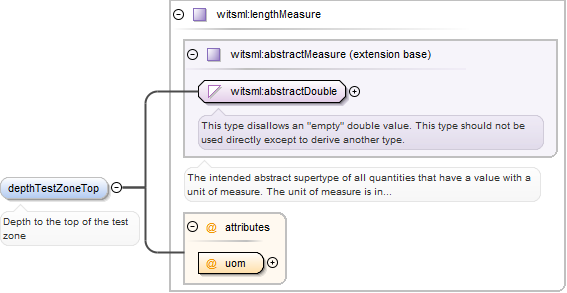
<element name="depthTestZoneTop" type="witsml:lengthMeasure" minOccurs="0"><annotation><documentation>Depth to the top of the test zone</documentation></annotation></element>
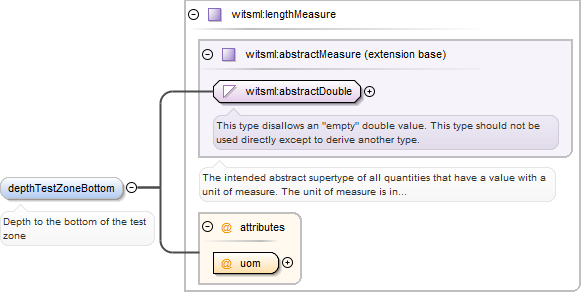
<element name="depthTestZoneBottom" type="witsml:lengthMeasure" minOccurs="0"><annotation><documentation>Depth to the bottom of the test zone</documentation></annotation></element>
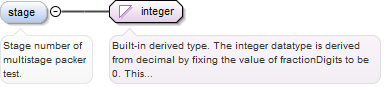
<element name="stage" type="integer" minOccurs="0"><annotation><documentation>Stage number of multistage packer test.</documentation></annotation></element>
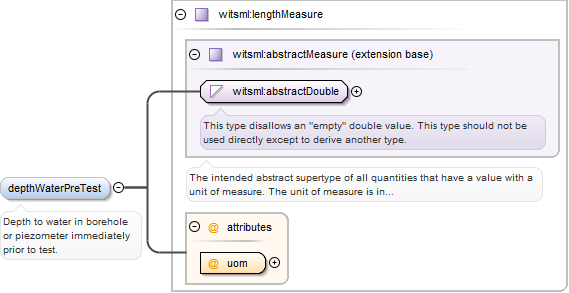
<element name="depthWaterPreTest" type="witsml:lengthMeasure" minOccurs="0"><annotation><documentation>Depth to water in borehole or piezometer immediately prior to test.</documentation></annotation></element>
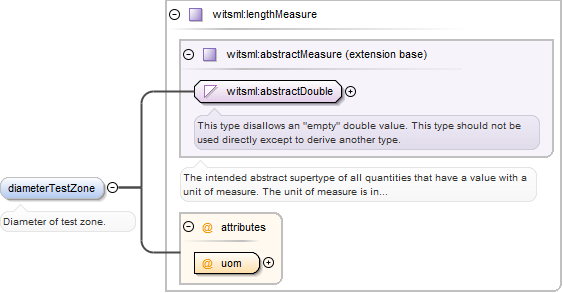
<element name="diameterTestZone" type="witsml:lengthMeasure" minOccurs="0"><annotation><documentation>Diameter of test zone.</documentation></annotation></element>
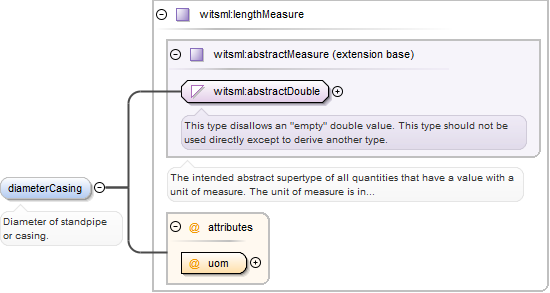
<element name="diameterCasing" type="witsml:lengthMeasure" minOccurs="0"><annotation><documentation>Diameter of standpipe or casing.</documentation></annotation></element>
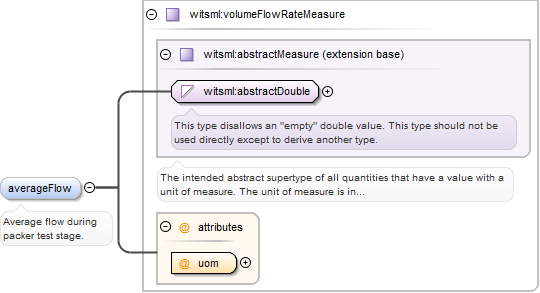
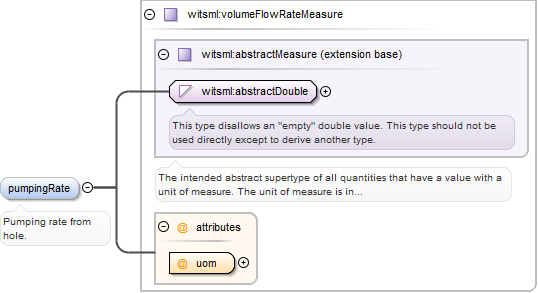
<element name="averageFlow" type="witsml:volumeFlowRateMeasure" minOccurs="0"><annotation><documentation>Average flow during packer test stage.</documentation></annotation></element>
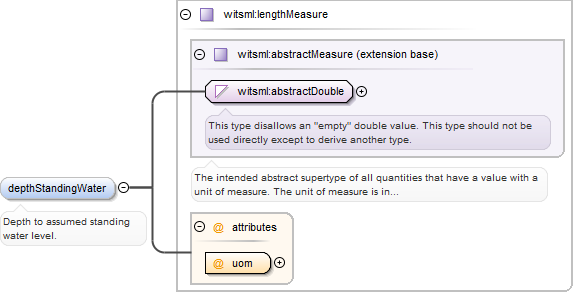
<element name="depthStandingWater" type="witsml:lengthMeasure" minOccurs="0"><annotation><documentation>Depth to assumed standing water level.</documentation></annotation></element>
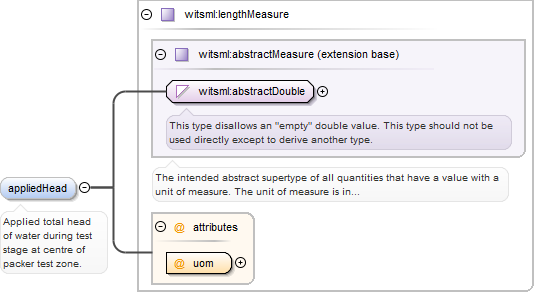
<element name="appliedHead" type="witsml:lengthMeasure" minOccurs="0"><annotation><documentation>Applied total head of water during test stage at centre of packer test zone.</documentation></annotation></element>
Schema location
http://diggsml.org/2.0a/schemas/Geotechnical.xsd
Element diggs_geo:InsituResistivityTest
Namespace
http://schemas.diggsml.com/2.0.a/geotechnical
Annotations
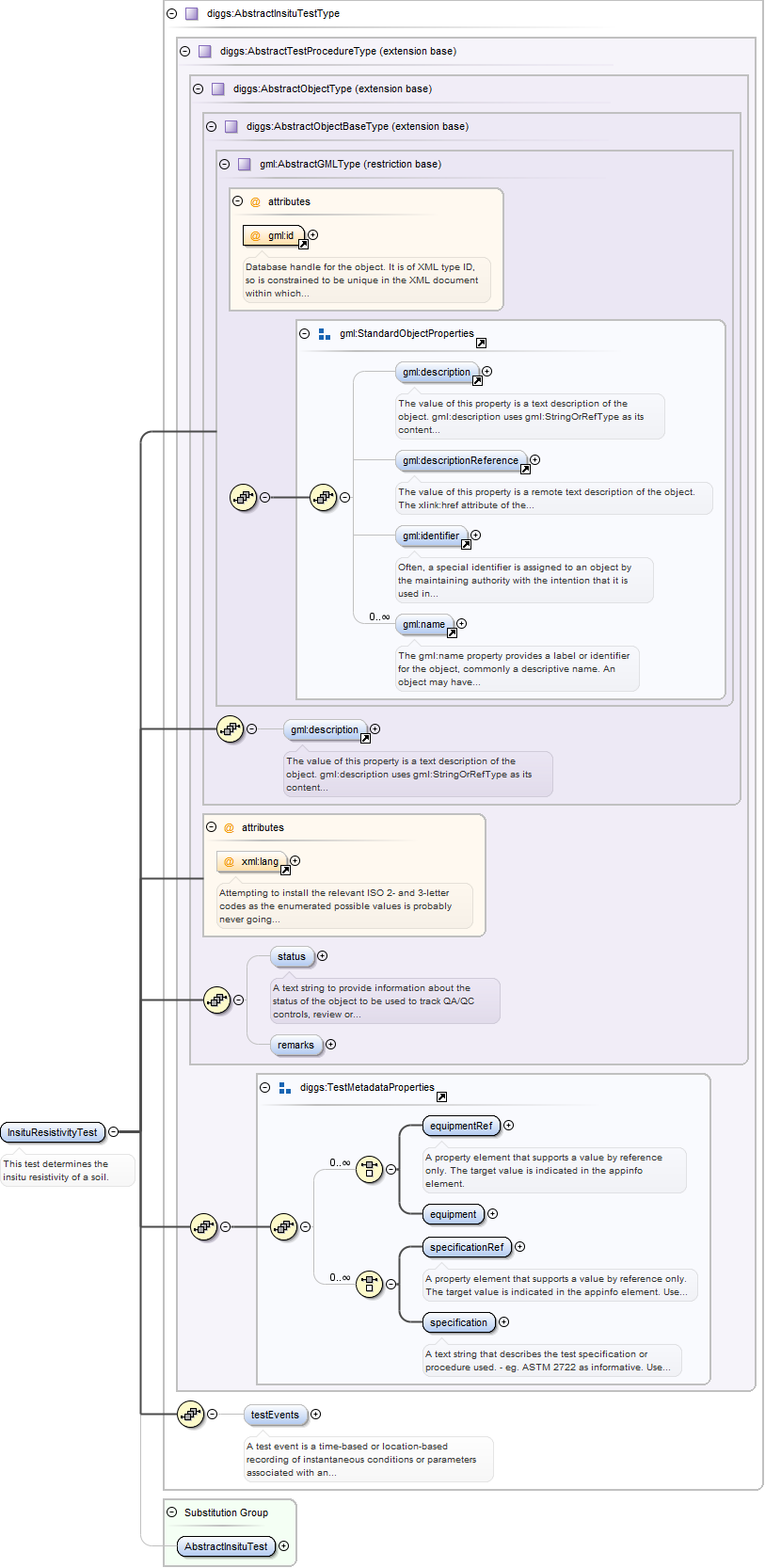
This test determines the insitu resistivity of a soil.
Database handle for the object. It is of XML type ID, so is constrained to beunique in the XML document within which it occurs. An external identifier for the object inthe form of a URI may be constructed using standard XML and XPointer methods. This is doneby concatenating the URI for the document, a fragment separator, and the value of the idattribute.
Attempting to install the relevant ISO 2- and 3-letter codes as the enumerated possible values is probably never going to be a realistic possibility. See RFC 3066 at http://www.ietf.org/rfc/rfc3066.txt and the IANA registry at http://www.iana.org/assignments/lang-tag-apps.htm for further information. The union allows for the 'un-declaration' of xml:lang with the empty string.
Source
<element name="InsituResistivityTest" type="diggs:AbstractInsituTestType" abstract="false" substitutionGroup="diggs:AbstractInsituTest"><annotation><documentation>This test determines the insitu resistivity of a soil.</documentation></annotation></element>
Schema location
http://diggsml.org/2.0a/schemas/Geotechnical.xsd
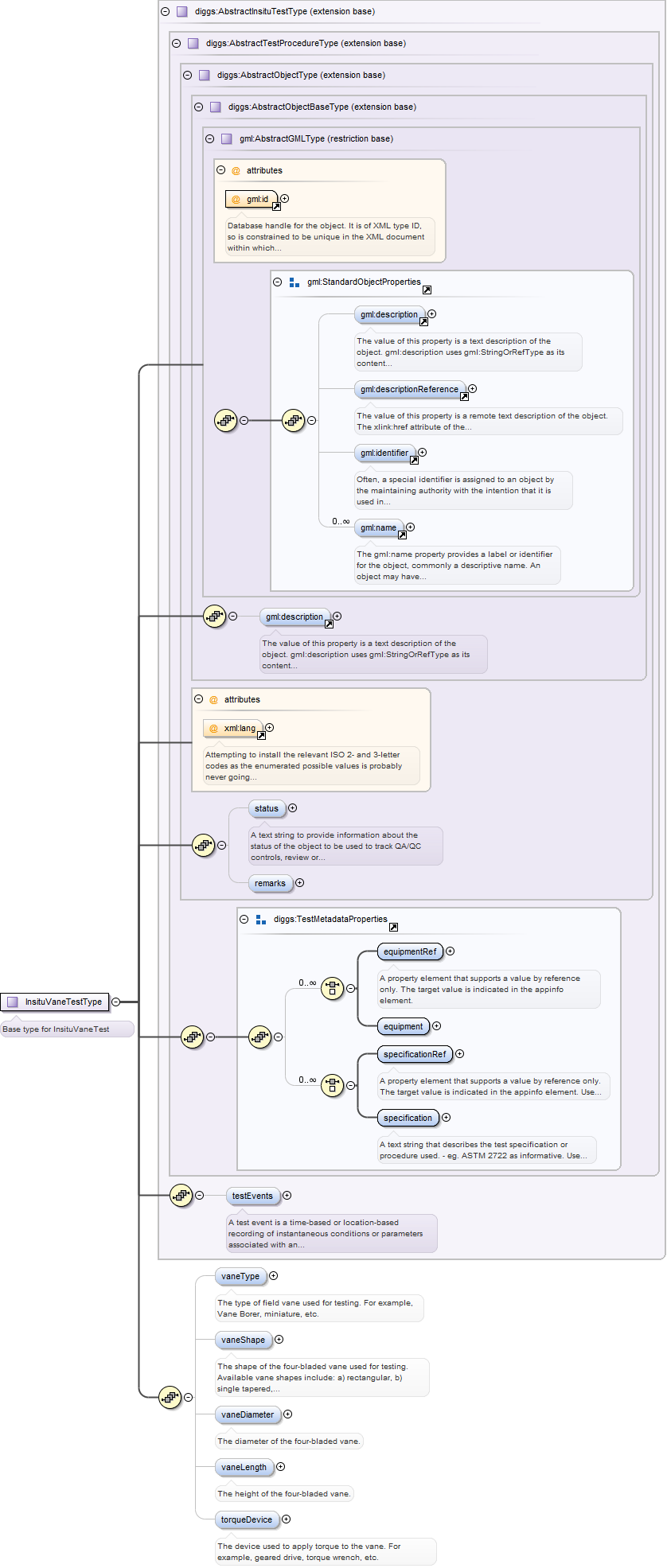
Element diggs_geo:InsituVaneTest
Namespace
http://schemas.diggsml.com/2.0.a/geotechnical
Annotations
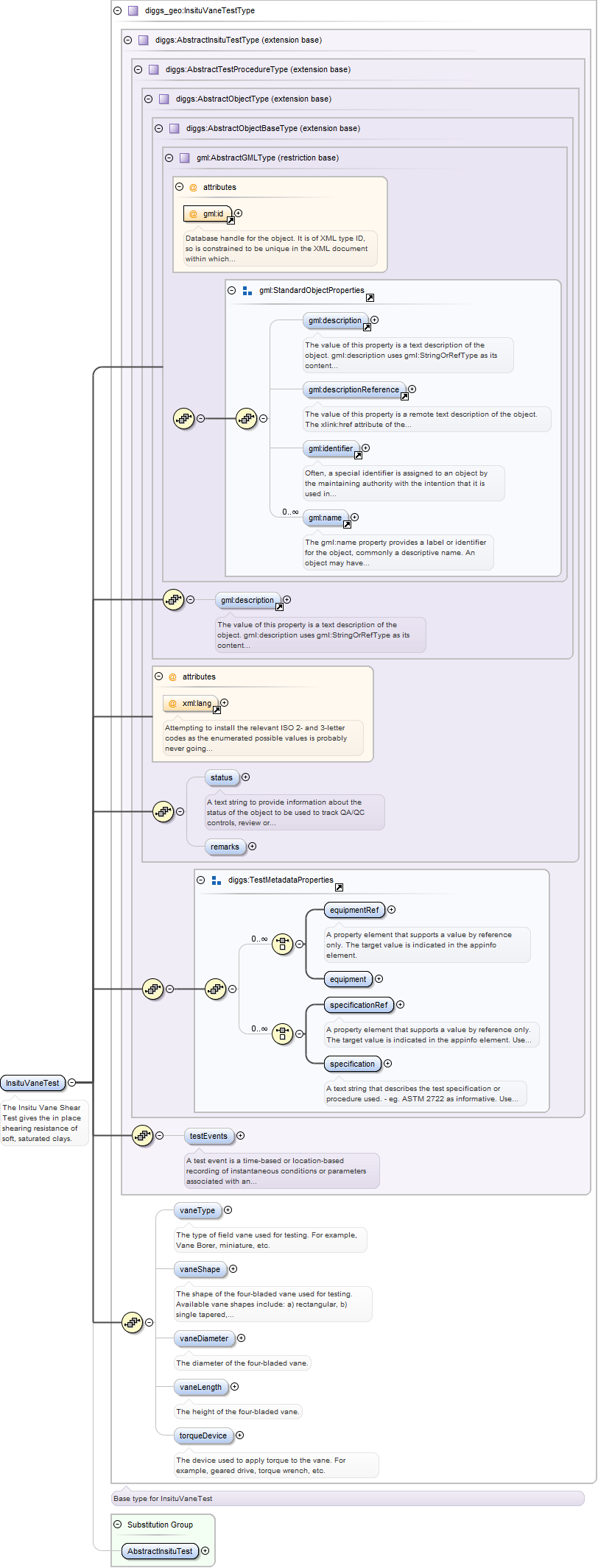
The Insitu Vane Shear Test gives the in place shearing resistance ofsoft, saturated clays.
Database handle for the object. It is of XML type ID, so is constrained to beunique in the XML document within which it occurs. An external identifier for the object inthe form of a URI may be constructed using standard XML and XPointer methods. This is doneby concatenating the URI for the document, a fragment separator, and the value of the idattribute.
Attempting to install the relevant ISO 2- and 3-letter codes as the enumerated possible values is probably never going to be a realistic possibility. See RFC 3066 at http://www.ietf.org/rfc/rfc3066.txt and the IANA registry at http://www.iana.org/assignments/lang-tag-apps.htm for further information. The union allows for the 'un-declaration' of xml:lang with the empty string.
Source
<element name="InsituVaneTest" type="diggs_geo:InsituVaneTestType" abstract="false" substitutionGroup="diggs:AbstractInsituTest"><annotation><documentation>The Insitu Vane Shear Test gives the in place shearing resistance of soft, saturated clays.</documentation></annotation></element>
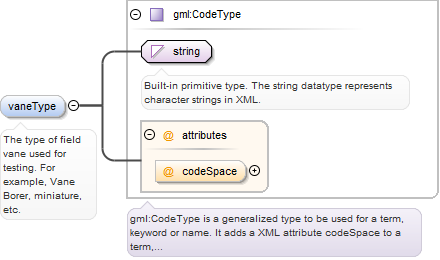
<element name="vaneType" type="gml:CodeType" minOccurs="0"><annotation><documentation>The type of field vane used for testing. For example, Vane Borer, miniature, etc.</documentation></annotation></element>
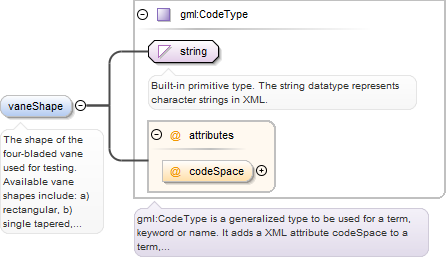
<element name="vaneShape" type="gml:CodeType" minOccurs="0"><annotation><documentation>The shape of the four-bladed vane used for testing. Available vane shapes include: a) rectangular, b) single tapered, c) double tapered, or d) other.</documentation></annotation></element>
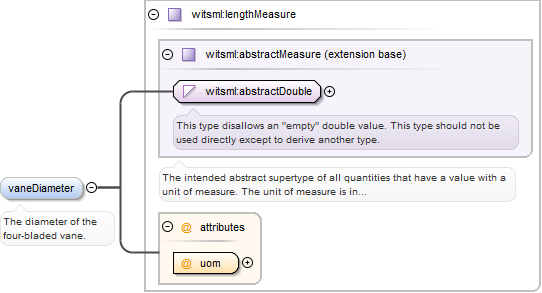
<element name="vaneDiameter" type="witsml:lengthMeasure" minOccurs="0"><annotation><documentation>The diameter of the four-bladed vane.</documentation></annotation></element>
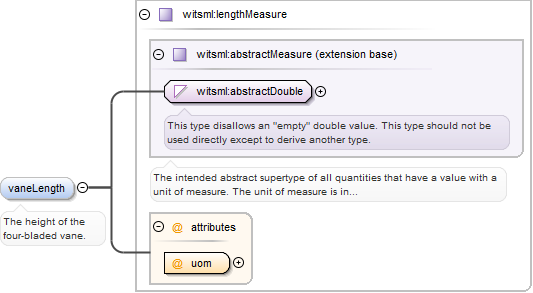
<element name="vaneLength" type="witsml:lengthMeasure" minOccurs="0"><annotation><documentation>The height of the four-bladed vane.</documentation></annotation></element>
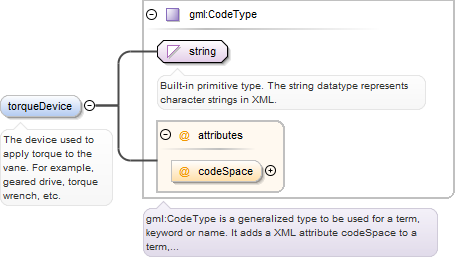
<element name="torqueDevice" type="gml:CodeType" minOccurs="0"><annotation><documentation>The device used to apply torque to the vane. For example, geared drive, torque wrench, etc.</documentation></annotation></element>
Schema location
http://diggsml.org/2.0a/schemas/Geotechnical.xsd
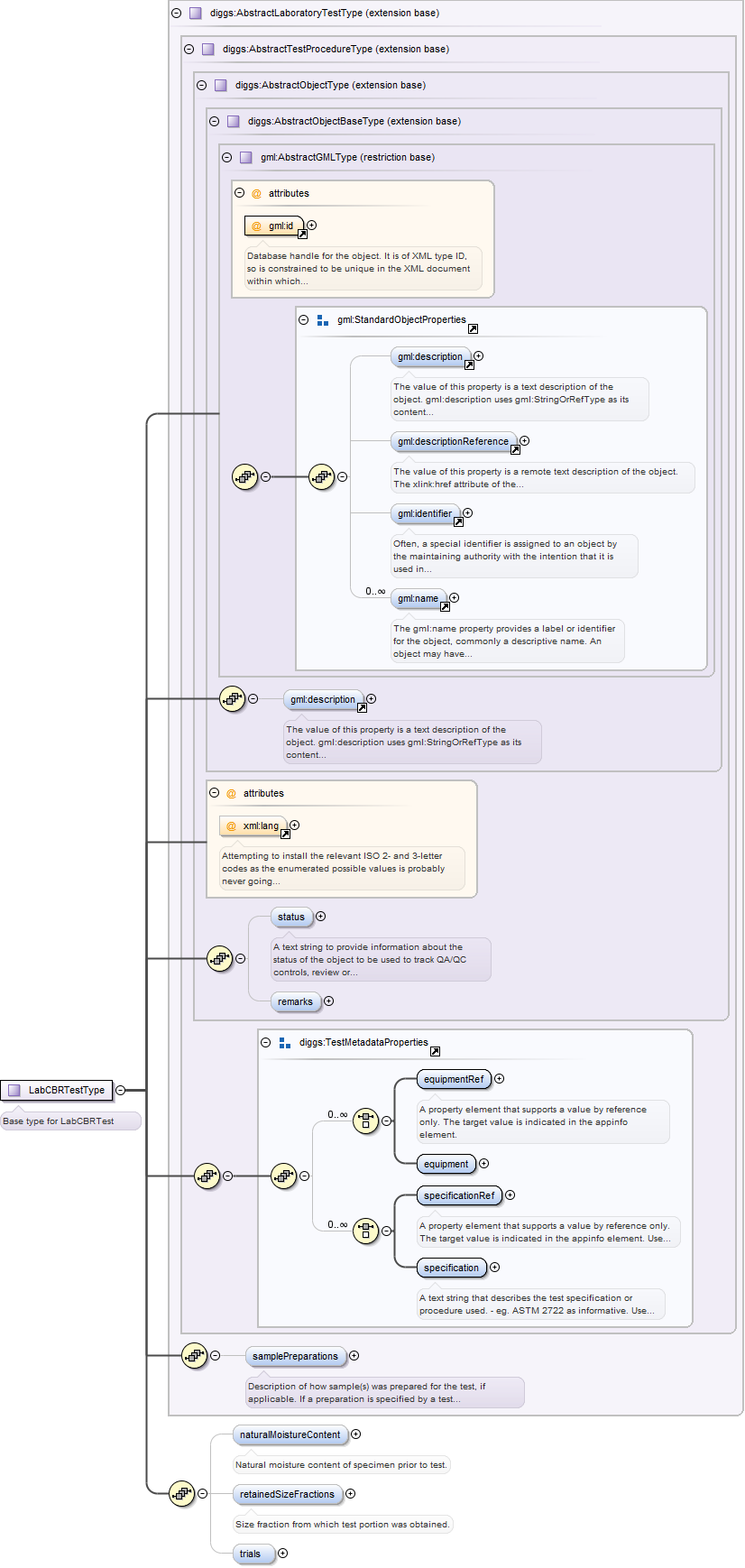
Element diggs_geo:LabCBRTest
Namespace
http://schemas.diggsml.com/2.0.a/geotechnical
Annotations
The California bearing ratio (CBR) is a penetration test for evaluationof the mechanical strength of road subgrades and basecourses. The test is performedby measuring the pressure required to penetrate a soil sample with a plunger ofstandard area. The measured pressure is then divided by the pressure required toachieve an equal penetration on a standard crushed rock material.
Database handle for the object. It is of XML type ID, so is constrained to beunique in the XML document within which it occurs. An external identifier for the object inthe form of a URI may be constructed using standard XML and XPointer methods. This is doneby concatenating the URI for the document, a fragment separator, and the value of the idattribute.
Attempting to install the relevant ISO 2- and 3-letter codes as the enumerated possible values is probably never going to be a realistic possibility. See RFC 3066 at http://www.ietf.org/rfc/rfc3066.txt and the IANA registry at http://www.iana.org/assignments/lang-tag-apps.htm for further information. The union allows for the 'un-declaration' of xml:lang with the empty string.
Source
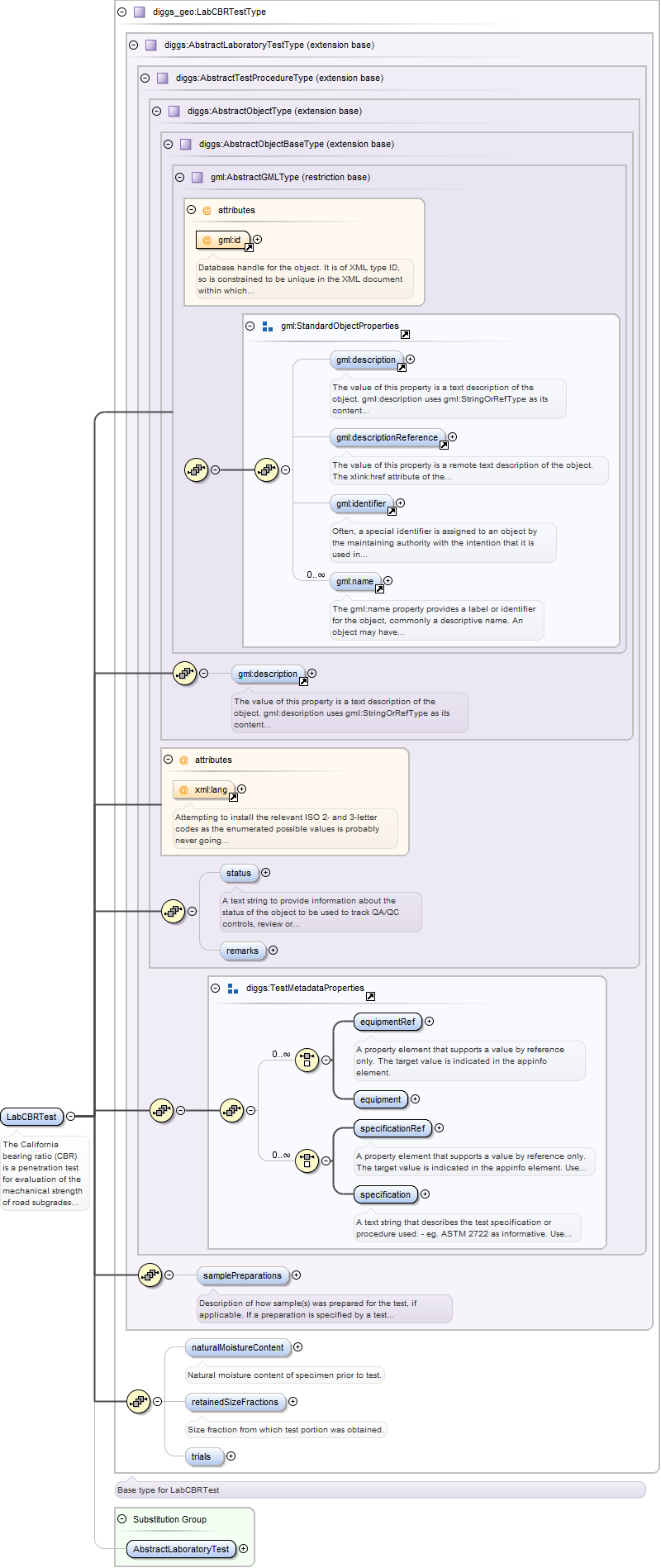
<element name="LabCBRTest" type="diggs_geo:LabCBRTestType" abstract="false" substitutionGroup="diggs:AbstractLaboratoryTest"><annotation><documentation>The California bearing ratio (CBR) is a penetration test for evaluation of the mechanical strength of road subgrades and basecourses. The test is performed by measuring the pressure required to penetrate a soil sample with a plunger of standard area. The measured pressure is then divided by the pressure required to achieve an equal penetration on a standard crushed rock material.</documentation></annotation></element>
<element name="retainedSizeFractions" type="diggs_geo:GradingPropertyType" minOccurs="0"><annotation><documentation>Size fraction from which test portion was obtained.</documentation></annotation></element>
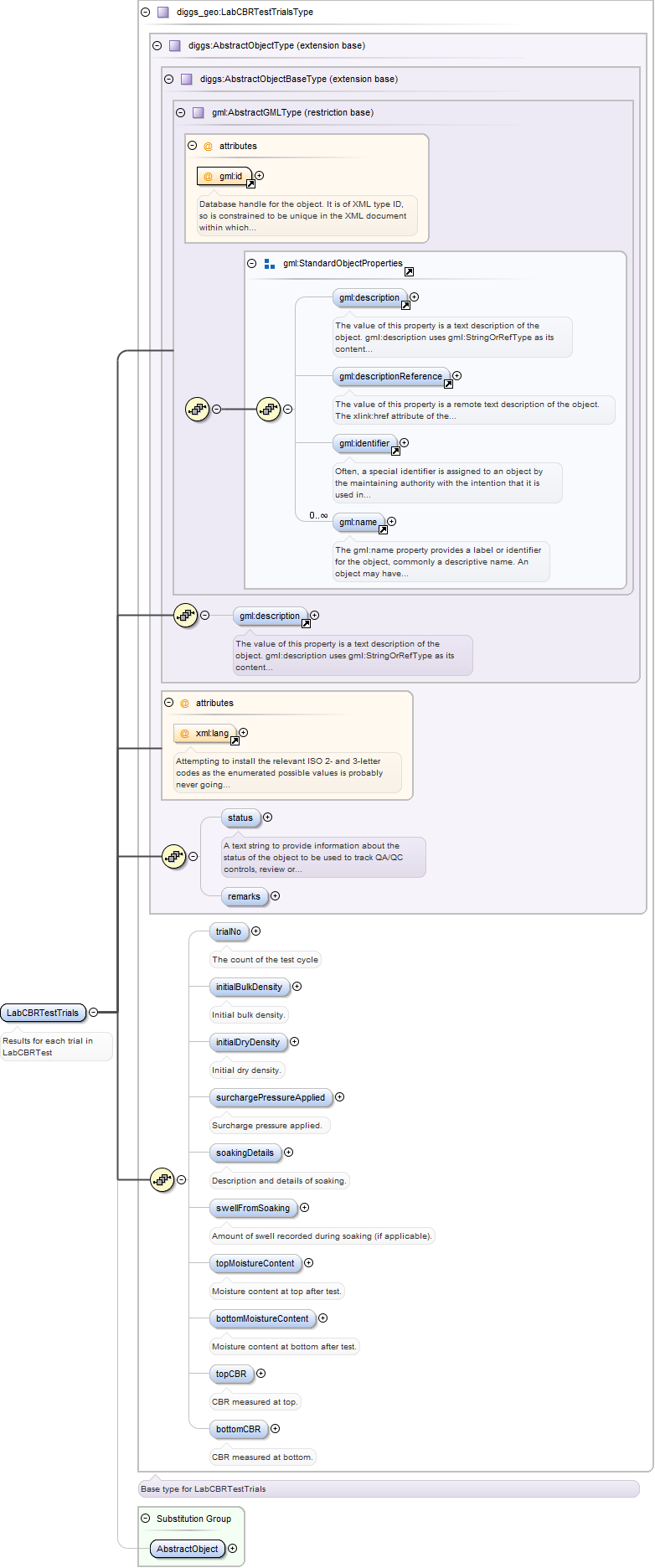
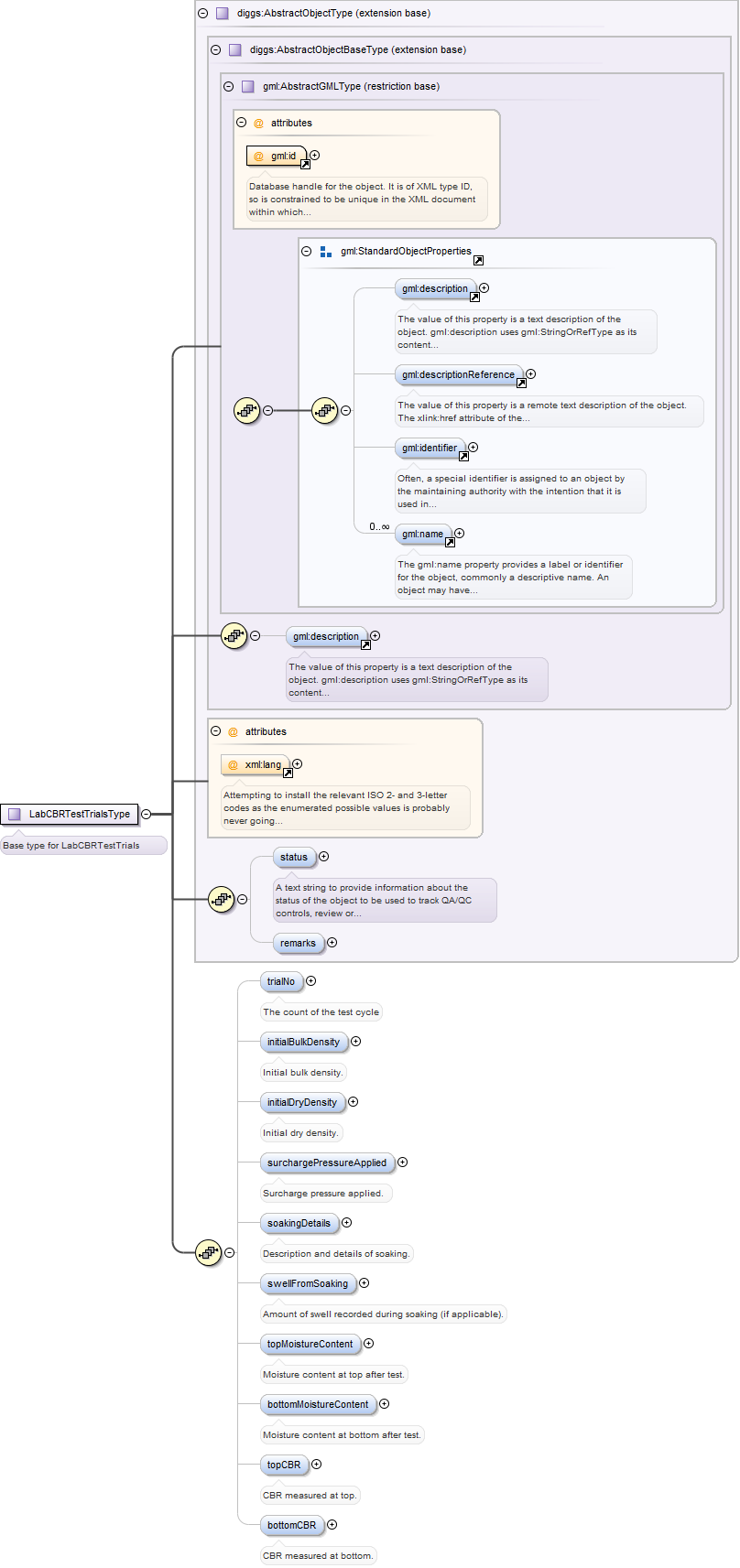
Database handle for the object. It is of XML type ID, so is constrained to beunique in the XML document within which it occurs. An external identifier for the object inthe form of a URI may be constructed using standard XML and XPointer methods. This is doneby concatenating the URI for the document, a fragment separator, and the value of the idattribute.
Attempting to install the relevant ISO 2- and 3-letter codes as the enumerated possible values is probably never going to be a realistic possibility. See RFC 3066 at http://www.ietf.org/rfc/rfc3066.txt and the IANA registry at http://www.iana.org/assignments/lang-tag-apps.htm for further information. The union allows for the 'un-declaration' of xml:lang with the empty string.
Source
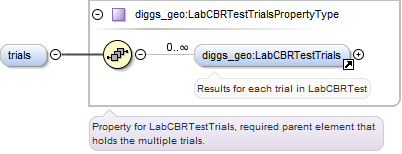
<element name="LabCBRTestTrials" type="diggs_geo:LabCBRTestTrialsType" abstract="false" substitutionGroup="diggs:AbstractObject"><annotation><documentation>Results for each trial in LabCBRTest</documentation></annotation></element>
<element name="soakingDetails" type="string" minOccurs="0"><annotation><documentation>Description and details of soaking.</documentation></annotation></element>
<element name="swellFromSoaking" type="witsml:lengthMeasure" minOccurs="0"><annotation><documentation>Amount of swell recorded during soaking (if applicable).</documentation></annotation></element>
<element name="topMoistureContent" type="diggs:PercentMeasureType" minOccurs="0"><annotation><documentation>Moisture content at top after test.</documentation></annotation></element>
<element name="bottomMoistureContent" type="diggs:PercentMeasureType" minOccurs="0"><annotation><documentation>Moisture content at bottom after test.</documentation></annotation></element>
<element name="bottomCBR" type="diggs:PercentMeasureType" minOccurs="0"><annotation><documentation>CBR measured at bottom.</documentation></annotation></element>
Schema location
http://diggsml.org/2.0a/schemas/Geotechnical.xsd
Element diggs_geo:LabPermeabilityTest
Namespace
http://schemas.diggsml.com/2.0.a/geotechnical
Annotations
The objective of the permeability test is to determine the coefficient ofpermeability of the soil. Several different laboratory testing methods can beperformed to more accurately determine permeability, including constant-head andfalling-head types.
Database handle for the object. It is of XML type ID, so is constrained to beunique in the XML document within which it occurs. An external identifier for the object inthe form of a URI may be constructed using standard XML and XPointer methods. This is doneby concatenating the URI for the document, a fragment separator, and the value of the idattribute.
Attempting to install the relevant ISO 2- and 3-letter codes as the enumerated possible values is probably never going to be a realistic possibility. See RFC 3066 at http://www.ietf.org/rfc/rfc3066.txt and the IANA registry at http://www.iana.org/assignments/lang-tag-apps.htm for further information. The union allows for the 'un-declaration' of xml:lang with the empty string.
Source
<element name="LabPermeabilityTest" type="diggs_geo:LabPermeabilityTestType" abstract="false" substitutionGroup="diggs:AbstractLaboratoryTest"><annotation><documentation>The objective of the permeability test is to determine the coefficient of permeability of the soil. Several different laboratory testing methods can be performed to more accurately determine permeability, including constant-head and falling-head types.</documentation></annotation></element>
<element name="retainedSizeFractions" type="diggs_geo:GradingPropertyType" minOccurs="0"><annotation><documentation>Size fraction from which test portion was obtained.</documentation></annotation></element>
<element name="methodOfSaturation" type="gml:CodeType" minOccurs="0"><annotation><documentation>Method used for saturation.</documentation></annotation></element>
<element name="drainDiameter" type="witsml:lengthMeasure" minOccurs="0"><annotation><documentation>Diameter of drain for radial permeability in hydraulic cell.</documentation></annotation></element>
<element name="drainMethod" type="gml:CodeType" minOccurs="0"><annotation><documentation>Method of forming central drain.</documentation></annotation></element>
<element name="meanEffectiveStress" type="witsml:pressureMeasure" minOccurs="0"><annotation><documentation>Mean effective stress at which permeability measured (when measured in triaxial or hydraulic cell).</documentation></annotation></element>
Hydraulic gradient at which permeability measured (forconstant head test).
Diagram
Type
double
Properties
content:
simple
minOccurs:
0
Source
<element name="hydraulicGradient" type="double" minOccurs="0"><annotation><documentation>Hydraulic gradient at which permeability measured (for constant head test).</documentation></annotation></element>
Schema location
http://diggsml.org/2.0a/schemas/Geotechnical.xsd
Element diggs_geo:LabVelocityTest
Namespace
http://schemas.diggsml.com/2.0.a/geotechnical
Annotations
Shear wave velocity can be measured in the laboratory using resonantcolumn tests, bender elements, ultrasonics, torsional shear tests, and modifiedtriaxial tests.
Database handle for the object. It is of XML type ID, so is constrained to beunique in the XML document within which it occurs. An external identifier for the object inthe form of a URI may be constructed using standard XML and XPointer methods. This is doneby concatenating the URI for the document, a fragment separator, and the value of the idattribute.
Attempting to install the relevant ISO 2- and 3-letter codes as the enumerated possible values is probably never going to be a realistic possibility. See RFC 3066 at http://www.ietf.org/rfc/rfc3066.txt and the IANA registry at http://www.iana.org/assignments/lang-tag-apps.htm for further information. The union allows for the 'un-declaration' of xml:lang with the empty string.
Source
<element name="LabVelocityTest" type="diggs_geo:LabVelocityTestType" abstract="false" substitutionGroup="diggs:AbstractLaboratoryTest"><annotation><documentation>Shear wave velocity can be measured in the laboratory using resonant column tests, bender elements, ultrasonics, torsional shear tests, and modified triaxial tests.</documentation></annotation></element>
<element name="testType" type="gml:CodeType" minOccurs="0"><annotation><documentation>Type of test used to produce velocity measures.</documentation></annotation></element>
Schema location
http://diggsml.org/2.0a/schemas/Geotechnical.xsd
Element diggs_geo:MCVTest
Namespace
http://schemas.diggsml.com/2.0.a/geotechnical
Annotations
The Moisture Condition Value (MCV) is determined from a moisturecondition test, a physical test indicating how much compactive effort is needed tocompact a sample of soil at a particular moisture content. Compactive effort isprovided by dropping a captive weight vertically a known distance on to a sample ofsoil in a cylindrical mould, and measuring compaction. By counting blows to give therequired compaction it will be possible to establish a MCV for a soil at aparticular moisture content.
Database handle for the object. It is of XML type ID, so is constrained to beunique in the XML document within which it occurs. An external identifier for the object inthe form of a URI may be constructed using standard XML and XPointer methods. This is doneby concatenating the URI for the document, a fragment separator, and the value of the idattribute.
Attempting to install the relevant ISO 2- and 3-letter codes as the enumerated possible values is probably never going to be a realistic possibility. See RFC 3066 at http://www.ietf.org/rfc/rfc3066.txt and the IANA registry at http://www.iana.org/assignments/lang-tag-apps.htm for further information. The union allows for the 'un-declaration' of xml:lang with the empty string.
Source
<element name="MCVTest" type="diggs_geo:MCVTestType" abstract="false" substitutionGroup="diggs:AbstractLaboratoryTest"><annotation><documentation>The Moisture Condition Value (MCV) is determined from a moisture condition test, a physical test indicating how much compactive effort is needed to compact a sample of soil at a particular moisture content. Compactive effort is provided by dropping a captive weight vertically a known distance on to a sample of soil in a cylindrical mould, and measuring compaction. By counting blows to give the required compaction it will be possible to establish a MCV for a soil at a particular moisture content.</documentation></annotation></element>
<element name="retainedSizeFractions" type="diggs_geo:GradingPropertyType" minOccurs="0"><annotation><documentation>Size fraction from which test portion was obtained.</documentation></annotation></element>
Database handle for the object. It is of XML type ID, so is constrained to beunique in the XML document within which it occurs. An external identifier for the object inthe form of a URI may be constructed using standard XML and XPointer methods. This is doneby concatenating the URI for the document, a fragment separator, and the value of the idattribute.
Attempting to install the relevant ISO 2- and 3-letter codes as the enumerated possible values is probably never going to be a realistic possibility. See RFC 3066 at http://www.ietf.org/rfc/rfc3066.txt and the IANA registry at http://www.iana.org/assignments/lang-tag-apps.htm for further information. The union allows for the 'un-declaration' of xml:lang with the empty string.
Source
<element name="MCVTestTrials" type="diggs_geo:MCVTestTrialsType" abstract="false" substitutionGroup="diggs:AbstractObject"><annotation><documentation>Results for each trial in MCVTest</documentation></annotation></element>
<element name="interpretationMethod" type="gml:CodeType" minOccurs="0"><annotation><documentation>Method of interpretation of the test curve.</documentation></annotation></element>
<element name="bulkDensity" type="witsml:densityMeasure" minOccurs="0"><annotation><documentation>Bulk density measured after test.</documentation></annotation></element>
<element name="difference" type="witsml:lengthMeasure" minOccurs="0"><annotation><documentation>Difference between initial (n) and final (3n) blows in rapid assessment test.</documentation></annotation></element>
<element name="strongerWeaker" type="string" minOccurs="0"><annotation><documentation>Stronger or weaker than pre-calibrated standard.</documentation></annotation></element>
Schema location
http://diggsml.org/2.0a/schemas/Geotechnical.xsd
Element diggs_geo:MoistureContentTest
Namespace
http://schemas.diggsml.com/2.0.a/geotechnical
Annotations
Water content or moisture content is the quantity of water contained in amaterial, expressed as a ratio. Also referred to as moisture content, this is themass of water divided by the mass of the solids, expressed as apercentage.
Database handle for the object. It is of XML type ID, so is constrained to beunique in the XML document within which it occurs. An external identifier for the object inthe form of a URI may be constructed using standard XML and XPointer methods. This is doneby concatenating the URI for the document, a fragment separator, and the value of the idattribute.
Attempting to install the relevant ISO 2- and 3-letter codes as the enumerated possible values is probably never going to be a realistic possibility. See RFC 3066 at http://www.ietf.org/rfc/rfc3066.txt and the IANA registry at http://www.iana.org/assignments/lang-tag-apps.htm for further information. The union allows for the 'un-declaration' of xml:lang with the empty string.
Source
<element name="MoistureContentTest" type="diggs:AbstractLaboratoryTestType" abstract="false" substitutionGroup="diggs:AbstractLaboratoryTest"><annotation><documentation>Water content or moisture content is the quantity of water contained in a material, expressed as a ratio. Also referred to as moisture content, this is the mass of water divided by the mass of the solids, expressed as a percentage.</documentation></annotation></element>
Schema location
http://diggsml.org/2.0a/schemas/Geotechnical.xsd
Element diggs_geo:ParticleSizeTest
Namespace
http://schemas.diggsml.com/2.0.a/geotechnical
Annotations
This test produces the distribution of particle sizes in soils asdetermined by sieve analysis and/or hydrometer analysis.
Database handle for the object. It is of XML type ID, so is constrained to beunique in the XML document within which it occurs. An external identifier for the object inthe form of a URI may be constructed using standard XML and XPointer methods. This is doneby concatenating the URI for the document, a fragment separator, and the value of the idattribute.
Attempting to install the relevant ISO 2- and 3-letter codes as the enumerated possible values is probably never going to be a realistic possibility. See RFC 3066 at http://www.ietf.org/rfc/rfc3066.txt and the IANA registry at http://www.iana.org/assignments/lang-tag-apps.htm for further information. The union allows for the 'un-declaration' of xml:lang with the empty string.
Source
<element name="ParticleSizeTest" type="diggs_geo:ParticleSizeTestType" abstract="false" substitutionGroup="diggs:AbstractLaboratoryTest"><annotation><documentation>This test produces the distribution of particle sizes in soils as determined by sieve analysis and/or hydrometer analysis.</documentation></annotation></element>
Database handle for the object. It is of XML type ID, so is constrained to beunique in the XML document within which it occurs. An external identifier for the object inthe form of a URI may be constructed using standard XML and XPointer methods. This is doneby concatenating the URI for the document, a fragment separator, and the value of the idattribute.
Attempting to install the relevant ISO 2- and 3-letter codes as the enumerated possible values is probably never going to be a realistic possibility. See RFC 3066 at http://www.ietf.org/rfc/rfc3066.txt and the IANA registry at http://www.iana.org/assignments/lang-tag-apps.htm for further information. The union allows for the 'un-declaration' of xml:lang with the empty string.
Source
<element name="PhotoIonizationDetectorTest" type="diggs:AbstractLaboratoryTestType" abstract="false" substitutionGroup="diggs:AbstractLaboratoryTest"><annotation><documentation>This test measures volatile organic compounds and other gases.</documentation></annotation></element>
Schema location
http://diggsml.org/2.0a/schemas/Geotechnical.xsd
Element diggs_geo:PocketPenetrometerTest
Namespace
http://schemas.diggsml.com/2.0.a/geotechnical
Annotations
This field and lab test provides an estimate of undrained shearstrength.
Database handle for the object. It is of XML type ID, so is constrained to beunique in the XML document within which it occurs. An external identifier for the object inthe form of a URI may be constructed using standard XML and XPointer methods. This is doneby concatenating the URI for the document, a fragment separator, and the value of the idattribute.
Attempting to install the relevant ISO 2- and 3-letter codes as the enumerated possible values is probably never going to be a realistic possibility. See RFC 3066 at http://www.ietf.org/rfc/rfc3066.txt and the IANA registry at http://www.iana.org/assignments/lang-tag-apps.htm for further information. The union allows for the 'un-declaration' of xml:lang with the empty string.
Source
<element name="PocketPenetrometerTest" type="diggs:AbstractLaboratoryTestType" abstract="false" substitutionGroup="diggs:AbstractLaboratoryTest"><annotation><documentation>This field and lab test provides an estimate of undrained shear strength.</documentation></annotation></element>
Schema location
http://diggsml.org/2.0a/schemas/Geotechnical.xsd
Element diggs_geo:PointLoadTest
Namespace
http://schemas.diggsml.com/2.0.a/geotechnical
Annotations
The Point Load Test produces the Point Load Test Index (Is50), which canbe correlated with the uniaxial compressive strength (UCS) of rock.
Database handle for the object. It is of XML type ID, so is constrained to beunique in the XML document within which it occurs. An external identifier for the object inthe form of a URI may be constructed using standard XML and XPointer methods. This is doneby concatenating the URI for the document, a fragment separator, and the value of the idattribute.
Attempting to install the relevant ISO 2- and 3-letter codes as the enumerated possible values is probably never going to be a realistic possibility. See RFC 3066 at http://www.ietf.org/rfc/rfc3066.txt and the IANA registry at http://www.iana.org/assignments/lang-tag-apps.htm for further information. The union allows for the 'un-declaration' of xml:lang with the empty string.
Source
<element name="PointLoadTest" type="diggs_geo:PointLoadTestType" abstract="false" substitutionGroup="diggs:AbstractLaboratoryTest"><annotation><documentation>The Point Load Test produces the Point Load Test Index (Is50), which can be correlated with the uniaxial compressive strength (UCS) of rock.</documentation></annotation></element>
Database handle for the object. It is of XML type ID, so is constrained to beunique in the XML document within which it occurs. An external identifier for the object inthe form of a URI may be constructed using standard XML and XPointer methods. This is doneby concatenating the URI for the document, a fragment separator, and the value of the idattribute.
Attempting to install the relevant ISO 2- and 3-letter codes as the enumerated possible values is probably never going to be a realistic possibility. See RFC 3066 at http://www.ietf.org/rfc/rfc3066.txt and the IANA registry at http://www.iana.org/assignments/lang-tag-apps.htm for further information. The union allows for the 'un-declaration' of xml:lang with the empty string.
Source
<element name="RockPorosityDensityTest" type="diggs_geo:RockPorosityDensityTestType" abstract="false" substitutionGroup="diggs:AbstractLaboratoryTest"><annotation><documentation>This test determines the porosity and density of rock.</documentation></annotation></element>
The Pressuremeter measures both the strength and stress-strain propertiesof all soil types including soft rock. The pressuremeter is used primarily tocalculate bearing capacity of shallow and deep foundations; settlement offoundations; deformation of laterally loaded and sheet piles and resistance ofanchors
Database handle for the object. It is of XML type ID, so is constrained to beunique in the XML document within which it occurs. An external identifier for the object inthe form of a URI may be constructed using standard XML and XPointer methods. This is doneby concatenating the URI for the document, a fragment separator, and the value of the idattribute.
Attempting to install the relevant ISO 2- and 3-letter codes as the enumerated possible values is probably never going to be a realistic possibility. See RFC 3066 at http://www.ietf.org/rfc/rfc3066.txt and the IANA registry at http://www.iana.org/assignments/lang-tag-apps.htm for further information. The union allows for the 'un-declaration' of xml:lang with the empty string.
Source
<element name="PressuremeterTest" type="diggs_geo:PressuremeterTestType" abstract="false" substitutionGroup="diggs:AbstractInsituTest"><annotation><documentation>The Pressuremeter measures both the strength and stress-strain properties of all soil types including soft rock. The pressuremeter is used primarily to calculate bearing capacity of shallow and deep foundations; settlement of foundations; deformation of laterally loaded and sheet piles and resistance of anchors</documentation></annotation></element>
<element name="pressuremeterType" type="gml:CodeType" minOccurs="0"><annotation><documentation>The type of pressuremeter.</documentation></annotation></element>
<element name="pressuremeterDiameter" type="witsml:lengthMeasure" minOccurs="0"><annotation><documentation>The uninflated diameter of the pressuremeter.</documentation></annotation></element>
Database handle for the object. It is of XML type ID, so is constrained to beunique in the XML document within which it occurs. An external identifier for the object inthe form of a URI may be constructed using standard XML and XPointer methods. This is doneby concatenating the URI for the document, a fragment separator, and the value of the idattribute.
Attempting to install the relevant ISO 2- and 3-letter codes as the enumerated possible values is probably never going to be a realistic possibility. See RFC 3066 at http://www.ietf.org/rfc/rfc3066.txt and the IANA registry at http://www.iana.org/assignments/lang-tag-apps.htm for further information. The union allows for the 'un-declaration' of xml:lang with the empty string.
Source
<element name="PressuremeterTestTrials" type="diggs_geo:PressuremeterTestTrialsType" abstract="false" substitutionGroup="diggs:AbstractObject"><annotation><documentation>Results for each trial in PressuremeterTest</documentation></annotation></element>
<element name="shearModulus" type="witsml:pressureMeasure" minOccurs="0"><annotation><documentation>Unload or reload shear modulus for the cycle.</documentation></annotation></element>
<element name="pressureRange" type="witsml:pressureMeasure" minOccurs="0"><annotation><documentation>Pressure range or amplitude.</documentation></annotation></element>
<element name="linearity" type="double" minOccurs="0"><annotation><documentation>Linearity exponent (from Bolton and Whittle, 1999)</documentation></annotation></element>
Schema location
http://diggsml.org/2.0a/schemas/Geotechnical.xsd
Element diggs_geo:PumpingTest
Namespace
http://schemas.diggsml.com/2.0.a/geotechnical
Annotations
An aquifer test (or a pumping test) is conducted to evaluate an aquiferby "stimulating" the aquifer through constant pumping, and observing the aquifer's"response" (drawdown) in observation wells.
Database handle for the object. It is of XML type ID, so is constrained to beunique in the XML document within which it occurs. An external identifier for the object inthe form of a URI may be constructed using standard XML and XPointer methods. This is doneby concatenating the URI for the document, a fragment separator, and the value of the idattribute.
Attempting to install the relevant ISO 2- and 3-letter codes as the enumerated possible values is probably never going to be a realistic possibility. See RFC 3066 at http://www.ietf.org/rfc/rfc3066.txt and the IANA registry at http://www.iana.org/assignments/lang-tag-apps.htm for further information. The union allows for the 'un-declaration' of xml:lang with the empty string.
Source
<element name="PumpingTest" type="diggs_geo:PumpingTestType" abstract="false" substitutionGroup="diggs:AbstractInsituTest"><annotation><documentation>An aquifer test (or a pumping test) is conducted to evaluate an aquifer by "stimulating" the aquifer through constant pumping, and observing the aquifer's "response" (drawdown) in observation wells.</documentation></annotation></element>
Database handle for the object. It is of XML type ID, so is constrained to beunique in the XML document within which it occurs. An external identifier for the object inthe form of a URI may be constructed using standard XML and XPointer methods. This is doneby concatenating the URI for the document, a fragment separator, and the value of the idattribute.
Attempting to install the relevant ISO 2- and 3-letter codes as the enumerated possible values is probably never going to be a realistic possibility. See RFC 3066 at http://www.ietf.org/rfc/rfc3066.txt and the IANA registry at http://www.iana.org/assignments/lang-tag-apps.htm for further information. The union allows for the 'un-declaration' of xml:lang with the empty string.
Source
<element name="PumpingTestTrials" type="diggs_geo:PumpingTestTrialsType" abstract="false" substitutionGroup="diggs:AbstractObject"><annotation><documentation>Results for each trial in PumpingTest</documentation></annotation></element>
<element name="dateTimeOfReading" type="dateTime" minOccurs="0"><annotation><documentation>Date and time of reading.</documentation></annotation></element>
<element name="waterDepth" type="witsml:lengthMeasure" minOccurs="0"><annotation><documentation>Depth to water below ground.</documentation></annotation></element>
<element name="pumpingRate" type="witsml:volumeFlowRateMeasure" minOccurs="0"><annotation><documentation>Pumping rate from hole.</documentation></annotation></element>
Schema location
http://diggsml.org/2.0a/schemas/Geotechnical.xsd
Element diggs_geo:RedoxTest
Namespace
http://schemas.diggsml.com/2.0.a/geotechnical
Annotations
The Redox Test is used to determine the electro-chemical potential of thesoil. A calomel reference probe and platinum probe is inserted in the ground atleast 150mm apart at the required depth and the two electrodes connected to amultimeter. The difference in electro-chemical potential between the two probes isthen measured.
Database handle for the object. It is of XML type ID, so is constrained to beunique in the XML document within which it occurs. An external identifier for the object inthe form of a URI may be constructed using standard XML and XPointer methods. This is doneby concatenating the URI for the document, a fragment separator, and the value of the idattribute.
Attempting to install the relevant ISO 2- and 3-letter codes as the enumerated possible values is probably never going to be a realistic possibility. See RFC 3066 at http://www.ietf.org/rfc/rfc3066.txt and the IANA registry at http://www.iana.org/assignments/lang-tag-apps.htm for further information. The union allows for the 'un-declaration' of xml:lang with the empty string.
Source
<element name="RedoxTest" type="diggs_geo:RedoxTestType" abstract="false" substitutionGroup="diggs:AbstractInsituTest"><annotation><documentation>The Redox Test is used to determine the electro-chemical potential of the soil. A calomel reference probe and platinum probe is inserted in the ground at least 150mm apart at the required depth and the two electrodes connected to a multimeter. The difference in electro-chemical potential between the two probes is then measured.</documentation></annotation></element>
<element name="redoxTestType" type="gml:CodeType" minOccurs="0"><annotation><documentation>The type of redox test conducted.</documentation></annotation></element>
Schema location
http://diggsml.org/2.0a/schemas/Geotechnical.xsd
Element diggs_geo:RelativeDensityTest
Namespace
http://schemas.diggsml.com/2.0.a/geotechnical
Annotations
The relative density of a soil is the ratio, expressed as a percentage,of the difference between the maximum index void ratio and the field void ratio of acohesionless, free-draining soil; to the difference between its maximum and minimumindex void ratios.
Database handle for the object. It is of XML type ID, so is constrained to beunique in the XML document within which it occurs. An external identifier for the object inthe form of a URI may be constructed using standard XML and XPointer methods. This is doneby concatenating the URI for the document, a fragment separator, and the value of the idattribute.
Attempting to install the relevant ISO 2- and 3-letter codes as the enumerated possible values is probably never going to be a realistic possibility. See RFC 3066 at http://www.ietf.org/rfc/rfc3066.txt and the IANA registry at http://www.iana.org/assignments/lang-tag-apps.htm for further information. The union allows for the 'un-declaration' of xml:lang with the empty string.
Source
<element name="RelativeDensityTest" type="diggs_geo:RelativeDensityTestType" abstract="false" substitutionGroup="diggs:AbstractLaboratoryTest"><annotation><documentation>The relative density of a soil is the ratio, expressed as a percentage, of the difference between the maximum index void ratio and the field void ratio of a cohesionless, free-draining soil; to the difference between its maximum and minimum index void ratios.</documentation></annotation></element>
<element name="retainedSizeFractions" type="diggs_geo:GradingPropertyType" minOccurs="0"><annotation><documentation>Size fraction from which test portion was obtained.</documentation></annotation></element>
The Schmidt Hardness Test utilizes a hammer mass launched against animpact plunger. The amount of hammer mass rebound depends on the hardness of thetest piece. This rebound amount is then shown on a scale of 10 to100.
Database handle for the object. It is of XML type ID, so is constrained to beunique in the XML document within which it occurs. An external identifier for the object inthe form of a URI may be constructed using standard XML and XPointer methods. This is doneby concatenating the URI for the document, a fragment separator, and the value of the idattribute.
Attempting to install the relevant ISO 2- and 3-letter codes as the enumerated possible values is probably never going to be a realistic possibility. See RFC 3066 at http://www.ietf.org/rfc/rfc3066.txt and the IANA registry at http://www.iana.org/assignments/lang-tag-apps.htm for further information. The union allows for the 'un-declaration' of xml:lang with the empty string.
Source
<element name="SchmidtReboundHardnessTest" type="diggs_geo:SchmidtReboundHardnessTestType" abstract="false" substitutionGroup="diggs:AbstractLaboratoryTest"><annotation><documentation>The Schmidt Hardness Test utilizes a hammer mass launched against an impact plunger. The amount of hammer mass rebound depends on the hardness of the test piece. This rebound amount is then shown on a scale of 10 to 100.</documentation></annotation></element>
<element name="hammerOrientation" type="gml:CodeType" minOccurs="0"><annotation><documentation>Orientation of the hammer axis in the test.</documentation></annotation></element>
<element name="clampingMethod" type="gml:CodeType" minOccurs="0"><annotation><documentation>Method of clamping specimen.</documentation></annotation></element>
Schema location
http://diggsml.org/2.0a/schemas/Geotechnical.xsd
Element diggs_geo:ShoreScleroscopeHardnessTest
Namespace
http://schemas.diggsml.com/2.0.a/geotechnical
Annotations
The Scleroscope test consists of dropping a diamond tipped hammer, whichfalls inside a glass tube under the force of its own weight from a fixed height,onto the test specimen. The height of the rebound travel of the hammer is measuredon a graduated scale. The scale of the rebound is arbitrarily chosen and consists onShore units, divided into 100 parts, which represent the average rebound from purehardened high-carbon steel. The scale is continued higher than 100 to include metalshaving greater hardness.
Database handle for the object. It is of XML type ID, so is constrained to beunique in the XML document within which it occurs. An external identifier for the object inthe form of a URI may be constructed using standard XML and XPointer methods. This is doneby concatenating the URI for the document, a fragment separator, and the value of the idattribute.
Attempting to install the relevant ISO 2- and 3-letter codes as the enumerated possible values is probably never going to be a realistic possibility. See RFC 3066 at http://www.ietf.org/rfc/rfc3066.txt and the IANA registry at http://www.iana.org/assignments/lang-tag-apps.htm for further information. The union allows for the 'un-declaration' of xml:lang with the empty string.
Source
<element name="ShoreScleroscopeHardnessTest" type="diggs:AbstractLaboratoryTestType" abstract="false" substitutionGroup="diggs:AbstractLaboratoryTest"><annotation><documentation>The Scleroscope test consists of dropping a diamond tipped hammer, which falls inside a glass tube under the force of its own weight from a fixed height, onto the test specimen. The height of the rebound travel of the hammer is measured on a graduated scale. The scale of the rebound is arbitrarily chosen and consists on Shore units, divided into 100 parts, which represent the average rebound from pure hardened high-carbon steel. The scale is continued higher than 100 to include metals having greater hardness.</documentation></annotation></element>
Schema location
http://diggsml.org/2.0a/schemas/Geotechnical.xsd
Element diggs_geo:LinearShrinkageTest
Namespace
http://schemas.diggsml.com/2.0.a/geotechnical
Annotations
Linear shrinkage is the decrease in length of a soil sample whenoven-dried, starting with a moisture content of the sample at the liquidlimit.
Database handle for the object. It is of XML type ID, so is constrained to beunique in the XML document within which it occurs. An external identifier for the object inthe form of a URI may be constructed using standard XML and XPointer methods. This is doneby concatenating the URI for the document, a fragment separator, and the value of the idattribute.
Attempting to install the relevant ISO 2- and 3-letter codes as the enumerated possible values is probably never going to be a realistic possibility. See RFC 3066 at http://www.ietf.org/rfc/rfc3066.txt and the IANA registry at http://www.iana.org/assignments/lang-tag-apps.htm for further information. The union allows for the 'un-declaration' of xml:lang with the empty string.
Source
<element name="LinearShrinkageTest" type="diggs_geo:LinearShrinkageTestType" abstract="false" substitutionGroup="diggs:AbstractLaboratoryTest"><annotation><documentation>Linear shrinkage is the decrease in length of a soil sample when oven-dried, starting with a moisture content of the sample at the liquid limit.</documentation></annotation></element>
<element name="retainedSizeFractions" type="diggs_geo:GradingPropertyType" minOccurs="0"><annotation><documentation>Size fraction from which test portion was obtained.</documentation></annotation></element>
Schema location
http://diggsml.org/2.0a/schemas/Geotechnical.xsd
Element diggs_geo:SuctionTest
Namespace
http://schemas.diggsml.com/2.0.a/geotechnical
Annotations
Soil suction is a measure of the free energy of the pore-water in a soil.Soil suction in practical terms is a measure of the affinity of soil to retain waterand can provide information on soil parameters that are influenced by the soilwater; for example, volume change, deformation, and strength characteristics of thesoil.
Database handle for the object. It is of XML type ID, so is constrained to beunique in the XML document within which it occurs. An external identifier for the object inthe form of a URI may be constructed using standard XML and XPointer methods. This is doneby concatenating the URI for the document, a fragment separator, and the value of the idattribute.
Attempting to install the relevant ISO 2- and 3-letter codes as the enumerated possible values is probably never going to be a realistic possibility. See RFC 3066 at http://www.ietf.org/rfc/rfc3066.txt and the IANA registry at http://www.iana.org/assignments/lang-tag-apps.htm for further information. The union allows for the 'un-declaration' of xml:lang with the empty string.
Source
<element name="SuctionTest" type="diggs:AbstractLaboratoryTestType" abstract="false" substitutionGroup="diggs:AbstractLaboratoryTest"><annotation><documentation>Soil suction is a measure of the free energy of the pore-water in a soil. Soil suction in practical terms is a measure of the affinity of soil to retain water and can provide information on soil parameters that are influenced by the soil water; for example, volume change, deformation, and strength characteristics of the soil.</documentation></annotation></element>
Database handle for the object. It is of XML type ID, so is constrained to beunique in the XML document within which it occurs. An external identifier for the object inthe form of a URI may be constructed using standard XML and XPointer methods. This is doneby concatenating the URI for the document, a fragment separator, and the value of the idattribute.
Attempting to install the relevant ISO 2- and 3-letter codes as the enumerated possible values is probably never going to be a realistic possibility. See RFC 3066 at http://www.ietf.org/rfc/rfc3066.txt and the IANA registry at http://www.iana.org/assignments/lang-tag-apps.htm for further information. The union allows for the 'un-declaration' of xml:lang with the empty string.
Source
<element name="PorewaterPressureMeasure" type="diggs_geo:PorewaterPressureMeasureType" abstract="false" substitutionGroup="diggs:AbstractObject"><annotation><documentation>Provides data structure to capture porewater pressure measurements.</documentation></annotation></element>
Database handle for the object. It is of XML type ID, so is constrained to beunique in the XML document within which it occurs. An external identifier for the object inthe form of a URI may be constructed using standard XML and XPointer methods. This is doneby concatenating the URI for the document, a fragment separator, and the value of the idattribute.
Attempting to install the relevant ISO 2- and 3-letter codes as the enumerated possible values is probably never going to be a realistic possibility. See RFC 3066 at http://www.ietf.org/rfc/rfc3066.txt and the IANA registry at http://www.iana.org/assignments/lang-tag-apps.htm for further information. The union allows for the 'un-declaration' of xml:lang with the empty string.
Source
<element name="PorePressureElement" type="diggs_geo:PorePressureElementType"><annotation><documentation>Provides data structure to capture pore pressure sensor metadata.</documentation></annotation></element>
Attempting to install the relevant ISO 2- and 3-letter codes as the enumerated possible values is probably never going to be a realistic possibility. See RFC 3066 at http://www.ietf.org/rfc/rfc3066.txt and the IANA registry at http://www.iana.org/assignments/lang-tag-apps.htm for further information. The union allows for the 'un-declaration' of xml:lang with the empty string.
Source
<element name="cellId" type="diggs:DiggsStringType" minOccurs="0"><annotation><documentation>The id number or value that identifies this filter element</documentation></annotation></element>
<element name="filterElementLocation" type="witsml:lengthMeasure" minOccurs="0"><annotation><documentation>The location of the filter element as distance from the cone tip</documentation></annotation></element>
The type of material used as porous filter element. Thefollowing materials are typically used: a) plastic, b) sinteredbronze, c) sintered steel, d) ceramic, or e) other. This value isextendable using Other: xx.
<element name="porousElementType" type="gml:CodeType" minOccurs="0" maxOccurs="unbounded"><annotation><documentation>The type of material used as porous filter element. The following materials are typically used: a) plastic, b) sintered bronze, c) sintered steel, d) ceramic, or e) other. This value is extendable using Other: xx.</documentation></annotation></element>
The fluid used to saturate the porous filter element. Thefollowing deaired fluids are typically used: a) water, b) glycerin,c) silicon oil, or d) other This value is extendable using Other:xx.
<element name="saturationFluid" type="gml:CodeType" minOccurs="0" maxOccurs="unbounded"><annotation><documentation>The fluid used to saturate the porous filter element. The following deaired fluids are typically used: a) water, b) glycerin, c) silicon oil, or d) other This value is extendable using Other: xx.</documentation></annotation></element>
<element name="saturationMethod" type="gml:CodeType" minOccurs="0"><annotation><documentation>A description of the procedure used to saturate the porous filter element.</documentation></annotation></element>
The Cone Penetration Test is an in situ testing method used to determinethe geotechnical engineering properties of soils and delineating soil stratigraphy.The test method consists of pushing an instrumented cone, with the tip facing down,into the ground at a controlled rate.
Database handle for the object. It is of XML type ID, so is constrained to beunique in the XML document within which it occurs. An external identifier for the object inthe form of a URI may be constructed using standard XML and XPointer methods. This is doneby concatenating the URI for the document, a fragment separator, and the value of the idattribute.
Attempting to install the relevant ISO 2- and 3-letter codes as the enumerated possible values is probably never going to be a realistic possibility. See RFC 3066 at http://www.ietf.org/rfc/rfc3066.txt and the IANA registry at http://www.iana.org/assignments/lang-tag-apps.htm for further information. The union allows for the 'un-declaration' of xml:lang with the empty string.
Source
<element name="StaticConePenetrationTest" type="diggs_geo:StaticConePenetrationTestType" substitutionGroup="diggs:AbstractInsituTest"><annotation><documentation>The Cone Penetration Test is an in situ testing method used to determine the geotechnical engineering properties of soils and delineating soil stratigraphy. The test method consists of pushing an instrumented cone, with the tip facing down, into the ground at a controlled rate.</documentation></annotation></element>
<element name="penetrometerType" type="gml:CodeType" minOccurs="0"><annotation><documentation>The type of static cone penetrometer used for testing.</documentation></annotation></element>
<element name="distanceTipToSleeve" type="witsml:lengthMeasure" minOccurs="0"><annotation><documentation>The distance between the tip and the center of the friction sleeve. A unit of measure is required in the uom attribute.</documentation></annotation></element>
Attempting to install the relevant ISO 2- and 3-letter codes as the enumerated possible values is probably never going to be a realistic possibility. See RFC 3066 at http://www.ietf.org/rfc/rfc3066.txt and the IANA registry at http://www.iana.org/assignments/lang-tag-apps.htm for further information. The union allows for the 'un-declaration' of xml:lang with the empty string.
Source
<element name="frictionReducer" type="diggs:DiggsStringType" minOccurs="0"><annotation><documentation>A description of the type, size and location of the friction reducer behind the base of the cone should be reported if used</documentation></annotation></element>
<element name="frictionSleeveArea" type="witsml:areaMeasure" minOccurs="0"><annotation><documentation>The surface area of the friction sleeve located immediately behind the penetrometer tip.</documentation></annotation></element>
The correction necessary to adjust the penetration coneresistance due to penetration water pressures acting behind the conetip.
Diagram
Type
double
Properties
content:
simple
minOccurs:
0
Source
<element name="netAreaRatioCorrection" type="double" minOccurs="0"><annotation><documentation>The correction necessary to adjust the penetration cone resistance due to penetration water pressures acting behind the cone tip.</documentation></annotation></element>
<element name="penetrationRate" type="witsml:velocityMeasure" minOccurs="0"><annotation><documentation>The rate of advance of the penetrometer.</documentation></annotation></element>
<element name="piezoconeType" type="gml:CodeType" minOccurs="0"><annotation><documentation>The type of Piezocone is defined in part by the location of the filter element.</documentation></annotation></element>
<element name="pushRodType" type="gml:CodeType" minOccurs="0"><annotation><documentation>The type of pushing rods used for CPT penetration. Standard nomenclature can be used such as A-rod or N-rod</documentation></annotation></element>
<element name="tipCapacity" type="witsml:forceMeasure" minOccurs="0"><annotation><documentation>The capacity of the tip load cell.</documentation></annotation></element>
<element name="sleeveCapacity" type="witsml:forceMeasure" minOccurs="0"><annotation><documentation>The capacity of the sleeve load cell.</documentation></annotation></element>
<element name="surfaceCapacity" type="witsml:forceMeasure" minOccurs="0"><annotation><documentation>The capacity of the surface load cell.</documentation></annotation></element>
<element name="tipApexAngle" type="witsml:planeAngleMeasure" minOccurs="0"><annotation><documentation>The apex angle of the conical point of the penetrometer tip.</documentation></annotation></element>
<element name="tipArea" type="witsml:areaMeasure" minOccurs="0"><annotation><documentation>The conical base area of the penetrometer tip.</documentation></annotation></element>
Schema location
http://diggsml.org/2.0a/schemas/Geotechnical.xsd
Element diggs_geo:WirelineLog
Namespace
http://schemas.diggsml.com/2.0.a/geotechnical
Annotations
This is a generic test structure to capture all forms of geophysical testdata collected by wireline methods.
Database handle for the object. It is of XML type ID, so is constrained to beunique in the XML document within which it occurs. An external identifier for the object inthe form of a URI may be constructed using standard XML and XPointer methods. This is doneby concatenating the URI for the document, a fragment separator, and the value of the idattribute.
Attempting to install the relevant ISO 2- and 3-letter codes as the enumerated possible values is probably never going to be a realistic possibility. See RFC 3066 at http://www.ietf.org/rfc/rfc3066.txt and the IANA registry at http://www.iana.org/assignments/lang-tag-apps.htm for further information. The union allows for the 'un-declaration' of xml:lang with the empty string.
Source
<element name="WirelineLog" type="diggs_geo:WirelineLogType" substitutionGroup="diggs:AbstractInsituTest"><annotation><documentation>This is a generic test structure to capture all forms of geophysical test data collected by wireline methods.</documentation></annotation></element>
Attempting to install the relevant ISO 2- and 3-letter codes as the enumerated possible values is probably never going to be a realistic possibility. See RFC 3066 at http://www.ietf.org/rfc/rfc3066.txt and the IANA registry at http://www.iana.org/assignments/lang-tag-apps.htm for further information. The union allows for the 'un-declaration' of xml:lang with the empty string.
Source
<element name="runNumber" type="diggs:DiggsStringType" minOccurs="0"><annotation><documentation>Log run number. This should normally be a number; however some legacy systems encode other information in this value.</documentation></annotation></element>
<element name="bhaRunNumber" type="witsml:positiveCount" minOccurs="0"><annotation><documentation>The bottom hole assembly run number associated with this log.</documentation></annotation></element>
<element name="logParam" type="diggs:IndexedParameterType" minOccurs="0" maxOccurs="unbounded"><annotation><documentation>Log parameters that apply to the overall log.</documentation></annotation></element>
Schema location
http://diggsml.org/2.0a/schemas/Geotechnical.xsd
Complex Type diggs_geo:AggregateAbrasionValueTestType
Database handle for the object. It is of XML type ID, so is constrained to beunique in the XML document within which it occurs. An external identifier for the object inthe form of a URI may be constructed using standard XML and XPointer methods. This is doneby concatenating the URI for the document, a fragment separator, and the value of the idattribute.
Attempting to install the relevant ISO 2- and 3-letter codes as the enumerated possible values is probably never going to be a realistic possibility. See RFC 3066 at http://www.ietf.org/rfc/rfc3066.txt and the IANA registry at http://www.iana.org/assignments/lang-tag-apps.htm for further information. The union allows for the 'un-declaration' of xml:lang with the empty string.
Source
<complexType name="AggregateAbrasionValueTestType"><annotation><documentation>Base type for AggregateImpactValueTest</documentation></annotation><complexContent><extension base="diggs:AbstractLaboratoryTestType"><sequence><element name="retainedSizeFractions" type="diggs_geo:GradingPropertyType" minOccurs="0"><annotation><documentation>Size fraction from which test portion was obtained.</documentation></annotation></element></sequence></extension></complexContent></complexType>
Schema location
http://diggsml.org/2.0a/schemas/Geotechnical.xsd
Complex Type diggs_geo:GradingPropertyType
Namespace
http://schemas.diggsml.com/2.0.a/geotechnical
Annotations
This is the property that contains the Grading object(s). It is needed tosatisfy the GML object-property rule when Grading is used as an element in anothertest.
<complexType name="GradingPropertyType"><annotation><documentation>This is the property that contains the Grading object(s). It is needed to satisfy the GML object-property rule when Grading is used as an element in another test.</documentation></annotation><sequence><element ref="diggs_geo:Grading" minOccurs="0" maxOccurs="unbounded"/></sequence></complexType>
Database handle for the object. It is of XML type ID, so is constrained to beunique in the XML document within which it occurs. An external identifier for the object inthe form of a URI may be constructed using standard XML and XPointer methods. This is doneby concatenating the URI for the document, a fragment separator, and the value of the idattribute.
Attempting to install the relevant ISO 2- and 3-letter codes as the enumerated possible values is probably never going to be a realistic possibility. See RFC 3066 at http://www.ietf.org/rfc/rfc3066.txt and the IANA registry at http://www.iana.org/assignments/lang-tag-apps.htm for further information. The union allows for the 'un-declaration' of xml:lang with the empty string.
Source
<complexType name="GradingType"><annotation><documentation>Base type for Grading object.</documentation></annotation><complexContent><extension base="diggs:AbstractObjectType"><sequence><element name="particleSize" type="witsml:lengthMeasure"><annotation><documentation>Size of this screen openings of the sieve or grain diameter evaluated via hydrometer, related to the value entered in the percentPassing or percentRetained property.</documentation></annotation></element><element name="percentPassing" type="diggs:PercentMeasureType" minOccurs="0"><annotation><documentation>The amount of the total sample "passing" (that has particle size smaller than) this size fraction. Expressed as a weight percent.</documentation></annotation></element><element name="percentRetained" type="diggs:PercentMeasureType" minOccurs="0"><annotation><documentation>The amount of the total sample "retained" at this size fraction (that has particle size greater or equal to the particleSize property, but smaller than any larger gradations. Expressed as a weight percent.</documentation></annotation></element><element name="weightRetained" type="witsml:massMeasure" minOccurs="0"><annotation><documentation>The dry weight of sample "retained" at this size fraction (that has particle size greater or equal to the particleSize property, but smaller than any larger gradations.</documentation></annotation></element><element name="sieveNumber" type="gml:CodeType" minOccurs="0"><annotation><documentation>The number of the sieve</documentation></annotation></element></sequence></extension></complexContent></complexType>
Schema location
http://diggsml.org/2.0a/schemas/Geotechnical.xsd
Complex Type diggs_geo:AggregateCrushingValueTestType
Database handle for the object. It is of XML type ID, so is constrained to beunique in the XML document within which it occurs. An external identifier for the object inthe form of a URI may be constructed using standard XML and XPointer methods. This is doneby concatenating the URI for the document, a fragment separator, and the value of the idattribute.
Attempting to install the relevant ISO 2- and 3-letter codes as the enumerated possible values is probably never going to be a realistic possibility. See RFC 3066 at http://www.ietf.org/rfc/rfc3066.txt and the IANA registry at http://www.iana.org/assignments/lang-tag-apps.htm for further information. The union allows for the 'un-declaration' of xml:lang with the empty string.
Source
<complexType name="AggregateCrushingValueTestType"><annotation><documentation>Base type for AggregateImpactValueTest</documentation></annotation><complexContent><extension base="diggs:AbstractLaboratoryTestType"><sequence><element name="retainedSizeFractions" type="diggs_geo:GradingPropertyType" minOccurs="0"><annotation><documentation>Size fraction from which test portion was obtained.</documentation></annotation></element></sequence></extension></complexContent></complexType>
Schema location
http://diggsml.org/2.0a/schemas/Geotechnical.xsd
Complex Type diggs_geo:AggregateImpactValueTestType
Database handle for the object. It is of XML type ID, so is constrained to beunique in the XML document within which it occurs. An external identifier for the object inthe form of a URI may be constructed using standard XML and XPointer methods. This is doneby concatenating the URI for the document, a fragment separator, and the value of the idattribute.
Attempting to install the relevant ISO 2- and 3-letter codes as the enumerated possible values is probably never going to be a realistic possibility. See RFC 3066 at http://www.ietf.org/rfc/rfc3066.txt and the IANA registry at http://www.iana.org/assignments/lang-tag-apps.htm for further information. The union allows for the 'un-declaration' of xml:lang with the empty string.
Source
<complexType name="AggregateImpactValueTestType"><annotation><documentation>Base type for AggregateImpactValueTest</documentation></annotation><complexContent><extension base="diggs:AbstractLaboratoryTestType"><sequence><element name="retainedSizeFractions" type="diggs_geo:GradingPropertyType" minOccurs="0"><annotation><documentation>Size fraction from which test portion was obtained.</documentation></annotation></element><element name="particleDensity" type="diggs:DensityMeasureType" minOccurs="0"><annotation><documentation>Particle density of size fraction between 8 mm and 12.5mm</documentation></annotation></element><element name="impactValue1" type="diggs:PercentMeasureType" minOccurs="0"><annotation><documentation>Aggregate impact value from first test.</documentation></annotation></element><element name="impactValue2" type="diggs:PercentMeasureType" minOccurs="0"><annotation><documentation>Aggregate impact value from second test.</documentation></annotation></element><element name="numberOfBlows" type="integer" minOccurs="0"/></sequence></extension></complexContent></complexType>
Schema location
http://diggsml.org/2.0a/schemas/Geotechnical.xsd
Complex Type diggs_geo:AggregateLosAngelesAbrasionTestType
Database handle for the object. It is of XML type ID, so is constrained to beunique in the XML document within which it occurs. An external identifier for the object inthe form of a URI may be constructed using standard XML and XPointer methods. This is doneby concatenating the URI for the document, a fragment separator, and the value of the idattribute.
Attempting to install the relevant ISO 2- and 3-letter codes as the enumerated possible values is probably never going to be a realistic possibility. See RFC 3066 at http://www.ietf.org/rfc/rfc3066.txt and the IANA registry at http://www.iana.org/assignments/lang-tag-apps.htm for further information. The union allows for the 'un-declaration' of xml:lang with the empty string.
Source
<complexType name="AggregateLosAngelesAbrasionTestType"><annotation><documentation>Base type for AggregateLosAngelesAbrasionTest</documentation></annotation><complexContent><extension base="diggs:AbstractLaboratoryTestType"><sequence><element name="chargeDescription" type="diggs:DiggsStringType" minOccurs="0"><annotation><documentation>Description of ball load or charge grading.</documentation></annotation></element><element name="retainedSizeFractions" type="diggs_geo:GradingPropertyType" minOccurs="0"><annotation><documentation>Size fraction from which test portion was obtained.</documentation></annotation></element></sequence></extension></complexContent></complexType>
Schema location
http://diggsml.org/2.0a/schemas/Geotechnical.xsd
Complex Type diggs_geo:AggregateSlakeDurabilityTestType
Database handle for the object. It is of XML type ID, so is constrained to beunique in the XML document within which it occurs. An external identifier for the object inthe form of a URI may be constructed using standard XML and XPointer methods. This is doneby concatenating the URI for the document, a fragment separator, and the value of the idattribute.
Attempting to install the relevant ISO 2- and 3-letter codes as the enumerated possible values is probably never going to be a realistic possibility. See RFC 3066 at http://www.ietf.org/rfc/rfc3066.txt and the IANA registry at http://www.iana.org/assignments/lang-tag-apps.htm for further information. The union allows for the 'un-declaration' of xml:lang with the empty string.
Source
<complexType name="AggregateSlakeDurabilityTestType"><annotation><documentation>Base type for AggregateSlakeDurabilityTest</documentation></annotation><complexContent><extension base="diggs:AbstractLaboratoryTestType"><sequence><element name="slakingFluidDescription" type="diggs:DiggsStringType" minOccurs="0"><annotation><documentation>Nature and temperature of slaking fluid.</documentation></annotation></element><element name="fragmentsRetainedDescription" type="diggs:DiggsStringType" minOccurs="0"><annotation><documentation>Appearance of fragments retained in the drum.</documentation></annotation></element><element name="fragmentsPassingDescription" type="diggs:DiggsStringType" minOccurs="0"><annotation><documentation>Appearance of fragments passing through the drum.</documentation></annotation></element><element name="index1" type="diggs:PercentMeasureType" minOccurs="0"><annotation><documentation>First cycle slake durability index</documentation></annotation></element><element name="index2" type="diggs:PercentMeasureType" minOccurs="0"><annotation><documentation>Second cycle slake durability index.</documentation></annotation></element></sequence></extension></complexContent></complexType>
Database handle for the object. It is of XML type ID, so is constrained to beunique in the XML document within which it occurs. An external identifier for the object inthe form of a URI may be constructed using standard XML and XPointer methods. This is doneby concatenating the URI for the document, a fragment separator, and the value of the idattribute.
Attempting to install the relevant ISO 2- and 3-letter codes as the enumerated possible values is probably never going to be a realistic possibility. See RFC 3066 at http://www.ietf.org/rfc/rfc3066.txt and the IANA registry at http://www.iana.org/assignments/lang-tag-apps.htm for further information. The union allows for the 'un-declaration' of xml:lang with the empty string.
Source
<complexType name="AggregateSoundnessTestType"><annotation><documentation>Base type for AggregateImpactValueTest</documentation></annotation><complexContent><extension base="diggs:AbstractLaboratoryTestType"><sequence><element name="retainedSizeFractions" type="diggs_geo:GradingPropertyType" minOccurs="0"><annotation><documentation>Size fraction from which test portion was obtained.</documentation></annotation></element></sequence></extension></complexContent></complexType>
Schema location
http://diggsml.org/2.0a/schemas/Geotechnical.xsd
Complex Type diggs_geo:AggregateTenPercentFinesTestType
Database handle for the object. It is of XML type ID, so is constrained to beunique in the XML document within which it occurs. An external identifier for the object inthe form of a URI may be constructed using standard XML and XPointer methods. This is doneby concatenating the URI for the document, a fragment separator, and the value of the idattribute.
Attempting to install the relevant ISO 2- and 3-letter codes as the enumerated possible values is probably never going to be a realistic possibility. See RFC 3066 at http://www.ietf.org/rfc/rfc3066.txt and the IANA registry at http://www.iana.org/assignments/lang-tag-apps.htm for further information. The union allows for the 'un-declaration' of xml:lang with the empty string.
Source
<complexType name="AggregateTenPercentFinesTestType"><annotation><documentation>Base type for TenPercentFinesTest</documentation></annotation><complexContent><extension base="diggs:AbstractLaboratoryTestType"><sequence><element name="retainedSizeFractions" type="diggs_geo:GradingPropertyType" minOccurs="0"><annotation><documentation>Size fraction from which test portion was obtained.</documentation></annotation></element><element name="value1" type="integer" minOccurs="0"><annotation><documentation>First TFV measurement</documentation></annotation></element><element name="value2" type="integer" minOccurs="0"><annotation><documentation>Second TFV measurement.</documentation></annotation></element></sequence></extension></complexContent></complexType>
Database handle for the object. It is of XML type ID, so is constrained to beunique in the XML document within which it occurs. An external identifier for the object inthe form of a URI may be constructed using standard XML and XPointer methods. This is doneby concatenating the URI for the document, a fragment separator, and the value of the idattribute.
Attempting to install the relevant ISO 2- and 3-letter codes as the enumerated possible values is probably never going to be a realistic possibility. See RFC 3066 at http://www.ietf.org/rfc/rfc3066.txt and the IANA registry at http://www.iana.org/assignments/lang-tag-apps.htm for further information. The union allows for the 'un-declaration' of xml:lang with the empty string.
Source
<complexType name="AtterbergLimitsTestType"><annotation><documentation>Base type for AtterbergLimitsTest</documentation></annotation><complexContent><extension base="diggs:AbstractLaboratoryTestType"><sequence><element name="nonPlastic" type="boolean" default="false" minOccurs="0"><annotation><documentation>Indicator used if material is determined to be non-plastic during the testing process..</documentation></annotation></element><element name="retainedSizeFractions" type="diggs_geo:GradingPropertyType" minOccurs="0"><annotation><documentation>Size fraction from which test portion was obtained.</documentation></annotation></element></sequence></extension></complexContent></complexType>
Database handle for the object. It is of XML type ID, so is constrained to beunique in the XML document within which it occurs. An external identifier for the object inthe form of a URI may be constructed using standard XML and XPointer methods. This is doneby concatenating the URI for the document, a fragment separator, and the value of the idattribute.
Attempting to install the relevant ISO 2- and 3-letter codes as the enumerated possible values is probably never going to be a realistic possibility. See RFC 3066 at http://www.ietf.org/rfc/rfc3066.txt and the IANA registry at http://www.iana.org/assignments/lang-tag-apps.htm for further information. The union allows for the 'un-declaration' of xml:lang with the empty string.
Source
<complexType name="CationExchangeTestType"><annotation><documentation>Base type for CationExchangeTest</documentation></annotation><complexContent><extension base="diggs:AbstractLaboratoryTestType"><sequence><element name="methodType" type="gml:CodeType" default="false" minOccurs="0"><annotation><documentation>Method used to determine the sodium concentration, e.g. atomic absorption, emission spectroscopy, or an equivalent method.</documentation></annotation></element></sequence></extension></complexContent></complexType>
Database handle for the object. It is of XML type ID, so is constrained to beunique in the XML document within which it occurs. An external identifier for the object inthe form of a URI may be constructed using standard XML and XPointer methods. This is doneby concatenating the URI for the document, a fragment separator, and the value of the idattribute.
Attempting to install the relevant ISO 2- and 3-letter codes as the enumerated possible values is probably never going to be a realistic possibility. See RFC 3066 at http://www.ietf.org/rfc/rfc3066.txt and the IANA registry at http://www.iana.org/assignments/lang-tag-apps.htm for further information. The union allows for the 'un-declaration' of xml:lang with the empty string.
Source
<complexType name="ChalkCrushingValueTestType"><annotation><documentation>Base type for ChalkCrushingValueTest</documentation></annotation><complexContent><extension base="diggs:AbstractLaboratoryTestType"><sequence><element name="waterContent" type="diggs:PercentMeasureType" minOccurs="0"><annotation><documentation>Water (moisture) content of specimen tested</documentation></annotation></element><element name="retainedSizeFractions" type="diggs_geo:GradingPropertyType" minOccurs="0"><annotation><documentation>Size fraction from which test portion was obtained.</documentation></annotation></element></sequence></extension></complexContent></complexType>
Database handle for the object. It is of XML type ID, so is constrained to beunique in the XML document within which it occurs. An external identifier for the object inthe form of a URI may be constructed using standard XML and XPointer methods. This is doneby concatenating the URI for the document, a fragment separator, and the value of the idattribute.
Attempting to install the relevant ISO 2- and 3-letter codes as the enumerated possible values is probably never going to be a realistic possibility. See RFC 3066 at http://www.ietf.org/rfc/rfc3066.txt and the IANA registry at http://www.iana.org/assignments/lang-tag-apps.htm for further information. The union allows for the 'un-declaration' of xml:lang with the empty string.
Source
<complexType name="CompactionTestType"><annotation><documentation>Base type for CompactionTest</documentation></annotation><complexContent><extension base="diggs:AbstractLaboratoryTestType"><sequence><element name="compactionMouldType" type="gml:CodeType" minOccurs="0"/><element name="retainedSizeFractions" type="diggs_geo:GradingPropertyType" minOccurs="0"><annotation><documentation>Size fraction from which test portion was obtained.</documentation></annotation></element><element name="trials" type="diggs_geo:CompactionTestTrialsPropertyType" minOccurs="0"/></sequence></extension></complexContent></complexType>
Schema location
http://diggsml.org/2.0a/schemas/Geotechnical.xsd
Complex Type diggs_geo:CompactionTestTrialsPropertyType
Namespace
http://schemas.diggsml.com/2.0.a/geotechnical
Annotations
Property for CompactionTestTrials, required parent element that holds themultiple trials.
<complexType name="CompactionTestTrialsPropertyType"><annotation><documentation>Property for CompactionTestTrials, required parent element that holds the multiple trials.</documentation></annotation><sequence><element ref="diggs_geo:CompactionTestTrials" minOccurs="0" maxOccurs="unbounded"/></sequence></complexType>
Database handle for the object. It is of XML type ID, so is constrained to beunique in the XML document within which it occurs. An external identifier for the object inthe form of a URI may be constructed using standard XML and XPointer methods. This is doneby concatenating the URI for the document, a fragment separator, and the value of the idattribute.
Attempting to install the relevant ISO 2- and 3-letter codes as the enumerated possible values is probably never going to be a realistic possibility. See RFC 3066 at http://www.ietf.org/rfc/rfc3066.txt and the IANA registry at http://www.iana.org/assignments/lang-tag-apps.htm for further information. The union allows for the 'un-declaration' of xml:lang with the empty string.
Source
<complexType name="CompactionTestTrialsType"><annotation><documentation>Base type for CompactionTestTrials</documentation></annotation><complexContent><extension base="diggs:AbstractObjectType"><sequence><element name="trialNo" type="integer" minOccurs="0"><annotation><documentation>The count of the test cycle</documentation></annotation></element><element name="moistureContent" type="diggs:PercentMeasureType" minOccurs="0"><annotation><documentation>Moisture content measured in this trial.</documentation></annotation></element><element name="dryUnitWeight" type="diggs:DensityMeasureType" minOccurs="0"><annotation><documentation>Dry unit weight measured in this trial.</documentation></annotation></element></sequence></extension></complexContent></complexType>
Schema location
http://diggsml.org/2.0a/schemas/Geotechnical.xsd
Complex Type diggs_geo:CompressiveStrengthTestType
Database handle for the object. It is of XML type ID, so is constrained to beunique in the XML document within which it occurs. An external identifier for the object inthe form of a URI may be constructed using standard XML and XPointer methods. This is doneby concatenating the URI for the document, a fragment separator, and the value of the idattribute.
Attempting to install the relevant ISO 2- and 3-letter codes as the enumerated possible values is probably never going to be a realistic possibility. See RFC 3066 at http://www.ietf.org/rfc/rfc3066.txt and the IANA registry at http://www.iana.org/assignments/lang-tag-apps.htm for further information. The union allows for the 'un-declaration' of xml:lang with the empty string.
Source
<complexType name="CompressiveStrengthTestType"><annotation><documentation>Base type for CompressiveStrengthTest</documentation></annotation><complexContent><extension base="diggs:AbstractLaboratoryTestType"><sequence><element name="waterContent" type="diggs:PercentMeasureType" minOccurs="0"><annotation><documentation>Water content of specimen tested</documentation></annotation></element><element name="testDuration" type="witsml:timeMeasure" minOccurs="0"><annotation><documentation>Duration of the test.</documentation></annotation></element><element name="stressRate" type="diggs:forcePerTimeUom" minOccurs="0"><annotation><documentation>Stress rate</documentation></annotation></element><element name="failureMode" type="gml:CodeType" minOccurs="0"><annotation><documentation>Mode of failure (eg. shear).</documentation></annotation></element></sequence></extension></complexContent></complexType>
Database handle for the object. It is of XML type ID, so is constrained to beunique in the XML document within which it occurs. An external identifier for the object inthe form of a URI may be constructed using standard XML and XPointer methods. This is doneby concatenating the URI for the document, a fragment separator, and the value of the idattribute.
Attempting to install the relevant ISO 2- and 3-letter codes as the enumerated possible values is probably never going to be a realistic possibility. See RFC 3066 at http://www.ietf.org/rfc/rfc3066.txt and the IANA registry at http://www.iana.org/assignments/lang-tag-apps.htm for further information. The union allows for the 'un-declaration' of xml:lang with the empty string.
Source
<complexType name="ConsolidationTestType"><annotation><documentation>Base type for ConsolidationTest</documentation></annotation><complexContent><extension base="diggs:AbstractLaboratoryTestType"><sequence><element name="consolidationTestType" type="gml:CodeType" default="false" minOccurs="0"><annotation><documentation>Type of consolidation test.</documentation></annotation></element><element name="initialMoistureContent" type="diggs:PercentMeasureType" minOccurs="0"><annotation><documentation>Initial moisture content of specimen</documentation></annotation></element><element name="finalMoistureContent" type="diggs:PercentMeasureType" minOccurs="0"><annotation><documentation>Final moisture content of specimen</documentation></annotation></element><element name="initialBulkDensity" type="witsml:densityMeasure" minOccurs="0"><annotation><documentation>Initial bulk density.</documentation></annotation></element><element name="initialDryDensity" type="witsml:densityMeasure" minOccurs="0"><annotation><documentation>Initial dry density.</documentation></annotation></element><element name="specificGravity" type="double" minOccurs="0"><annotation><documentation>Specific gravity of solids.</documentation></annotation></element><element name="initialSaturation" type="diggs:PercentMeasureType" minOccurs="0"><annotation><documentation>Initial degree of saturation</documentation></annotation></element><element name="swellingPressure" type="witsml:pressureMeasure" minOccurs="0"><annotation><documentation>Swelling pressure.</documentation></annotation></element><element name="heightChange" type="diggs:PercentMeasureType" minOccurs="0"><annotation><documentation>Height change of specimen on saturation, or flooding as percentage of original height</documentation></annotation></element><element name="initialVoidRatio" type="double" minOccurs="0"><annotation><documentation>Initial void ratio prior to running tests.</documentation></annotation></element><element name="trials" type="diggs_geo:ConsolidationTestTrialsPropertyType" minOccurs="0"/></sequence></extension></complexContent></complexType>
Schema location
http://diggsml.org/2.0a/schemas/Geotechnical.xsd
Complex Type diggs_geo:ConsolidationTestTrialsPropertyType
Namespace
http://schemas.diggsml.com/2.0.a/geotechnical
Annotations
Property for ConsolidationTestTrials, required parent element that holdsthe multiple trials.
<complexType name="ConsolidationTestTrialsPropertyType"><annotation><documentation>Property for ConsolidationTestTrials, required parent element that holds the multiple trials.</documentation></annotation><sequence><element ref="diggs_geo:ConsolidationTestTrials" minOccurs="0" maxOccurs="unbounded"/></sequence></complexType>
Schema location
http://diggsml.org/2.0a/schemas/Geotechnical.xsd
Complex Type diggs_geo:ConsolidationTestTrialsType
Database handle for the object. It is of XML type ID, so is constrained to beunique in the XML document within which it occurs. An external identifier for the object inthe form of a URI may be constructed using standard XML and XPointer methods. This is doneby concatenating the URI for the document, a fragment separator, and the value of the idattribute.
Attempting to install the relevant ISO 2- and 3-letter codes as the enumerated possible values is probably never going to be a realistic possibility. See RFC 3066 at http://www.ietf.org/rfc/rfc3066.txt and the IANA registry at http://www.iana.org/assignments/lang-tag-apps.htm for further information. The union allows for the 'un-declaration' of xml:lang with the empty string.
Source
<complexType name="ConsolidationTestTrialsType"><annotation><documentation>Base type for ConsolidationTestTrials</documentation></annotation><complexContent><extension base="diggs:AbstractObjectType"><sequence><element name="trialNo" type="integer" minOccurs="0"><annotation><documentation>The count of the test cycle</documentation></annotation></element><element name="loadingStress" type="witsml:pressureMeasure" minOccurs="0"><annotation><documentation>The loading stress increment.</documentation></annotation></element><element name="initialVoidRatio" type="double" minOccurs="0"><annotation><documentation>Initial void ratio prior at start of increment.</documentation></annotation></element><element name="finalVoidRatio" type="double" minOccurs="0"><annotation><documentation>Final void ratio at end of increment.</documentation></annotation></element><element name="endingStress" type="witsml:pressureMeasure" minOccurs="0"><annotation><documentation>Stress at end of stress increment/decrement</documentation></annotation></element><element name="coefficientOfConsolidation" type="double" minOccurs="0"><annotation><documentation>Coefficient of consolidation for this stress increment.</documentation></annotation></element><element name="coefficientOfSecondaryCompression" type="double" minOccurs="0"><annotation><documentation>Coefficient of secondary compression over stress increment</documentation></annotation></element><element name="coefficientTertiaryCompressionIncrement" type="double" minOccurs="0"><annotation><documentation>Coefficient of tertiary compression over stress increment</documentation></annotation></element><element name="coefficientOfVolumeCompressibility" type="double" minOccurs="0"><annotation><documentation>Reported coefficient of volume compressibility over stress increment</documentation></annotation></element></sequence></extension></complexContent></complexType>
Database handle for the object. It is of XML type ID, so is constrained to beunique in the XML document within which it occurs. An external identifier for the object inthe form of a URI may be constructed using standard XML and XPointer methods. This is doneby concatenating the URI for the document, a fragment separator, and the value of the idattribute.
Attempting to install the relevant ISO 2- and 3-letter codes as the enumerated possible values is probably never going to be a realistic possibility. See RFC 3066 at http://www.ietf.org/rfc/rfc3066.txt and the IANA registry at http://www.iana.org/assignments/lang-tag-apps.htm for further information. The union allows for the 'un-declaration' of xml:lang with the empty string.
Source
<complexType name="DirectShearTestType"><annotation><documentation>Base type for DirectShearTest</documentation></annotation><complexContent><extension base="diggs:AbstractLaboratoryTestType"><sequence><element name="directShearTestType" type="gml:CodeType" default="false" minOccurs="0"><annotation><documentation>Type of shear box test.</documentation></annotation></element><element name="trials" type="diggs_geo:DirectShearTestTrialsPropertyType" minOccurs="0"/></sequence></extension></complexContent></complexType>
Schema location
http://diggsml.org/2.0a/schemas/Geotechnical.xsd
Complex Type diggs_geo:DirectShearTestTrialsPropertyType
Namespace
http://schemas.diggsml.com/2.0.a/geotechnical
Annotations
Property for DirectShearTestTrials, required parent element that holdsthe multiple trials.
<complexType name="DirectShearTestTrialsPropertyType"><annotation><documentation>Property for DirectShearTestTrials, required parent element that holds the multiple trials.</documentation></annotation><sequence><element ref="diggs_geo:DirectShearTestTrials" minOccurs="0" maxOccurs="unbounded"/></sequence></complexType>
Database handle for the object. It is of XML type ID, so is constrained to beunique in the XML document within which it occurs. An external identifier for the object inthe form of a URI may be constructed using standard XML and XPointer methods. This is doneby concatenating the URI for the document, a fragment separator, and the value of the idattribute.
Attempting to install the relevant ISO 2- and 3-letter codes as the enumerated possible values is probably never going to be a realistic possibility. See RFC 3066 at http://www.ietf.org/rfc/rfc3066.txt and the IANA registry at http://www.iana.org/assignments/lang-tag-apps.htm for further information. The union allows for the 'un-declaration' of xml:lang with the empty string.
Source
<complexType name="DirectShearTestTrialsType"><annotation><documentation>Base type for DirectShearTestTrials</documentation></annotation><complexContent><extension base="diggs:AbstractObjectType"><sequence><element name="trialNo" type="integer" minOccurs="0"><annotation><documentation>The count of the test cycle</documentation></annotation></element><element name="initialBulkDensity" type="witsml:densityMeasure" minOccurs="0"><annotation><documentation>Initial bulk density.</documentation></annotation></element><element name="initialDryDensity" type="witsml:densityMeasure" minOccurs="0"><annotation><documentation>Initial dry density.</documentation></annotation></element><element name="initialVoidRatio" type="double" minOccurs="0"><annotation><documentation>Initial void ratio prior at start of increment.</documentation></annotation></element><element name="normalStressApplied" type="witsml:pressureMeasure" minOccurs="0"><annotation><documentation>Normal stress applied to specimen.</documentation></annotation></element><element name="displacementRatePeakStressStage" type="witsml:velocityMeasure" minOccurs="0"><annotation><documentation>Displacement rate for peak stress stage.</documentation></annotation></element><element name="displacementRateResidualStressStage" type="witsml:velocityMeasure" minOccurs="0"><annotation><documentation>Displacement rate for residual stress stage.</documentation></annotation></element><element name="peakShearStress" type="witsml:pressureMeasure" minOccurs="0"><annotation><documentation>Peak shear stress during this trial.</documentation></annotation></element><element name="residualShearStress" type="witsml:pressureMeasure" minOccurs="0"><annotation><documentation>Residual shear stress during this trial.</documentation></annotation></element><element name="horizDisplPeakShear" type="witsml:lengthMeasure" minOccurs="0"><annotation><documentation>Horizontal displacement at peak shear stress.</documentation></annotation></element><element name="vertDisplPeakShear" type="witsml:lengthMeasure" minOccurs="0"><annotation><documentation>Vertical displacement at peak shear stress.</documentation></annotation></element><element name="horizDisplResidualShear" type="witsml:lengthMeasure" minOccurs="0"><annotation><documentation>Horizontal displacement at residual shear stress.</documentation></annotation></element><element name="vertDisplResidualShear" type="witsml:lengthMeasure" minOccurs="0"><annotation><documentation>Vertical displacement at residual shear stress.</documentation></annotation></element><element name="particleDensity" type="witsml:densityMeasure" minOccurs="0"><annotation><documentation>Particle density, specific gravity.</documentation></annotation></element><element name="initialMoistureContent" type="diggs:PercentMeasureType" minOccurs="0"><annotation><documentation>Initial moisture content.</documentation></annotation></element><element name="finalMoistureContent" type="diggs:PercentMeasureType" minOccurs="0"><annotation><documentation>Final moisture content.</documentation></annotation></element><element name="failureCriteria" type="gml:CodeType" minOccurs="0"><annotation><documentation>Failure/residual strength criterion used.</documentation></annotation></element></sequence></extension></complexContent></complexType>
Database handle for the object. It is of XML type ID, so is constrained to beunique in the XML document within which it occurs. An external identifier for the object inthe form of a URI may be constructed using standard XML and XPointer methods. This is doneby concatenating the URI for the document, a fragment separator, and the value of the idattribute.
Attempting to install the relevant ISO 2- and 3-letter codes as the enumerated possible values is probably never going to be a realistic possibility. See RFC 3066 at http://www.ietf.org/rfc/rfc3066.txt and the IANA registry at http://www.iana.org/assignments/lang-tag-apps.htm for further information. The union allows for the 'un-declaration' of xml:lang with the empty string.
Source
<complexType name="FlatDilatometerTestType"><annotation><documentation>Base type for FlatDilatometerTest</documentation></annotation><complexContent><extension base="diggs:AbstractInsituTestType"><sequence><element name="membraneType" type="gml:CodeType" minOccurs="0"><annotation><documentation>The type of thin flat dilatometer circular steel membrane used for testing. Typical types include soft, standard and hard.</documentation></annotation></element><element name="frictionReducerDiameter" type="witsml:lengthMeasure" minOccurs="0"><annotation><documentation>The diameter of the friction reducer.</documentation></annotation></element><element name="frictionReducerLocation" type="witsml:lengthMeasure" minOccurs="0"><annotation><documentation>The distance of the friction reducer relative to the center of the dilatometer membrane.</documentation></annotation></element></sequence></extension></complexContent></complexType>
Database handle for the object. It is of XML type ID, so is constrained to beunique in the XML document within which it occurs. An external identifier for the object inthe form of a URI may be constructed using standard XML and XPointer methods. This is doneby concatenating the URI for the document, a fragment separator, and the value of the idattribute.
Attempting to install the relevant ISO 2- and 3-letter codes as the enumerated possible values is probably never going to be a realistic possibility. See RFC 3066 at http://www.ietf.org/rfc/rfc3066.txt and the IANA registry at http://www.iana.org/assignments/lang-tag-apps.htm for further information. The union allows for the 'un-declaration' of xml:lang with the empty string.
Source
<complexType name="DrivenPenetrationTestType"><annotation><documentation>Base type for DrivenPenetrationTest</documentation></annotation><complexContent><extension base="diggs:AbstractInsituTestType"><sequence><element name="penetrationTestType" type="gml:CodeType"><annotation><documentation>Type of penetration test performed, e.g. Standard Penetration Test, Becker Hammer Test, etc.</documentation></annotation></element><element name="hammerType" type="gml:CodeType" minOccurs="0"><annotation><documentation>The type of hammer used for the sampling and penetration, including the mechanism used to lift and drop the hammer assembly. Additional details about the sampler (e.g. cathead diameter, number of turns, etc) can be mapped to the equipment object.</documentation></annotation></element><element name="hammerMass" type="witsml:massMeasure" minOccurs="0"><annotation><documentation>The hammer mass used to drive the sampler.</documentation></annotation></element><element name="hammerDropHeight" type="witsml:lengthMeasure" minOccurs="0"><annotation><documentation>The hammer drop height.</documentation></annotation></element><element name="hammerEfficiency" type="diggs:PercentMeasureType" minOccurs="0"><annotation><documentation>A description of the energy efficiency of the hammer.</documentation></annotation></element><element name="samplerLength" type="witsml:lengthMeasure" minOccurs="0"><annotation><documentation>The length of the sampler barrel.</documentation></annotation></element><element name="samplerInternalDiameter" type="witsml:lengthMeasure" minOccurs="0"><annotation><documentation>The inside diameter of the sampler.</documentation></annotation></element><element name="samplerLinerDescription" type="diggs:DiggsStringType" minOccurs="0"><annotation><documentation>A description of the liner, if used.</documentation></annotation></element><element name="samplerRetainerDescription" type="diggs:DiggsStringType" minOccurs="0"><annotation><documentation>A description of the basket retainer, if used.</documentation></annotation></element><element name="rodType" type="gml:CodeType" minOccurs="0"><annotation><documentation>The type of sampling rods used for penetration.</documentation></annotation></element><element name="rodExternalDiameter" type="witsml:lengthMeasure" minOccurs="0"><annotation><documentation>The external diameter of the sampling rods.</documentation></annotation></element><element name="rodWeight" type="witsml:perLengthUom" minOccurs="0"><annotation><documentation>The drive rod weight per unit length.</documentation></annotation></element><element name="depthCasing" type="witsml:lengthMeasure" minOccurs="0"><annotation><documentation>Casing depth at time of test</documentation></annotation></element><element name="selfWeightPenetration" type="witsml:lengthMeasure" minOccurs="0"><annotation><documentation>The distance the sampler penetrates the soil under its own weight before applying hammer blows</documentation></annotation></element><element name="waterDepth" type="witsml:lengthMeasure" minOccurs="0"><annotation><documentation>Depth to water at time of test.</documentation></annotation></element><element name="totalPenetration" type="witsml:lengthMeasure" minOccurs="0"><annotation><documentation>Total distance the sampler penetrated the soil following completion of the procedure</documentation></annotation></element><element name="driveSets" type="diggs_geo:DriveSetPropertyType" minOccurs="0"/></sequence></extension></complexContent></complexType>
Schema location
http://diggsml.org/2.0a/schemas/Geotechnical.xsd
Complex Type diggs_geo:DriveSetPropertyType
Namespace
http://schemas.diggsml.com/2.0.a/geotechnical
Annotations
This is the property that contains the DriveSet object(s). It is neededto satisfy the GML object-property rule when DriveSet is used as an element inanother test.
<complexType name="DriveSetPropertyType"><annotation><documentation>This is the property that contains the DriveSet object(s). It is needed to satisfy the GML object-property rule when DriveSet is used as an element in another test.</documentation></annotation><sequence><element ref="diggs_geo:DriveSet" minOccurs="0" maxOccurs="unbounded"/></sequence></complexType>
Database handle for the object. It is of XML type ID, so is constrained to beunique in the XML document within which it occurs. An external identifier for the object inthe form of a URI may be constructed using standard XML and XPointer methods. This is doneby concatenating the URI for the document, a fragment separator, and the value of the idattribute.
Attempting to install the relevant ISO 2- and 3-letter codes as the enumerated possible values is probably never going to be a realistic possibility. See RFC 3066 at http://www.ietf.org/rfc/rfc3066.txt and the IANA registry at http://www.iana.org/assignments/lang-tag-apps.htm for further information. The union allows for the 'un-declaration' of xml:lang with the empty string.
Source
<complexType name="DriveSetType"><annotation><documentation>Base type for DriveSet object.</documentation></annotation><complexContent><extension base="diggs:AbstractObjectType"><sequence><element name="index" type="positiveInteger"><annotation><documentation>An integer that indicates the location of the drive set. The first or seating drive of a test would be assigned an index of 1, the next drive set an index of 2, etc. An index of 1 should only be used for the seating drive.</documentation></annotation></element><element name="blowCount" type="positiveInteger"><annotation><documentation>An integer value of the number of hammer blows in this drive set.</documentation></annotation></element><element name="penetration" type="witsml:lengthMeasure"><annotation><documentation>The distance the sampler is driven into the soil in this drive set.</documentation></annotation></element><element name="delay" type="diggs:DelayEventPropertyType" minOccurs="0"><annotation><documentation>Duration of delay before increment started.</documentation></annotation></element><element name="torque" type="witsml:momentOfForceMeasure" minOccurs="0"><annotation><documentation>Maximum torque required to rotate rods.</documentation></annotation></element></sequence></extension></complexContent></complexType>
Schema location
http://diggsml.org/2.0a/schemas/Geotechnical.xsd
Complex Type diggs_geo:FrostSusceptibilityTestType
Database handle for the object. It is of XML type ID, so is constrained to beunique in the XML document within which it occurs. An external identifier for the object inthe form of a URI may be constructed using standard XML and XPointer methods. This is doneby concatenating the URI for the document, a fragment separator, and the value of the idattribute.
Attempting to install the relevant ISO 2- and 3-letter codes as the enumerated possible values is probably never going to be a realistic possibility. See RFC 3066 at http://www.ietf.org/rfc/rfc3066.txt and the IANA registry at http://www.iana.org/assignments/lang-tag-apps.htm for further information. The union allows for the 'un-declaration' of xml:lang with the empty string.
Source
<complexType name="FrostSusceptibilityTestType"><annotation><documentation>Base type for FrostSusceptibilityTest</documentation></annotation><complexContent><extension base="diggs:AbstractLaboratoryTestType"><sequence><element name="dryDensity" type="diggs:DensityMeasureType" minOccurs="0"><annotation><documentation>Dry density of specimens after preparation.</documentation></annotation></element><element name="waterContent" type="diggs:PercentMeasureType" minOccurs="0"><annotation><documentation>Water (moisture) content of specimen tested</documentation></annotation></element><element name="frostHeave1" type="witsml:lengthMeasure" minOccurs="0"><annotation><documentation>Frost heave, first specimen.</documentation></annotation></element><element name="frostHeave2" type="witsml:lengthMeasure" minOccurs="0"><annotation><documentation>Frost heave, second specimen.</documentation></annotation></element><element name="frostHeave3" type="witsml:lengthMeasure" minOccurs="0"><annotation><documentation>Frost heave, third specimen.</documentation></annotation></element></sequence></extension></complexContent></complexType>
Database handle for the object. It is of XML type ID, so is constrained to beunique in the XML document within which it occurs. An external identifier for the object inthe form of a URI may be constructed using standard XML and XPointer methods. This is doneby concatenating the URI for the document, a fragment separator, and the value of the idattribute.
Attempting to install the relevant ISO 2- and 3-letter codes as the enumerated possible values is probably never going to be a realistic possibility. See RFC 3066 at http://www.ietf.org/rfc/rfc3066.txt and the IANA registry at http://www.iana.org/assignments/lang-tag-apps.htm for further information. The union allows for the 'un-declaration' of xml:lang with the empty string.
Source
<complexType name="HandVaneTestType"><annotation><documentation>Base type for HandVaneTest</documentation></annotation><complexContent><extension base="diggs:AbstractLaboratoryTestType"><sequence><element name="vaneDiameter" type="witsml:lengthMeasure" minOccurs="0"><annotation><documentation>Equivalent diameter of the vane.</documentation></annotation></element><element name="vaneLength" type="witsml:lengthMeasure" minOccurs="0"><annotation><documentation>Length of the vane.</documentation></annotation></element><element name="waterContent" type="diggs:PercentMeasureType" minOccurs="0"><annotation><documentation>Water (moisture) content of specimen tested</documentation></annotation></element></sequence></extension></complexContent></complexType>
Database handle for the object. It is of XML type ID, so is constrained to beunique in the XML document within which it occurs. An external identifier for the object inthe form of a URI may be constructed using standard XML and XPointer methods. This is doneby concatenating the URI for the document, a fragment separator, and the value of the idattribute.
Attempting to install the relevant ISO 2- and 3-letter codes as the enumerated possible values is probably never going to be a realistic possibility. See RFC 3066 at http://www.ietf.org/rfc/rfc3066.txt and the IANA registry at http://www.iana.org/assignments/lang-tag-apps.htm for further information. The union allows for the 'un-declaration' of xml:lang with the empty string.
Source
<complexType name="InsituCBRTestType"><annotation><documentation>Base type for InsituCBRTest</documentation></annotation><complexContent><extension base="diggs:AbstractInsituTestType"><sequence><element name="cbrType" type="gml:CodeType" minOccurs="0"><annotation><documentation>Type of CBR insitu performed.</documentation></annotation></element><element name="seatingForce" type="witsml:forceMeasure" minOccurs="0"><annotation><documentation>Force of reaction system.</documentation></annotation></element><element name="surchargePressure" type="witsml:pressureMeasure" minOccurs="0"><annotation><documentation>Load imposed by surchage from test equipment.</documentation></annotation></element><element name="waterContent" type="diggs:PercentMeasureType" minOccurs="0"><annotation><documentation>Water (moisture) content relating to test.</documentation></annotation></element></sequence></extension></complexContent></complexType>
Database handle for the object. It is of XML type ID, so is constrained to beunique in the XML document within which it occurs. An external identifier for the object inthe form of a URI may be constructed using standard XML and XPointer methods. This is doneby concatenating the URI for the document, a fragment separator, and the value of the idattribute.
Attempting to install the relevant ISO 2- and 3-letter codes as the enumerated possible values is probably never going to be a realistic possibility. See RFC 3066 at http://www.ietf.org/rfc/rfc3066.txt and the IANA registry at http://www.iana.org/assignments/lang-tag-apps.htm for further information. The union allows for the 'un-declaration' of xml:lang with the empty string.
Source
<complexType name="InsituPermeabilityTestType"><annotation><documentation>Base type for InsituPermeabilityTest</documentation></annotation><complexContent><extension base="diggs:AbstractInsituTestType"><sequence><element name="permeabilityTestType" type="gml:CodeType" default="false" minOccurs="0"><annotation><documentation>Type of permeability test.</documentation></annotation></element><element name="depthTestZoneTop" type="witsml:lengthMeasure" minOccurs="0"><annotation><documentation>Depth to the top of the test zone</documentation></annotation></element><element name="depthTestZoneBottom" type="witsml:lengthMeasure" minOccurs="0"><annotation><documentation>Depth to the bottom of the test zone</documentation></annotation></element><element name="stage" type="integer" minOccurs="0"><annotation><documentation>Stage number of multistage packer test.</documentation></annotation></element><element name="depthWaterPreTest" type="witsml:lengthMeasure" minOccurs="0"><annotation><documentation>Depth to water in borehole or piezometer immediately prior to test.</documentation></annotation></element><element name="diameterTestZone" type="witsml:lengthMeasure" minOccurs="0"><annotation><documentation>Diameter of test zone.</documentation></annotation></element><element name="diameterCasing" type="witsml:lengthMeasure" minOccurs="0"><annotation><documentation>Diameter of standpipe or casing.</documentation></annotation></element><element name="averageFlow" type="witsml:volumeFlowRateMeasure" minOccurs="0"><annotation><documentation>Average flow during packer test stage.</documentation></annotation></element><element name="depthStandingWater" type="witsml:lengthMeasure" minOccurs="0"><annotation><documentation>Depth to assumed standing water level.</documentation></annotation></element><element name="appliedHead" type="witsml:lengthMeasure" minOccurs="0"><annotation><documentation>Applied total head of water during test stage at centre of packer test zone.</documentation></annotation></element></sequence></extension></complexContent></complexType>
Database handle for the object. It is of XML type ID, so is constrained to beunique in the XML document within which it occurs. An external identifier for the object inthe form of a URI may be constructed using standard XML and XPointer methods. This is doneby concatenating the URI for the document, a fragment separator, and the value of the idattribute.
Attempting to install the relevant ISO 2- and 3-letter codes as the enumerated possible values is probably never going to be a realistic possibility. See RFC 3066 at http://www.ietf.org/rfc/rfc3066.txt and the IANA registry at http://www.iana.org/assignments/lang-tag-apps.htm for further information. The union allows for the 'un-declaration' of xml:lang with the empty string.
Source
<complexType name="InsituVaneTestType"><annotation><documentation>Base type for InsituVaneTest</documentation></annotation><complexContent><extension base="diggs:AbstractInsituTestType"><sequence><element name="vaneType" type="gml:CodeType" minOccurs="0"><annotation><documentation>The type of field vane used for testing. For example, Vane Borer, miniature, etc.</documentation></annotation></element><element name="vaneShape" type="gml:CodeType" minOccurs="0"><annotation><documentation>The shape of the four-bladed vane used for testing. Available vane shapes include: a) rectangular, b) single tapered, c) double tapered, or d) other.</documentation></annotation></element><element name="vaneDiameter" type="witsml:lengthMeasure" minOccurs="0"><annotation><documentation>The diameter of the four-bladed vane.</documentation></annotation></element><element name="vaneLength" type="witsml:lengthMeasure" minOccurs="0"><annotation><documentation>The height of the four-bladed vane.</documentation></annotation></element><element name="torqueDevice" type="gml:CodeType" minOccurs="0"><annotation><documentation>The device used to apply torque to the vane. For example, geared drive, torque wrench, etc.</documentation></annotation></element></sequence></extension></complexContent></complexType>
Database handle for the object. It is of XML type ID, so is constrained to beunique in the XML document within which it occurs. An external identifier for the object inthe form of a URI may be constructed using standard XML and XPointer methods. This is doneby concatenating the URI for the document, a fragment separator, and the value of the idattribute.
Attempting to install the relevant ISO 2- and 3-letter codes as the enumerated possible values is probably never going to be a realistic possibility. See RFC 3066 at http://www.ietf.org/rfc/rfc3066.txt and the IANA registry at http://www.iana.org/assignments/lang-tag-apps.htm for further information. The union allows for the 'un-declaration' of xml:lang with the empty string.
Source
<complexType name="LabCBRTestType"><annotation><documentation>Base type for LabCBRTest</documentation></annotation><complexContent><extension base="diggs:AbstractLaboratoryTestType"><sequence><element name="naturalMoistureContent" type="diggs:PercentMeasureType" minOccurs="0"><annotation><documentation>Natural moisture content of specimen prior to test.</documentation></annotation></element><element name="retainedSizeFractions" type="diggs_geo:GradingPropertyType" minOccurs="0"><annotation><documentation>Size fraction from which test portion was obtained.</documentation></annotation></element><element name="trials" type="diggs_geo:LabCBRTestTrialsPropertyType" minOccurs="0"/></sequence></extension></complexContent></complexType>
Schema location
http://diggsml.org/2.0a/schemas/Geotechnical.xsd
Complex Type diggs_geo:LabCBRTestTrialsPropertyType
Namespace
http://schemas.diggsml.com/2.0.a/geotechnical
Annotations
Property for LabCBRTestTrials, required parent element that holds themultiple trials.
<complexType name="LabCBRTestTrialsPropertyType"><annotation><documentation>Property for LabCBRTestTrials, required parent element that holds the multiple trials.</documentation></annotation><sequence><element ref="diggs_geo:LabCBRTestTrials" minOccurs="0" maxOccurs="unbounded"/></sequence></complexType>
Database handle for the object. It is of XML type ID, so is constrained to beunique in the XML document within which it occurs. An external identifier for the object inthe form of a URI may be constructed using standard XML and XPointer methods. This is doneby concatenating the URI for the document, a fragment separator, and the value of the idattribute.
Attempting to install the relevant ISO 2- and 3-letter codes as the enumerated possible values is probably never going to be a realistic possibility. See RFC 3066 at http://www.ietf.org/rfc/rfc3066.txt and the IANA registry at http://www.iana.org/assignments/lang-tag-apps.htm for further information. The union allows for the 'un-declaration' of xml:lang with the empty string.
Source
<complexType name="LabCBRTestTrialsType"><annotation><documentation>Base type for LabCBRTestTrials</documentation></annotation><complexContent><extension base="diggs:AbstractObjectType"><sequence><element name="trialNo" type="integer" minOccurs="0"><annotation><documentation>The count of the test cycle</documentation></annotation></element><element name="initialBulkDensity" type="witsml:densityMeasure" minOccurs="0"><annotation><documentation>Initial bulk density.</documentation></annotation></element><element name="initialDryDensity" type="witsml:densityMeasure" minOccurs="0"><annotation><documentation>Initial dry density.</documentation></annotation></element><element name="surchargePressureApplied" type="witsml:pressureMeasure" minOccurs="0"><annotation><documentation>Surcharge pressure applied.</documentation></annotation></element><element name="soakingDetails" type="string" minOccurs="0"><annotation><documentation>Description and details of soaking.</documentation></annotation></element><element name="swellFromSoaking" type="witsml:lengthMeasure" minOccurs="0"><annotation><documentation>Amount of swell recorded during soaking (if applicable).</documentation></annotation></element><element name="topMoistureContent" type="diggs:PercentMeasureType" minOccurs="0"><annotation><documentation>Moisture content at top after test.</documentation></annotation></element><element name="bottomMoistureContent" type="diggs:PercentMeasureType" minOccurs="0"><annotation><documentation>Moisture content at bottom after test.</documentation></annotation></element><element name="topCBR" type="diggs:PercentMeasureType" minOccurs="0"><annotation><documentation>CBR measured at top.</documentation></annotation></element><element name="bottomCBR" type="diggs:PercentMeasureType" minOccurs="0"><annotation><documentation>CBR measured at bottom.</documentation></annotation></element></sequence></extension></complexContent></complexType>
Database handle for the object. It is of XML type ID, so is constrained to beunique in the XML document within which it occurs. An external identifier for the object inthe form of a URI may be constructed using standard XML and XPointer methods. This is doneby concatenating the URI for the document, a fragment separator, and the value of the idattribute.
Attempting to install the relevant ISO 2- and 3-letter codes as the enumerated possible values is probably never going to be a realistic possibility. See RFC 3066 at http://www.ietf.org/rfc/rfc3066.txt and the IANA registry at http://www.iana.org/assignments/lang-tag-apps.htm for further information. The union allows for the 'un-declaration' of xml:lang with the empty string.
Source
<complexType name="LabPermeabilityTestType"><annotation><documentation>Base type for LabPermeabilityTest</documentation></annotation><complexContent><extension base="diggs:AbstractLaboratoryTestType"><sequence><element name="testType" type="gml:CodeType" minOccurs="0"><annotation><documentation>Type of test conducted</documentation></annotation></element><element name="retainedSizeFractions" type="diggs_geo:GradingPropertyType" minOccurs="0"><annotation><documentation>Size fraction from which test portion was obtained.</documentation></annotation></element><element name="initialMoistureContent" type="diggs:PercentMeasureType" minOccurs="0"><annotation><documentation>Initial moisture content of specimen prior to test.</documentation></annotation></element><element name="initialSaturation" type="diggs:PercentMeasureType" minOccurs="0"><annotation><documentation>Initial degree of saturation.</documentation></annotation></element><element name="methodOfSaturation" type="gml:CodeType" minOccurs="0"><annotation><documentation>Method used for saturation.</documentation></annotation></element><element name="initialBulkDensity" type="witsml:densityMeasure" minOccurs="0"><annotation><documentation>Initial bulk density.</documentation></annotation></element><element name="initialParticleDensity" type="witsml:densityMeasure" minOccurs="0"><annotation><documentation>Initial particle density.</documentation></annotation></element><element name="initialDryDensity" type="witsml:densityMeasure" minOccurs="0"><annotation><documentation>Initial dry density.</documentation></annotation></element><element name="drainDiameter" type="witsml:lengthMeasure" minOccurs="0"><annotation><documentation>Diameter of drain for radial permeability in hydraulic cell.</documentation></annotation></element><element name="drainMethod" type="gml:CodeType" minOccurs="0"><annotation><documentation>Method of forming central drain.</documentation></annotation></element><element name="initialVoidsRatio" type="double" minOccurs="0"><annotation><documentation>Initial voids ratio.</documentation></annotation></element><element name="meanEffectiveStress" type="witsml:pressureMeasure" minOccurs="0"><annotation><documentation>Mean effective stress at which permeability measured (when measured in triaxial or hydraulic cell).</documentation></annotation></element><element name="hydraulicGradient" type="double" minOccurs="0"><annotation><documentation>Hydraulic gradient at which permeability measured (for constant head test).</documentation></annotation></element></sequence></extension></complexContent></complexType>
Database handle for the object. It is of XML type ID, so is constrained to beunique in the XML document within which it occurs. An external identifier for the object inthe form of a URI may be constructed using standard XML and XPointer methods. This is doneby concatenating the URI for the document, a fragment separator, and the value of the idattribute.
Attempting to install the relevant ISO 2- and 3-letter codes as the enumerated possible values is probably never going to be a realistic possibility. See RFC 3066 at http://www.ietf.org/rfc/rfc3066.txt and the IANA registry at http://www.iana.org/assignments/lang-tag-apps.htm for further information. The union allows for the 'un-declaration' of xml:lang with the empty string.
Source
<complexType name="LabVelocityTestType"><annotation><documentation>Base type for LabVelocityTest</documentation></annotation><complexContent><extension base="diggs:AbstractLaboratoryTestType"><sequence><element name="testType" type="gml:CodeType" minOccurs="0"><annotation><documentation>Type of test used to produce velocity measures.</documentation></annotation></element></sequence></extension></complexContent></complexType>
Database handle for the object. It is of XML type ID, so is constrained to beunique in the XML document within which it occurs. An external identifier for the object inthe form of a URI may be constructed using standard XML and XPointer methods. This is doneby concatenating the URI for the document, a fragment separator, and the value of the idattribute.
Attempting to install the relevant ISO 2- and 3-letter codes as the enumerated possible values is probably never going to be a realistic possibility. See RFC 3066 at http://www.ietf.org/rfc/rfc3066.txt and the IANA registry at http://www.iana.org/assignments/lang-tag-apps.htm for further information. The union allows for the 'un-declaration' of xml:lang with the empty string.
Source
<complexType name="MCVTestType"><annotation><documentation>Base type for MCVTest</documentation></annotation><complexContent><extension base="diggs:AbstractLaboratoryTestType"><sequence><element name="naturalMoistureContent" type="diggs:PercentMeasureType" minOccurs="0"><annotation><documentation>Natural moisture content of specimen prior to test.</documentation></annotation></element><element name="retainedSizeFractions" type="diggs_geo:GradingPropertyType" minOccurs="0"><annotation><documentation>Size fraction from which test portion was obtained.</documentation></annotation></element><element name="trials" type="diggs_geo:MCVTestTrialsPropertyType" minOccurs="0"/></sequence></extension></complexContent></complexType>
Schema location
http://diggsml.org/2.0a/schemas/Geotechnical.xsd
Complex Type diggs_geo:MCVTestTrialsPropertyType
Namespace
http://schemas.diggsml.com/2.0.a/geotechnical
Annotations
Property for MCVTestTrials, required parent element that holds themultiple trials.
<complexType name="MCVTestTrialsPropertyType"><annotation><documentation>Property for MCVTestTrials, required parent element that holds the multiple trials.</documentation></annotation><sequence><element ref="diggs_geo:MCVTestTrials" minOccurs="0" maxOccurs="unbounded"/></sequence></complexType>
Database handle for the object. It is of XML type ID, so is constrained to beunique in the XML document within which it occurs. An external identifier for the object inthe form of a URI may be constructed using standard XML and XPointer methods. This is doneby concatenating the URI for the document, a fragment separator, and the value of the idattribute.
Attempting to install the relevant ISO 2- and 3-letter codes as the enumerated possible values is probably never going to be a realistic possibility. See RFC 3066 at http://www.ietf.org/rfc/rfc3066.txt and the IANA registry at http://www.iana.org/assignments/lang-tag-apps.htm for further information. The union allows for the 'un-declaration' of xml:lang with the empty string.
Source
<complexType name="MCVTestTrialsType"><annotation><documentation>Base type for MCVTestTrials</documentation></annotation><complexContent><extension base="diggs:AbstractObjectType"><sequence><element name="trialNo" type="integer" minOccurs="0"><annotation><documentation>The count of the test cycle</documentation></annotation></element><element name="moistureContent" type="diggs:PercentMeasureType" minOccurs="0"><annotation><documentation>Moisture content.</documentation></annotation></element><element name="interpretationMethod" type="gml:CodeType" minOccurs="0"><annotation><documentation>Method of interpretation of the test curve.</documentation></annotation></element><element name="bulkDensity" type="witsml:densityMeasure" minOccurs="0"><annotation><documentation>Bulk density measured after test.</documentation></annotation></element><element name="mcv" type="double" minOccurs="0"><annotation><documentation>Measured MCV</documentation></annotation></element><element name="difference" type="witsml:lengthMeasure" minOccurs="0"><annotation><documentation>Difference between initial (n) and final (3n) blows in rapid assessment test.</documentation></annotation></element><element name="strongerWeaker" type="string" minOccurs="0"><annotation><documentation>Stronger or weaker than pre-calibrated standard.</documentation></annotation></element></sequence></extension></complexContent></complexType>
Database handle for the object. It is of XML type ID, so is constrained to beunique in the XML document within which it occurs. An external identifier for the object inthe form of a URI may be constructed using standard XML and XPointer methods. This is doneby concatenating the URI for the document, a fragment separator, and the value of the idattribute.
Attempting to install the relevant ISO 2- and 3-letter codes as the enumerated possible values is probably never going to be a realistic possibility. See RFC 3066 at http://www.ietf.org/rfc/rfc3066.txt and the IANA registry at http://www.iana.org/assignments/lang-tag-apps.htm for further information. The union allows for the 'un-declaration' of xml:lang with the empty string.
Source
<complexType name="ParticleSizeTestType"><annotation><documentation>Base type for ParticleSizeTest</documentation></annotation><complexContent><extension base="diggs:AbstractLaboratoryTestType"><sequence><element name="gradingData" type="diggs_geo:GradingPropertyType" minOccurs="0"/></sequence></extension></complexContent></complexType>
Database handle for the object. It is of XML type ID, so is constrained to beunique in the XML document within which it occurs. An external identifier for the object inthe form of a URI may be constructed using standard XML and XPointer methods. This is doneby concatenating the URI for the document, a fragment separator, and the value of the idattribute.
Attempting to install the relevant ISO 2- and 3-letter codes as the enumerated possible values is probably never going to be a realistic possibility. See RFC 3066 at http://www.ietf.org/rfc/rfc3066.txt and the IANA registry at http://www.iana.org/assignments/lang-tag-apps.htm for further information. The union allows for the 'un-declaration' of xml:lang with the empty string.
Source
<complexType name="PointLoadTestType"><annotation><documentation>Base type for PointLoadTest</documentation></annotation><complexContent><extension base="diggs:AbstractLaboratoryTestType"><sequence><element name="testType" type="gml:CodeType" minOccurs="0"><annotation><documentation>Type of test.</documentation></annotation></element><element name="uncorrectedPointLoadIndex" type="double" minOccurs="0"><annotation><documentation>Uncorrected point load index, Is50</documentation></annotation></element><element name="moistureContent" type="diggs:PercentMeasureType" minOccurs="0"><annotation><documentation>Moisture content of specimen.</documentation></annotation></element></sequence></extension></complexContent></complexType>
Schema location
http://diggsml.org/2.0a/schemas/Geotechnical.xsd
Complex Type diggs_geo:RockPorosityDensityTestType
Database handle for the object. It is of XML type ID, so is constrained to beunique in the XML document within which it occurs. An external identifier for the object inthe form of a URI may be constructed using standard XML and XPointer methods. This is doneby concatenating the URI for the document, a fragment separator, and the value of the idattribute.
Attempting to install the relevant ISO 2- and 3-letter codes as the enumerated possible values is probably never going to be a realistic possibility. See RFC 3066 at http://www.ietf.org/rfc/rfc3066.txt and the IANA registry at http://www.iana.org/assignments/lang-tag-apps.htm for further information. The union allows for the 'un-declaration' of xml:lang with the empty string.
Source
<complexType name="RockPorosityDensityTestType"><annotation><documentation>Base type for RockPorosityDensityTest</documentation></annotation><complexContent><extension base="diggs:AbstractLaboratoryTestType"><sequence><element name="testType" type="gml:CodeType" minOccurs="0"><annotation><documentation>Type of test.</documentation></annotation></element><element name="moistureContent" type="diggs:PercentMeasureType" minOccurs="0"><annotation><documentation>Moisture content of specimen.</documentation></annotation></element><element name="initialSaturation" type="diggs:PercentMeasureType" minOccurs="0"><annotation><documentation>Initial degree of saturation.</documentation></annotation></element><element name="initialBulkDensity" type="witsml:densityMeasure" minOccurs="0"><annotation><documentation>Initial bulk density.</documentation></annotation></element><element name="initialDryDensity" type="witsml:densityMeasure" minOccurs="0"><annotation><documentation>Initial dry density.</documentation></annotation></element><element name="initialParticleDensity" type="witsml:densityMeasure" minOccurs="0"><annotation><documentation>Initial particle density.</documentation></annotation></element></sequence></extension></complexContent></complexType>
Database handle for the object. It is of XML type ID, so is constrained to beunique in the XML document within which it occurs. An external identifier for the object inthe form of a URI may be constructed using standard XML and XPointer methods. This is doneby concatenating the URI for the document, a fragment separator, and the value of the idattribute.
Attempting to install the relevant ISO 2- and 3-letter codes as the enumerated possible values is probably never going to be a realistic possibility. See RFC 3066 at http://www.ietf.org/rfc/rfc3066.txt and the IANA registry at http://www.iana.org/assignments/lang-tag-apps.htm for further information. The union allows for the 'un-declaration' of xml:lang with the empty string.
Source
<complexType name="PressuremeterTestType"><annotation><documentation>Base type for PressuremeterTest</documentation></annotation><complexContent><extension base="diggs:AbstractInsituTestType"><sequence><element name="pressuremeterType" type="gml:CodeType" minOccurs="0"><annotation><documentation>The type of pressuremeter.</documentation></annotation></element><element name="pressuremeterDiameter" type="witsml:lengthMeasure" minOccurs="0"><annotation><documentation>The uninflated diameter of the pressuremeter.</documentation></annotation></element><element name="trials" type="diggs_geo:PressuremeterTestTrialsPropertyType" minOccurs="0"/></sequence></extension></complexContent></complexType>
Schema location
http://diggsml.org/2.0a/schemas/Geotechnical.xsd
Complex Type diggs_geo:PressuremeterTestTrialsPropertyType
Namespace
http://schemas.diggsml.com/2.0.a/geotechnical
Annotations
Property for PressuremeterTestTrials, required parent element that holdsthe multiple trials.
<complexType name="PressuremeterTestTrialsPropertyType"><annotation><documentation>Property for PressuremeterTestTrials, required parent element that holds the multiple trials.</documentation></annotation><sequence><element ref="diggs_geo:PressuremeterTestTrials" minOccurs="0" maxOccurs="unbounded"/></sequence></complexType>
Schema location
http://diggsml.org/2.0a/schemas/Geotechnical.xsd
Complex Type diggs_geo:PressuremeterTestTrialsType
Database handle for the object. It is of XML type ID, so is constrained to beunique in the XML document within which it occurs. An external identifier for the object inthe form of a URI may be constructed using standard XML and XPointer methods. This is doneby concatenating the URI for the document, a fragment separator, and the value of the idattribute.
Attempting to install the relevant ISO 2- and 3-letter codes as the enumerated possible values is probably never going to be a realistic possibility. See RFC 3066 at http://www.ietf.org/rfc/rfc3066.txt and the IANA registry at http://www.iana.org/assignments/lang-tag-apps.htm for further information. The union allows for the 'un-declaration' of xml:lang with the empty string.
Source
<complexType name="PressuremeterTestTrialsType"><annotation><documentation>Base type for PressuremeterTestTrials</documentation></annotation><complexContent><extension base="diggs:AbstractObjectType"><sequence><element name="trialNo" type="integer" minOccurs="0"><annotation><documentation>Pressuremeter loading or reloading cycle.</documentation></annotation></element><element name="shearModulus" type="witsml:pressureMeasure" minOccurs="0"><annotation><documentation>Unload or reload shear modulus for the cycle.</documentation></annotation></element><element name="meanStrain" type="double" minOccurs="0"><annotation><documentation>Mean strain.</documentation></annotation></element><element name="strainRange" type="double" minOccurs="0"><annotation><documentation>Strain range or amplitude.</documentation></annotation></element><element name="meanPressure" type="witsml:pressureMeasure" minOccurs="0"><annotation><documentation>Mean pressure.</documentation></annotation></element><element name="pressureRange" type="witsml:pressureMeasure" minOccurs="0"><annotation><documentation>Pressure range or amplitude.</documentation></annotation></element><element name="linearity" type="double" minOccurs="0"><annotation><documentation>Linearity exponent (from Bolton and Whittle, 1999)</documentation></annotation></element></sequence></extension></complexContent></complexType>
Database handle for the object. It is of XML type ID, so is constrained to beunique in the XML document within which it occurs. An external identifier for the object inthe form of a URI may be constructed using standard XML and XPointer methods. This is doneby concatenating the URI for the document, a fragment separator, and the value of the idattribute.
Attempting to install the relevant ISO 2- and 3-letter codes as the enumerated possible values is probably never going to be a realistic possibility. See RFC 3066 at http://www.ietf.org/rfc/rfc3066.txt and the IANA registry at http://www.iana.org/assignments/lang-tag-apps.htm for further information. The union allows for the 'un-declaration' of xml:lang with the empty string.
Source
<complexType name="PumpingTestType"><annotation><documentation>Base type for PumpingTest</documentation></annotation><complexContent><extension base="diggs:AbstractInsituTestType"><sequence><element name="trials" type="diggs_geo:PumpingTestTrialsPropertyType" minOccurs="0"/></sequence></extension></complexContent></complexType>
Schema location
http://diggsml.org/2.0a/schemas/Geotechnical.xsd
Complex Type diggs_geo:PumpingTestTrialsPropertyType
Namespace
http://schemas.diggsml.com/2.0.a/geotechnical
Annotations
Property for PumpingTestTrials, required parent element that holds themultiple trials.
<complexType name="PumpingTestTrialsPropertyType"><annotation><documentation>Property for PumpingTestTrials, required parent element that holds the multiple trials.</documentation></annotation><sequence><element ref="diggs_geo:PumpingTestTrials" minOccurs="0" maxOccurs="unbounded"/></sequence></complexType>
Database handle for the object. It is of XML type ID, so is constrained to beunique in the XML document within which it occurs. An external identifier for the object inthe form of a URI may be constructed using standard XML and XPointer methods. This is doneby concatenating the URI for the document, a fragment separator, and the value of the idattribute.
Attempting to install the relevant ISO 2- and 3-letter codes as the enumerated possible values is probably never going to be a realistic possibility. See RFC 3066 at http://www.ietf.org/rfc/rfc3066.txt and the IANA registry at http://www.iana.org/assignments/lang-tag-apps.htm for further information. The union allows for the 'un-declaration' of xml:lang with the empty string.
Source
<complexType name="PumpingTestTrialsType"><annotation><documentation>Base type for PumpingTestTrials</documentation></annotation><complexContent><extension base="diggs:AbstractObjectType"><sequence><element name="trialNo" type="integer" minOccurs="0"><annotation><documentation>The count of the test cycle</documentation></annotation></element><element name="dateTimeOfReading" type="dateTime" minOccurs="0"><annotation><documentation>Date and time of reading.</documentation></annotation></element><element name="waterDepth" type="witsml:lengthMeasure" minOccurs="0"><annotation><documentation>Depth to water below ground.</documentation></annotation></element><element name="pumpingRate" type="witsml:volumeFlowRateMeasure" minOccurs="0"><annotation><documentation>Pumping rate from hole.</documentation></annotation></element></sequence></extension></complexContent></complexType>
Database handle for the object. It is of XML type ID, so is constrained to beunique in the XML document within which it occurs. An external identifier for the object inthe form of a URI may be constructed using standard XML and XPointer methods. This is doneby concatenating the URI for the document, a fragment separator, and the value of the idattribute.
Attempting to install the relevant ISO 2- and 3-letter codes as the enumerated possible values is probably never going to be a realistic possibility. See RFC 3066 at http://www.ietf.org/rfc/rfc3066.txt and the IANA registry at http://www.iana.org/assignments/lang-tag-apps.htm for further information. The union allows for the 'un-declaration' of xml:lang with the empty string.
Source
<complexType name="RedoxTestType"><annotation><documentation>Base type for RedoxTest</documentation></annotation><complexContent><extension base="diggs:AbstractInsituTestType"><sequence><element name="redoxTestType" type="gml:CodeType" minOccurs="0"><annotation><documentation>The type of redox test conducted.</documentation></annotation></element></sequence></extension></complexContent></complexType>
Database handle for the object. It is of XML type ID, so is constrained to beunique in the XML document within which it occurs. An external identifier for the object inthe form of a URI may be constructed using standard XML and XPointer methods. This is doneby concatenating the URI for the document, a fragment separator, and the value of the idattribute.
Attempting to install the relevant ISO 2- and 3-letter codes as the enumerated possible values is probably never going to be a realistic possibility. See RFC 3066 at http://www.ietf.org/rfc/rfc3066.txt and the IANA registry at http://www.iana.org/assignments/lang-tag-apps.htm for further information. The union allows for the 'un-declaration' of xml:lang with the empty string.
Source
<complexType name="RelativeDensityTestType"><annotation><documentation>Base type for RelativeDensityTest</documentation></annotation><complexContent><extension base="diggs:AbstractLaboratoryTestType"><sequence><element name="retainedSizeFractions" type="diggs_geo:GradingPropertyType" minOccurs="0"><annotation><documentation>Size fraction from which test portion was obtained.</documentation></annotation></element><element name="maxDryDensity" type="diggs:DensityMeasureType" minOccurs="0"><annotation><documentation>Maximum dry density.</documentation></annotation></element><element name="minDryDensity" type="diggs:DensityMeasureType" minOccurs="0"><annotation><documentation>Minimum dry density.</documentation></annotation></element></sequence></extension></complexContent></complexType>
Schema location
http://diggsml.org/2.0a/schemas/Geotechnical.xsd
Complex Type diggs_geo:SchmidtReboundHardnessTestType
Database handle for the object. It is of XML type ID, so is constrained to beunique in the XML document within which it occurs. An external identifier for the object inthe form of a URI may be constructed using standard XML and XPointer methods. This is doneby concatenating the URI for the document, a fragment separator, and the value of the idattribute.
Attempting to install the relevant ISO 2- and 3-letter codes as the enumerated possible values is probably never going to be a realistic possibility. See RFC 3066 at http://www.ietf.org/rfc/rfc3066.txt and the IANA registry at http://www.iana.org/assignments/lang-tag-apps.htm for further information. The union allows for the 'un-declaration' of xml:lang with the empty string.
Source
<complexType name="SchmidtReboundHardnessTestType"><annotation><documentation>Base type for SchmidtReboundHardnessTest</documentation></annotation><complexContent><extension base="diggs:AbstractLaboratoryTestType"><sequence><element name="hammerOrientation" type="gml:CodeType" minOccurs="0"><annotation><documentation>Orientation of the hammer axis in the test.</documentation></annotation></element><element name="clampingMethod" type="gml:CodeType" minOccurs="0"><annotation><documentation>Method of clamping specimen.</documentation></annotation></element></sequence></extension></complexContent></complexType>
Database handle for the object. It is of XML type ID, so is constrained to beunique in the XML document within which it occurs. An external identifier for the object inthe form of a URI may be constructed using standard XML and XPointer methods. This is doneby concatenating the URI for the document, a fragment separator, and the value of the idattribute.
Attempting to install the relevant ISO 2- and 3-letter codes as the enumerated possible values is probably never going to be a realistic possibility. See RFC 3066 at http://www.ietf.org/rfc/rfc3066.txt and the IANA registry at http://www.iana.org/assignments/lang-tag-apps.htm for further information. The union allows for the 'un-declaration' of xml:lang with the empty string.
Source
<complexType name="LinearShrinkageTestType"><annotation><documentation>Base type for LinearShrinkageTest</documentation></annotation><complexContent><extension base="diggs:AbstractLaboratoryTestType"><sequence><element name="retainedSizeFractions" type="diggs_geo:GradingPropertyType" minOccurs="0"><annotation><documentation>Size fraction from which test portion was obtained.</documentation></annotation></element></sequence></extension></complexContent></complexType>
Database handle for the object. It is of XML type ID, so is constrained to beunique in the XML document within which it occurs. An external identifier for the object inthe form of a URI may be constructed using standard XML and XPointer methods. This is doneby concatenating the URI for the document, a fragment separator, and the value of the idattribute.
Attempting to install the relevant ISO 2- and 3-letter codes as the enumerated possible values is probably never going to be a realistic possibility. See RFC 3066 at http://www.ietf.org/rfc/rfc3066.txt and the IANA registry at http://www.iana.org/assignments/lang-tag-apps.htm for further information. The union allows for the 'un-declaration' of xml:lang with the empty string.
Source
<complexType name="SuctionTestType"><annotation><documentation>Base type for SuctionTest</documentation></annotation><complexContent><extension base="diggs:AbstractLaboratoryTestType"><sequence><element name="moistureContent" type="diggs:PercentMeasureType" minOccurs="0"><annotation><documentation>Moisture content of specimen.</documentation></annotation></element><element name="initialBulkDensity" type="witsml:densityMeasure" minOccurs="0"><annotation><documentation>Initial bulk density.</documentation></annotation></element><element name="initialDryDensity" type="witsml:densityMeasure" minOccurs="0"><annotation><documentation>Initial dry density.</documentation></annotation></element></sequence></extension></complexContent></complexType>
Schema location
http://diggsml.org/2.0a/schemas/Geotechnical.xsd
Complex Type diggs_geo:PorewaterPressureMeasureType
Database handle for the object. It is of XML type ID, so is constrained to beunique in the XML document within which it occurs. An external identifier for the object inthe form of a URI may be constructed using standard XML and XPointer methods. This is doneby concatenating the URI for the document, a fragment separator, and the value of the idattribute.
Attempting to install the relevant ISO 2- and 3-letter codes as the enumerated possible values is probably never going to be a realistic possibility. See RFC 3066 at http://www.ietf.org/rfc/rfc3066.txt and the IANA registry at http://www.iana.org/assignments/lang-tag-apps.htm for further information. The union allows for the 'un-declaration' of xml:lang with the empty string.
Source
<complexType name="PorewaterPressureMeasureType"><annotation><documentation>Base type for PorewaterPressureMeasure</documentation></annotation><complexContent><extension base="diggs:AbstractObjectType"><sequence><element name="cellIdRef" type="gml:ReferenceType" minOccurs="0"/><element name="pressure" type="witsml:pressureMeasure" minOccurs="0"/></sequence></extension></complexContent></complexType>
Schema location
http://diggsml.org/2.0a/schemas/Geotechnical.xsd
Complex Type diggs_geo:PorewaterPressureMeasurePropertyType
Namespace
http://schemas.diggsml.com/2.0.a/geotechnical
Annotations
This is the property that contains the PorewaterPressureMeasureobject(s). It is needed to satisfy the GML object-property rule whenPorewaterPressureMeasure is used as an element in another test.
<complexType name="PorewaterPressureMeasurePropertyType"><annotation><documentation>This is the property that contains the PorewaterPressureMeasure object(s). It is needed to satisfy the GML object-property rule when PorewaterPressureMeasure is used as an element in another test.</documentation></annotation><sequence><element ref="diggs_geo:PorewaterPressureMeasure" minOccurs="0" maxOccurs="unbounded"/></sequence></complexType>
Database handle for the object. It is of XML type ID, so is constrained to beunique in the XML document within which it occurs. An external identifier for the object inthe form of a URI may be constructed using standard XML and XPointer methods. This is doneby concatenating the URI for the document, a fragment separator, and the value of the idattribute.
Attempting to install the relevant ISO 2- and 3-letter codes as the enumerated possible values is probably never going to be a realistic possibility. See RFC 3066 at http://www.ietf.org/rfc/rfc3066.txt and the IANA registry at http://www.iana.org/assignments/lang-tag-apps.htm for further information. The union allows for the 'un-declaration' of xml:lang with the empty string.
Source
<complexType name="PorePressureElementType"><annotation><documentation>Base type for PorePressureElement.</documentation></annotation><complexContent><extension base="diggs:AbstractObjectType"><sequence><element name="cellId" type="diggs:DiggsStringType" minOccurs="0"><annotation><documentation>The id number or value that identifies this filter element</documentation></annotation></element><element name="filterElementLocation" type="witsml:lengthMeasure" minOccurs="0"><annotation><documentation>The location of the filter element as distance from the cone tip</documentation></annotation></element><element name="poreCapacity" type="witsml:generalMeasureType" minOccurs="0" maxOccurs="unbounded"><annotation><documentation>The capacity of the pore pressure load cell.</documentation></annotation></element><element name="porousElementType" type="gml:CodeType" minOccurs="0" maxOccurs="unbounded"><annotation><documentation>The type of material used as porous filter element. The following materials are typically used: a) plastic, b) sintered bronze, c) sintered steel, d) ceramic, or e) other. This value is extendable using Other: xx.</documentation></annotation></element><element name="saturationFluid" type="gml:CodeType" minOccurs="0" maxOccurs="unbounded"><annotation><documentation>The fluid used to saturate the porous filter element. The following deaired fluids are typically used: a) water, b) glycerin, c) silicon oil, or d) other This value is extendable using Other: xx.</documentation></annotation></element><choice minOccurs="0" maxOccurs="unbounded"><element name="saturationMethod" type="gml:CodeType" minOccurs="0"><annotation><documentation>A description of the procedure used to saturate the porous filter element.</documentation></annotation></element><element name="saturationMethodRef" type="diggs:MetadataReferenceType" minOccurs="0"><annotation><appinfo>Diggs:Specification</appinfo></annotation></element></choice></sequence></extension></complexContent></complexType>
Schema location
http://diggsml.org/2.0a/schemas/Geotechnical.xsd
Complex Type diggs_geo:PorePressureElementPropertyType
Namespace
http://schemas.diggsml.com/2.0.a/geotechnical
Annotations
This is the property that contains the PorePressureElement object(s). Itis needed to satisfy the GML object-property rule when PorePressureElement is usedas an element in another test.
<complexType name="PorePressureElementPropertyType"><annotation><documentation>This is the property that contains the PorePressureElement object(s). It is needed to satisfy the GML object-property rule when PorePressureElement is used as an element in another test.</documentation></annotation><sequence><element ref="diggs_geo:PorePressureElement" minOccurs="0" maxOccurs="unbounded"/></sequence></complexType>
Schema location
http://diggsml.org/2.0a/schemas/Geotechnical.xsd
Complex Type diggs_geo:StaticConePenetrationTestType
Database handle for the object. It is of XML type ID, so is constrained to beunique in the XML document within which it occurs. An external identifier for the object inthe form of a URI may be constructed using standard XML and XPointer methods. This is doneby concatenating the URI for the document, a fragment separator, and the value of the idattribute.
Attempting to install the relevant ISO 2- and 3-letter codes as the enumerated possible values is probably never going to be a realistic possibility. See RFC 3066 at http://www.ietf.org/rfc/rfc3066.txt and the IANA registry at http://www.iana.org/assignments/lang-tag-apps.htm for further information. The union allows for the 'un-declaration' of xml:lang with the empty string.
Source
<complexType name="StaticConePenetrationTestType"><annotation><documentation>Base type for StaticConePenetrationTest</documentation></annotation><complexContent><extension base="diggs:AbstractInsituTestType"><sequence><element name="penetrometerType" type="gml:CodeType" minOccurs="0"><annotation><documentation>The type of static cone penetrometer used for testing.</documentation></annotation></element><element name="distanceTipToSleeve" type="witsml:lengthMeasure" minOccurs="0"><annotation><documentation>The distance between the tip and the center of the friction sleeve. A unit of measure is required in the uom attribute.</documentation></annotation></element><element name="frictionReducer" type="diggs:DiggsStringType" minOccurs="0"><annotation><documentation>A description of the type, size and location of the friction reducer behind the base of the cone should be reported if used</documentation></annotation></element><element name="frictionSleeveArea" type="witsml:areaMeasure" minOccurs="0"><annotation><documentation>The surface area of the friction sleeve located immediately behind the penetrometer tip.</documentation></annotation></element><element name="netAreaRatioCorrection" type="double" minOccurs="0"><annotation><documentation>The correction necessary to adjust the penetration cone resistance due to penetration water pressures acting behind the cone tip.</documentation></annotation></element><element name="penetrationRate" type="witsml:velocityMeasure" minOccurs="0"><annotation><documentation>The rate of advance of the penetrometer.</documentation></annotation></element><element name="piezoconeType" type="gml:CodeType" minOccurs="0"><annotation><documentation>The type of Piezocone is defined in part by the location of the filter element.</documentation></annotation></element><element name="porePressureElementInfo" type="diggs_geo:PorePressureElementPropertyType" minOccurs="0"/><element name="pushRodType" type="gml:CodeType" minOccurs="0"><annotation><documentation>The type of pushing rods used for CPT penetration. Standard nomenclature can be used such as A-rod or N-rod</documentation></annotation></element><element name="tipCapacity" type="witsml:forceMeasure" minOccurs="0"><annotation><documentation>The capacity of the tip load cell.</documentation></annotation></element><element name="sleeveCapacity" type="witsml:forceMeasure" minOccurs="0"><annotation><documentation>The capacity of the sleeve load cell.</documentation></annotation></element><element name="surfaceCapacity" type="witsml:forceMeasure" minOccurs="0"><annotation><documentation>The capacity of the surface load cell.</documentation></annotation></element><element name="tipApexAngle" type="witsml:planeAngleMeasure" minOccurs="0"><annotation><documentation>The apex angle of the conical point of the penetrometer tip.</documentation></annotation></element><element name="tipArea" type="witsml:areaMeasure" minOccurs="0"><annotation><documentation>The conical base area of the penetrometer tip.</documentation></annotation></element></sequence></extension></complexContent></complexType>
Database handle for the object. It is of XML type ID, so is constrained to beunique in the XML document within which it occurs. An external identifier for the object inthe form of a URI may be constructed using standard XML and XPointer methods. This is doneby concatenating the URI for the document, a fragment separator, and the value of the idattribute.
Attempting to install the relevant ISO 2- and 3-letter codes as the enumerated possible values is probably never going to be a realistic possibility. See RFC 3066 at http://www.ietf.org/rfc/rfc3066.txt and the IANA registry at http://www.iana.org/assignments/lang-tag-apps.htm for further information. The union allows for the 'un-declaration' of xml:lang with the empty string.
Source
<complexType name="WirelineLogType"><annotation><documentation>Base type for WirelineLog</documentation></annotation><complexContent><extension base="diggs:AbstractInsituTestType"><sequence><element name="runNumber" type="diggs:DiggsStringType" minOccurs="0"><annotation><documentation>Log run number. This should normally be a number; however some legacy systems encode other information in this value.</documentation></annotation></element><element name="bhaRunNumber" type="witsml:positiveCount" minOccurs="0"><annotation><documentation>The bottom hole assembly run number associated with this log.</documentation></annotation></element><element name="logParam" type="diggs:IndexedParameterType" minOccurs="0" maxOccurs="unbounded"><annotation><documentation>Log parameters that apply to the overall log.</documentation></annotation></element></sequence></extension></complexContent></complexType>