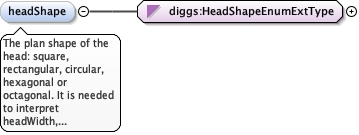
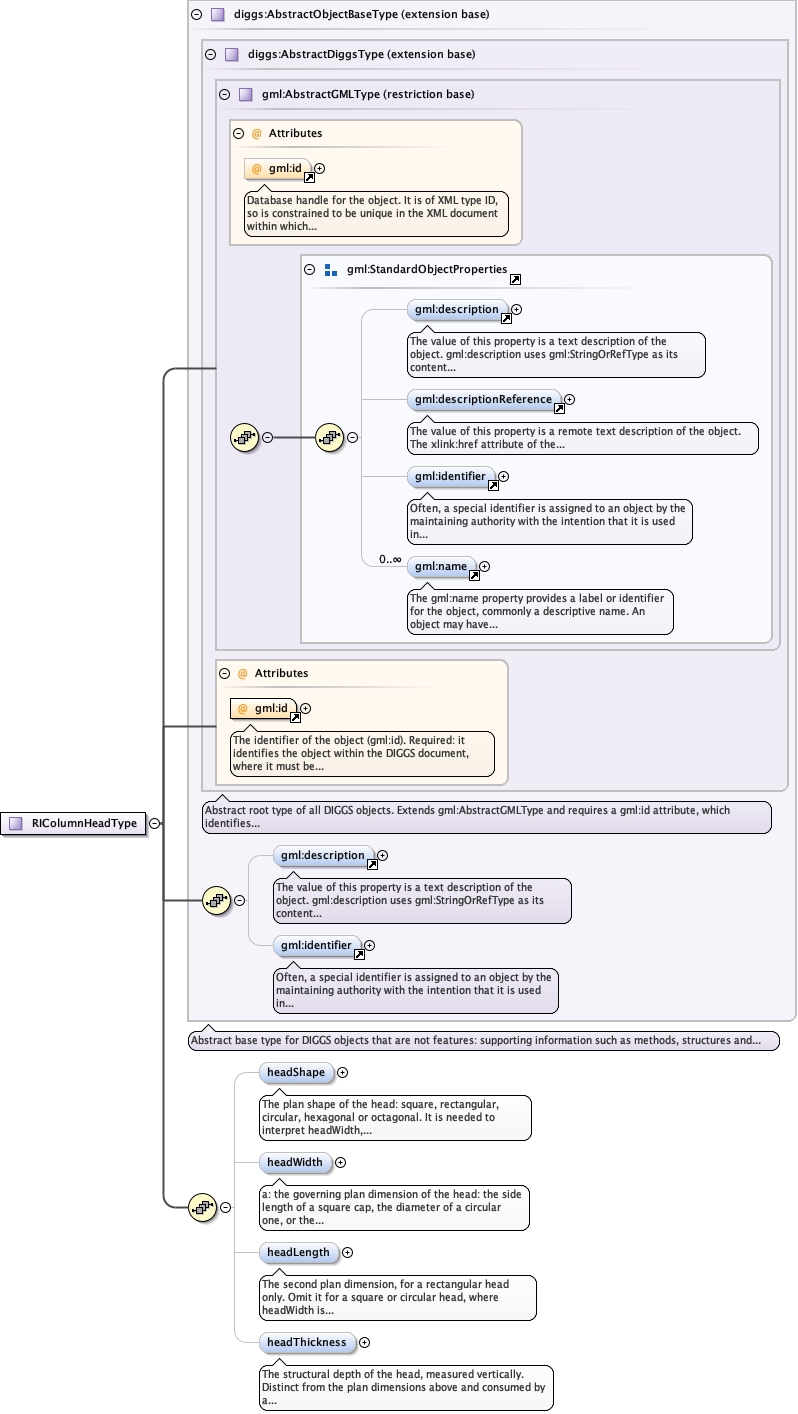
The plan shape of the head: square, rectangular, circular, hexagonalor octagonal. It is needed to interpret headWidth, which isotherwise ambiguous between the side of a square and the diameter ofa circle, which differ in area by 4/pi. It is notdiggs:PileShapeEnumExtType, the closest existing vocabulary, whichdescribes the structural cross section of a pile and has valuesmeaningless for a cap, such as "circular open" and "square hollow".Values come from the enumerated list, or "Other: xx", where xx is auser-defined term whose meaning differs from every listed value (nota synonym of one).
<element minOccurs="0" name="headShape" type="diggs:HeadShapeEnumExtType"><annotation><documentation>The plan shape of the head: square, rectangular, circular, hexagonal or octagonal. It is needed to interpret headWidth, which is otherwise ambiguous between the side of a square and the diameter of a circle, which differ in area by 4/pi. It is not diggs:PileShapeEnumExtType, the closest existing vocabulary, which describes the structural cross section of a pile and has values meaningless for a cap, such as "circular open" and "square hollow". Values come from the enumerated list, or "Other: xx", where xx is a user-defined term whose meaning differs from every listed value (not a synonym of one).</documentation></annotation></element>
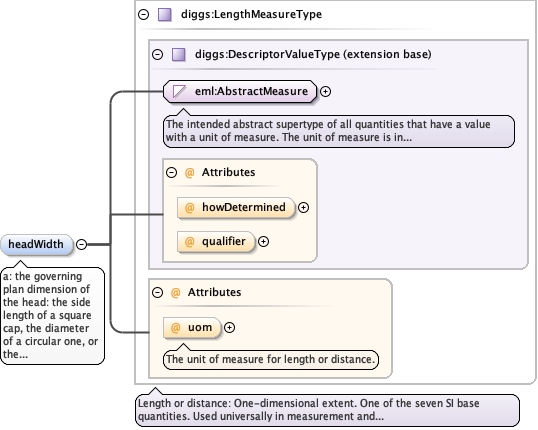
a: the governing plan dimension of the head: the side length of asquare cap, the diameter of a circular one, or the smaller side of arectangular one. It is the quantity called a in the archingliterature, and the one from whichdiggs:DesignRIColumnType/areaReplacementRatio is computed where acap is present, since the cap rather than the shaft determines thearea replaced.
<element minOccurs="0" name="headWidth" type="diggs:LengthMeasureType"><annotation><documentation>a: the governing plan dimension of the head: the side length of a square cap, the diameter of a circular one, or the smaller side of a rectangular one. It is the quantity called a in the arching literature, and the one from which diggs:DesignRIColumnType/areaReplacementRatio is computed where a cap is present, since the cap rather than the shaft determines the area replaced.</documentation></annotation></element>
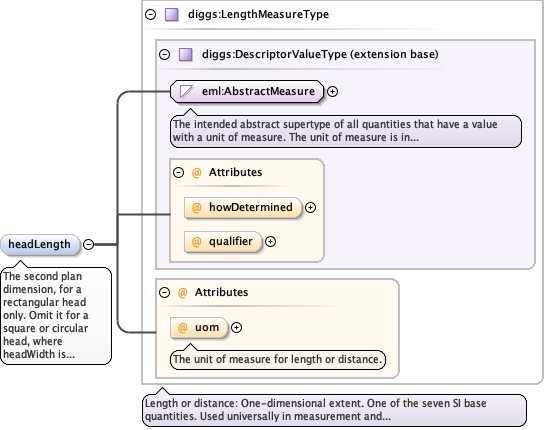
The second plan dimension, for a rectangular head only. Omit it fora square or circular head, where headWidth is sufficient. ThatheadShape and this element agree is a correlation the XSD cannotexpress and is left to the validation chain.
<element minOccurs="0" name="headLength" type="diggs:LengthMeasureType"><annotation><documentation>The second plan dimension, for a rectangular head only. Omit it for a square or circular head, where headWidth is sufficient. That headShape and this element agree is a correlation the XSD cannot express and is left to the validation chain.</documentation></annotation></element>
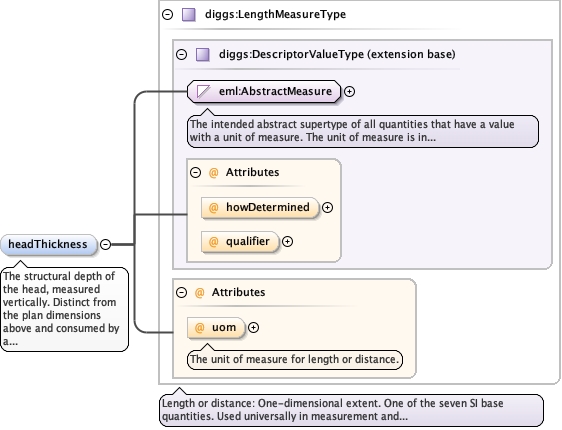
The structural depth of the head, measured vertically.Distinct from the plan dimensions above and consumed by a differentcheck: punching shear depends on the depth available to develop theshear perimeter, not on the plan area.
<element minOccurs="0" name="headThickness" type="diggs:LengthMeasureType"><annotation><documentation>The structural depth of the head, measured vertically. Distinct from the plan dimensions above and consumed by a different check: punching shear depends on the depth available to develop the shear perimeter, not on the plan area.</documentation></annotation></element>
Database handle for the object. It is of XML type ID, so is constrained to beunique in the XML document within which it occurs. An external identifier for the object inthe form of a URI may be constructed using standard XML and XPointer methods. This is doneby concatenating the URI for the document, a fragment separator, and the value of the idattribute.
Source
<complexType name="RIColumnHeadType"><complexContent><extension base="diggs:AbstractObjectBaseType"><sequence><element minOccurs="0" name="headShape" type="diggs:HeadShapeEnumExtType"><annotation><documentation>The plan shape of the head: square, rectangular, circular, hexagonal or octagonal. It is needed to interpret headWidth, which is otherwise ambiguous between the side of a square and the diameter of a circle, which differ in area by 4/pi. It is not diggs:PileShapeEnumExtType, the closest existing vocabulary, which describes the structural cross section of a pile and has values meaningless for a cap, such as "circular open" and "square hollow". Values come from the enumerated list, or "Other: xx", where xx is a user-defined term whose meaning differs from every listed value (not a synonym of one).</documentation></annotation></element><element minOccurs="0" name="headWidth" type="diggs:LengthMeasureType"><annotation><documentation>a: the governing plan dimension of the head: the side length of a square cap, the diameter of a circular one, or the smaller side of a rectangular one. It is the quantity called a in the arching literature, and the one from which diggs:DesignRIColumnType/areaReplacementRatio is computed where a cap is present, since the cap rather than the shaft determines the area replaced.</documentation></annotation></element><element minOccurs="0" name="headLength" type="diggs:LengthMeasureType"><annotation><documentation>The second plan dimension, for a rectangular head only. Omit it for a square or circular head, where headWidth is sufficient. That headShape and this element agree is a correlation the XSD cannot express and is left to the validation chain.</documentation></annotation></element><element minOccurs="0" name="headThickness" type="diggs:LengthMeasureType"><annotation><documentation>The structural depth of the head, measured vertically. Distinct from the plan dimensions above and consumed by a different check: punching shear depends on the depth available to develop the shear perimeter, not on the plan area.</documentation></annotation></element></sequence></extension></complexContent></complexType>