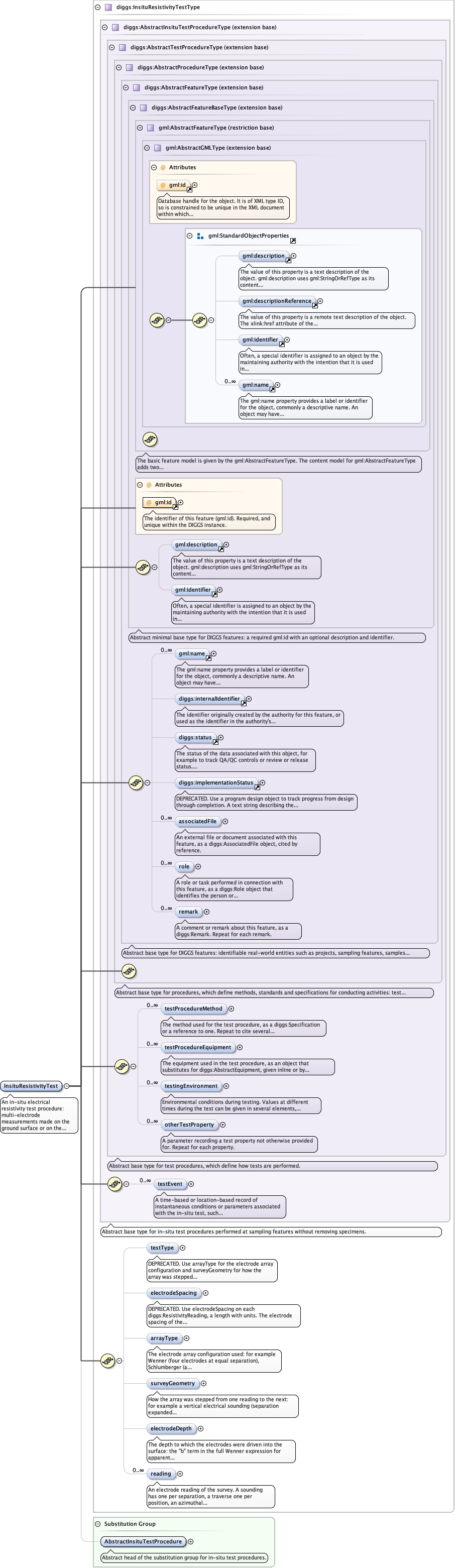
An in-situ electrical resistivity test procedure: multi-electrode measurements madeon the ground surface or on the surface of an in-place material, from which theresistivity of that material is determined. One type serves several surveygeometries, which differ only in what is stepped from one reading to the next: avertical electrical sounding steps the electrode separation about a fixed arraycenter; electrical profiling (constant separation traversing) steps the array alonga traverse; an azimuthal sounding steps the array orientation about a fixed center;a single-separation measurement takes one reading, as is usual for a Wenner probe onin-place concrete. They are distinguished by diggs:surveyGeometry anddiggs:arrayType, and the readings are diggs:ResistivityReading objects in everycase. Not for tomographic surveys: a multi-electrode survey inverted to a 2-D or 3-Dresistivity model is a diggs:GeophysicalFieldSurvey with diggs:geophysicalMethod"electrical resistivity tomography (ERT)". Not for laboratory measurement:resistivity of a specimen removed from the ground (the soil-box method of ASTM G57,or AASHTO T288) is diggs:LabResistivityTest. Cite the governing standard orstandards in diggs:AbstractTestProcedureType/testProcedureMethod; ASTM G57 (Wennerarray), IEEE Std 81 (earthing design) and ASTM D6431 (subsurface characterization)all describe measurements this type carries.
Database handle for the object. It is of XML type ID, so is constrained to beunique in the XML document within which it occurs. An external identifier for the object inthe form of a URI may be constructed using standard XML and XPointer methods. This is doneby concatenating the URI for the document, a fragment separator, and the value of the idattribute.
Source
<element name="InsituResistivityTest" type="diggs:InsituResistivityTestType" abstract="false" substitutionGroup="diggs:AbstractInsituTestProcedure"><annotation><documentation>An in-situ electrical resistivity test procedure: multi-electrode measurements made on the ground surface or on the surface of an in-place material, from which the resistivity of that material is determined. One type serves several survey geometries, which differ only in what is stepped from one reading to the next: a vertical electrical sounding steps the electrode separation about a fixed array center; electrical profiling (constant separation traversing) steps the array along a traverse; an azimuthal sounding steps the array orientation about a fixed center; a single-separation measurement takes one reading, as is usual for a Wenner probe on in-place concrete. They are distinguished by diggs:surveyGeometry and diggs:arrayType, and the readings are diggs:ResistivityReading objects in every case. Not for tomographic surveys: a multi-electrode survey inverted to a 2-D or 3-D resistivity model is a diggs:GeophysicalFieldSurvey with diggs:geophysicalMethod "electrical resistivity tomography (ERT)". Not for laboratory measurement: resistivity of a specimen removed from the ground (the soil-box method of ASTM G57, or AASHTO T288) is diggs:LabResistivityTest. Cite the governing standard or standards in diggs:AbstractTestProcedureType/testProcedureMethod; ASTM G57 (Wenner array), IEEE Std 81 (earthing design) and ASTM D6431 (subsurface characterization) all describe measurements this type carries.</documentation></annotation></element>