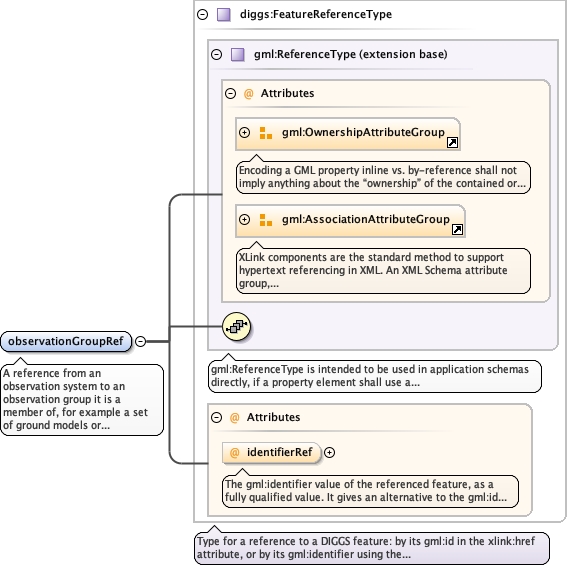
A reference from an observation system to an observation group it is a member of,for example a set of ground models or logs interpreted together. The member citesthe group; see diggs:AbstractProjectScopedGroup. An observation system and ameasurement are the two feature classes that produce interpretable results about theground, and both can need grouping because several of them may be meaningful onlywhen read together; compare diggs:measurementGroupRef. The name follows the documentslot (diggs:Diggs/observation) rather than the abstract head(diggs:AbstractObservationSystem), and the group head it targets,diggs:AbstractObservationGroup, is named to match. Given by reference only.
The gml:identifier value of the referenced feature, as a fully qualifiedvalue. It gives an alternative to the gml:id in xlink:href for findingthe referenced feature, mainly to reference a feature by a globallyunique identifier and where naming conflicts occur with gml:id whenaccessing data in external files.
<element name="observationGroupRef" type="diggs:FeatureReferenceType"><annotation><appinfo source="urn:x-gml:targetElement">diggs:AbstractObservationGroup</appinfo><documentation>A reference from an observation system to an observation group it is a member of, for example a set of ground models or logs interpreted together. The member cites the group; see diggs:AbstractProjectScopedGroup. An observation system and a measurement are the two feature classes that produce interpretable results about the ground, and both can need grouping because several of them may be meaningful only when read together; compare diggs:measurementGroupRef. The name follows the document slot (diggs:Diggs/observation) rather than the abstract head (diggs:AbstractObservationSystem), and the group head it targets, diggs:AbstractObservationGroup, is named to match. Given by reference only.</documentation></annotation></element>