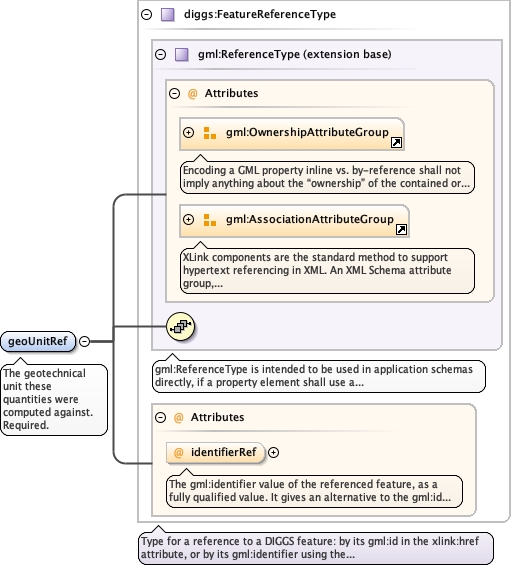
The gml:identifier value of the referenced feature, as a fully qualifiedvalue. It gives an alternative to the gml:id in xlink:href for findingthe referenced feature, mainly to reference a feature by a globallyunique identifier and where naming conflicts occur with gml:id whenaccessing data in external files.
<element name="geoUnitRef" type="diggs:FeatureReferenceType"><annotation><appinfo source="urn:x-gml:targetElement">diggs:GeoUnitObservation</appinfo><documentation>The geotechnical unit these quantities were computed against. Required.</documentation></annotation></element>
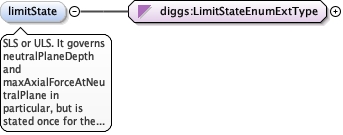
SLS or ULS. It governs neutralPlaneDepth andmaxAxialForceAtNeutralPlane in particular, but is stated once forthe instance because a single analysis run is normally computedunder one limit state. Values come from the enumerated list, or"Other: xx", where xx is a user-defined term whose meaning differsfrom every listed value (not a synonym of one).
<element minOccurs="0" name="limitState" type="diggs:LimitStateEnumExtType"><annotation><documentation>SLS or ULS. It governs neutralPlaneDepth and maxAxialForceAtNeutralPlane in particular, but is stated once for the instance because a single analysis run is normally computed under one limit state. Values come from the enumerated list, or "Other: xx", where xx is a user-defined term whose meaning differs from every listed value (not a synonym of one).</documentation></annotation></element>
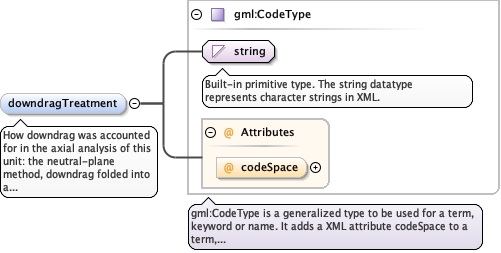
How downdrag was accounted for in the axial analysis of this unit:the neutral-plane method, downdrag folded into a limit-strengthcheck rather than located at a computed plane, engineeringexperience, or not considered. It governs negativeSkinFrictionLimit,neutralPlaneDepth and maxAxialForceAtNeutralPlane in the same waylimitState does, and is stated once per instance for the samereason: two designs reporting the same neutral-plane depth arrivedat by different treatments are not comparable. It is declared onthis per-unit type, and not only on diggs:RIProgramBasisType,because the values it qualifies live here and aconditionalElementXpath predicate can see only local containment,not the target of a basisRef. Use the DIGGS dictionarydowndragTreatment.xml for the list of values.
<element minOccurs="0" name="downdragTreatment" type="gml:CodeType"><annotation><documentation>How downdrag was accounted for in the axial analysis of this unit: the neutral-plane method, downdrag folded into a limit-strength check rather than located at a computed plane, engineering experience, or not considered. It governs negativeSkinFrictionLimit, neutralPlaneDepth and maxAxialForceAtNeutralPlane in the same way limitState does, and is stated once per instance for the same reason: two designs reporting the same neutral-plane depth arrived at by different treatments are not comparable. It is declared on this per-unit type, and not only on diggs:RIProgramBasisType, because the values it qualifies live here and a conditionalElementXpath predicate can see only local containment, not the target of a basisRef. Use the DIGGS dictionary downdragTreatment.xml for the list of values.</documentation></annotation></element>
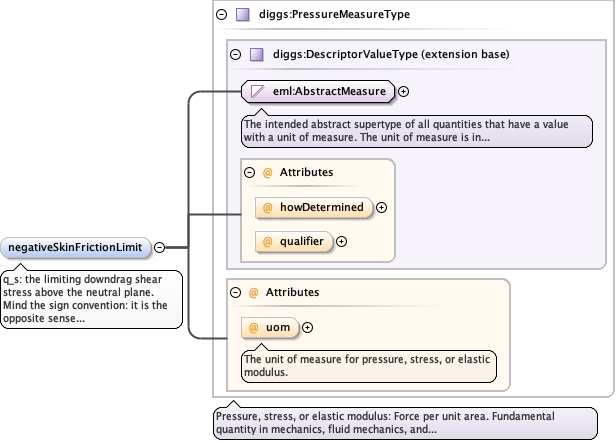
q_s: the limiting downdrag shear stress above the neutral plane.Mind the sign convention: it is the opposite sense fromshaftResistance, the positive shaft resistance below the neutralplane, for the same physical interface.
The unit of measure for pressure, stress, or elastic modulus.
Source
<element minOccurs="0" name="negativeSkinFrictionLimit" type="diggs:PressureMeasureType"><annotation><documentation>q_s: the limiting downdrag shear stress above the neutral plane. Mind the sign convention: it is the opposite sense from shaftResistance, the positive shaft resistance below the neutral plane, for the same physical interface.</documentation></annotation></element>
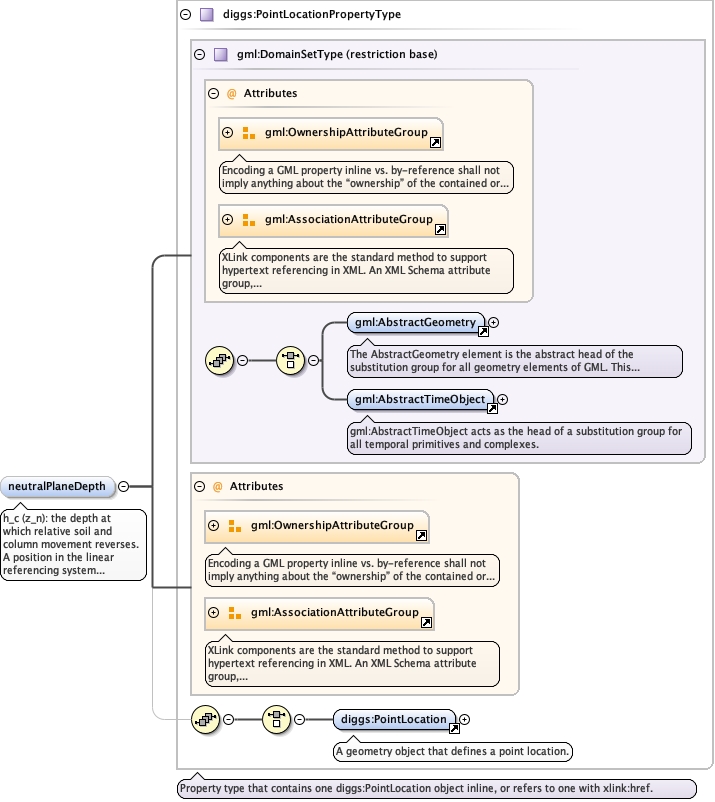
h_c (z_n): the depth at which relative soil and column movementreverses. A position in the linear referencing system of the column,not a bare length: a diggs:PointLocationPropertyType, asdiggs:RIColumnType/cutoffElevation is, rather than adiggs:LengthMeasureType that would leave the depth uninterpretablewithout the datum it was measured from.
<element minOccurs="0" name="neutralPlaneDepth" type="diggs:PointLocationPropertyType"><annotation><documentation>h_c (z_n): the depth at which relative soil and column movement reverses. A position in the linear referencing system of the column, not a bare length: a diggs:PointLocationPropertyType, as diggs:RIColumnType/cutoffElevation is, rather than a diggs:LengthMeasureType that would leave the depth uninterpretable without the datum it was measured from.</documentation></annotation></element>
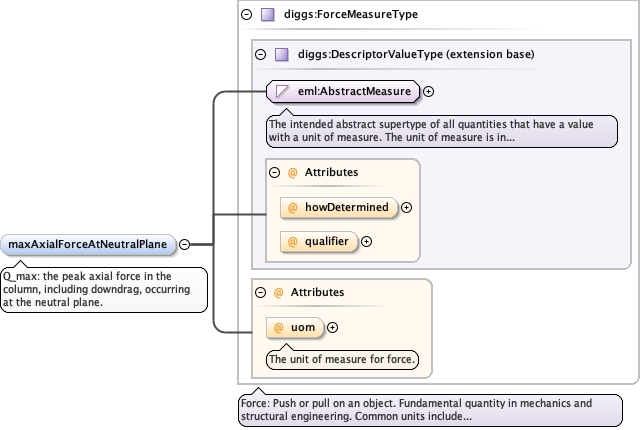
<element minOccurs="0" name="maxAxialForceAtNeutralPlane" type="diggs:ForceMeasureType"><annotation><documentation>Q_max: the peak axial force in the column, including downdrag, occurring at the neutral plane.</documentation></annotation></element>
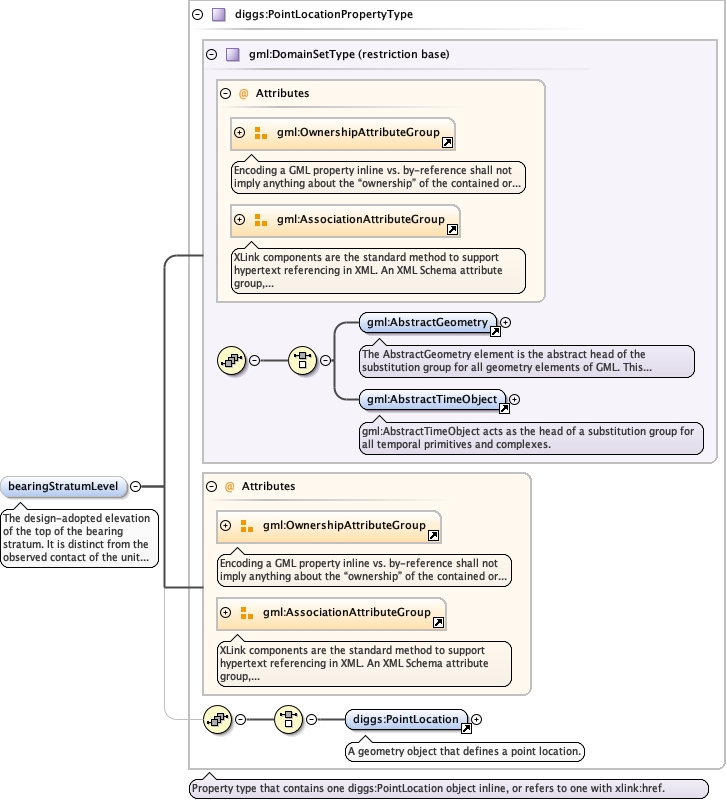
The design-adopted elevation of the top of the bearing stratum. Itis distinct from the observed contact of the unit cited bygeoUnitRef, which can be a variable surface the designer hasidealized to this single level.
<element minOccurs="0" name="bearingStratumLevel" type="diggs:PointLocationPropertyType"><annotation><documentation>The design-adopted elevation of the top of the bearing stratum. It is distinct from the observed contact of the unit cited by geoUnitRef, which can be a variable surface the designer has idealized to this single level.</documentation></annotation></element>
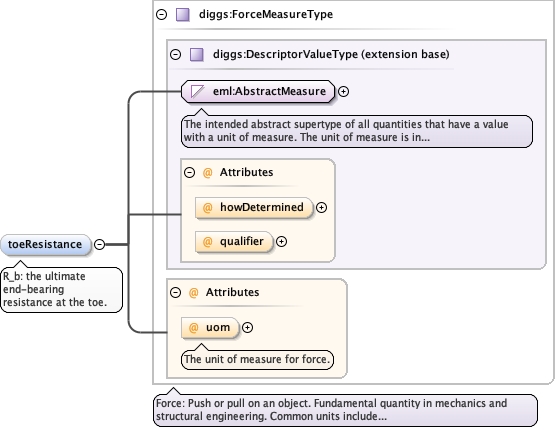
<element minOccurs="0" name="toeResistance" type="diggs:ForceMeasureType"><annotation><documentation>R_b: the ultimate end-bearing resistance at the toe.</documentation></annotation></element>
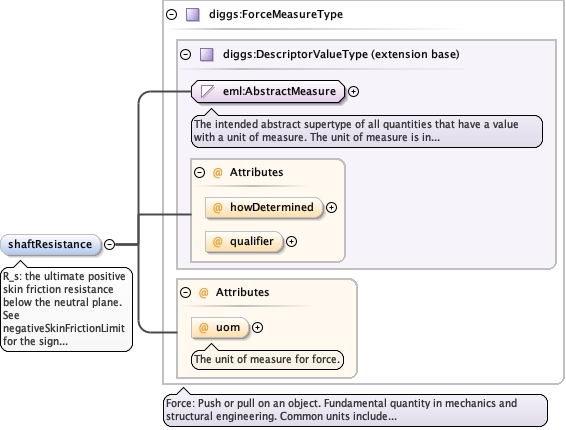
<element minOccurs="0" name="shaftResistance" type="diggs:ForceMeasureType"><annotation><documentation>R_s: the ultimate positive skin friction resistance below the neutral plane. See negativeSkinFrictionLimit for the sign convention.</documentation></annotation></element>
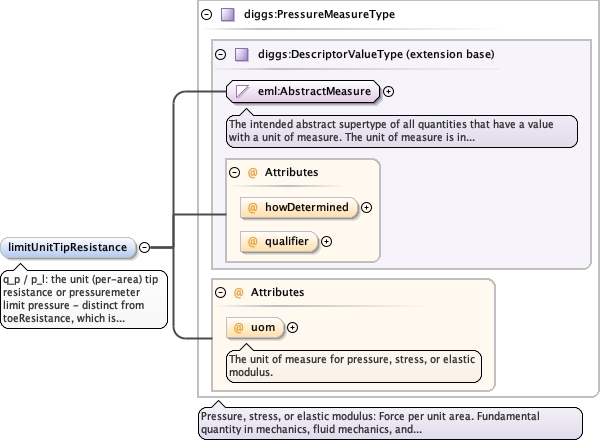
q_p / p_l: the unit (per-area) tip resistance orpressuremeter limit pressure - distinct from toeResistance, which isthe resulting total force over the toe area.
The unit of measure for pressure, stress, or elastic modulus.
Source
<element minOccurs="0" name="limitUnitTipResistance" type="diggs:PressureMeasureType"><annotation><documentation>q_p / p_l: the unit (per-area) tip resistance or pressuremeter limit pressure - distinct from toeResistance, which is the resulting total force over the toe area.</documentation></annotation></element>
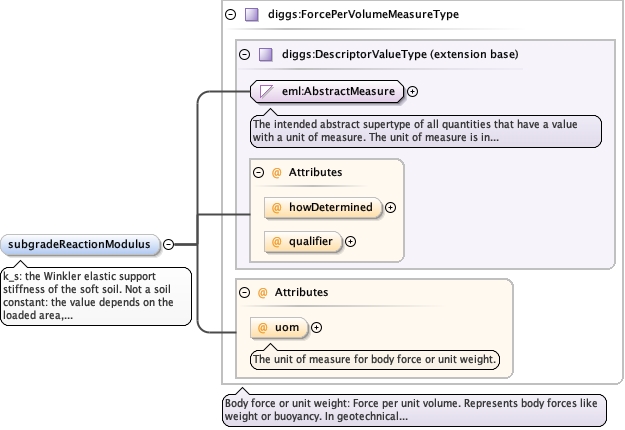
k_s: the Winkler elastic support stiffness of the soft soil. Not asoil constant: the value depends on the loaded area, so a statedvalue is comparable only with another computed for a similarly sizedloaded area.
The unit of measure for body force or unit weight.
Source
<element minOccurs="0" name="subgradeReactionModulus" type="diggs:ForcePerVolumeMeasureType"><annotation><documentation>k_s: the Winkler elastic support stiffness of the soft soil. Not a soil constant: the value depends on the loaded area, so a stated value is comparable only with another computed for a similarly sized loaded area.</documentation></annotation></element>
Database handle for the object. It is of XML type ID, so is constrained to beunique in the XML document within which it occurs. An external identifier for the object inthe form of a URI may be constructed using standard XML and XPointer methods. This is doneby concatenating the URI for the document, a fragment separator, and the value of the idattribute.
Source
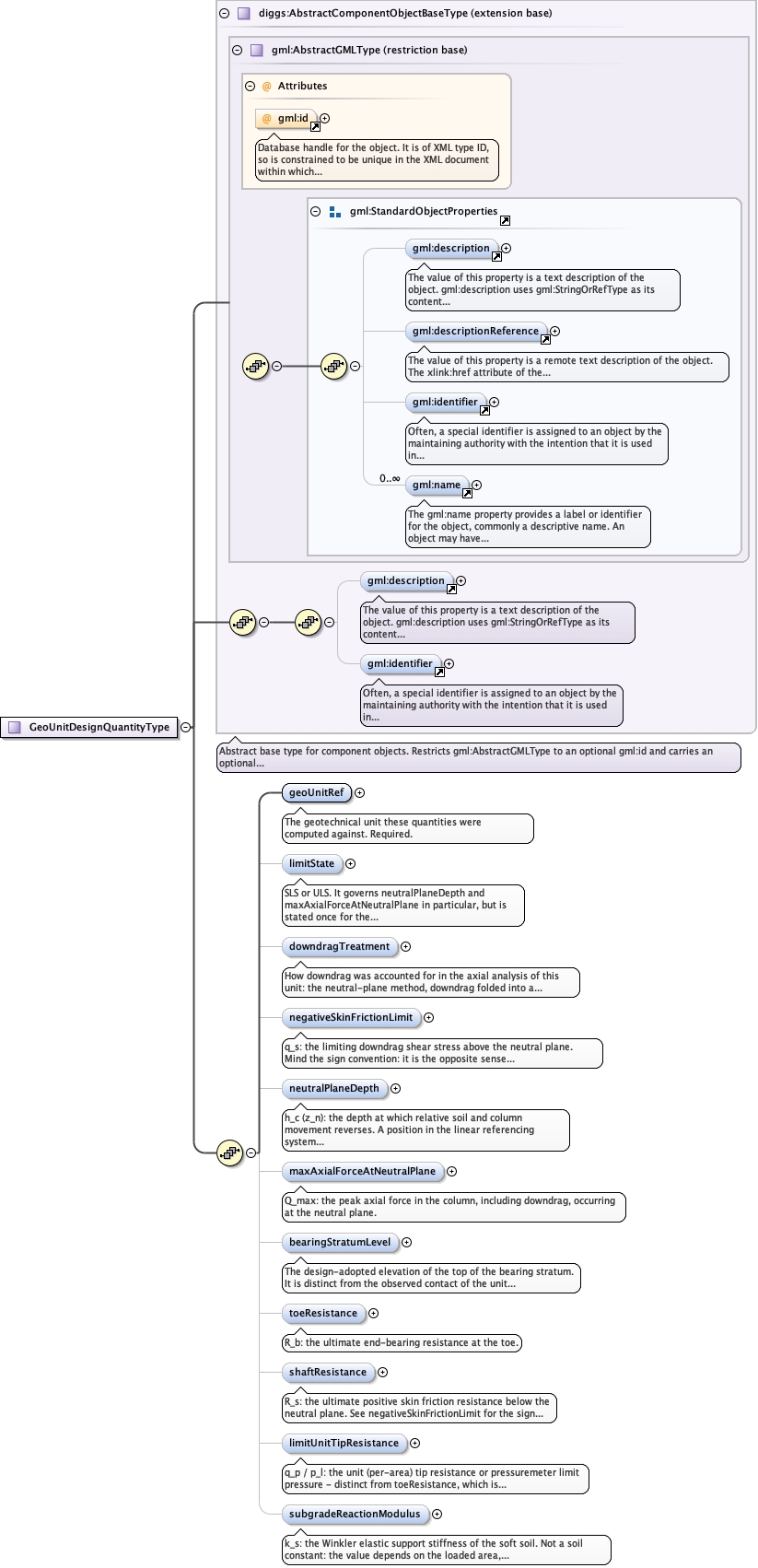
<complexType name="GeoUnitDesignQuantityType"><complexContent><extension base="diggs:AbstractComponentObjectBaseType"><sequence><element name="geoUnitRef" type="diggs:FeatureReferenceType"><annotation><appinfo source="urn:x-gml:targetElement">diggs:GeoUnitObservation</appinfo><documentation>The geotechnical unit these quantities were computed against. Required.</documentation></annotation></element><element minOccurs="0" name="limitState" type="diggs:LimitStateEnumExtType"><annotation><documentation>SLS or ULS. It governs neutralPlaneDepth and maxAxialForceAtNeutralPlane in particular, but is stated once for the instance because a single analysis run is normally computed under one limit state. Values come from the enumerated list, or "Other: xx", where xx is a user-defined term whose meaning differs from every listed value (not a synonym of one).</documentation></annotation></element><element minOccurs="0" name="downdragTreatment" type="gml:CodeType"><annotation><documentation>How downdrag was accounted for in the axial analysis of this unit: the neutral-plane method, downdrag folded into a limit-strength check rather than located at a computed plane, engineering experience, or not considered. It governs negativeSkinFrictionLimit, neutralPlaneDepth and maxAxialForceAtNeutralPlane in the same way limitState does, and is stated once per instance for the same reason: two designs reporting the same neutral-plane depth arrived at by different treatments are not comparable. It is declared on this per-unit type, and not only on diggs:RIProgramBasisType, because the values it qualifies live here and a conditionalElementXpath predicate can see only local containment, not the target of a basisRef. Use the DIGGS dictionary downdragTreatment.xml for the list of values.</documentation></annotation></element><element minOccurs="0" name="negativeSkinFrictionLimit" type="diggs:PressureMeasureType"><annotation><documentation>q_s: the limiting downdrag shear stress above the neutral plane. Mind the sign convention: it is the opposite sense from shaftResistance, the positive shaft resistance below the neutral plane, for the same physical interface.</documentation></annotation></element><element minOccurs="0" name="neutralPlaneDepth" type="diggs:PointLocationPropertyType"><annotation><documentation>h_c (z_n): the depth at which relative soil and column movement reverses. A position in the linear referencing system of the column, not a bare length: a diggs:PointLocationPropertyType, as diggs:RIColumnType/cutoffElevation is, rather than a diggs:LengthMeasureType that would leave the depth uninterpretable without the datum it was measured from.</documentation></annotation></element><element minOccurs="0" name="maxAxialForceAtNeutralPlane" type="diggs:ForceMeasureType"><annotation><documentation>Q_max: the peak axial force in the column, including downdrag, occurring at the neutral plane.</documentation></annotation></element><element minOccurs="0" name="bearingStratumLevel" type="diggs:PointLocationPropertyType"><annotation><documentation>The design-adopted elevation of the top of the bearing stratum. It is distinct from the observed contact of the unit cited by geoUnitRef, which can be a variable surface the designer has idealized to this single level.</documentation></annotation></element><element minOccurs="0" name="toeResistance" type="diggs:ForceMeasureType"><annotation><documentation>R_b: the ultimate end-bearing resistance at the toe.</documentation></annotation></element><element minOccurs="0" name="shaftResistance" type="diggs:ForceMeasureType"><annotation><documentation>R_s: the ultimate positive skin friction resistance below the neutral plane. See negativeSkinFrictionLimit for the sign convention.</documentation></annotation></element><element minOccurs="0" name="limitUnitTipResistance" type="diggs:PressureMeasureType"><annotation><documentation>q_p / p_l: the unit (per-area) tip resistance or pressuremeter limit pressure - distinct from toeResistance, which is the resulting total force over the toe area.</documentation></annotation></element><element minOccurs="0" name="subgradeReactionModulus" type="diggs:ForcePerVolumeMeasureType"><annotation><documentation>k_s: the Winkler elastic support stiffness of the soft soil. Not a soil constant: the value depends on the loaded area, so a stated value is comparable only with another computed for a similarly sized loaded area.</documentation></annotation></element></sequence></extension></complexContent></complexType>