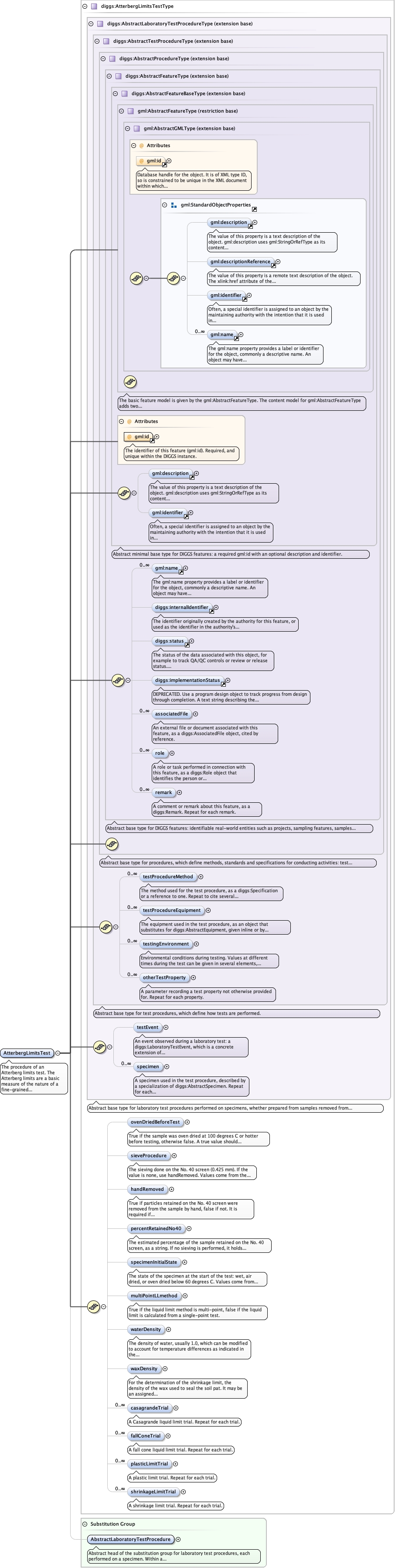
The procedure of an Atterberg limits test. The Atterberg limits are a basic measureof the nature of a fine-grained soil, which may appear in four states depending onits water content: solid, semi-solid, plastic and liquid. The boundary between eachstate is defined by a change in the behavior of the soil, and the limits distinguishsilt from clay and different types of silts and clays.
Database handle for the object. It is of XML type ID, so is constrained to beunique in the XML document within which it occurs. An external identifier for the object inthe form of a URI may be constructed using standard XML and XPointer methods. This is doneby concatenating the URI for the document, a fragment separator, and the value of the idattribute.
Source
<element name="AtterbergLimitsTest" type="diggs:AtterbergLimitsTestType" abstract="false" substitutionGroup="diggs:AbstractLaboratoryTestProcedure"><annotation><documentation>The procedure of an Atterberg limits test. The Atterberg limits are a basic measure of the nature of a fine-grained soil, which may appear in four states depending on its water content: solid, semi-solid, plastic and liquid. The boundary between each state is defined by a change in the behavior of the soil, and the limits distinguish silt from clay and different types of silts and clays.</documentation></annotation></element>