The 'actuate' attribute is used to communicate the desired timing of traversal from the starting resource to the ending resource; it's value should be treated as follows:onLoad - traverse to the ending resource immediately on loading the starting resource onRequest - traverse from the starting resource to the ending resource only on a post-loading event triggered for this purpose other - behavior is unconstrained; examine other markup in link for hints none - behavior is unconstrained
The 'show' attribute is used to communicate the desired presentation of the ending resource on traversal from the starting resource; it's value should be treated as follows: new - load ending resource in a new window, frame, pane, or other presentation contextreplace - load the resource in the same window, frame, pane, or other presentation contextembed - load ending resource in place of the presentation of the starting resourceother - behavior is unconstrained; examine other markup in the link for hints none - behavior is unconstrained
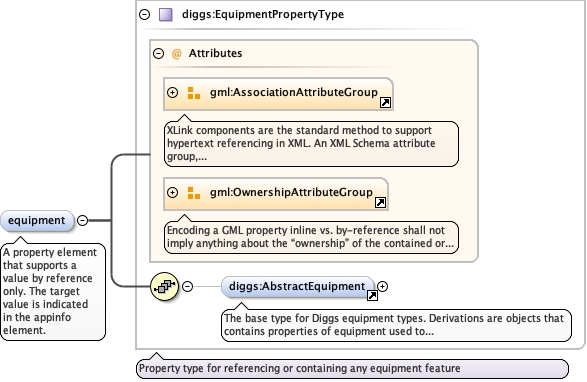
<element maxOccurs="unbounded" minOccurs="0" name="equipment" type="diggs:EquipmentPropertyType"><annotation><appinfo>diggs:AbstractEquipment</appinfo><documentation>A property element that supports a value by reference only. The target value is indicated in the appinfo element.</documentation></annotation></element>
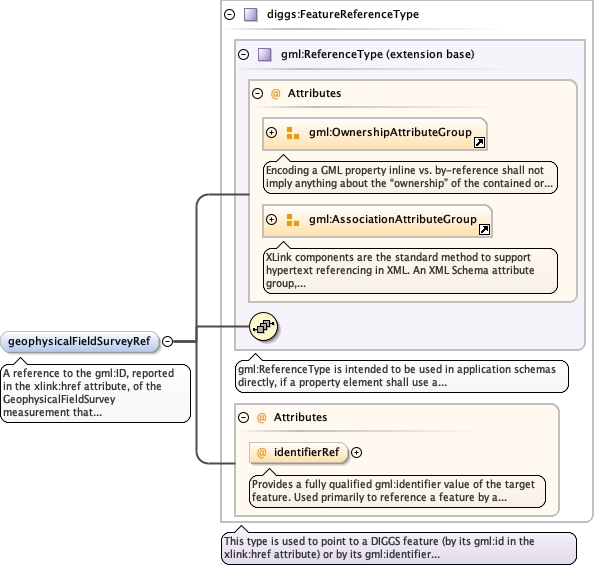
A reference to the gml:ID, reported in the xlink:hrefattribute, of the GeophysicalFieldSurvey measurement that contains the results obtainedduring data acquisition and that serves as input into the processingsteps that produce the results of this associatedmeasurement
Provides a fully qualified gml:identifier value of the targetfeature. Used primarily to reference a feature by a globally uniqueidentifier as opposed to the gml:id
The 'actuate' attribute is used to communicate the desired timing of traversal from the starting resource to the ending resource; it's value should be treated as follows:onLoad - traverse to the ending resource immediately on loading the starting resource onRequest - traverse from the starting resource to the ending resource only on a post-loading event triggered for this purpose other - behavior is unconstrained; examine other markup in link for hints none - behavior is unconstrained
The 'show' attribute is used to communicate the desired presentation of the ending resource on traversal from the starting resource; it's value should be treated as follows: new - load ending resource in a new window, frame, pane, or other presentation contextreplace - load the resource in the same window, frame, pane, or other presentation contextembed - load ending resource in place of the presentation of the starting resourceother - behavior is unconstrained; examine other markup in the link for hints none - behavior is unconstrained
<element minOccurs="0" name="geophysicalFieldSurveyRef" type="diggs:FeatureReferenceType"><annotation><documentation>A reference to the gml:ID, reported in the xlink:href attribute, of the GeophysicalFieldSurvey measurement that contains the results obtained during data acquisition and that serves as input into the processing steps that produce the results of this associated measurement</documentation></annotation></element>
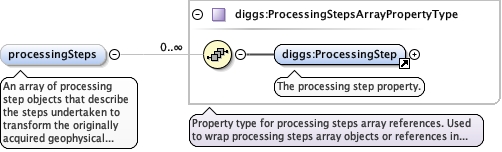
An array of processing step objects that describe thesteps undertaken to transform the originally acquired geophysicaldata to the associated processed results
<element minOccurs="0" name="processingSteps" type="diggs:ProcessingStepsArrayPropertyType"><annotation><documentation>An array of processing step objects that describe the steps undertaken to transform the originally acquired geophysical data to the associated processed results</documentation></annotation></element>
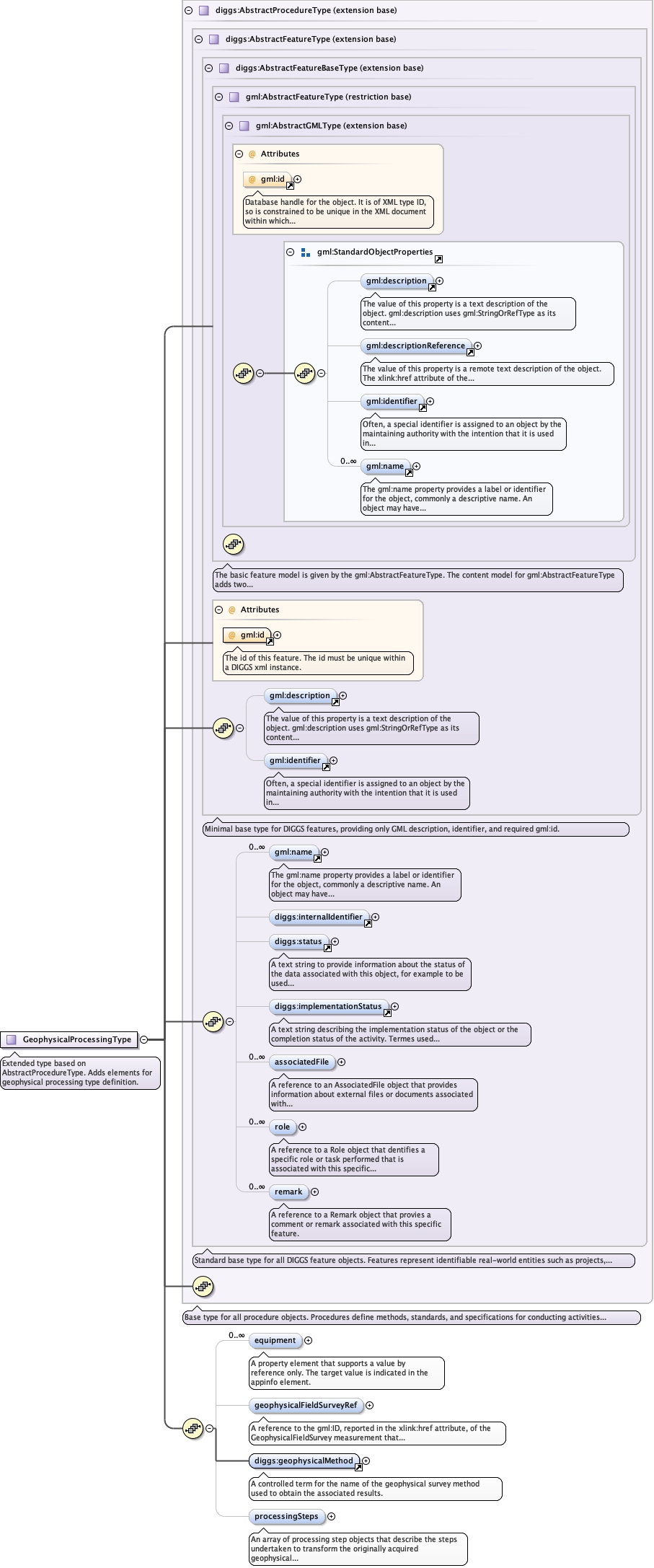
Complex Type diggs:GeophysicalProcessingType
Namespace
http://diggsml.org/schemas/3
Annotations
Extended type based on AbstractProcedureType. Adds elements for geophysical processing type definition.
Database handle for the object. It is of XML type ID, so is constrained to beunique in the XML document within which it occurs. An external identifier for the object inthe form of a URI may be constructed using standard XML and XPointer methods. This is doneby concatenating the URI for the document, a fragment separator, and the value of the idattribute.
Source
<complexType name="GeophysicalProcessingType"><annotation><documentation>Extended type based on AbstractProcedureType. Adds elements for geophysical processing type definition.</documentation></annotation><complexContent><extension base="diggs:AbstractProcedureType"><sequence><element maxOccurs="unbounded" minOccurs="0" name="equipment" type="diggs:EquipmentPropertyType"><annotation><appinfo>diggs:AbstractEquipment</appinfo><documentation>A property element that supports a value by reference only. The target value is indicated in the appinfo element.</documentation></annotation></element><element minOccurs="0" name="geophysicalFieldSurveyRef" type="diggs:FeatureReferenceType"><annotation><documentation>A reference to the gml:ID, reported in the xlink:href attribute, of the GeophysicalFieldSurvey measurement that contains the results obtained during data acquisition and that serves as input into the processing steps that produce the results of this associated measurement</documentation></annotation></element><element ref="diggs:geophysicalMethod" minOccurs="1"><annotation><documentation>A controlled term for the name of the geophysical survey method used to obtain the associated results.</documentation></annotation></element><element minOccurs="0" name="processingSteps" type="diggs:ProcessingStepsArrayPropertyType"><annotation><documentation>An array of processing step objects that describe the steps undertaken to transform the originally acquired geophysical data to the associated processed results</documentation></annotation></element></sequence></extension></complexContent></complexType>