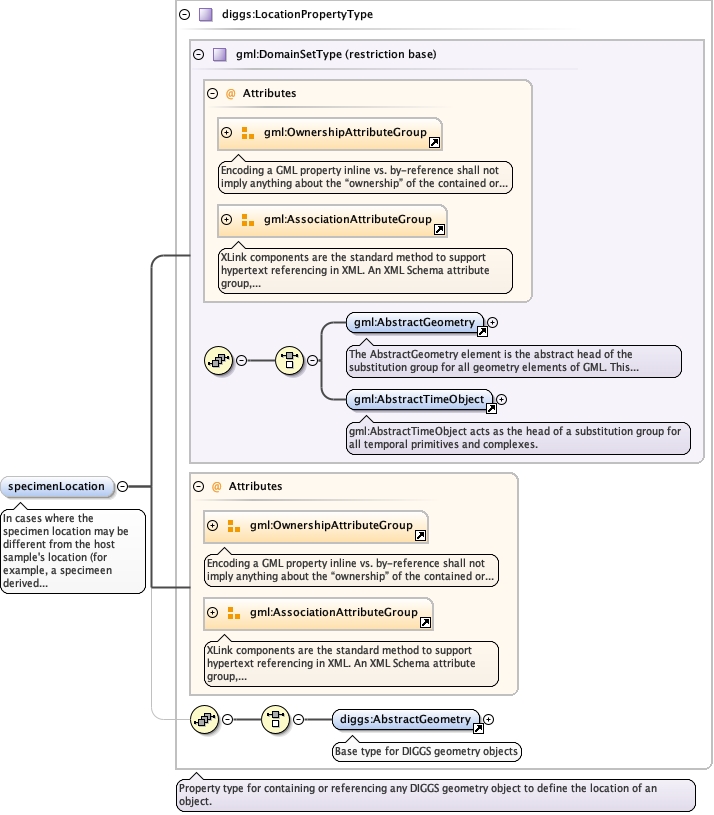
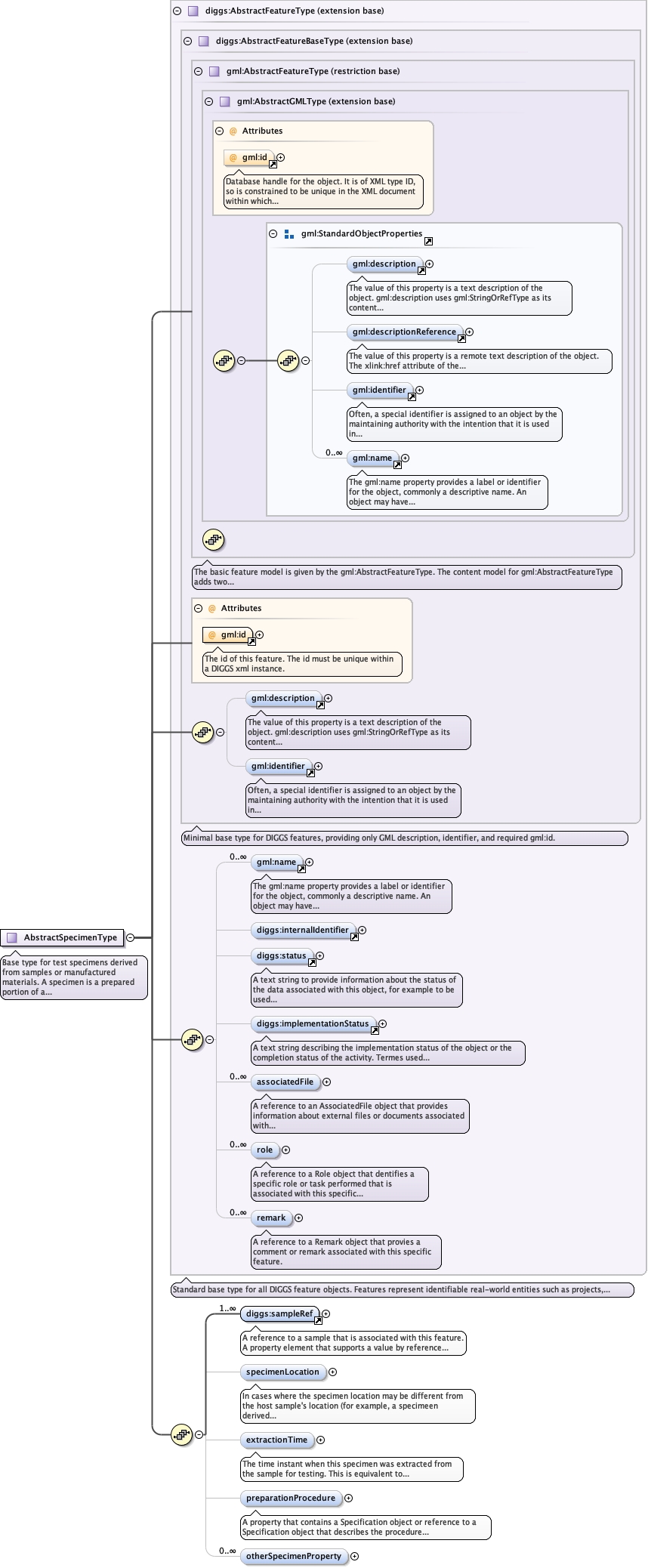
In cases where the specimen location may be differentfrom the host sample's location (for example, a specimeen derivedfrom a core sample at a specific location, instead of a specimenencompassing the entire extent of the sample), this property is usedto indicate the specific location. When not present, the spcecimenlocation will be the same as the host sample's location if relevant.
The 'actuate' attribute is used to communicate the desired timing of traversal from the starting resource to the ending resource; it's value should be treated as follows:onLoad - traverse to the ending resource immediately on loading the starting resource onRequest - traverse from the starting resource to the ending resource only on a post-loading event triggered for this purpose other - behavior is unconstrained; examine other markup in link for hints none - behavior is unconstrained
The 'show' attribute is used to communicate the desired presentation of the ending resource on traversal from the starting resource; it's value should be treated as follows: new - load ending resource in a new window, frame, pane, or other presentation contextreplace - load the resource in the same window, frame, pane, or other presentation contextembed - load ending resource in place of the presentation of the starting resourceother - behavior is unconstrained; examine other markup in the link for hints none - behavior is unconstrained
<element minOccurs="0" name="specimenLocation" type="diggs:LocationPropertyType"><annotation><documentation>In cases where the specimen location may be different from the host sample's location (for example, a specimeen derived from a core sample at a specific location, instead of a specimen encompassing the entire extent of the sample), this property is used to indicate the specific location. When not present, the spcecimen location will be the same as the host sample's location if relevant.</documentation></annotation></element>
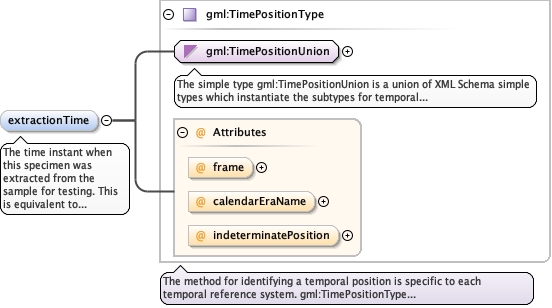
The time instant when this specimen was extracted fromthe sample for testing. This is equivalent todiggs:MaterialTest/sampleTime and diggs:Test/diggs:samplingTimewhere only one specimen is used for the test and should generallynot be used in that case. Where multiple specimens are used for atest and each was extracted from the host at different times, thenthis property should be used to record the precise sampling time foreach specimen.
<element minOccurs="0" name="extractionTime" type="gml:TimePositionType"><annotation><documentation>The time instant when this specimen was extracted from the sample for testing. This is equivalent to diggs:MaterialTest/sampleTime and diggs:Test/diggs:samplingTime where only one specimen is used for the test and should generally not be used in that case. Where multiple specimens are used for a test and each was extracted from the host at different times, then this property should be used to record the precise sampling time for each specimen.</documentation></annotation></element>
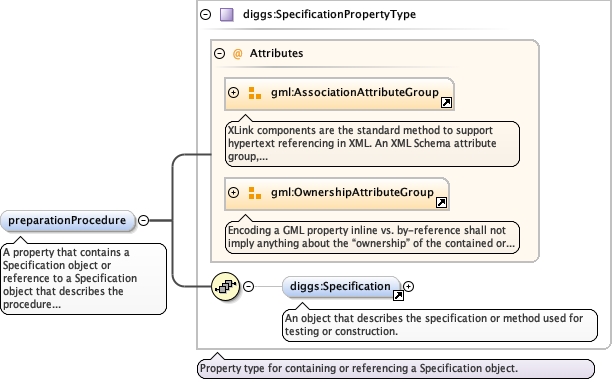
A property that contains a Specification object orreference to a Specification object that describes the procedureused to prepare the specimen from the sample. This can be a simpledescription (contained in the Specification object's gml:descriptionproperty), the name of a standard specification (in the gml:name) ora full procedural specification using appropriate properties in theSpecification object.
The 'actuate' attribute is used to communicate the desired timing of traversal from the starting resource to the ending resource; it's value should be treated as follows:onLoad - traverse to the ending resource immediately on loading the starting resource onRequest - traverse from the starting resource to the ending resource only on a post-loading event triggered for this purpose other - behavior is unconstrained; examine other markup in link for hints none - behavior is unconstrained
The 'show' attribute is used to communicate the desired presentation of the ending resource on traversal from the starting resource; it's value should be treated as follows: new - load ending resource in a new window, frame, pane, or other presentation contextreplace - load the resource in the same window, frame, pane, or other presentation contextembed - load ending resource in place of the presentation of the starting resourceother - behavior is unconstrained; examine other markup in the link for hints none - behavior is unconstrained
<element minOccurs="0" name="preparationProcedure" type="diggs:SpecificationPropertyType"><annotation><documentation>A property that contains a Specification object or reference to a Specification object that describes the procedure used to prepare the specimen from the sample. This can be a simple description (contained in the Specification object's gml:description property), the name of a standard specification (in the gml:name) or a full procedural specification using appropriate properties in the Specification object.</documentation></annotation></element>
Base type for test specimens derived from samples or manufactured materials. A specimen is a prepared portion of a sample used for a specific laboratory test. Specimens differ from samples in that they are typically prepared to standard dimensions and conditions (e.g., trimmed, molded, cured) according to test method requirements. A single sample may yield multiple specimens for different tests or repeat testing. Specimens are always associated with a MaterialTest procedure.
Database handle for the object. It is of XML type ID, so is constrained to beunique in the XML document within which it occurs. An external identifier for the object inthe form of a URI may be constructed using standard XML and XPointer methods. This is doneby concatenating the URI for the document, a fragment separator, and the value of the idattribute.
Source
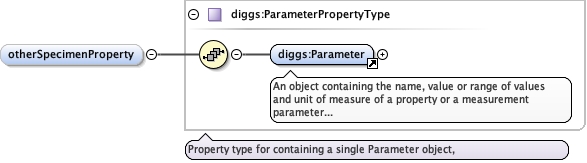
<complexType abstract="true" name="AbstractSpecimenType"><annotation><documentation>Base type for test specimens derived from samples or manufactured materials. A specimen is a prepared portion of a sample used for a specific laboratory test. Specimens differ from samples in that they are typically prepared to standard dimensions and conditions (e.g., trimmed, molded, cured) according to test method requirements. A single sample may yield multiple specimens for different tests or repeat testing. Specimens are always associated with a MaterialTest procedure.</documentation></annotation><complexContent><extension base="diggs:AbstractFeatureType"><sequence><element maxOccurs="unbounded" ref="diggs:sampleRef"/><element minOccurs="0" name="specimenLocation" type="diggs:LocationPropertyType"><annotation><documentation>In cases where the specimen location may be different from the host sample's location (for example, a specimeen derived from a core sample at a specific location, instead of a specimen encompassing the entire extent of the sample), this property is used to indicate the specific location. When not present, the spcecimen location will be the same as the host sample's location if relevant.</documentation></annotation></element><element minOccurs="0" name="extractionTime" type="gml:TimePositionType"><annotation><documentation>The time instant when this specimen was extracted from the sample for testing. This is equivalent to diggs:MaterialTest/sampleTime and diggs:Test/diggs:samplingTime where only one specimen is used for the test and should generally not be used in that case. Where multiple specimens are used for a test and each was extracted from the host at different times, then this property should be used to record the precise sampling time for each specimen.</documentation></annotation></element><element minOccurs="0" name="preparationProcedure" type="diggs:SpecificationPropertyType"><annotation><documentation>A property that contains a Specification object or reference to a Specification object that describes the procedure used to prepare the specimen from the sample. This can be a simple description (contained in the Specification object's gml:description property), the name of a standard specification (in the gml:name) or a full procedural specification using appropriate properties in the Specification object.</documentation></annotation></element><element minOccurs="0" name="otherSpecimenProperty" type="diggs:ParameterPropertyType" maxOccurs="unbounded"/></sequence></extension></complexContent></complexType>