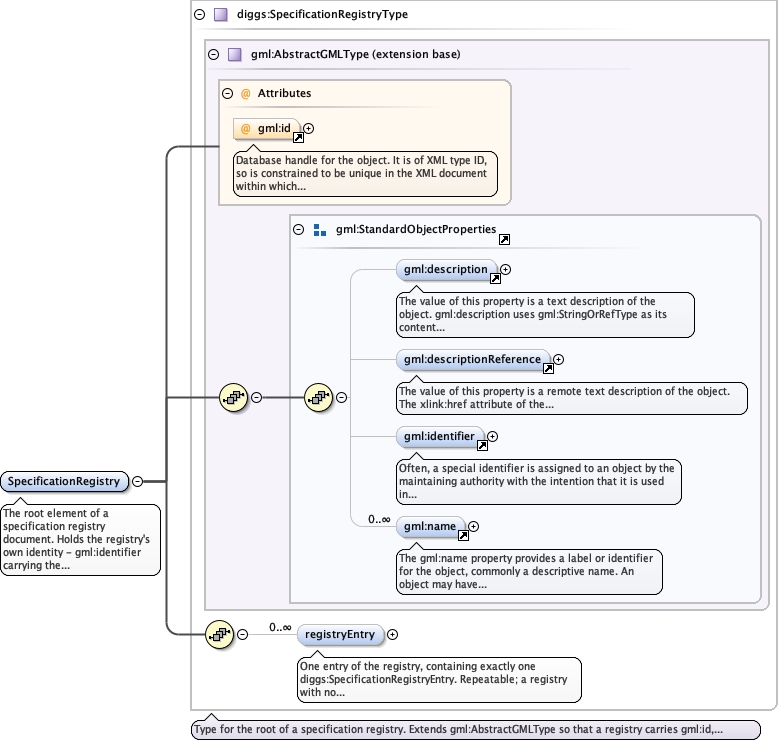
The root element of a specification registry document. Holds the
                registry's own identity - gml:identifier carrying the registry's canonical URL,
                gml:name, gml:description - inherited from gml:AbstractGMLType, followed by its
                entries.

                A registry document is validated against Diggs.xsd like any other DIGGS document;
                this element is its root, in the same way gml:Dictionary is the root of a code list
                document. It is NOT reachable from diggs:Diggs and must never be embedded in a
                project instance: a registry is published by an authority, and a project cites it.

                ONE UNIFIED REGISTRY IS THE INTENDED SHAPE, NOT ONE PER DOMAIN - see this schema's
                own top-level SCOPE note for why a per-domain split was tried and withdrawn. Say what
                the registry as a whole covers in gml:description; say what one ENTRY covers with its
                own diggs:domain classification (one or more codes) plus its diggs:occurrences
                declarations, which are what actually enforce where a given standard may be
                cited.

                ORDER ENTRIES SO THAT A REFERENCE FOLLOWS ITS ANTECEDENT. Where one entry's
                supersededByRef points at another, the superseding entry must appear first, as
                DIGGS forbids forward references throughout.
Database handle for the object. It is of XML type ID, so is constrained to beunique in the XML document within which it occurs. An external identifier for the object inthe form of a URI may be constructed using standard XML and XPointer methods. This is doneby concatenating the URI for the document, a fragment separator, and the value of the idattribute.
Source
<element name="SpecificationRegistry" type="diggs:SpecificationRegistryType"><annotation><documentation>The root element of a specification registry document. Holds the registry's own identity - gml:identifier carrying the registry's canonical URL, gml:name, gml:description - inherited from gml:AbstractGMLType, followed by its entries. A registry document is validated against Diggs.xsd like any other DIGGS document; this element is its root, in the same way gml:Dictionary is the root of a code list document. It is NOT reachable from diggs:Diggs and must never be embedded in a project instance: a registry is published by an authority, and a project cites it. ONE UNIFIED REGISTRY IS THE INTENDED SHAPE, NOT ONE PER DOMAIN - see this schema's own top-level SCOPE note for why a per-domain split was tried and withdrawn. Say what the registry as a whole covers in gml:description; say what one ENTRY covers with its own diggs:domain classification (one or more codes) plus its diggs:occurrences declarations, which are what actually enforce where a given standard may be cited. ORDER ENTRIES SO THAT A REFERENCE FOLLOWS ITS ANTECEDENT. Where one entry's supersededByRef points at another, the superseding entry must appear first, as DIGGS forbids forward references throughout.</documentation></annotation></element>