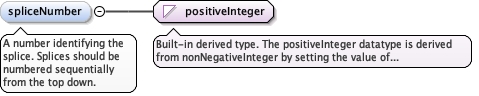
A number identifying the splice. Splices should benumbered sequentially from the top down.
Diagram
Type
positiveInteger
Properties
content
simple
minOccurs
0
Source
<element minOccurs="0" name="spliceNumber" type="positiveInteger"><annotation><documentation>A number identifying the splice. Splices should be numbered sequentially from the top down.</documentation></annotation></element>
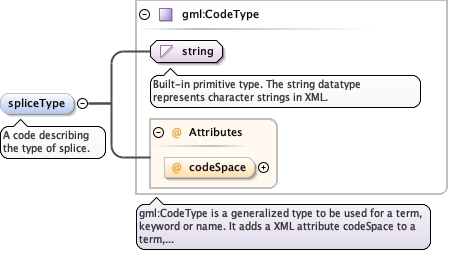
<element minOccurs="0" name="spliceType" type="gml:CodeType"><annotation><documentation>A code describing the type of splice.</documentation></annotation></element>
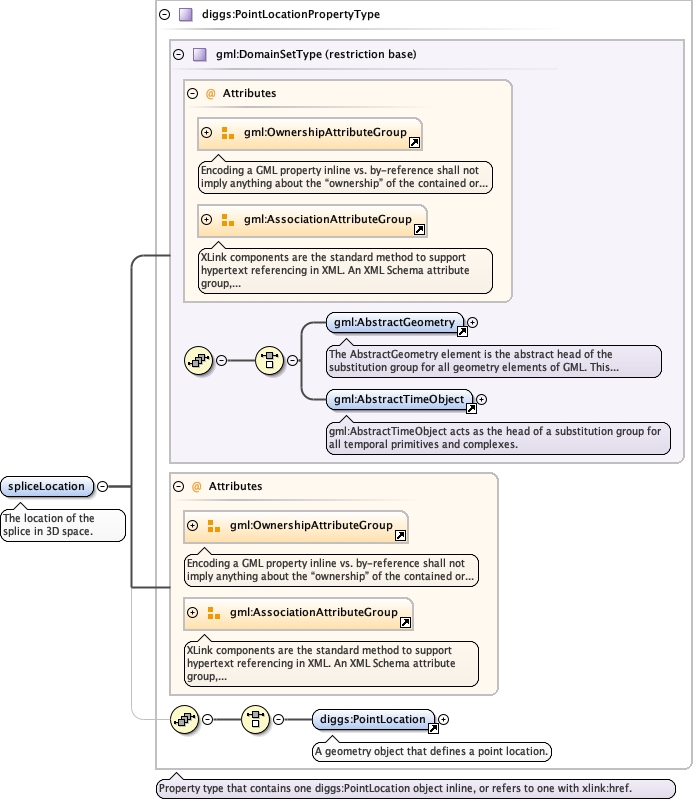
<element minOccurs="1" name="spliceLocation" type="diggs:PointLocationPropertyType"><annotation><documentation>The location of the splice in 3D space.</documentation></annotation></element>
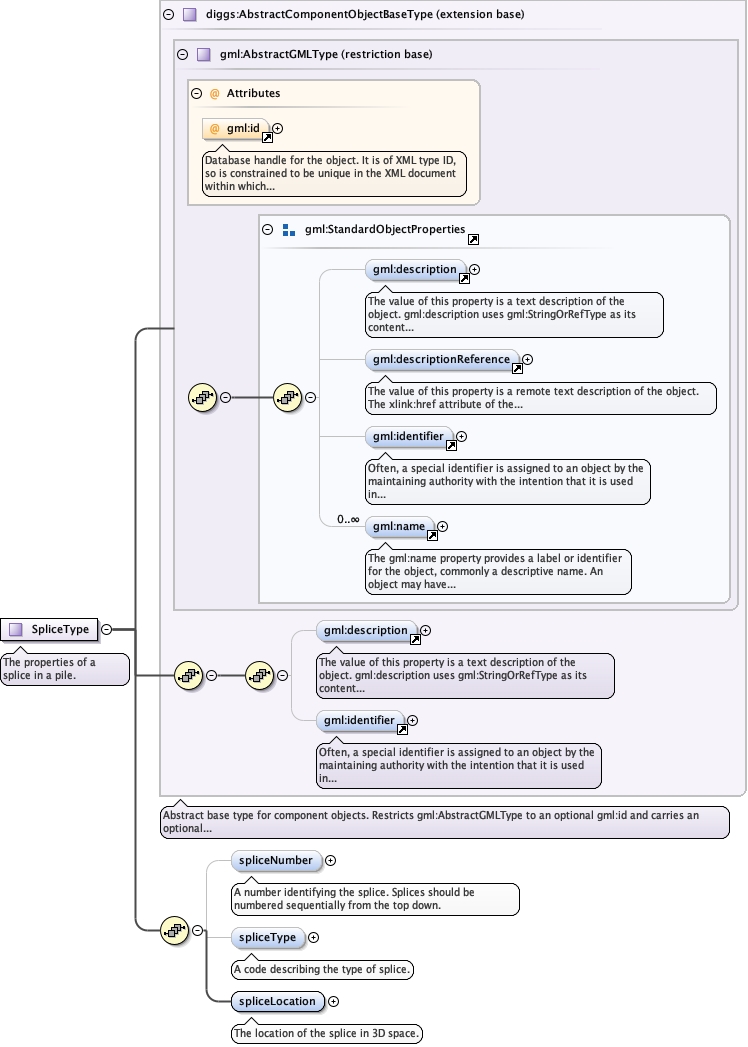
Database handle for the object. It is of XML type ID, so is constrained to beunique in the XML document within which it occurs. An external identifier for the object inthe form of a URI may be constructed using standard XML and XPointer methods. This is doneby concatenating the URI for the document, a fragment separator, and the value of the idattribute.
Source
<complexType name="SpliceType"><annotation><documentation>The properties of a splice in a pile.</documentation></annotation><complexContent><extension base="diggs:AbstractComponentObjectBaseType"><sequence><element minOccurs="0" name="spliceNumber" type="positiveInteger"><annotation><documentation>A number identifying the splice. Splices should be numbered sequentially from the top down.</documentation></annotation></element><element minOccurs="0" name="spliceType" type="gml:CodeType"><annotation><documentation>A code describing the type of splice.</documentation></annotation></element><element minOccurs="1" name="spliceLocation" type="diggs:PointLocationPropertyType"><annotation><documentation>The location of the splice in 3D space.</documentation></annotation></element></sequence></extension></complexContent></complexType>