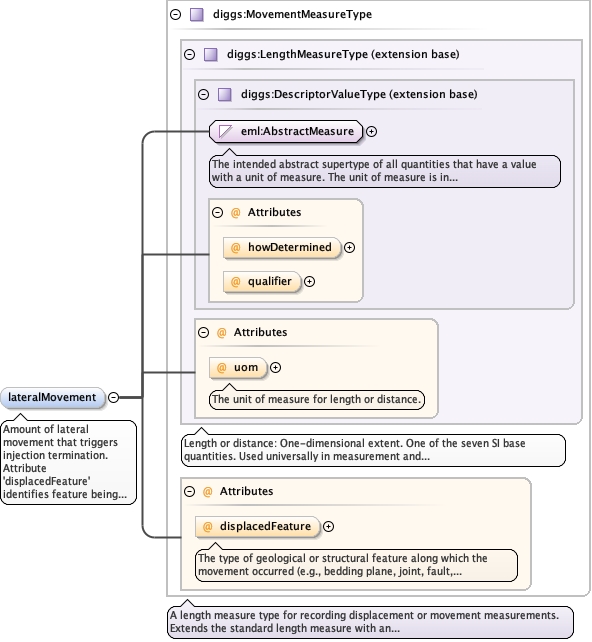
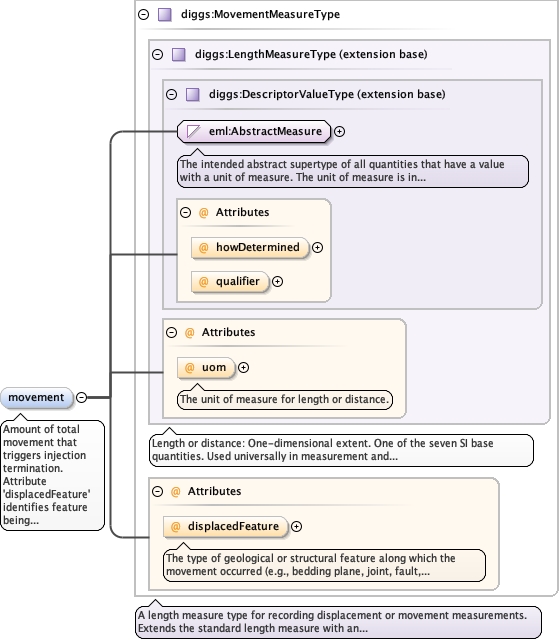
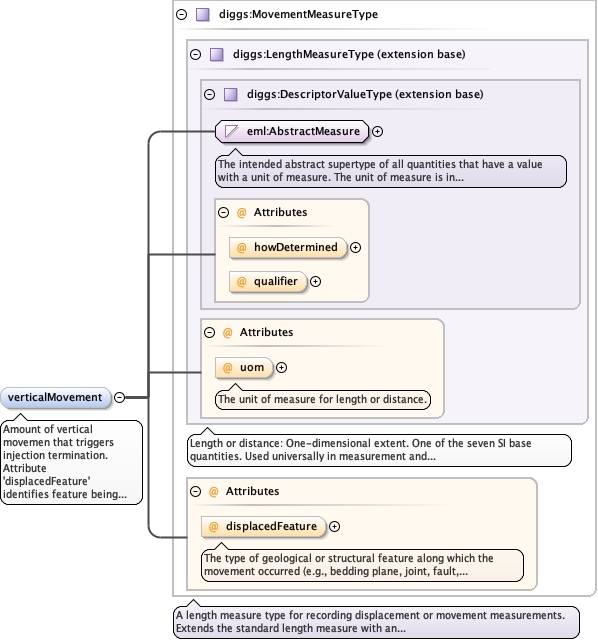
The type of geological or structural feature along which the movement occurred (e.g., bedding plane, joint, fault, shear surface, fracture). This identifies what was displaced and provides context for the movement measurement.
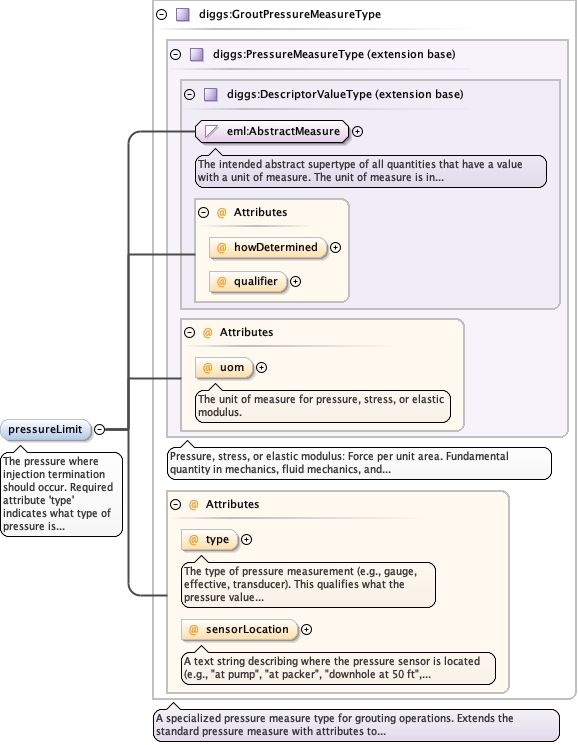
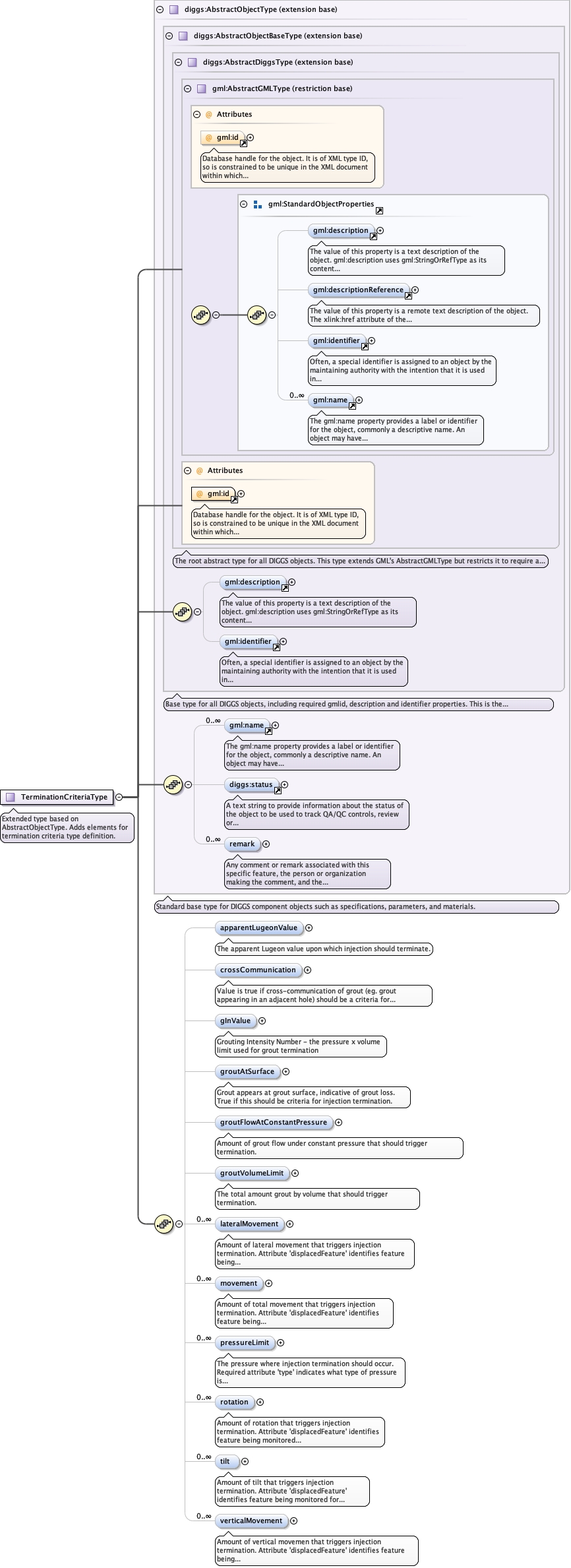
The pressure where injection termination should occur.Required attribute 'type' indicates what type of pressure is beingmeasured - eg. gauge, effective, transducer) and optional attribute'sensorLocation' is a string type indicating where sensor is located(eg. pump, grout head, etc.).
A text string describing where the pressure sensor is located (e.g., "at pump", "at packer", "downhole at 50 ft", "surface manifold"). This is important because pressure can vary significantly between the pump and the point of injection.
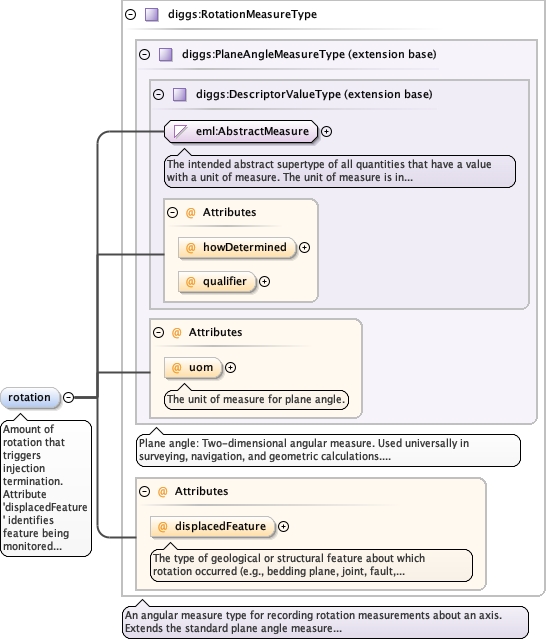
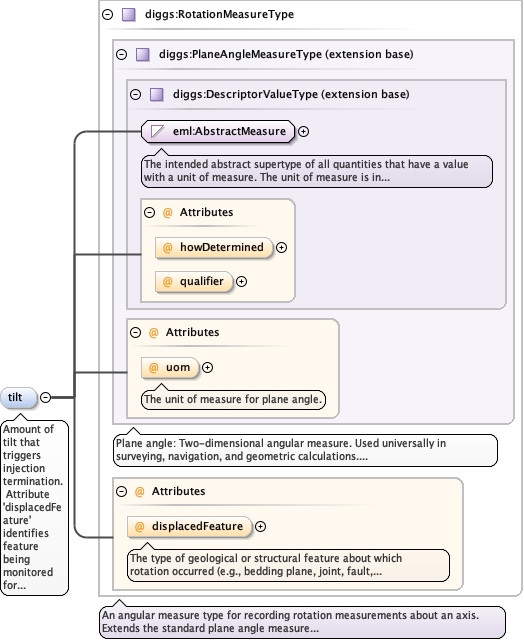
The type of geological or structural feature about which rotation occurred (e.g., bedding plane, joint, fault, foliation). This identifies the axis or plane of rotation and provides geological context for the measurement.
The type of geological or structural feature along which the movement occurred (e.g., bedding plane, joint, fault, shear surface, fracture). This identifies what was displaced and provides context for the movement measurement.
Database handle for the object. It is of XML type ID, so is constrained to beunique in the XML document within which it occurs. An external identifier for the object inthe form of a URI may be constructed using standard XML and XPointer methods. This is doneby concatenating the URI for the document, a fragment separator, and the value of the idattribute.