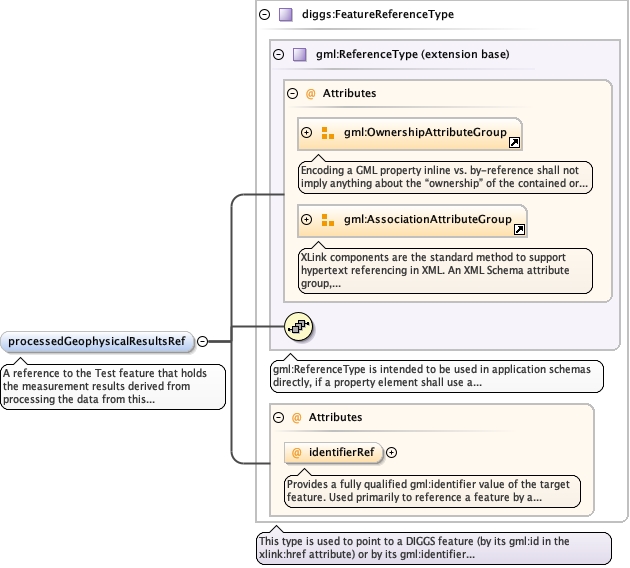
Provides a fully qualified gml:identifier value of the targetfeature. Used primarily to reference a feature by a globally uniqueidentifier as opposed to the gml:id
The 'actuate' attribute is used to communicate the desired timing of traversal from the starting resource to the ending resource; it's value should be treated as follows:onLoad - traverse to the ending resource immediately on loading the starting resource onRequest - traverse from the starting resource to the ending resource only on a post-loading event triggered for this purpose other - behavior is unconstrained; examine other markup in link for hints none - behavior is unconstrained
The 'show' attribute is used to communicate the desired presentation of the ending resource on traversal from the starting resource; it's value should be treated as follows: new - load ending resource in a new window, frame, pane, or other presentation contextreplace - load the resource in the same window, frame, pane, or other presentation contextembed - load ending resource in place of the presentation of the starting resourceother - behavior is unconstrained; examine other markup in the link for hints none - behavior is unconstrained
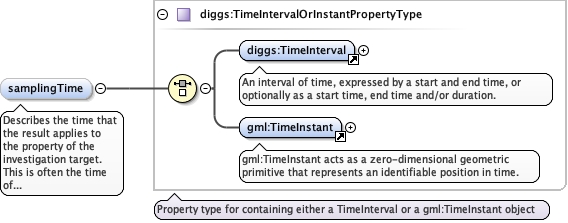
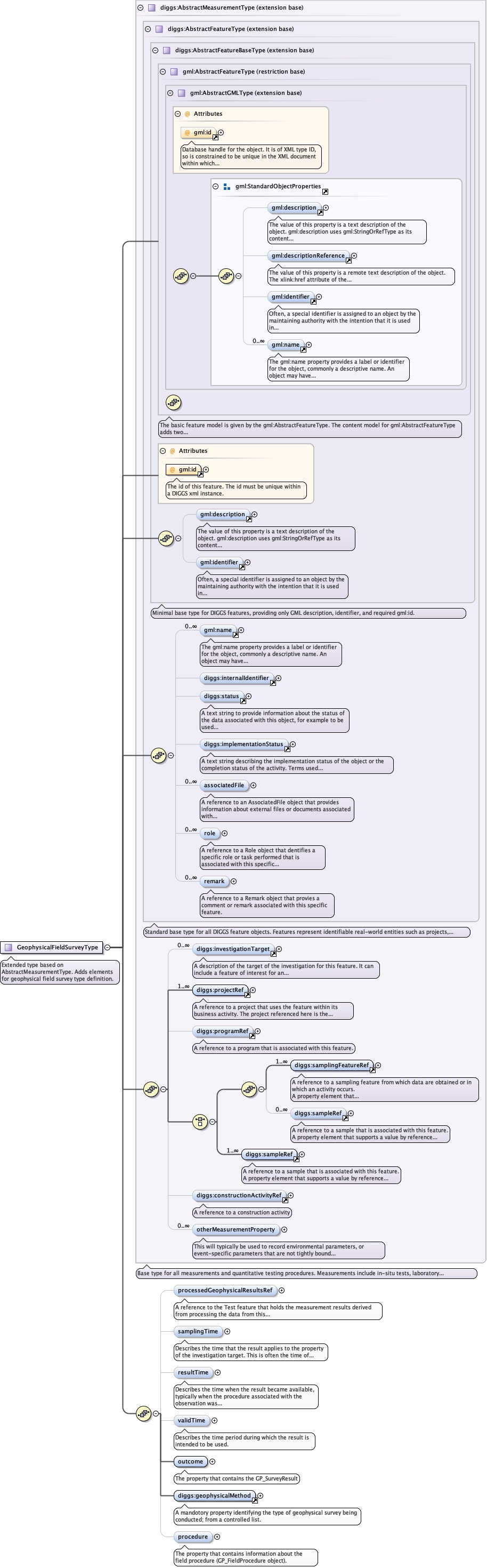
Describes the time that the result applies to theproperty of the investigation target. This is often the time ofinteraction by a sampling activity or measurement procedure with areal-world feature.
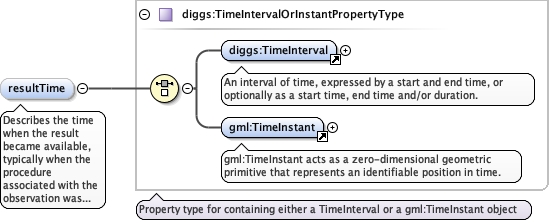
Describes the time when the result became available,typically when the procedure associated with the observation wascompleted. For some observations this is identical to thesamplingTime. However, there are important cases where they differ.Example: Where a measurement is made on a specimen in a laboratory,the samplingTime should record the time the specimen was retrievedfrom its host, while the resultTime should record the time thelaboratory procedure was applied. Example: Where monitoringobservation results are post-processed, the resultTime is thepost-processing time, while the samplingTime preserves the time ofinitial interaction with the world.
Database handle for the object. It is of XML type ID, so is constrained to beunique in the XML document within which it occurs. An external identifier for the object inthe form of a URI may be constructed using standard XML and XPointer methods. This is doneby concatenating the URI for the document, a fragment separator, and the value of the idattribute.