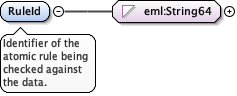
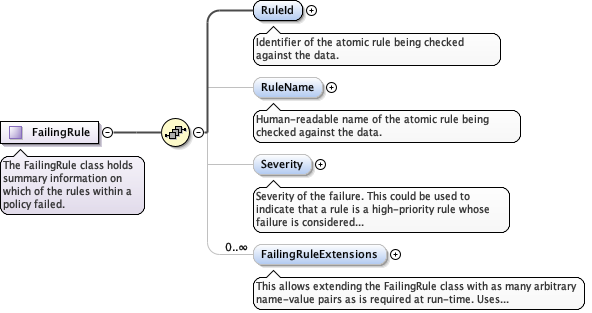
<xs:element name="RuleId" type="eml:String64" minOccurs="1" maxOccurs="1"><xs:annotation><xs:documentation>Identifier of the atomic rule being checked against the data.</xs:documentation></xs:annotation></xs:element>
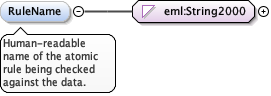
<xs:element name="RuleName" type="eml:String2000" minOccurs="0" maxOccurs="1"><xs:annotation><xs:documentation>Human-readable name of the atomic rule being checked against the data.</xs:documentation></xs:annotation></xs:element>
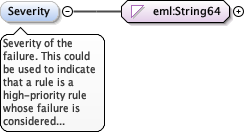
Severity of the failure. This could be used to indicate that a rule is a high-priority rule whose failure is considered as severe or could be used to indicate just how badly a rule was contravened.The meaning of this field should be standardized within a company to maximize its utility.
<xs:element name="Severity" type="eml:String64" minOccurs="0" maxOccurs="1"><xs:annotation><xs:documentation>Severity of the failure. This could be used to indicate that a rule is a high-priority rule whose failure is considered as severe or could be used to indicate just how badly a rule was contravened. The meaning of this field should be standardized within a company to maximize its utility.</xs:documentation></xs:annotation></xs:element>
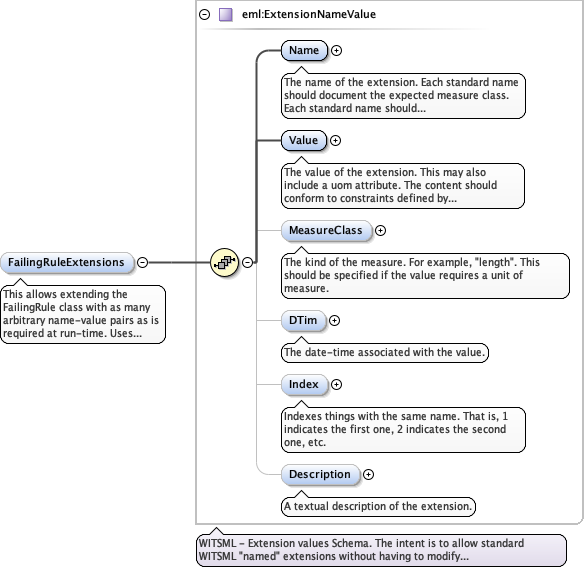
This allows extending the FailingRule class with as many arbitrary name-value pairs as is required at run-time.Uses for this might include why the rule failed or by how much.
<xs:element name="FailingRuleExtensions" type="eml:ExtensionNameValue" minOccurs="0" maxOccurs="unbounded"><xs:annotation><xs:documentation>This allows extending the FailingRule class with as many arbitrary name-value pairs as is required at run-time. Uses for this might include why the rule failed or by how much.</xs:documentation></xs:annotation></xs:element>
Complex Type eml:FailingRule
Namespace
http://www.energistics.org/energyml/data/commonv2
Annotations
The FailingRule class holds summary information on which of the rules within a policy failed.
<xs:complexType name="FailingRule"><xs:annotation><xs:documentation>The FailingRule class holds summary information on which of the rules within a policy failed.</xs:documentation></xs:annotation><xs:sequence><xs:element name="RuleId" type="eml:String64" minOccurs="1" maxOccurs="1"><xs:annotation><xs:documentation>Identifier of the atomic rule being checked against the data.</xs:documentation></xs:annotation></xs:element><xs:element name="RuleName" type="eml:String2000" minOccurs="0" maxOccurs="1"><xs:annotation><xs:documentation>Human-readable name of the atomic rule being checked against the data.</xs:documentation></xs:annotation></xs:element><xs:element name="Severity" type="eml:String64" minOccurs="0" maxOccurs="1"><xs:annotation><xs:documentation>Severity of the failure. This could be used to indicate that a rule is a high-priority rule whose failure is considered as severe or could be used to indicate just how badly a rule was contravened. The meaning of this field should be standardized within a company to maximize its utility.</xs:documentation></xs:annotation></xs:element><xs:element name="FailingRuleExtensions" type="eml:ExtensionNameValue" minOccurs="0" maxOccurs="unbounded"><xs:annotation><xs:documentation>This allows extending the FailingRule class with as many arbitrary name-value pairs as is required at run-time. Uses for this might include why the rule failed or by how much.</xs:documentation></xs:annotation></xs:element></xs:sequence></xs:complexType>