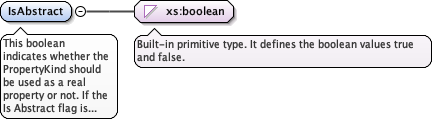
This boolean indicates whether the PropertyKind should be used as a real property or not.If the Is Abstract flag is set, then this entry should be used only as the parent of a real property. For example, the PropertyKind of "force per length" shouldn't be used directly, as it is really just a description of some units of measure. This entry should only be used as the parent of the real physical property "surface tension".
Diagram
Type
xs:boolean
Properties
content
simple
minOccurs
1
maxOccurs
1
Source
<xs:element name="IsAbstract" type="xs:boolean" minOccurs="1" maxOccurs="1"><xs:annotation><xs:documentation>This boolean indicates whether the PropertyKind should be used as a real property or not. If the Is Abstract flag is set, then this entry should be used only as the parent of a real property. For example, the PropertyKind of "force per length" shouldn't be used directly, as it is really just a description of some units of measure. This entry should only be used as the parent of the real physical property "surface tension".</xs:documentation></xs:annotation></xs:element>
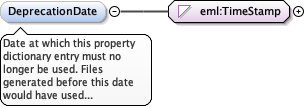
Date at which this property dictionary entry must no longer be used. Files generated before this date would have used this entry so it is left here for reference.

A null value means the property kind is still valid.
<xs:element name="DeprecationDate" type="eml:TimeStamp" minOccurs="0" maxOccurs="1"><xs:annotation><xs:documentation>Date at which this property dictionary entry must no longer be used. Files generated before this date would have used this entry so it is left here for reference. A null value means the property kind is still valid.</xs:documentation></xs:annotation></xs:element>
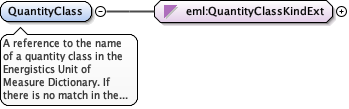
A reference to the name of a quantity class in the Energistics Unit of Measure Dictionary.If there is no match in the Energistics Unit of Measure Dictionary, then this attribute is purely for human information.
<xs:element name="QuantityClass" type="eml:QuantityClassKindExt" minOccurs="1" maxOccurs="1"><xs:annotation><xs:documentation>A reference to the name of a quantity class in the Energistics Unit of Measure Dictionary. If there is no match in the Energistics Unit of Measure Dictionary, then this attribute is purely for human information.</xs:documentation></xs:annotation></xs:element>
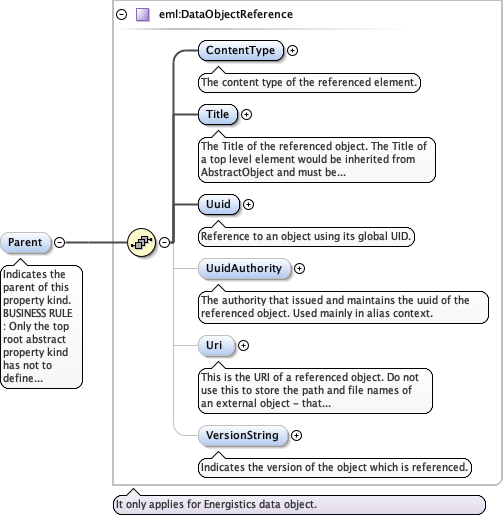
<xs:element name="Parent" type="eml:DataObjectReference" minOccurs="0" maxOccurs="1"><xs:annotation><xs:documentation>Indicates the parent of this property kind. BUSINESS RULE : Only the top root abstract property kind has not to define a parent property kind.</xs:documentation></xs:annotation></xs:element>
Complex Type eml:PropertyKind
Namespace
http://www.energistics.org/energyml/data/commonv2
Annotations
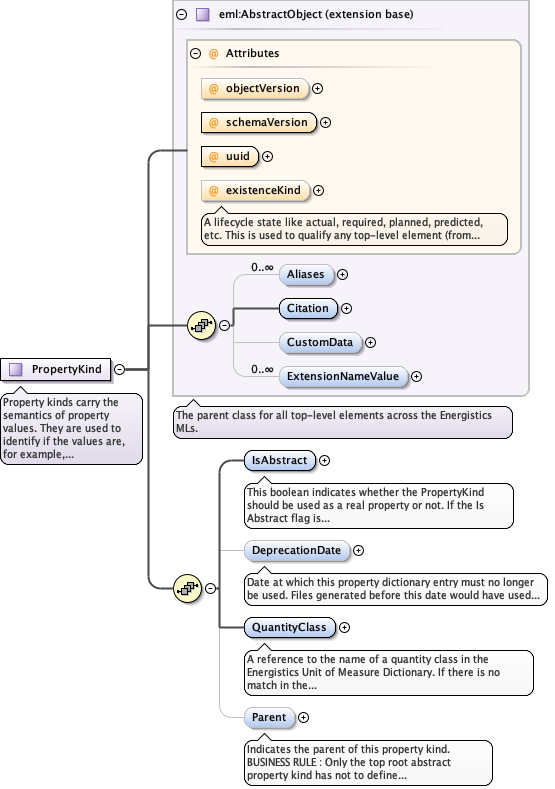
Property kinds carry the semantics of property values. They are used to identify if the values are, for example, representing porosity, length, stress tensor, etc. Energistics provides a list of standard property kind that represent the basis for the commonly used properties in the E&P subsurface workflow.
<xs:complexType name="PropertyKind"><xs:annotation><xs:documentation>Property kinds carry the semantics of property values. They are used to identify if the values are, for example, representing porosity, length, stress tensor, etc. Energistics provides a list of standard property kind that represent the basis for the commonly used properties in the E&P subsurface workflow.</xs:documentation></xs:annotation><xs:complexContent><xs:extension base="eml:AbstractObject"><xs:sequence><xs:element name="IsAbstract" type="xs:boolean" minOccurs="1" maxOccurs="1"><xs:annotation><xs:documentation>This boolean indicates whether the PropertyKind should be used as a real property or not. If the Is Abstract flag is set, then this entry should be used only as the parent of a real property. For example, the PropertyKind of "force per length" shouldn't be used directly, as it is really just a description of some units of measure. This entry should only be used as the parent of the real physical property "surface tension".</xs:documentation></xs:annotation></xs:element><xs:element name="DeprecationDate" type="eml:TimeStamp" minOccurs="0" maxOccurs="1"><xs:annotation><xs:documentation>Date at which this property dictionary entry must no longer be used. Files generated before this date would have used this entry so it is left here for reference. A null value means the property kind is still valid.</xs:documentation></xs:annotation></xs:element><xs:element name="QuantityClass" type="eml:QuantityClassKindExt" minOccurs="1" maxOccurs="1"><xs:annotation><xs:documentation>A reference to the name of a quantity class in the Energistics Unit of Measure Dictionary. If there is no match in the Energistics Unit of Measure Dictionary, then this attribute is purely for human information.</xs:documentation></xs:annotation></xs:element><xs:element name="Parent" type="eml:DataObjectReference" minOccurs="0" maxOccurs="1"><xs:annotation><xs:documentation>Indicates the parent of this property kind. BUSINESS RULE : Only the top root abstract property kind has not to define a parent property kind.</xs:documentation></xs:annotation></xs:element></xs:sequence></xs:extension></xs:complexContent></xs:complexType>