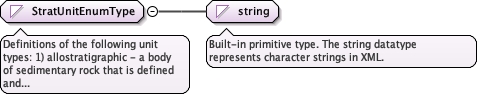
Definitions of the following unit types: 1) allostratigraphic - a body ofsedimentary rock that is defined and identified only by its bounding discontinuities2) biostratigraphic - bodies of rock strata that are defined or characterized on thebasis of their contained fossils. 3) chemostratigraphic - a body of rock defined onthe chemical composition of the sediments, rocks, and rock components. 4)chronostratigraphic - bodies of rocks, layered or unlayered, that are definedbetween specified stratigraphic horizons which represent specified intervals ofgeologic time. 5) geophysical - bodies of rocks and soils that are distinguished bytheir geophysical properties. The criteria for distinguishing such units may varydepending on the engineering application. 6) hydrostratigraphic - a part of a bodyof rock that forms a distinct hydrologic unit with respect to the flow of groundwater, generally characterized by its porosity and permeability. 7) lithodemic - athree-dimensional body composed of one or more intrusive, highly deformed or highlymetamorphosed rock types, distinguished and delimited on the basis of rockcharacteristics. Its contacts with other rock units may be sedimentary, extrusive,intrusive, and tectonic or relate to metamorphic grade. 8) lithostratigraphy -bodies of rocks, bedded or unbedded, that are defined and characterized on the basisof their lithologic properties and their stratigraphic relations. 9)magnetostratigraphic - rock strata unified by similar magnetic characteristics (notonly magnetic polarity) which allows it to be differentiated from adjacent strata.10) pedostratigraphic - units defined based on the stratigraphical and spatialrelationships and implications of surface and buried soils. It has emerged as a keymeans of interpreting palaeosols; records of metastability in landscapes when ratesof erosion and accumulation are slow. 11) polarity chronostratigraphic - unitsdefined by primary magnetic-polarity record imposed when the rock was deposited orcrystallized during a specific interval of geologic time. 12) tectonostratigraphic -a body characterized by a consistent tectonostratigraphy and metamorphic evolution,and bounded by tectonic discontinuities.
Diagram
Type
restriction of string
Facets
enumeration
allostratigraphic
enumeration
biostratigraphic
enumeration
chemostraitgraphic
enumeration
chronostratigraphic
enumeration
geophysical
enumeration
hydrostraptigraphic
enumeration
lithodemic
enumeration
lithostratigraphic
enumeration
magnetostratigraphic
enumeration
pedostratigraphic
enumeration
polarity chronostratigraphic
enumeration
tectonostratigraphic
Source
<simpleType name="StratUnitEnumType"><annotation><documentation>Definitions of the following unit types: 1) allostratigraphic - a body of sedimentary rock that is defined and identified only by its bounding discontinuities 2) biostratigraphic - bodies of rock strata that are defined or characterized on the basis of their contained fossils. 3) chemostratigraphic - a body of rock defined on the chemical composition of the sediments, rocks, and rock components. 4) chronostratigraphic - bodies of rocks, layered or unlayered, that are defined between specified stratigraphic horizons which represent specified intervals of geologic time. 5) geophysical - bodies of rocks and soils that are distinguished by their geophysical properties. The criteria for distinguishing such units may vary depending on the engineering application. 6) hydrostratigraphic - a part of a body of rock that forms a distinct hydrologic unit with respect to the flow of ground water, generally characterized by its porosity and permeability. 7) lithodemic - a three-dimensional body composed of one or more intrusive, highly deformed or highly metamorphosed rock types, distinguished and delimited on the basis of rock characteristics. Its contacts with other rock units may be sedimentary, extrusive, intrusive, and tectonic or relate to metamorphic grade. 8) lithostratigraphy - bodies of rocks, bedded or unbedded, that are defined and characterized on the basis of their lithologic properties and their stratigraphic relations. 9) magnetostratigraphic - rock strata unified by similar magnetic characteristics (not only magnetic polarity) which allows it to be differentiated from adjacent strata. 10) pedostratigraphic - units defined based on the stratigraphical and spatial relationships and implications of surface and buried soils. It has emerged as a key means of interpreting palaeosols; records of metastability in landscapes when rates of erosion and accumulation are slow. 11) polarity chronostratigraphic - units defined by primary magnetic-polarity record imposed when the rock was deposited or crystallized during a specific interval of geologic time. 12) tectonostratigraphic - a body characterized by a consistent tectonostratigraphy and metamorphic evolution, and bounded by tectonic discontinuities.</documentation></annotation><restriction base="string"><enumeration value="allostratigraphic"/><enumeration value="biostratigraphic"/><enumeration value="chemostraitgraphic"/><enumeration value="chronostratigraphic"/><enumeration value="geophysical"/><enumeration value="hydrostraptigraphic"/><enumeration value="lithodemic"/><enumeration value="lithostratigraphic"/><enumeration value="magnetostratigraphic"/><enumeration value="pedostratigraphic"/><enumeration value="polarity chronostratigraphic"/><enumeration value="tectonostratigraphic"/></restriction></simpleType>